

This week’s Friday Poem is ‘Daughter II’ by Deryn Rees-Jones from her collection Burying the Wren. Deryn’s poem ‘Consider the Lillies’, first published by Modron Magazine, was recently Highly Commended in the Forward Prizes for Poetry.

This week’s Friday Poem is ‘Daughter II’ by Deryn Rees-Jones from her collection Burying the Wren. Deryn’s poem ‘Consider the Lillies’, first published by Modron Magazine, was recently Highly Commended in the Forward Prizes for Poetry.
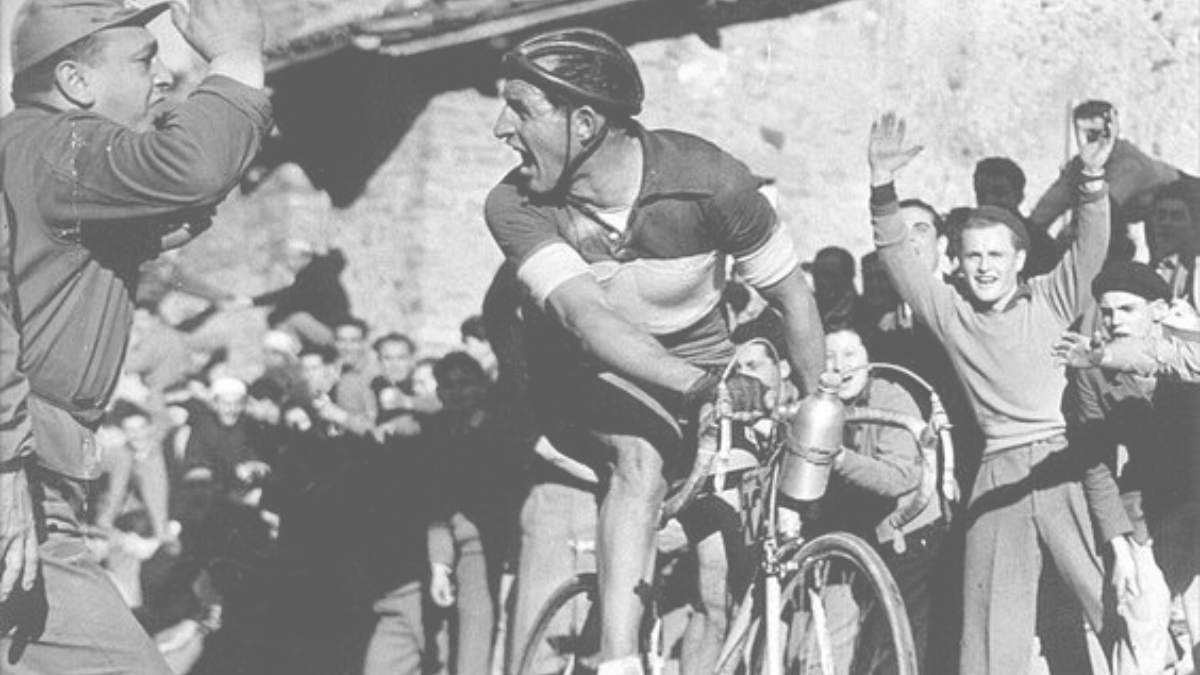
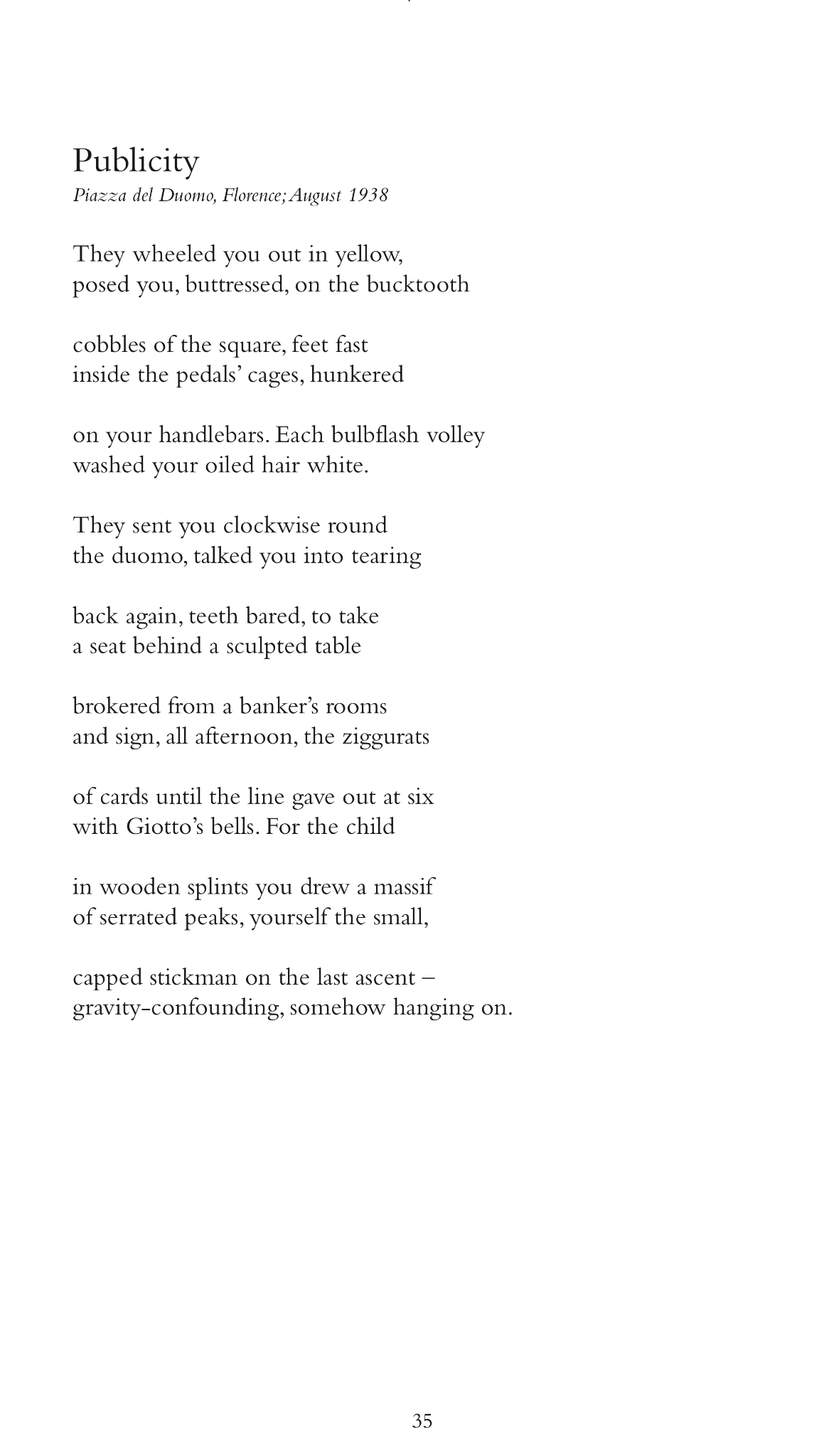
This week’s Friday Poem is ‘Publicity’ by Damian Walford Davies from his new collection Viva Bartali!. Damian is launching the book at St Illtud’s Church in Llantwit Major on Wednesday 2nd July with Bardic Vintage Books. Contact the shop for details.

To celebrate International Women’s Day 2023, we’re highlighting a range of titles which explore various thoughts and experiences affecting women’s lives today. Find many more fantastic books written by women on our website.

This collection of lyric essays by Forward prize-winning poet Kim Moore explores at the relationship between poetry and everyday sexism. Moore examines the dynamics of performing poetry as a female poet – drawing on her PhD research and experiences of writing and performing the poems in her second collection All The Men I Never Married which won the Forward Prize for Best Collection 2022.
The essays tackle subjects that range from heckling at poetry readings, problems with the male gaze and explorations of what the female gaze might look like in poetry to discussions about complicity, guilt and objectification, the slipperiness of the word sexism and whether poetry can be part of transformational change.
Listen to Kim chatting about the book on today’s episode of BBC Woman’s Hour.

With over 250 contributors, this generous selection of poetry by women features poets from the USA, Canada, England, Ireland, Scotland, Wales, Australia, and New Zealand. Arranged by thematic chapters that touch on various aspects of modern life, this anthology aims to be a touchstone of women’s thoughts and experiences; to be entertaining and relevant as well as inclusive and representative of some of the best poetry published now.
In these ‘Post-Feminist’ times, is there a need for such a book? Is the literary establishment still as dominated by men as it once was? Who gets to decide the canon? Eva Salzman opens Women’s Work with a lively polemic, making the case for the women-only anthology with characteristic wit and flair.

Maggie Harris’ short story collection Writing on Water is informed by the Caribbean, where she was born, and Britain where she has lived as an adult, and through them, the wider world. Issues of belonging and migration feature, but alongside these are growing interests in voice, narrative, gardening and botany, music and family. There are both UK and Caribbean voices in these tales, told by children, migrants, mothers, and grandparents.
Republic is about class, culture and community. It recounts the story of a young woman growing in west Wales up listening to the post-punk music of the 1980s and indie labels of the 1990s, decades which culminated in the explosion of “Cŵl Cymru” and new devolutionary powers in Wales.
Offering stories that are overheard, handed down, magnified, often translated from Welsh, this sequence of 80 prose poems creates a patchwork of narratives which share the challenges faced by women, Welsh-speakers, and other marginalised groups. This volume arose from the need to tell an alternative social history, one that commits an oral history to paper.

Vividly told, The Amazingly Astonishing Story is a classic story of a working-class girl growing up in the fifties and sixties, where dreams and reality seem irreconcilable. Her Catholic upbringing, a father torn between his daughter and his new wife, her irreverent imagination and stubborn determination to enjoy life, all mean that Lucy Gannon really does have an amazing story (including meeting the Beatles in her school grounds) as she finds her place in the world.
Lucy Gannon is the author of 8 plays and 18 TV dramas or series, including The Best of Men, Soldier Soldier, Peak Practice, Bramwell, and Dad. She won the Richard Burton Award for New Playwrights and has been writer in residence at the Royal Shakespeare Company.

1994, Iris and Victoria are pen friends. Iris writes about her life with her family in Paris. Victoria is in a refugee camp in Goma having fled the genocide in Rwanda in which thousands are being killed. One day Victoria’s letters stop, and Iris is told she has been moved.
Twenty years later Iris, a new mother, is working as a journalist in London. As she prepares to return to work, her thoughts turn to Victoria and what might have happened to her. She pitches a story to her editor which sets her on a journey to find her pen friend. But as she follows the story, things emerge that make her question her own past. Was her father, a French government official, somehow involved in the genocide? Are her childhood memories more fiction than fact?
How have the lives of these two women, who shared a moment in time, changed in the past twenty years? As the pressure of long-kept family secrets builds, will they ever find each other?
Kim Moore’s award-winning second collection All The Men I Never Married is pointedly feminist, challenging and keenly aware of the contradictions and complexities of desire. The 48 numbered poems take us through a gallery of exes and significant others where we encounter rage, pain, guilt, and love. A powerful collection of deeply thoughtful and deeply felt poetry.

A city burns in a crisis − because the status quo has collapsed and change must come. Every value, relationship and belief is shaken and the future is uncertain.
In the twenty-six stories in A City Burning, set in Wales, Northern Ireland and Italy, children and adults face, in the flames of personal tragedy, moments of potential transformation. On the threshold of their futures each must make a choice: how to live in this new ‘now’. With a virtuoso control of tone, by turns elegiac, comic, lyrical, philosophical, A City Burning examines power of all types, exploring conflicts between political allegiances; between autonomy and intimacy; emotional display and concealment; resistance versus acceptance. The result is a deeply human book full of hauntingly memorable characters and narratives.

In her debut collection 163 Days Hannah Hodgson uses a panoply of medical, legal, and personal vocabularies to explore what illness, death and dying does to a person as both patient and witness. In her long poem ‘163 Days’, her longest period of hospitalisation to date, she probes various truths which clash like a tray of dropped instruments in a silent operating theatre. The mundanity of hospital life is marbled by a changing landscape of mood, hope and loss. A gap yawns between the person she is, and the person in her medical notes. In ‘Aftercare’, Hannah navigates the worlds of both nightclubs and hospice care as she embarks on a new version of her life as a disabled adult. An important collection, in which Hodgson’s true voice takes poetry into difficult places.
Create your free Seren account and enjoy 20% off every book you buy from us.

This Christmas, find gifts for the whole family with our 2022 gift guide. We’ve got special offers on some of your favourite authors, books which are hot-off-the-press and popular classics.

Shortlisted for the Forward Prize for Poetry 2022, All The Men I Never Married is the astounding second collection by Kim Moore. Pointedly feminist, challenging and keenly aware of the contradictions and complexities of desire, this collection speaks to the experiences of many women. The 48 numbered poems take us through a gallery of exes and significant others where we encounter rage, pain, guilt, and love.

“Easily the most remarkable work of fiction to come out of Wales in a thousand moons” says Jon Gower. Hammad Rind’s debut novel Four Dervishes is a satirical comedy which takes inspiration from the dastan, an ornate form of oral history. Forced onto the street by a power cut, the unnamed narrator finds himself sheltering in a cemetery where he comes across four others – a grave digger, an aristocrat, an honourable criminal and a messiah – each with a past, and with a story to tell. Crimes have been committed, dark family secrets revealed, fortunes rise and fall, the varieties of love are explored, and new selves are discovered in a rich round of storytelling. And as the Disappointed Man discovers, a new story is about to begin…

Bar 44 Tapas y Copas is the perfect gift for hardcore foodies and home cooks alike. Packed with over 100 out of this world recipes which elevate Spanish cuisine to exciting new heights, it includes dishes for any occasion. Chicken sobrassada and spiced yoghurt, beetroot gazpacho, tuna tartare with apple ajo blanco, lamb empanada, strawberry and cava sorbet and pear and olive oil cake are just some of the dishes you can try at home. There’s even a chapter dedicated to sherry and Spanish wines with some fantastic cocktails mixed in for good measure. What more could you want?

A book for both the climate conscious and poetry fanatics, this landmark anthology 100 Poems to Save the Earth brings together poems by the best new and established contemporary poets from Britain, Ireland, America and beyond. They invite us to fine-tune our senses, to listen to the world around us, and pay attention to what we have been missing. The defining crisis of our time is revealed to be fundamentally a crisis of perception. We must act now if we are to save the only planet we have.
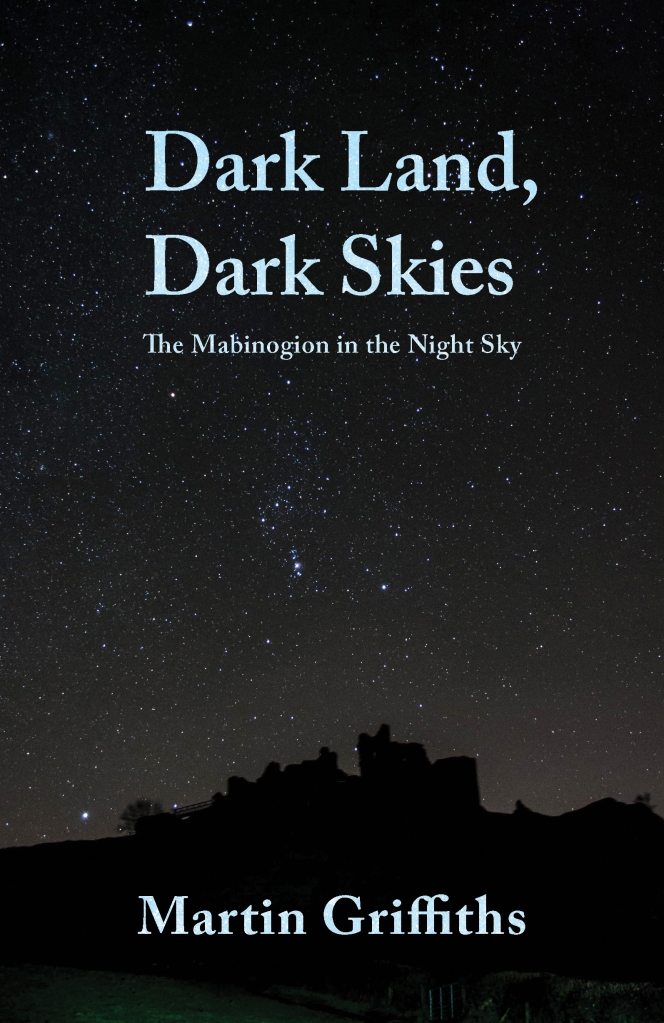
In Dark Land, Dark Skies, astronomer Martin Griffiths subverts conventional astronomical thought by eschewing the classical naming of constellations and investigating Welsh and Celtic naming. Ancient peoples around the world placed their own myths and legends in the heavens, though these have tended to become lost behind the dominant use of classical cultural stories to name stars. In many cases it is a result of a literary culture displacing an oral one. Griffiths draws on his research into the past use of Welsh heroes from the Mabinogion in the naming of constellations, to create an interesting and provocative guidebook that combines astronomy with a new perspective on Welsh mythology.

The ‘city of light’ under German occupation: Paris, a place, a people, lives in flux. And among these uncertainties, these compromised loyalties, these existences under constant threat, lives Marcel Petiot, a mass murderer. A doctor, a resistance fighter, a collaborator: who can tell? Stretching backwards and forwards through the twentieth century, Darkness in the City of Light is a remarkable multi-form novel that combines fiction, journals, poetry and images in its investigation of what war can let loose, and how evil can dominate a man. The compelling debut novel by Tony Curtis.

The Occasional Vegan is a collection of simple, affordable and delicious recipes, suitable for newcomers and long-time vegans alike, that will keep you well-fed and healthy. Author Sarah Philpott’s recipes are accompanied by the story of her own journey to becoming a vegan, exploring the ethical and lifestyle arguments for a plant-based diet. Her recipes are homely and easily cooked, suitable for gourmet cooks and the kitchen novice.
In her follow-up, The Seasonal Vegan she presents a kitchen diary of seasonal recipes with a delicious mixture of fine food writing and beautiful photography. Her guide to eating with the seasons takes a realistic approach to shopping cheaply and sustainably and proves that the vegan lifestyle is anything but expensive.
In her debut collection 163 Days Hannah Hodgson uses a panoply of medical, legal, and personal vocabularies to explore what illness, death and dying does to a person as both patient and witness. In her long poem ‘163 Days’, her longest period of hospitalisation to date, she probes various truths which clash like a tray of dropped instruments in a silent operating theatre. The mundanity of hospital life is marbled by a changing landscape of mood, hope and loss. A gap yawns between the person she is, and the person in her medical notes. In ‘Aftercare’, Hannah navigates the worlds of both nightclubs and hospice care as she embarks on a new version of her life as a disabled adult. An important collection, in which Hodgson’s true voice takes poetry into difficult places.

The Rivalry of Flowers is a book of new paintings and works by Shani Rhys James, one of Britain’s leading and most distinctive artists. Her latest work has developed a lighter palette to deal with new subjects of flowers and colourful patterned wallpaper backgrounds. These themes of domesticity are not anodyne however, but informed by ‘The Yellow Wallpaper’, Charlotte Perkins Gilman’s 1892 story about the plight of women in the home. Rhys James’s paintings continue her exploration of the position of women in society, and in particular how women can be imprisoned by consumerism and the domestic environment.
With contributions from William Packer, Francesca Rhydderch and Edward Lucie-Smith.

If a light, witty read is what you’re looking for, then you’ve found it here. Kidnap Fury of the Smoking Lovers details exactly how Fargo Hawkins steals a car to travel across Britain with his ex-employer’s wife. Described by Buzz Magazine as the ‘perfect read to provide a bit of escapism’, this novel will bring a bit of joy in lieu of winter gloom this Christmas.
Preter’s previous novel The Stromness Dinner is the story of two Londoners who follow their dreams. Odd job man Ed and city banker Claire end up in Stromness where they find anything is possible in this compelling novel. Kind, funny, narrated by white van man Ed, The Stromness Dinner is a novel which rattles along with “irresistible pace and panache” – Val Hennessy.

Twelve Poems for Christmas is a sparkling selection of Christmas poems, the perfect stocking filler for any poetry addict. These are poems full of feeling that resist cliché, that touch on classic ‘Christmas’ themes, but bring them to life from fresh perspectives. The pamphlet opens with Pippa Little’s lyrical and tender poem, ‘St. Leonore and the Robin’, and features poems both humorous and contemplative. Small enough to send with (or instead of) a card, this is the perfect festive treat for your loved ones.
This is Not Who We Are is the gripping debut novel by Sophie Buchaillard which follows the lives of two women, Iris and Victoria. In 1994 they are pen friends. Iris writes to Victoria from her home in Paris. Victoria writes back from a refugee camp in Goma, having fled the genocide in Rwanda in which thousands are being killed. One day Victoria’s letters stop, and Iris is told she has been moved.
Twenty years after their unlikely pen pal correspondence, they are living different lives in different places. But this one horrific event still connects them. As the pressure of long-kept family secrets builds, will they ever find each other?

Fans of historical crime fiction are sure to be captivated by Leslie Scase’s latest Inspector Chard mystery Sabrina’s Teardrop. Returning to his native Shrewsbury, the previously enigmatic Inspector Chard finds himself arrested for a horrific double murder. Facing execution, he must fight to clear his name. As tensions rise, can Chard find a missing woman and the stolen Sabrina’s Teardrop sapphire to solve the riddle before it is too late?
Don’t forget to also look up book two in the series Fatal Solution.

In a world of uncertainties, how do human beings navigate the increasingly complex interrelations of love, desire, home, community? In her short story collections An Affair of the Heart and Scar Tissue Clare Morgan offers a fresh perspective on the nature of individual existence in all its transient vulnerability. In these lyrical, evocative and searching stories, Clare Morgan unflinchingly explores the darker and more challenging aspects of emotional, sexual and familial relationships, while simultaneously celebrating the joys of being alive in an unfathomable world.

Maria Donovan’s debut novel, The Chicken Soup Murder, subverts the crime and murder mystery genres in a meditation on bereavement, friendship and the meaning of family. This emotionally involving coming-of-age narrative is told with resilience and humour by eleven-year-old Michael, a thoughtful boy who tests the boundaries of his own behaviour as he carries a burden of knowledge no one else seems willing to share.
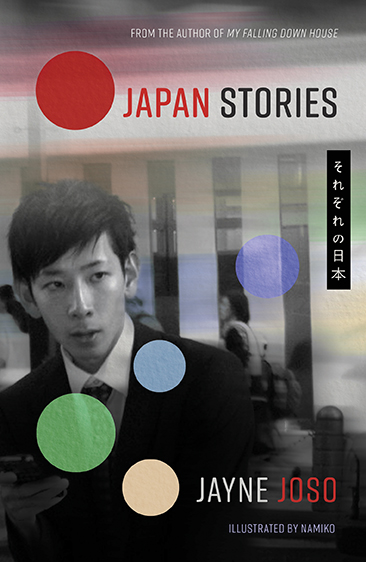
Japan Stories is a spellbinding collection of short fiction set in Japan by Jayne Joso. Each centres on a particular character – a sinister museum curator, a son caring for his dementia-struck father, a young woman who returns to haunt her killer, and a curious homeless man intent on cleaning your home with lemons! This work also includes Joso’s stories, ‘I’m not David Bowie’ and ‘Maru-chan’ an homage to Yayoi Kusama. Together, these compelling narratives become a mosaic of life in contemporary Japan, its people, its society, its thinking, its character. Illustrated by Manga artist Namiko, Japan Stories provides a window into a country we would all love to know more deeply.

“Punctuation killed my wife,” states octogenarian Vernon in the opening sentence of Please. Full of humanity, sly humour and verbal invention, Christopher Meredith’s fifth novel is his shortest and arguably funniest, most innovative and most outrageous. It’s a tragicomedy touching on themes of the limits of knowledge, on isolation, and male frailty in new and playful ways. The whole gradually and inexorably unlocks the meanings of its extraordinary opening sentence in a complex and dazzling psychological and linguistic entertainment that ends in a surprising, dreamlike and ultimately moving denouement.
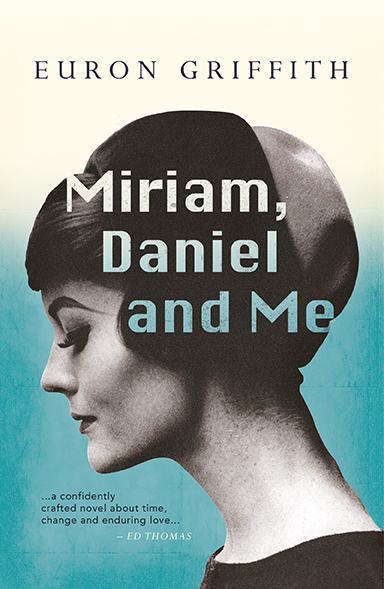
When Miriam fell in love with Padraig life seemed simple. But she soon discovered that love is a treacherous business. Everything changed when she met Daniel. She was taken down an unexpected path which would dictate and dominate the rest of her life.
Spanning three generations of a North Wales family in a Welsh-speaking community, Miriam, Daniel and Me is Euron Griffith’s absorbing and compelling story of family discord, political turmoil, poetry, jealousy… and football.

The Edge of Cymru is the story of Julie Brominicks’ year-long walk around the edge of Wales. As an educator she knew a lot about the country’s natural resources. But as a long established incomer from England and more recent Welsh learner, she wanted to know more about its history, about Wales today, and her place in it. As her walk unwinds the history of Wales is also unwound, from the twenty-first century back to pre-human times, often viewed through an environmental lens. Brominicksʼ observations of the places and people she meets on her journey make a fascinating alternative travelogue about Wales and the lives its people live. A quest of personal discovery, the narrative of The Edge of Cymru is also a refreshingly different way of looking at place, identity, memory and belonging.

In his new book of short prose pieces, Delirium, award winning author Robert Minhinnick delivers a breathless epic. It opens with a real 1945 diary kept in Burma, and Minhinnick telling stories to his mother in her care home. There are a series of pictures of war-stricken Baghdad, and vignettes about place and travel, dedicated to Jan Morris. On the way we encounter a Middle East island devoted to sustainability, close ups of what clearing a family house reveals, and the writer’s intimately imagined Welsh sand dunes, as well as the Covid pandemic, threats of extinction, and images of post-apocalyptic life.

This new addition to the Real Series explores the town of Hay-on-Wye, home to the prestigious the Hay Literature Festival, How the Light Gets In festival, and so-called ‘town of books’. Kate Noakes ventures into its hinterland, which is historically so much a part of the town too. The Black Mountains to the south, the river and Clyro to the north, rural Herefordshire to the east and out towards Brecon to the west fall into her territory, a rich and varied area, which appears in so many travel guides and so much literature, and in the DNA of Hay locals as their patch. The beautiful countryside and dramatic mountains surrounding Hay also bear witness to change and Noakes makes her own contribution to the cultural heritage of an area which has inspired artists and in particular writers, for centuries. Real Hay-on-Wye is full of discoveries in a place that is familiar to many, though not as familiar as we might think.
Longlisted for the Edge Hill Short Story Prize 2021
A city burns in a crisis − because the status quo has collapsed and change must come. Every value, relationship and belief is shaken and the future is uncertain.
In the twenty-six stories in A City Burning, set in Wales, Northern Ireland and Italy, children and adults face, in the flames of personal tragedy, moments of potential transformation. Some of these moments occur in mundane circumstances, others amidst tragedy or drama. On the threshold of their futures each must make a choice: how to live in this new ‘now’.

Longlisted for the Laurel Prize 2022
In Much With Body by Polly Atkin the beauty of the Lake District is both balm and mirror, refracting pain and also soothing it with distraction. Much of the landscape is lakescape, giving the book a watery feel, the author’s wild swimming being just one kind of immersion. There is also a distinct link with the past in a central section of found poems taken from transcripts of the journals of Dorothy Wordsworth, from a period late in her life when she was often ill. In common with the works of the Wordsworths, these poems share a quality of the metaphysical sublime. Their reverence for the natural world is an uneasy awe, contingent upon knowledge of our fragility and mortality.
Shortlisted for Wales Book of the Year 2021
By turns laugh out loud funny and deeply sad, The Amazingly Astonishing Story is a frank and surprising look into a child’s tumultuous mind, a classic story of a working-class girl growing up in the 60s. Her Catholic upbringing, a father torn between daughter and new wife, her irreverent imagination and determination to enjoy life, mean this really is an amazing story (including meeting the Beatles).
‘The saddest, happiest, funniest books I’ve read for ages.’ – Dawn French

John Downing was the pre-eminent press photographer of his generation. His memoir, Aperture: Life Through a Fleet Street Lens, offers a unique and first-hand insight into life behind the Fleet Street lens during one of the most interesting periods of world history and a golden age of photojournalism. The glamour and excitement of journalism at the time: the hard-nosed editors, the rivalries, the ‘work hard play hard culture’, foreign assignments issued at the drop of a hat, are brought vividly to life, but so too is the toll on journalists and photographers. At a time when the world was less accessible than now, newspapers, and photojournalists in particular, played a vital role in shining light into some of its darker, more inaccessible parts. Completed shortly before his death, with the help of colleague Wendy Holden, Downing filed a story for the final time: his own remarkable life.

Elaine Morgan: A Life Behind the Screen is Daryl Leeworthy’s informative biography of award-winning screen writer Elaine Morgan. The book establishes her reputation and significant place in writing from Wales. It outlines her early days living only just above the poverty line in the Rhondda, before reading English Literature at Oxford, and examines her careers as an award-winning television writer and visionary anthropologist. Richly detailed it is essential in understanding the life and work of this important writer.
“A scintillating new biographical study, impressively researched and elegantly written.” – Dai Smith

Escape Room is the long-awaited debut collection by Bryony Littlefair, following her Mslexia prize-winning pamphlet Giraffe. At the heart of Escape Room is the question of how to find light within the pain of anxiety and loss, the consolatory powers of friendship and creativity and the reimagining of life’s darkness as ‘an emerald, exciting kind of dark, a gaseous dark, dark / with a lot of light inside it.’
Balancing resolute joy, with humour and irony, it is a contemporary Betjemanesque exploration of suburban, middle-class life, with all its apathy and subconscious fear. Wryly observed this collection’s warmth, honesty and precision makes it an irresistible and perspicacious first collection.

Peter Finch’s two-volume Collected Poems chart the course of a remarkable writing career. A restless exploration of the ideas behind his boundary-pushing poems, they are a testament to the experimental in literature, to ways of doing it differently, and to an alternative modernist culture in Wales and Britain. Consequently, invaluably, they also open a window on a poetry scene seemingly lost from view to the twenty-first century. They remind us that there was interesting and vital writing happening outside of what has now calcified into the canon of twentieth century British poetry. And that Finch was at its cutting edge.
“The publication of his collected poems in two big juicy volumes will delight readers new and old.” – The Western Mail

Lairs brings together something primal and secret – the lair as haven for a wild or feral animal – with the poem framed as a mathematical equation. In these terms, the ‘lair’ is a kind of nest, a beautiful accumulation of dense detail. The poems are introspective, by turns analytical, fearful and mocking in their response to the systems shaping an altered world. The use of language is innovative, while maintaining moments of vulnerability and moving self-awareness. In these exquisite poems, the lair is both the community at large and a dark and intricate interior space where something wild still survives.
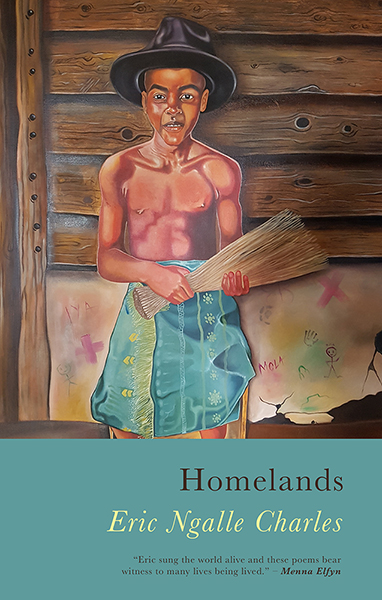
In his debut collection Homelands, Eric Ngalle Charles draws on his early life raised by the matriarchs of Cameroon, being sent to Moscow by human traffickers, and finding a new home in Wales. Rich in tone, subject and emotion, Charles’ poetry moves between the present and the past, between Africa and Europe, and between despair and hope. It discovers that historical injustices now play out in new forms, and that family tensions are as strong as the love within a family. Despite the difficulties Charles has faced, Homelands contains poems of fondness, warmth and humour and, as he returns to Cameroon to confront old ghosts, forgiveness.

Goliat is the second collection by Rhiannon Hooson, a follow-up to her Wales Book of the Year nominated debut, The Other City. An intelligent and beautiful book, Goliat offers absorbing stories of a precarious world on the brink of climate emergency. Employing startling imagery and a deep sense of history, these poems explore the irreplaceable beauty of a wild world, and the terrible damage that humans might do to each other and the earth.
“Hooson’s poetry is a rich and assured gift—complex truths are revealed in language that is precise and luminous.” – Menna Elfyn
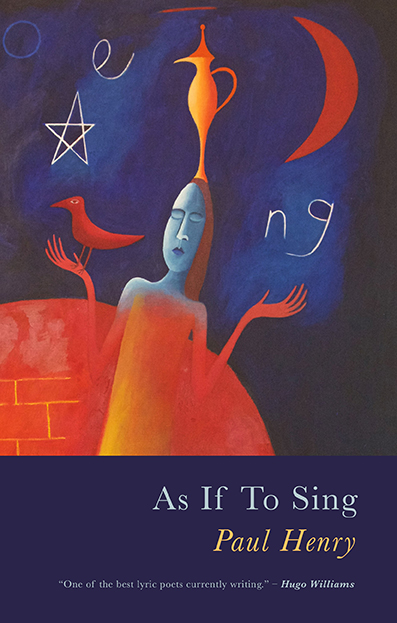
The power of song, to sustain the human spirit, resonates through As If To Sing. A trapped caver crawls back through songs to the sea; Welsh soldiers pack their hearts into a song on the eve of battle, ‘for safe-keeping’; a child crossing a bridge sings ‘a song with no beginning or end’… Rich in the musical lyricism admired by readers and fellow poets, As If To Sing is an essential addition to Paul Henry’s compelling body of work.
‘As If To Sing explores the human condition through the language of music and does so with a mastery of poetics.’ – Wales Arts Review

Sanctuary is – urgent. The pandemic has made people crave it; political crises are denying it to millions; the earth is no longer our haven. This theme has enormous traction at a time of existential fear − especially among the young − that nowhere is safe. Even our minds and our bodies are not refuges we can rely on. Truth itself is on shaky ground. In Sanctuary: There Must Be Somewhere, Angela Graham and five other writers from Wales and Northern Ireland, addresses these critical situations from the inside. How we can save the earth, ourselves and others? How valid is the concept of a ‘holy’ place these days? Are any values still sacrosanct? We all deserve peace and security but can these be achieved without exploitation?
With Phil Cope, Viviana Fiorentino, Mahyar, Csilla Toldy and Glen Wilson
“A necessary and urgent response to the world’s increasing crises…” – Robert Minhinnick
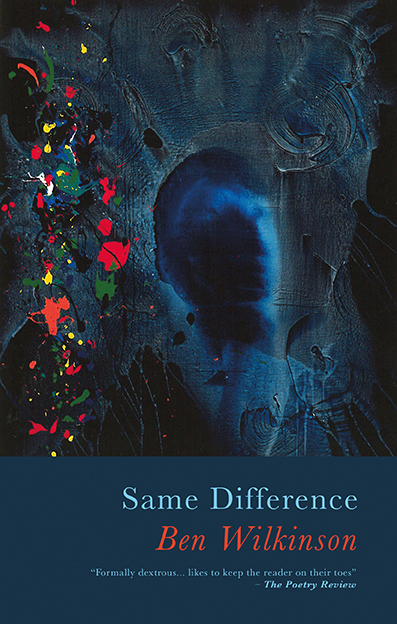
Same Difference is the formally acute second collection by Ben Wilkinson. Carefully crafted, and charged with contemporary language, the poems play with poetic voice and the dramatic monologue, keeping us on our toes and asking just who is doing the talking. Throughout, he ‘steps into the shoes’ of French symbolist poet Paul Verlaine (1844-96), reframing his voice for modern readers. Brimming with everyone from cage fighters and boy racers to cancer patients and whales in captivity, Same Difference is gritty, darkly ironic and often moving – a collection for our times.

When Rosanne Alexander’s boyfriend Mike was offered the job of warden of Skomer Island, they had just ten days to leave college, marry (a condition of employment) and gather their belongings and provisions. With great sensitivity, and humour, Rosanne Alexander relates their experiences, including her observations of the island’s wildlife and landscape. Her lyrical evocation of the natural world will inspire and entertain anyone who has felt the need for escape. Waterfalls of Stars is the perfect gift for any one needing a captivating breath of literary air.

In these two books, television naturalist Iolo Williams picks his top 40 nature sites, first in Wales and then across the UK. He criss-crosses countries, taking in coastal sites from marshes to towering cliffs, to mountains, valleys, bogs, meadows, woods and land reclaimed from industry. Drawing on his considerable knowledge, he guides readers and visitors to the natural delights of each site. Illustrated in beautiful detail with glorious images of the sites by top nature photographers, naturalists of all kinds will find much to enjoy in these fascinating volumes.

In The Owl House, Daniel Butler charts his relationship with two barn owls which nested in the barn of his rural mid-Wales home. In this pastoral exploration of his locale, rich in wildlife of all kinds, he roams the mountains and forests, takes trips to the coast, encounters all manner of animals and birds, and grows to understand the relationship between the local people and their surroundings. A rich and vivid portrait of one of the most remote and sparsely populated areas of Britain – mid-Wales – broad in its horizons yet full of fascinating detail.

The short story has long been a popular form with writers and readers in Wales. The Green Bridge, part of the Seren Classics series, collects work by 25 of the country’s foremost writers of the twentieth century in an entertaining and varied anthology. Horror, satire, humour, war, tales of the aristocracy, of navvies, love, and madness, industry, the countryside, politics and sport: these stories provide insight into the changing values of Wales and the world.

Tide-Race is Brenda Chamberlain’s remarkable account of life on Bardsey Island (Ynys Enlli in Welsh), a remote and mysterious island off the coast of North Wales, where she lived from 1947 to 1961, during the last days of its hardy community. The combination of Bardsey, ancient site of Christian pilgrimage, wild and dangerous landscape, and Brenda Chamberlain, Royal Academy trained artist, results in a classic book, vividly illustrated by the author’s line drawings.

Winner of the Mslexia Women’s Poetry Pamphlet Competition 2020
Alison Binney’s debut pamphlet of poems Other Women’s Kitchens introduces us to a gifted new voice who writes with flair and feeling about coming out and coming of age as a gay woman in 21st century Britain. The collection explores the challenges of discovering and owning a lesbian identity in the 1980s and 1990s and the joy of finding both love and increased confidence in that identity as an adult. Beautifully entertaining, pointedly political and often very funny, Other Women’s Kitchens is essential reading.

Angola, America takes its name from a prison in Louisiana in the southern United Sates. In these strikingly original, thoroughly contemporary, and deeply moving poems, we are immersed in the world the inmates must endure. From the first poem, when we witness a home-made tattoo and understand that this scarring and incision is a “map in the connective tissue of pain and loss”, we are drawn into this world in a way that is carefully observed and beautifully empathetic.

Kathryn Bevis’s critically-acclaimed debut pamphlet Flamingo introduces us to a troupe of wild, unique, and captivating poems. Life and our own embodiment are brought sharply into focus as we encounter a variety of subjects including work, survival, love, and mortality. Formally inventive, these hopeful and sometimes surreal poems are not afraid to confront complex or difficult emotions. Cancer is posed as a ring-tailed lemur, capering through the sufferer’s body, and the title poem imagines death as a flamboyant transformation where the speaker shapeshifts into the afterlife. Each poem is a discovery and a joy.
“A stunning and original pamphlet… inspiring, impressive and wonderful.” – The London Grip

Speaking from and for LGBTQIA+ communities, SL Grange gives a voice to lost transcestors, celebrates acts of resistance, sings a gender-fluid love song, and hosts a tender-angry conversation with the ghosts of the personal and political histories that inhabit us. In true haunted house tradition, the non-human and the supernatural are also given rooms of their own; personal demons are summoned, we are entangled with our wilder sides. Witchcraft, seance and prophecy are invoked and brought up against sharp slices of reality. Described by judges as ‘strong and self-assured’, ‘sheer gorgeous’, and ‘a dark and brooding collection that combines the visceral nature of the body with the ephemeral and supernatural’, bodies, and other haunted houses is a beautifully crafted exploration of identity which queers time as well as self.

The one year Seren Gift Subscription is the perfect present for any book lover. The recipient will receive three brand-new Seren books across the year plus a range of other subscriber perks. Buy today and we’ll post them a gift card explaining who the gift is from to open on Christmas Day in advance of the first book arriving in January 2023. Every new subscriber will receive a Seren tote-bag, notebook and pen with their first delivery.

Founded in 1965, Poetry Wales is Wales’ foremost poetry magazine. Edited by Zoë Brigley, the magazine publishes internationally respected contemporary poetry, features and reviews in its triannual print and digital magazine. Its mission is to sustain and preserve the artistic works both inspiring our literary present and shaping our literary future. The perfect gift for any poetry lover.

Create your free Seren account and enjoy 20% off every book you buy from us.
We’re celebrating Earth Day 2022 with a list of books that address the natural world, the climate emergency and nature in all its glory.

100 Poems to Save the Earth invites us to fine-tune our senses, to listen to the world around us, pay attention to what we have been missing. The defining crisis of our time is revealed to be fundamentally a crisis of perception. For too long, the earth has been exploited. With its incisive Foreword, this landmark anthology is a call to action to fight the threat facing the only planet we have.

In Wild Places UK television naturalist Iolo Williams picks his favourite forty wildlife sites from the many nature reserves around the country. As this informative and lavishly illustrated book demonstrates, all forty places are packed with the widest variety of trees, plants, birds, animals and insects. Williams draws on his enormous knowledge to guide readers and visitors to the natural delights of each site. Wild Places will show them rarities like the osprey, where to find almost six hundred different species of moths, or an incredible 51 species of caddis fly. Readers will discover where to find birds, both rare and in huge numbers, where hares box and otters swim, where to spot dolphins and salmon, and where to see whales and sharks.

Carolyn Jess-Cooke’s new poetry collection is both keenly political and deeply personal. The opening poem ‘now’ features a seemingly peaceful domestic scene of a family lounging at home as the starting point for meditation on history, time, mortality and the fate of the planet: I think of what tomorrow asks and what is yet/ to be done and undone, how many nows make up a life/ and what is living. There are hints of a struggle with depression stemming from a difficult childhood, inspiring Jess-Cooke to express her experiences with her child and their autism diagnosis.

Resonant, complex, rich in heft and texture, these are mature poems that grapple with serious themes. André Mangeot’s Blood Rain opens with a deeply personal love poem (“Remember, too, our secret pool?”) that also introduces the natural world and it’s endangerment – one of several key themes in a book that addresses some of the most troubling man-made issues now facing us all. The second poem, ‘Bellwether’, reflects this: a subtle socio-political piece, a warning in a time of populism and radicalisation. This breadth of awareness and range is part of the collection’s appeal, giving the poems an urgent topicality and depth.

Much With Body is the startlingly original second collection by poet Polly Atkin. The beauty of the Lake District is both balm and mirror, refracting pain and also soothing it with distraction: unusual descriptions of frogs, birds, a great stag that ‘you will not see’. Much of the landscape is lakescape, giving the book a watery feel, the author’s wild swimming being just one kind of immersion. There is also a distinct link with the past in a central section of found poems taken from transcripts of the journals of Dorothy Wordsworth, from a period late in her life when she was often ill. In common with the works of the Wordsworths, these poems share a quality of the metaphysical sublime. Their reverence for the natural world is an uneasy awe, contingent upon knowledge of our fragility and mortality.

When Rosanne Alexander’s boyfriend Mike was offered the job of warden of Skomer, a small uninhabited island off the south west tip of Wales, they had just ten days to leave college, marry (a condition of employment) and gather their belongings and provisions for the trip to the island. This was the first of many challenges Rosanne and Mike faced during their ten years on the nature reserve, from coping with periods of isolation when they were the island’s only inhabitants, to dwindling food supplies during the winter when rough weather made provisioning from the mainland impossible. Thrown on their own resources they had also to deal with catastrophes like the devastation of the island’s seal colony following an oil spill.

The shaking city of Australian poet Cath Drake’s debut poetry collection is a metaphor for the swiftly changing precarity of modern life within the looming climate and ecological emergency, and the unease of the narrator who is far from home. Tall tales combine with a conversational style, playful humour and a lyrical assurance. The poet is able to work a wide set of diverse spells upon the reader through her adept use of tone, technique, plot and form.

Nia Vine is about to fulfil her dream of exploring an unmapped cave system. With her will go two friends who were brought up in the same seaside town. These companions are international travellers, but Nia, who has recently become a mother, feels her experience insignificant compared with that of her friends. While the three explore, Nia finds herself obsessed by a series of dreams that finally lead to a shocking revelation. Page-turningly evocative, immersive and compelling, Robert Minhinnick has written a novel in which realism and poetry collide and mingle.

In Dark Land, Dark Skies, astronomer Martin Griffiths subverts conventional astronomical thought by eschewing the classical naming of constellations and investigating Welsh and Celtic naming. Ancient peoples around the world placed their own myths and legends in the heavens, though these have tended to become lost behind the dominant use of classical cultural stories to name stars. In many cases it is a result of a literary culture displacing an oral culture.
Find these titles and many more on the Seren website serenbooks.com.
Create your free Seren account and enjoy 20% off every book you buy from us.

Our gift guide returns for 2021 with loads of great new recommendations. From old favourites to brand new books that are hot off the press, find something for everyone this Christmas.

Bar 44 Tapas y Copas is the perfect gift for hardcore foodies and home cooks alike. Packed with over 100 out of this world recipes which elevate Spanish cuisine to exciting new heights, it includes dishes for any occasion. Chicken sobrassada and spiced yoghurt, beetroot gazpacho, tuna tartare with apple ajo blanco, lamb empanada, strawberry and cava sorbet and pear and olive oil cake are just some of the dishes you can try at home. There’s even a chapter dedicated to sherry and Spanish wines with some fantastic cocktails mixed in for good measure. What more could you want?
The new one year Seren Gift Subscription is the perfect present for any book lover. The recipient will receive three brand-new Seren books across the year plus a range of other subscriber perks. Buy today and we’ll post them a gift card explaining who the gift is from to open on Christmas Day in advance of the first book arriving in January 2022. Every new subscriber will receive a Seren tote-bag, notebook and pen with their first delivery.

Published simultaneously earlier this year, renowned author Christopher Meredith’s two new books will satisfy any literature lover. His poetry collection Still uses the title word as a fulcrum to balance paradoxical concerns: stillness and motion, memory and forgetting, sanity and madness, survival and extinction. Meanwhile his short novel Please is a verbally dazzling tragicomedy about hidden passion and regret in which octogenarian language geek Vernon tries to find a way to write the story of his long marriage.
One of this year’s most highly anticipated poetry books, All The Men I Never Married is the astounding new collection by Kim Moore. Pointedly feminist, challenging and keenly aware of the contradictions and complexities of desire, this collection speaks to the experiences of many women. The 48 numbered poems take us through a gallery of exes and significant others where we encounter rage, pain, guilt, and love.

In Real Oxford, Professor Patrick McGuinness guides us through the past, but also the present Oxford, as he walks the city from the station to the ringroad. He tracks its canals and towpaths, its footbridges and tunnels to introduce us to the unnoticed and reflect on the familiar, revealing that the ‘Real Oxford’ is more than dreaming spires, bicycles, and Inspector Morse. This is a guide to Oxford unlike any other.
Japan Stories is a spellbinding collection of short fiction set in Japan by Jayne Joso. Each centres on a particular character – a sinister museum curator, a son caring for his dementia-struck father, a young woman who returns to haunt her killer, and a curious homeless man intent on cleaning your home with lemons! This work also includes Joso’s stories, ‘I’m not David Bowie’ and ‘Maru-chan’ an homage to Yayoi Kusama. Together, these compelling narratives become a mosaic of life in contemporary Japan, its people, its society, its thinking, its character. Illustrated by Manga artist Namiko, Japan Stories provides a window into a country we would all love to know more deeply.
A book for both the climate conscious and poetry fanatics, this landmark anthology brings together 100 poems by the best new and established contemporary poets from Britain, Ireland, America and beyond. They invite us to fine-tune our senses, to listen to the world around us, and pay attention to what we have been missing. The defining crisis of our time is revealed to be fundamentally a crisis of perception. We must act now if we are to save the only planet we have.
“Easily the most remarkable work of fiction to come out of Wales in a thousand moons” says Jon Gower. This outstanding debut novel from Hammad Rind is a satirical comedy which takes inspiration from the dastan, an ornate form of oral history. Forced onto the street by a power cut, the unnamed narrator finds himself sheltering in a cemetery where he comes across four others – a grave digger, an aristocrat, an honourable criminal and a messiah – each with a past, and with a story to tell. Crimes have been committed, dark family secrets revealed, fortunes rise and fall, the varieties of love are explored, and new selves are discovered in a rich round of storytelling. And as the Disappointed Man discovers, a new story is about to begin…

In Welsh Quilts expert author Jen Jones presents an authoritative guide to the history and art of the quilt in Wales. Driven by her desire to see this gloriously high-quality craft revived, Jones set out to research the topic which led to the creation of her extensive quilt collection, now housed in the Welsh Quilt Centre in Lampeter. Including stunning, high resolution images of the bold designs and intricate stitching of the quilts in her collection, Welsh Quilts is the essential book on the subject, whether you are a quilter yourself, or simply interested in quilting heritage.

This beautifully illustrated, bilingual collection (a great gift for Welsh learners) sees two poets, each confident in their own traditions, meet in the hinterland between translation and collaboration – Cyril Jones from the disciplines of Welsh cynghanedd, Philip Gross from the restless variety of English verse. Rather than lamenting the impossibility of reproducing any language’s unique knots of form and content in translation, they trust each other to explore the energies released. Valerie Coffin Price’s striking letter press designs make this a fantastic gift.

Fans of historical crime fiction are sure to be captivated by Leslie Scase’s latest Inspector Chard mystery. In Fatal Solution Inspector Thomas Chard once again finds himself faced with a murder in bustling Victorian Pontypridd. On the face of it the case appears unremarkable, even if it isn’t obviously solvable, but following new leads takes Chard into unexpected places. A second murder, a sexual predator, industrial espionage and a mining disaster crowd into the investigation, baffling the Inspector and his colleagues and Chard finds his own life at risk as the murderer attempts to avoid capture. In this page-turning story of detection, both Chard and the reader are left guessing until the final page…
Tide-race is Brenda Chamberlain’s remarkable account of life on Bardsey Island (Ynys Enlli in Welsh), a remote and mysterious island off the coast of North Wales, where she lived from 1947 to 1961, during the last days of its hardy community. The combination of Bardsey, ancient site of Christian pilgrimage, wild and dangerous landscape, and Brenda Chamberlain, Royal Academy trained artist, results in a classic book, vividly illustrated by the author’s line drawings.
Much With Body by Polly Atkin is a Poetry Book Society Winter Choice. The beauty of the Lake District is both balm and mirror, refracting pain and also soothing it with distraction. Much of the landscape is lakescape, giving the book a watery feel, the author’s wild swimming being just one kind of immersion. There is also a distinct link with the past in a central section of found poems taken from transcripts of the journals of Dorothy Wordsworth, from a period late in her life when she was often ill. In common with the works of the Wordsworths, these poems share a quality of the metaphysical sublime. Their reverence for the natural world is an uneasy awe, contingent upon knowledge of our fragility and mortality.

Part biography, part memoir, Just You and the Page by acclaimed novelist Sue Gee is a must-read for the aspiring writer. Opening in 1971, with the dramatist Michael Wall hammering out his plays on a portable typewriter, and concluding in 2020, when the novelist and academic Josie Barnard is teaching students to compose novels on Instagram, Gee interviews twelve distinctly different writers about their craft. As she examines what has shaped them and their careers, several themes emerge: struggle, inspiration, dedication, and above all, resilience.

A must-have anthology for fans of contemporary Welsh poetry, A Last Respect celebrates the Roland Mathias Prize, awarded to outstanding books of poetry by authors from Wales. It presents a selection of work from all eleven prize-winning books, by Dannie Abse, Tiffany Atkinson, Ruth Bidgood, Ailbhe Darcy, Rhian Edwards, Christine Evans, John Freeman, Philip Gross, Gwyneth Lewis, Robert Minhinnick, and Owen Sheers.

Miner’s son Morlais Jenkins is already being educated away from his background at grammar school when he is adopted, on the death of her own son, by the wife of the local colliery owner. Despite the heavy price, Morlais’s parents recognise the opportunity for their son to make a better future. Morlais is a gifted poet and, stiffled by middle class life, his adoptive mother encourages him to be neither working class or middle class, but true to his talent. As Morlais struggles to find his place between his two families, his two backgrounds and his desire to become a poet, this enthralling novel by Alun Lewis is the journey of a boy who becomes a man.
By turns laugh out loud funny and deeply sad, The Amazingly Astonishing Story (which was shortlisted for Wales Book of the Year) is a frank and surprising look into a child’s tumultuous mind, a classic story of a working-class girl growing up in the 60s. Her Catholic upbringing, a father torn between daughter and new wife, her irreverent imagination and determination to enjoy life, mean this really is an amazing story (including meeting the Beatles).

Our series of regional poetry pamphlets celebrates the beauty, history, and lively everyday goings-on of four areas of Wales: Pembrokeshire, Snowdonia, the Borders, and the capital city of Cardiff. Each pamphlet comes with an envelope and a postcard – the perfect stocking filler for your loved ones this Christmas.
The ‘city of light’ under German occupation: Paris, a place, a people, lives in flux. And among these uncertainties, these compromised loyalties, these existences under constant threat, lives Marcel Petiot, a mass murderer. A doctor, a resistance fighter, a collaborator: who can tell? Stretching backwards and forwards through the twentieth century, this remarkable multi-form novel combines fiction, journals, poetry and images in its investigation of what war can let loose, and how evil can dominate a man. The compelling debut novel by Tony Curtis.

Grahame Davies revisits his own university town in Real Cambridge to examine it anew and discovers another Cambridge away from A List alumni, Nobel prizes and scientific discoveries. Behind the picture-postcard image of punts, Pimms and polymaths, is the working East Anglian fenland community that gave us Pink Floyd, Association Football, the Society for Psychical Research, the Cambridge Folk Festival, the Reality Checkpoint – and the graffiti protestor who sprayed his messages in Latin… Tourists and armchair travellers alike will be surprised by the discoveries Davies makes in this offbeat exploration.
In The Owl House, Daniel Butler charts his relationship with two barn owls which nested in the barn of his rural mid-Wales home. In this pastoral exploration of his locale, rich in wildlife of all kinds, he roams the mountains and forests, takes trips to the coast, encounters all manner of animals and birds, and grows to understand the relationship between the local people and their surroundings. A rich and vivid portrait of one of the most remote and sparsely populated areas of Britain – mid-Wales – broad in its horizons yet full of fascinating detail.

Carolyn Jess-Cooke’s new poetry collection is both keenly political and deeply personal. As well as tender poems about family and mental health, there are two sequences: Songs for the Arctic, inspired by field work done for the Arctic at the Thought Foundation, poems that are vividly descriptive of an extreme landscape sensitive to the effects of global-warming. And The House of Rest, a history in nine poems of Josephine Butler (1828-1906), who pioneered feminist activism, and helped to repeal the Contagious Diseases Act 1869. Jess-Cooke is unafraid of dark material but is also ultimately hopeful and full of creative strategies to meet challenging times.

While away the long winter nights with this enthralling collection of short fiction by Mary-Ann Constantine. Two doctors and a folklorist meet in northern Brittany in 1898, determined to prove that leprosy still exists. But their ardour for collecting evidence draws them into a dark, watchful landscape where superstition is rife. From poignant and dangerous obsessions with the iconic (a Romano-British figurine; a carved wooden Christ-child; a bronze angel) to direct, often puzzled conversations with ghosts, the characters in this book all strive to make contact with the impossible.

Illustrated with stunning photographs, The Golden Valley is Phil Cope’s personal account of the Garw valley where he has lived for thirty-five years. In it he explores the valley’s history: sparsely worked agriculture; boom-town coal exploitation; sudden, followed by gentle, post-industrial decline; attempts at re-invigoration through heritage and leisure; and now, existing in a post-covid world. He photographs everything from the ancient Garw hilltops, to the terraced houses of the coal villages, to the valley’s outstanding areas of natural beauty.

In this contemporary retelling from Seren’s New stories from the Mabinogion series, award-winning writer Fflur Dafydd transforms the medieval Welsh Arthurian myth of the Mabinogion’s ‘Culhwch and Olwen’ into a 21st century quest for love and revenge. Life is tough for Cilydd, after his wife Goleuddydd, who is nine months pregnant, seems to vanish into thin air at a supermarket one wintry afternoon. Cilydd gets his cousin, Arthur – a private eye who has never solved a single case – to help him with the investigation. So begins a tale of intrigue and confusion that ends with a wild boar chase and a dangerous journey to the House of the Missing.

January 1963. ‘Please, Please Me’ by The Beatles shoots to number one. So begins a new era, in which one band transforms the face of music, youth and popular culture. Taking in everything from the music, their influence, the way we lived then and the way we live now, this book is a response to the Beatles’ creativity and capacity to influence successive generations. With contributions by a myriad of poets including, Simon Armitage, Carol Ann Duffy, Elaine Feinstein, Peter Finch, Adrian Henri, Philip Larkin, Lachlan Mackinnon, Roger McGough, Sheenagh Pugh, Jeremy Reed and Carol Rumens. Beatles fans young and old will want this anthology to add to their collection.

This new edition of The Green Bridge, collects work by twenty-five of the Wales’s foremost writers of the twentieth century in an entertaining and varied anthology. Horror, satire, humour, war, tales of the aristocracy, of navvies, love, and madness, industry, the countryside, politics and sport: these stories provide insight into the changing values of Wales and the world. Includes work by Dannie Abse, Glenda Beagan, Ron Berry, Duncan Bush, Brenda Chamberlain, Rhys Davies, Dorothy Edwards, Caradoc Evans, George Ewart Evans, Margiad Evans, Sian Evans, Geraint Goodwin, Nigel Helseltine, Richard Hughes, Emyr Humphreys, Glyn Jones, Gwyn Jones, Alun Lewis, Clare Morgan, Leslie Norris, Ifan Pughe, Alun Richards, Jaci Stephen, Dylan Thomas and Gwyn Thomas.

Auscultation means listening and specifically, in medicine, listening to sounds that come from the body’s internal organs. If listening is a central theme of this collection, it is also about being heard. Ilse Pedler is poet of breadth and depth. There are poems about waiting rooms and surgical instruments, about crisis calls, about overhearing farmers and pet owners and colleagues. There are poems about surviving a stern childhood and a heartbreaking sequence about being a stepmother. This is a compelling debut from a striking new voice.

Television naturalist Iolo Williams picks his top 40 nature sites in Wales. From Cemlyn on Anglesey to the Newport Wetlands, from Stackpole in Pembrokeshire to the Dee Estuary, Williams criss-crosses Wales. His list takes in coastal sites from marshes to towering cliffs – plus Skomer and other islands – mountains, valleys, bogs, meadows, woods and land reclaimed from industry. Drawing on his considerable knowledge, Williams guides readers and visitors to the natural delights of each site. Naturalists of all kinds will find much to enjoy in this beautifully illustrated book.
Founded in 1965, Poetry Wales is Wales’ foremost poetry magazine. Edited by Zoë Brigley, the magazine publishes internationally respected contemporary poetry, features and reviews in its triannual print and digital magazine. Its mission is to sustain and preserve the artistic works both inspiring our literary present and shaping our literary future. The perfect gift for any poetry lover.
Create your free Seren account and enjoy 20% off every book you buy from us.

It comes around every year – the struggle of finding a gift for that hard-to-buy-for family member. But don’t worry, we’ve got you covered with the Seren Christmas Gift Guide. Refreshed for 2020, we’ve grouped together our top suggestions, old and new, across a range of interests to help make that decision a little bit easier.
Twelve Poems for Christmas Ed. Amy Wack: £5.00

This sparkling selection of Christmas poems is the perfect stocking filler for any poetry addict. These are poems full of feeling that resist cliché, that touch on classic ‘Christmas’ themes, but bring them to life from fresh perspectives. The pamphlet opens with Pippa Little’s lyrical and tender poem, ‘St. Leonore and the Robin’, and features poems both humorous and contemplative. Small enough to send with (or instead of) a card, this is the perfect festive treat for your loved ones.
Christmas in Wales Ed. Dewi Roberts: £8.99

Celebrate Christmas the Welsh way in the company of some of the country’s leading writers, past and present. Christmas mass, the nativity play, turkey and plum pudding, the Mari Lwyd, presents, the weather, the shopping and post-festive blues are among the many subjects drawn from stories, poems, diaries and letters. Featuring R.S. Thomas, Dylan Thomas, Dannie Abse, Gillian Clarke, Catherine Fisher, Bruce Chatwin, Sian James, Kate Roberts and Leslie Norris, it’s guaranteed to get you in the Christmas spirit.
Seren Christmas Books Bundles: £9.99

Take the pressure out of present buying and let us do the choosing (and the wrapping) for you. Treat yourself or someone special to one of our Mystery Book Bundles for the fantastic price of only £9.99 and we’ll send you three books from our wide-ranging and wonderful list, beautifully gift-wrapped and ready to put under the tree. Choice of fiction or poetry.
A Simple Scale by David Llewellyn: £9.99

A single piece of music starts a story that takes us from Soviet Russia and McCarthyite Hollywood to post-9/11 New York. A single piece of music, and two composers – one American, the other Soviet – but which of them wrote it? How did their lives cross? How were their fortunes shaped by history, and what were the consequences for those they loved? Rich in detail and atmosphere, David Llewellyn explores the points at which the personal and political meet.
The Green Bridge: Stories from Wales Ed. John Davies: £9.99

The short story has long been a popular form with writers and readers in Wales. The Green Bridge
collects work by 25 of the country’s foremost writers of the twentieth century in an entertaining and varied anthology. Horror, satire, humour, war, tales of the aristocracy, of navvies, love, and madness, industry, the countryside, politics and sport: these stories provide insight into the changing values of Wales and the world.
What Remains at the End by Alexandra Ford: £9.99

In the aftermath of World War II, hundreds of thousands of Yugoslavia’s ethnic Germans, the Danube Swabians, were expelled by Tito’s Partisan regime. A further sixty thousand were killed. Seventy years later, Marie Kohler’s marriage is falling apart. She’s seeing someone new, an enigmatic man named David, who takes her to the former Yugoslavia to find the truth behind her grandparents’ flight to America. Ford has written a moving narrative of emigration and identity, realpolitik and relationships, and asks what happens when the truth is unspoken.
Miriam, Daniel and Me by Euron Griffith: £9.99

When Miriam fell in love with Padraig life seemed simple. But soon she discovered that love is a treacherous business. Everything changed when she met Daniel. She was taken down an unexpected path which would dictate and dominate the rest of her life. Spanning three generations of a North Wales family in a Welsh-speaking community,
Miriam, Daniel and Me is an absorbing and compelling story of family discord, political turmoil, poetry, jealousy…and football.
The Seren Real Series: £9.99

First started by Peter Finch with Real Cardiff and now containing over 20 volumes, the Seren Real Series is a collection of psychogeographic guides that take a closer look at beloved towns and cities from all over the UK. Always insightful and full of interesting observations, made personal by each author’s connection to the place, these books discover the essence of what makes our towns and cities tick.
Walking Cardiff by Peter Finch and John Briggs: £14.99

Join Peter Finch and John Briggs on twenty walks around Cardiff, the bustling capital of Wales. Together they visit the new and the ancient, the difficult, the undiscovered, the lesser-known, the artistic, the entertaining, the quirky and the unexpected. They criss-cross the city, informing, discovering, exploring, and enduring, reviving old routes as they go. Their journeys encompass the city’s history, and record daily life on its streets, in its parks and its famous and not so famous, buildings.
At the Bright Hem of God by Peter J. Conradi: £9.99
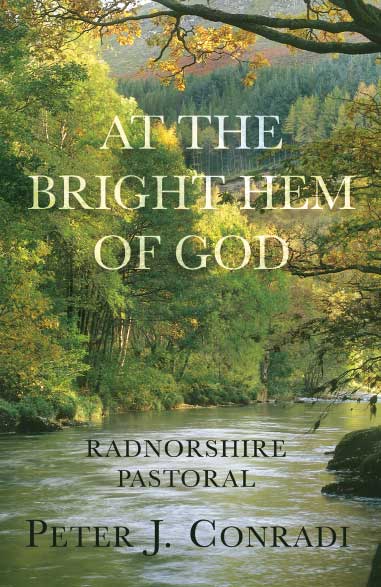
Radnorshire, a county rural and remote. The lives of its sparse population continue to be shaped by the wild landscape of valleys and mountains in ways that for Britain now lie in the past. Yet down the centuries Radnorshire has fascinated and inspired, as a place of contemplation, exploration, creation and retreat. Peter J. Conradi examines both his own relationship with the place and responses to it by writers from Gerald of Wales, who passed through in 1176, to the present day.
Forbidden Lives by Norena Shopland: £12.99

A fascinating collection of portraits and discussions that aims to populate LGBT gaps in the history of Wales, a much neglected part of Welsh heritage. Norena Shopland reviews the reasons for this neglect while outlining the activity behind the recent growth of the LGBT profile here. She also surveys LGBT people and their activity as far back as Giraldus Cambrensis’ Journey Through Wales in the twelfth century.
Wales’s Best One Hundred Churches by T. J. Hughes: £12.99

The archetypal Welsh church is not in town or village, enhanced by generations of patronage: it is the isolated, simple, evocative walls-with-roof, in a landscape often spiritually charged. Illustrated in colour Wales’s Best One Hundred Churches encompasses a millennium of churches around Wales. It is an invaluable repository of history, art and architecture, spirituality and people’s lives which will appeal to the historian and the tourist, communicants and those without a god.
Lime, Lemon and Sarsaparilla by Colin Hughes: £9.99

Lime, Lemon & Sarsaparilla is a wonderful evocation of Italian immigration in south Wales from the turn of the century to the postwar years, when the Italian café was central to life in many small communities in the Valleys. In this award-winning study Colin Hughes, himself a south Walian, explains why so many immigrants from Bardi settled in the area. Fully illustrated with contemporary photographs, and with a Foreword by the Welsh-Italian actor Victor Spinetti, it is a revealing history of our recent past.
Elaine Morgan: A Life Behind the Screen by Daryl Leeworthy: £9.99

This informative biography restores Elaine Morgan’s reputation and establishes her significant place in writing from Wales. It outlines her early days living only just above the poverty line in the Rhondda, before reading English Literature at Oxford, and examines her careers as an award-winning television writer and visionary anthropologist. Richly detailed it is essential in understanding the life and work of this important writer.
Wild Places UK: UK’s Top 40 Nature Sites by Iolo Williams: £19.99

Iolo Williams returns with a guide to his top 40 sites in the UK. From Hermaness on Shetland to the London Wetland Centre, from Dungeness in Kent to Loch Neagh, Williams criss-crosses the country. Lavishly illustrated, author and book aim to introduce a new audience to the delights of the UK, be they armchair naturalists or, more importantly, visitors to the forty sites Williams has selected. Follow up to Wild Places Wales.
Waterfalls of Stars by Rosanne Alexander: £12.99

When Rosanne Alexander’s boyfriend Mike was offered the job of warden of Skomer Island, they had just ten days to leave college, marry (a condition of employment) and gather their belongings and provisions. With great sensitivity, and humour, Rosanne Alexander relates their experiences, including her observations of the island’s wildlife and landscape. Her lyrical evocation of the natural world will inspire and entertain anyone who has felt the need for escape.
The Owl House by Daniel Butler: £12.99

Daniel Butler charts his relationship with two barn owls which nested in the barn of his rural mid-Wales home. In this pastoral exploration of his locale, rich in wildlife of all kinds, he roams the mountains and forests, takes trips to the coast, encounters all manner of animals and birds, and grows to understand the relationship between the local people and their surroundings. A rich and vivid portrait of one of the most remote and sparsely populated areas of Britain, broad in its horizons yet full of fascinating detail.
The Art of Falling by Kim Moore: £9.99

In her debut collection The Art of Falling Kim Moore writes vividly about her own life and the lives of others. She sets out her stall in the opening poems, firmly in the North amongst ‘My People’. The title poem riffs on the many sorts of falling “so close to failing or to falter or to fill”, and her experience as a peripatetic brass teacher sparks several poems. Other poems feature: suffragettes, a tattoo inspired by Virginia Woolf, and a poetic letter addressed to a ‘Dear Mr Gove’. Winner of the Geoffrey Faber Memorial Prize 2016.
The Estate Agent’s Daughter by Rhian Edwards: £9.99

Rhian Edwards won Wales Book of the Year for her debut poetry collection, Clueless Dogs. The Estate Agent’s Daughter is her eagerly awaited second book. Acute and wryly observed, the poems step forth with a confident tone, touching on the personal and the public, encapsulating a woman’s tribulations in the 21st century. Her voice is both powerfully personal, local to her Bridgend birthplace, and performative, born to be read aloud.
Footnotes to Water by Zoë Skoulding: £9.99

Winner of the Poetry Category in Wales Book of the Year 2020, Footnotes to Water imagines a river as a transverse section, cutting through urban and rural spaces, connecting places that are themselves in flux. Zoë Skoulding follows two forgotten rivers, the Adda in Bangor and the Bièvre in Paris, and tracks the literary hoofprints of sheep through Welsh mountains. In these journeys she reveals urban and rural locales as sites of lively interconnection, exploring the ways in which place shapes and is shaped by language.
Regional Poetry Pamphlets: £5.00

Our new series of poetry pamphlets celebrates the beauty, history and lively everyday goings-on in four areas of Wales: Pembrokeshire, Snowdonia, the Borders, and the capital city of Cardiff. Each pamphlet comes with an envelope and a postcard – the perfect stocking filler for your loved ones this Christmas.
The Occasional Vegan by Sarah Philpott: £12.99

This collection of 70 simple, affordable and delicious recipes is suitable for newcomers and long-time vegans alike. Sarah’s recipes are accompanied by the story of her own journey to becoming a vegan, exploring the ethical and lifestyle arguments for a plant-based diet. Illustrated with photographs by Manon Houston.
The Seasonal Vegan by Sarah Philpott: £12.99
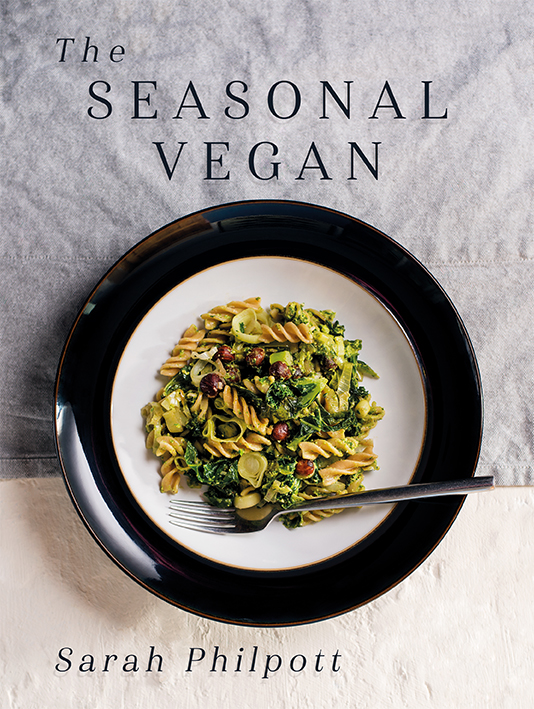
This simple guide to eating with the seasons takes a realistic approach to shopping cheaply and sustainably and proves that the vegan lifestyle is anything but expensive. With a sections on all four seasons, dishes that can be enjoyed all year round, and menu ideas for special occasions, its the perfect kitchen companion. With beautiful photography by Manon Houston.
Just Help Yourself by Vernon Hopkins: £9.99

1960. Britain stood at the cusp of new times. In Pontypridd, sixteen-year-old Vernon Hopkins had just found a new singer for his band: a local boy who would come to be known as Tom Jones. Just Help Yourself tells the full story of The Senators – soon to become The Squires – and their lead singer Tom Jones. Vernon Hopkins’ authentic narrative is a revealing look at the highs and lows of the music business, and of London in the allegedly Swinging Sixties. Full of gritty detail about life in Pontypridd, and with great insight into the music business, it is a cautionary tale of ambition and success. Illustrated with previously unseen photographs from the author’s archive.
The Roots of Rock, from Cardiff to Mississippi and Back by Peter Finch: £9.99

Peter Finch follows the trail of twentieth century popular music from a 1950s valve radio playing in a suburban Cardiff terrace to the reality of the music among the bars of Ireland, the skyscrapers of New York, the plains of Tennessee, the flatlands of Mississippi and the mountains of North Carolina. The Roots of Rock mixes musical autobiography with an exploration of the physical places from which this music comes. It is a demonstration of the power of music to create a world for the listener that is simultaneously of and beyond the place in which it is heard. It also considers how music has changed during this time, from the culture-shaping (revolutionising) 50s and 60s to the present day.
The Wellspring by Barney Norris: £12.99

In The Wellspring acclaimed novelist and dramatist Barney Norris conducts a conversation with his even more acclaimed father, the pianist and composer David Owen Norris, on creativity, cultural identity, and how the two intertwine. Their combined experience, in two fields, in two different generations, provides a thought-provoking discussion of how a place and a culture inform the work of artists, and how England and Englishness have changed over the past half century.
No Far Shore: Charting Unknown Waters by Anne-Marie Fyfe: £9.99

No Far Shore is no ordinary exploration of coastlines. Anne-Marie Fyfe combines travel writing, history, memoir and poetry in an intriguing meditation on the sea, that explores the unsettledness of living on the boundary between two elements. She explores countless coastlines, her own family history and the works of a number of writers for whom the coast has been influential along the way.
Crossings by Nicholas Murray: £12.99

Nicholas Murray considers the borders he has confronted – geographic, cultural, linguistic, social, class, religious, sexual – and reflects on the influence of borders on how we think of ourselves and others. In the first section he transports
the reader to Spain and North Africa, Gibraltar,
Turkey, partitioned Cyprus, the cross roads that is Trieste, Hong Kong and Australia, and takes a trip along the Danube through the contested lands of the Balkans. In the second he explores his home patch, the border between Wales and England, providing a fascinating counterpoint to the people, customs and mores encountered in the first part of the book.
The Road to Zagora by Richard Collins: £9.99

When Richard Collins was diagnosed with a progressive incurable disease in 2006 he decided to see as much of the world as he could while his condition allowed. The result is The Road to Zagora, a singular travel book which takes in India, Nepal, Turkey, Morocco, Peru, Equador and Wales. With ‘Mr Parkinson’, as Collins refers to his condition, by their side, he and his partner Flic decide to continue to travel ‘close to the land’ post diagnosis, leaving the tourist trails and visiting places of extremes: the Himalayas, rainforests, deserts. The story of their travels is collected here in a memorable journey around the world, and the self.
To Babel and Back by Robert Minhinnick: £7.99

Join Robert Minhinnick on a journey across a radioactive planet. Researching the use of depleted uranium in modern weapons, the writer follows a deadly trail from the uranium mines of the USA into Saddam Hussein’s Iraq. Berlin, Prague, Buenos Aires, New York, Italy, England, Finland, Canada: this globalised world is simultaneously familiar and bizarre, filled with the background noise of contemporary society yet capable of providing places and moments of utter silence. Jetlagged, culture-lagged, Minhinnick returns to his native Wales, its coastline and valleys as extraordinary as anything encountered in a Babel that might be myth or alarmingly real. Winner of Wales Book of the Year 2006.
The Amazingly Astonishing Story by Lucy Gannon: £12.99

By turns laugh out loud funny and deeply sad, The Amazingly Astonishing Story is a frank and surprising look into a child’s tumultuous mind, a classic story of a working-class girl growing up in the 60s. Her Catholic upbringing, a father torn between daughter and new wife, her irreverent imagination and determination to enjoy life, mean this really is an amazing story (including meeting the Beatles).
Family Business: A Memoir by Peter J. Conradi: £12.99

Family Business is Peter J. Conradi’s multi-stranded memoir. It explores his Jewish background, his rebellious youth, his sexuality, and his relationship with the novelist and philosopher Iris Murdoch and her husband John Bayley, who became almost a second family for him. Thoughtfully composed and beautifully written, it is a classic in waiting.
The Longest Farewell by Nula Suchet: £12.99

When Nula’s husband James, an Irish documentary filmmaker, becomes forgetful they put it down to the stress of his work. But his behaviour becomes more erratic, and he is eventually diagnosed as suffering from Pick’s Disease, an early onset and aggressive form of dementia. The Longest Farewell is the true story of Nula’s fight with her husband’s disease, and how this terrible time held a happy ending.
Jim Neat: The Case of a Remarkable Man Down on his Luck by Mary J. Oliver: £9.99

Jim Neat is a remarkable evocation of the seemingly fractured life of Mary J. Oliver’s father. Tinged with the tragedy of his partner’s death and an orphaned daughter, it ranges across the history of 20th century England and Canada. Using the few documents of Jim’s life and a combination of poetry and prose, Oliver adopts a legal structure, making ‘the case’ for the worth of his life. The result is a fascinating and engaging book unlike any other memoir.
Welsh Quilts by Jen Jones: £12.99

Welsh Quilts is an authoritative guide to the history and art of the quilt in Wales. It is the result of expert author Jen Jones’ researches into the subject and her desire to revive what had been a gloriously high-quality craft. Illustrated with beautiful images of the bold designs and intricate stitching of the quilts in her own collection, Welsh Quilts is the essential book on the subject, whether you are a quilter yourself, or simply interested in quilting heritage.
Tide-Race by Brenda Chamberlain: £9.99

Tide-Race is a remarkable account of life on Bardsey (known as Ynys Enlli to Welsh speakers), a remote and mysterious island off the coast of North Wales. Brenda Chamberlain lived on the island from 1947 to 1961, during the last days of its hardy community. The combination of Bardsey, ancient site of Christian pilgrimage, wild and dangerous landscape, and Brenda Chamberlain, Royal Academy trained artist, results in a classic book, vividly illustrated by the author’s line drawings.
A Fold in the River by Philip Gross and Valerie Coffin Price: £12.99

A Fold in the River is the fruit of collaboration between T.S. Eliot prize-winning poet Philip Gross and the visual artist Valerie Coffin Price. Philip Gross once lived on the banks of the River Taff in Wales and his journals are the source for the powerful poems. Valerie Coffin Price revisited the walking route along the river and evolved the beautiful prints and drawings that accompany the poems. Look out for a follow up, Troeon/Turnings with Welsh-language poet Cyril Jones in January 2021.
Welsh Artists Talking by Tony Curtis: £19.99

Featuring Brendan Stuart Burns, Ivor Davies, David Garner, Robert Harding, Alfred Janes, Christine Jones, Jonah Jones, David Nash, Terry Setch and Lois Williams, this collection of interviews with artists from Wales is further evidence of the renaissance of the visual arts in the country. The ten artists talking to Tony Curtis vary in practice from figurative and abstract painters through a ceramicist to sculptors in stone, wood and metal. Their work and words provide, at once, a history of twentieth century art in Wales and a guide to making in the twenty-first century.
Living in Wales by David Hurn: £25.00

Living in Wales is an album of one hundred and one duotone portraits of people who, in the words of David Hurn ‘have enriched my life and that of Wales.’ It is a roster of the famous and distinguished in the fields of science, business, the arts, sport, the law, health, media, politics and religion. Beautifully composed, and shot with David’s characteristic flair for detail, the photographs linger on the physicality of the person, a telling prop pushing the image towards the possibility of narrative. Here is a photographer on inspirational form.
The Living Wells of Wales by Phil Cope: £20.00

Author and photographer Phil Cope takes us on a journey through the sacred wells of Wales, from the Anglesey to the Gwent. On his way he discovers wells in city centres and, quite literally, in the middle of nowhere – on mountainsides, in deserted valleys, on the coast, in sea caves. They include healing wells, cursing wells, and wells named for saints, Satan, witches, angels, fairies, friars, nuns, hermits, murderers and hangmen. Packed with colour photographs, including some of long-forgotten wells now rediscovered, The Living Wells of Wales is the new definitive volume on a subject gaining a new popularity.
Taken in Time by John Briggs: £14.95

Photographer John Briggs continues his project to document change in the Cardiff docklands, revisiting the sites and people memorably recorded in Before the Deluge. In the last thirty years landmark buildings have been demolished, docks filled in, the barrage built, maritime businesses closed, and streets disappeared. In their place, a huge redevelopment scheme, gentrification, and tourism. With characteristic honesty and an eye for compelling detail, John Briggs brings these changes to a wider audience in this not to be missed book.
Let Me Tell You What I Saw by Adnan Al-Sayegh, Trans. Jenny Lewis, Ruba Abughaida and others: £12.99

Let Me Tell You What I Saw is the first ever publication as a dual-language (English/Arabic) text of substantial extracts from Adnan Al-Sayegh’s ground-breaking epic poem, Uruk’s Anthem, one of the longest poems ever written in Arabic literature, which gives voice to the profound despair of the Iraqi experience. This superb translation brings the eloquent original Arabic epic to a new readership.
Bilbao – New York – Bilbao by Kirmen Uribe, Trans. Elizabeth Macklin £9.99

Bilbao–New York–Bilbao takes place during a flight to New York and tells the story of journeys by three generations of the same family. The key to the book is Liborio’s fishing boat, the Dos Amigos: who are these two friends, and what is the nature of their friendship? Through letters, diaries, emails, poems and dictionaries, Kirmen creates a mosaic of memories and stories that combine to form a homage to a world that has almost disappeared, as well as a hymn to the continuity of life. It is also a reflection on the art of writing, and lies between life and fiction.
Ukulele Jam by Alen Mešković, Trans. by Paul Russell Garrett: £9.99

Miki, a Bosnian teenager, and his family are escaping the Balkan war. They live in a Croatian refugee camp, a former holiday resort on the Adriatic, but it’s difficult to adjust to their new circumstances. With the war rumbling in the background and his brother missing in a Serbian prison camp, Miki and his new friends pick up girls, listen to music and have campfire parties on the beach. Then war breaks out between Croats and Bosnians and friends threaten to become enemies. Miki wants to emigrate to Sweden, but his parents can’t face leaving behind their old life in Bosnia.
Create your free Seren account and enjoy 20% off every book you buy from us.

It’s World Book Day today and we have a new story for you to enjoy – Emma Timpany’s ‘Flowers’ is our Short Story of the Month.
‘This is the place: four fields in the shape of a rough parallelogram…’
Searching for a space to plant the seeds of her flowers and, indirectly, her future, a woman forges a subtle bond with a man undergoing his own struggle.
 Emma Timpany grew up in Dunedin, in the far south of New Zealand, and now lives in Cornwall. She has a lifelong love of short story form. Her first collection, The Lost of Syros, was published in 2015. Her short stories have won three awards, including the Society of Authors’ Tom-Gallon Trust Award, and have been published in literary journals in England, New Zealand and Australia. She is co-editor of Cornish Short Stories: A Collection of Contemporary Cornish Writing and author of the novella Travelling in the Dark.
Flowers
This is the place: four fields in the shape of a rough parallelogram. On her left, one part of the closest field is enclosed behind wire mesh. A path runs through long, wet grass towards a gate in the fence. Ahead of her is an open-fronted barn with a caravan parked inside it, a chimney rising from its roof.
She cannot see anyone. She is about to leave when, looking again, she notices a figure kneeling inside the fencing.
She walks over but he does not seem to know she is there. He wears a suit, some kind of woollen weave, not tweed.
Hello.
Hello.
He is young, younger than her. He stands and wipes his hands on his clothes. His hair is flat and yellowish. Despite his smile, his face is the wrong kind of white. He has been ill. Is still ill, perhaps.
Rachel said you wanted someone to grow flowers.
Yes. He shakes his head as if confused. I only just woke up. I still have to sleep a lot. But I remember now.
She doesn’t know what to say. She doesn’t know what she was expecting but it was not this.
Are you cold? he says. It’s cold today.
And bleak, she does not say, this place is bleak.
Let’s have some tea.
The barn smells of dirt and straw, the caravan of damp. His bed is a heap of sleeping bags and blankets; the cups are stained with a thick layer of tannin. Roll-up butts huddle, crushed together in a jar lid.
Sit down. Here. He moves a pile of books from a seat. Rachel said you were a florist.
Well, yes. Sort of. I never meant to be. It wasn’t what I wanted.
He lights the camp stove, rolls a cigarette.
My family were. Florists, I mean. My grandfather lost his job in the Great Depression. Five kids and nothing to eat. So my grandmother started growing flowers. She doesn’t know why she is telling him this. She doesn’t tell anyone this. She shakes her head.
I don’t have any biscuits.
It doesn’t matter.
I only have goat’s milk. Is that okay?
Yes. She has never drunk goat’s milk. That’s okay.
It is raining. In her mind the earth has a red tint but now she sees that, under the rain, the soil is deep brown, black, almost. He has laid out some beds within the wire mesh, six rectangles of soil. The fence is to keep out the rabbits which will otherwise eat everything.
Look. He points to a line of feathery green leaves. I planted them in December and they’re up already.
Are they a type that grows in winter?
No. I was late putting them in because I was in hospital. All this should have been done earlier, in the autumn. This soil must be good soil.
It looks like good soil but she will not know until she starts to work it. The rain is heavy now, too heavy for her to begin.
In the shelter of the barn, he shows her rows of tools. Most are old but some are new, their dull, silver light an oddity amongst the rest, the well-used and the worn.
The next time, there is no sign of him, though she scans the field for a crouched figure in suit. Inside the barn, still air that could mistakenly be called warm but is only the cessation of wind. Through the caravan window, she sees him curled up on his side, blankets heaped around him, holes in the bottom of his socks.
She climbs over the rabbit fence and puts a bin bag, filled with bags of bulbs and packets of seeds, down by the side of the bed of freshly dug earth he indicated, last time, that she could plant. Returns to the barn for tools along the path of beaten grass. Begins to mark out a row.
The rows of vegetables in the neighbouring beds are all perfectly straight. By contrast, the trench she has made wavers. She goes back to her row and tries to even it up, mentally making a list of the things she will need – bamboo poles, string.
The soil smells slightly of iron, of leaves. Small stones appear occasionally but it has a lightness to it. She opens a packet of bulbs – tulips – and looks at them in the dim light. It is three months past the optimum time to plant them. She bought them cheaply from a local discount store but they look in good condition, a bright brown, shiny sheath on the outside of the pure white bulb. Plant at twice the depth of bulb. She lays them out fifteen centimetres apart then covers them.
The beds are larger than she thought. She adds sawdust to the list in her head. The last seeds she plants are poppies. Light, tiny, they are indistinguishable from the soil as soon as she sows them.
You’ve been busy. He is wearing an old oilskin over his suit.
Yes.
What have you been planting?
Bulbs, she says. Seeds. She fumbles for the packets and hands them to him. Her jeans are soaked from where she has been kneeling.
These are nice. He holds the empty poppy packet.
They were free. I wouldn’t have bought them. Because the flowers only last a day or so. Still, I can use the seed heads.
That’s a shame. About the flowers.
It’s often the way. The most beautiful don’t last.
He is looking at her rows.
I should have made them straight. Next time I’ll bring some string.
I’ve got some. Poles and string. Didn’t you see them in the barn?
No.
Before he got ill, he tells her, he was a set designer. Now he works on the field. The quiet here, the growing things. It is his way of making himself better.
Look, peregrine.
She does not want to look but, raising her head, she follows his finger to where the bird flies through veils of rain.
We should go in. Shelter from this. Do you want tea?
No, thanks. I’m soaked. She is cold now, having been still for so long. The thought of sitting in the caravan is not a pleasant one. I’ll be back next week.
She knocks mud off the spade and fork and carries them back to the barn. He opens the caravan door; warmth from the camp stove drifts out. Condensation fogs the windows. He is smiling at her, and she wonders what he is going to say.
Could you bring some milk when you come next time? I can’t have dairy. Goat’s milk. Or soya.
Sure, she says.
Back at the car she takes off her gumboots, her soaking coat, and loads them in the boot. Strips off her jeans and wraps her lower half in a blanket. Drives home that way.
From the highest point, where she now stands, and the high point opposite her, the land creases down, as if it has been folded on the diagonal, into the corner farthest from her. Because he is working near the bottom of the crease, it is hard to make out what he is doing.
She has forgotten the milk.
It has already started to bother her that it is his soil, his earth, his rules. That she is merely scratching, borrowing a few centimetres of surface. And yet she cannot imagine belonging to this place, it being hers. It is not what she would choose for herself. It is too high, too exposed. The jumbled boulders of the carn seem, at times, a reflection of her confusion. And then there is the cold, a deep earth-and-stone cold, the kind that gets in your bones. She wonders again what is wrong with him, what was wrong with him.
The quiet, though, also has a way of its own. In the way her life is away from this place, it feels like nourishment. Every action she initiates proceeds, un-thwarted, until it is complete. No-one else to consider except for the too-thin man she sees out of the corner of her eye.
She is planting Liatris spicata. The bulbs are dark, knobbly, a light hair of old, dried roots on their bases. Their hairiness reminds her of sea potatoes, found on the nearby beaches at low-tide. When she looks up she notices two parallel rows of bamboo canes, joined at their apex, stand in one of the beds. Supports for beans, perhaps, or peas. Everything he does out here, in the beds, is so neat. But it is not neat in the barn or in the caravan.
No rain today but it is cold. Smoky-yellow light crouches at the edges of the sky. Next, she plants a row of Camassia leicthinii, a cultivar of quamash. The bulbs are white and smooth, small green shoots already sprouting from their apical points. It is far too late to be planting them. She tries to think of May, when these bulbs will produce long, straight, green stems, and then star-shaped flowers, blue and cream.
She hears the soft sound of his boots on the grass. As she turns, reluctant to stop her work, she briefly wonders what he thinks of her. Her neck aches, so she rubs it.
More bulbs.
Yes. Look at these. She lifts an Eremurus stenophyllus tuber from brown paper, holding towards him the flat disc with leggy roots, like the dried limbs of a once fleshy spider.
And they’ll stay in the soil? Or will you lift them?
No. They’ll stay. They form clumps. Bulbs like these, perennials, reproduce themselves asexually. Clone themselves, basically. So you get more flowers year on year.
This seems to surprise him. She has no idea what he knows or doesn’t know about flowers.
The next time there are lots of people at the field. It takes her a while to find him. People talk to her, seem interested in what she is doing. They tell her things about the man who owns the field, assuming she knows more than she does. Without her prompting, his secrets spill out on the grass. They all seem excited by the fact that their friend has this surfeit of space. Many of them live on boats, in vans and caravans squeezed into corners of fields, fringes of towns and villages.
She sees him in the distance, reassesses his age down a notch and then down again. How aged he is by illness, by the experience of illness. It makes him more like her; it is the bridge that links her on one side and his friends on the other.
She has found out, quite recently, that her brother has been lying to her. For years, he has stolen from her, from the joint assets left to them by their parents. He calls what he did an act of love. It is not love. There is a chance that she will lose her house, lose everything she has worked for.
The friends start dragging dead wood into a circle. Some-one sets light to it. Bottles appear and a keg of beer. She plants Nectaroscordum siculum, an onion-paper fine sheath over its bulbs, which will one day be a handful of purple and green striped bells dangling from a wiggly stem. By the time she finishes, darkness is come. She looks over to the circle of light. The flames give his face the colour it normally lacks. She catches a glimpse of how he must have looked and how he might, perhaps, look again one day.
In the weak sunlight, the green tips of the first bulbs she planted poke through the earth, cast tiny purple shadows on the soil, and she sees what he has described to her but she has never really believed. There is a view of the sea. Distant, complex with lines of trees and land in the foreground and further back a skewed triangle of mint green water, a violet horizon.
Tomorrow, February tips into March. In the soil she finds a lime green grub, curled and sleeping. More seeds have broken through the earth; tiny as watercress, they tremble as if exhausted by the division of their first leaf into two. In the hearts of the hyacinths, flower spikes push upwards.
She knocks on the caravan door. No reply. She opens it, pulls a pint of goat’s milk from her pocket, leaving it on the floor where she hopes he will see it.
The goat’s milk was fresh today 28/2. See you next week?
She is annoyed that she brought him milk and he isn’t here. But she is also pleased. Words have stopped, are trapped inside her. She does not want to talk. She wants to plant flowers, row and rows of flowers, and wait and watch and tend them as they grow.
Thank you for the milk.
I didn’t bring any today.
What are you planting?
Lavender. She has bought plug plants and potted them on, hardened them off in her courtyard garden; against the vastness of the field, they seem tiny. She plants them through a layer of weed matting, cutting crosses and slotting one plant into each gap.
How long will they last for?
They’ll grow and get bigger for about ten years or so. And then they’ll die off.
As the day ends, she hears the sound of cars, footsteps and voices echoing down the track, the clink of bottles. The friends build a fire with new, dry boughs. They distract him, keep him busy, talking. In the fading light, he shifts from old to young, young to old.
Her back aches. She tidies her things and looks at what she has achieved. There is little to see; the bulk of her labour lies beneath the surface of the soil.
The sky is a serious blue, which means darkness is not far away. Through the still air she hears the sharp crackle of flames and smells dry wood burning.
Today she plants the last of the bulbs, some alliums, the Triteleia laxa, and the sweet pea seeds, pre-scored. The poppies and the cornflowers are through. The love-lies-bleeding. The soil is warming. The irises have produced grey, strap-fine leaves. A violet ground beetle scuttles away under her hand. An idea, a question, a friend of a friend – all of these things have led her here. Now, the hyacinths are opening. As she cuts through their thick, sappy stems, washes the dirt off the leaves and lower flowers, the few open bells release a clean, sweet scent.
He has also been planning and planting. She has helped him to lift off turf and peel it back, in preparation for a second row of beds.
The weeds have started to grow; the perennial buttercup, its net-like roots spread horizontally, is particularly hard to shift. She tracks the white roots of dandelions, zigzags of light in the dark soil, their wounds leaking a milky sap.
He digs for a while and then he stops and coughs. Whatever is wrong with him is taking its time to give up its hold.
He has gone to drink water, hand resting on the tap until the coughing eases. His clothes still hang on him like the clothes on a scarecrow. When was he last well? When did he last live in a house? She considers this coldness, rising from the earth, his enemy. She thinks he does not do enough to protect himself against it. How can he become better if he is not warm?
How will he get better if he drinks from filthy mugs?
He has seen her looking at him and now he beckons her. She climbs over the fence, her shoulders tense.
He points to a new ridge of earth by the side of the barn. From here she can see thin sticks are planted in it.
Willows, he says.
They’ll grow big.
I know.
Why here?
Because this is where the house will go.
You’re building a house?
One day.
To live in?
Isn’t that why most people build houses?
I thought…But she doesn’t know what she had thought.
He begins talking about dwelling rights, planning permission. The house will be built out of straw bales, with wool as insulation.
She cuts the Camassia leicthinii ‘Alba’, secures five stems with a rubber band and drops them in a bucket. The alliums are ready, tall Gladiator and the squat lavender starburst of Allium christophii. Once they are all cut and bunched, she moves them into the shade. Dahlia tubers lie in the trench. She covers them with soil, then plants sedum around the edges of the bed, a type with purple-black leaves and, come September, small, hard, ruby flowers.
She is beginning to realise that he did not think she would plant anything permanent. He expected that she would grow flowers from seed and harvest them, an annual crop. There has been this miscommunication right from the beginning, probably the result of her reluctance to talk, his assumption that flowers were grown in the same way as vegetables.
She tells herself it does not matter. Everything she plants, with a couple of exceptions, can be dug up again and moved. Like people, flowers travel: transplanted with care, they usually manage to re-establish themselves, to put down new roots.
Twice in her life she has tried to run away from flowers, the first time from her family’s floristry business, the second time when, out of necessity, she worked as a florist in London. Yet here she is, back among them. They follow her, it seems. Or she, unwittingly, unwillingly, follows them. They present themselves to her as opportunities, the only options.
She knows their common and Latin names. Some have been her companions since earliest childhood, their names learnt alongside her own; they have always been amongst the most important inhabitants of her world. The flowers she grows, that line up wonkily behind her back like a beautiful army, are not as delicate as they look. They are survivors.
She is ready to go. She walks over to where he is working, beside the willow bank.
Goodbye, she says.
I’m going to get a digger in, to grade the earth flat for the house, he says. I’ll get them to scoop out a pond while they’re here.
I brought you some milk, she says.
Come and see the pond, he says.
A shallow basin has been scraped out below the flower beds, the excess soil tipped at the southerly edge, building it up into a bank; the effect is pleasing, as if the far lip of the pond were somehow floating above the lower parts of the field.
In her childhood garden, there was a stream, dividing the formal beds around the house from the secret spaces of a stand of native bush. A simple bridge, arch-backed, connected the two worlds. She remembers what it was to paddle in that stream, the little beach of pale gold gravel it left before it exited the property, edged by a rustling screen of bamboo.
So water, yes.
Nothing exists without water.
So many things are flowering: Liatris spicata, Eryngium planum, nigella, cornflowers, sweet peas. She comes early to cut the flowers, weeds a little, covers the soil in mulch to stop it losing moisture to the sun and is ready to leave by midday.
When she hears the caravan door open she looks up, expecting to see him, but a woman emerges and walks towards the standpipe to fill the kettle.
Hello.
Who are you? the woman says.
I’m the one who grows the flowers.
He comes out of the caravan, rubbing his hair.
When you’re finished, can you give Jo a lift back to town? he says. Are you finished?
Yes. Pretty much. Just tidying up.
We haven’t had breakfast yet, Jo says. We haven’t even had a cup of tea.
You can have breakfast when you get home.
Are you trying to get rid of me, Jo says, before I’ve had a cup of tea?
Of course not, he says. I’ll make you some tea. Would you like tea?
No, thanks, she says. I’m going soon. But I brought some milk.
As she carries the flowers to the edge of the track, Jo sits on one of the benches by the fire circle and talks to her. The things Jo says are funny in a pithy kind of way. She’s pretty, too.
He brings out two mugs of tea.
I’m off now.
Do you mind giving Jo a lift?
Not at all.
I think I’ll spend the day here, Jo says, stretching and looking around. It’s going to be a beautiful day.
Do what you like, he says. But you should know I’ve got work to do.
Don’t mind me. Jo lies back on the boards, folding her hands over her ribs, shutting her eyes. I’ll be just fine.
The pond water is pale bronze, the suspended particles of soil in it yet to settle. He is wading, thigh deep, forearms immersed, planting marginals below the surface. The scent of water is softly mineral, a note of freshness amongst the dry grass and the dust.
Flower buds form on the tiny lavender bushes; the leaves of the sedum are dark as wine. What is winter? Its memory lies in the earth, beneath the bark of the shrubs, the trees. It lies in leaves which tremble in the light. It lies in pollen, gold and grey, the bees collect and carry with them from flower to flower.
When she looks over to the pond again she sees him floating on his back, arms and legs splayed out, five-pointed as a fallen star.
Years later, on the day she comes to dig up the last of the flowers, he is not there. He has gone to work in Greece for a while, Jo tells her. On a sustainable building project.
Jo stands in the doorway of the house made of straw. I’ve got a flat in a proper house again, she says. I’m moving on, too.
The wool they’d used as insulation had been full of moth larvae. They’d had a massive infestation, as well as trouble with mice.
What sort of trouble with mice?
They were falling out of the ceiling onto my face, Jo says, while I was asleep.
What can be done?
Jo shrugs. Perhaps the moths have got into the straw. Perhaps the house will have to be torn down, and they’ll start again somehow. He’s gone away to have time to think things through.
Time to think. She had had it, in the hours that she spent here on her knees, eyes on the ground, hands in the good earth.
The willows he grew from sticks reach above her head. The lavenders have filled out from tiny plugs to dense, thick pads. They will remain, along with some other plants that are difficult to shift. Though she tries to lift them carefully, she is bound to miss some bulbs. After she is gone, they will put up their heads each spring, aiming for the light.
Will he think of them as a nuisance?
Or a gift?
Five years on she has managed to reclaim most of what was lost. Now she is moving to a new house with a garden big enough to hold all these flowers.
She walks over to the pond. On its green-grey surface, water lilies float, white and cream and copper-red, stands of sedge and flag iris softening its edges, and she feels it, as she felt it when she was a child, flowers all around her: a sense of dissolution between here and now and whatever lies just out of reach.
Here.
All that has filtered down into the darkness has given life to flowers that open like a hand; in the centre of each a deepening of colour, which she can hear as if it were a sound.
Nothing exists without water.
She thinks of him and knows that he is well.
View the Short Story of the Month archive here.

 Christopher Meredith is an award-winning author of fiction and poetry. He has published four novels, three full poetry collections, and several shorter works. He is also the subject of a new Writers of Wales critical study, written by Diana Wallace.
Meredith’s new book, Brief Lives, is his first venture into short story writing – and its release comes thirty years after his groundbreaking debut novel, Shifts.
In this interview, Rosie Johns asks Chris about creative inspiration, the impact of personal experience, and the challenge of playing with tone and style in the short story form.
In the acknowledgements, you mention that you felt Brief Lives is an unoriginal title; what about it was so important to the collection that you decided to keep it anyway?
It’s not that I feel the title’s unoriginal – it is. Apart from the famous John Aubrey book from the 17th century at least one novel, other story collections, various book series and radio series have used this title. It was simply my working title as the book evolved, and it grew to fit. Ultimately the publisher registered the ISBN under this title without checking with me and there we were. In some ways that was a relief as it was probably the right title all along, and the subtitle six fictions does a bit of extra work.
Calling this book Brief Lives was a bit like a composer calling a piece Nocturne or Study or Caprice. It draws on a myth kitty of shared knowledge and expectations and suggests both form and theme. But the two words are very charged. As used originally for Aubrey’s short biographical notes on real people, the word ‘brief’ implies that the writing is not the whole story. In its origins, ‘brief’ can mean a summary, or better a compression. In one story, ‘Progress’, the young man standing on a bridge actually uses the word ‘summaries’ to describe, euphemistically, a blaze of powerful memory that’s just run through his head. While a summary can sound like an arid thing, it can also suggest; its compression can expand in the mind after the reading. A few reviewers have commented on the intensity of this book which perhaps is an effect of those compressions opening in the mind.
So it’s the writing that’s ‘brief’, but of course there’s the thought that life itself is brief too, and the fact of mortality haunts this book. Every story touches on death in some way. The powerful conflation of art and reality in that double meaning partly explains why the title has such a draw.
The story ‘Opening Time’ features in two very different books: Snaring Heaven and now Brief Lives. What drives your certainty that it belongs in both, despite their differences?
Snaring Heaven is a collection of poems. There are echoes and connections between that story at the end of the collection and other poems in that book and also its title; exactly the same thing happens in different terms in Brief Lives. There it gathers many of the elements and effects of the previous stories and goes beyond their various realisms. Readers can compare the two books and decide for themselves.
Does writing about Wales in English differ from writing about it in Welsh? And if so, how?
I’ve written little in Welsh and in all my writing I hardly ever write about Wales. It’s not a subject but often, perhaps always, part of the context. The one difference I can think of is that when writing in Welsh that context is manifest. Of Wales, not about.
How much of your own experience is reflected in the three stories that take place in Wales, and how is this influenced by the connection between place and memory, as demonstrated in ‘The Enthusiast’? And in stories with less explicit locations, how else do your experiences inform the narrative?Everything you write has to come from somewhere in your own experience, even if that experience is sometimes reading, research, dreams, stuff overheard, something glimpsed, stuff at second or third hand, etc., and all of that’s then transformed in the imagination and the process of writing. In that sense, everything in the book comes from that slippery thing ‘experience’, and I don’t see the value in looking for differences in how that plays in relation to ‘place’. The mediation of that stuff into the final story can be immensely complex and obscure. I’ve never waded into a cold river to rescue a child as happens in the supposedly realistic and located ‘The Enthusiast’, but it became useful for the story to imagine how that would feel. On the other hand, in ‘Haptivox’, one of the strangest and least ‘realistic’ stories, though I’ve never magically changed sex, as happens there, I have noticed a bird looking like a comma hanging on a sawn branch, and I’ve swum in ocean so clear that you can see the sea bed vividly even at quite great depths. Anyway, the story you write doesn’t care about you or your experience. It just has to work.
‘Haptivox’ certainly stands out with its more ambiguous sense of place, and the science fiction elements. How did this change of tone affect your portrayal of individuals and their internal lives?
I think there are shades of ambiguity in relation to both place and genre. Formally, ‘Haptivox’ is similar to the opening story ‘Averted Vision’ in that it’s broadly third person, inhabits two points of view, and is divided into short sections. The two stories, I hope, share an unreal and intense quality. The exact setting for ‘Averted Vision’ is never made completely explicit. I hope it’s more vivid for that; there are clues and it’s roughly guessable. A date and place are given away only in the cover blurb in fact, not in the story. For the characters, the nightmare time at sea feels dis-located in time and space, unreal, and the word ‘real’ plays a key and dark part in the story. Fewer suggestions for location are needed for ‘Haptivox’ to work. But the potential of short fiction to reach for the simultaneously emblematic and, I hope, psychologically rich and convincing is at work in both, perhaps all, the stories, but in nuanced ways. The two overwrought young soldiers in ‘Averted Vision’ are named because they’re both male and I need to distinguish between them. The man and woman in ‘Haptivox’ are unnamed because ‘he’ and ‘she’ can do all the work. But at the same time that works in an emblematic way with the fact that story is partly to do with maleness and femaleness. In that sense ‘Haptivox’ moves towards the more manifestly general. But in every story I think I found myself looking into brief, often small moments in lives and at the interplay between moment and memory in isolated people to gain vistas into vast and perhaps shared spaces.
Brief Lives is available from the Seren website: £9.99
Create your free Seren account and enjoy 20% off every book you buy from us.

 Jonathan Tulloch’s remarkable Larkinland is a novel which expertly and minutely captures the essence of Philip Larkin and his poetry. Tulloch deftly builds Larkin’s poems into a sustained landscape, fills it with Larkin’s characters and just for good measure adds a version of Larkin himself – meet Arthur Merryweather: librarian, poet and would-be great romantic.
In the extract below, having newly (and rather unhappily) moved to a new town, Merryweather embarks on his first journey to his new place of employment: the university library…
This extract begins on page 49 of Larkinland.
Hiding behind his (local) morning newspaper on the trolley, Merryweather felt as though he were going not to a library but a hospital for the prognosis of some lump. The Monday morning breakfast table repeated on him as much as the kippers: that barrage of sauce bottles, chewing jaws and bad breath.
Contrary to expectations, a pleasant surprise awaited him at the university. Instead of the utilitarian, redbrick barrack rising from a raw building site his successful novelist friend had led him to expect, he found half hidden in lawns and willows, a country house brocaded with ivy. A post box was quickly located, and the weekend’s letters dispatched.At the Aide to the Vice-Chancellor’s office he had to wait for half an hour. ‘What does he want?’ he heard the administrator ask his secretary.
‘Something about the library, sir.’
‘Library? What does he want with the library?’
‘You appointed him as the new head librarian, Sir.’
‘Did I?’
Throughout their brief cup of tea, the Aide to the Vice-Chancellor continually rearranged pens on his desk as though working out some enigmatic puzzle. His curly beard and fringe gave him the look of a merino sheep. This ovine resemblance reminded the librarian that the man on the other side of the desk had been the silent partner in the interviewing panel at the British library, though he clearly didn’t remember Merryweather. ‘Found digs yet, Merriman?’
‘Yes, thank you.’ His mother’s son, in the face of authority Merryweather demurred from making correction.
The Aide to the Vice-Chancellor paused in his pen arranging. ‘The town does have some good areas; I’ve always maintained that. How do you find arrangements on the river? Yes we are rather out on a limb. Where the train runs out, the land too, wot? And we’re just left with the mud and the sky. The natives, well you might like them or you might not; on the whole the students can sometimes be keen. Not a bit like that dreadful novel doing the rounds.’ Merryweather suppressed a grin. His friend, and chief correspondent, was the writer of the deliciously scandalous academic novel doing the rounds. ‘Well, no doubt you’ll be anxious to see your little fiefdom. Very good of you to come in today, Merriman. Above and beyond…’
Was everybody off their rocker here? The librarian puzzled as, interview over, he headed in the direction the Aide to the Vice-Chancellor’s secretary had pointed out.
Merryweather’s fiefdom was yet another surprise. Had his luck changed? Leaning out of some children’s story, a pair of manorial gateposts offered a secretive avenue of chestnut trees. The avenue graciously ushered the librarian to a brownstone building bearing the simple sign: Library. In summer, that dead wood adhering to the walls would be rambling roses; spring, when it arrived, promised bluebells. For now, a robin piped the melancholy carol of a T.S. Eliot April; all that was missing was a gardener’s fork for it to perch on and begin conducting the way to a secret garden.And there was the garden fork!
Not a city sound to be heard as the new head librarian mounted his library steps for the first time. Above the door, a sculpted stone figure in the art deco style reclined on lintel. The figure – reclining or hovering? – peered down at him. Was it an angel? Art deco, the final and least expected touch. The ghosts of Evelyn Waugh’s bright young things. Et in Arcadia Ego blah, blah, blah. That was one thing about librarianship, it might be sexless and bloody boring, but, like a convalescence from a good bout of measles, it gave one plenty of time to read.
The angel watched Merryweather push and pull the entrance door, shunt and shove, thrust and shoulder. All in vain, it was locked. No sign of anyone within. No lights. Nose pressed against the glass, all the new man could see was a darkling, marble vestibule. Skulking in the shadows like a Neanderthal peering from his cave, the bust of some beetle-browed philanthropist frowned at the disturber of his peace. Knocking unanswered, Merryweather got on his knees and called through the low letterbox.
‘Oi!’ A shout from the chestnuts. The librarian struggled to his feet. Was it directed at him? ‘Yes, you, you lanky sod. What’s your game?’
For a moment, he thought the person breaking from the undergrowth, all whirring arms and neck, was a policeman. Only when the official reached him did the librarian realise his mistake. ‘I’m trying to get in,’ Merryweather explained.
‘Oh you are, are you? Well you’re not going to.’ Not the sprightliest of men, the college porter was out of breath. ‘Can’t you see it’s closed?’ Merryweather’s trilby, tie, briefcase and British Warm seemed to mollify the custodian. ‘Thought you were some grubby student.’
‘Actually – I’m the new head librarian.’
Torn between suspicion and a professional sense of caste, the porter took off his hat and scratched his head.‘Didn’t they tell you? Nowt’s open today. No students. Nothing.’ Suspicion reared to the fore.‘ How do I know you’re who you say you are? No one told me. I didn’t even know the last one had gone.’
Feeling rather ludicrous, Merryweather opened his briefcase to bring out a copy of The Library, the journal of the Bibliographical Society. The porter flipped through the pages with a yawn. ‘No, I don’t suppose you’d read something like that unless you really were a librarian.’
‘Well exactly.’
The porter fell back on the eternal sigh of his breed, as well as the habitual mix of pronouns. ‘Better come with me, sir, and I’ll see if we can’t sort you out for yourself. I’m Harry. Harry Oxley.’
Harry led him back up the chestnut avenue and across a chain of secluded lawns to where a more municipal, Winifred Holtbyish building stood. A hushed maze of parquet floors contained the porter’s lodge. Merryweather was installed on an ancient chair beneath an enormous dovecote of pigeonholes. Smelling the lodge’s varied woods and listening to the porter on the phone, he felt gratitude for having missed both the war and national service. Easy to imagine a rifle range, wet feet, and the porter, a sergeant major, explaining how to strip a Bren gun for the hundredth time. Four separate phone calls had to be made, two of them trunk. At last the hugest bunch of keys Merryweather had ever seen was plucked from a hook. ‘If you’d like to come along with me, Mr M.’ Jingling like some Dickensian turnkey, the porter led him back through the parquet labyrinth, over the lawn, through the enchanted gates and down the chest- nut avenue to the library. ‘That wants taking down,’ Harry declared, looking up at the angel as he unlocked the door. ‘Or one of these fine days it’ll come down and crush a student flat.’
Passing through the philanthropist’s marble gaze, they entered the library proper. After the imposing entrance and almost grand vestibule, the first impression was frankly underwhelming. Something about the size of a real tennis court presented itself. Less fiefdom than corner shop. Well, not quite that bad. As Merryweather’s eyes grew accustomed to the half-light, he saw that the shelves were almost spectacularly tall. They towered into a shadowed silence bound by a lofty gallery. Above that, high windows. Following Harry, Merryweather found that the premises had a second, identical room, which gave access to a couple of smaller reading rooms. In total, the whole concern was on the scale of a thriving branch library. The high windows gave the vague feel of a mausoleum. Merryweather felt half at home. When Harry switched a flick, the gruelly light barely thickened. ‘Bloody bulb’s gone again,’ he said, voice amplified to a giant’s timbre by the cavernous emptiness. ‘Pardon my French.’
There was another surprise. Following his guide between tight, dark shelves, the new librarian stepped into a well of light. A dome rose high above him. It had been hidden from him by the tall stacks. A metal staircase wound steeply up the side of the dome. ‘Careful coming up here, Sir.’ The steps creaked as the pair mounted them, the echo rippling through the several deeps of the library.‘They all like this?’ the porter asked, stopping halfway up.
‘Beg pardon?’ asked Merryweather, not sure the stairs were exactly safe.
‘Are all libraries so loud?’
‘I’ve never really thought about it.’
‘They’re supposed to be quiet, but they’re not, not when nobody’s in them. It’s only when they’re full that they’re quiet. What do you make of that?’
‘Interesting,’ said the new head librarian only quarter lying.
The winding stair led to a smoked glass door marked Head Librarian in rather skittish swirls. The porter opened up. By some architectural sleight of hand, instead of the storeroom attic Merryweather had been expecting, the room was commodious to the point of extravagance. Decorous cornices, oil paintings, armchairs, and, wonderfully incongruous, a chaise longue. Two pairs of generous windows to boot. After the crypt-like library, the view – chestnut avenue, gateposts, a lawned middle distance bound by tree-lined road – opened up like the vista from a headland. ‘Its acoustic is the opposite of a theatre,’ Merryweather said, without turning from the window. ‘That’s what makes them so loud. Libraries. Paradoxically so, given all the signs for silence.’ His eyes narrowed as he continued to gaze at the view whose limit was described by a bicycle trolling through a tracery of leafless branches. ‘A theatre is designed for projection, a library, introspection. On stage, one seeks to be heard by hundreds, a library has a far greater ambition. It aims to reach…’ Merryweather broke off. He could see Harry making off under the chestnuts. ‘And so forth.’
Shoulders easing with this unexpected bonanza of solitude, Merryweather sat at his desk. Solid as a tug. Just as well, more than likely it would be required to haul him into the waters of middle-age. Perhaps beyond. It offered all the tools of the trade. Ink bottle, ink well, blotting paper, telephone, in and out trays, an ashtray (plain), pen holder (rather decorative), enough drawer space for concealing a dismembered corpse let alone a bottle of Glenlivet, paper too, sufficient thereof for the writing of a novel. Except his novel-writing days were over, that was a business best left to his successful friend. Merryweather suppressed a belch of regret, but it was that morning’s kippers not the brace of his own unsuccessful novels, which had found little favour with the reading public when published just after the war. With the nearly pleasurable air of being a ship’s captain finding himself alone not only on his bridge but on the whole vessel, Merryweather lit the fire from the ample basket of logs, and then his first Park Drive of the day. A relatively exciting though not entirely trustworthy feeling flickered with the flames as he sat on the chaise longue: he’d be able to write poetry here.
Larkinland is currently half price on the Seren website: £9.99 £4.99
Half price offer ends midnight, Sunday 29 July.

This September, you’re invited to explore the unseen and the unsettling. From dark and menacing landscapes to the everyday terrors of domestic settings disturbingly close to home, these stories will horrify and delight in equal measure. Be prepared, for ‘this is a land of ancient power, and even more ancient beings...’ Pre-order the latest addition to our Welsh Gothic series, ‘Giving the Darkness Life’ on our website now.
.
Stories by @markblayney1, Mary-Ann Constantine, @damianwalforddavies, Caradoc Evans, Dorothy K. Haynes, @lucie_mckhardy Arthur Machen, Elinor Mordaunt, John Llewellyn Probert, L.T.C. Rolt, @priyasharma1000, Edward Thomas, Elizabeth Walter and D.P. Watt
.
@inpressbooks @books.wales #WelshGothic #SerenBooks #NationalYearOfReading2026 #SpookySeason #AutumnBooks

We had a wonderful time listening to @megan.c.hayes talking about her memoir ‘Glimmering’ with Kath Little from @bardic_books at St Illtud’s church in Llantwit Major on Saturday. Diolch yn fawr to everyone who joined us and to Kath for hosting! Copies of ‘Glimmering’ are available now in your local bookshop.
.
#Glimmering #Memoir #SerenBooks #IndependentBookshop #NationalYearOfReading2026
Ebooks available now! ‘In Search of Sea Dragons’, ‘Muslim Wales’ and ‘The Waters That Raised Us’ are now available from all major ebook retailers meaning you can take them with you on the go 🎉 Do you prefer reading ebooks, print books or both?
.
@severn.sea.fossils @azimwales @tayloredmonds #Ebooks #Kindle #SerenBooks #BooksFromWales #LoveReading
🏆@maggiepoet continues her winning streak having won the Guyana Prize for Literature Poetry Award with her collection ‘I Sing to the Greenhearts’! Available now in bookshops nationwide and on our website!
.
#AwardWinning #GuyanaPrize #Poetry #PoetryBooks #SerenBooks


