Posted on

Extract from Fatal Solution by Leslie Scase

Fatal Solution by Leslie Scase once again sees Inspector Thomas Chard confronted with a murder in bustling Victorian Pontypridd.

On the face of it the case appears unremarkable, even if it isn’t obviously solvable, but following new leads takes Chard into unexpected places. A second murder, a sexual predator, industrial espionage and a mining disaster crowd into the investigation, baffling the Inspector and his colleagues and putting his own life at risk as the murderer attempts to avoid capture.

Once again Leslie Scase takes the reader back to a time and place where, despite the pretensions of Victorian society, life is cheap and passions strong. His research brings Pontypridd vividly to life, and historical events drive along the plot of this page-turning story of detection, as Chard navigates a way through the clues and red herrings, and a lengthening list of suspects, towards the poisoner.

Atmospheric, authentic, Chard and the reader are left guessing until the final page.

Our featured extract begins on page 24 of the novel, with Inspector Chard and his colleague interviewing local residents in the wake of a fire…

‘This is Mrs Griffiths who discovered the fire,’ said Scudamore by means of introduction.

‘Very pleased to meet you Mrs Griffiths, I am Inspector Chard. I hope you might be able to help me with my enquiries.’

‘Only too pleased to help. There’s not much that I don’t know,’ stated the woman confidently. ‘Not that I’m a gossip mind,’ she added.

‘Thank you. Now when did you notice the fire?’

‘Well, I had noticed old Mr. Jones go up the road, hadn’t I? Poor old soul, it’s the dust on his lungs, he hasn’t been well for ages. It takes for ever for him to get to the end of the street.’

‘What time would that be?’

‘Sometime after five o’clock then wasn’t it?’

‘Can you be more precise? I mean you must have been out on the street yourself so what time did you set off ?’

‘My old man has a bad cough so I was off to see Mrs Evans, wasn’t I?’

Chard was becoming irritable. ‘Very well Mrs Griffiths, why were you going to see Mrs Evans and how does that help us establish the time?’

The woman looked at Chard as though he was simple minded. ‘I was going to Mrs Evans to get something for my old man’s cough like I said. We don’t have enough money for doctors around here do we? We all have little gardens and grow our own natural remedies. I was short of a few bits and bobs so I was going to get some dried herbs from Mrs Evans. That’s how I know what time it was.’

‘What was the time?’

‘It was definitely sometime after five because I saw Mr Jones. I told you that didn’t I?’

Chard grimaced and decided a different tack.

‘Very well, did you notice anyone else about at the time?’

‘The light was very poor, but yes. There was Mrs Davies out with her little boy, horrible little thing as he is. Always pulling jibs.’

Chard glanced at Constable Scudamore who assisted by saying, ‘pulling faces, sir.’

‘Then there was Mr Phillips from the grocer’s shop, going about his business. He had his window smashed the other day, didn’t he? Now then, we also had Mrs Evans.’

‘The one that you were going to see?’ asked Chard.

‘No, different Mrs Evans. We have four in our street. There was someone I didn’t know, a scruffy looking man in a long coat. There were two men talking together, but they were too far away to see properly. Then young Tommy Jones, he is nearly twelve so will be down the pit soon.’

‘Is that all?’

‘Apart from Mrs Pearce’s children, she lets them run riot you know, not that I’m one to talk.’

Chard turned to Constable Scudamore. ‘Tomorrow morning trace everyone this lady has mentioned and see if they know anything.’

‘Can I go now?’ asked Mrs Griffiths.

‘Just one or two more questions. Did people get on with Mr Hughes, I mean was he popular?’

‘I am not one to cleck on others,’ said Mrs Griffiths hesitantly.

‘She means tell tales,’ added Scudamore helpfully, for even after a year Chard was still unfamiliar with the local idioms.

‘To be truthful, for I cannot tell a lie, Mr Hughes was not a particularly pleasant man. The only person who got on with him was his wife, and he was besotted with her.’ continued Mrs Griffiths. ‘No one else had much of a good word to say about him and he had been very mean spirited of late.’

‘So Mr Dixon told me,’ said Chard.

‘There’s another grumpy bugger. Those two didn’t get on at all. Why are you asking though?’ asked the woman with keen interest. ‘Do you think the fire started deliberately? You can tell me. I won’t tell a soul.’

‘We are keeping an open mind Mrs Griffiths so I wouldn’t jump to any conclusions. Thank you for your help.’

Turning away the inspector led Constable Scudamore out of earshot. ‘If this is murder then it doesn’t make sense. By the sounds of it he was unpopular but why not just slit his throat one evening? Why do it in daylight and then burn down the workshop?’

‘No idea sir,’ answered the constable, rubbing his chin.

‘There is evil here Constable, I can feel it in the air, but I will uncover it, you mark my words.’

Fatal Solution is available as a paperback or ebook on the Seren website

Buy the first Inspector Chard mystery, Fortuna’s Deadly Shadow, as an ebook: £7.99

Create your free Seren account and enjoy 20% off every book you buy from us.

Bring a glass of wine or your favourite tipple and join us on Tuesday 25th May at 7:30pm for the online launch. Leslie will be in conversation with Matt Johnson and we’ll host an audience Q&A. Register for free via Eventbrite https://www.eventbrite.co.uk/e/154383153167.

Posted on

Short Story of the Month | ‘The Purging’ by Drew Martyn

Our new Short Story of the Month is ‘The Purging’ by Drew Martyn.


‘One cloud and a couple of vapour trails lazed against a heat-paled blue sky and a warm afternoon slid slowly into evening; I was aware of none of it. I was seventeen and cool, she was sixteen and hot: that’s all you can see at that age.’

In the lazy days of summer, two teenagers are forced to grow up quickly as they are thrown into the real world by events beyond their control.


Drew and his family live in Wales where he enjoys writing, football, music and real ales. He’s had dark fiction published in a number of print anthologies including Horror Library volume 5 and Fortune: Lost and Found as well as online and in magazines including Isotropic Fiction and Dark Tales. In Heroic Fantasy Quarterly (May 2017) he toyed with sword and sorcery prose-poetry. In the past he’s also contributed articles and conducted interviews for a UK soccer website. If asked about inspiration, he’d witter on forever about Ray Bradbury, William Trevor and especially Georges Perec, so probably best not to…


 

The Purging

This is an extract. Read the full short story for free on the Seren website.

One cloud and a couple of vapour trails lazed against a heat-paled blue sky and a warm afternoon slid slowly into evening; I was aware of none of it. I was seventeen and cool, she was sixteen and hot: that’s all you can see at that age.

Her name was Alison. She had a body to turn heads and a face to turn hearts, and I swallowed hard and said something inane at the first smile she gave me. It was summer holidays, no school, time for fun. Time for growing up into the real world – and I had a lot of growing up to do and not much time to do it in.

She took me home to meet her family.

I’d heard a few things about them, mostly from Alison. That was ok: listen to her stories and her family were okay. But I heard rumours too. And then someone told someone else who told someone who told me… and those rumours I didn’t like one bit.

But, anyway, we were here, walking onto her estate. The people we passed looked surprisingly ok. Normal. They didn’t have two heads, or bite the heads off kittens or carry machetes or grenades. They didn’t snarl or even growl as we walked past. Most of them didn’t even frown.

It was a typical housing estate: a warren of streets, narrow alleys and short cuts, cars half-off half-on the pavement, some tidy front gardens, a few of them anyway, some just rubbish tips for the couldn’t care less brigade.

“My house is just up here,” Alison said as we turned a corner. I slowed the pace.

“It’s ok,” she reassured me, laughing. “Honest.”

We passed a few bedraggled houses, the ubiquitous mattress in one of the front gardens, a rusty pram in another. And then, for no apparent reason, the houses suddenly looked cleaner, more looked-after. It took me a few yards to realise it was because they didn’t have flaking paint on the doors and windows. And the cars were parked properly. And the lawns were mowed. Lawns? I realised these houses here had the first grass and flowers in front of them that I’d seen on the estate.

“Mine,” said Alison, opening a wrought iron gate. It squeaked a bit as we walked through. I suppose it had to give some sort of nod to the neighbourhood. Or a warning to those inside the house.

That thought both scared me and made me realise I was being a snob. Ew no; one didn’t tolerate unoiled hinges where I came from, certainly not.

I can be a prat sometimes, I reminded myself.

On the other hand this house even had coaching lamps, shiny and polished, each side of the front door. Nice. Bit over the top, common maybe, but nice.

I can be judgemental, too. Goes with being a prat.

Shit, she was opening the front door! I hung back but she grabbed my hand and pulled me along like some toy dog. A waft of soap and Brut hit me as we walked in. I was about to meet the family.


This is what I knew of them:

Da had a reputation that could scratch diamonds, and fists to match. This town was his town.

Ma loved her own. For everyone else there were razors and bullets, mostly wielded by her tongue. Mostly (apparently).

Big brother Paul took one look at me and said: “Get her pregnant and you marry her, or you’ll never see her again.” This wasn’t a threat, this was a vision.

I didn’t listen. I didn’t care. After all, I reasoned, what’s sight worth, when love itself is blind? Oh yeah, I’m a romantic. Bit of a poet, me.

In other words, an all round total prat.


Inside, her house gave no indication of being anything special. It looked sort of nice. Tidy, like. No dead bodies. No suitcases full of money. And definitely no guns.

“Hi Da,” said Alison.

Da stood in front of a large sideboard mirror shaving with a cutthroat razor, a bowl of soap suds in front of him, his white vest splashed grey with soapy water, his braces hanging to his knees.  A radio in an upstairs room spoke loudly of last year’s moon landing and something about The Beatles disbanding.

As soon as I appeared, Da turned into a statue, the razor blade slicing my reflection, only his eyes moving, following me.

“You Mike?”

“Yessir.”

Even if I wasn’t, I’d have had to say “Yessir” to that voice.

“Don’t call me ‘Sir’. Don’t call nobody ‘Sir’. When you’re with my girl, other people call you ‘Sir’. Understand?”

I almost said “Yessir.” Instead, I said “So they should.”

It was the right thing to say. He chuckled and carried on shaving.

“Thanks Daddy!” Alison said, grinning.

Mam called out “Alison” and Alison led me into the kitchen. Mam wiped her hands on a tea-towel and threw it onto the sink before turning around to face us.

She looked at me for a second, then “Why don’t you sit down, love?” in a way that said, quietly and gently, “Sit down or I’ll rip your throat out.”

So I sat down.

She looked me up and down. Like Alison, she had big blue eyes, but Mam’s were a mother’s eyes, an assessor’s eyes, looking for weapons and chinks in armour.

I looked at Alison.

Mam leaned forward. That meant “Stop looking at her. Look at me, good boy!”

She said “Still in school, love?”

I nearly lied, saying I had a job, maybe that would go down better. Mothers liked that sort of thing: mature young man and all that.

What came out was “Yes, I am.”

Mam’s eyes smiled then and she nodded. “It’s good you didn’t lie to me,” she whispered. I felt like she could see into my soul, and I blushed. Not cool.

Continue reading ‘The Purging’ for free here

Posted on

Short Story of the Month | ‘The Walk’, Jonathan Page

Jonathan Page The Walk short story

Our new Short Story of the Month is ‘The Walk’ by Jonathan Page.

After the anniversary of his lover’s death, a man walks purposefully along a familiar hillside path and ruminates on the relationship that has come to define his life.

Ten years have passed since he bid farewell to the woman, the artist, he loved so dearly – and as her life and the last of her works become public property, he finds himself resisting calls to give up what little he has left of her.

Jonathan Page lives in Bronllys, close to the Black Mountains. He works as a senior technical author and writes literary fiction in his spare time. Jonathan was the winner of the Earlyworks Press Short Story Competition 2015 and the Earlyworks Press Flash Fiction competition 2017. His story, ‘The Hill Farm’, took second prize in the ShortStory.net Competition 2016. His stories have appeared in five anthologies between 2016 and 2017. His current project is Century, a novel of closely connected stories that spans a hundred years in a Welsh border town.


The Walk

This is an extract. Read the full short story for free on the Seren website.

John walks a path in the sky. The world falls green away, severe and pleasing in its scale. The soft dissolved fields are as far away as the sky. Cairns stand at intervals on the ridge.

He is full of love for this place. A skylark sews the air over the long drop, like a message to him, like something he should carry home for translation. The light blooms in the long grass and rocks cascade down the steep sides of the hills in suspended glittering motion. The rocks look like coal dust pitched from the end of a spade.

Every time he comes up top it feels new to him. The lark singing in plain sight. The way a rock carries the light on its back. But what do you tell people when you come down again, what can you say. You talk about a rock and a bird and you drift over your pint into more solid matter about the state of your legs or the path or the weather. Your pictures go unseen by others, as they must, as is their nature.

Pictures. His pictures began here.

His longing for Rose overtakes him and he sits on the ground with his hands about his knees. His first paintings were muddy things. He ridged the paint like he planted potatoes and cut paths with his palette knife. There was nothing wrong with them, they sold, but they were wrong. They hid what he wanted seen.

That was when, seventy-six? Rose had been painting a long time. Her pictures were sparse, a few lines and she was done. She smiled at his piles of unvaried muddy panels. Then she took him up here to walk and draw, though there was no intention to change him. He had lived in Llanandred all his life and never come up.

After those first walks he made simpler paintings using reds and golds and blues, the colours and strong architecture of the high moor. They came from his experience of a place and he was no longer so ashamed to draw from it. He had been a teller in a Bank the year before and it was hard to believe he was any good. His father did not think pictures proper work. He thought he shirked. He thought it a phase. He thought it sex.

John closes his eyes and sees Rose’s hand  – the skin thin and soft over the bones in her hand – cover his. The tickle of the air is the hover of her hand over his, about to rest upon it. Maybe the old bastard was right about the sex.

He goes on all fours, his bottom in the air, to help himself get up again. Part of him wants to stay where he is, sheltered by the small cairn and warmed by the sun. His bones are getting old. For a moment the path ahead intimidates like stairs in early childhood.

Come on you lazy sod.

Critics and dealers were always coming to the chapel to see Rose. He saw something switch off in their eyes when they learned the paintings at the back were his. She was the One they came for, the famous Rose Hartwood. If they praised his work it was to please her. If they asked him what he did and what he thought and what he liked it was to please her. They were not unkind, not unperceptive. He was her lover and her assistant, an anteroom they must pass through.

He did not mind. He did not begrudge. Without Rose he would never have left the bank.  Without Rose he would not have found love. Her work besides was extraordinary. She reinvented her work constantly and whatever she did worked. Besides he was still young – youngish – and assumed there would be more for him. He took his hunger to succeed for satisfaction. He took the dead eyes of the critics as proof that his work was truthful.

Later he found himself a footnote in articles and books. The writers and academics milked him for stories of their life together. The age-gap titillated and repulsed and sex was always on their minds when they talked to him. He was a means to an end, an aspect of Rose’s psyche.

A Rose by any other name.

When did he stop painting? Eighty-four or eighty-five, whenever Ted Brentwood’s biography came out.  Rose hated that book. It was a fiction, lies. She hated what he had made of her, what he had made of both of them. Still it secured her legend. It got her commissions and kept her in the public eye. It was glamour of a kind, to be Rose’s lover.

He could not make paintings nobody saw. They were props for his walk-on role. When he looked at one of his paintings his saw a shut door.

John stands on a peninsula jutting out into the flat below. The cairn he uses to shield him from the wind is spiky with slants of greenish rock and the light burns low on the opposing hill. The sun pulls reddish browns and slate and three or more kinds of green out of its rounded forms. One minute the hills are as severe as a vast falling wave, the next all curves.

He sees another walker on the slope opposite, a miniature red upright on the zig-zag path. John raises his hand and he sees the red figure pause and raise its hand to him.

John is nobody without Rose. The figure – a man or woman he can’t tell from here – may be the last person he ever sees.

Continue reading ‘The Walk’ for free here.


Posted on

An extract from A Simple Scale by David Llewellyn

David Llewellyn A Simple Scale Extract

In David Llewellyn’s compelling new novel, A Simple Scale, a single piece of music starts a story that takes us from Soviet Russia and McCarthyite Hollywood to post-9/11 New York, as the mystery of the lives of two gay composers is uncovered.

In the immediate aftermath of 9/11, a man arrives in New York to claim that the theme tune of a popular tv series, said to be written by composer Sol Conrad, in fact belongs his grandfather Sergey, an eminent Russian composer who was sent to the gulag by Stalin, and from whom Sol stole the score. Conrad’s young PA Natalie is determined to defend her elderly employer, but as she digs deeper she discovers worlds of which she barely knew – Russian labour camps, McCarthyism, repressive governments, and the plight of homosexuals in the USA and USSR during the twentieth century.
Rich in detail and atmosphere, David Llewellyn explores the points at which the personal and the political meet. Throughout, his depiction of ’30s Leningrad, ’50s California and post-9/11 New York is only too believable.

Our featured extract begins on page 24 of the novel. It opens onto a wintery scene, in what was then Leningrad…


Chapter 2:
LENINGRAD, FEBRUARY 1950

Another time, another place; the city grey, the snowflakes falling in the street like ashes. Beneath the station’s clock tower, two heavy doors swing open with a gasp, and Sergey Grekov steps out, his coat held around him and his gloveless hands clasped tightly in his armpits. Thirty-seven years old but prematurely grey and uncommonly thin, he looks at Leningrad as if it still might be a mirage.
From everything he has been told these last few years, he was anticipating ruins. Hollow buildings and charred timbers, streets strewn with rubble. Instead, he finds it repainted and rebuilt,and yet the place is different,as if everything has been moved around in his absence, as you might rearrange the furniture in an old room.
He’s unaccustomed to choice. When he comes to a junction, he can go in any direction; left, right, straight ahead. The space is almost limitless. No perimeter fence, no watchtowers, no guard dogs. Yet this isn’t complete freedom. His papers tell him where to go and when. The tenement, the factory. Disobey them, and there’s every chance they could send him
back.
The streets around the station are almost empty. The few people he passes look shabby, not how he remembers them. Moscow was always the peasant city, the place where people look as if they’ve just arrived from the country. Not Leningrad. Not Piter.
Moskovsky Prospect is busier, especially once he’s crossed the bridge. There, he moves through a shuffling black mass of other people, winter coats and hats dusted with snow. A xylophone-ribbed dog shivers and keeps pace with him along the gutter. Red and white trams whisper through the slush, passengers pressed against windows opaque with steam. The bell of a nearby clock strikes one.
The last time he saw this street it was through the windows of a police car, in the early hours of a Tuesday morning. It was August then, the air already humid, and stuffier still inside the car. He remembers an agent, a lad barely older than twenty, lighting his cigarette for him – his own hands were cuffed – and the way the car was filled almost immediately with smoke.
As a young man, Leningrad’s winters seemed so much colder than this – far too cold to consider walking very far – but the last leg of his journey was spent in a train compartment with ten others. They took it in turns to sit, but there was no room to lie down and sleep. Cold as it might be, it’s good to be out in the open. Besides, he has known far colder.
His papers tell him to report to the tenement building no earlier than 3pm and so, to pass the time, he finds a café where he orders coffee, black bread and a bowl of rassolnik.
The secret police and their informants were everywhere in the north; guards spying on prisoners and even prisoners spying on guards. No-one trusted anyone. But what about here, in this café? The skinny lad behind the counter, perhaps. The old woman eating some indeterminate grey mush out of a chipped bowl. The crooked figure hunched over a newspaper in the far corner.
The soup, when it arrives, is mostly barley and carrots, little in the way of meat. Sergey dips his bread into the soup. He hasn’t eaten in more than a day. The broth dances on his tongue. Its warmth spreads out, from his chest and through his limbs and into his fingers and toes. He closes his eyes, and when he opens them again he senses someone staring at him.The figure in the corner; the small man with stooped shoulders, his face drawn, pinched and beetle-browed. Though as threadbare and hungry-looking as everyone else in the city, this man could be secret service.
After studying him a moment longer, the stranger gets to his feet, tucks his newspaper into the inside of his overcoat, and crosses the café.
“Seryozha?” he says, his smile a gash of yellow teeth and greyish gums.“Sergey Andreievich?” Sergey nods slowly, waiting for the stranger’s smile to fade, and for him to say there’s been a mistake, that Sergey should never have been released, that his rehabilitation is incomplete and that he will be placed on the very first train back to Komi, by orders of the MGB.
“Do I know you?” he asks.
The stranger laughs. “Know me? Sergey! Of course you know me! It’s me! Vasily Nikolayevich. Sidorov! Vasya!”
Vasily Sidorov. A name he’s neither said nor spoken nor even thought about in years. When did they last see one another? Perhaps the night of the premiere, or in the days that followed. No, his memory of that time is too clouded to picture the exact scene. When he first laid eyes on him, however… this he remembers clearly.
A rehearsal room, backstage at the Kirov. Secretary Remizov taking Sergey on a tour of the theatre, introducing him as “our latest genius”. Echoing against a polished floor, the sound of a piano playing one of Chopin’s nocturnes. In the studio, holding the bar, a young man, eighteen or nineteen, with dark, lightly curled hair, performing a series of degage, and stopping only when he noticed the presence of a stranger.
Now, in the café, Sergey’s innards clench. He hardly recognises him.
Vasya?”
The man draws out the facing chair and sits.
I knew it was you!” he says. “I work nights at the children’s hospital, and every day I come here for lunch, which is really supper, I suppose. But every day I come here, and I know everyone who comes in, if not by name then by face. I see them every day. But you, as soon as you walked in, I thought, ‘Hold on, he’s new.’ And then I looked at you again, and I realised it was you.”
Yes,” says Sergey, smiling almost painfully. “It’s me.”
How long has it been? Ten years? Fifteen?”
Twelve.”
Twelve years. Well. Can you imagine? Twelve years. Incredible. I heard you were up in Archangel, writing music for a theatre company. That’s what everyone was saying. Is it true?”
Sergey shakes his head.
Oh,” says Vasily. “They must have got it wrong. But you’re here now.”
Sergey nods.
And it’s so good to see you! I hardly see anyone these days. We were, well, you know… One oughtn’t say such things in public, but people like us, the artists, we weren’t exactly front of the queue when the rations were being handed out. Were you here at all, during the blockade?”
Sergey shakes his head.
Of course not. Silly question. But you were lucky. Say, are you going to eat all of that bread?” “Yes.” “Only, if you weren’t, I have some wood in my flat that I could swap. It’s good, too. It’s not damp and it won’t burn too quickly, not like some of the cheap shit that’s going around.”
No, I’m quite hungry, so-”
Do you have a place to stay?” Sergey tells him that yes, he has a place to stay, in Kirovskiy, near the Kirov plant.
Nice, nice,” says Vasily.
Is it?”
Oh, yes. And prestigious, too. You’re lucky. Have you moved in yet?”
Not yet, no,” says Sergey. “I only got here an hour ago.”
Oh, well,” says Vasily. “If you’ve not moved in yet, they might not have wood. In your rooms, I mean. They don’t always give you fuel, when you move in. Some places, it takes weeks. So, you know, if you don’t have any…”
Sergey draws his plate closer and dunks what’s left of his bread into the rassolnik.
You must be hungry,” says Vasily. “I know they don’t always have much bread on the trains. I’ve heard, a friend once told me, if you want a bigger ration of bread…” His voice drops to a whisper. “If you want a bigger ration of bread, you have to give the ticket inspector a blowjob. Is that true?”
Sergey smiles. “I wouldn’t know.”
Oh, then you must be hungry,” says Vasily, laughing and coughing at the same time.“Say, listen. I live near here. When you’re finished, let’s go to mine. I’m on the third floor, so it’s not too cold,and I have some vodka.”
A loaded invitation, but Sergey has nowhere else to go and two hours till he can report to his tenement. When the bill is settled he and Vasily walk the short distance to Vasily’s building, just off Sennaya Square.
Twelve years ago Vasily Sidorov lived not so far from here, in an apartment complex on Sadovaya Street, and Sergey remembers summer parties when they would congregate on a small terrace overlooking the square ,and they would drink champagne; Soviet champagne, of course, but ice cold, and sparkling and as crisp as a fresh apple.
Vasily’s new building has no terrace. One of its two entrances is sealed shut by a frozen snowdrift, and the other opens only when Vasily barges into it with such force that Sergey worries he – and not the door – might break.
Once inside, they are taken up to Vasily’s floor by a gloomy hallway and a flight of stairs that smells strongly of piss, while Vasily’s room smells mustily of tobacco smoke, mildew and dust. Sergey recalls Vasily having a small collection of illicit Persian rugs and a mantelpiece crammed with ornaments, but this new place – if it can be called new – is sparse, decorated only with a few pieces of old furniture. The floor and the walls are bare.
Please, sit,” says Vasily. “I’ll get us some vodka. I only have one glass. Do you mind having yours in a teacup?”
Not at all.”
What am I saying? You have the glass, I’ll have the teacup. As you may be able to tell, I don’t do much entertaining these days…” Vasily opens a cupboard and takes out the vodka, a chipped teacup and a cloudy tumbler. He crosses the room with an awkward, scuttling motion; bug-like, a spider creeping along a skirting board. He was once the most graceful man Sergey had ever met. Small in build, but not feminine. Women and men alike considered him beautiful. Now he reminds Sergey of a gargoyle or some grinning demon, a didko, from an old folktale. He takes to the sagging armchair opposite, and for a moment they sit in silence; Vasily still smiling at him, scrutinising him.
It’s incredible,” he says, at last. “That you came here. To Leningrad. It isn’t often men come back. Usually, well, usually they’re sent to some other place. Remember Remizov?”
As if the room has grown a degree or two colder, Sergey flinches. “Yes,” he says. “I remember him.”


A Simple Scale is available to pre-order on the Seren website: £9.99

Join our free Book Club for 20% off every book you buy from us.


Posted on

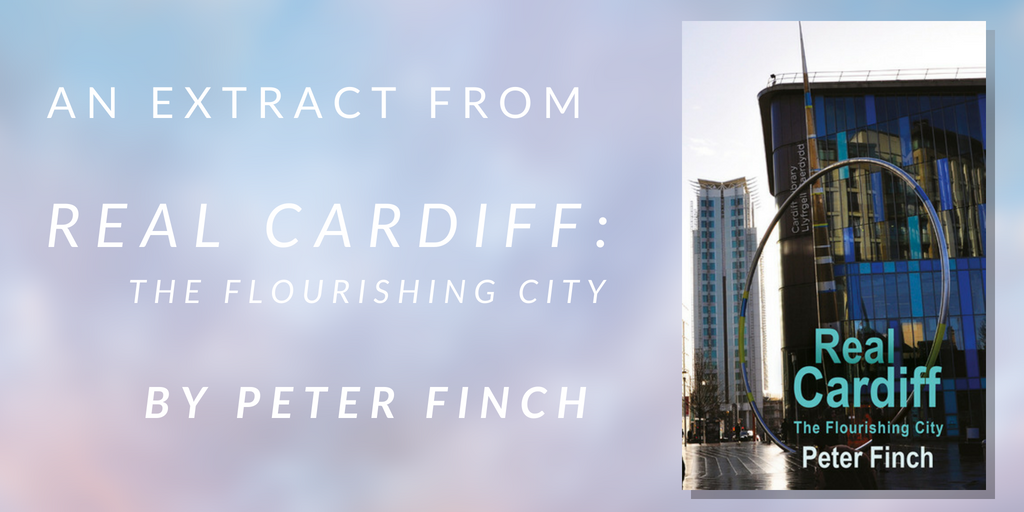
An extract from Real Cardiff: The Flourishing City, by Peter Finch

Real Cardiff Peter Finch extract

Though certain parts may be seeing rain this weekend, the warm weather continues – and what better time than summer to explore all the UK has to offer?

Peter Finch Real Cardiff Flourishing CityOur Real Series – a collection of intimate and entertaining guide books written by local writers – offers an insider’s view of the places it celebrates. The most recent addition to the series is Real Cardiff: The Flourishing City by Cardiff author and legend Peter Finch. So whether you’re an armchair traveller, or someone looking forward to a trip to the Welsh Capital sometime soon, we hope you enjoy this glimpse into the history of Cardiff – specifically, the area in which famous children’s author Roald Dahl grew up.

The whole of the Real Series – and all our other Seren books – are 50% off until midnight, Sunday 29 July, on the Seren website.


ROALD DAHL’S CARDIFF NORTH LEY

I catch the train at Cardiff Central. This is the City Line which began in the city’s north east and now, after looping in a great U through the city’s heart is about to head north again. I’m in the two-car Sprinter and I’m standing. Every single seat is occupied by pupils from Bishop of Llandaff High School. Kids, bags, blazers, headphones, chewing.
The windows stream as the train steams. Around us is railway land, an industrial cityscape full of rail sheds, engine bays, carriage washeries, repair shops and assembled new track in stacks like a giant train set. This south west of the city on view from the tracks is the capital with its guard down. Backs of mosques, tottering streets, unkempt gardens, the yards of Brains brewery, warehouses stacked with building materials, and even more open and right now empty rail beds. It reminds me of London, how the land looks as you reach Paddington or Waterloo.
But it doesn’t last. After the carriages have disgorged a hundred uniformed school kids at Fairwater, the cuttings emerge, wooded banks and scrub masking the housing above. It’s leafy suburbia giving an impression of empty countryside. A green west Cardiff, a place that doesn’t change.
It’s freezing. This is January. The train has reached Radyr where it will rest a while before returning the way it came. I’m off, up the footbridge steps, plastered thickly with Network Rail road salt. No one but no one will slip and sue here. In a previous, smaller, steam-filled incarnation, the Radyr train would have served Roald Dahl’s father, Harald, who did a daily commute in to what was then called Bute Road Station. His ghost is there on the platform now, eye glasses, three-piece suit, white starched collar. He looks like a disapproving headmaster. His railway season ticket was found inside his expensive leather wallet when he died in 1920. That was on April the 11th. The ticket was valid until the 23rd.
Like most in Cardiff at this time Harald’s business was coal. With his partner Ludvig Aadnesen he had established a business as a colliery agent and provider of all that ships docking in the world’s leading coal port would need. Provisions, ropes, oil for their lamps, food. The profits flowed.
In 1917 Harald had bought Tŷ Mynydd (Mountain House), set on rising ground a mile north of the Radyr rail station. As befits the successful businessman Harald was, here was life on a grand scale. 150 acres of land, outbuildings, cottages, a piggery, lawns, formal flower borders, terraces, its own electricity generator and an enormous Victorian house.
In photographs it looks like part of Hogwarts. It had multiple chimney stacks, mock Tudor gables, a tiled roof larger than most churches’ and greenhouses to the side to rival those of Dyffryn House, to the west of Cardiff. This is the place Roald, the great author, remembers with nostalgia, recalling the fields full of shire horses and dairy cows. There are photographs of him as a four-year-old out on the lawns and terraces, in the fields among the sheaves of corn, sitting on the wall of the piggery and of the house itself, which is resplendently decorated with both the Union Jack and the Norwegian Flag. No Welsh dragon in sight.
Like Cefn Onn, Tŷ Mynydd also had railway connections. The house had been built in 1883 by George Fisher, Director of the Taff Vale Railway. When he died in 1891 the property passed to his son, H. Oakden Fisher, Chair of both the TVR and the Cardiff Gaslight and Coke Company Ltd, although his real interest lay with the military. He was Lieutenant Colonel of the Glamorgan Volunteer Artillery. Harald bought the estate in 1918. When he died in 1920, his second wife, Sofie Magdalene, moved to smaller premises back in Llandaff. Tŷ Mynydd then became the property of the architect Sir Beddoe Rees, MP and for a brief time in the 1930s was turned into St Maur’s College, a small private boarding school for girls.
In 1967 the house and most if its outbuildings were demolished. This was the first full-blooded rush at clearance following the war. Cardiff was expanding. Property developers had no interest in the preservation of inefficient, draughty piles such as Tŷ Mynydd. On its lands a whole housing estate could be build. It had to come down.
I take the road up out of the station’s gully. Already the old shunting yards and waste ground lining the river have been populated with high density brick town housing. There’s little public space. Most structures are distinct from each other, laid at angles as if thrown there like dice. Room for breath is restricted and corners are rounded. Access is on turning roads named after De Clare, Norman Lord of the City, Aradur Hen, an ancient local croft that gave us the name Radyr, and Goetre Fawr, the farm that once worked these lands. Behind the aptly named Junction Terrace is a field replete with three grazing llamas, tall-necked beasts which, despite the ll of their name, are about as common in Wales as kangaroos. Food To Go which has signs offering coffee and warmth is closed. I head up along rising Heol Isaf in the direction of the Village of Fire.
In 1841 the ten cottages of Pentre Poeth (Warm Village) were all that existed of what is now Morganstown, upper Radyr – that part of Cardiff north of the M4’s périphérique grip. This is where the workforce of the developing fire-filled ironworks at Pentyrch lived, an element of Cardiff’s lost industrial heritage. Heol Isaf was and still is the main road to Tŷ Mynydd. It’s no distance to cover. In my ears I’ve got Emmylou playing through the buds. 1970s country, when what she sang was the edge. Alabama down home. Dahl wouldn’t have stood for this. He preferred Beethoven.
The Tŷ Mynydd estate has been built on; the fields are gone. The line of the original entrance path running up from Tŷ Mynydd Lodge has been preserved in the rising bends of MaesYr Awel. The detached late-sixties houses along it turn eventually to a U-shaped cluster of apartment blocks. Cwrt Tŷ Mynydd is the appropriately named first; after that the developer gave up and resorted to names with a strong English resonance – Norfolk Court, York Court, Windsor. It’s a marketing thing. Here, near the eastern edge of Wales, where the language thins, the Anglo norm dominates.
Beyond the apartment courts, circled like a residential wagon train, there’s a copse, ancient pine trees, all that remains of what once was here. For the Dahls of the nineteen teens this would all now be virtually unrecognisable. A local walking his young daughter to the primary school at the former estate’s southern end tells me, yes, he knows about Dahl and the great house. He points me back towards the still extant Tŷ Mynydd Lodge which faces Heol Isaf. And there it is, the gatehouse preserved, doing time now as an up-market B&B. The Llandaff Society have installed a celebratory plaque above the front door. Over the years since Roald would have known it the building has been much extended. But there’s enough original left for the Dahlian spirit to soar. I can see him outside, short pants, laced leather shoes, hat, overcoat with enormous buttons. Mama holding his hand.


Real Cardiff: The Flourishing City is currently half price on the Seren website: £9.99 £4.99

Thinking of visiting cities elsewhere in the UK? Find the perfect insider’s guidebook to enrich your trip:

Poet Ian Spring overlays the current map of Glasgow with the map of his memory and experience.

‘Bard of Barnsley’ Ian McMillan delves into the past of the area of South Yorkshire in which he was born and still lives.

Poet Chris McCabe looks at the art, attractions and ‘oozy’ docklands history of this slice of London.

Novelist Clare Dudman explores her richly historic city as you won’t find it in other guidebooks.


See the full list of Real books on the Seren website: all half price until midnight, Sunday 29 July!

Posted on

An extract from Larkinland by Jonathan Tulloch

Extract Larkinland Jonathan Tulloch

Larkinland Jonathan TullochJonathan Tulloch’s remarkable Larkinland is a novel which expertly and minutely captures the essence of Philip Larkin and his poetry. Tulloch deftly builds Larkin’s poems into a sustained landscape, fills it with Larkin’s characters and just for good measure adds a version of Larkin himself – meet Arthur Merryweather: librarian, poet and would-be great romantic.

In the extract below, having newly (and rather unhappily) moved to a new town, Merryweather embarks on his first journey to his new place of employment: the university library…


This extract begins on page 49 of Larkinland.

8.

Hiding behind his (local) morning newspaper on the trolley, Merryweather felt as though he were going not to a library but a hospital for the prognosis of some lump. The Monday morning breakfast table repeated on him as much as the kippers: that barrage of sauce bottles, chewing jaws and bad breath.
Contrary to expectations, a pleasant surprise awaited him at the university. Instead of the utilitarian, redbrick barrack rising from a raw building site his successful novelist friend had led him to expect, he found half hidden in lawns and willows, a country house brocaded with ivy. A post box was quickly located, and the weekend’s letters dispatched.At the Aide to the Vice-Chancellor’s office he had to wait for half an hour. ‘What does he want?’ he heard the administrator ask his secretary.
‘Something about the library, sir.’
‘Library? What does he want with the library?’
‘You appointed him as the new head librarian, Sir.’
‘Did I?’
Throughout their brief cup of tea, the Aide to the Vice-Chancellor continually rearranged pens on his desk as though working out some enigmatic puzzle. His curly beard and fringe gave him the look of a merino sheep. This ovine resemblance reminded the librarian that the man on the other side of the desk had been the silent partner in the interviewing panel at the British library, though he clearly didn’t remember Merryweather. ‘Found digs yet, Merriman?’
‘Yes, thank you.’ His mother’s son, in the face of authority Merryweather demurred from making correction.
The Aide to the Vice-Chancellor paused in his pen arranging. ‘The town does have some good areas; I’ve always maintained that. How do you find arrangements on the river? Yes we are rather out on a limb. Where the train runs out, the land too, wot? And we’re just left with the mud and the sky. The natives, well you might like them or you might not; on the whole the students can sometimes be keen. Not a bit like that dreadful novel doing the rounds.’ Merryweather suppressed a grin. His friend, and chief correspondent, was the writer of the deliciously scandalous academic novel doing the rounds. ‘Well, no doubt you’ll be anxious to see your little fiefdom. Very good of you to come in today, Merriman. Above and beyond…’
Was everybody off their rocker here? The librarian puzzled as, interview over, he headed in the direction the Aide to the Vice-Chancellor’s secretary had pointed out.
Merryweather’s fiefdom was yet another surprise. Had his luck changed? Leaning out of some children’s story, a pair of manorial gateposts offered a secretive avenue of chestnut trees. The avenue graciously ushered the librarian to a brownstone building bearing the simple sign: Library. In summer, that dead wood adhering to the walls would be rambling roses; spring, when it arrived, promised bluebells. For now, a robin piped the melancholy carol of a T.S. Eliot April; all that was missing was a gardener’s fork for it to perch on and begin conducting the way to a secret garden.And there was the garden fork!
Not a city sound to be heard as the new head librarian mounted his library steps for the first time. Above the door, a sculpted stone figure in the art deco style reclined on lintel. The figure – reclining or hovering? – peered down at him. Was it an angel? Art deco, the final and least expected touch. The ghosts of Evelyn Waugh’s bright young things. Et in Arcadia Ego blah, blah, blah. That was one thing about librarianship, it might be sexless and bloody boring, but, like a convalescence from a good bout of measles, it gave one plenty of time to read.
The angel watched Merryweather push and pull the entrance door, shunt and shove, thrust and shoulder. All in vain, it was locked. No sign of anyone within. No lights. Nose pressed against the glass, all the new man could see was a darkling, marble vestibule. Skulking in the shadows like a Neanderthal peering from his cave, the bust of some beetle-browed philanthropist frowned at the disturber of his peace. Knocking unanswered, Merryweather got on his knees and called through the low letterbox.
‘Oi!’ A shout from the chestnuts. The librarian struggled to his feet. Was it directed at him? ‘Yes, you, you lanky sod. What’s your game?’
For a moment, he thought the person breaking from the undergrowth, all whirring arms and neck, was a policeman. Only when the official reached him did the librarian realise his mistake. ‘I’m trying to get in,’ Merryweather explained.
‘Oh you are, are you? Well you’re not going to.’ Not the sprightliest of men, the college porter was out of breath. ‘Can’t you see it’s closed?’ Merryweather’s trilby, tie, briefcase and British Warm seemed to mollify the custodian. ‘Thought you were some grubby student.’
‘Actually – I’m the new head librarian.’
Torn between suspicion and a professional sense of caste, the porter took off his hat and scratched his head.‘Didn’t they tell you? Nowt’s open today. No students. Nothing.’ Suspicion reared to the fore.‘ How do I know you’re who you say you are? No one told me. I didn’t even know the last one had gone.’
Feeling rather ludicrous, Merryweather opened his briefcase to bring out a copy of The Library, the journal of the Bibliographical Society. The porter flipped through the pages with a yawn. ‘No, I don’t suppose you’d read something like that unless you really were a librarian.’
‘Well exactly.’
The porter fell back on the eternal sigh of his breed, as well as the habitual mix of pronouns. ‘Better come with me, sir, and I’ll see if we can’t sort you out for yourself. I’m Harry. Harry Oxley.’
Harry led him back up the chestnut avenue and across a chain of secluded lawns to where a more municipal, Winifred Holtbyish building stood. A hushed maze of parquet floors contained the porter’s lodge. Merryweather was installed on an ancient chair beneath an enormous dovecote of pigeonholes. Smelling the lodge’s varied woods and listening to the porter on the phone, he felt gratitude for having missed both the war and national service. Easy to imagine a rifle range, wet feet, and the porter, a sergeant major, explaining how to strip a Bren gun for the hundredth time. Four separate phone calls had to be made, two of them trunk. At last the hugest bunch of keys Merryweather had ever seen was plucked from a hook. ‘If you’d like to come along with me, Mr M.’ Jingling like some Dickensian turnkey, the porter led him back through the parquet labyrinth, over the lawn, through the enchanted gates and down the chest- nut avenue to the library. ‘That wants taking down,’ Harry declared, looking up at the angel as he unlocked the door. ‘Or one of these fine days it’ll come down and crush a student flat.’
Passing through the philanthropist’s marble gaze, they entered the library proper. After the imposing entrance and almost grand vestibule, the first impression was frankly underwhelming. Something about the size of a real tennis court presented itself. Less fiefdom than corner shop. Well, not quite that bad. As Merryweather’s eyes grew accustomed to the half-light, he saw that the shelves were almost spectacularly tall. They towered into a shadowed silence bound by a lofty gallery. Above that, high windows. Following Harry, Merryweather found that the premises had a second, identical room, which gave access to a couple of smaller reading rooms. In total, the whole concern was on the scale of a thriving branch library. The high windows gave the vague feel of a mausoleum. Merryweather felt half at home. When Harry switched a flick, the gruelly light barely thickened. ‘Bloody bulb’s gone again,’ he said, voice amplified to a giant’s timbre by the cavernous emptiness. ‘Pardon my French.’
There was another surprise. Following his guide between tight, dark shelves, the new librarian stepped into a well of light. A dome rose high above him. It had been hidden from him by the tall stacks. A metal staircase wound steeply up the side of the dome. ‘Careful coming up here, Sir.’ The steps creaked as the pair mounted them, the echo rippling through the several deeps of the library.‘They all like this?’ the porter asked, stopping halfway up.
‘Beg pardon?’ asked Merryweather, not sure the stairs were exactly safe.
‘Are all libraries so loud?’
‘I’ve never really thought about it.’
‘They’re supposed to be quiet, but they’re not, not when nobody’s in them. It’s only when they’re full that they’re quiet. What do you make of that?’
‘Interesting,’ said the new head librarian only quarter lying.
The winding stair led to a smoked glass door marked Head Librarian in rather skittish swirls. The porter opened up. By some architectural sleight of hand, instead of the storeroom attic Merryweather had been expecting, the room was commodious to the point of extravagance. Decorous cornices, oil paintings, armchairs, and, wonderfully incongruous, a chaise longue. Two pairs of generous windows to boot. After the crypt-like library, the view – chestnut avenue, gateposts, a lawned middle distance bound by tree-lined road – opened up like the vista from a headland. ‘Its acoustic is the opposite of a theatre,’ Merryweather said, without turning from the window. ‘That’s what makes them so loud. Libraries. Paradoxically so, given all the signs for silence.’ His eyes narrowed as he continued to gaze at the view whose limit was described by a bicycle trolling through a tracery of leafless branches. ‘A theatre is designed for projection, a library, introspection. On stage, one seeks to be heard by hundreds, a library has a far greater ambition. It aims to reach…’ Merryweather broke off. He could see Harry making off under the chestnuts. ‘And so forth.’
Shoulders easing with this unexpected bonanza of solitude, Merryweather sat at his desk. Solid as a tug. Just as well, more than likely it would be required to haul him into the waters of middle-age. Perhaps beyond. It offered all the tools of the trade. Ink bottle, ink well, blotting paper, telephone, in and out trays, an ashtray (plain), pen holder (rather decorative), enough drawer space for concealing a dismembered corpse let alone a bottle of Glenlivet, paper too, sufficient thereof for the writing of a novel. Except his novel-writing days were over, that was a business best left to his successful friend. Merryweather suppressed a belch of regret, but it was that morning’s kippers not the brace of his own unsuccessful novels, which had found little favour with the reading public when published just after the war. With the nearly pleasurable air of being a ship’s captain finding himself alone not only on his bridge but on the whole vessel, Merryweather lit the fire from the ample basket of logs, and then his first Park Drive of the day. A relatively exciting though not entirely trustworthy feeling flickered with the flames as he sat on the chaise longue: he’d be able to write poetry here.


Larkinland is currently half price on the Seren website: £9.99 £4.99

Half price offer ends midnight, Sunday 29 July.


Posted on

An extract from The Wellspring by Barney Norris

Barney Norris The Wellspring extract

‘A rare duet, in which father and son rediscover a whole world through the redeeming power of art.’
– Declan Kiberd

Barney Norris The WellspringIn The Wellspringacclaimed novelist and dramatist Barney Norris conducts a conversation with his even more acclaimed father, the pianist and composer David Owen Norris, on creativity, cultural identity, and how the two intertwine.

In this free extract, the conversation between father and son turns towards David’s career as a pianist: how it began; the impact of failures and accolades; the strangely altering milestone of 30.

This extract begins on page 87 of The Wellspring.

Playing

BN: I’ve titled this second sequence ‘Playing’. Ostensibly, what I hope to cover here is the bulk of your professional life – your work as a performer. But I have it in my mind as well that what we’re circling is one person’s route into a life, into living well, and I want to draw attention to that as we begin. This book will take the same path everyone does as they find their way into the world – first we listen, then we simulate, then we live. In some lives, I don’t think the path is as easy to trace. Not everyone has a vocation. Not everyone’s entire life can be expressed as the development of a single project. Of course, your life isn’t adequately summarised if we turn it into a single developing theme, either. If we were to exhaustively catalogue everything you’ve ever done, a meaning would emerge that was too diffuse and complex to express – or you might end up with a catalogue of infinite drift, I don’t know how open you are to the idea that lives have inherent meanings at all, or whether it’s fairer to say all narratives are superimposed. But the opportunity we have here is that it’s in the nature of an artist’s career, where the life feeds the work and the enthusiasms are buried deep in childhood and the work is all-consuming, that a narrative can be constructed more easily than is usually the case that expresses something like a linear development through life. So when looking at an artist’s life, you can say things about the way all people move through time more easily than you can with some other careers. The milestones are easier to make out. So for the purposes of this book we’ll read your performing career as a second stage in a development that leads, eventually, to the writing of music. Not an adequate summation, but perhaps it’s an interesting one, you see the two as connected?

DON: It was the break-down of my early composing career that led directly to my performing career. I’ve already hinted that my composing didn’t go down too well in 1970s Oxford, though come to think, I left with a composition scholarship to the Academy. But the contemptuous reaction to my B. Mus exercise a year later – ‘This fugue subject implies harmony’ was one criticism I still recall with some puzzlement – and the prevailing narrow taste in ‘modern music’ funding circles, led me to concentrate on something I did to everyone’s satisfaction, namely, play the piano. Young performers play a wide range of music, partly because they know they need a wide range of experience, and partly for frank commercial reasons, and so I formed hands-on opinions of the work of still-living composers like Tippett & Britten & Messiaen, and I gave innumerable premieres of works by composers now forgotten.

BN: It’s a very interesting environment, the generation of contemporaries one works with at the beginning, before it’s clear who’s really going to make it. I’ve been going through that myself for the last few years – it’s still a bit too soon to tell which of my generation of theatremakers will one day be filed under that ‘now forgotten’. Because there’s no precise formula for identifying the ones who’ll last, is there. It’s not only talent, it’s not only prevalent fashions in funding circles, it’s not only luck, it’s not only hard work, it’s not only whether you choose to have a family, or where you’re from, or who you know; it’s not even whether you’re someone that anyone likes. It’s terrifying, because of course, after the first six months when a few people who thought they were serious wake up and back out, anyone who’s tilting at the windmill of the arts can’t imagine doing anything else, and doesn’t have a back-up plan, even though some will end up needing one. The arts are so hard to break into, you’d never do it if you were capable of doing anything else. But it’s also a very wonderful moment, because, in a Schrodinger sort of way, you live suspended in this moment where anything might be possible for you and your friends – even if in actual fact, when you get to the end, you will look back and find that it wasn’t.

DON: ‘Now forgotten’ sounds callous, doesn’t it? I meant it more as a merciful imprecision. Your list of things that need to slot into place is pretty scary – and very carefully ordered! Academy Professors, as I discovered when I became one, all agreed that we should exert ourselves to the utmost to put students off, because only the students that can’t be put off stand the slightest chance in the business. Good as far as it goes, but things change, become less narrow – good changes as well as bad changes. Some of the less positive changes at institutions of higher education are down to money, which has all sorts of repercussions – not all new courses fill purely educational needs. Then, if half the population is going to university, degrees will need to change, not necessarily for the worse: but we need to make sure that the former methods of study, where they were valuable, can be continued – which has emphatically not happened in secondary school music.

But there are positive changes too. I’m thinking especially of social change. What’s often called dumbing-down (something I’ve hinted at in the previous paragraph) can also be seen as a welcome acceptance that art need not always be on the verge of unintelligibility to be worthy – which is why my music can reach listeners now, though it was so out of tune with the seventies. Another helpful social development is a public acceptance of the portfolio career. We can take real advantage of the new opportunities the twenty-first century has brought us, the communications revolution. I wonder if I could have created a taste for my sort of music back in the seventies, if we’d had the Internet. But it lumbers up too late, like Chesterfield coming to the assistance of Dr. Johnson. Still, it gives us new ways to reach audiences, if only we had time to develop them.

BN: You told me once that the thing to watch for was what happened when everyone turned thirty – it was around then that things started shaking out. Having turned thirty not so long ago, I can increasingly attest to the truth of this. Did that advice come from personal experience?

DON: Observation rather than experience, luckily. There were so many schemes and scholarships that you could compete for till you were thirty. After that, you were on your own, and many winners didn’t make the change into actually earning a living. It’s an age that concentrates the mind in many ways. Clocks are ticking, clocks of self-esteem as well as of biology. Is it still too late to become a bank manager? we used to ask ourselves back in the day, in blissful ignorance, probably, of how difficult it is to be a bank manager.


The Wellspring is available on the Seren website: £12.99

Join our free Book Club for 20% off every book you buy from us.


Posted on

Short Story of the Month | ‘The Visit’, Jaki McCarrick

The Visit Jaki McCarrick Short Story of the Month

May’s Short Story of the Month is ‘The Visit’ by Jaki McCarrick, an award-winning writer of plays, poetry and fiction.

the scatteringMcCarrick won the 2010 Papatango New Writing Prize for her play, Leopoldville, and her play Belfast Girls, developed at the National Theatre London, was shortlisted for the Susan Smith Blackburn Prize and the 2014 BBC Tony Doyle Award. The Scattering, from which ‘The Visit’ is taken, was shortlisted for the Edge Hill Prize.

‘The Visit’ takes place against the backdrop of Bill Clinton’s visit to the border town of Dundalk in Ireland – a visit that was very much a part of the Peace Process. 


The Visit

This is an extract. Read the full short story for free on the Seren website.

It had been a day of weather: snow and wind, sunshine and rain.
Water dripped from the overhanging hedges in the drive and
the path was thick with pine needles. Brendan made a mental
note to sweep them up once Pat had gone. He stopped before
the gates and pulled his trousers up by their creases to check
his shoes and thought that maybe he should’ve worn his boots.
He walked on. Pat would make him forget. Pat could make you
forget all kinds of silly woes. He glanced over at Coogan’s and
noticed the stars and stripes flag, still and wet on the pole.
After McCaughey’s he looked over at Joy Callan’s neat line of
laundry crowning her raised side lawn: a small satin-rimmed
blanket, black stockings, two blue ballroom gowns, a pair of
orange nylon pillowcases. As he approached her house he saw
her in the yard, bright and chic in pink slacks and a tight white
jumper. She was raking up leaves. He watched her part the
dresses then yank the wet leaves into a pile. It made him smile;
she might have hung the gowns out after she’d raked, but Joy
always seemed to do things differently from others. And anyway,
he was glad, because she made the task so mesmerising. He
recalled how after her husband had gone she had kept body and
soul together by moonlighting, rather originally he thought, as
a mushroom picker in Clones. Otherwise, as a relief teacher
she had taught both his children in the Friary, though she had
not been popular. He waved and wondered would she be at
the Square tomorrow. He made a mental note to call in one
of these evenings with the picture of Sean’s wedding in the
paper.
Walking on, his thoughts returned to Pat. He looked forward
to seeing him. There would be much talk of the ‘great
adventures’ as Brendan called them, the London times, the days
of the Black Lion where he had been manager for nearly a
decade and where Pat had been its most notorious barfly. He
was proud to think he’d organised some of London’s most
celebrated lock-ins, booked musicians from Dublin and Doolin
and Donegal, and had the likes of David Bailey and Donovan
in attendance. Soon he and Pat would be reminiscing about
those times, about the dog races at Hackney and White City,
the times they’d played poker in Holland Park with Jack Doyle.
He walked up the cobbled lane towards the station. He could
see clearly on the cold day the sprawl of the town towards the
hills. The trees by the church were draped in ropes of white
lights, and a flurry of flags hung from Carroll’s Apartments. He
was amazed to think that here, in this small dot on the face of
the globe, he and Pat would stand together tomorrow evening
and see the President of America.
The big station clock said ten to three. He had a few minutes
yet to gather his thoughts, stare over at the glass wall of the
brewery. He sat outside on the iron seat. The gulls hovered
above him, filling the air with their cries. The sweet wort’s more
pungent today, he thought, as his gaze fixed on the huge copper
kettle glistening through the glass. It had been his first job in
the brewery to wash the kettle out once the sweet wort had been
siphoned off. He would then prepare it for the following
morning’s shipment of hops and grain. He had spent the best
part of five years inside that copper drum, up to his ankles in
the remnants of fresh hops, proteins and sticky clumps of
caramelised sugar. It had given him time to think; to put into
perspective all that had happened in ’74.
There was a rumble on the tracks. He turned and saw the
sleek green body of the Enterprise stack up like a metallic snake
along platform two. He walked over and watched from the
ticket office. The doors of the carriages swung open. Women
with pull-up trolleys, young men in dishevelled suits, Mrs Little
and her daughter, Edel. As the crowds dispersed he saw a ghost,
the tall, hulking frame of Pat Coleman standing stock-still on
the busy platform. The springy hair was all white, the once firm
chest now visibly lax. Brendan watched his friend remove a
cigarette from behind his ear, ask a girl for a light, then take
three or four concentrated puffs before flicking the stub behind
him onto the tracks. Pat’s short-sleeved shirt seemed frowsy
and unironed; the thick brown arms with their blue tattoos
recalled to Brendan Pat’s nickname on the sites: Popeye. Popeye
Pat had had the strength of ten men, and once, in a drunken
rage, Brendan had seen him flatten as many.
He followed Pat’s gaze. Up to the pale, elusive sky of the
North; out to the striking sweep of the white-capped hills, the
green spire of the Protestant church peeping up against them.
He began to feel unfamiliar pangs of pride for the town, as if
through Pat’s languorous impression, he, too, was glimpsing
it for the first time. The town was his wife’s town, and he had
always found it hard to appreciate its people with their
wariness, their industrious, practical approach to things. His
wife had been right; he had put up a resistance. She had
accused him often of hiding away in the brewery kettle like a
genie. But the friendships he had formed here had been
without the closeness of his London bonds. The men he knew
from the town were nothing like that famous man on platform
two.

Continue reading ‘The Visit’ for free here.


Posted on

Free extracts from our favourite Halloween books: read them if you dare…

read these free extracts from our favourite Halloween books

Get yourself in the Halloween spirit – read these chilling extracts from our favourite spine-tingling stories.

trick or treat: happy Halloween from Seren

Ritual, 1969 by Jo MazelisRitual 1969 by Jo Mazelis
From ‘The Twice Pricked Heart’:


When Margaret returned to the cottage she saw that her father and stepmother had retired to bed, though it was not yet night.
She put Esmerelda in a chair and the child settled down to sleep as she sang softly to her. The light in the room was made strange by the dark sky and glittering snow. The quiet of the house seemed to swell with each passing second. Margaret sat upon the settle and took up the workbasket and began to mend her father’s shirt. It was torn under the arm and this she made good before turning it over to inspect it for other signs of wear. She froze at what she saw, for there on the chest where it lay over his heart she found a small puncture hole, the edges of which were stained in a halo of what must be dried blood. She gasped to see this for to her mind such a wound was unlikely to strike the same place twice.
A chill crept over her flesh and looking up she saw that the sun was at the lowest point in the sky and shadows filled the room. Then while she looked about her she saw a movement in the darkest corner of the room that she likened to a moving cloth, such as a woman’s cloak, for there was a sort of fluttering wavelike movement to it. Never had she perceived the like before and there was nothing in the room to cast such a shadow.
She kept to her place too terrified to move or make a sound, then just at the moment when she had made up her mind to gather Esmerelda in her arms and flee the house, she heard a step upon the stair and there was the sailor’s eldest daughter, dressed in her shift and a wrap, her cheeks aglow, her eyes bright and her lips red and wet and swollen.
‘Bring me cheese,’ she said, ‘and bread and wine.’

Want to keep reading? Buy your copy of Ritual, 1969 now: £8.99


Sugar Hall Tiffany Murrayfrom Sugar Hall by Tiffany Murray:


His cry echoed in the empty shed, his breath coming out in puffs of white. Dieter thought about London: he thought of the broken buildings and the cracks, he thought of the wide spaces and the rubble, and he thought of all those adventures he was missing. He gazed up at the dust dancing and the cobwebs pulsing, and Dieter heard a noise.

‘Pop!’ it said. Then,‘Pap!’

There were sparks and a shimmer that had to settle. Then, by the window and the filthy crates, there was a boy’s face.

The face was moving as if the boy was already standing up, but there was no body beneath it.

The Cheshire Cat, Dieter thought, as the face moved towards him. He gripped his pa’s crisp shirt tight, he stopped breathing, but he was determined that this time he wouldn’t run away.

The face was making a strange noise, as if tiny wings were fluttering in its throat. Dieter felt the balloon’s skin crackle beneath him; there was electricity: a crackle beneath his bottom and a crackle in the air.

He’s not a duppy, Cyn, Dieter thought, he won’t hurt me.

‘I – I brought you this shirt, these trousers,’ Dieter said. ‘I thought you’d be cold.’

Then Dieter wondered how the boy could use the shirt if he didn’t have a body.

A hot breeze of golden sparks cut through the freezing air and suddenly the boy was all there: his chest, his arms and legs, his neck and around that a silver collar. The boy shook himself and stretched up: Dieter had never seen anyone so naked, not even himself. The boy walked from those filthy storage chests and it was soundless, but Dieter watched the pitpat, pitpat of his footprints in the dust. Pitpat, pitpat; like steps in the sand and no one there.

The boy was thin. He was small, but Dieter couldn’t tell how old he was.

The boy hunched over and bent into a squat. His arms dropped, hands palmup and circling in the dust like little fish. The golden sparks were gone and Dieter saw the boy was pale for all his blackness.

Want to keep reading? Buy your copy of Sugar Hall now: £8.99


Masque by Bethany W PopeFrom Masque by Bethany Pope:


It was my job to see that she was properly dressed for company, to escort her to the room to meet her lover and the other admiring gentlemen, and then to change the subject any way I could when her natural whimsy took a turn for the disgusting as it often might.

One night, while De Changy was speaking to his managers (this was, you remember, two sets of managers back) she started speaking to a tall, nearly skeletal man who had appeared, dressed in a cloak and dinner jacket, a fine fedora aslant, shadowing a face as bland and unlined as a new-born baby’s. Her laughter had grown its most dangerous edge, the short hairs on my neck, cheeks, and arms rose in fear. La Sorelli was sweet, and she had a good heart, but her tongue could suddenly become impolitic and there were many investors present there this evening.

Annie and the stranger were standing at the point where the glorious stairs that make the Palais Garner famous intersect and form an enormous marble Y, glittering in the light refracted in a thousand tear-shaped crystals that drip from the tremendous chandeliers and gaslight torches. Whoever he was, he stood terribly erect, his gloved hands hidden behind his narrow waist, clutching a fine ebony stick. My friend, who I was meant to be watching, was sloppily drunk, spreading her barely covered breasts against the wide, pink-veined bannister. I could not read his face as he looked at her, his features were oddly stiff, expressionless, but the arch of his body signalled contempt. I rushed to her side, a quickly as I could, pleased that my new silk shoes did not slap against the carved stone stairs, pleased that I did not slip and crack my skull against the pavement…

Want to keep reading? Buy your copy of Masque now: £9.99


Bonus: download Jaki McCarrick’s short story, ‘Blood’, for free!
‘Blood’ from The Scattering by Jaki McCarrickShabby academic Fred Plunkett, working alone in his aunt’s Victorian house, has his peace disturbed by a sleek intruder with matt red lipstick, a lampblack dress and high, plastic heels. Lara claims to be researching vampires and the theory that Dracula fled his native Transylvania to take refuge in the Cooley Mountains of Ireland, in Fred’s home town. But when she smiles, submerged thoughts of blood and desire begin to wake in Fred’s mind…

Download ‘Blood’ for free from amazon.co.uk

‘Blood’ is one of nineteen stories in Jaki McCarrick’s critically acclaimed short story collection, The Scattering, available from the Seren website: £8.99


Posted on

An extract from Masque by Bethany W. Pope

an extract from Masque by Bethany W Pope

Enjoy this extract from Bethany W. Pope’s debut novel, Masque, now available from serenbooks.com (or your local bookshop!)

Masque by Bethany W PopeAbout Masque:
Masque is a richly gothic retelling of Gaston Leroux’s The Phantom of the Opera. Centre stage is would-be opera singer Christine, who, despite being devoted to her art, attracts the attention of both the Phantom, and rich theatre owner Raoul. The resulting mix of love, rage, art and murderous intent, is explosive.


This extract begins on p.11 of the novel and is our first introduction to The Phantom – Erik – a deformed and complex character, both monstrous and kind. Unlike Leroux’s original The Phantom of the Opera story, Masque is told from the perspective of the three main characters, so we see directly into the mind of the much-maligned Phantom, and can judge him as we see fit…


ERIK
1.
My father was a master mason. I never met the man but I
spent the first decade of my life inside the house he built
and so I feel I know him. The lathes of the attic communicated
with me as much through their shape (he was
exacting when he laid out the angles of the eaves) as did
the notations he left in pencil on the undersides of the
unfinished, unpainted struts which supported the ceiling. I
inherited the crabbed handwriting he used to mark out his
measurements, though I am far more articulate than he ever
was in artistry, architecture, or print.
Although he was skilled with the trowel and could lay
travertine so tightly that its texture was more like marble
than limestone, he was more renowned for the beauty of
his person that the skill of his hands. He won my mother
with his looks and he left her a sad ghost of the gay girl he
married, haunting the house that he built on Rue Rouge.
I learned about him through the letters he left to my
mother, retained by her in memory of their apparently passionate
courtship.They were bound by a blue ribbon, an
appropriate memento of an innocent girl. One envelope
contained a bright lock of hair that must have been his,
since mother’s was as dark as a sewer rat’s. The letters were
naïve, almost innocently crude. They were full of phrases
about the things that he wished that he could do to her
body and peppered with prayers for many years of marital
bliss. They were written in the kind of cheap ink that an
uneducated man would favour. He did not expect them to
last, or be held on to.The sepia was grainy and badly mixed,
this combined with his handwriting in such a way that it
seemed as though his words were written out by a sexually
precocious child with a fondness for experimenting with
matchsticks. As I said, my handwriting is no better, but at
least the ink I use is superior.
I always thought that writing was a bit like the telepathy
those spiritualists in the paper are always talking about. It
makes sense, if you think about it; one mind communicates
to another through a series of black blotches which transmit
thoughts directly into another’s brain. You, reading this,
whoever you are, can hear my voice (a sweet, trained tenor)
without ever having to worry about viewing the flesh that
produces it.This is lucky for you: all my gifts are internal.
In any case, my current habitations remind me of my
childhood home. These damp vaults are rather like the basement
where my mother moved my crib once the
neighbours complained that my cries disrupted their business.
The house my father built was tall and narrow, the
walls of dark grey granite, polished to the high shine of
gravestones. He meant his home to be a living monument
to his skill and a permanent advertisement for his services.
The roof was tiled with slabs of greenish slate, and the
windows were small and imperfectly glassed. When I was
older, I replaced them as a gift for my mother. I spent a
whole afternoon removing the warped and watery panes,
replacing them with sheets I’d poured myself. I learned the
art of glazing, sneaking every night to the factory down the
street. When the time came that I had spent enough hours
watching the midnight production shift pouring the sheets
of reddish molten sand into the mould, I tried my hand at
it myself. I waited until the Michaelmas holiday and stole
the machinery (I provided my own materials, lugging bags
of silicone that I’d found in the cellars among the unopened
bottles of wine and the skeletons of rodents). I love the look
of glass as it is being poured. It is honest, then, about itself.
Cooled, it only seems a solid. It never fully hardens. Over
centuries, window glass will melt.
There is no such thing as stasis.
In any case, my mother loved the finished product; windows
that let the light in without warping what she saw on
the street. She was so thrilled she squeezed my upper arm
through the thick fabric of my jacket. I swear she almost
hugged me. In any case, for once she did not shudder at my
smell or flinch away from the feel of my corpselike body.
The houses on either side of ours were dedicated, in their
own way, to music. Dancing girls and cabaret, absinthe and
cheap champagne that the likes of those poets who styled
themselves ‘Romantic’ drank themselves to death in. My
widowed mother hired men to refurbish the attic into a
series of rooms that she furnished with sticks she’d bought
from brothels, closed in raids by the province governor the
previous summer. She did not sleep on them and rarely
bothered to change the sheets, so she didn’t have to worry
about bedbugs. She made a good living, I must say, giving
the drunks who seethed from her neighbours in the early
morning a bed off of the streets.
For my fifth birthday she made me my first (and for a
long time only) birthday present; a mask cut from a length
of chamois that she bought from a glover. It was more like
a loose sack with holes cut for eyes than a proper garment
but it did its job well. The sight of me ceased bothering her.
As I grew older, she let me come up more frequently –
although once she had a steady stream of lodgers I never
had the run of the attic again – my father’s writing was long
since buried behind plaster. I wore the mask without complaint
– it was far from uncomfortable and it had a nice smell,
as did the sachets of mint and violet that she sewed into my
clothing. If she almost never touched me, she did love me as
best as she was able, being young and easily frightened.
After a few years of proving my capacity with panes of
glass and basic home repairs, she hired a blind tutor to teach
me letters, music, mathematics. He would come and sit for
hours in my basement room, complaining of the effect of the
chill on his bones and making me memorise many disparate
packets of learning. When I surpassed his ability to teach, as
I soon did, I had many books close at hand and I turned to
them to expand my knowledge. I read everything from
Archimedes to fairy stories. As I recall, I had a special affection
for La Belle et la Bête. My mother bought me as many books
as she could afford through mail-order – often secondhand.
She resold them after I had squeezed them of their nutrients,
though I demanded permission to keep the fairy tales. They
were a balm to me, with their stories of transformation. They
provided me with a sharp and dangerous hope.


Buy your copy of Masque now: £9.99

Claim 20% off this and all future orders when you become a Seren Book Club member