Posted on

Friday Poem – ‘City’ by Peter Finch

This week our Friday Poem is ‘City’ by Peter Finch from his 2020 collection The Machineries of Joy.

The Machineries of Joy is the vibrant, uproarious, pointed & wildly entertaining new collection from renowned Cardiff-based performance poet, Peter Finch. Known for his inventive and multi-faceted formal strategies & his best-selling psycho-geographical peregrinations around Wales and the USA, he gives us the world in all its contemporary complexity.

The Machineries of Joy is available on the Seren website: £9.99

Create your free Seren account and enjoy 20% off every book you buy direct from us

Last year Peter joined us for an event as part of the Seren Stay-at-Home Series. Rewatch it in full on our Youtube channel:

Posted on

Extract from Fatal Solution by Leslie Scase

Fatal Solution by Leslie Scase once again sees Inspector Thomas Chard confronted with a murder in bustling Victorian Pontypridd.

On the face of it the case appears unremarkable, even if it isn’t obviously solvable, but following new leads takes Chard into unexpected places. A second murder, a sexual predator, industrial espionage and a mining disaster crowd into the investigation, baffling the Inspector and his colleagues and putting his own life at risk as the murderer attempts to avoid capture.

Once again Leslie Scase takes the reader back to a time and place where, despite the pretensions of Victorian society, life is cheap and passions strong. His research brings Pontypridd vividly to life, and historical events drive along the plot of this page-turning story of detection, as Chard navigates a way through the clues and red herrings, and a lengthening list of suspects, towards the poisoner.

Atmospheric, authentic, Chard and the reader are left guessing until the final page.

Our featured extract begins on page 24 of the novel, with Inspector Chard and his colleague interviewing local residents in the wake of a fire…

‘This is Mrs Griffiths who discovered the fire,’ said Scudamore by means of introduction.

‘Very pleased to meet you Mrs Griffiths, I am Inspector Chard. I hope you might be able to help me with my enquiries.’

‘Only too pleased to help. There’s not much that I don’t know,’ stated the woman confidently. ‘Not that I’m a gossip mind,’ she added.

‘Thank you. Now when did you notice the fire?’

‘Well, I had noticed old Mr. Jones go up the road, hadn’t I? Poor old soul, it’s the dust on his lungs, he hasn’t been well for ages. It takes for ever for him to get to the end of the street.’

‘What time would that be?’

‘Sometime after five o’clock then wasn’t it?’

‘Can you be more precise? I mean you must have been out on the street yourself so what time did you set off ?’

‘My old man has a bad cough so I was off to see Mrs Evans, wasn’t I?’

Chard was becoming irritable. ‘Very well Mrs Griffiths, why were you going to see Mrs Evans and how does that help us establish the time?’

The woman looked at Chard as though he was simple minded. ‘I was going to Mrs Evans to get something for my old man’s cough like I said. We don’t have enough money for doctors around here do we? We all have little gardens and grow our own natural remedies. I was short of a few bits and bobs so I was going to get some dried herbs from Mrs Evans. That’s how I know what time it was.’

‘What was the time?’

‘It was definitely sometime after five because I saw Mr Jones. I told you that didn’t I?’

Chard grimaced and decided a different tack.

‘Very well, did you notice anyone else about at the time?’

‘The light was very poor, but yes. There was Mrs Davies out with her little boy, horrible little thing as he is. Always pulling jibs.’

Chard glanced at Constable Scudamore who assisted by saying, ‘pulling faces, sir.’

‘Then there was Mr Phillips from the grocer’s shop, going about his business. He had his window smashed the other day, didn’t he? Now then, we also had Mrs Evans.’

‘The one that you were going to see?’ asked Chard.

‘No, different Mrs Evans. We have four in our street. There was someone I didn’t know, a scruffy looking man in a long coat. There were two men talking together, but they were too far away to see properly. Then young Tommy Jones, he is nearly twelve so will be down the pit soon.’

‘Is that all?’

‘Apart from Mrs Pearce’s children, she lets them run riot you know, not that I’m one to talk.’

Chard turned to Constable Scudamore. ‘Tomorrow morning trace everyone this lady has mentioned and see if they know anything.’

‘Can I go now?’ asked Mrs Griffiths.

‘Just one or two more questions. Did people get on with Mr Hughes, I mean was he popular?’

‘I am not one to cleck on others,’ said Mrs Griffiths hesitantly.

‘She means tell tales,’ added Scudamore helpfully, for even after a year Chard was still unfamiliar with the local idioms.

‘To be truthful, for I cannot tell a lie, Mr Hughes was not a particularly pleasant man. The only person who got on with him was his wife, and he was besotted with her.’ continued Mrs Griffiths. ‘No one else had much of a good word to say about him and he had been very mean spirited of late.’

‘So Mr Dixon told me,’ said Chard.

‘There’s another grumpy bugger. Those two didn’t get on at all. Why are you asking though?’ asked the woman with keen interest. ‘Do you think the fire started deliberately? You can tell me. I won’t tell a soul.’

‘We are keeping an open mind Mrs Griffiths so I wouldn’t jump to any conclusions. Thank you for your help.’

Turning away the inspector led Constable Scudamore out of earshot. ‘If this is murder then it doesn’t make sense. By the sounds of it he was unpopular but why not just slit his throat one evening? Why do it in daylight and then burn down the workshop?’

‘No idea sir,’ answered the constable, rubbing his chin.

‘There is evil here Constable, I can feel it in the air, but I will uncover it, you mark my words.’

Fatal Solution is available as a paperback or ebook on the Seren website

Buy the first Inspector Chard mystery, Fortuna’s Deadly Shadow, as an ebook: £7.99

Create your free Seren account and enjoy 20% off every book you buy from us.

Bring a glass of wine or your favourite tipple and join us on Tuesday 25th May at 7:30pm for the online launch. Leslie will be in conversation with Matt Johnson and we’ll host an audience Q&A. Register for free via Eventbrite https://www.eventbrite.co.uk/e/154383153167.

Posted on

Celebrating International Women’s Day

This International Women’s Day we’re showcasing books written by or about inspiring women. Find many more on our website.

women's work 2016

With over 250 contributors, this generous selection of poetry by women with an emphasis on twentieth-century poetry in English features poets from the USA, Canada, England, Ireland, Scotland, Wales, Australia, and New Zealand. Arranged by thematic chapters that touch on various aspects of modern life, this anthology aims to be a touchstone of women’s thoughts and experiences; to be entertaining and relevant as well as inclusive and representative of some of the best poetry published now.

Wild Persistence by Katrina Naomi is a confident and persuasive collection of poems. Written following her move from London to Cornwall, it considers distance and closeness, and questions how to live. She dissects ‘dualism’ and arrival, sex and dance, a trip to Japan. The collection also includes a moving sequence of poems about the aftermath of an attempted rape.

The Estate Agent’s Daughter is the eagerly awaited follow up to Rhian Edwards’s Wales Book of the Year winning debut collection Clueless DogsAcute and wryly observed, the poems step forth with a confident tone, touching on the personal and the public, encapsulating a woman’s tribulations in the twenty-first century.

This informative biography restores Elaine Morgan’s reputation and establishes her significant place in writing from Wales. It outlines her early days living only just above the poverty line in the Rhondda, before reading English Literature at Oxford, and examines her careers as an award-winning television writer and visionary anthropologist. Richly detailed it is essential in understanding the life and work of this important writer.

By turns laugh out loud funny and deeply sad, The Amazingly Astonishing Story is a frank and surprising look into a child’s tumultuous mind, a classic story of a working-class girl growing up in the 60s. Her Catholic upbringing, a father torn between daughter and new wife, her irreverent imagination and determination to enjoy life, mean this really is an amazing story (including meeting the Beatles).

When Nula’s husband James, an Irish documentary filmmaker, becomes forgetful they put it down to the stress of his work. But his behaviour becomes more erratic, and he is eventually diagnosed as suffering from Pick’s Disease, an early onset and aggressive form of dementia. The Longest Farewell is the true story of Nula’s fight with her husband’s disease, and how this terrible time held a happy ending.

A city burns in a crisis − because the status quo has collapsed and change must come. Every value, relationship and belief is shaken and the future is uncertain. In the twenty-six stories in A City Burning, set in Wales, Northern Ireland and Italy, children and adults face, in the flames of personal tragedy, moments of potential transformation. On the threshold of their futures each must make a choice: how to live in this new ‘now’. 

In the aftermath of World War II, hundreds of thousands of Yugoslavia’s ethnic Germans, the Danube Swabians, were expelled by Tito’s Partisan regime. A further sixty thousand were killed. Seventy years later, Marie Kohler’s marriage is falling apart. She’s seeing someone new, an enigmatic man named David, who takes her to the former Yugoslavia to find the truth behind her grandparents’ flight to America. Ford has written a moving narrative of emigration and identity, realpolitik and relationships, and asks what happens when the truth is unspoken.

The Women of Versailles Kate Brown

Princess Adélaïde, daughter of Louis XV, is at odds with the etiquette of the French court. Adélaïde envies her brother, is bored with her sister and, when Madame de Pompadour, a bourgeoise, comes to court as her father’s mistress, she is smitten, with dangerous results. Adélaïde pushes against the confines of the court, blind to the difference between a mistress and princess, with tragic results. Forty-four years later, under the looming shadow of the revolution, what has happened to the hopes of a young girl and the doomed regime in which she grew up?

Find many more fantastic titles by female authors on the Seren website serenbooks.com/shop/new-titles.

Create your free Seren account and enjoy 20% off every book you buy from us.

Posted on

Queer’s the Word: Readings for LGBT+ History Month

Daryl Leeworthy, author of A Little Gay History of Wales and Elaine Morgan: A Life Behind the Screen, shares some of the top books you should be reading this LGBT+ History Month.

Since the removal of Section 28 from the statute book in 2003, Britain’s queer communities have come together each February to celebrate a history which was for so long hidden in plain sight. Each year, LGBT+ History Month has a theme: in 2021 it is ‘Body, Mind, Spirit’. Anyone who has watched Russell T. Davies’s masterpiece, It’s A Sin, will know just how much each of those elements can be affected by absorbing oneself in aspects of the queer past and present. The books I have chosen for this short article penned as a contribution to LGBT+ History Month, each represent a different side of life.

Let’s start with the master historian, Jeffrey Weeks, who was born in the Rhondda in 1945, and his landmark book, Coming Out. First published by Quartet in 1977, and released in a new edition in 2016, Coming Out brings Britain’s queer history to life. It is radical. It is rooted in the ideas of gay liberation – about which more in a moment – and in the left-wing politics of the 1970s. But it is not an artifact of an earlier time, so much as an endlessly absorbing and fascinating excavation of a past richly experienced but all-too-easily cloaked in the horror of criminal codes and lavender scares. Weeks’s great triumph is to bring queer history back down to street level. In his long career, Weeks went on to write about Edward Carpenter, theories of sexuality, and the triumph of the queer civil rights movement through signature legislation such as same-sex marriage. This spring he turns his attention to his Welsh roots in a masterful memoir, Between Worlds.

To understand the Gay Liberation Front itself, there is no better work than Lisa Power’s No Bath But Plenty Of Bubbles, an oral history of the movement in London, which was originally published in 1995 by Cassell. Long out of print and difficult to get hold of, it has recently been re-released as an e-book to mark GLF’s fiftieth anniversary. By the time the book appeared in the mid-1990s, the world had changed completely from that envisaged by the GLF activists twenty years before – but rarely for the better. The age of consent, set at 21 since 1967, fell to eighteen in 1994 but the opportunity to bring about equality at 16 was narrowly missed. Section 28 was on the statute book and ruining the lives of a generation of queer children (me included). HIV/AIDS wreaked havoc all over the world, amongst queer and non-queer communities alike. Lisa Power wrote a book of history, then, but one designed as a kick into gear, a serious attempt to recover something of the spirit and purpose of the Gay Liberation Front and to make the world better for everyone. Twenty five years later, we know it succeeded.

After a year living with the COVID-19 pandemic, many of us are feeling an enormous strain and frustration. We have come to think of the virus as a once in a century event – it is not. But that tells us something about how societies remember and how we as individuals remember, too. Studies have shown that the descendants of those most directly impacted by traumatic events carry with them a genetic memory – an imprint of that harm which cannot be got rid of. It is especially apparent amongst Holocaust survivors and their children and grandchildren. For queer people, especially, it is also true of HIV/AIDS, the other great global pandemic of the past fifty years. To understand the interplay between trauma and memory, there is no better novel than Rebecca Makkai’s The Great Believers. Published in 2018, it focuses on Chicago and brings to life a community which was forced to adapt and compelled to live with death and danger, day after day. But it is a universal story, one which can – and in its comparison with COVID-19 does – affect us all.

But what of Wales? When I wrote A Little Gay History of Wales a few years ago, I had a delightful afternoon reading Sion Eirian’s 1979 novel, Bob yn y Ddinas. It’s not really a queer novel except for a passage where the title character, Bob, goes into the Duke Of Wellington pub in central Cardiff and encounters a neighbourhood drag queen who buys a drink for everyone in the snug, but not him. He was outside the community. This was truth, not fiction. For a period in the late-1970s, the Duke of Wellington joined its neighbour the King’s Cross and the nearby Golden Cross and Bristol Hotel as part of the small gay scene of those years. This was Real Cardiff, as Peter Finch would describe it, tough and grimy and poor; the place as it was before the corporate towers arrived and the rents shot up.

My last choice takes me back to the Rhondda and to another queer emigré who made his way to London: the novelist Rhys Davies. In his lifetime, Rhys Davies never openly acknowledged his homosexuality. Privately, and to his friends, and partners, it was a different story. He cruised guardsmen on the streets of interwar London; he cruised men in the various European cities in which he lived; he was in Germany like Christopher Isherwood and saw the rise of the Nazis; he wrote very queer novels which take little decoding for modern readers; and became close friends and a beneficiary of the noted American lesbians Gertrude Stein and Alice Toklas. Alas, much of the writer’s work is now out of print but his memoir, Print of a Hare’s Foot, first published in 1969, appears as a Seren Classic. More so than Mike Stephens’s prize-winning biography, which doesn’t really get to the heart of its subject’s sexuality, I’m afraid, Print of a Hare’s Foot is the best place to start with a writer who is to Wales what Oscar Wilde is to Ireland.

Daryl Leeworthy is the Rhys Davies Research Fellow at Swansea University. He is the author of A Little Gay History of Wales (2019) and of Elaine Morgan: A Life Behind the Screen, which is out now with Seren.

Elaine Morgan: A Life Behind the Screen is available on the Seren website: £9.99

A Little Gay History of Wales is published by University of Wales Press: £11.99

Consider supporting independent bookshops with a purchase via bookshop.org.

Posted on

Recipe: Swede Gratin with Miso & Maple Syrup by Sarah Philpott

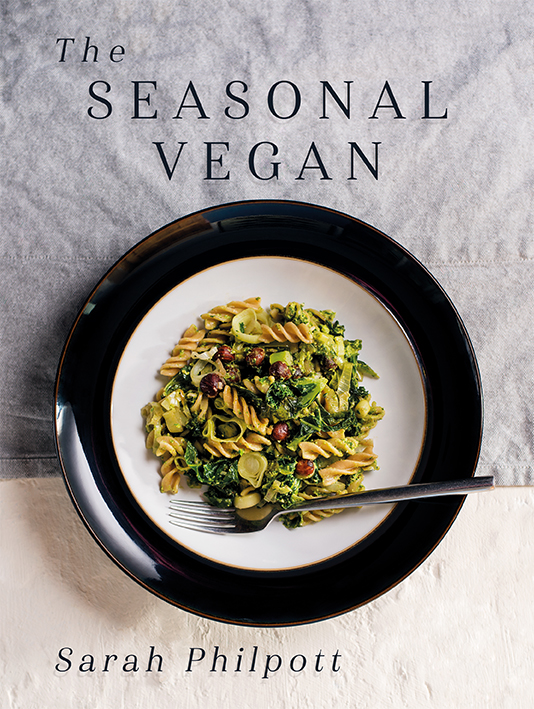
Are you trying Veganuary this year? The 70 simple but delicious recipes in The Seasonal Vegan by Sarah Philpott are a great introduction to a vegan diet and there are plenty of comforting dishes in the winter section to get you through the colder months like this hearty Swede Gratin with Miso & Maple Syrup.

The Seasonal Vegan is a kitchen diary of seasonal recipes with a delicious mixture of Sarah Philpott’s fine food writing and Manon Houston’s beautiful photography. This guide to eating with the seasons takes a realistic approach to shopping cheaply and sustainably and proves that the vegan lifestyle is anything but expensive.

Swede Gratin with Miso & Maple Syrup

1 hour 45 minutes

Serves 4-6

Photograph by Manon Houston

Ingredients

2 large swedes, peeled and sliced thinly, lengthways

2 tbsp rapeseed oil

2 garlic cloves, peeled and crushed

3 tbsp plain flour

A generous pinch of salt

500ml oat milk

250ml vegetable stock

1 tbsp apple cider vinegar

2 heaped tsp white miso paste

2 tbsp maple syrup

Salt and pepper

A grating of fresh nutmeg

First of all, make the sauce. Heat the oil in a large saucepan over a medium heat, then add the garlic and sauté for 2-3 minutes, until soft and translucent. Add the flour and salt and stir rapidly. Cook for a minute, then gradually add the plant milk and hot stock and stir through, then add the miso paste, maple syrup and vinegar. Cook for another 5 minutes, stirring all the while. Try to get out all the lumps if you can.

Now, turn the oven on to 200C. Slice the swede thinly then use a little oil to grease a casserole or large ovenproof dish. Spread a layer of slices along the bottom and cover with some of the sauce. Add another layer of swede and add more sauce, then place a final layer of swede on top and season with salt and pepper and a grating of fresh nutmeg. Cover with a lid or foil and place on the top shelf of the oven. Bake for 45 minutes then remove the lid or foil and bake for another 25-30 minutes, until golden brown. For a really crisp topping, place it under the grill (lid off) for the final 5 minutes.

The Seasonal Vegan is available on the Seren website: £12.99

Why not also try Sarah’s other book The Occasional Vegan which contains 70 more easy, home-cooked recipes suitable for newcomers and long-time vegans alike.

Create your free Seren account and enjoy 20% off every book you buy from us.

Posted on

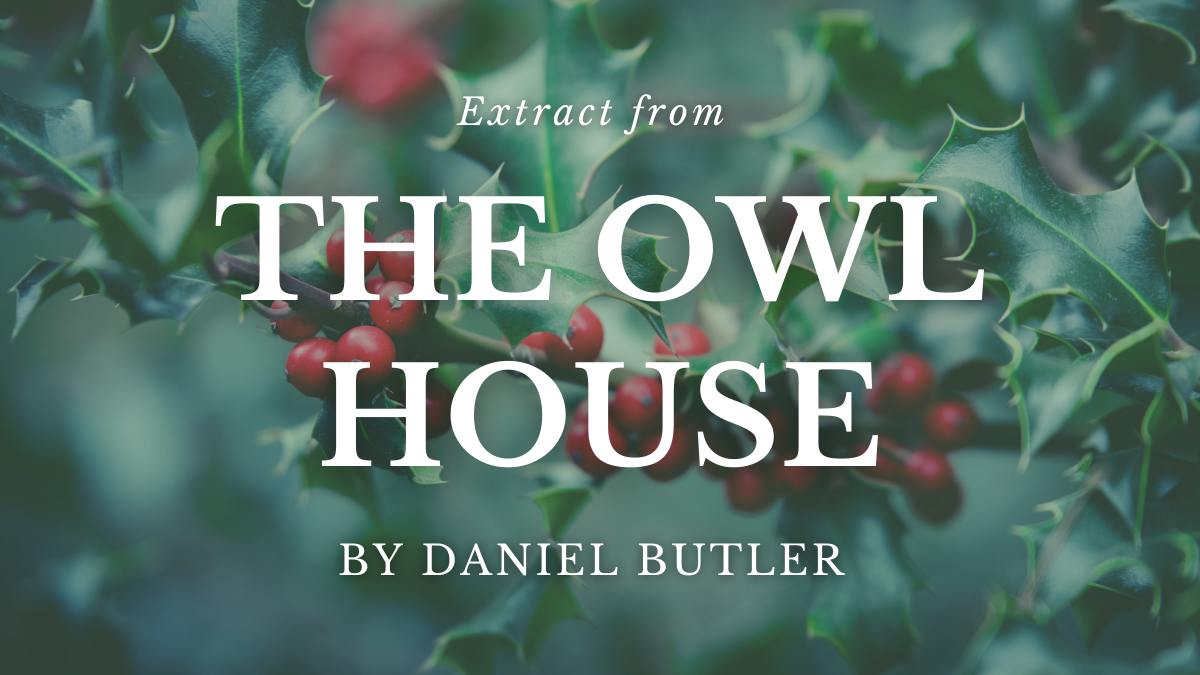
Extract from ‘The Owl House’ by Daniel Butler

If you’re still looking for a last minute gift, you can’t go wrong with Daniel Butler’s new book The Owl House. This pastoral exploration of mid-Wales is beautifully observed, full of evocative observations that can only have been lived to have been accrued. Here is a wintry extract from the chapter ‘Weather’.

Daniel Butler has lived in the Cambrian Mountains near Rhayader for twenty-five years, absorbing the world around him and charting its changes slow and rapid. His passion for the natural world was compounded when two wild birds, barn owls, nested at his farm. Through charting his relationship with the birds, he embarks on a pastoral exploration of his locale, rich as it is in wildlife of all kinds. His new book The Owl House is a rich and vivid portrait of one of the most remote and sparsely populated areas of Britain, broad in its horizons yet full of fascinating detail. The perfect gift for any lover of the natural world and mid-Wales.

Winter bird activity is not just about survival. I used to think the breeding season was a spring phenomenon, but for many creatures the concept seems to lurk as a constant background urge.

Even in the depths of winter there are signs of what’s to come. Mistle thrushes start to gang up towards the end of August in family groups which later join together to form small flocks. They give off their instantly recognisable football rattle calls as they bounce through the air above the fields, but by the end of the year these groups have disbanded. Instead of looking for the security of a flock to evade predators, the males are beginning to get a head start on next year’s breeding season. They do this by searching for a berry-laden food source. Indeed, the bird’s name comes from its fondness for mistletoe, that strange shrub, a living green sphere that hangs in bunches from the apparently lifeless limbs of oaks and apple trees. A glance at its fleshy white berries and strange green leaves and it isn’t difficult to see why the druids apparently venerated it as a sign of life in the depths of winter. The oak or crab apple host would be no more than a black skeleton, yet its passenger would appear the embodiment of life. Mistletoe is rare in Radnorshire, although it is common enough a few miles away in the acres of Herefordshire cider orchards.

My mistle thrushes are drawn mainly by the lure of another tree beloved by pagans and one which is, if anything, even more associated with Christmas. There is a particularly splendid and always well-endowed holly halfway down the lane. The berries grow slowly all autumn, green and hard and invisible among the glossy spiked leaves until they burst into view by turning red seemingly overnight.

By the time I go to collect a few decorative sprigs in early December, there will already be a resident mistle thrush. His favourite perch is near the crown to gain a good vantage point. He sits here like a miser crouched over his hoard, jealously watching for thieves or rivals which may try to steal his crown. At my approach he flies off giving his characteristic rattling calls of alarm towards the row of neighbouring pines. He perches there and with binoculars I can just make him out staring warily at me, filled with terrors that his jewelled kingdom might be raided in his absence.

He is not always in the holly, however, sometimes he is lurking among the ‘sallies’ (goat willows) that straggle along the banks of the nearby stream. This probably indicates the proximity of a sparrowhawk or goshawk, and he’s waiting for the danger to pass. Normally he’s a pugnacious fellow, fiercely defending his scarlet treasure from a host of increasingly hungry thieves. His greatest ire is reserved for sexual rivals, but he will defend his prize from smaller redwings and fieldfares, doves and even wood pigeons. He does this by intimidation rather than actual violence, flying at them only to veer off at the last second. At stake is not just a precious food supply at the leanest time of year, but the implications this has for the breeding season ahead. The fatter and fitter he is at winter’s end, the better his chances of attracting the best mate, for any bird that can finish the lean months in good condition is clearly a good breeding prospect. So he spends the winter fighting for food and sex.

By Christmas tawny owls are also beginning to stake out breeding territories, hooting out their instantly recognisable ‘toowhit, too-woo’ calls and at about the same point the garden robins become increasingly evident. The clichéd seasonal card image of a robin on a snow-covered spade handle as a representation of the season of goodwill and peace couldn’t be further from the truth. These are testosterone-pumped pugilists, determined to fight all rivals. At first they are driven by the need to protect their food supplies and territories and will pick fights with any other robin – even potential future mates. Once, after a heavy snow fall, I was looking at the crowds of finches, tits and nuthatches hanging on the feeders outside the kitchen window when my eye was caught by flying puffs of snow on the back lawn. Two robins were scrapping in the soft powder, bouncing into view as they pecked and kicked in fury, only to sink almost out of sight whenever they paused. No sooner had the last tiny crystals fallen back, however, than the furious tussle would resume.

The Owl House is available on the Seren website £12.99 or can be found in bookshops nationwide. Find your nearest independent bookshop using the Books Council of Wales or Bookseller Association shop finders.

Create your free Seren account and enjoy 20% off every book you buy from us.

Posted on

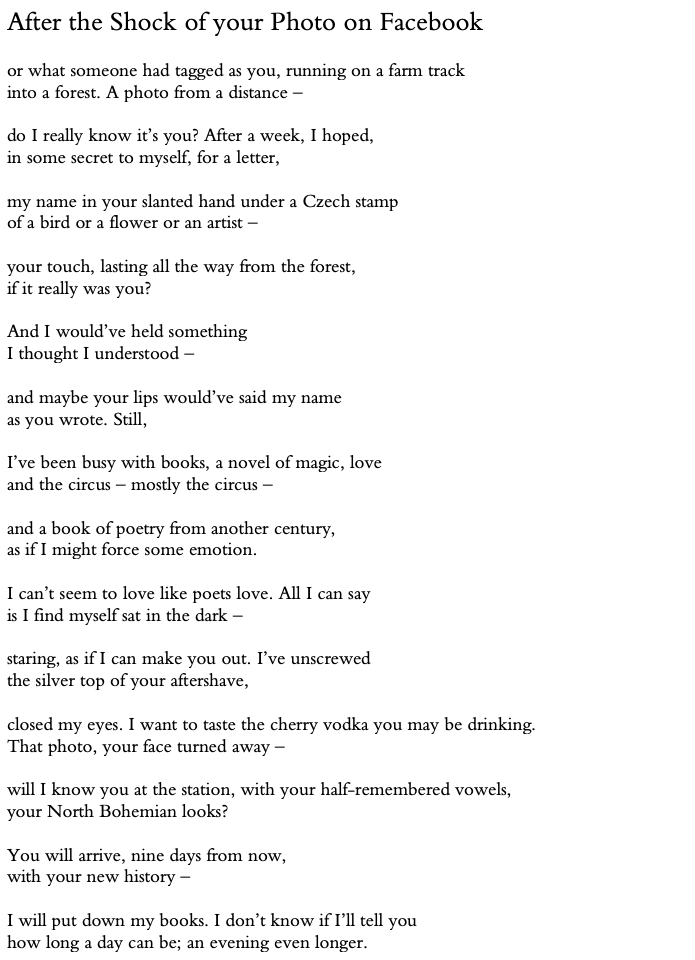
Friday Poem – ‘After the Shock of your Photo on Facebook’ by Katrina Naomi

This week’s Friday Poem is ‘After the Shock of your Photo on Facebook’ by Katrina Naomi from her latest collection Wild Persistence.

Wild Persistence by Katrina Naomi is a confident and persuasive collection of poems. Written following her move from London to Cornwall, it considers distance and closeness, and questions how to live. She dissects ‘dualism’ and arrival, sex and dance, a trip to Japan. The collection also includes a moving sequence of poems about the aftermath of an attempted rape.

“Funny, moving, surprising, unflinching and, above all else… joyous.” – Helen Mort

Wild Persistence is available on the Seren website: £9.99

Create your free Seren account and enjoy 20% off every book you buy from us.

Looking for a last minute present? Why not browse the Seren Christmas Gift Guide for a touch of inspiration.

Posted on

Short Story of the Month – ‘All Through the Night’ by Angela Graham

Our new short story of the month is ‘All Through the Night’ by Angela Graham from her debut short story collection A City Burning.

A man looks back to the night his marriage reached its tipping-point on a cliff-top in west Wales.

A city burns in a crisis − because the status quo has collapsed and change must come. Every value, relationship and belief is shaken and the future is uncertain.

In the twenty-six stories in A City Burning, set in Wales, Northern Ireland and Italy, children and adults face, in the flames of personal tragedy, moments of potential transformation. On the threshold of their futures each must make a choice: how to live in this new ‘now’. 

The story ‘All Through the Night’ was first published in the Irish journal Crannóg which nominated it for the prestigious Pushcart Prize in 2019. 

This is an excerpt, read the full story for FREE on the Seren website here.

All Through the Night

I look back now with a kind of dread, yet dread is about the future, about what’s going to happen, not what has already happened. So I dread…? The memory of pain.
          I never thought of myself as a man given to gestures. Imagination I do have, but I tend to keep it to myself.
          I remember the road: the little road under the starlight that summer. It was the year Mam and Dad sold the farm. I didn’t want it. They kept the farmhouse and the little bwthyn that had been the kernel of the homestead. You and I had used it for years already for holidays with the kids. They loved its thick walls and deep window-ledges.
          At Clogwyn Uchel, on the very edge of Wales, the roads are dark (some of them are tracks, really) and the stars sort of spread themselves out overhead, display themselves, with a careless glamour; or like something much more homely, like sugar spilt across a slate, but up there, up above. A sprinkling of sugar overhead. Very confusing if you thought about it too much. And higher into the sky – it’s hard to describe! – there’s a hazy cloud of them.  Growing up at Clogwyn Uchel and I never bothered to learn much about them. Anyway, the stars do what they do whether we notice them or not. They’re not waiting for our attention.
          On a clear night like that one they shed enough light to see your way and the chalky ground of the lane helps. It’s a glimmering path up to the bwthyn, reflecting light from far, far above. Sometimes it even seems to me as though a bit of the sky has dropped to earth because the little white stones are like a rough and tumble Milky Way between the hedges.
          You walked ahead of me, Mari. Blindly, I thought. Or like someone who’d been dazzled by something. Your feet took you.
          Your mind? Numbed.
          Probably. We all have to do so much guess-work about each other! What is she feeling?  What will she do next? What does she want?
          “Do you love him?” I called out. But you didn’t stop, or look back, or speak. I’m sure you heard me. You went on, into the little house.
          I couldn’t. I walked around it to where the sea suddenly presents itself. A shock! Always. Always that shiver at finding yourself on the edge of a cliff. Acres of water ahead in a dark mass. The endlessness of the sea. It doesn’t stop. It goes about its business, rushing and crushing, floating boats, flexing itself. That night it was shuddering.
          The stars. Some flung themselves down the sky. Mad bastards. Most looked on in a dignified way, blinking mildly at this recklessness.  And I thought of the song. Its beautiful tune.
          Holl amrantau’r sêr ddywedant
          Ar hyd y nos.

          Ar hyd y nos. All through the night.
          Nothing like the crappy English version.  Sickly-sweet, that.  And boring. “Soft the drowsy hours are creeping… visions of delight revealing… hill and vale in slumber steeping”. And the stars don’t get a look-in! Not a mention. You pointed that out to me. When you were learning Welsh. “How come…?” you asked. You were always asking that. “Why is the verb here? Why do I have to say…?” Whatever.
          And I’d say, “It just is, Mari. I don’t know why. Ask your teacher, cariad.  Gwyn knows all that stuff.”
          Yes, he did, didn’t he?

Finish reading ‘All Through the Night’ on the Seren website here.

A City Burning is available on the Seren website £9.99

Create your free Seren account and enjoy 20% off every book you buy from us.

Posted on

Friday Poem – ‘Weaving with Rushes’ by Sarah Wimbush

This week’s Friday Poem is ‘Weaving with Rushes’ by Sarah Wimbush from her debut pamphlet Bloodlines which has just been shortlisted for the Michael Marks Poetry Award 2020.

Bloodlines is an exploration of Sarah Wimbush’s own Gypsy/Traveller heritage, a journey made by piecing together fragments of distant stories and a scattered language. Along the way, we meet people who are ‘tethered to the seasons’; voices that reverberate with a sense of family and resilience, and always with that constant wonder of being part of something colourful, untamed and rare.

“A thrilling debut…” – Daljit Nagra

Bloodlines is available on the Seren website: £5.00

Create your free Seren account and enjoy 20% off every book you buy direct from us.

Enjoy this filmpoem of Sarah reading the pamphlet’s title poem ‘Bloodlines’. Film made by Isobel Turner.

Posted on

Friday Poem – Fold The River by Philip Gross

This week’s Friday Poem is ‘Fold The River’ by Philip Gross from A Fold in the River.

A Fold in the River is the fruit of collaboration between T.S. Eliot prize-winning poet Philip Gross and the visual artist Valerie Coffin Price. Philip Gross once lived on the banks of the River Taff in Wales and his journals are the source for the powerful poems. Valerie Coffin Price revisited the walking route along the river and evolved the beautiful prints and drawings that accompany the poems.

A Fold in the River is available on the Seren website: £12.99

Struggling to find the perfect gift for that hard-to-buy-for family member? Browse our Christmas Gift Guide for inspiration. Don’t forget there’s 20% off on the Seren website when you sign up to our bookclub.