Posted on

National Walking Month

Photo of a wooden sign post pointing in various directions. Blue sky and green hills roll away behind it.

To celebrate National Walking Month, we asked some of our authors to suggest walks featured in their books which anyone can enjoy. Read on to find out more. 

Walking the Valleys by Peter Finch and John Briggs
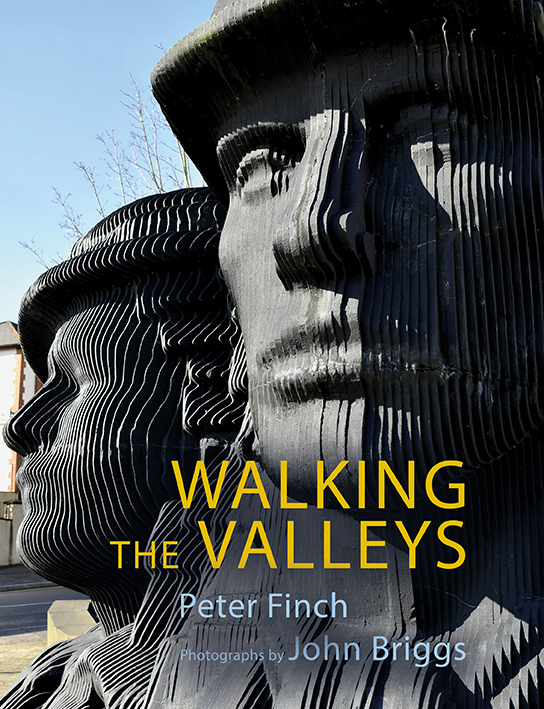
This cover shows a photo of a large sculpture depicting the heads of two miners made from horizontal black slabs. The text reads: Walking the Valleys. Peter Finch. Photographs by John Briggs.

Walking the Valleys  is a collection of fifteen walks around the South Wales Valleys. Author Peter Finch suggests trying these interesting urban rambles which feature in the book alongside John Briggs’s lively photographs.

Aberdare: ‘Four and a half miles circular walk around Aberdare, Queen of the Valleys.  A splendid walk that takes in the canal, the remains of the iron industry, the chapels and the bustling and once choir-filled town.  Ups and downs throughout and thoroughly invigorating. End up at the Cynon Museum, best in the valleys.’
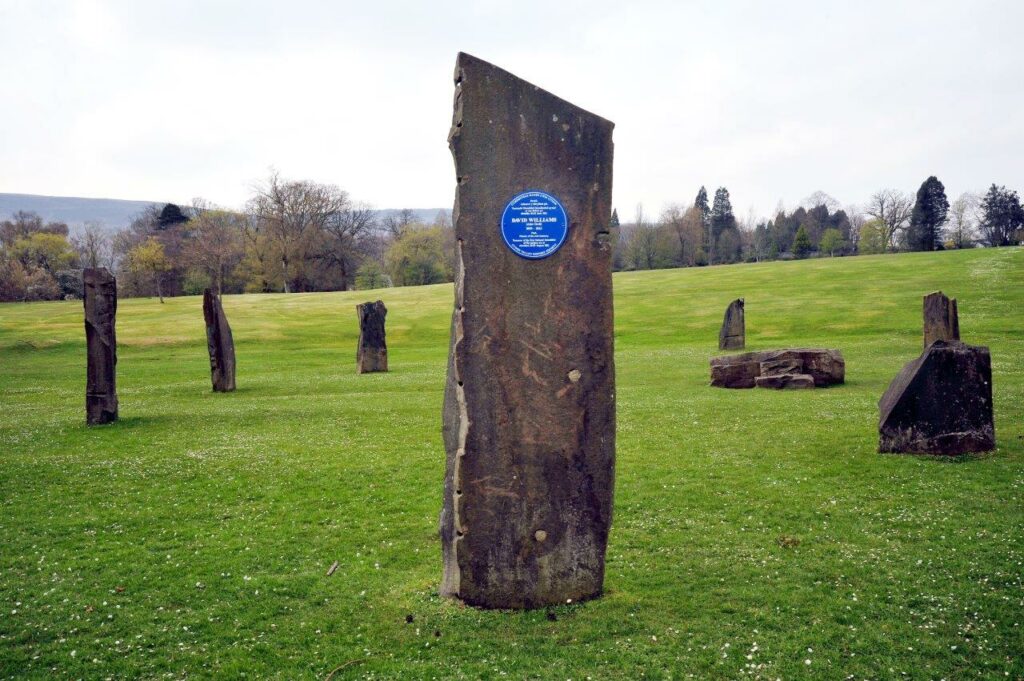
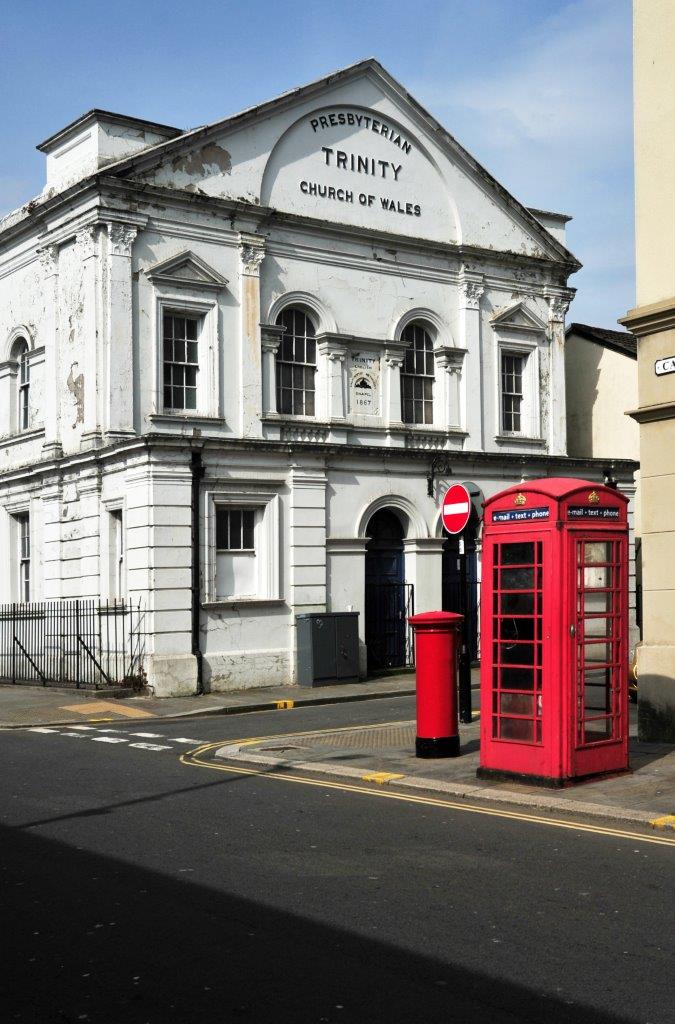
Gelligaer to Bargoed: ‘Six and a half miles from Pengam rail station to Gilfach International (smallest rail platform in south Wales) via townscape and open moor.  Pass through an historical vortex –  Roman remains, standing stones, Celtic crosses, Welsh castles, reclaimed coal tips and rushing rivers.  Start at one rail station and finish at another.’
The Edge of Cymru: A Journey by Julie Brominicks
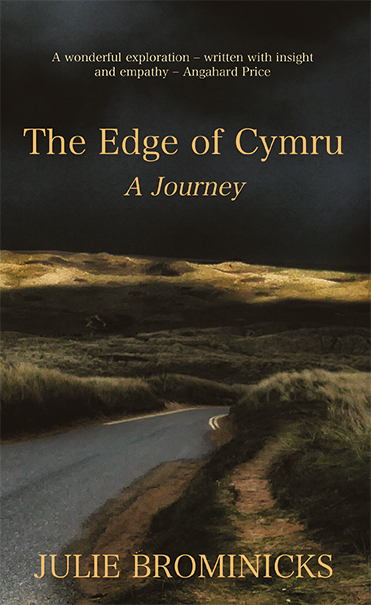
This cover shows a photo of a country road stretching into the distance. The sky is dark with storm clouds but the top of the hill is bathed in golden light. The text reads The Edge of Cymru. Julie Brominicks.

In her book The Edge of Cymru, Julie Brominicks recounts her year-long walk around the edge of Wales following the Wales Coastal Path and Offa’s Dyke Trail. Here she suggests some easily accessible sections of the route which made an impact on her.

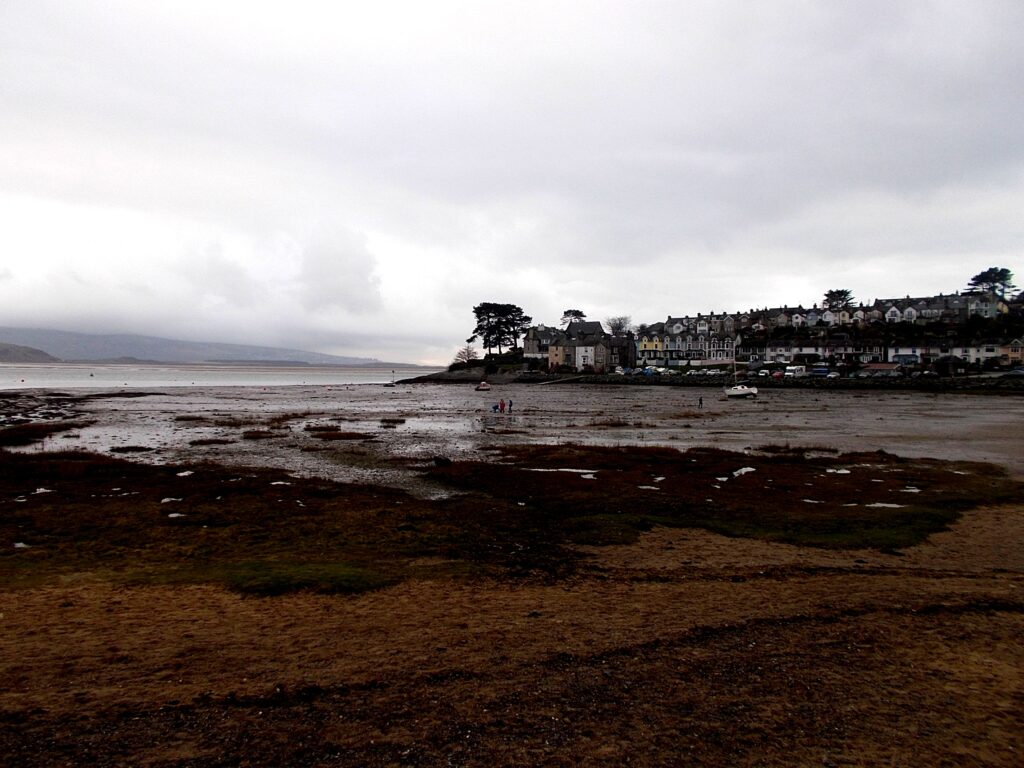
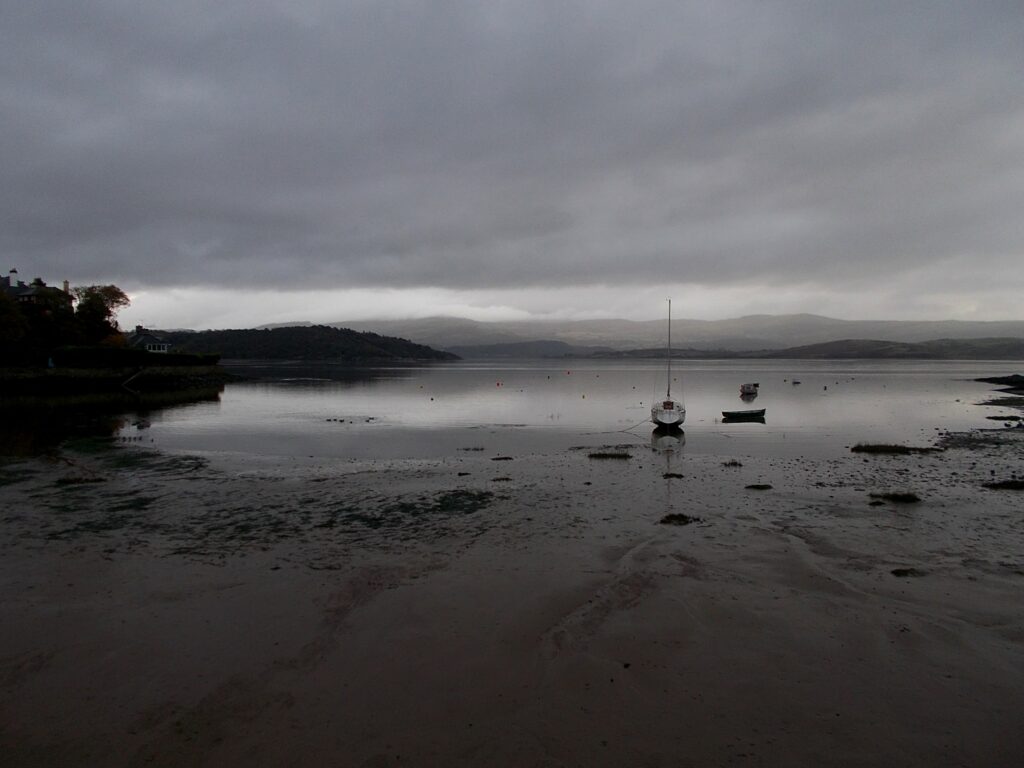
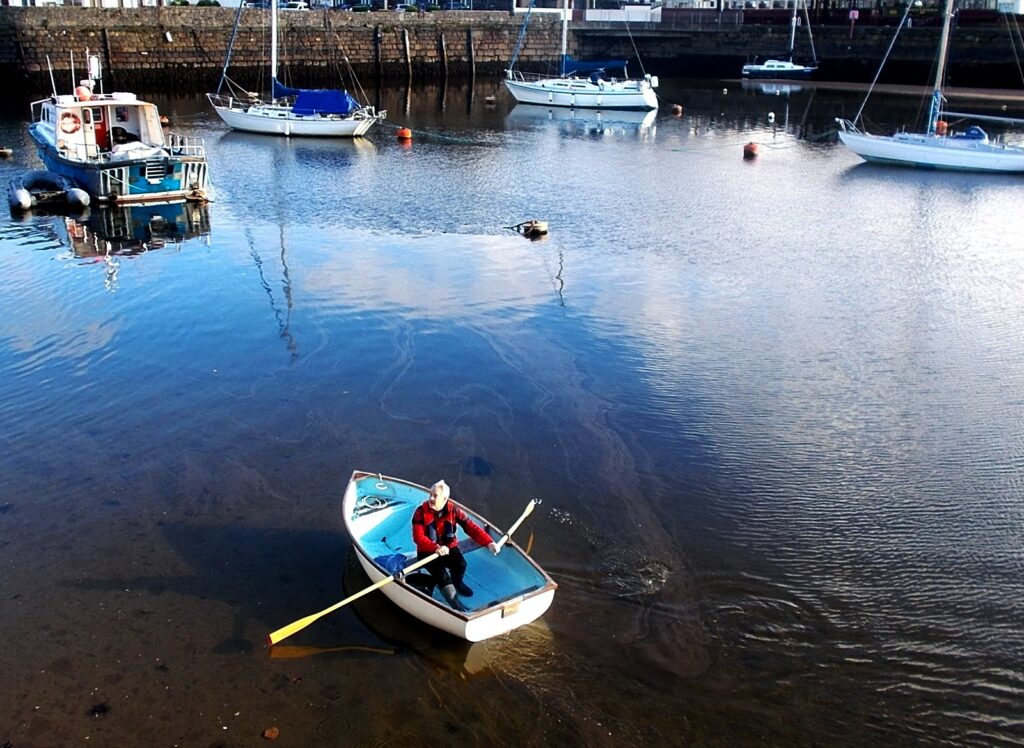
Porthmadog and Criccieth are both well served by connecting trains and buses making the coast path between them easily accessible for non-drivers like me. This is a dreamy walk. Even the fascinating steam trains, boats, traffic and noisy high street of Porthmadog seem to be tolerated by the surrounding mountains which speak of something else, stronger but silent. Afon Dwyryd is particularly poetic. In all seasons and weathers its light is nuanced, its estuary waters shift. There is intrigue in the shingly marsh at Borth-y-Gest and the labyrinthine paths and secretive inlets that follow. Less so along the beachy stretch from the headland to Criccieth but this stretch is good for being brisk. And Criccieth has a lot more going on than sweet tea-rooms, should you care to look.’
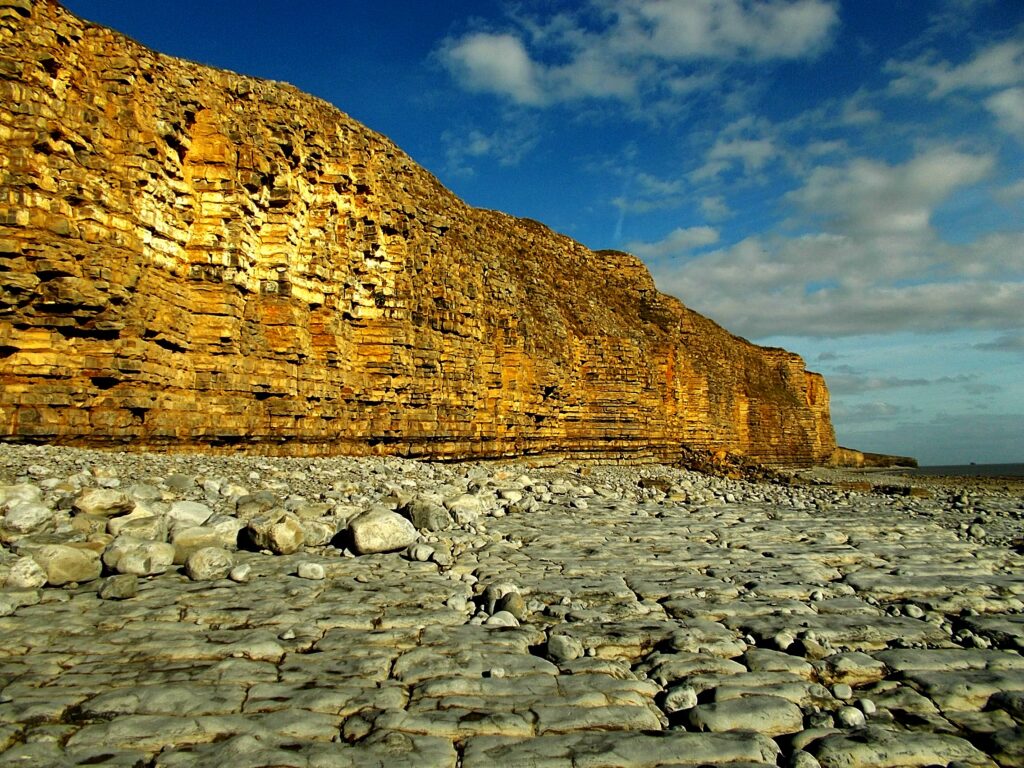
‘Meanwhile for drama with minimum effort, Llanilltud Fawr to Aberogwr is a spectacular walk largely atop an undulating clifftop plateau with less climbing than you might expect for such rocky theatre. These cliffs consisting of uplifted Triassic and Jurassic rock which is rare in Cymru, have a tendency to topple, leaving exposed rock the colour of honeycomb, and rubble like bombed cathedrals, fossils and the occasional dinosaur on the beaches. The views are expansive, the walk remote, and the wooded valleys strange unexpected islands of wildlife. Perhaps I’ve been lucky but late light here on each occasion I’ve visited has been an other-worldly chiaroscuro.’
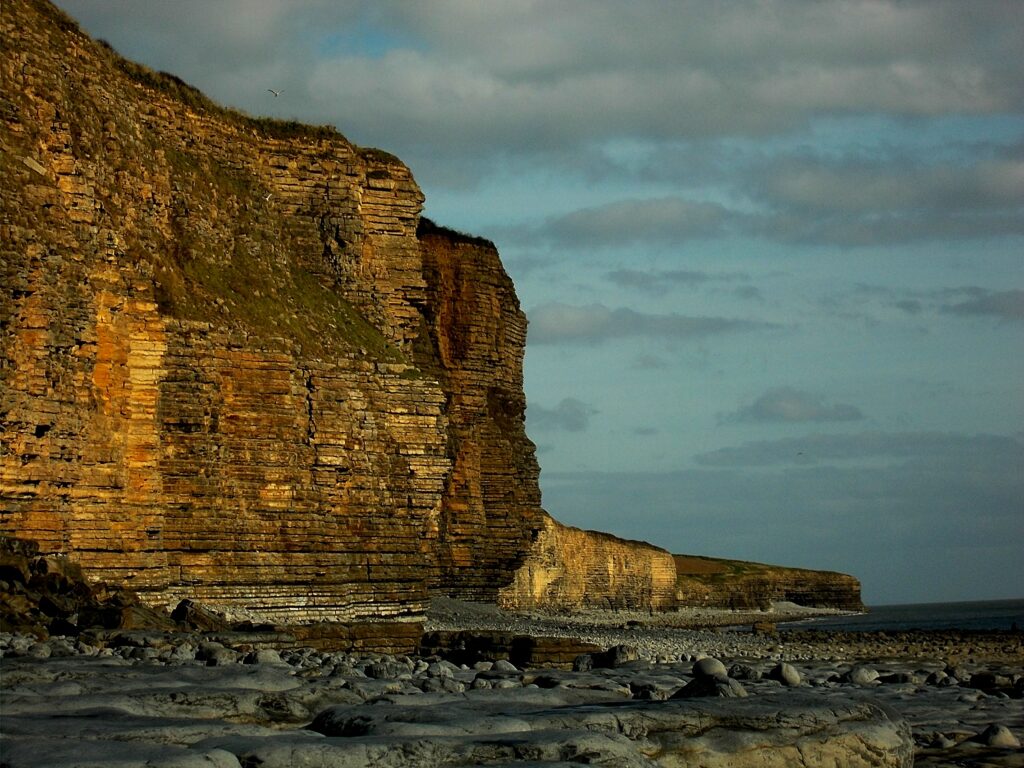
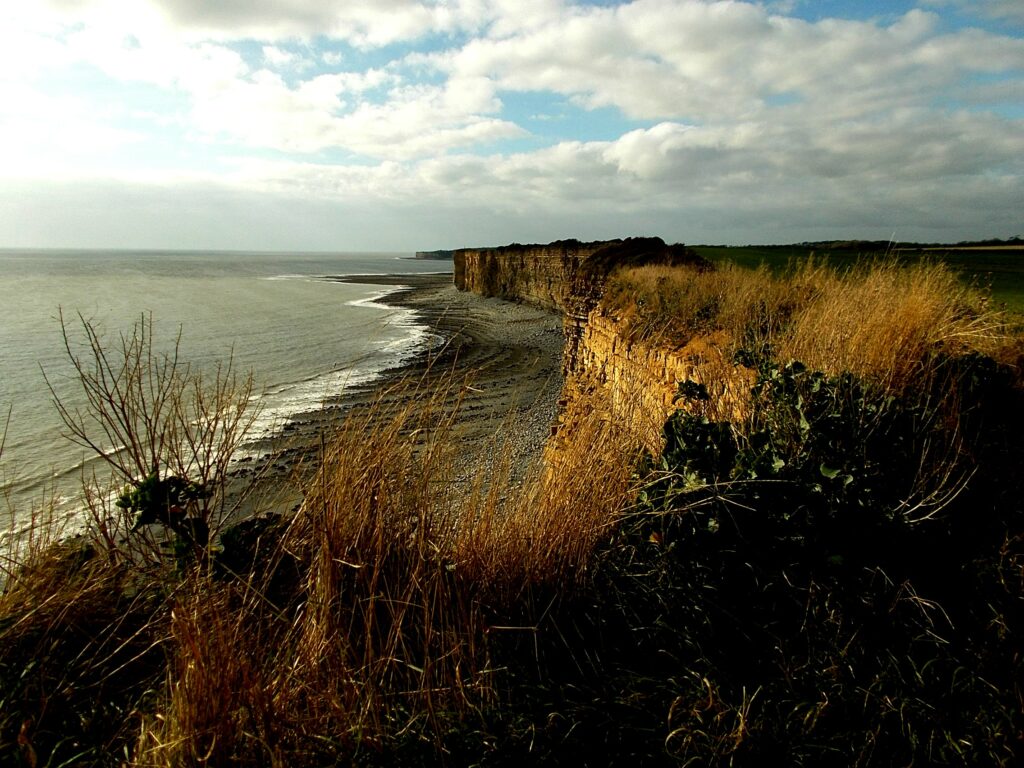
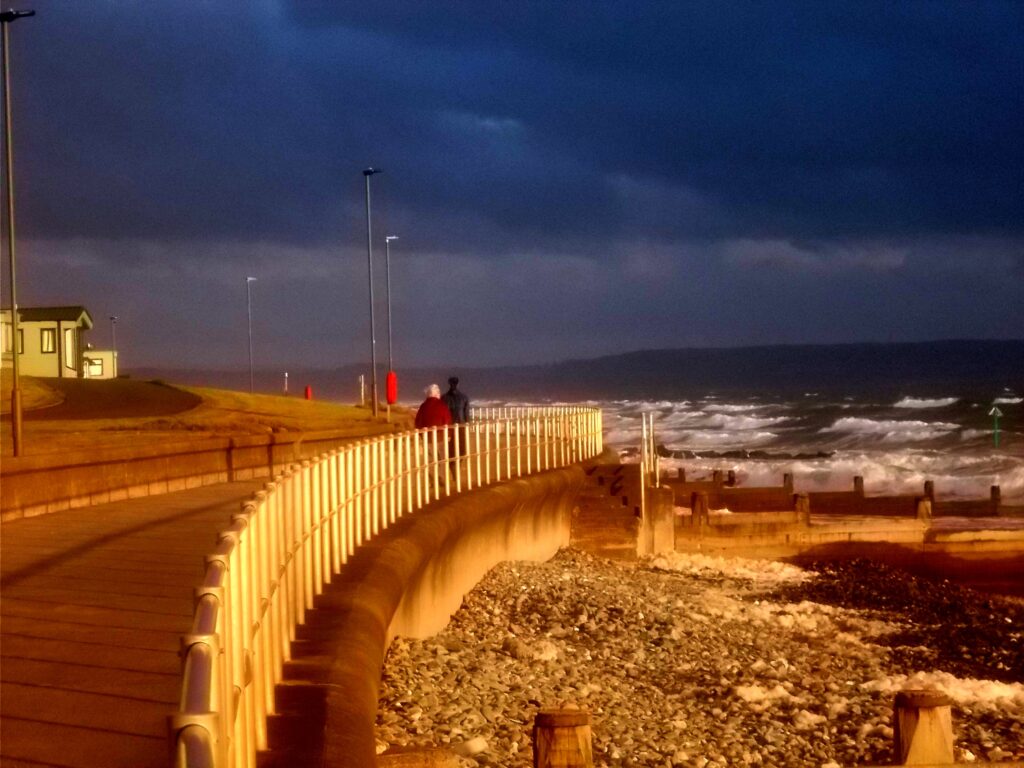
‘A few precious (or should I say precious few) parts of the coast are accessible for all. The Millennium Coastal Park at Llanelli, in essence a well-designed modern promenade, is a glorious landscaped swirl incorporating wildflower planting, ponds and new woodlands. Meanwhile the promenade at Tywyn though old-school in its ruler-straightness is no less accessible. Much of my childhood was spent on Tywyn prom, whose salt-sticky handrail is as familiar to my skin as the foam creaming up the beach like a Guinness top. A stretch of coast path at Aberporth is also noteworthy – whilst only a mile long, it is fully wheelchair accessible giving users access to a lofty vantage point over the bay. 

Walking to me, is opportunity to think, breathe, gain perspective. Yet often I feel it is perceived as a radical act. It seems I don’t ‘go for a walk’ in the expected way. I’m not mad about kit and dislike guidebooks, am not very good at directions and enjoy not knowing much where I am. Furthermore I don’t drive and I’m glad. For me, something is lost by driving some place to have a walk. Walking to me is less pastime more intrinsic, and it never ceases to puzzle me that to engage in the oldest and most reliable way of travelling can cause people so much surprise!’

Real Dorset by Jon Woolcott
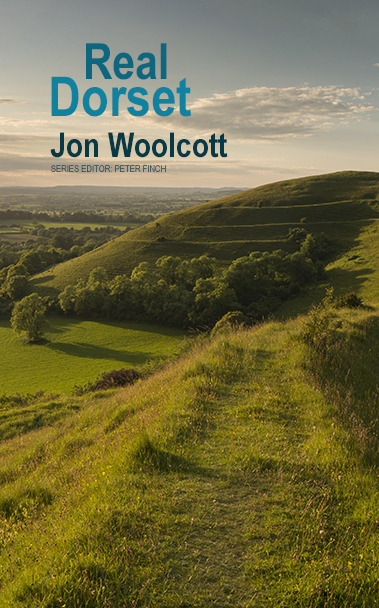
This cover shows a photo of a Dorset Hill Fort. A lush grass path leads to the domed fort in the distance which sits beneath a blue sky tinged with the golden light of early dusk. The text reads: Real Dorset. Jon Woolcott.

Real Dorset is the latest addition to the Seren Real Series of psychogeographic guides. Whilst writing the book, Jon Woolcott explored much of the county on foot and suggests visiting these note-worthy places.

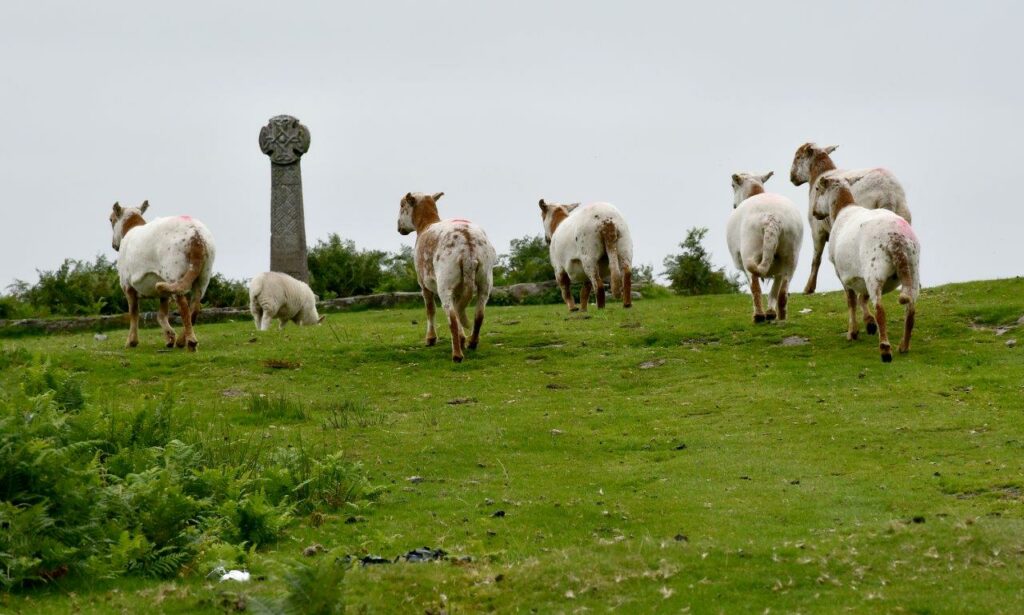
‘At events for Real Dorset, I’m always asked to name my favourite place in Dorset, or sometimes a favourite walk. It’s like picking your favourite child. Each time I choose a different place. Variety is Dorset’s wonder, from the high chalklands of Cranborne Chase to the flat clay of Blackmore to the folded valleys of the west. But my (new) favourite walk is where the land drops swiftly to the sea, around the Valley of the Stones in the south.

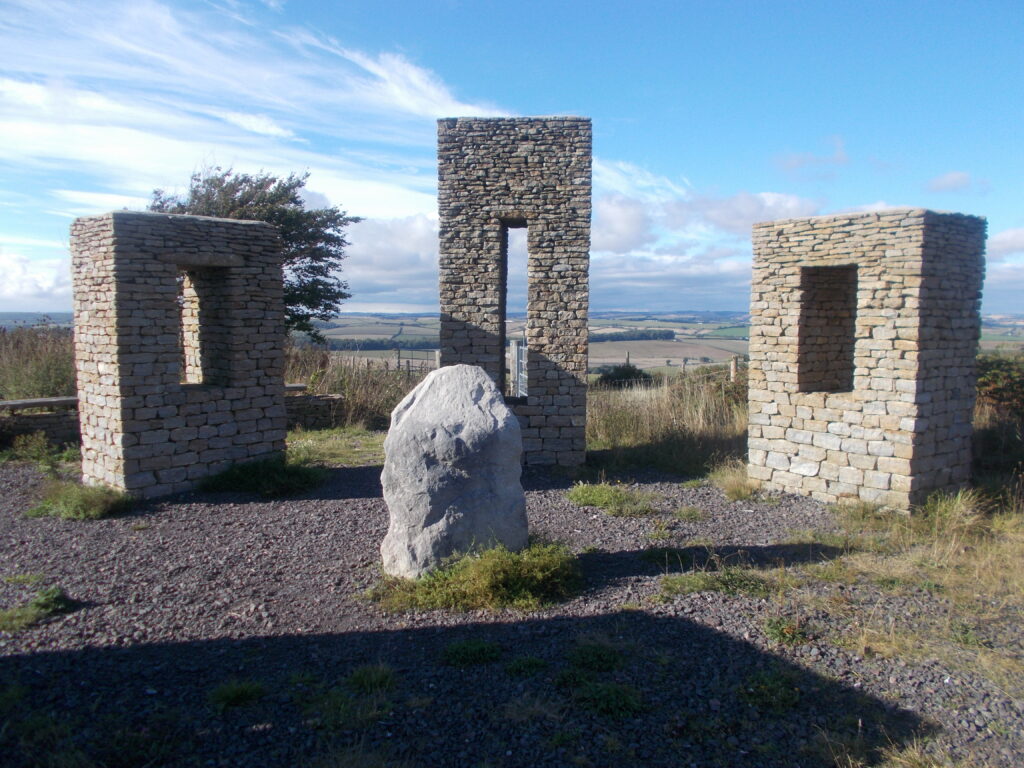
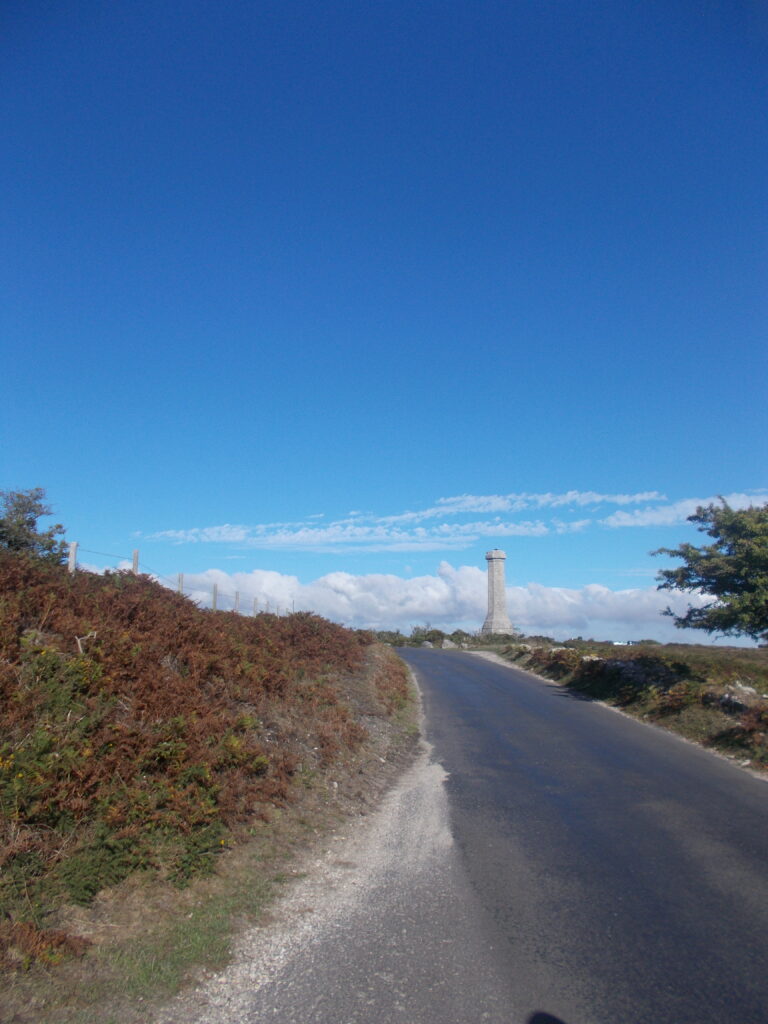
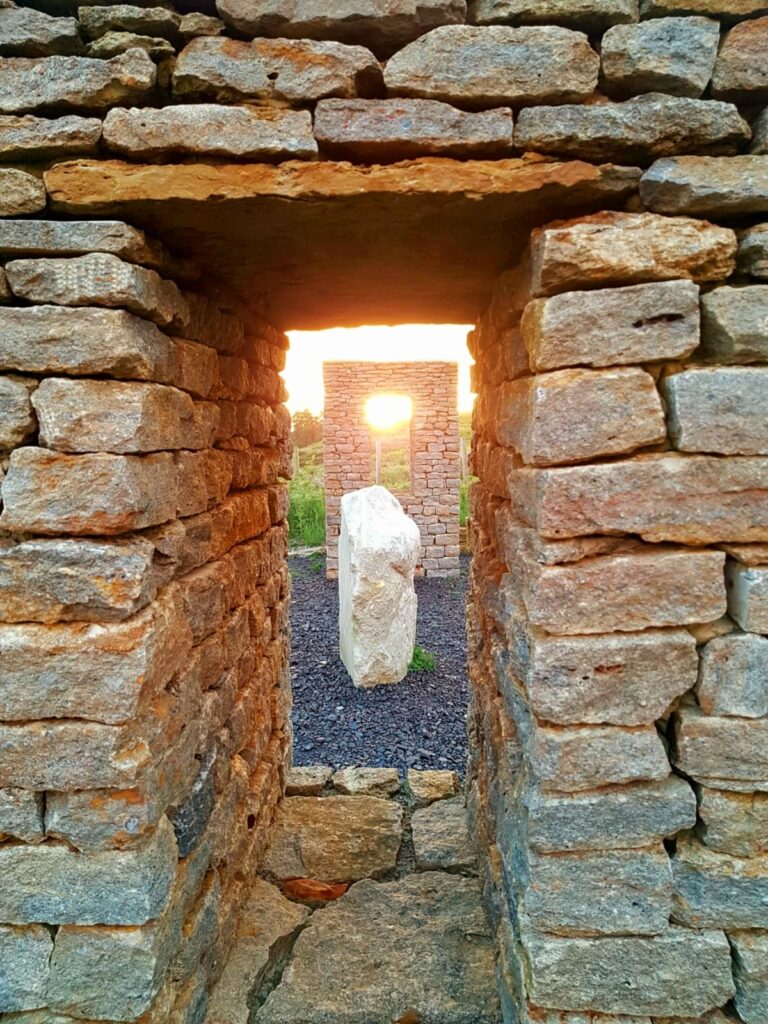
Dorset has few stone circles or dolmens – but most are gathered together around the Valley of the Stones, an ancient natural quarry formed by glaciation from which the stones for the monuments were dragged. These are all easily accessed from the South Dorset Ridgeway, which some have speculated was once a processional route between the megaliths. Walking from the sensationally ugly Hardy Monument, built for Nelson’s captain (‘Kiss Me Hardy’) you can find The Hellstone, a dolmen dramatically reconstructed by the Victorians, The Grey Mare and her Colts, a long barrow covered mostly now by earth, and the remote Kingston Russell Stone Circle. Close to the Hardy Monument itself, is a new stone circle, built only in 2018 and which aligns to the midsummer sunrise. Aside from the stones, the views are magnificent and the walking generally easy and flat. Take a sandwich, watch the stones, feel the ancient power.

Map: OS Explorer OL15 (Purbeck and South Dorset). By car: park in the National Trust car park at the Hardy Monument. By public transport: First Bus run services along the coast which stop at Portesham.’
Edging the City by Peter Finch

This cover shows a simple illustration of part of the Cardiff border. The text reads Peter Finch, Edging the City, A Journey Round the Border of Cardiff.

If you’re still hungry for some walks but fancy yourself more of an urban explorer, check out these suggestions from Peter Finch. During lockdown, he decided to walk to Cardiff border, as Covid restrictions confined people to staying within their local authority. As shown in his book Edging the City, walking the city’s edge allowed Finch to view it as never before, and you can too on these routes.

The Peterstone Gout Diversion
Peterstone Wentloog to the Gout and back (via the golf club)

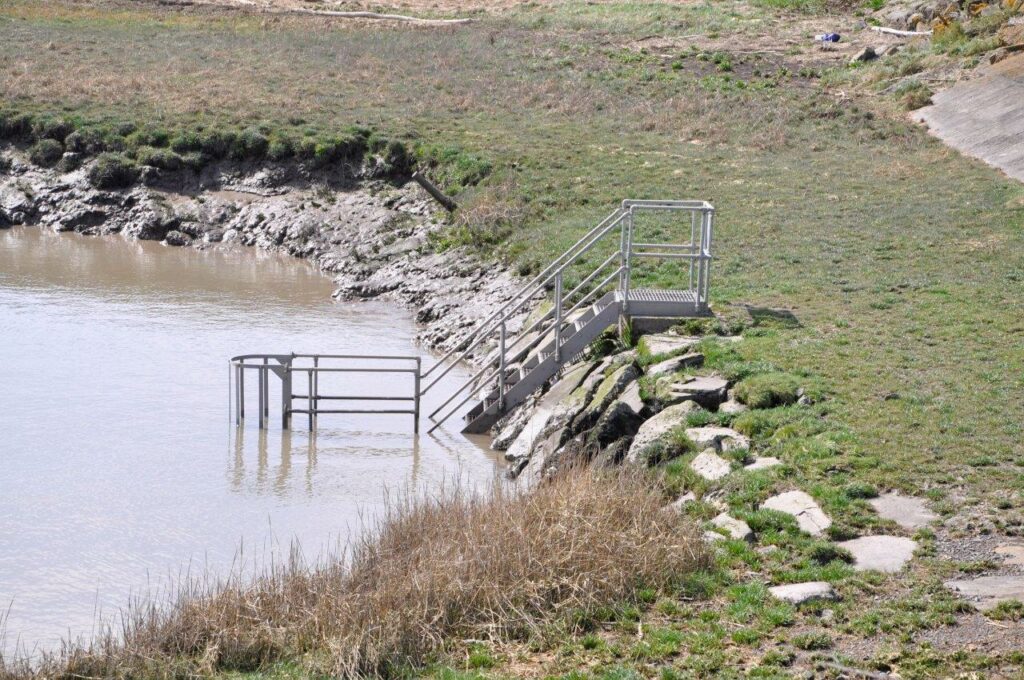
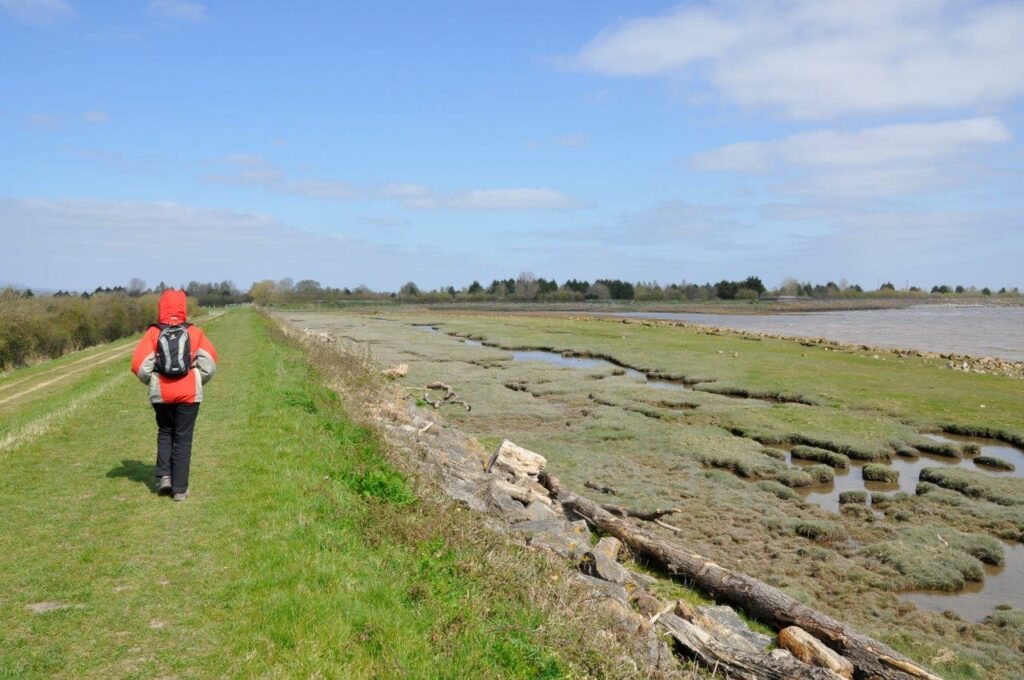
An easy circular three mile ramble on Cardiff’s weirdly flat out of this world coast land.  Pills, drainage reens, sea-operated sluices, the remains of a medieval harbour, site of the great flood of 1607 and a golf club that will let non-members into the clubhouse.’
Graig Llysfaen

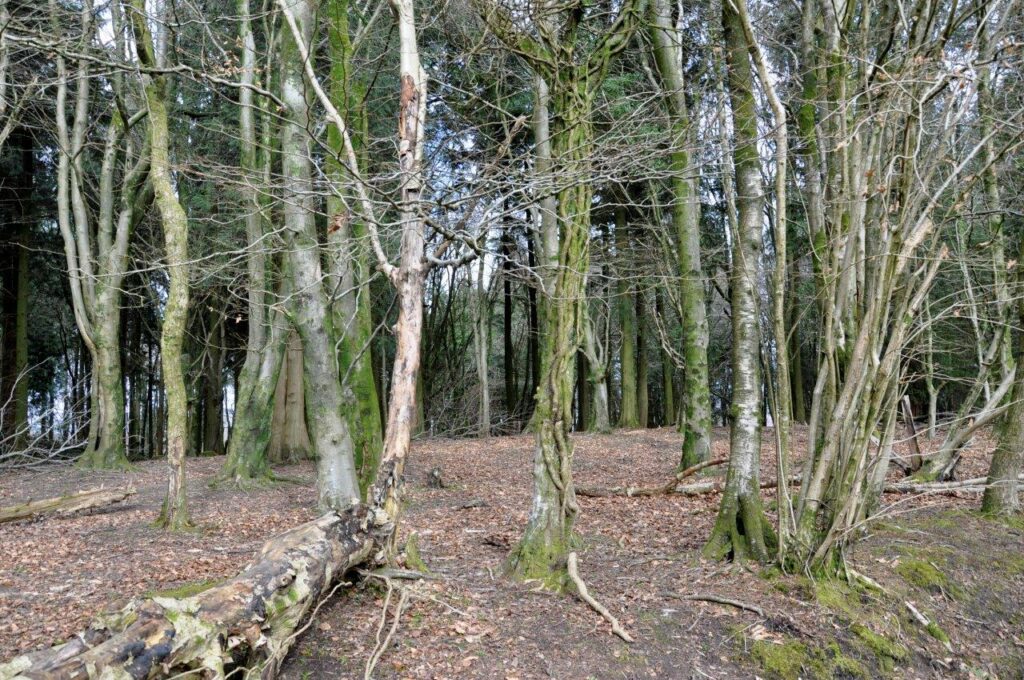
‘Breath-taking views from this slide along Cardiff’s protecting ridge.  Start at the Ty Mawr, take in a cold war communications tower, Cardiff’s most northerly extremity in a farmer’s field and the magnificent trees of the Coed Coesau Whips. Start at the Ty Mawr and finish at the Maenllwyd Inn.’
We hoped you enjoy exploring the walks suggested by our authors. If you end up following one, remember to tag us in on social media @SerenBooks. Happy National Walking Month!
Posted on

Friday Poem – ‘FISH’ by Peter Finch

This week’s Friday Poem is ‘FISH’ by Peter Finch. Originally published in The Machineries of Joy (2020), it now features in Volume Two of his Collected Poems which was published in 2022.

The covers of Peter Finch's collected poems show mirrored image of a geometric pattern made of grey 3D hexagons. The text reads Peter Finch Collected Poems.

Peter Finch’s remarkable career spans over fifty years. He has been taking poetry to places it didn’t know it wanted to go from the beginning; blending the avant-garde, concrete, visual, sound, performance and more conventional forms to create something unique. His new two-volume Collected Poems, edited by Andrew Taylor, cement his reputation as one of Britain’s leading poets.

Volume One brings together work from long lost chapbooks, broadsheets and limited editions, as well as more conventionally published work. Volume Two focuses on the second half of Finch’s career with poems from later collections sitting alongside works from his prose books and those engraved in the public realm on sculptures, walls and buildings, particularly in his native Cardiff. Nerys Williams and Ian McMillan provide appreciative forewords to each volume.

FISH
He wrote the things decades back
He did them underwater
He pulled them out like sonic fish,
Dada hake, Bauhaus trout, Schwitters skate,
Showed them to Ormond who shook his head.
You’ve energy, Finch, but
they’ll not put that on your grave.
Flailing in the Welsh fog.
This man punctuates using the chance methods
of John Cage. Potato’s Potatoe’s Potatos.
There are monkeys and there are typewriters
and the two shouldn’t be allowed to mix.
Your leaflet advertising your amateur magazine
is a joke, is it not?
Beer mats, they read better, boy.
Bwthyn, Llanbradach, Cariad, Hiraeth, Pysgodyn.
Finch has never used words like those.
Vous êtes une nation poétique san concours4, dit Chopin,
piling on the micro-particles sans son sea
sip seeeeth yat rat ata ata ata ata aaaah
tick tick tick ttttt ttttt tteeee. Chopin this is
an incorrect claim. Wales is a nation of
standard-stoppages
engaging with pasteurised modernism
forty years outside the frame.
I sound now like Kingsley Amis,
it’s come to this at last.
Asked him once to send in a poem.
Got a postcard back reading
Mr Amis regrets but he
cannot do as you ask.
4. You are a poetic nation without competition

Order the Collected Poems Complete Set on the Seren website for £30.00, or buy them individually for £19.99 each.

The Machineries of Joy is available on the Seren website: £9.99

Peter Finch will be reading alongside Philip Gross at Seren First Thursday in Cardiff on Thursday 2nd March. Find out more here www.serenbooks.com/event/first-thursday-march-peter-finch-and-philip-gross.

Seren First Thursday March. Peter Finch and Philip Gross. In person and via Facebook Live. Thursday 2nd March 7:30pm GMT. Tickets £3 on the door on wach live on Facebook for free. Supported by Seren and Literature Wales.
Posted on

Friday Poem – ‘Politics of Water’ by Peter Finch

This week’s Friday Poem is ‘Politics of Water’ by Peter Finch. Originally published in his 1996 collection Math, it now features in Volume One of his newly published Collected Poems.

This cover features a photo of a geometric concrete sculpture made up of hexagons. The text reads: Peter Finch Collected Poems One 1968-1997

Peter Finch’s remarkable career spans over fifty years. He has been taking poetry to places it didn’t know it wanted to go from the beginning; blending the avant-garde, concrete, visual, sound, performance and more conventional forms to create something unique. His new two-volume Collected Poems, edited by Andrew Taylor, cement his reputation as one of Britain’s leading poets.

This cover features a photo of a geometric concrete sculpture made up of hexagons. The text reads: Peter Finch Collected Poems Two 1997-2021

Volume One brings together work from long lost chapbooks, broadsheets and limited editions, as well as more conventionally published work. Volume Two focuses on the second half of Finch’s career with poems from later collections sitting alongside works from his prose books and those engraved in the public realm on sculptures, walls and buildings, particularly in his native Cardiff. Nerys Williams and Ian McMillan provide appreciative forewords to each volume.

POLITICS OF WATER
there (here) are (were) places (pimples) in (on)
Wales (wheels) I (we) don’t (can’t) go (gone)
reservoirs (places) that (this) are (will be) the (a)
subconscious (subterranean) (subtotal) (subliminal)
(superfluous) (serenity) of (in) (on) a (the)
people (people). Here (where) were (will be)
pimples (scars) (gouges) (savage stripes)
on (in) wheels (fields) (folds) I (you) (we)
can’t (can) (cannot) gone (grown) (green)
places (princes) (parsons) (people) this
(those) will be (will not) a (the)
subterranean (terminal) (termination) (treeless)
invasion (inversion) in (of) the (the) people
(person) (personal) (private) (so private)
(so personal) (only) it is (never) not (yours)
(mine) (moan) (theirs) (his) (hers) (ours) (whose)
dig (dirge) (deep) (down) (down) (down)

Order the Collected Poems Complete Set on the Seren website for £30.00, or buy them individually for £19.99 each.

We launched the Collected Poems at Jury’s Inn in Cardiff earlier this week. Watch the live stream recording on demand on our AM channel now amam.cymru/seren.

Photos by John Briggs.

Posted on

Friday Poem – ‘City’ by Peter Finch

This week our Friday Poem is ‘City’ by Peter Finch from his 2020 collection The Machineries of Joy.

The Machineries of Joy is the vibrant, uproarious, pointed & wildly entertaining new collection from renowned Cardiff-based performance poet, Peter Finch. Known for his inventive and multi-faceted formal strategies & his best-selling psycho-geographical peregrinations around Wales and the USA, he gives us the world in all its contemporary complexity.

The Machineries of Joy is available on the Seren website: £9.99

Create your free Seren account and enjoy 20% off every book you buy direct from us

Last year Peter joined us for an event as part of the Seren Stay-at-Home Series. Rewatch it in full on our Youtube channel:

Posted on

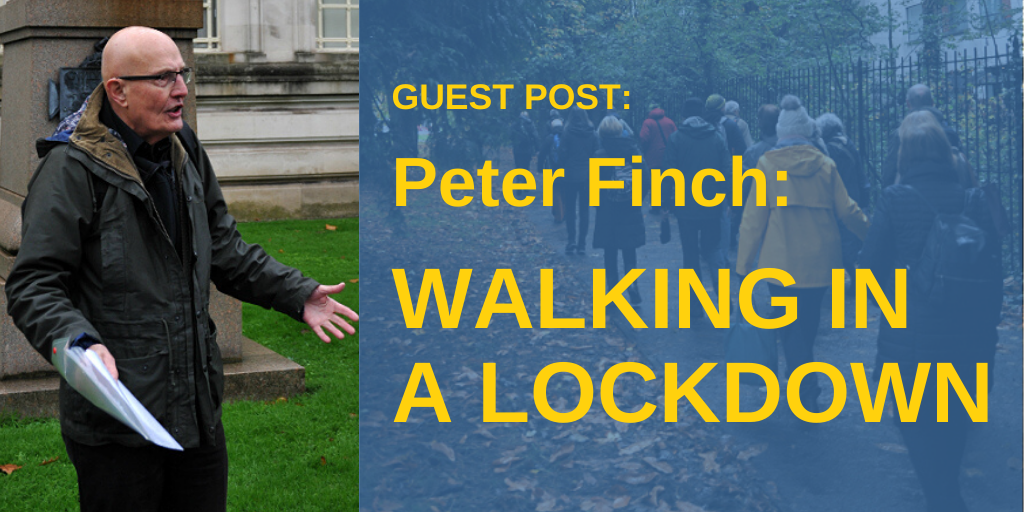
Guest Post: Peter Finch – Walking in a Lockdown

This morning, to celebrate National Walking Month, we have a guest post from avid walker and author of Walking Cardiff Peter Finch. He tells us what walking in a lockdown looks like for him when separated from his fellow wanderer John Briggs and how it is affecting work on their next project.

Walking in a Lockdown

Out, up the hill, it’s always the same hill.  Weave into the road to avoid the next guy.  Smile.  Sometimes they smile back.  Climb.  Runners pass, headphoned, sneaking up behind silently and then zooming on in a rush of huff and sweat.  Advice I’ve read tells me that being laterally near a runner isn’t too bad.  It’s getting caught in the slipstream you need to avoid.  How do I police this?  I’m thinking of adopting a Friar Tuck walking pole.  Thrash it about.  Make myself utterly anti-social but certainly safe.

On the way back down, with the on a clear day splendid views of the city’s high-rise and the sea beyond, I try to imagine myself elsewhere.   Walking the Valleys again. The follow on project to Walking Cardiff.  Writing such a book during lockdown, getting there by Google but pretending it’s real, is akin to studying Macbeth through Coles Notes and never reading the actual text.  Not that we are without some touch of genuine experience.  Both John Briggs, my fellow Valleys wanderer, and I have walked Valley landscape and township extensively together in planned excursion.  We’ve also done this individually in swift half days to scope a place out -a couple of hours rambling Ponty looking for traces of Dr William Price and Iolo Morgannwg and a few more in Ron Berry’s Blaen Cwm checking out the entrance to the Rhondda tunnel and the end of the world streets Charlie Burton painted so well.

We’ve walked these places historically – mine often recalled through fog – a reading with Mike Jenkins at the Imp in Merthyr, as a child accompanying my father to work in Ystrad Mynach,  to one of Harri Webb’s legendary parties at Garth Newydd.  John’s have usually been done through actual photographs.  He’s sent me a great thirty-year spread of black and white coal pits taken across the whole Valley landscape, a detailed set of Merthyr Tydfil done one Christmas in 2014, and then, his piece de résistance, shots taken on a Literary Tour (which, under the auspices of Academi, I organised but, for unfathomable reasons now, did not go on) in the company of Daniel Williams and Nigel Jenkins to look for traces of Idris Davies in the valley top town of Rhymney.


Rhymney was the place we were right in the middle of exploring when the virus struck and our ability to walk freely was rudely curtailed.  I’d walked around the centre on my own – found the Idris Davies plaque on the house where he died, seen the Michael Disley statue of the miner and the steelworker back to back over one of Pete Seeger’s Bells of Rhymney and had a cup of tea and a piece of doorstep toast in the café with no windows on the High Street.  Looking later at John’s pics, taken in 2011, that statue looks bright and new.  It looked stained and neglected when I passed.

John had one well up on me.  He’d also visited the actual Davies grave in Rhymney Cemetery and stood listening to Nigel’s sonorous voice recite extracts from Gwalia Deserta.  Idris Davies, the people’s poet, the miner who could rhyme and make memorable our collective fears and aspirations.  His Maggie Fach and 1926 I’d help turn into poster poems, famous throughout Welsh bedsits for a whole generation, back in the 70s.  It was good to trail in his wake.

South of Rhymney station was a place where neither John nor I had yet ventured.  Here was land once occupied by Bute’s great Egyptian-styled Union ironworks but now vacant and worn.  On it  stood the operation of K J Services Ltd.  This presented the world with the greatest assemblage of broken, bust and otherwise abandoned mechanical diggers and JCBs anyone could imagine. Running for miles.  Visible from space.  There’s a YouTube tour, I discovered, and an overhead walkthrough available on Google Earth.  That’s all we have for now as the virus chases our tails.  When it’s dead John and I will visit in person.   For all this virtual stuff, Zoom meetings, Skype chats, Facetimes, Houseparty romps and desk research until my eyes ache you just cannot do without first person.  Don’t let anyone say different.

Peter Finch

28/04/2020

Photographs taken by John Briggs.


Walking Cardiff is available on the Seren website £14.99

Don’t forget you can get 20% off when you sign up to become a member of our book club. 

Posted on

Friday Poem – ‘Wales’ by Peter Finch

Our Friday Poem this week is ‘Wales’ by Peter Finch from his forthcoming collection The Machineries of Joy. Peter will be reading from this new collection at the Seren Cardiff Poetry Festival on Saturday 15 February.

The Machineries of Joy is the vibrant, uproarious, pointed & wildly entertaining new collection from renowned Cardiff-based performance poet, Peter Finch. Known for his inventive and multi-faceted formal strategies & his best-selling psycho-geographical peregrinations around Wales and the USA, he gives us the world in all its contemporary complexity.


The Machineries of Joy is available to pre-order on the Seren website: £9.99

Peter will be reading from The Machineries of Joy at the Seren Cardiff Poetry Festival on Saturday 15 February at 12pm. Book tickets online here.

Create your free Seren account and enjoy 20% off every book you buy direct from us.

Posted on

An interview with Cardiff author & legend, Peter Finch

Interview Cardiff Peter Finch

The Eisteddfod will soon be in full swing in Cardiff’s beautiful Bay area. We can’t wait to welcome you to Wales’ capital city – and to introduce you to our resident Cardiff expert, Peter Finch, who will be signing copies of his new book on the Welsh Books Council stand (84) on Wednesday 8 August, 1:00pm.

As you prepare for the marvellous week ahead, we thought you might enjoy learning a little more about the Welsh capital – so here is our interview with Peter Finch, who – as ever – is full of fascinating insight into his home city.

Peter Finch

Peter, you have been writing about Cardiff for quite some time now, with the first ‘Real Cardiff’ book having appeared in 2004. What do you perceive as the most radical change Cardiff has undergone in the last decade?
Changes to Cardiff seem to work in twenty year cycles rather than decades.  We didn’t have the Bay nor the Barrage, the Millennium Centre not the Senedd in 1980 but by 2000 we did.  In 2000 and other than right on campus there was barely a purpose-built student let available anywhere in the city.  Today they are everywhere, gargantuan, gleaming, glowing, growing, rocketing up in every district from right next door to the old Gaiety Cinema on City Road to the city’s highest of new high rises, the Bridge Street Exchange, at the bottom of Charles Street.  In the pipeline are plans for more.  Purpose Built Student Accommodation (PBSA) erected against a background of weak planning control and easy to manage building regulation they are the cash cows of property developers everywhere.   Put them up and then apply for change of use.  The cityscape will never be the same again.  In 2000 we had a green belt running right round the city.  Today that belt has shifted to become instead a green wedge, a green splash, a green smear.  In its place are the city’s new districts.  Plas Dwr, Churchlands and all the others. Cardiff expands. And expands. And expands.

The ‘culinary odyssey of City Road’ is marvellously well documented in Real Cardiff: The Flourishing City. For hungry Eisteddfod-goers, where would you recommend trying first?
.CN, the internet suffix for China, is the name of the city’s best Chinese eatery by far.  Here you can get top end Sichuan king prawn in chilli and pepper sauce, healthy option Kung Po chicken, and north east China salad in a style you’ll find hard to beat anywhere else in the city.  Failing that and for kebab fans Al Wali’s Omani Restaurant half way down and hiding behind a bus stop is pretty decent.  For Omani read Persian or Iranian or Egyptian, or Middle Eastern.  City Road is a feast from one end to the other offering meals at price points everyone can reach.

If you could be transported to any period of Cardiff’s history, which would you choose?
I think I’d want to see the heroic period of Cardiff’s industrial expansion in action first hand.  That would mean arriving in 1861 at the Royal Arcade and finding the very first Cardiff Free Library on the first floor.  Out the back they’d have a time machine, naturally, so having got here I could then get back.  I’d use it to slide back a further few years to 1849 to see Brunel move the Taff in order to build Cardiff General Rail Station for his South Wales broad gauge railway.  I’d spot a few numbers and then rush forward to 1886 to visit the brand new Coal Exchange, have a drink in the just opened Grand Hotel on the new Westgate Street, buy some cockles at the brand new indoor market and finally climb up the shiny new statue of John Bachelor to top his head with a road mender’s lamp, traffic cones not yet having been invented.   This was the period that made Cardiff, when the population boomed and when modern invention and business innovation flooded the place.  That flourishing must have been simply thrilling to watch.

Psychogeography is a particularly inventive way of mapping a place – how did you first become interested in it?
The Situationists who flourished between the fifties and the seventies were international social revolutionaries and avant garde artists.  I was running the journal second aeon at the time, a Welsh-based home for a world of avant garde poetry, so naturally I took note.  These people interested me.  They were an onward growth of the Dadaists and the Surrealists and seemed to me to be right at the cutting edge.  One of their members was Guy Debord ­– the man who invented psychogeography, the exploration of mainly urban environments for what they were rather than where they led.  The sense of place became more important than the place itself.  Why not view a city as an entity rather than a destination?  This was something I needed to try for myself.

Peter Finch Real Cardiff Flourishing CityWhat did you find most challenging in your process of writing Real Cardiff: The Flourishing City?
In writing these books you don’t sit about waiting for inspiration to strike, no hoping for those rays of Blakean stuff to come pouring down through the air and infest your work.  None of that.  This is work..  I need to immerse myself in my subject. Research it, walk through it, think about, talk about, listen to it, feel it.  I make notes.  Constantly.  I record things on the camera, take snaps, use the phone.  I check out the maps.  I check out the old ones and then the new ones.  I check  just how the used to spell the name of the place I am interested in.  Why was Rumney called Rompney? Why was Cardiff called Kairdiv?

I accumulate what I need to say and then find a way of starting out and saying it.  The starting is so important.  Get that right and the rest will flow. I work hard walking and thinking, note book always with me, and into it I make notes of how my start might go.  The walking helps the flow.  I ignore passers-by, I ignore interrupters, I am working so this poor and rude behaviour is entirely reasonable.

It’s also true that you then need to check and then check again.  I reread and redraft.  I get help from others to check too and I listen to what they say.  I recheck my spellings.  I look at what others have said and I try not to repeat them.  I acknowledge them if I do.

What’s the most challenging?  Transcribing interviews.  Getting that right.  And remembering to ask the right questions in the first place.  I always double check with my interviewees.  I let the subject see what I intend including and ask them if they are happy.  If they aren’t or I’ve got it wrong somehow then I put it right.

And finally, in the closing pages of The Flourishing City, you wonder about Cardiff ‘how it could be’, and tell us, ‘Cities are never finished’. Is it also true, then, that you’ll never be finished exploring this city of yours?
I think that once a city gets above a certain size there will always be new things to discover about it.  Not only is Cardiff big enough to keep me permanently involved but it is also changing constantly, often at a bewildering rate.  No matter which part of it I find myself in there are always new things to look at, new roads to walk down, new paths to follow and new routes to create.  Tracking the lost can be just as thrilling as delighting in the newly discovered.  The moment I finish a volume of Real Cardiff something new or different or previously unseen appears.  Buildings get built.  Buildings get torn down.  Populations flourish.  Roads and walkways bend and turn offering new and different vistas.  This capital of ours is a great Welsh place, far more involving than most people think. Try it. Just arrive and open your eyes. Real Cardiff: The Flourishing City will give you a few hints.


Real Cardiff: The Flourishing City is available from the Seren website: £9.99

Join our free Book Club for 20% off every book you buy from us.


Posted on

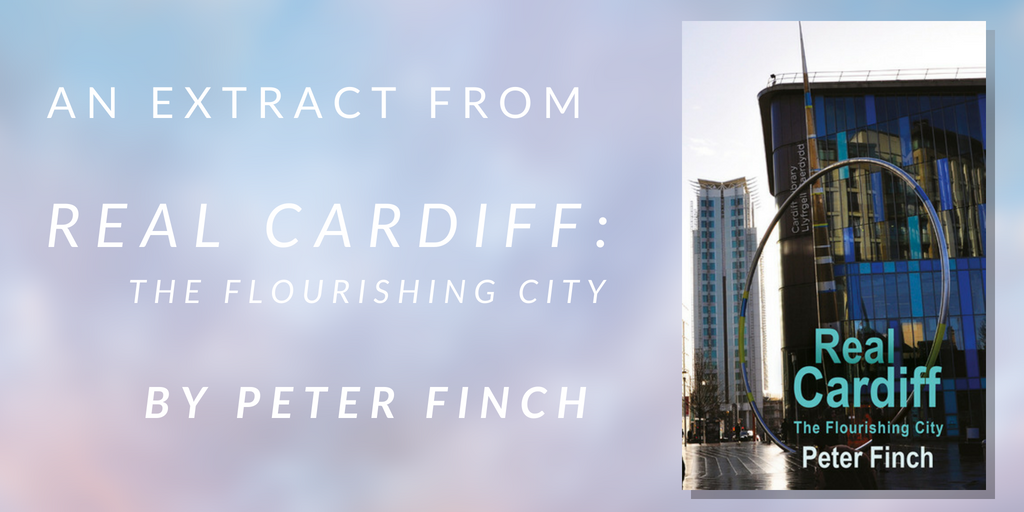
An extract from Real Cardiff: The Flourishing City, by Peter Finch

Real Cardiff Peter Finch extract

Though certain parts may be seeing rain this weekend, the warm weather continues – and what better time than summer to explore all the UK has to offer?

Peter Finch Real Cardiff Flourishing CityOur Real Series – a collection of intimate and entertaining guide books written by local writers – offers an insider’s view of the places it celebrates. The most recent addition to the series is Real Cardiff: The Flourishing City by Cardiff author and legend Peter Finch. So whether you’re an armchair traveller, or someone looking forward to a trip to the Welsh Capital sometime soon, we hope you enjoy this glimpse into the history of Cardiff – specifically, the area in which famous children’s author Roald Dahl grew up.

The whole of the Real Series – and all our other Seren books – are 50% off until midnight, Sunday 29 July, on the Seren website.


ROALD DAHL’S CARDIFF NORTH LEY

I catch the train at Cardiff Central. This is the City Line which began in the city’s north east and now, after looping in a great U through the city’s heart is about to head north again. I’m in the two-car Sprinter and I’m standing. Every single seat is occupied by pupils from Bishop of Llandaff High School. Kids, bags, blazers, headphones, chewing.
The windows stream as the train steams. Around us is railway land, an industrial cityscape full of rail sheds, engine bays, carriage washeries, repair shops and assembled new track in stacks like a giant train set. This south west of the city on view from the tracks is the capital with its guard down. Backs of mosques, tottering streets, unkempt gardens, the yards of Brains brewery, warehouses stacked with building materials, and even more open and right now empty rail beds. It reminds me of London, how the land looks as you reach Paddington or Waterloo.
But it doesn’t last. After the carriages have disgorged a hundred uniformed school kids at Fairwater, the cuttings emerge, wooded banks and scrub masking the housing above. It’s leafy suburbia giving an impression of empty countryside. A green west Cardiff, a place that doesn’t change.
It’s freezing. This is January. The train has reached Radyr where it will rest a while before returning the way it came. I’m off, up the footbridge steps, plastered thickly with Network Rail road salt. No one but no one will slip and sue here. In a previous, smaller, steam-filled incarnation, the Radyr train would have served Roald Dahl’s father, Harald, who did a daily commute in to what was then called Bute Road Station. His ghost is there on the platform now, eye glasses, three-piece suit, white starched collar. He looks like a disapproving headmaster. His railway season ticket was found inside his expensive leather wallet when he died in 1920. That was on April the 11th. The ticket was valid until the 23rd.
Like most in Cardiff at this time Harald’s business was coal. With his partner Ludvig Aadnesen he had established a business as a colliery agent and provider of all that ships docking in the world’s leading coal port would need. Provisions, ropes, oil for their lamps, food. The profits flowed.
In 1917 Harald had bought Tŷ Mynydd (Mountain House), set on rising ground a mile north of the Radyr rail station. As befits the successful businessman Harald was, here was life on a grand scale. 150 acres of land, outbuildings, cottages, a piggery, lawns, formal flower borders, terraces, its own electricity generator and an enormous Victorian house.
In photographs it looks like part of Hogwarts. It had multiple chimney stacks, mock Tudor gables, a tiled roof larger than most churches’ and greenhouses to the side to rival those of Dyffryn House, to the west of Cardiff. This is the place Roald, the great author, remembers with nostalgia, recalling the fields full of shire horses and dairy cows. There are photographs of him as a four-year-old out on the lawns and terraces, in the fields among the sheaves of corn, sitting on the wall of the piggery and of the house itself, which is resplendently decorated with both the Union Jack and the Norwegian Flag. No Welsh dragon in sight.
Like Cefn Onn, Tŷ Mynydd also had railway connections. The house had been built in 1883 by George Fisher, Director of the Taff Vale Railway. When he died in 1891 the property passed to his son, H. Oakden Fisher, Chair of both the TVR and the Cardiff Gaslight and Coke Company Ltd, although his real interest lay with the military. He was Lieutenant Colonel of the Glamorgan Volunteer Artillery. Harald bought the estate in 1918. When he died in 1920, his second wife, Sofie Magdalene, moved to smaller premises back in Llandaff. Tŷ Mynydd then became the property of the architect Sir Beddoe Rees, MP and for a brief time in the 1930s was turned into St Maur’s College, a small private boarding school for girls.
In 1967 the house and most if its outbuildings were demolished. This was the first full-blooded rush at clearance following the war. Cardiff was expanding. Property developers had no interest in the preservation of inefficient, draughty piles such as Tŷ Mynydd. On its lands a whole housing estate could be build. It had to come down.
I take the road up out of the station’s gully. Already the old shunting yards and waste ground lining the river have been populated with high density brick town housing. There’s little public space. Most structures are distinct from each other, laid at angles as if thrown there like dice. Room for breath is restricted and corners are rounded. Access is on turning roads named after De Clare, Norman Lord of the City, Aradur Hen, an ancient local croft that gave us the name Radyr, and Goetre Fawr, the farm that once worked these lands. Behind the aptly named Junction Terrace is a field replete with three grazing llamas, tall-necked beasts which, despite the ll of their name, are about as common in Wales as kangaroos. Food To Go which has signs offering coffee and warmth is closed. I head up along rising Heol Isaf in the direction of the Village of Fire.
In 1841 the ten cottages of Pentre Poeth (Warm Village) were all that existed of what is now Morganstown, upper Radyr – that part of Cardiff north of the M4’s périphérique grip. This is where the workforce of the developing fire-filled ironworks at Pentyrch lived, an element of Cardiff’s lost industrial heritage. Heol Isaf was and still is the main road to Tŷ Mynydd. It’s no distance to cover. In my ears I’ve got Emmylou playing through the buds. 1970s country, when what she sang was the edge. Alabama down home. Dahl wouldn’t have stood for this. He preferred Beethoven.
The Tŷ Mynydd estate has been built on; the fields are gone. The line of the original entrance path running up from Tŷ Mynydd Lodge has been preserved in the rising bends of MaesYr Awel. The detached late-sixties houses along it turn eventually to a U-shaped cluster of apartment blocks. Cwrt Tŷ Mynydd is the appropriately named first; after that the developer gave up and resorted to names with a strong English resonance – Norfolk Court, York Court, Windsor. It’s a marketing thing. Here, near the eastern edge of Wales, where the language thins, the Anglo norm dominates.
Beyond the apartment courts, circled like a residential wagon train, there’s a copse, ancient pine trees, all that remains of what once was here. For the Dahls of the nineteen teens this would all now be virtually unrecognisable. A local walking his young daughter to the primary school at the former estate’s southern end tells me, yes, he knows about Dahl and the great house. He points me back towards the still extant Tŷ Mynydd Lodge which faces Heol Isaf. And there it is, the gatehouse preserved, doing time now as an up-market B&B. The Llandaff Society have installed a celebratory plaque above the front door. Over the years since Roald would have known it the building has been much extended. But there’s enough original left for the Dahlian spirit to soar. I can see him outside, short pants, laced leather shoes, hat, overcoat with enormous buttons. Mama holding his hand.


Real Cardiff: The Flourishing City is currently half price on the Seren website: £9.99 £4.99

Thinking of visiting cities elsewhere in the UK? Find the perfect insider’s guidebook to enrich your trip:

Poet Ian Spring overlays the current map of Glasgow with the map of his memory and experience.

‘Bard of Barnsley’ Ian McMillan delves into the past of the area of South Yorkshire in which he was born and still lives.

Poet Chris McCabe looks at the art, attractions and ‘oozy’ docklands history of this slice of London.

Novelist Clare Dudman explores her richly historic city as you won’t find it in other guidebooks.


See the full list of Real books on the Seren website: all half price until midnight, Sunday 29 July!

Posted on

Top of the Non-Fiction: what to buy in the half price sale

Top of the Non Fiction Seren half price sale

There’s still time to take advantage of our big January sale – which ends midnight, Friday 13th (not such an unlucky day, after all!)
All our books are half price, and that includes a gloriously diverse range of non-fiction: everything from biography to art, history to criticism. Here we pick a few of our favourites.

The Girl who Lived on Air by Stephen Wade examines the strange story of The Girl Who Lived on AirSarah Jacob, ‘the Welsh fasting girl’. Though not the first anorexic, she was arguably the first to cause a national furore, and was made to be the centre of a lucrative and also media-hungry ‘spin’ on the nineteenth century nexus of knowledge between science and superstition, folk-belief and religious asceticism. Stephen Wade covers new ground in examining the medical issues surrounding the case, the legal complexities, the prison life of Sarah’s parents, and the significance of folklore and superstition.
Alun Lewis biographer John Pikoulis covers new ground in Alun, Gweno & Alun, Gweno & Freda by John PikoulisFreda, which examines Lewis’ life and writing through the particular prism of his relationships with his wife, Gweno, and Freda Aykroyd, an ex-patriot in India whose house provided respite for British officers on leave. The book argues that Lewis’s charged relationships with these two women were the key to both his writing and his mental health, and goes on to explore the circumstances surrounding Lewis’ sudden death, and weigh into the ongoing debate over whether it was accidental, or suicide.
Losing Israel by Jasmine Donahaye is more than biography. This moving and honest losing_israelrgbwelsh-book-of-the-yearmemoir, which won the Wales Book of the Year, Non-Fiction Category (2016), recounts the author’s struggles with identity and history after she stumbles upon the collusion of her family in the displacement of Palestinians in 1948. Biography, travel writing and birdwatching are all weaved together in this fascinating re-evaluation of memory, family and cultural identity.
Robert Minhinnick’s Watching the Fire Eater, newly back in stock, takes us Watching the Fire Eater Robert Minhinnickfrom Copacabana to urban Yorkshire, from New Mexico to a Welsh funfair, from The Netherlands to the Clare coast. Minhinnick’s essays cover a variety of subjects – sunbathing, third world poverty, the demise of Margaret Thatcher, to name a few – but at the core this is a vivid series of attempts to strip away the exhausted mythologies of the writer’s own country and the increasingly-packaged places he visits.
The Roots of Rock, from Cardiff to Mississippi and Back is Peter Finch’s The Roots of Rock, from Cardiff to Mississippi and Backserenade to rock and popular music, and an infectiously nostalgic trip from the 1950s onwards that is guaranteed to enthrall music lovers. From an old valve radio playing in the Cardiff suburbs in the ’50s to live music today in America and beyond, Peter Finch tours countries and decades to illustrate how rock and pop has evolved, giving us sharp-eyed accounts of gigs from Champion Jack Dupree to the Garth Mountain Boys, visits to musical shrines and theme parks – Dollywood, Grand Ole Opry, Graceland, Stax – and music, lots and lots of music.


See our full Non-Fiction list on the Seren website, and hurry – sale ends midnight, Friday 13 January.

Save

Posted on

Author Appearances at the Seren Christmas Pop-Up Shop

chapter pop-up shop author appearances

The Seren pop-up bookshop is returning to Chapter, Cardiff, for its third year. You’ll find us in Chapter’s entrance hall, Friday 9th to Monday 12th December.

Come and have a browse of our books, take advantage of free Christmas gift wrapping, and chat with Seren staff about publishing, writing, reading – and your love of books. We look forward to seeing you!

When: 9-12 December, 10am–8pm
Where: Chapter Arts Centre, 40 Market Road, Cardiff, CF5 1QE

Seren authors will also be stopping by, so why not come along and grab a special signed Christmas gift or two?

author-appearances-chapter-pop-up-16


Peter Finch will be joining us on Saturday. A poet, author and critic, Peter is author of the hugely popular Real Cardiff trilogy, and series editor for the Real Series. He has published numerous poetry collections, including perennial bestseller Zen Cymru, and his Selected Later Poems. His latest book, The Roots of Rock, from Cardiff to Mississippi and Back, explores the evolution of rock and popular music, and is the perfect gift for the music lover in your life.

David Foster-Morgan will be coming to the pop-up shop on Sunday. David has been widely published in a number of journals including Poetry Wales, Envoi, Smiths Knoll and The Interpreter’s House, and was recently shortlisted in the Times Literary Supplement Poetry Competition. Masculine Happiness is his innovative debut collection, and signed copies will be available if you come along at 12.


We look forward to seeing you at the Seren Christmas pop-up shop!