Posted on

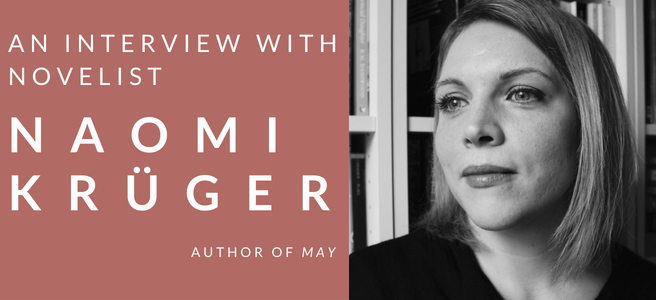
An interview with novelist Naomi Krüger

Interview novelist Naomi Kruger

Naomi Krüger MayNaomi Krüger’s debut novel, May, provides a sensitive and moving insight into the life of the title character. We see May in glimpses through the eyes of her loved ones, and from her own perspective: from the past to her present in a care home, where she now struggles to maintain her identity and memory as she wrestles with the effects of dementia.

What moved Naomi to write such a novel, and how did she go about it? In this interview, Seren’s Rosie Johns asks Naomi all about the creation of May.


What do you think it is about fiction that makes it a good form in which to address subjects such as dementia? 

Dementia is something that inspires a lot of fear and is often represented in the media in reductive and sensationalist ways. What I think fiction can do is give nuance to these kinds of representations. It can allow us to imagine what it might be like to live with a disease that affects memory, identity and perception. It can remind us that someone with dementia is more than a diagnosis. It can complicate the stereotype. But in some ways dementia resists narrative representations because the very things we need to write and read a story (the ability to make connections between past and present, the ability to anticipate what comes next) are disrupted. So it’s a complex thing to try to narrate in first person.


In May, there are several different narratives of which May’s story –despite being the thing to connect them all – is only a part. What influenced your decision to depict this story in such a way? 

I wanted May to be part of a community of voices. In some ways this was a practical choice because it would be hard to sustain a whole novel in such a fragmented consciousness. But I also wanted to show that May’s identity is inter-subjective. She has dementia but she is also part of a family and a community. She is influenced by her past experiences and her current environment in the care home. As I began writing the other narratives, interesting parallels emerged. Many of the other characters feel lost or alone. They forget things, lie or fail to speak. They are not as different from May as you might imagine at first. There are opportunities for connection and although the characters don’t always take these, I wanted readers to sense these spaces, to see May through the eyes of other people and build up a complex picture of someone who struggles to speak fro herself but still has things to communicate.


Given the delicate nature of the subject matter and the abstract style in which you approached it, did you find narrating May’s perspective difficult? Were there any other characters whose narratives were particularly easy or difficult to write? 

Capturing May’s perspective was a shifting experiment. At times it felt like a giant imaginative leap. Although she is a fictional character I did feel a sense of responsibility to research the effects of dementia and spend time with people who live with the disease to get a sense of the reality. But of course this varies from person to person and diagnosis to diagnosis. Ultimately it is an approximation of something often beyond language that has to feel as ‘real’ as possible. Afsana was another character that I felt a real responsibility to. I didn’t find her difficult to imagine or write, but because I was taking a cultural leap I spent a lot of time researching and trying to make sure the details were right.


Another character we get very close to throughout the novel is May’s grandson, Alex. He finds his grandmother’s deterioration particularly hard to deal with, especially when her memory of him fades. What would your advice be to those who find themselves in a similar position to Alex?

I think it can be very scary and upsetting to feel unseen and unknown by a person who has  previously been a big part of your life and identity. This can hit particularly hard for young people who are still in the process of finding their place in the world. I am very fond of Alex as a character. Although the book is not autobiographical his experience is very loosely inspired by my own reaction to my grandfather’s Parkinson’s related dementia. He lived with my family for my whole life and died when I was sixteen. When he began to get confused and hallucinate I didn’t deal with it very well. I went from daily contact to avoiding him as much as possible. When he was transferred to a home I didn’t visit him as much as I could have. I didn’t know what to say. My advice to my younger self would be to go anyway, to meet him wherever he is. To listen, to communicate through music or photographs or touch, to feel the fear and still go.


Finally, if you could recommend one book that readers of May will also love, what would it be?

I’m going to cheat and say three!

Moon Tiger by Penelope Lively: A book that plays with memory, hope and regret in really interesting and beautiful ways.

The Turning by Tim Winton: A collection of interconnected short stories set on the Australian coast. I love the way the characters re-emerge, trespass and become more and more complex with each story.

Olive Kitteridge by Elizabeth Strout: Another collection of stories, but this time focused on one main protagonist. I love how the book builds layers of relationships often through the mundane and domestic details, the moments that build and accumulate.


May is available from the Seren website: £8.99

Join our free Book Club for 20% off every book you buy from us.


Posted on

Short Story of the Month | ‘The Visit’, Jaki McCarrick

The Visit Jaki McCarrick Short Story of the Month

May’s Short Story of the Month is ‘The Visit’ by Jaki McCarrick, an award-winning writer of plays, poetry and fiction.

the scatteringMcCarrick won the 2010 Papatango New Writing Prize for her play, Leopoldville, and her play Belfast Girls, developed at the National Theatre London, was shortlisted for the Susan Smith Blackburn Prize and the 2014 BBC Tony Doyle Award. The Scattering, from which ‘The Visit’ is taken, was shortlisted for the Edge Hill Prize.

‘The Visit’ takes place against the backdrop of Bill Clinton’s visit to the border town of Dundalk in Ireland – a visit that was very much a part of the Peace Process. 


The Visit

This is an extract. Read the full short story for free on the Seren website.

It had been a day of weather: snow and wind, sunshine and rain.
Water dripped from the overhanging hedges in the drive and
the path was thick with pine needles. Brendan made a mental
note to sweep them up once Pat had gone. He stopped before
the gates and pulled his trousers up by their creases to check
his shoes and thought that maybe he should’ve worn his boots.
He walked on. Pat would make him forget. Pat could make you
forget all kinds of silly woes. He glanced over at Coogan’s and
noticed the stars and stripes flag, still and wet on the pole.
After McCaughey’s he looked over at Joy Callan’s neat line of
laundry crowning her raised side lawn: a small satin-rimmed
blanket, black stockings, two blue ballroom gowns, a pair of
orange nylon pillowcases. As he approached her house he saw
her in the yard, bright and chic in pink slacks and a tight white
jumper. She was raking up leaves. He watched her part the
dresses then yank the wet leaves into a pile. It made him smile;
she might have hung the gowns out after she’d raked, but Joy
always seemed to do things differently from others. And anyway,
he was glad, because she made the task so mesmerising. He
recalled how after her husband had gone she had kept body and
soul together by moonlighting, rather originally he thought, as
a mushroom picker in Clones. Otherwise, as a relief teacher
she had taught both his children in the Friary, though she had
not been popular. He waved and wondered would she be at
the Square tomorrow. He made a mental note to call in one
of these evenings with the picture of Sean’s wedding in the
paper.
Walking on, his thoughts returned to Pat. He looked forward
to seeing him. There would be much talk of the ‘great
adventures’ as Brendan called them, the London times, the days
of the Black Lion where he had been manager for nearly a
decade and where Pat had been its most notorious barfly. He
was proud to think he’d organised some of London’s most
celebrated lock-ins, booked musicians from Dublin and Doolin
and Donegal, and had the likes of David Bailey and Donovan
in attendance. Soon he and Pat would be reminiscing about
those times, about the dog races at Hackney and White City,
the times they’d played poker in Holland Park with Jack Doyle.
He walked up the cobbled lane towards the station. He could
see clearly on the cold day the sprawl of the town towards the
hills. The trees by the church were draped in ropes of white
lights, and a flurry of flags hung from Carroll’s Apartments. He
was amazed to think that here, in this small dot on the face of
the globe, he and Pat would stand together tomorrow evening
and see the President of America.
The big station clock said ten to three. He had a few minutes
yet to gather his thoughts, stare over at the glass wall of the
brewery. He sat outside on the iron seat. The gulls hovered
above him, filling the air with their cries. The sweet wort’s more
pungent today, he thought, as his gaze fixed on the huge copper
kettle glistening through the glass. It had been his first job in
the brewery to wash the kettle out once the sweet wort had been
siphoned off. He would then prepare it for the following
morning’s shipment of hops and grain. He had spent the best
part of five years inside that copper drum, up to his ankles in
the remnants of fresh hops, proteins and sticky clumps of
caramelised sugar. It had given him time to think; to put into
perspective all that had happened in ’74.
There was a rumble on the tracks. He turned and saw the
sleek green body of the Enterprise stack up like a metallic snake
along platform two. He walked over and watched from the
ticket office. The doors of the carriages swung open. Women
with pull-up trolleys, young men in dishevelled suits, Mrs Little
and her daughter, Edel. As the crowds dispersed he saw a ghost,
the tall, hulking frame of Pat Coleman standing stock-still on
the busy platform. The springy hair was all white, the once firm
chest now visibly lax. Brendan watched his friend remove a
cigarette from behind his ear, ask a girl for a light, then take
three or four concentrated puffs before flicking the stub behind
him onto the tracks. Pat’s short-sleeved shirt seemed frowsy
and unironed; the thick brown arms with their blue tattoos
recalled to Brendan Pat’s nickname on the sites: Popeye. Popeye
Pat had had the strength of ten men, and once, in a drunken
rage, Brendan had seen him flatten as many.
He followed Pat’s gaze. Up to the pale, elusive sky of the
North; out to the striking sweep of the white-capped hills, the
green spire of the Protestant church peeping up against them.
He began to feel unfamiliar pangs of pride for the town, as if
through Pat’s languorous impression, he, too, was glimpsing
it for the first time. The town was his wife’s town, and he had
always found it hard to appreciate its people with their
wariness, their industrious, practical approach to things. His
wife had been right; he had put up a resistance. She had
accused him often of hiding away in the brewery kettle like a
genie. But the friendships he had formed here had been
without the closeness of his London bonds. The men he knew
from the town were nothing like that famous man on platform
two.

Continue reading ‘The Visit’ for free here.


Posted on

Paul Deaton on Therapy, Honesty, and Exiting the ‘Poetry Closet’

Paul Deaton therapy poetry

This article was originally published in Therapy Today (April 2018) and we thank the editors for granting permission for its reproduction here.

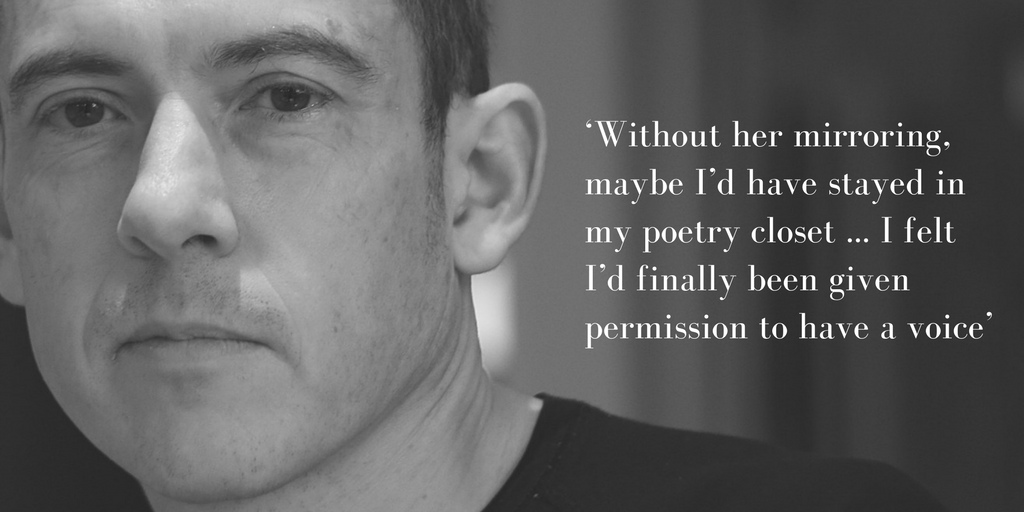
‘Without her mirroring, maybe I’d have stayed in my poetry closet. Her affirmation was the turning point in my adult life. I felt I’d finally been given permission to have a voice’

Ten years ago, when I was 40, I saw an advert for a poetry course at Bristol University. It was an adult learning programme, which, sadly, is no longer offered. I had to submit six poems before being accepted. I’ve always written, and always used poetry as my mirror, to know and explore who I am. But I’ve always done so as a guilty pleasure, a closet hobby.
The course was run by a grounded, passionate and sometimes fearsome poet. It was challenging in the way that therapy is challenging; getting the poems to a level of truth and meaning, of genuine authenticity, isn’t easy. People often get the wrong idea of poetry; they think of it as something flaky. I was struck by how powerfully my teacher responded to my work. She was serious about it. She said it had value, more than I had chosen to give it. Tellingly, what she conveyed was that she believed in it.
Looking back, this was a huge moment. She opened a door that had been firmly shut. Without her mirroring, maybe I’d have stayed in my poetry closet. Her affirmation was the turning point in my adult life. I felt I’d finally been given permission to have a voice.
Up to that point I’d been working in publishing sales. I’d graduated in psychology as a mature student when I was 33. In my final year, I fell ill with Hodgkin’s disease. Even though I eventually came out with a top degree, when I graduated, rather than being full of confidence, I was broken. I had lost hope in my own future. I also felt I’d failed. The sales job was some bizarre gesture to my father; I was still trying to get his love, to prove to him I could be a man in a man’s world. It wasn’t me at all.
My relationship with him had been tense, difficult and baleful. I didn’t trust him, and that lack of trust fed into me. I wouldn’t trust myself or my own instincts. That poetry course opened the door to a side of my personality I had done my damnedest to shut away. Once open, there was no going back to the repressed darkness. I’d found a little light and began a process of reliving that opened out my 40s. I could no longer afford to not be myself. There wasn’t time.
I started to trust in my more nuanced skills – thoughtfulness and reflectiveness; to trust that I could be and offer something else. I entered therapy and was ‘blessed’ by a male therapist, week in and week out. It was a revelatory experience to trust a man. Like a new tide, I returned to my love of psychology, and finally had the confidence to start my counselling training. And, amid the study, my new job with the NHS, gardening work and marathon running, I followed on with a commitment to my poetry. I sent my poems into the world, and to my surprise, they were published.

Paul Deaton poetAbout Paul
Paul Deaton is a poet, writer and counsellor-in- training at BCPC Bath. Seren has just published his first full-length poetry collection, A Watchful Astronomy.


Paul Deaton A Watchful Astronomy

About A Watchful Astronomy:
A Watchful Astronomy is such an unclouded, moving and accessible collection it should be prescribed by the NHS for those who say they cannot stomach poetry because it’s too difficult or irrelevant.’
– Poetry School
Haunted by a father ‘like a wounded bear’, the poems in Paul Deaton’s debut collection, A Watchful Astronomy, are tense, exact and often beautifully formal.


Posted on

Recipe & Interview with Sarah Philpott – The Occasional Vegan Blog Hop

The Occasional Vegan blog hop KFC recipe

Today marks the beginning of The Occasional Vegan  blog hop – two weeks of recipes, giveaways, reviews and articles from some of the UK’s best foodie blogs. To kick things off we have an interview with author Sarah Philpott, and a free recipe – Kentucky Fried Cauliflower.

The Occasional Vegan Sarah Philpott

The Occasional Vegan, your new cookbook, has just been released and we couldn’t be happier. You describe in the introduction how you dived straight into veganism, giving up meat and dairy cold turkey after making the decision that you wanted to eat more ethically. What was the hardest part about changing your diet so radically and so quickly?

Well, it was a bit of a shock to the system and it took my body a little while to adapt so I was quite tired and hungry at first. That didn’t last for long though, and as my taste buds changed, I soon realised that there was so much food for me to eat. It’s easier now than ever because there are so many vegan alternatives out there and plenty of biscuits, cakes, and even cheeses, to enjoy.

Would you recommend the same approach to others who are considering the vegan diet? And which resources would you recommend, to help with the transition?

Everybody is different and it’s important to do what feels right for you, your body and your lifestyle. If you want to try eating vegan, you can introduce new things gently and gradually, perhaps buying almond milk for your cereal or making a spaghetti bolognese with lentils instead of minced beef. There’s plenty of support out there and we’re a friendly bunch in the vegan community – we don’t preach, we teach! Veganuary is a great resource and there are plenty of great vegan cookery books and blogs out there – some of my favourites are Avant Garde Vegan, Anna Jones and Aine Carlin – and Instagram is full of inspiration, too.

Criticism of veganism often leans towards comments about ‘rabbit food’, kale, and boring salads. What do you have to say to people who think vegan food lacks variety and flavour?

It’s such a myth that vegans don’t like food! Of course, vegans can eat salad all the time, but most of us don’t! And if your salads are boring, you’re not making them right. Cooking as a vegan forces you to be more creative and to play around with different flavours and textures. What’s not to love about that?

What do you cook for your non-vegan friends and family? Do you have a go-to dinner party menu that has proven to be a hit?

Luckily, most of my friends and family don’t mind that I cook without meat and my boyfriend is a vegetarian so that makes things a lot easier. I tend to cook hearty but healthy meals like spaghetti bolognese, chilli, and warming stews and casseroles. My salads always go down well; I like to experiment with different flavours, and beetroot, orange and fennel is a current favourite combination. I also make a mean chocolate mousse.

All of us have times when we fancy eating something naughty – perhaps late at night, or maybe even the next morning. What’s your favourite go-to greasy food?

I don’t think that any food is ‘naughty’, because enjoying a bit of what you fancy is an important part of balanced eating. If I fancy something a bit greasy I’ll sometimes have chips or I’ll make a toasted sandwich with vegan cheese, and if I want a real treat I’ll make KFC – that’s Kentucky fried cauliflower! – which tastes amazing and is surprisingly easy to make. My favourite breakfast is avocado on toast with peanut butter and Marmite because it’s sweet and salty and a good source of protein and healthy fats – don’t knock it until you’ve tried it!

There are masses more vegans now than there have ever been before. Do you think the popularity of plant-based diets will lead to real social, ecological and agricultural change? What would you like to see happen?

I’d like to see more people embrace the idea of veganism, even if they decide not to eat that way all the time. Every little helps and reducing our consumption of animal products can make a real difference. People are a lot more aware of the impact that agriculture has on the environment and the cruelty that animals suffer and I think they want to change that.

And finally, what do you most hope people will get out of your book? 

I hope people will try the recipes and discover that being vegan can be just as delicious – if not more so – as any other way of eating. Giving up meat doesn’t mean that you have to miss out!  

Thank you Sarah for giving us some insight into your vegan experience. And now for a little vegan comfort food…

Kentucky Fried Cauliflower (KFC) with sweet potato fries

KFC vegan

Delicious, cruelty-free and surprisingly easy to make, thisKentucky Fried Cauliflower uses most of the ‘secret’ spices in KFC’s blend. By grounding the flaxseed, you create an egg-like binder which makes the spicy coating stick to the cauliflower. There’s no other way to say this: these are delicious. Seriously good and definitely worth the mess.

Ingredients

–1 large head of cauliflower, cut into largish pieces
– 200ml vegetable oil, or more depending on how shallow your pan is

For the dry coating
– 3 tsp salt
– ½ tsp dried thyme
– ½ tsp dried basil
– ½ tsp dried oregano
– 2 tsp black pepper
– 2 tsp sweet paprika
– 2 tsp smoked paprika
– 1 tsp ground ginger
– 2 tsp brown sugar
– 150g plain flour

For the wet coating
– 2 tbsp ground flaxseed (or linseed) or chia seeds
– 3 tbsp hot sauce
– 1 tbsp Dijon mustard
– 1 tbsp maple syrup
– 70ml water

For the sweet potato fries
– 2 large sweet potatoes, peeled and sliced very thinly
– 1 tbsp olive oil
– 1 tsp smoked paprika
– ½ tsp dried rosemary or thyme
– 1-2 tbsp plain flour or cornflour
– Salt and pepper

Directions
Preheat the oven to 200C. Make the chips by popping everything into a freezer bag and shaking it so that the potato fries are coated. Place them onto greaseproof paper on a baking sheet and roast for 20-25 minutes.

Meanwhile, make the wet coating for your cauliflower. Put the seeds into a food processor or grind in a pestle and mortar. Add to a bowl and mix together with the other ingredients. Stir well and give it a few minutes to thicken.

Make your dry coating. In a large bowl, mix the flour with all the spices, sugar and salt and pepper.

Pour the vegetable oil into a large pan (make sure it’s about 2-3cm high so that the cauliflower pieces are fully submerged when you dip them in) and place on a high heat. Make sure that it doesn’t get too hot – it shouldn’t bubble or splatter.

Now comes the messy bit. Take a cauliflower piece and dip it into the wet coating, making sure to cover both sides. Dip into the flour coating, again covering both sides. Now, repeat the process: roll in the wet coating and then again in the flour mixture.

Using tongs, take the cauliflower and submerge in the oil. Cook for 4-5 minutes, turning occasionally, until brown and crispy. Place on a plate with some kitchen roll to absorb some of the oil. Repeat with all the pieces (you may need to top up the oil), then serve with the sweet potato fries.


The Occasional Vegan is available from all good bookshops, and also the Seren website (£12.99).

Follow the rest of the blog hop, which features 13 fabulous food bloggers – tomorrow, there will be a giveaway and guest post from Sarah on the For the Love of Hygge blog.


Posted on

Why the Welsh Assembly being named Britain’s best employer for LGBT is no surprise

This is a guest blog by author and activist Norena Shopland, whose new book Forbidden Lives we published in late 2017.

Why the Welsh Assembly being named Britain’s best employer for LGBT is no surprise

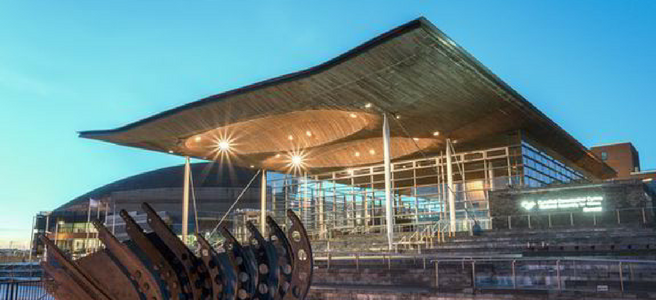
The National Assembly for Wales has just been named Britain’s best employer for LGBT staff in Stonewall’s annual list of top 100 LGBT-inclusive employers. Fifth last year, they made the top spot due to their range of policies for lesbian, gay, bisexual and transgender (LGBT) staff, as well as introducing new measures to improve the workplace for transgender employees.

I have seen first-hand the positive work done by Assembly employees, particularly the LGBT staff network group Prism and Seren Books and I would like to congratulate the Welsh Assembly on their award. It didn’t surprise me though – given how influential people from Wales have been in British LGBT history, and by extension in societal history here and abroad.

Norena Shopland Forbidden LivesThis was something I was made acutely aware of when writing Forbidden Lives: LGBT stories from Wales, and several chapters are dedicated to these influential people.

In 2017 we celebrated the sixtieth anniversary of the Wolfenden Report (1957) and the fiftieth of the Sexual Offences Act (1967). I was delighted to be invited to speak at a House of Commons event on the roles played by people from Wales. I took as my theme that great period of flux in the mid-twentieth century when so much happened with regard to LGBT people: prosecutions against gay men reached its highest point; in 1931 there were 622 prosecutions, a figure which rose to 6,644 in 1955 – because of a law that prohibited gay men from simply being. We know that Alan Turing was convicted for nothing more than confessing he was a homosexual, and whilst gay women and transgender people were not prohibited under law, simply being so was socially unacceptable and discrimination was high. When society began to question the purpose of this law, particularly following the sensational Montagu trial (1954), an increasing number of people began speaking up.

Opponents included Roy Jenkins MP, and Rev. Llywelyn Williams MP from Abertillery among others, but it was Pembrokeshire’s Desmond Donnolly MP who first brought the subject of decriminalising homosexuality up in the House of Commons, a risky move at the time.  Robert Boothby MP pressurised the Home Secretary, David Maxwell-Fyfe into considering the situation and reluctantly Maxwell-Fyfe agreed, tagging homosexuality onto a commissioned report on prostitution, which became known as the Wolfenden Report.

Initially the Wolfenden committee refused to speak to homosexual men, as they could not consider talking to criminals. Welshman Goronwy Rees, described as the most ‘lateral thinking and perceptive member of the committee’, thought differently and complained that few members had ever encountered a homosexual ‘in a social way’. He persuaded John Wolfenden, the chair, to meet some homosexual men and to accept the testimony of Peter Wildeblood, who had been imprisoned following the Montague trial. Wildeblood had subsequently written a book and Wolfenden therefore considered him an ‘attention seeker’. Rees also facilitated the inclusion of Patrick Trevor-Roper, a Harley Street consultant; Carl Winter, the director of the Fitzwillian Museum; and author Angus Wilson. Only these four self-identified homosexual men appeared before the committee but they played an important role in influencing the outcome of the Wolfenden Report.

The recommendation of the report for more leniency towards homosexual men was on the whole positively received, but whilst the recommendations on prostitution were enacted, those on homosexuality were not. Maxwell-Fyfe, having reluctantly commissioned Wolfenden, was now stalling it and Harold Wilson, then Prime Minister and personally supportive of change, felt that it would cost the labour party too many votes.

When it became apparent that nothing was going to happen, Tony Dyson, an English lecturer at Bangor University, wrote to every notable person he could think of, asking them to sign an open letter to The Times requesting Wolfenden be enacted. Writing on Bangor University headed note paper, Dyson was placing himself at great risk of being either arrested, sacked or both. As it happened, the university took no action against him – a progressive reaction at the time. The Times obituary for Dyson in 2002 drew attention to his contribution: ‘it is difficult to comprehend,’ they said, ‘the danger of living as a homosexual before the law was reformed in 1967, with the ever-present threat of criminal proceeding or blackmail.’

On the back of The Times letter, Dyson and others set up the Homosexual Law Reform Society, the first openly gay campaigning group in Britain – others followed. What was needed was someone to spearhead a campaign to get Wolfenden enacted and that person was Leo Abse, Cardiff solicitor and MP for Pontypool. As a backbencher he was able to concentrate on unpopular causes and did much for women’s rights, among other achievements. But even he struggled to get this bill through and it was Roy Jenkins, then Home Secretary, who gave the final push needed for the legislation to pass and so changed British society for good.

Of course others have been at the forefront: Katherine Philips; Mary Lloyd; Cliff Tucker; Cranogwen; John Randell; Cliff Gordon; Jan Morris; Gwen John; Ernest Jones; Cedric Morris; Griff Vaughan Williams; Lady Rhondda – I could go on and on about the number of Welsh people who have influenced LGBT and British life.

Wales is a small country but in LGBT history it has always had a huge presence – and that is why the Welsh Assembly award shouldn’t come as a surprise to anyone.


Posted on

Legend of the Month: Gwyneth Lewis

Legend of the Month Gwyneth Lewis

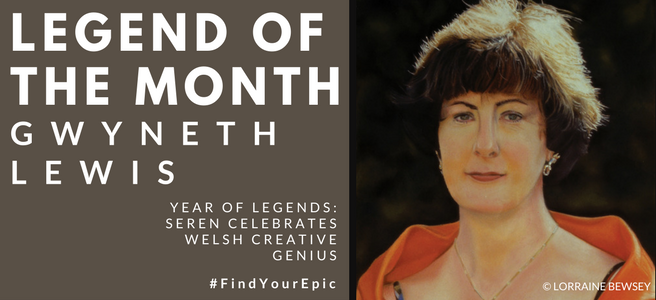
Each month we are celebrating one fantastic Seren author in honour of Wales’ Year of Legends. This month the spotlight has fallen on Wales’ first ever National Poet, Gwyneth Lewis, shown here in brilliant pastel by artist Lorraine Bewsey, from her series Poet Portraits.

Gwyneth Lewis has published nine books of poetry in Welsh and English, and wrote the six-foot-high words on the front of Cardiff’s iconic Wales Millennium Centre, rumoured to be the largest poem in the world.

Gwyneth is also an award-winning writer of non-fiction and screenplays. Gwyneth’s first non-fiction book, Sunbathing in the Rain: A Cheerful Book about Depression (2002) was shortlisted for the Mind Book of the Year, and her first television screenplay, Y Streic a Fi (‘The Strike and Me’), commissioned by S4C, won the 2015 BAFTA Wales for Best Drama. Gwyneth is also a writer of fiction: The Meat Tree, a space-age re-imagining of the tale of Blodeuwedd, is part of Seren’s New Stories from the Mabinogion series. Her light-hearted novella, Advantages of the Older Man, explores the strange case of a Swansea woman who is apparently possessed by the ghost of Dylan Thomas.

Gwyneth is a librettist and dramatist and has written two chamber operas for children and an oratorio, all commissioned and performed by Welsh National Opera. She is a Fellow of the Royal Society of Literature, a member of the Welsh Academi and a NESTA Fellow. In 2010 she was given a Society of Authors Cholmondeley Award recognizing a body of work and achievement of distinction.


Please enjoy this extract from The Meat Tree – a dangerous tale of desire, DNA, incest and flowers:

1

Technical Preparation

Synapse Log 28 Jan 2210, 09:00

Inspector of Wrecks
Is that working now, I wonder? I hate these thought recorders. They’re good in very confined spaces, where you don’t want to overhear the idiotic things your colleagues say to their families back on Mars, but I think they’re overrated. The trick is to keep the unconscious out of it as much as possible and pretend that you’re talking to yourself.
Now, I think it’s settling down. Right. Well, we’re just about approaching the Mars Outer Satellite Orbit. Not seeing too much debris around at the moment, they must have had a clean up fairly recently. Last time I was here, you could hardly move for junk. We’ve glimpsed the ship in the distance, and should arrive later this afternoon.
The new girl’s feeling sick but won’t admit it. She thinks I don’t know that she threw up in the heads, but you can’t hide any smells in a spacecraft. If Nona doesn’t stop vomiting, I’ll have to make her take the drugs. Her eyes are red alraedy, she’s dehydrated. I can’t have her out of action, we’re too close to the target vessel. Typical, getting lumbered with a student on my last mission.
Befrore anything starts happening, I’m going to get my expenses software set up…

Apprentice
So Campion’s telling me how he does his mileage first ‘and all else follows’ and I’m about to throw up all over him, but I manage to swallow it. Ironic. My whole life to get to Mars orbit, and now I’m here I feel too awful to take it in.
I did get to look out of a porthole as we passed close to home. Saw a dust storm in Thaumasia, thousands of miles wide. It looked like miso soup when you stir it up. Made me nauseous all over again. So I stopped looking. You wouldn’t believe how hard it is to catch floating vomit in a paper bag.
We’re not one day in and I’m already tired of hearing about the Department of Wrecks in the Good Old Days. When flotsam came in from as far as the Sculptor galaxy or the Microscopium Void. When he had a full team and they got to work on really interesting cultures. Not like this speck from God knows where, just me and him – the one man in the service who has absolutely no imagination.
Oh, I think he wants to do a quick equipment check.

Joint Thought Channel 28 Jan 2210, 09:02

Inspector of Wrecks
This is so that we can talk to each other on the vessel without disturbing any of the artifacts. Sometimes alien communication can be diffused by the human voice, so we’ll keep to Joint Thought mode until we know more about what’s going on.

Apprentice
You mean like a mind-meld? God! I didn’t mean to say that.

Inspector of Wrecks
The whole trick of this channel is to avoid personal static. Keep it professional.

Apprentice
Sorry. Of course.

Inspector of Wrecks
It’s a knack. Not a silent version of speaking out loud, but it’s a way of sharing two sets of sense impressions from slightly different angles. It doubles the amount of data we can record. But you’ll have to learn to make a very precise form of running commentary. It’s not your uncensored thoughts, but it’s not formal reporting either. Try doing it on me for a second.

Apprentice
He looks much taller than he did on Mars. And skinnier.

Inspector of Wrecks
That’s close, but you can do better. It’s a question of what’s appropriate. Give me some sensory data, because that’s often much more valuable than your opinions. We Won’t know what we’re seeing, but we need to record the effect its having on us. Try again.

Apprentice
The smell of his soap makes me sick to my stomach, I can’t get away from it.

Inspector of Wrecks
That’s much, much better. Relevant stuff. A little personal, perhaps, but that’s good. We’ll be getting all the objective data from the robots we send in before us.
Again.

Apprentice
His comb-over looks like the tendrils of a plant in zero gravity.

Inspector of Wrecks
That’s it, you’re getting it. And don’t worry, you can’t offend me. What I’m looking for is information. Record it, even if it doesn’t seem important at the time. I’m particularly interested in alien emotio-translation technology, we have a lot to learn in that area. This technique is going to be especially important if we have to go into Virtual Reality.

Apprentice
The sleep of leaves!

Inspector of Wrecks
All right! That’s it! That will do for now. Oh, and I’ll change the soap. Didn’t realise it was a problem. You should have said.


The Meat Tree is available from the Seren website: £7.99


Save

Save

Posted on

National Poetry Day 2017: Recommended Reads

Recommended Reads National Poetry Day

This year National Poetry Day is taking place this Thursday, 28 September, and the theme is “Freedom”.

National Poetry Day is all about enjoying, discovering and sharing poems. With the support of publishers, the Forward Arts Foundation have curated four strong and varied lists of recommended poetry reading, comprising 40 books: anthologies, poetry for children, books for reading groups and current collections.

Seren are proud to announce that not one but two of our authors feature amongst this list of 40: Caroline Smith and Kim Moore. Find out more about their books, and how they tie into this year’s theme, below.

The Immigration Handbook Caroline SmithCaroline Smith’s The Immigration Handbook transforms stories heard every day by the author in her work as an Immigration Officer. Within this collection are heartbreaking scenes of anguish and frustration, contrasts between first and third worlds that prick the conscience, and also occasional moments of humour, of joy: the e-mail address changed to reflect a success, the comical mis-spellings of those learning English, the friendships that arise due to shared difficulties. Above all, The Immigration Handbook offers empathy and hope, with refugees and immigrants who step vividly off the page, emploring the reader to listen to their stories.

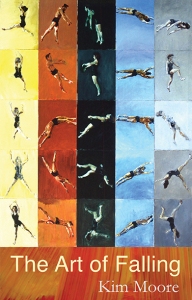
The Art of Falling Kim MooreThe quietly devastating central sequence in Kim Moore’s The Art of Falling, entitled ‘How I Abandoned My Body To His Keeping’, is the story of a woman embroiled in a relationship marked by coercion and violence. These are close-to-the-bone pieces, harrowing and exact, where in place of love there is posession, and the memory of violence is a haunting presence: ‘when I’m afraid,/ it’s only then I think of him, or remember his name.’ The poetry itself, though, is a means of catharsis, and throughout the collection pulls us like a current towards lighter, brighter things: an imagining of Percy Bysshe Shelley’s childhood mischief; a tattoo inspired by Virginia Woolf; beautifully imagined character portraits of John Lennon, Wallace Hartley and Chet Baker.

Find both amazing books in a bookshop near you!


Take a look at the Library of Freedom Poems on the National Poetry Day website, where you’ll find a great selection of themed poems to read.

Join in on National Poetry Day: find out what’s happening near you on the events map. You can also join in the conversation by using the hashtag #NationalPoetryDay on Twitter.


Save

Save

Posted on

Legend of the Month: Owen Sheers

Legend of the Month Owen Sheers

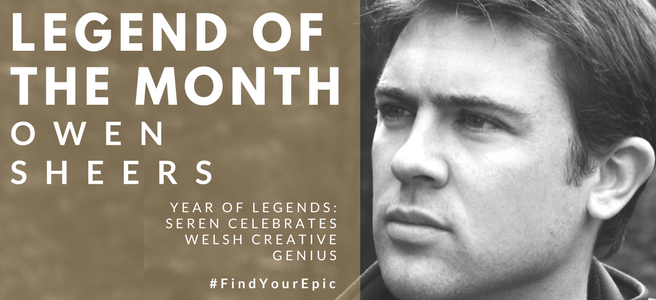
Each month we are celebrating one fantastic Seren author in honour of Wales’ Year of Legends. This month the spotlight has fallen on Owen Sheers, whose stunning poetry and fiction are regular Seren bestsellers.

Owen SheersOwen Sheers is an author, poet and playwright from Wales. His first poetry collection, The Blue Book (Seren, 2000), was shortlisted for the Forward Poetry Prize Best First Collection and ACW Book of the Year 2001. Skirrid Hill (Seren, 2006), his second collection, won a Somerset Maugham Prize and was longlisted for Welsh Book of the Year. Sheers’ debut prose work The Dust Diaries (Faber & Faber), won the Welsh Book of the Year 2005. His first novel, Resistance (Faber & Faber), has been translated into eleven languages.

In 2009 Owen contributed to Seren’s ‘New Stories from the Mabinogion’ series with White Ravens, a contemporary response to the myth of Branwen, Daughter of Llyr. He published The Gospel of Us in 2012 – a novel based on his dramatisation of The Passion for the National Theatre of Wales, set in the streets and clubs of Port Talbot and starring Michael Sheen. Sheers’ latest novel, I Saw A Man (Faber & Faber), was published in June 2015.

We hope you enjoy Owen’s poem ‘Intermission’, from Skirrid Hill, which featured as our Poem of the Month in the Seren Newsletter.

Owen Sheers Intermission Skirrid Hill


Find Owen Sheers’ books on the Seren website.

Discover a great selection of books by our other legendary writers on the Year of Legends page.


Save

Posted on

Legend of the Month: Robert Minhinnick

Robert Minhinnick Legend of the Month

Each month we are celebrating one fantastic Seren author in honour of Wales’ Year of Legends. This month the spotlight falls on Robert Minhinnick – and as a special treat, all his books are 30% off.

Robert Minhinnick, born near Neath in 1952, has published numerous poetry books, collections of essays, novels, and short stories. His book To Babel and Back – a series of essays from America, Iraq and Wales – won the Wales Book of the Year Award in 2006. His first poetry collection was published more than thirty years ago, and he has won the Forward Poetry Prize twice. He has also received an Eric Gregory Award for his poetry and in 1998 he won a Cholmondeley Award.
He founded Friends of the Earth Cymru in 1984 and has worked as a writer in residence in Canada, travelling back there regularly to give readings. He was Editor of Poetry Wales magazine from 1997 until 2008.
Until the end of the month, you can enjoy 30% off all Robert Minhinnick’s books. Find out more about the poetry, fiction and essays available below.

limestone man robert minhinnickLimestone Man
RRP £9.99
NOW £6.99
Minhinnick’s latest novel is a meditation on age and opportunity, and introduces us to Richard Parry: a painter who cannot paint, a writer who doesn’t write. Parry’s obsession is Lulu, that ‘orphan off the street’, his aboriginal  ‘green child’. But on returning from Australia to his hometown he finds it has become notorious for the suicides of young people. As Parry tries to connect past and present he is haunted by dreams of Australia and of his youth. Yet is Parry all he seems?

Island of Lightning
RRP £9.99
NOW £6.99
The author travels from his home in south Wales to Argentina, China, Finland, Iraq, Tuscany and Piemonte, Malta, New York, Zagreb, Lithuania and the lightning island of Malta. In conventional travel essays and leaps of imaginative narrative his subjects include the annual Elvis convention in Porthcawl, Neolithic sculptures, poets playing football, the body of a saint and the definition of cool. His themes are big ones: the relationship of man and landscape, man and time, man and nature, immigration and war, in one sense ultimately humankind itself.

The Keys of Babylon
RRP 8.99
NOW £6.29
This Wales Book of the Year-shortlisted and Edge Hill-longlisted collection of 15 linked stories gives voices to migrants around the globe. The Keys of Babylon is both a fictional record of, and an exploration into their lives, and the characters reflect a comprehensive mix of hope, success, failure, fear, indifference and passion as their stories intertwine to create the final narrative.

Sea Holly
RRP £7.99
NOW £5.59
Sea Holly is Robert Minhinnick’s stuning debut novel, a story of drifting, burnt-out lives, shadowed by the mysterious disappearance of a vivacious young girl.
“John Vine? He has it all. Home, family, career. You can’t knock that. But he has this worm inside him, this dissatisfaction… A boy of twenty, that’s OK, he’s going to dream. But a man of fifty? With a young piece who thinks he’s not half bad?…believe me that’s when everything’s going to come loose.That’s when it’s going to get dangerous.”
Sea Holly was shortlisted for the RSL Ondaatje Prize.

To Babel and Back
RRP £7.99
NOW £5.59
Join Robert Minhinnick on a journey across a radioactive planet. Researching the use of depleted uranium in modern weapons, the writer follows a deadly trail from the uranium mines of the USA into Saddam Hussein’s Iraq. Here, he is led into the temples of a deserted Babylon and to what his guides insist is the site of the Tower of Babel. Interspersed with these ‘radioactive writings’, which seem part documentary, part dream, are essays on a host of different places.

Badlands
RRP £6.95
NOW £4.86
In these essays the writer travels from the impoverished of Albania to the scorched suburbia of Silicon Valley. On the way he encounters a foreign country called England, twenty thousand frozen lakes, and a desert of dinosaur bones. The people of Badlands include Coleridge and Ryan Giggs, Colonel Sanders and Freud, plus a host of minor deities from the numbing world of celebrity. Urban and rural, tragic and absurd, Badlands is a real place. But where the borders of Badlands begin, or finish, is difficult to say.

Green Agenda
RRP £7.95
NOW £5.56
In the 1970s, it was ignorance, in the 1980s, enthusiasm, and from the 1990s environmental issues were greeted with a peculiar fatalism. Green Agenda, the first popular volume of its type to be published in Wales, confronts head on our ideas of what constitutes ’the environment’ and how we perceive it. These essays acknowledge the danger of allowing environmental concern to flourish within a green ghetto, the perils of over-speculation, the banality of ’issues’.

Watching the Fire Eater Robert MinhinnickWatching the Fire-eater
RRP 8.99
NOW £6.29
Watching the Fire-eater covers variety of subjects: third world poverty and the internationalism of alcohol, rugby through the eyes of a vegetarian, nuclear power, sunbathing and a thanksgiving dinner for the demise of Margaret Thatcher. But at the core of this essay collection is a vivid series of attempts to strip away the exhausted mythologies of the writer’s own country and the increasingly-packaged places he visits. Watching the Fire-eater was the Wales Book of the Year Award winner, 1993.

Hey Fatman
RRP £5.95
NOW £4.16
Hey Fatman by Robert Minhinnick is full of the rich, sometimes strange, always telling, detail that we have come to expect from one of Britain’s most compelling poets. The book opens with poems set in and around his home country of south Wales, and includes a sequence based on the history of an ancestral house, Dunraven. We then move on to work inspired by the poet’s travels in South America and the U.S.A. This includes the title poem ’Hey Fatman’, a splendid baroque essay on the characters gathered in a Rio beach bar.


Find a great selection of books by our other legendary writers on the Year of Legends page.

Posted on

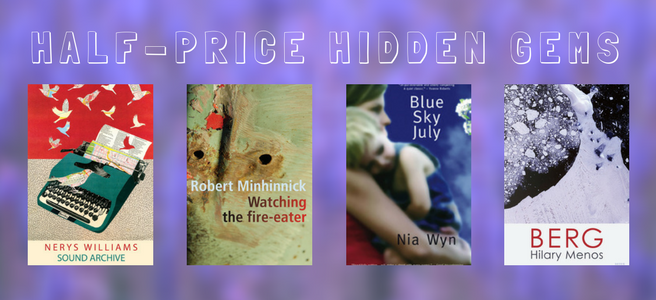
Half-Price Hidden Gems: Prize-winners from the archives

Half-Price Hidden Gems Seren Archive

Today we shine the spotlight on some hidden gems from the archives – fiction, poetry and non-fiction prize-winners from years passed which, if you haven’t read already, come highly recommended.

We’ve just passed the mid-week hurdle, and that means there’s only a few days left to take advantage of our half price summer sale. If you’re struggling to choose your next read, why not start with one of the extraordinary books below? These are the oldies and goodies from the Seren archive.

John Haynes Letter to PatienceLetter to Patience, John Haynes
Costa Poetry Award Winner, 2006
Set in Patience’s Parlour, a small mud-walled bar in northern Nigeria, at a time of political unrest, Letter to Patience is a vividly atmospheric book-length poem divided into cantos. The poem is not only a biography, or an essay on post-colonialism, it is an epic portrayal of a beautiful and troubled country and of one man’s search for meaning in difficult times.

Touch CoverTouch, Graham Mort
Edge Hill Short Story Prize Winner, 2011
From a young child adrift on an ice-filled lake to an ageing farmer facing life alone, the twenty-one stories display a deep sensitivity to both the natural world and to human relationships. In skilfully crafted prose, vivid with detail, Mort examines the strength and fragility of life and the ties that hold us within it.
Touch spans twenty years of short-story writing, and includes the Bridport prize-winning story ‘The Prince’.

Hilary Menos BergBerg, Hilary Menos
Winner of the Forward Prize, Best First Collection, 2010
In this extraordinarily vibrant debut collection, icebergs floating down the Thames jostle with transvestites in Singapore, aliens wading the Hudson River and the lively crew from the local slaughterhouse. We go shopping with Ingomar the barbarian and watch Bernard Manning gigging at Totnes Civic Hall. Throughout, Menos brings a sophisticated sensibility to her poetry. Her subjects are seen aslant, with ironic as well as tender intentions.


Gift of a Daughter Emyr HumphreysThe Gift of a Daughter, Emyr Humphreys
Wales Book of the Year Winner, 1999
Archaeology lecturer Aled Morgan and his wife Marian flee to Tuscany, and the home of old friends, to escape a family tragedy. Yet even immersed in Etruscan culture, Aled finds that friendships aren’t all they seem, and that his wife has become almost a stranger to him. The Gift of a Daughter is a novel of delusion and self-knowledge, tradition and change, loss and identity in which the pace, plotting, characterisation and dialogue are as faultless as we expect from a writer of Emyr Humphreys’s experience and skill.

Nerys Williams Sound ArchiveSound Archive, Nerys Williams
Winner of the DLR Strong Award, 2011
Shortlisted for both the Forward Prize Best First Collection and the Michael Murphy Prize, Sound Archive is a strikingly original first collection of poems. Using formal strategies similar to modernist painting: abstraction, dislocation, surrealist juxtaposition, the poet conjures a complex music, intriguing narratives, and poems full of atmosphere that query identity, gender, and the dream of art as a vehicle for emotion and meaning. Williams confronts our preconceptions about what it might mean to be a woman writing against the background of two formidable traditions: that of Welsh-speaking Wales and of English literature.

Watching the Fire Eater Robert MinhinnickWatching the Fire-eater, Robert Minhinnick
Wales Book of the Year Winner, 1993
Watching the Fire-eater
covers variety of subjects: third world poverty and the internationalism of alcohol, rugby through the eyes of a vegetarian, nuclear power, sunbathing and a thanksgiving dinner for the demise of Margaret Thatcher. But at the core of this essay collection is a vivid series of attempts to strip away the exhausted mythologies of the writer’s own country and the increasingly-packaged places he visits. Whether in the rainforest or the big match crowd, Minhinnick’s language: acid, imagist, compassionate, celebrates the people he meets and, fleetingly, defines their lives.

Nia Wyn Blue Sky JulyBlue Sky July, Nia Wyn
Barnes & Noble Discovery Prize Winner, 2009
Set between the summers of 1998 and 2005 in Cardiff, Blue Sky July follows the story of a mother whose child suffers a devastating brain injury. It traces her journey into a world hidden away in society’s pockets as she battles against impossible odds to heal him.
Through Wyn’s intimate day by day musings, the book explores the impact of the tragedy on her home life, love life, friendships and connection to the world, as the most extraordinary relationship unfolds between them. Blue Sky July won the Glen Dimplex Biography Prize and was shortlisted for both the Good Housekeeping Book of the Year, and Wales Book of the Year.

Time Being Ruth BidgoodTime Being, Ruth Bidgood
Roland Matthias Prize Winner, 2011
Time Being is Ruth Bidgood’s tenth collection, and a Poetry Book Society Recommendation. It has been said, rightly, that Bidgood’s work is ‘emphatically a poetry of location’ and it is the history and nature of her particular region of mid-Wales that most inspire the author. Her distinctive voice has a quiet authority but also a subtle, conspiratory edge, as if she is letting one in on a secret, unveiling a hidden fact, or making a discovery. She avoids sentimentality, but – unfashionably – not sentiment; an observation can engender joy or sorrow or fear uncluttered by irony. These are ambitious attempts to transcend the lyric and move towards a more epic, multi-faceted form equal to the many experiences of her long life.

The Colour of Dawn, Yanick Lahens
Winner of the RFO Award (2009); Prix Millepages (2008); and Prix Richelieu de la Francophonie (2009)
Port au Prince, Haiti. The police roam the streets and no-one is safe. Fignolé, musician and political radical, is missing. His sisters Joyeuse and Angelique search for their young brother amid the colourful bustle, urban deprivation and political tension of the city. Eventually they will find him, but in the process they will also have found more about themselves than they wanted to know. The Colour of Dawn is a tense, passionate and vividly told story of small victories of hope in the face of a seemingly impossible fight against a monolithic regime.

Bilbao–New York–Bilbao Kirmen UribeBilbao–New York–Bilbao, Kirmen Uribe
Spanish National Literature Prize Winner, 2009
Bilbao–New York–Bilbao takes place during a flight to New York and tells the story of journeys by three generations of the same family. The key to the book is Liborio’s fishing boat, the Dos Amigos: who are these two friends, and what is the nature of their friendship? Through letters, diaries, emails, poems and dictionaries, Kirmen reflects on the art of writing, and the distinction between life and fiction. Kirmen’s novel, translated by Elizabeth Macklin, creates a mosaic of memories and stories that combine to form a homage to a world that has almost disappeared, as well as a hymn to the continuity of life.


Half price summer sale Seren


Save