
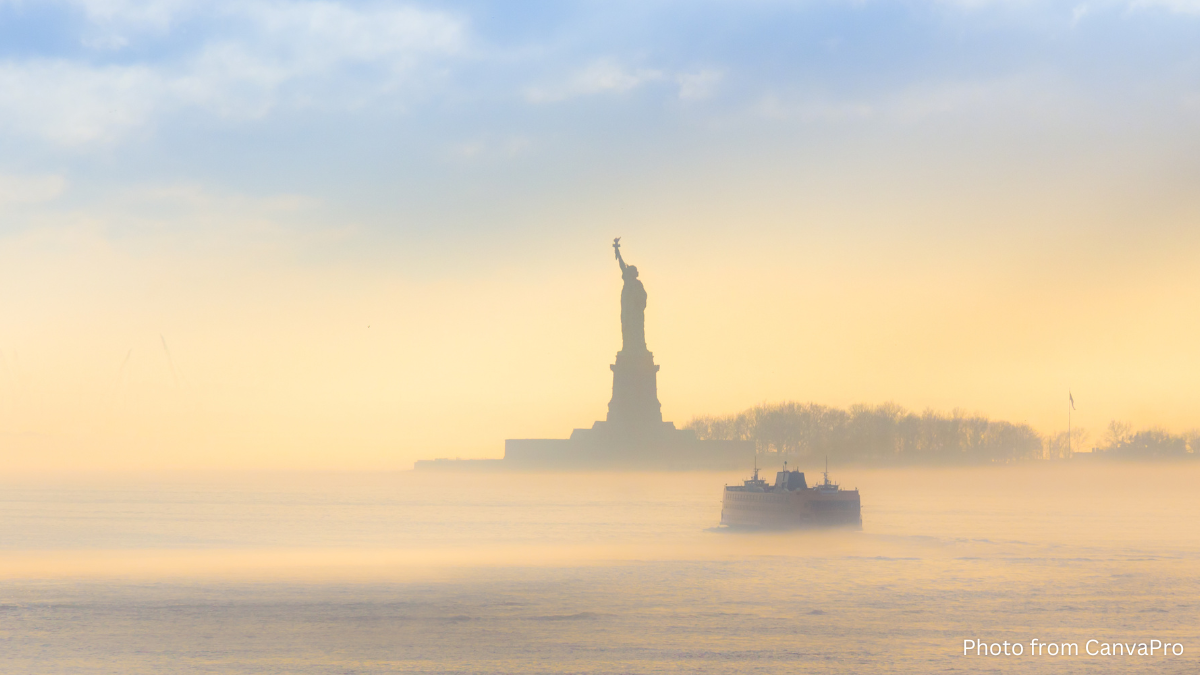
This week’s Friday Poem is ‘Nursery Tales’ by Caroline Smith from her collection The Immigration Handbook.
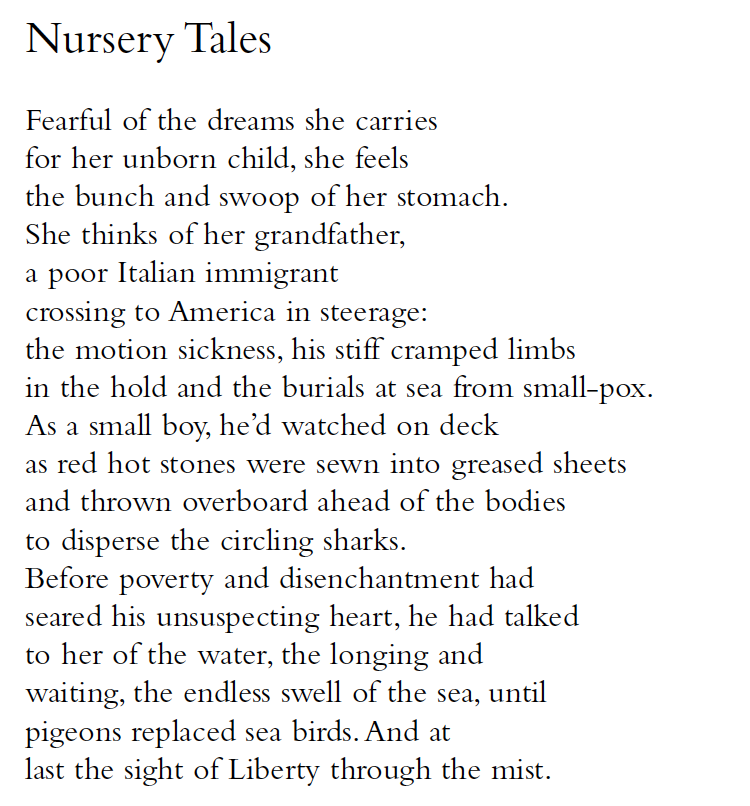
This week’s Friday Poem is ‘Nursery Tales’ by Caroline Smith from her collection The Immigration Handbook.

This week our Friday Poem is ‘Red Road Flats’, from Caroline Smith’s poignant and hard-hitting collection, The Immigration Handbook, in which the poems are carefully crafted tributes to the gut-wrenching stories Smith hears every day in her work as an Immigration Caseworker.
 This poem is based on a true story of a family who committed suicide following the refusal of their asylum claim. Before being ‘dispersed’ to Glasgow by the Home Office, they lived in Wembley and the father regularly came to our immigration surgery for help. I can see him pacing by the window in a worn, grey suit with a big brief case held against his chest, constantly checking the window for someone following him. He once pointed to a white delivery van outside the building: certain there was a satellite tracking dish inside. He brought with him an envelope of white powder he claimed he’d been sent. We had it tested through the House of Commons security – it was harmless.
After their deaths, I read back through the letters and glimpsed the terror of the world he had created and believed he was trapped in; where he could no longer trust appearance as reality, where the known world is not what it appears to be. A world where truth was constructed to harm him. Welcome to the Home Office.
Caroline Smith

The Immigration Handbook is available from the Seren website: £9.99
Claim 20% off every book you buy from us when you create a free Seren account.
This year National Poetry Day is taking place this Thursday, 28 September, and the theme is “Freedom”.
National Poetry Day is all about enjoying, discovering and sharing poems. With the support of publishers, the Forward Arts Foundation have curated four strong and varied lists of recommended poetry reading, comprising 40 books: anthologies, poetry for children, books for reading groups and current collections.
Seren are proud to announce that not one but two of our authors feature amongst this list of 40: Caroline Smith and Kim Moore. Find out more about their books, and how they tie into this year’s theme, below.
Caroline Smith’s The Immigration Handbook transforms stories heard every day by the author in her work as an Immigration Officer. Within this collection are heartbreaking scenes of anguish and frustration, contrasts between first and third worlds that prick the conscience, and also occasional moments of humour, of joy: the e-mail address changed to reflect a success, the comical mis-spellings of those learning English, the friendships that arise due to shared difficulties. Above all, The Immigration Handbook offers empathy and hope, with refugees and immigrants who step vividly off the page, emploring the reader to listen to their stories.
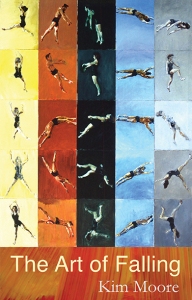 The quietly devastating central sequence in Kim Moore’s The Art of Falling, entitled ‘How I Abandoned My Body To His Keeping’, is the story of a woman embroiled in a relationship marked by coercion and violence. These are close-to-the-bone pieces, harrowing and exact, where in place of love there is posession, and the memory of violence is a haunting presence: ‘when I’m afraid,/ it’s only then I think of him, or remember his name.’ The poetry itself, though, is a means of catharsis, and throughout the collection pulls us like a current towards lighter, brighter things: an imagining of Percy Bysshe Shelley’s childhood mischief; a tattoo inspired by Virginia Woolf; beautifully imagined character portraits of John Lennon, Wallace Hartley and Chet Baker.
Find both amazing books in a bookshop near you!
Take a look at the Library of Freedom Poems on the National Poetry Day website, where you’ll find a great selection of themed poems to read.
Join in on National Poetry Day: find out what’s happening near you on the events map. You can also join in the conversation by using the hashtag #NationalPoetryDay on Twitter.
Our Friday Poem this week is a modern-day parallel to the Nativity story, where we see the hardships faced by a migrant couple upon the birth of their child.
‘Nativity’ is taken from Caroline Smith’s collection, The Immigration Handbook, which tells the stories of immigrants seeking citizenship in the UK – their hopes, their anguish, the bureaucracy they face, and their small moments of triumph. In these strikingly moving poems, the characters step vividly off the page, and we listen to their often harrowing stories as if first-hand. Caroline Smith’s poems are a moving record of global people movement, the story of our time.
Nativity
She lay on the sofa
its hard cushions
squashed down into the corner
under the heavy paisley quilt
she’d found there.
There was nothing
left to eat in the fridge,
its door nudged open
swollen with ice,
the fibrous cold
stealing into the room.
Just ice and knots of sweetcorn
heaped in a corner
like rancid yellow straw,
and a bottle of baby milk
left by the Kosovan family
housed there before her.
She’d heard they’d been allowed to stay.
Baby John Harris Farruku
brother to Adriatuk, Flutura and Etmir,
born three days inside the amnesty.
His birth had allowed
the family to begin again
given them the hope
of an ordinary life.
The Immigration Handbook is available from the Seren website: £9.99
Join our free, no-purchase-necessary Book Club for 20% off every time you shop with us

Today we are joined by Caroline Smith, whose new poetry collection The Immigration Handbook weaves together stories of hope, frustration and pain, drawn from Smith’s experience as an Immigration Caseworker.
 Caroline Smith was born in Ilford and grew up in Hertfordshire. She originally trained as a sculptor at Goldsmith’s College. Her first publication was a 30-page narrative poem, ‘Edith’. Smith’s first full collection, The Thistles of the Hesperides (Flambard), is about the community of West Pilton in Scotland where Caroline lived in the 1980s when it was one of the most deprived housing estates in Europe. Using imagery and structure from Greek mythology, and direct stories from observed lives, the poet weaves a dense and dramatic tension between the harshness of reality and the lyricism of myth. Published widely in journals like Poetry Wales, Poetry Review, Staple, Orbis and Stand, she has twice won prizes in the Troubadour Poetry Competition. Smith has had work set to music, broadcast on the BBC and is also the author of a musical play, The Bedseller’s Tale, that was performed at the Edinburgh Festival Fringe. She lives in London with her family.
Your new poetry collection, The Immigration Handbook, brings to life the stories from migrants and refugees that you hear every day in your work as an Immigration Caseworker. What made you choose to transcribe these deeply affecting stories, and was the process cathartic?
Writing thousands of letters to the Home Office over the years, I think about language, what turns a letter into a poem, the different functions of language and how by changing the angle or perspective on a subject you can show it afresh. My book is another way of contributing to the immigration debate, but it is primarily a book of poetry. It’s the stuff of my life so it’s what I make art out of.
When I was younger I couldn’t decide if I wanted to be a priest or a sculptor – so I campaigned for women’s equality and ended up as a poet! But in a sense these twin strands have come together in my poetry; my interest in social justice and my training as a sculptor who needs always to recreate the world in a different way.
I’ve never found writing cathartic. When I am most upset about something I want it to stop, I don’t write my way out of it. I see my work as an Immigration Caseworker and my poetry as separate. I get angry and try to change the system, but for poetry I need distance and reflection and I enjoy the creative process; the juxtaposition of odd fragments, creating something new, although I suppose it is cathartic in a Nietzschean way….. ‘Every art and every philosophy may be regarded as a healing… in that respect maybe.
Your poems are often (unsurprisingly) rather bleak, as they describe characters who have lost hope, who feel abused by the system, who don’t know where to turn. Do you hope the collection inspires people to see beyond the statistics and recognise the humanity of those seeking citizenship?
Yes that is exactly what I am hoping people will find in my poems – despite the bleakness, a celebration of humanity. My poetry contributes to the immigration debate; not by putting forward a set of arguments like I do in my letters to the Home Office, but by showing the humanity of people trapped in the system. Not every asylum seeker or refugee is a hero or angel. I have painted people as they are – with both frailties and resilience. We all have the same longings and desires to make something of our lives, it’s just that the people I see in our immigration surgery have a much tougher journey than most of us have ever had to bear.
You have a knack for finding humour in surprising places, for instance in your poem ‘Judgements’, which cleverly and comically portrays the bureaucracy behind judgements made on applications:
“… if the appellant claimed
that relevant matters did not happen I should not
exclude the possibility that they did not happen
(although believing that they probably did)”
Is humour an important part of poetry writing for you? And does it follow you into the workplace, and other aspects of your life?
Tragedy and comedy sit very close to each other. I’ve received so many misspelt letters…’I have been arrested by six uninformed guards’… ‘with wormiest regards’ … ‘I love your cuntry’!
Satire and the use of comedy is important in art. Slapstick and the absurd sharpen the truth of a situation. The most wildly improbable stories, can actually accentuate pathos and provide a break in the bleakness. Humour is also a great tool for showing up the absurdity and dysfunctionality of the Home Office which cruelly traps people without status and documents for years. It is the startling and unbelievable that is often true; whereas the predictable stories are most likely to be fabricated.
The Immigration Handbook was written over a number of years. Were these poems always destined to be released as a collection, or did the idea to publish these stories together come much later?
I always intended them to be a sequence of poems on the subject. I remember the night I started writing this collection. I filled a book with scrawling notes of incidents, characters and injustices. But it is one thing to have an idea for a poem, but then you have to wait for all the elements to come together and it often ends up going off in a completely different direction. Because I have so many stories fermenting in my head, unexpected elements mesh together.
Both my previous collections included sequences of poems. I’ve never been interested in writing a novel, but I love the opportunities presented by writing a number of individual poems that can work together and spark off each other to come at an idea from different angles and perspectives. Although I don’t write formally, the form of the poems are critical to me. I used to approach a sculpture from all angles as once. I would use different materials and found objects set against each other to break up the surface, juxtaposing different textures. And I think I do the same with poems using different intensities; some highly worked, some quick ‘line drawings’, some found reports. The difference today is that I’m carrying my studio of scraps and fragments and found objects around in my head!
And finally, tell us about your plans for the future- where will we see your name next, and are there any festival or events appearances you can tell us about?
I had a great time reading at the Ledbury Festival earlier this summer and my book launch at the Nehru Centre in London was just fantastic – courtesy of the Indian High Commissioner! I have a whole series of readings lined up for the autumn in Cardiff, London, Aberystwyth and I’m doing a couple of Festivals in Bristol and Chorleywood as well as a special event with Waterstones in Berkhamsted for National Poetry Day.
I am really enjoying giving readings and talking about my book but already the restlessness to create and my dissatisfaction with the world as it is, is pushing me back to my writing desk. When I have lots of ideas in my head I find it distracting to read. Now The Immigration Handbook is out I’m reading as much as I can, going to lots of poetry events and every play that I can get tickets for.
17th September: Free Verse, The London Poetry Book Fair.
3rd October: Poetry Can Festival, Bristol.
6th October: National Poetry Day, Waterstones Berkhamsted, Herts.
15th October: Chorleywood LitFest, 12 noon The Junction, Chorleywood, Herts.
18th October: Lumen Poetry Series, 19:00 Tavistock Place, London.
26th October: Aberystwyth University, English & Creative Writing Society.
27th October: Waterstones Aberystwyth.
30th October: Cardiff Book Festival.
24th November: 19:30 Waterstones Piccadilly.
The Immigration Handbook is available on our website. Buy your copy now: £9.99
Claim 20% off when you become a Seren Book Club member
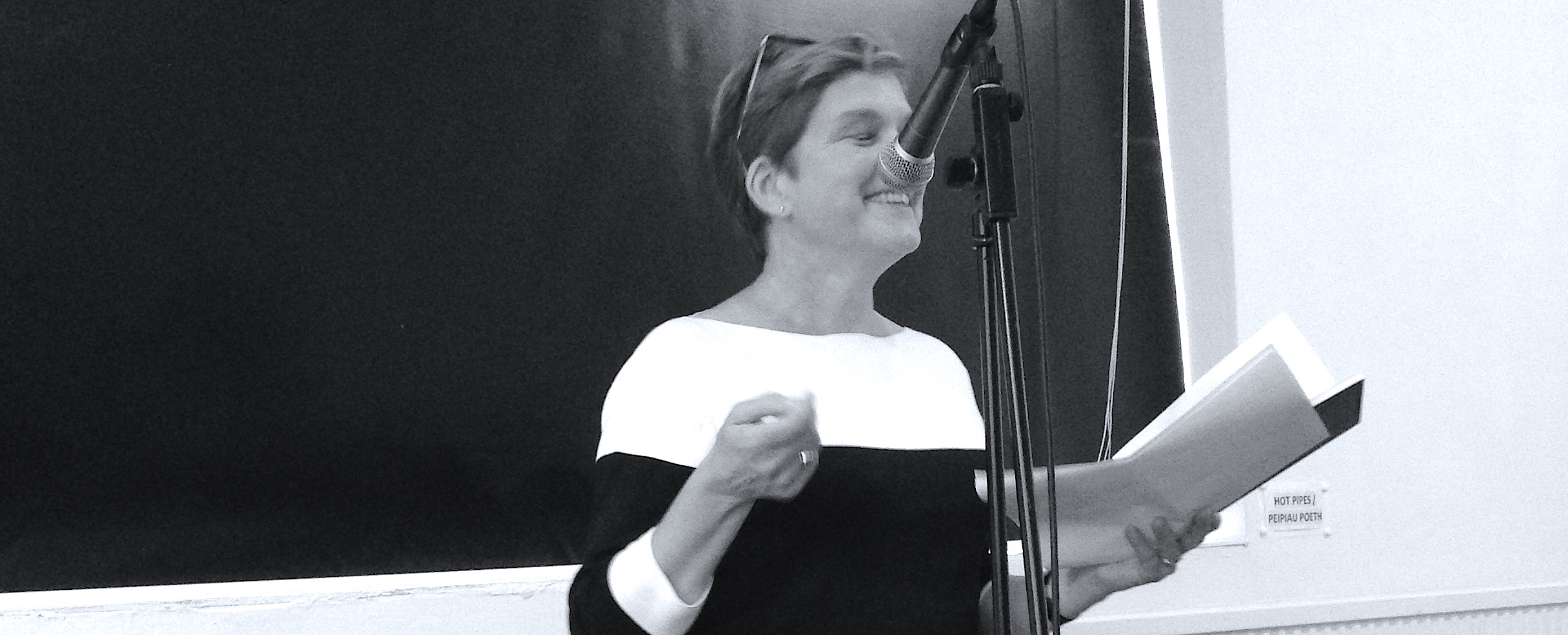
Last night saw us at Chapter, Cardiff, for July’s First Thursday event and among the readers was Caroline Smith with her new collection, The Immigration Handbook. This week we have a treat for you – you can listen to the Friday Poem being read by the author. Look below for the video, and accompanying poem text.
The strikingly moving poems in Caroline Smith’s The Immigration Handbook are the fruit of the author’s career as an Immigration Caseworker for one of the most diverse inner-city areas in London. Her characters are careful composites of people she’s observed. They step vividly off the page, as if out of the headlines. Written over a period of years, as layered and infused with experience as the documents she discusses: letters folded and refolded, creased with time, Caroline Smith’s poems are a moving record of global people movement, the story of our time.
The Scarlet Lizard
Nothing moves
except the evening light
crossing the Judge’s room.
The lawyers’ skeleton arguments
lay piled on his desk.
They seemed to him brittle
as bleached poppies,
tapped of their seeds.
He longed to see the quick movement
of a scarlet lizard weaving unexpectedly
through the parched, cracked hexagons
of a legal phrase, to hear the snapped stick
fritter away from a hiding place;
to feel the cold, diaphanous weed grip
in the black current of a border crossing.
He needed to sense some quiver of
indecision, an odd detail
that would open the truth of their words;
chinks of light shining
through shuttered doors.
Buy your copy of The Immigration Handbook now from the Seren website: £9.99
Become a Book Club Member to claim 20% off.

This September, you’re invited to explore the unseen and the unsettling. From dark and menacing landscapes to the everyday terrors of domestic settings disturbingly close to home, these stories will horrify and delight in equal measure. Be prepared, for ‘this is a land of ancient power, and even more ancient beings...’ Pre-order the latest addition to our Welsh Gothic series, ‘Giving the Darkness Life’ on our website now.
.
Stories by @markblayney1, Mary-Ann Constantine, @damianwalforddavies, Caradoc Evans, Dorothy K. Haynes, @lucie_mckhardy Arthur Machen, Elinor Mordaunt, John Llewellyn Probert, L.T.C. Rolt, @priyasharma1000, Edward Thomas, Elizabeth Walter and D.P. Watt
.
@inpressbooks @books.wales #WelshGothic #SerenBooks #NationalYearOfReading2026 #SpookySeason #AutumnBooks

We had a wonderful time listening to @megan.c.hayes talking about her memoir ‘Glimmering’ with Kath Little from @bardic_books at St Illtud’s church in Llantwit Major on Saturday. Diolch yn fawr to everyone who joined us and to Kath for hosting! Copies of ‘Glimmering’ are available now in your local bookshop.
.
#Glimmering #Memoir #SerenBooks #IndependentBookshop #NationalYearOfReading2026
Ebooks available now! ‘In Search of Sea Dragons’, ‘Muslim Wales’ and ‘The Waters That Raised Us’ are now available from all major ebook retailers meaning you can take them with you on the go 🎉 Do you prefer reading ebooks, print books or both?
.
@severn.sea.fossils @azimwales @tayloredmonds #Ebooks #Kindle #SerenBooks #BooksFromWales #LoveReading
🏆@maggiepoet continues her winning streak having won the Guyana Prize for Literature Poetry Award with her collection ‘I Sing to the Greenhearts’! Available now in bookshops nationwide and on our website!
.
#AwardWinning #GuyanaPrize #Poetry #PoetryBooks #SerenBooks


