Posted on

Friday Poem – A small domestic scene

This week’s poem is from Ivy Alvarez’s collection, Disturbance, published in 2013.

Disturbance is a novel in verse by Ivy Alvarez that chronicles a multiple homicide, a tragic case of domestic violence, where a family was gunned down by the husband and father. 

The book features poems in a kaleidoscope of voices from all the characters involved. We first meet the family itself and witness how the father’s controlling attitude gradually escalates into violence. Then we get the aftermath: the authorities, police and neighbours, who all might have helped to prevent this tragedy. This is a very dark book, but a courageous one, ultimately about evil and its presence in our everyday lives. The fact that this family was relatively well-to-do, seemingly prosperous and well-connected, adds another layer of intrigue and mystery. There is some graphic violence, but the emphasis is on the characters and their motivations.

A small domestic scene

‘Blood comes out in cold water,’
he said to me,
almost tenderly,
from the doorway,
as I held the icepack to my cheek,
looked at my blouse in the mirror,
fingered the stains.

Order Disturbance from our website.

Posted on

Help the Homeless: A Charity Evening with Rosie Shepperd

Rosie Shepperd is teaming up with Waterstones Guildford to present a charity launch of her debut collection, The Man at the Corner Table.

Join Rosie and the Waterstones team at 18:30 on Monday 7th December for a sophisticated evening that will include wine, canapés, and a talk from Rosie about her dazzling collection. The event itself is free, but any who wish to attend are encouraged to make a donation, however large or small, to the Number Five Project, a Guildford-based homeless shelter.

Number Five offers short-term emergency accommodation for homeless men and women over the age of 18; they provide a hot meal, a hot shower, a bed for the night and breakfast the next morning, as well as 1-2-1 key-worker support to all residents.

For those of us lucky enough to have never been homeless, we can’t possibly imagine just how awful homelessness is. People who are homeless are in danger of being attacked, abused or stigmatised, and as the weather gets colder, many homeless people will not survive the winter.

So if you can, attend the launch and make a donation – if you can’t make a donation, why not spread the word? You could make a difference!


Posted on

Friday Poem – Mermaid

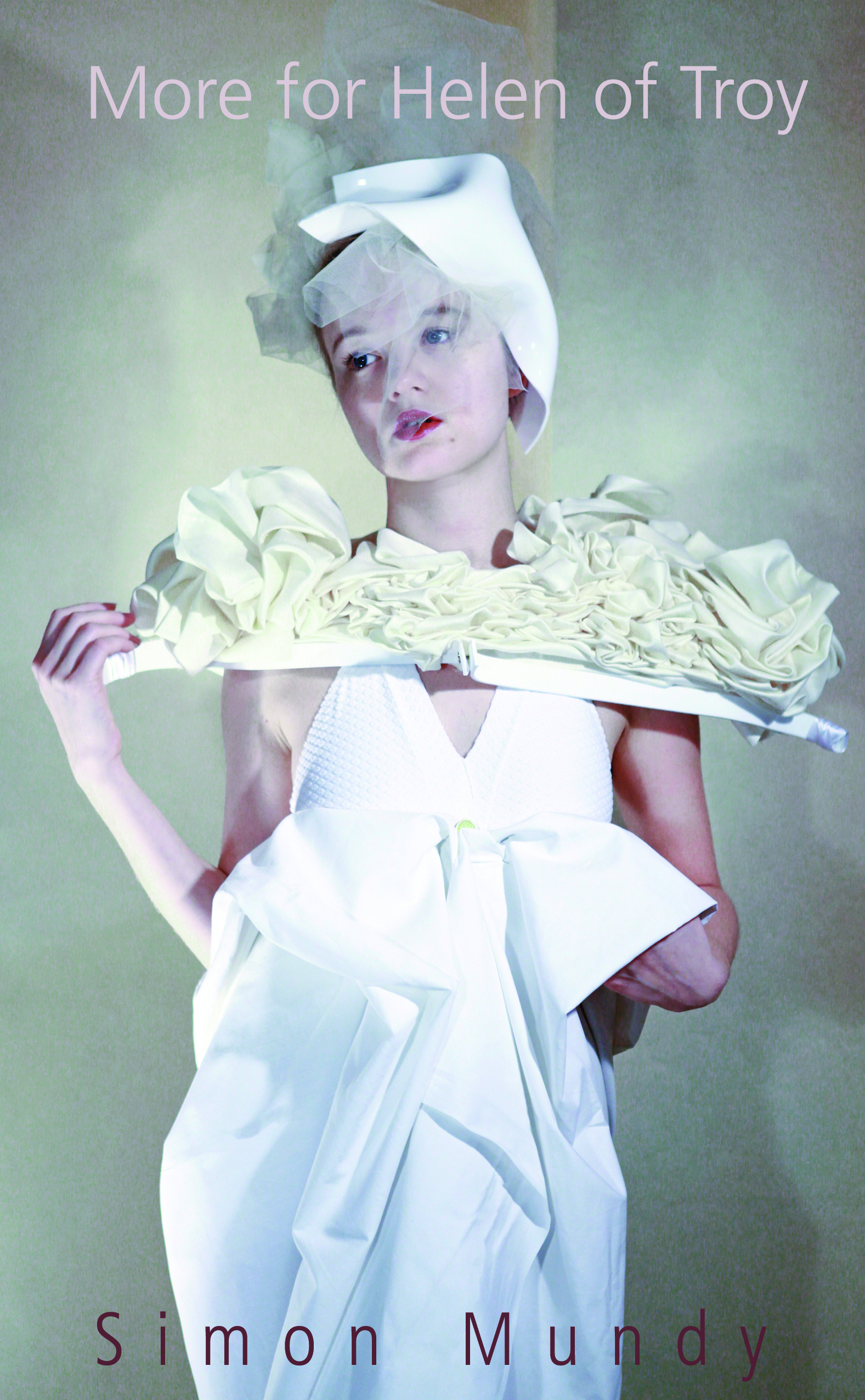
This week’s poem is from Simon Mundy’s fourth collection, More for Helen of Troy, first published in 2012.

More for Helen of Troy, Simon Mundy’s new collection of poems from Seren, is suffused with the atmosphere of the landscapes that inspire him, the lush countryside of Powys, and a number of islands all over the world:Genada, Jamaica, Shetland, Italy. It is also deeply involved with many questions of desire: for the ideal of a beautiful woman, as ‘Mermaid’; for the hope of a good state, as in ‘The New Senedd, Cardiff’ for the vision of a pristine country and seaside, as in ‘Radnor Songs’ and ‘Aspects of Sea’. The tension between all these ideals, between lofty aims and inevitable disappointments, come together in the main title sequence, where an entire society must scheme and suffer for the allure of Helen. Helen is also emblematic: both a legendary figure and a imago for women from all times: pursued, desired, lonely, restless, she haunts the imagination of the poet. Sometimes keenly satirical, as in ‘Society Haiku’, and often poignantly lyrical as in ‘Translated Daughter’, these poems are both pointed and enjoyable. 

Mermaid

This rock, this divan of stone
Is too jagged for your tail, tearing
Young scales, the salt of sea and tears
Searing raw skin as you preen and comb,
Holding the pose for shipsful of men
Who pass in the morning.
What else can you do?
Hide in the cold northern waters that sparkle
On the surface but hold poisons that pock
Your fins with dirty sores.
Or you could hitch on board those ships,
Shed the tail, rejoice in legs and bush,
Bask on the warm sands of love
Before the mortal tides creep in
Across the disappointing strand.
No. Keep amphibious. Immortal
Beauty is worth a little weeping.

Order More for Helen of Troy from our website.

Posted on

(Holly) Jolly Good Deal!

Christmas is on its way, and this festive season we want to see you ten lords a-leaping for joy. So because we’re such good eggs, we have a very exciting Christmas deal for you!

grinchmas

Buy any two books from our website and you’ll receive a free copy of Christmas in Wales! You can dip in and out of poetry, fiction and memoirs that celebrate Christmas the Welsh way, or you can pass it on as a cheeky present to a friend or loved one.

This offer ends at midnight on the 24th December – don’t miss out!

Posted on

Friday Poem – The Last Soldier

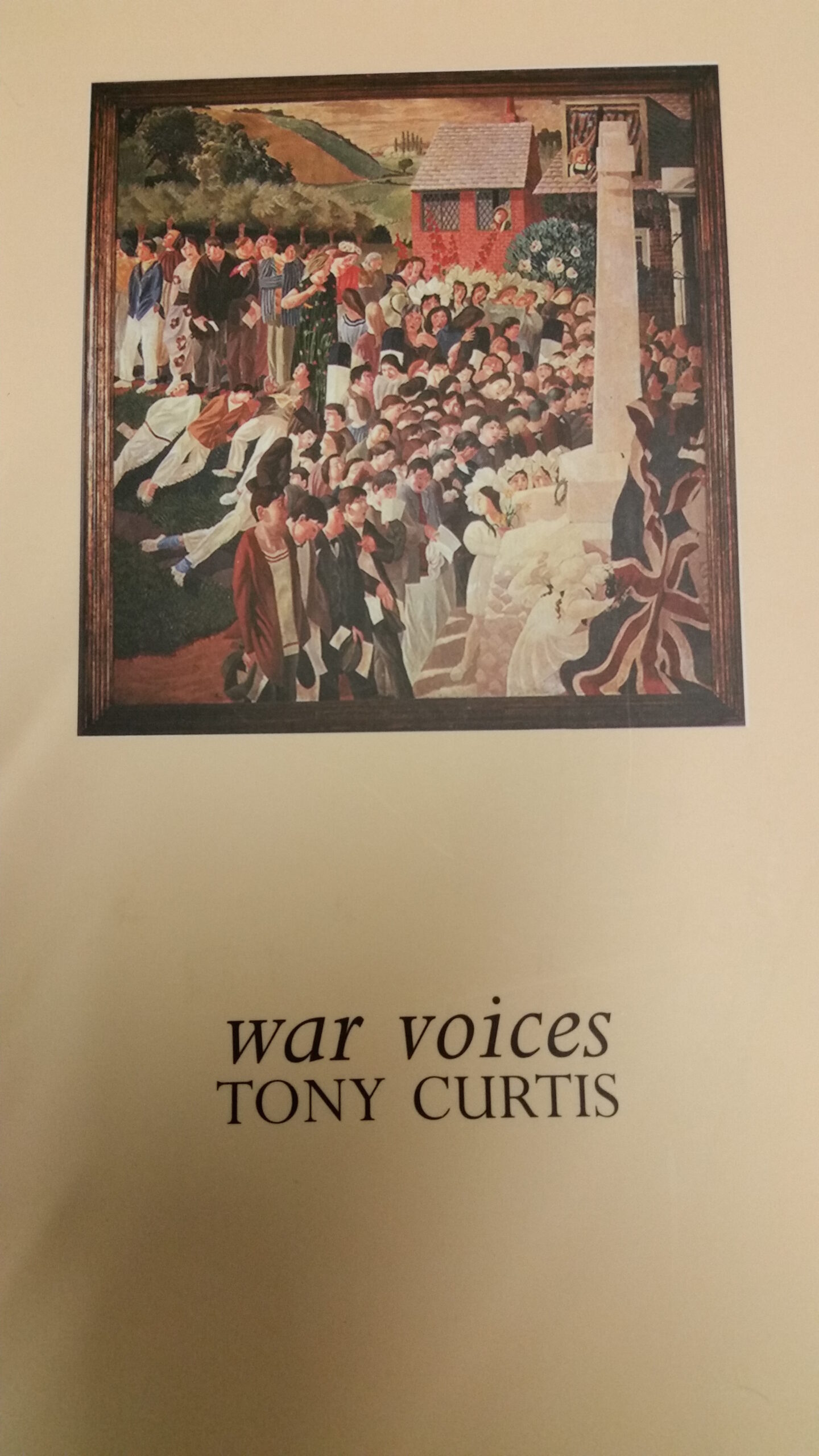
This week’s poem comes from Tony Curtis’ War Voices, first published in 1995.

War and its effects have been an enduring subject throughout the twenty-five year writing career of Tony Curtis. The resulting poetry might have been bleak but for the sensitivity with which Curtis handles the theme, and the bravery and dignity in the face of barbarism which he finds underlying conflict. Poems such as ‘Soup’, shortlisted for the Observer / Arvon Prize and ‘The Death of Richard Beattie-Seaman’, winner of the National Poetry Competition, are a measure of Curtis’s skill in addressing this difficult subject. From Flanders to Bosnia, via Russia and Suez, India and Ireland, Vietnam and the Cold War, these War Voices speak of protest, remembrance and commemoration.

The Last Soldier

The last soldier marches out of the jungle
to the gentlemen of the press and an official welcome.
He salutes, presents the sword
which his parents, thirty years before,
had him swear to use with honour
in war, or on himself. Swathed
in a white cloth, it does not glint in the lights.
The President orders a reception, magnanimously
pardons the crimes of his private war.
A chartered Jumbo flies him home:
his mother’s cheek is leather,
his father’s mind has split.
The crowds scream for a walking-history,
the last spirit of Empire. Too late.
In his absence the Dream has come
and gone.

The bright shells of cars litter his path,
blind-eyed towers monster above him;
selling lights dazzle, pattern unfamiliar streets.
The air cloys with a sweet choking sin.

Back in the jungle, the fronds of evening
finger a clear sky, rainbow birds dash
colours across the deep green.
Minutely, against the background of birds
and the timed whispering of the ocean
his abandoned radio crackles into life:
orders come through.

Order War Voices from our website.

Posted on

Friday Poem – Masculine Happiness

This week’s poem is from David Foster-Morgan’s debut collection, Masculine Happiness, which was released this week!

Masculine Happiness is the provocative debut poetry collection by David Foster-Morgan. Born and based in Wales, Foster-Morgan has long been a presence in the poetry world, having had poems published widely in magazines and with appearances at workshops, festivals, and events including ‘slams’ where his quiet style and obvious integrity frequently beat louder and less subtle voices to a prize. His debut collection, some years in the making, is inspired in part by his reading of American literature: the conversational tone of Frank O’Hara (‘F’OH’) and the long-lined garrulity of Allen Ginsberg, (‘Allen Ginsberg returns to Llantony Priory’) as well as the models of masculinity handed out to us by Hollywood characters like John Wayne (‘Masculine Happiness’). His ambivalence toward the idea of the ‘hero’ and his observation of the fate of those who have been lauded, like the conflicted protagonist of ‘The City Legend’, is a fruitful area for exposition.

This is also a writer who casts a cold eye on the natural world, at one point lauding a landscape and the next, mourning its depredation. In the poem ‘Meeting my Eagle’ the narrator comments: ‘Polar magnets, our feel for each other is/strongest at the point of turning away.’  The poet observes, interacts and resists the urge to rhapsodise. The author’s philosophical education informs his frequent changes of character and point of view. This erasure of ego is characteristic. We also see into the minds of people like the ‘Machine Gun Killer’, made frightening due to the author eschewing gory melodrama in favour of cool accuracy. We are poised with this professional killer, ‘behind the muzzle’s flare, breathing the pepper exhaust, transported on the recoil’s shudder.’

There is also a considerable amount of humour here, along with astute satire and insightful character poems.

Foster-Morgan’s work repays the careful attention of thoughtful readers.

Masculine Happiness

John Wayne is warm, tired and had
just the right number of drinks. Firelight
and the stars of Arizona surround his bed:
a saddle blanket rolled out in the desert night.

News headlines of a foreign war: the reporter’s
hair and blue eyes match her checked scarf;
and a voice behind me starts: who’s having her,
insulted when I won’t laugh as he starts to laugh.

On another channel Bob Mitchum’s an old sea captain:
safe on land while his son’s submarine is overdue;
drinking cognac from a dark bottle, he finishes it all,
and floats into the sleep of drunk and drowned men.
Sick the next morning, his steps slow and unsure,
like a shipwrecked sailor exploring a new shore.

Order Masculine Happiness from our website.

Posted on

Remember, Remember

Our Marketing Assistant, Jess, discusses the relationship between history, identity and literature.

Remember, remember!
The fifth of November,
The Gunpowder treason and plot;
I know of no reason
Why the Gunpowder treason
Should ever be forgot!

It’s been 410 years since Guy Fawkes tried to blow up parliament and we’re still talking about it. Granted trying to blow up the Houses of Parliament (with the king inside) is a pretty big deal, and it’s fascinating to think what Britain might have become if Fawkes had succeeded. Would it even be much different to the way it is now?

We have this idea that we must remember the important moments in history because if we do they won’t happen again. If we remember that Hitler was a bad man we’ll be able to prevent anyone like him from rising to power again, and if we remember that trying to prevent interracial marriage is just plain silly we’ll be a better society. Of course that’s not quite how the world works. Sadly there are still plenty of horrible people in politics, and it’s only in recent years – this year in the case of the United States – that gay marriage has been legalised.

Basically, we never learn, and this is true of our own histories too.

No matter who we are, where we go or what we do, we always find ourselves drawn back to our pasts; our decisions and experiences creep up on us like waves, slowly advancing until we’re caught in the tide and pulled back to something we’d forgotten, whether by accident or by choice. It could be anything from a faint whiff of perfume that reminds you of your grandmother’s old house, or a song you hear that takes you right back to your school days because it was playing everywhere and dammit now it’s stuck in your head again. You’ll be humming it for weeks.

This is particularly true of writers, or at least that’s what I’ve discovered in my experience. Authors can write a huge amount of different stories in their lifetime, but no matter how different the story is, no matter how different the characters or the setting are, there will always be those themes that authors just can’t help going back to.

It’s true of our authors, too. In Anne Lauppe-Dunbar’s debut novel, Dark Mermaids, published earlier this year, our protagonist Sophia finds herself haunted by her past no matter how hard she tries to run from it. Set in Germany, the book itself is something of a link back to Anne Lauppe-Dunbar’s own family history; I interviewed Anne here about her startling debut, and wasn’t at all surprised to discover that she’s working on another novel set in Germany. I’ve had the pleasure of meeting Anne in person, and it’s clear from the way she talks about her writing how passionate she is about these Germany-based stories.

Francesca Rhydderch’s prize-winning debut, The Rice Paper Diaries, also draws on personal family history, and the characters in Mary-Ann Constantine’s debut, Star-Shot, just can’t help being drawn to the National Museum Cardiff, a building that is literally full of our history.

Then we have our New Stories from the Mabinogion. Our authors took the tales from The Mabinogion and placed them wherever, and whenever, they saw fit, leaving us with stories set during the Second World War and stories set in outer space. Fairy tales, folktales and legends are the first stories we’re ever introduced to, and we continue to come across them even when we might not realise it. What is Pretty Woman if not a slightly updated Cinderella story? What is The Phantom of the Opera if not yet another spin on Beauty and the Beast?

Try as we might we can’t stop returning to these old stories, whether they’re stories everyone knows or stories from our own personal histories. They just keep coming back, and all we can do is keep telling them.


Posted on

Friday Poem – Witch

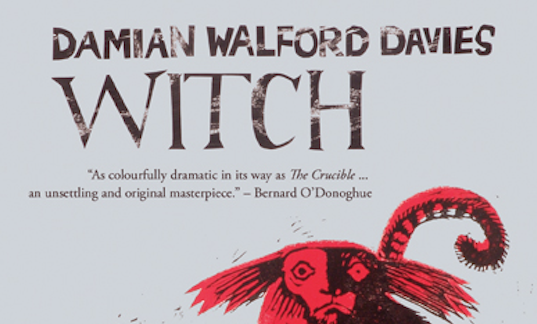
Witch by Damian Walford Davies

This week’s poem is a section from Damian Walford Davies’ second collection Witch, just in time for Halloween!

With the narrative pull of a novel and the vibrancy of a play for voices, Damian Walford Davies’ Witch offers a thrilling portrait of a Suffolk village in the throes of the witchcraft hunts of the mid-seventeenth century. The poems in this collection are dark spells, compact and moving: seven sections, each of seven poems, each of seven couplets, are delivered by those most closely involved in the ‘making’ of a witch. The speakers – from Thomas Love the priest, the villagers who slowly succumb to suspicion and counter-accusation, the ‘discoverer of witches’ Francis Hurst, and the ‘witch’ herself – authentically conjure a war-torn society in which religious paranoia amplifies local grievances to fever pitch. Witch is a damning parable that chimes with the terror and anxieties of our own haunted age.

An extract from Witch

She was threshing out
a prayer from deep inside

her chained throat’s
gabble. The air was dizzy

with her dirt. Which art,
she kept repeating,

which art in, as if the once
lithe tongue were damned

to dwell on it. Hustling
clouds let sunlight flush

in pools; she sprang
and chased it, thwacking,

thwacking back again
along her jangling leash.

Did they expect she’d
partner them in one

last meek pavane?
She scratched and bit,

lapsed sullen. At the gate
they bound her wrists

until the knot was
knuckled like a fist

and dragged her bucking
in the dirt. I followed

in her rut and fierce
curlicues, like the carving

of the vine stock’s sudden
flourish into grapes.

Shouldered like a sheaf,
bare hockshins shocking

white, she felt the press
of bodies pitching up

against the pikes. Each
rung made her trussed

bulk skip. He botched
the roping-up, the halter

like a bridle round her
mouth. She turned to him

with squally eyes. Her feet
on his, he held her like

a husband by the waist,
and let her go.

Order Witch from our website.

Posted on

Spooktacular Books

As Halloween approaches, the Seren team share some of their favourite spooky books!

Untitled design (6)

Amy | Poetry Editor

“Damian Walford-Davies’ poetic play-for-voices Witch, is a profoundly disturbing portrait of a village in Suffolk in the throes of the witchcraft hunts of twitch72he 17th century.

I was lucky enough to see a debut performance of this in the Aberystwyth Arts Centre where some terrific poets like Matthew Francis and Tiffany Atkinson played some of the main parts of the villagers slowly succumbing to the tense atmosphere as they became embroiled in suspicion and counter-accusation. I agree with Bernard O’Donoghue who calls Witch ‘an unsettling and original masterpiece, addressing our world as much as 1640s England.’”

Untitled design (8)

Rosie | Marketing Officer

“I love all things Gothic and ghosty, so picking one story to talk about was a pretty hard task.

The one I keep going back to isn’t technically a ghost story at all, but is possessed with an overpowering sense of haunting– I’m talking about Rebecca by Daphne du Maurier.

rebeccaDu Maurier is an absolute genius and (IMHO) Rebecca is her most well-known novel for a very good reason. The story is so compelling that if I had to choose between carrying on reading and free pizza, I might just pass on the pizza. Shocking, I know.

What I love most about Rebecca is that even though we never gain a full picture of the title character, she pervades every aspect of the story as an inescapable, mystifying presence. The narrator’s recurring self-doubts and feelings of inadequacy make her truly relatable, too. Definitely one to take a look at if you haven’t already!”

Untitled design (5)Jess | Marketing Assistant

“I don’t tend to read much horror because I’m a huge wuss; I don’t even like watching Shaun of the Dead on my own. That being said, I’ve always loved spooky stories, particularly ghost stories. We like scaring ourselves. I’m sure Freud would have a lot to say about that.

tls

Ghost stories, particularly ghost stories set in decrepit houses, are my favourite kind of spooky read for Halloween. I recently read The Little Stranger by Sarah Waters and adored it; I love its setting of post-war Britain, of a time in which the aristocracy were beginning to fade away and lose their place in society, and I love its atmosphere. Atmosphere is what makes a ghost story for me, and it seeps from the pages of this book. It reminded me of Shirley Jackson’s The Haunting of Hill House, another favourite of mine, in that the house is as much a character as it is a setting. It’s a brilliant book – give it a read!”

Rebecca | Editorial Assistant for Poetry Wales

Untitled design (7)

mrjgsAround this time each year I dig out an old battered copy of M.R. James’ Collected Ghost Stories and read about three or four and then put the book away again for the following year. I do this because they are so good, I want to savour the collection for as long as possible. This year I will have read the final few. What will I do next year? Probably start from the beginning again!”

What are some of your favourite reads for the spooky season?

Posted on

Friday Poem – The Witch Bag

This week’s poem comes from Sarah Corbett’s second collection, The Witch Bag, published in 2002.

“Poetry as white-knuckle ride” is how Poetry Wales described Sarah Corbett’s debut, The Red Wardrobe. Her eagerly-awaited second collection, The Witch Bag, is as powerful as its predecessor, and is sure to cement Corbett’s reputation as one of the rising stars of British poetry. The title poem evokes a spellbinder who is both “weightless, thin as pond moss” and “blacker than the pond’s belly.” ’The Kitchen God’ is a series of erotic love sonnets; ’My Son the Horse’ is part of an astonishing group of poems about the birth of a son; ’Czech Pieces’ records vivid impressions of Eastern Europe; the final section focuses on the death of a father. This poet, in sensuous and evocative language, conjures intimate worlds; her subjects are often fearlessly personal: birth, death, and love in all its manifestations.

The Witch Bag

Remember me. I am the woman
who shook her fisted nipples
at the moon,
bearing down the dark streets
that could not take her.

My face broke in two
as I ate its bright cheek,
my hands sudden as marshlight
held before me
into the dark nights that followed.

I am the woman who flew
not only in her dreams,
but remembered the spell as she woke
and hunted sighs like ticks,
dipping and turning as she went.

That woman, weightless thing,
thin as pond moss,
blacker than the pond’s black belly.
She hooks its clammy limbs around her own
and sucks the water into herself.

That woman, without a world,
who goes hopping with one boot
between twilights,
a bagful of grave treasures
lost and lost again –

mask of hair, milk tooth,
heel-bone, blood-purse, name.

Order The Witch Bag from our website.