November will always be a month in which we remember the sacrifices of our ancestors, those who fought, and those who died doing so. 2015 marks not only 70 years since the end of the Second World War, but also the birth of the Welsh war writer, Alun Lewis, whose centenary we have been celebrating throughout the year.
One of the most important things we can do is to ensure we never forget the fighting that both horrified and defined the 20th century, and so, as we thank both the fallen and those who made it home, we hope you’ll take a moment to peruse some of war-themed titles, and help us to honour Remembrance Day in the best way we know how.
Lest we forget.

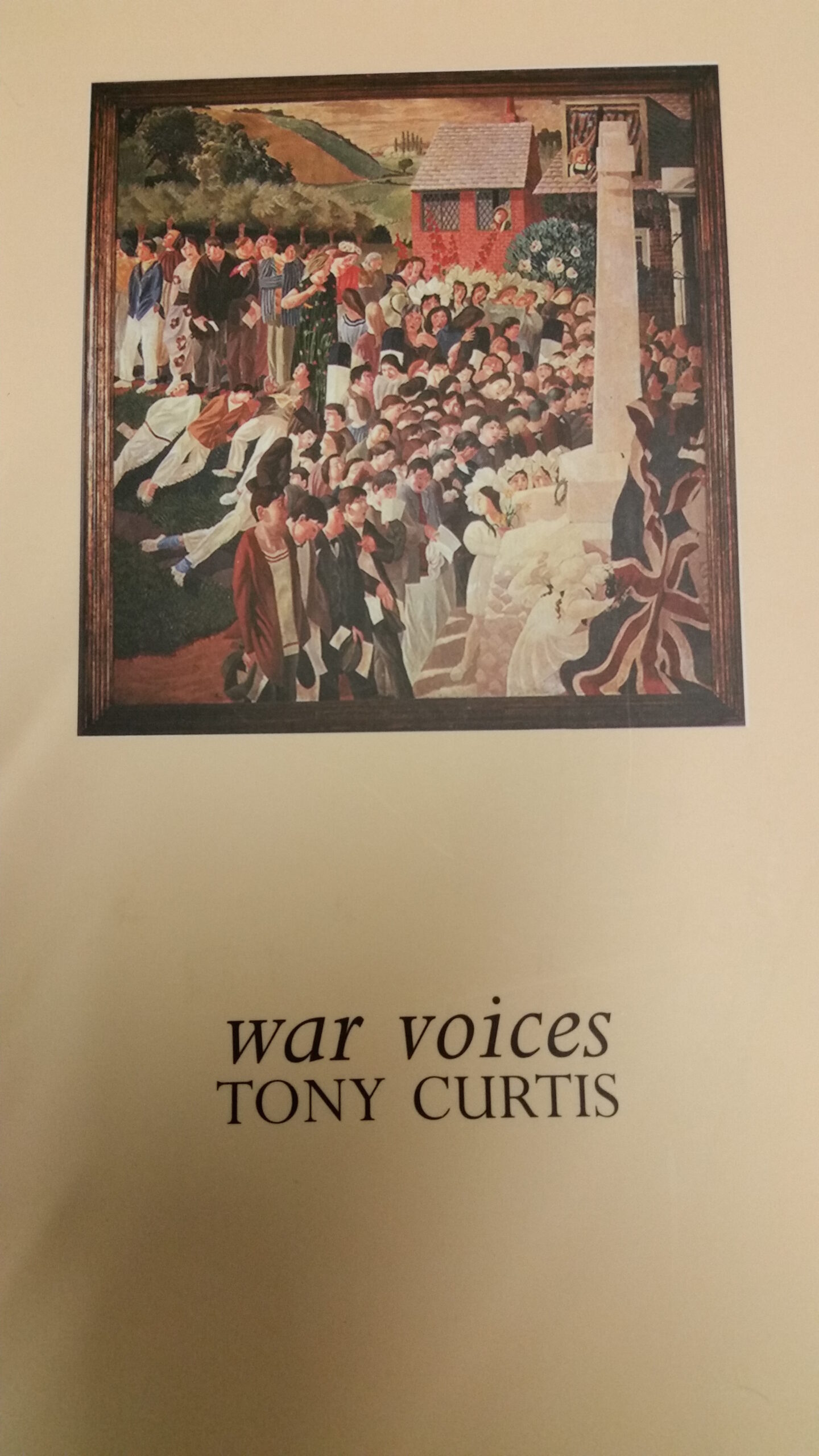
After the First Death: An Anthology of Wales and War in the Twentieth Century
ed. by Tony Curtis
This anthology contains writing by many of the greatest authors of Wales. From Wilfred Owen and David Jones, Dylan Thomas and Dannie Abse to Christopher Meredith and Gillian Clarke, it spans a century which saw both the barbarism of mechanised warfare and the development of mass communication, mass literacy and a flourishing of creative endeavour.
After the First Death draws on the experience of those who have faced death on the battlefield, and on others who have sought to put into words the complex philosophical, political and emotional responses that military action demands. Including poetry, extracts from fiction, memoirs, letters and biography, the book moves from World War One via the ideological battleground of the 1930s into the Second World War, then through the Cold War, Vietnam, the Falklands and the Gulf wars.

Men Who Played the Game
by Mike Rees
The Great War marked a profound change in attitudes to war and the conduct of it. Six million men from the British Isles served in it, 720,000 (12%) were killed. Junior offices had a 20% survival rate; up to 80% of a battalion could be lost. Battle had changed from engagement by professionals to wholesale, mechanized slaughter. The effect on servicemen and those at home was profound, perhaps never more so than in the case of sportsmen, who fought ‘battles’ on the pitch or in the ring according to rules devised for fair play.
Men Who Played the Game explores the development and importance of sport in Britain and the Empire leading up to the outbreak of the First World War, and the part played by sportsmen in the conflict. The book opens with revealing chapters of how various sports – the fans, the governing bodies and the sportsmen themselves – reacted to the outbreak of war.
The bulk of the book tells the stories of individuals and groups of sportsmen, combining accounts of their pre-war sporting success and their military experience. It covers several sports – rugby, football, cricket, athletics, tennis, boxing; social hierarchy – ‘gentlemen’ and ‘players’; several nationalities – English, Welsh, Scottish, Irish, Australian, New Zealanders; and several theatres of war – Western Front, Gallipoli, Africa, the Middle East. Here are stories about the famous Hearts football team, soccer stars Leigh Rhoose, Jimmy Speirs and the first mixed race footballer Walter Tull. Rugby Union is represented by All Black captain Dave Gallagher, British Lion David Bedell-Sivright and a swathe of England captains; cricket by the fate of the Kent County side and Booth, Jeeves and Burns: three all-rounders killed on the Somme.
Historian Mike Rees has written an invaluable guide to the relationship of sport and war, to the state of sporting Britain, and a moving testimony to the fate of so many sportsmen.

Collected Poems
by Alun Lewis
Alun Lewis (1915-1944), the remarkable poet and story writer, died, aged 28, in Burma during the Second World War. Some critics see him as the last of the great Romantic poets, a twentieth century Keats. Others view him as the bridge between pre-war poets like Auden and Yeats to post-war poets such as Hughes and Gunn. He was born and raised in Depression-struck south Wales and, following degrees in history at Aberystwyth and Manchester, became a teacher there. Early in 1940, despite his pacifist inclinations he enlisted and, after long periods of training, joined the war in India.
Becoming a soldier galvanised Lewis’s writing. By 1944 he had written two collections of poems and one of short stories, all published to considerable acclaim. Firmly established with Keith Douglas as the leading writer of the Second World War, Lewis’s death in an accident while on active service was huge loss to English literature. This Collected Poems comprises a body of work which has endured and which transcends the label ‘war poetry’; it is complete in itself and full of promise of greater things.

Love & War
by Siân James
Siân James brings her customary narrative flair and ear for dialogue to this beautifully-observed novel of love, scandal and grief set in wartime rural Wales.
For three years, young teacher Rhian Evans has lived a life of isolation in her small village, patiently awaiting the return of her soldier-husband, Huw. While Rhian struggles to stay true to her strict Chapel upbringing, her carefree lodger Ilona Hughes apparently has no such concerns, seeming to live life as she pleases.
As Rhian’s loneliness grows, Ilona’s influence leads her friend to confront the conflicting passions at work within her. Faced with the interests of art-teacher Gwynn Morgan (a married man with whom Rhian fell in love before meeting her husband) she finds herself questioning the morals imposed upon her by her upbringing, and eventually even her love for her absent husband. Soon, Rhian’s revived affections for Gwynn overpower both her loyalty to Huw and the disapproval of certain members of the community, leading the couple to embark on a passionate affair, just as Gwynn himself is called-up to fight.
But Rhian’s sadness at his departure is nothing compared to her devastation when she learns of his death only a few weeks later; wracked by grief, loneliness and guilt, she endeavours to make peace with her community, and particularly with Gwynn Morgan’s urbane French widow.
Perceptive, funny and moving, Love & War is a poignant and beautifully-plotted portrait of one rural community during the Second World War.

Kerry’s Children
by Ellen Davis
Ellen Davis was born in 1929 in the small German village of Hoof. Her Jewish family had lived there since 1760 but its peaceful existence was shattered when Hitler came to power and German Jews were persecuted.
Ellen’s autobiography tells the harrowing story of her childhood struggle to protect her younger brothers and sisters from the terrors of life in Nazi Germany and her escape to Swansea via the Kindertransport.
This is also the moving story of Ellen’s life in Britain, the difficulties of her first marriage and her love for her own Welsh children as she finds happiness in a new relationship. Meanwhile she continues to search for her German family and relatives in Australia, Israel and the US – a search which ends finally, heart-rendingly, in Riga in Latvia. Ellen Davis tells her story simply and honestly. In recent years she has given many interviews about her life and spoken about it especially to young people.