Posted on

Friday Poem – ‘Peau’ by Damian Walford Davies

Photo of a dusty road bending to the left and disappearing into rocky mountains

This week’s Friday Pome is ‘Peau’ by Damian Walford Davies from his collection Viva Bartali!.

Peau
Tour de France, 1938; Stage 14, Col d’Izoard, 22 July
From the dustcloud belly
of the baggage train, a megaphone
bawled out your lead in cracked
Italian through the moonscape
of the Casse Déserte. There was
time enough to notice
how a fine grey dust descended
on your arms, like mamma’s
sifted flour from a sack
the colour of the Virgin’s cloak,
parching then to snakescale
crust, sweat slaking it to clay
until the staggered watchers
at the summit saw a man of ash
thrash past, his face a mask,
and wished him such a steeping
at Briançon as would be
the utter shedding of a skin.

Viva Bartali! and lots more great poetry titles are currently available half-price in our Summer Sale which runs until 1st September 2024. Use the code summer2024 for 50% off any featured title.

Posted on

Friday Poem – Page 35 from ‘Witch’ by Damian Walford Davies

This week’s Friday Poem is taken from Witch by Damian Walford Davies. This continuous narrative poem conjures a thrilling portrait of a Suffolk village in the throes of the witchcraft hunts of the mid-seventeenth century.

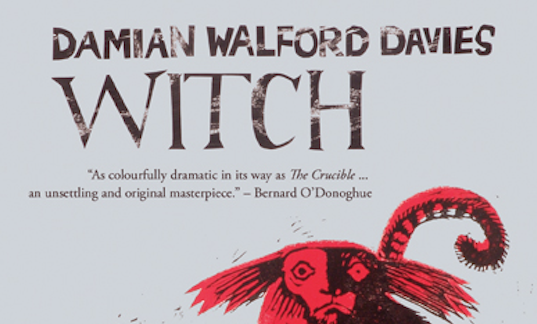
This cover shows a red sketchy print of a monkey sitting on a table beside a lamp. The text reads: Damian Walford Davies Witch.

With the narrative pull of a novel and the vibrancy of a play for voices, the poems in this collection are dark spells, compact and moving: seven sections, each of seven poems, each of seven couplets, are delivered by those most closely involved in the ‘making’ of a witch. The speakers authentically conjure a war-torn society in which religious paranoia amplifies local grievances to fever pitch. Damian Walford Davies’s Witch is a damning parable that chimes with the terror and anxieties of our own haunted age.

We were eeling in the fingers
of the creek, drawing knots
of muscle from the rushwork
creels, a silty tidemark just
above the knees. We watched
him loll along the boards,
lank sprays of loosestrife
in his hands. Clem dropped
her trussed skirt on the tide,
two eels flailing round
her wrists, quickening water
lapping at our legs. He saw us,
held his poor posy out. Love!
he said. I couldn’t say to which.

Witch is available on the Seren website: £8.99

Create your free Seren account and enjoy 20% off every book you buy from us.

Posted on

Friday Poem – ‘Gifts’ by Damian Walford Davies

This week’s Friday Poem is ‘Gifts’ by Damian Walford Davies which appears in his collection Docklands: A Ghost Story.

A disquieting fin-de-siècle ghost story in verse, Docklands explores grey worlds at the edges of the eye, conjuring late-Victorian Cardiff’s hustling, booming, sullied docks –and the horrors they conceal. A study of the violences perpetrated against wives and daughters, and of patterns of grief and longing, this disturbing sequence summons lost children and dark desires.


Docklands: A Ghost Story is available on the Seren website: £9.99

Create your free Seren account and enjoy 20% off every book you buy from us.

Posted on

Friday Poem – ‘Perspective’, Damian Walford Davies

It’s 1st March – Dydd Gŵyl Dewi Sant Hapus (or Happy St David’s Day) to you! This Welsh holiday has been celebrated since the 12th Century, and honours Wales’ patron saint.

On such a historic holiday it seems fitting to consider Wales’ history, and our Friday Poem does just that – ‘Perspective’, the opening poem from Docklands by Damian Walford Davies, introduces Victorian Cardiff: the chilling and visceral setting of this intriguing ghost-story-in-verse.

Damian Walford Davies Docklands Ghost Story

‘When much new poetry looks no further than the poet’s navel, this kind of imaginative leap is a tonic.’ – The Telegraph

Damian Walford Davies’s compellingly eerie new poetry collection, Docklands: A Ghost Story, introduces us to a Cardiff architect – a man supremely sure of himself – as he is commissioned to transform an area in the busy docks. Docklands explores grey worlds at the edges of the eye, conjuring late-Victorian Cardiff’s hustling, booming, sullied docks – and the horrors they conceal.


Friday Poem Perspective Damian Walford Davies


Docklands: A Ghost Story is available from the Seren website: £9.99

Create your free Seren account and enjoy 20% off every book you buy from us.


Posted on

Friday Poem – Witch

Witch by Damian Walford Davies

This week’s poem is a section from Damian Walford Davies’ second collection Witch, just in time for Halloween!

With the narrative pull of a novel and the vibrancy of a play for voices, Damian Walford Davies’ Witch offers a thrilling portrait of a Suffolk village in the throes of the witchcraft hunts of the mid-seventeenth century. The poems in this collection are dark spells, compact and moving: seven sections, each of seven poems, each of seven couplets, are delivered by those most closely involved in the ‘making’ of a witch. The speakers – from Thomas Love the priest, the villagers who slowly succumb to suspicion and counter-accusation, the ‘discoverer of witches’ Francis Hurst, and the ‘witch’ herself – authentically conjure a war-torn society in which religious paranoia amplifies local grievances to fever pitch. Witch is a damning parable that chimes with the terror and anxieties of our own haunted age.

An extract from Witch

She was threshing out
a prayer from deep inside

her chained throat’s
gabble. The air was dizzy

with her dirt. Which art,
she kept repeating,

which art in, as if the once
lithe tongue were damned

to dwell on it. Hustling
clouds let sunlight flush

in pools; she sprang
and chased it, thwacking,

thwacking back again
along her jangling leash.

Did they expect she’d
partner them in one

last meek pavane?
She scratched and bit,

lapsed sullen. At the gate
they bound her wrists

until the knot was
knuckled like a fist

and dragged her bucking
in the dirt. I followed

in her rut and fierce
curlicues, like the carving

of the vine stock’s sudden
flourish into grapes.

Shouldered like a sheaf,
bare hockshins shocking

white, she felt the press
of bodies pitching up

against the pikes. Each
rung made her trussed

bulk skip. He botched
the roping-up, the halter

like a bridle round her
mouth. She turned to him

with squally eyes. Her feet
on his, he held her like

a husband by the waist,
and let her go.

Order Witch from our website.

Posted on

Our Recommended Reads for Halloween!

recommended reads for halloween

halloweengif

Start carving your pumpkins and stocking up on sweets, because Halloween is on the way!

What do you mean it’s too early? It’s never too early, and here at Seren we have even more reason to celebrate, because the earliest roots of Halloween date back to the harvest festivals in the Celtic nations, like Wales.

tmyk

Okay, okay, maybe it’s a tad early to dig those skeletons out of your closet and dangle them from your wall, but it’s never too early – or too late, for that matter! – to read something that will put you in the mood for the spookiest time of the year…

sing_sorrow_sorrow_72

Sing Sorrow Sorrow
ed. Gwen Davies

Sing Sorrow Sorrow is a chilling collection of supernatural myth and otherworldly horror stories from some of Wales’ most exciting new and established authors.

From the dark waters of the Styx to the circling birds of the Mabinogion, from the lonely house to cities of the mind, the contemporary stories in Sing Sorrow Sorrow grow out of European folk, fable, fairy tale and legend – all tales which belong to the domain of the underworld. There are ghosts, murderesses, blood-soaked enchantment, black humour and stories with the darkest twists of the imagination – draw the chair nearer the fire and enjoy.

With contributions from Niall Griffiths, Maria Donovan, Deborah Kay Davies, Gee Williams, Richard Gwyn, Tristan Hughes, Cynan Jones, Matthew Francis, Anne Lauppe-Dunbar, Mary-Ann Constantine, Zillah Bethell, Dai Vaughan, Imogen Herrad, Lloyd Jones, Euron Griffith, Jo Mazelis Glenda Beagan, Alan Bilton, Roshi Fernando, Christine Harrison, Jon Gower, Charlotte Greig.

witch72

Witch
by Damian Walford Davies

With the narrative pull of a novel and the vibrancy of a play for voices, Damian Walford Davies’ Witch offers a thrilling portrait of a Suffolk village in the throes of the witchcraft hunts of the mid-seventeenth century. The poems in this collection are dark spells, compact and moving: seven sections, each of seven poems, each of seven couplets, are delivered by those most closely involved in the ‘making’ of a witch. The speakers – from Thomas Love the priest, the villagers who slowly succumb to suspicion and counter-accusation, the ‘discoverer of witches’ Francis Hurst, and the ‘witch’ herself – authentically conjure a war-torn society in which religious paranoia amplifies local grievances to fever pitch. Witch is a damning parable that chimes with the terror and anxieties of our own haunted age.

20660874

Sugar Hall
by Tiffany Murray

Easter 1955. As Lilia Sugar scrapes the ice from the inside of the windows and the rust from the locks in Sugar Hall, she knows there are pasts she cannot erase. On the very edge of the English/Welsh border, the red gardens of Sugar Hall hold a secret, and as Britain prepares for its last hanging, Lilia and her children must confront a history that has been buried but not forgotten.

Based on the stories of the slave boy that surround Littledean Hall in the Forest of Dean, this is a superbly chilling ghost story from Tiffany Murray.

You can order all of these books and more from our website!

Posted on

Don’t Judge a Book by its Cover

It’s a lesson we’re all taught, but one few of us ever really learn. No matter how much we try and convince ourselves otherwise, how our books look matters; it’s easy to appeal to the wrong audience, or not appeal to the audience you’re aiming for at all, if you have a cover that isn’t right for your book.

It’s true that it’s what’s inside that counts, but nobody’s going to bother taking a look inside, or even picking your book up off the shelf, if it has a hideous cover. You could have written the next masterpiece – winner of all the awards! – but the way your story is packaged has to appeal to readers.

The great thing about book covers, and, frankly, life in general, is that everyone’s different. You’re unique, just like everyone else. All of our tastes vary, so what could be a horrible cover to some is a beautiful one to others. In that case you might even ask: ‘well what’s the point of this blog post at all?’ And to that I say: here are some of my personal favourite Seren book covers.

I’d love to know what some of yours are!

serencovers

Browse our books on our website.

Posted on

Seren at The Hay Festival

hayfestlogo

Today marks the beginning of The Hay Festival 2015, and this year there are plenty of events involving some of our very own authors.

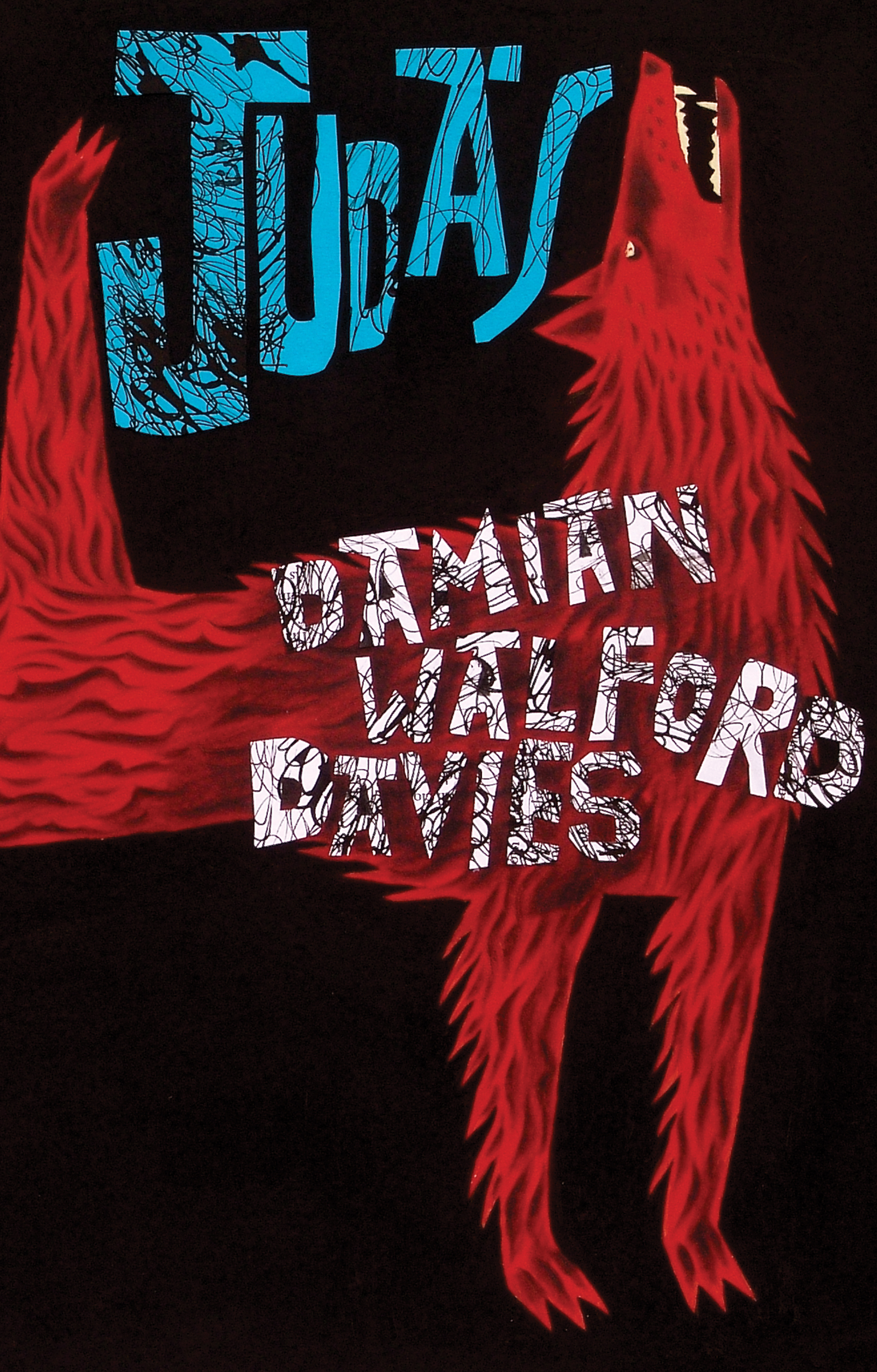
my_family_and_other_superheroes_covercosta_quicksand coverPaul Henry and Jonathan Edwards will be reading from their latest collections, Boy Running and the Costa Poetry Prize-winning My Family and Other Superheroes respectively. If you’re a fan of poetry, T.S. Eliot Prize-winning poet Philip Gross and visual artist Valerie Coffin Price will also be discussing their collaborative collection, A Fold in the River, and Damian Walford Davies will be discussing and reading from his latest collection, Judas.

We’re alAlun Lewis 72so going to be celebrating the centenary of Alun Lewis at Hay this year, with two events dedicated to the WW2 writer. Juliet Aykroyd, Owen Sheers and John Pikoulis will be discussing Lewis’s time in India, in particular how he met and fell in love with Juliet’s mother, Freda Aykroyd, while Owen Sheers reads some of his poems.

Another event will see Gillian Clarke, the National Poet of Wales, do a close reading and discussion of Lewis’s poems.

Losing_Israelcmyk300Our prose is also getting some attention at Hay this year. Jasmine Donahaye will be talking to Francesca Rhydderch, author of the 2014 Wales Book of the Year The Rice Paper Diaries and co-editor of New Welsh Short Stories, about her upcoming memoir, Losing Israel, a moving and honest account of nature writing, travel writing and family history exploring the displacement of Palestinians in 1948.
For those of you who are fiction lovers, Tiffany Murray will be doing a late-night reading from her acclaimed ghost story, Sugar Hall, where she will be joined by David Mitchell, author of Cloud Atlas and the upcoming Slade House.

With so much to see this year at Hay, you’d be a fool to miss out! Buy your tickets online at www.hayfestival.com, or check out our Events Page for more information.

Posted on

Friday Poem – Corpus

An Easter themed poem  for this week’s installment. ‘Corpus’ comes from Damian Walford Davies’ latest collection, Judas.

A shattered Judas Iscariot – that byword for betrayal – tells his own story in Damian Walford Davies’ compelling and finely wrought new collection from Seren.

We follow Judas over the course of five days as he moves through first-century Jerusalem trying to make sense of the bewildering events surrounding the life and execution of Jesus. But this is a man for whom the future is as real as his anguished and traumatized present, and for whom the Arab-Israeli conflict is as urgent as the tension between the Romans and Jews. Emphasising our compulsion to create, and challenge, gospel truths, Judas gives voice to man caught up in the promise and violence of history.

In short-lined, intensely suggestive dramatic monologues, Damian Walford Davies vividly summons moments of fear and swagger, doubt and passion, despair and nonchalance as an outlaw Judas finds himself haunted by his chequered and extraordinary past. Familiar stories are rendered strange and uncanny as the reader is caught in multiple ironies. As striking as the unnerving images on the news loops of our TV and computer screens, these poems locate us on the hazardous streets of a divided city with a companion-guide who shares with us his own troubling and troubled version of history.

Drawing on conflicting representations of Judas spanning twenty centuries, this chain of poems sets out to challenge orthodoxies and easy pieties. Judas offers an imaginative map of ancient enmities – and dares to hint at resolutions – in the form of a dramatic autobiography of the man whose most famous act (they say) was a kiss in the dark.

Corpus

What can I say? I wasn’t there:
neither ready to relieve him
of the transom’s heft

at Via Dolorosa, Station number five;
nor standing with his mother
on the quarry’s scree

to watch his wrists
spiked expertly
between electric nerve

and bone, and hear him
gurgle, drowning in the liquor
of his lungs. I could have tracked

the trail of blood
from here to where the last gob
hit the ground. The morning

had an air of perfect
commonplace. I howled,
so silently I know he heard.

Order Judas from our website.