Posted on

Friday Poem – Bamp

my family and other superheroes

Our Friday poem is from Jonathan Edwards’ Costa Award-winning My Family and Other Superheroes, which is 35% off until 14th February in our Valentine’s sale (so what better time to pick up a copy?)

my family and other superheroes jonathan edwardsMy Family and Other Superheroes introduces a vibrant and unique new voice from Wales. The superheroes in question are a motley crew. Evel Knievel, Sophia Loren, Ian Rush, Marty McFly, a bicycling nun and a recalcitrant hippo – all leap from these pages and jostle for position, alongside valleys mams, dads and bamps, described with great warmth. Other poems focus on the crammed terraces and abandoned high streets where a working-class and Welsh nationalist politics is hammered out. This is a post-industrial valleys upbringing re-imagined through the prism of pop culture and surrealism.

Bamp

That’s him, with the tweed and corduroy
skin, wearing the slack gloves of his hands,
those liver spots like big full stops. That’s him

passing time with his favourite hobby, which is
you know, pottering, or staring closely
at the middle distance, enjoying the magic tricks

his watch does. His pockets are for special things
he has forgotten, no one fills the holes
in crumpets like he does, and in his wallet

is a licence from the Queen and what it means
is he can say what the hell he likes and you
can’t do nothing. That’s him, with a cupboard full

of tea cosies, a severe hearing problem
round those he doesn’t like, gaps in his smile
and stories, a head full of buried treasure

and look, that’s him now, twiddling his thumbs
so furiously, it’s like he’s knitting air.
It’s only him can hold the air together.

Buy your copy now.

Posted on

Short Story of the Month | ‘A Bird Becomes A Stone’ by Jo Mazelis

Our January Short Story of the Month, still available to read, is ‘A Bird Becomes A Stone’ by Jo Mazelis, which features in her beautiful new collection Ritual, 1969, due to be published April 2016.
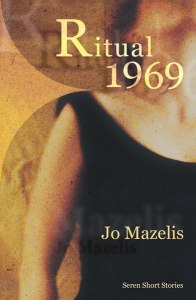
A Bird Becomes A Stone from Ritual, 1969 by Jo Mazelis

This, her third collection, welcomes you to a darkly disquieting world of make-believe and performance, where nothing is quite as it seems and first impressions may only lead to further disguises and false trails. Twins, circus acts, playground games and play-acting, the path from the schoolyard to adulthood is beset with misunderstandings, missed dates and traps for the unwary.

Awarded a Jerwood Fiction Uncovered Prize for her debut novel Significance, Jo has also had numerous short stories in anthologies and listed for awards, including five short-listings for the Rhys Davies short-story prize. Several of her stories have been broadcast on Radio 4.


A Bird Becomes A Stone

This is an extract. Read the full short story for free on our website.

The film Sarah had volunteered to act in was written and directed by a Welsh girl called Catrin, who was at college in Bristol. She’d brought a crew of other students to Wales, one to do sound, another was a cameraman. There was also a sulky girl with bad skin called Morgana whose role was not explained. They drove in a grubby white VW van up to the Brecon Beacons, careering and bumping along narrow tracks in search of good locations. The cameraman drove and the girl with bad skin sat up front because she claimed she’d get carsick otherwise. So the other three had to suffer in the back, wedged in among the film equipment and two plastic sacks of what seemed to be dirty laundry but turned out to be props and costume.

Sarah played the main role. According to the storyboard a lot of footage would consist of her running through woods, along a shoreline (brooding clouds and crashing waves in the background) and along treacherous mountain paths. The schedule demanded that they shoot with her for three days, then on the fourth and fifth days another actor would join them. He was to play a man who had molested her as a child. The chief premise of the film was that every impression in the early sequences led the audience to believe she was being chased, but actually it emerged that her character was the pursuer. The hunted becomes the hunter.

They parked at a lay-by above a stream. The day was still and unusually warm, white puffs of cumulus clouds moved lazily across a yawning blue sky.

‘This weather is crap,’ Catrin said.

The girl with the bad skin sat on a rock and stared hatefully at the rest of them as they unloaded the van.

From eleven o’clock until almost two, Sarah helped Catrin and the sound man scatter torn white sheets along the side of the stream while the cameraman shouted directions at them. At two they stopped for a lunch made by Catrin’s mother. Sandwiches with cheap white bread, some sort of meat that might have been pork or possibly turkey, hard-boiled eggs, crisps and an assortment of chocolate-covered biscuits which were warm and sticky and reminded her too much of long journeys in the back of her parents’ car; of her loneliness as an only child.

After lunch Sarah climbed into the back of the van and struggled into the costume they had brought for her; a grubby, ivory-coloured floor length dress. It had a plunging front and tied behind her neck leaving her back bare. It was made of artificial satin and the rough skin on her hands caught on it like tiny barbs.

In this scene she was meant to wander along by the stream charting a course between one discarded rag and another. Catrin showed Sarah some photographs taken after a battle; women searching for their menfolk in a field littered with the corpses of soldiers, explaining that this was the atmosphere she wanted to convey.

Sarah set off barefoot; in places mud oozed between her toes. The dress was thin, she shivered as the sun began to drop behind the mountains, but she persevered.

That night Sarah dreamt that she was filming the scene over and over, but her dream was invaded by the war photograph and as she stared at each flung-down rag, the torn scraps came to life turning into dreadful ghosts with scarred and half-flayed skin who moaned and tried to touch her.

The next day Catrin was overjoyed as weighty blue-grey cumulonimbus began to gather behind the mountains threatening an approaching storm.

‘We’re going further north today, then as far as Dolgellau on Thursday.’

There was little time wasted on the second day; they parked on a bleak mountain with a ribbon-like road running through it. Plynlimon hunkered under dark skies to the north.

‘Now just run towards the camera but look beyond it, not directly at it.’

She ran. Barefoot in wet grass peppered with shiny black sheep droppings, her long dress saturated up to her thighs. A few times she fell but pulled herself up and stumbled on.

‘That was brilliant! It looks so real when you fall,’ Catrin said.

‘Hey,’ the sound guy said, touching her arm gently. ‘Is that blood? Did you hurt yourself?’

She looked down; the dress was torn over her right knee, bright crimson blood mixed with muddy grey stains. She lifted her dress, her knee was grazed and in one place a small cut sent a trickle of red coursing down her leg and over the arch of her foot.

Continue reading ‘A Bird Becomes A Stone’ here.


Jo Mazelis’ new collection, Ritual, 1969, will be published by Seren in April 2016. More information coming soon to the Seren website.

Posted on

Friday Poem – Christmas Holiday

This week’s poem is from Alun Lewis’ Collected Poems. Merry Christmas!

Alun Lewis (1915-1944), the remarkable poet and story writer, died, aged 28, in Burma during the Second World War. Some critics see him as the last of the great Romantic poets, a twentieth century Keats. Others view him as the bridge between pre-war poets like Auden and Yeats to post-war poets such as Hughes and Gunn. He was born and raised in Depression-struck south Wales and, following degrees in history at Aberystwyth and Manchester, became a teacher there. Early in 1940, despite his pacifist inclinations he enlisted and, after long periods of training, joined the war in India.

Becoming a soldier galvanised Lewis’s writing. By 1944 he had written two collections of poems and one of short stories, all published to considerable acclaim. Firmly established with Keith Douglas as the leading writer of the Second World War, Lewis’s death in an accident while on active service was huge loss to English literature. This Collected Poems comprises a body of work which has endured and which transcends the label ‘war poetry’; it is complete in itself and full of promise of greater things.

Christmas Holiday

Big-uddered piebald cattle low
The shivering chestnut stallion dozes
The fat wife sighs in her chair
Her lap is filled with paper roses
The poacher sleeps in the goose-girl’s arms
Incurious after so much eating
All human beings are replete.

But the cock upon the dunghill feels
God’s needle quiver in his brain
And thrice he crows: and at the sound
The sober and the tipsy men
Jump out of the bed with one accord
And start the war again.

The fat wife comfortably sleeping
Sighs and licks her lips and smiles

But the goose-girl is weeping.

Order Alun Lewis’ Collected Poems from our website.

Posted on

Friday Poem – Snow

This week’s poem is by the National Poet of Wales, Gillian Clarke, and is taken from the Seren anthology, Christmas in Wales. If you order two books from our website you’ll get a copy of Christmas in Wales for free! Offer ends Midnight, 24th December.

Celebrate Christmas the Welsh way in the company of some of the country’s leading writers, past and present. Christmas mass, the nativity play, turkey and plum pudding, the Mari Lwyd, presents, the weather, the shopping and post-festive blues are among the many subjects drawn from stories, poems, diaries and letters. Wartime Christmases in Swansea and the Rhondda – and home thoughts from India and Italy – pantomime characters, Christmas cards and New Year Resolutions; R.S. Thomas, Dylan Thomas, Dannie Abse, Gillian Clarke, Catherine Fisher, Bruce Chatwin, Sian James, Kate Roberts and Leslie Norris, Christmas in Wales has all the ingredients for the complete experience of the season of celebration.

Snow

The dreamed Christmas,
flakes shaken out of silences so far
and starry we can’t sleep for listening
for papery rustles out there in the night
and wake to find our ceiling glimmering,
the day a psaltery of light.

So we’re out over the snow fields
before it’s all seen off with a salt-lick
of Atlantic air, then home at dusk, snow-blind
from following chains of fox and crow and hare,
to a fire, a roasting bird, a ringing phone,
and voices wondering where we are.

A day foretold by images
of glassy pond, peasant and snowy roof
over the holy child iconed in gold.
Or women shawled against the goosedown air
pleading with soldiers at a shifting frontier
in the snows of television,

while in the secret dark a fresh snow falls
filling our tracks with stars.

Order Christmas in Wales from our website.

Posted on

Santa Baby, Slip a Story Under the Tree

Christmas is on its way, and we have some recommendations for you whether you’re looking for a present for someone else, or you’re looking for something to ask Santa for this Christmas!

santagif

For Thriller Lovers:

ttt

If you or someone you know loves a good crime story, why not try Jo Mazelis’ Jerwood Fiction Uncovered Prize-winning Significance, or Anne Lauppe-Dunbar’s debut Dark Mermaids?

For Historical Fiction Lovers:

ttt (1)

Francesca Rhydderch’s debut, The Rice Paper Diaries, which won the 2014 Wales Book of the Year Award and Tiffany Murray’s chilling Sugar Hall are perfect for readers who like their stories old school. So old school they’re practically history.

For Sci-Fi/Fantasy Lovers:

ttt (4)

If you’re after something weird and wonderful for you or a friend this festive season, then you can’t go wrong with one of our New Stories from The Mabinogion; The Meat Tree is a brilliantly bizarre sci-fi retelling of the Blodeuwedd myth, perfect for readers who love stories that are literally out of this world. But if you’re after something a little closer to home, why not pick up a copy of Mary-Ann Constantine’s fable-esque debut, Star-Shot? This novel is a real treat for readers who are familiar with Cardiff.

For Short Story Lovers:

ttt (4)

For lovers of the oft forgotten art form that is the short story, why not pick up New Welsh Short Stories, an anthology featuring a wide range of Welsh authors from Carys Davies to Jo Mazelis, or Graham Mort’s latest collection, Terroir. These two look quite charming together, so if I were you I’d get both.

eldoradogif

For Non-Fiction Lovers:

ttt (3)

Jasmine Donahaye’s memoir, Losing Israel, has been stunning readers since its publication earlier this year; part memoir, part travel writing, part nature writing, it’s the perfect gift for any non-fiction connoisseur. Mike Rees’ Men Who Played the Game is the ideal book for any sports fan, and as we commemorate one hundred years since the First World War there’s no better time to read it than right now.

For Poetry Lovers:

ttt (5)

Here at Seren we’d be nothing without our poetry, so why not pick up a copy of Kim Moore’s hugely popular debut collection, The Art of Falling, or Jonathan Edwards’ Costa Award-winning debut collection, My Family and Other Superheroes – we promise they won’t disappoint you! Or if someone you know likes to keep on top of the latest poetry, a subscription to Poetry Wales magazine would make for a fine Christmas present, if you ask me. And I suppose you must be asking me if you’re reading this…

You can find all these books and more on our website, so treat the readers you know to some well-chosen words this Christmas!

homealone


Posted on

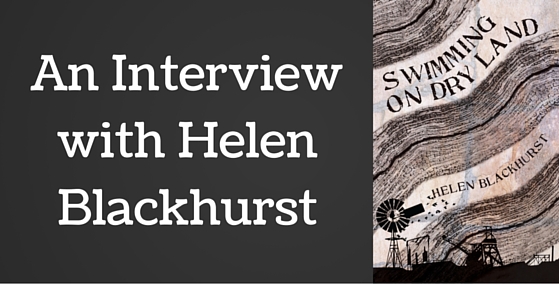
An Interview with Helen Blackhurst

We had a chat with Helen Blackhurst about her debut novel, Swimming on Dry Land.

Helen lives in rural Ireland and works as a drama therapist.  Her first novel, Swimming on Dry Land, was born out of a period of residency in Australia.  Helen’s passion for the Australian landscape has inspired her writing ever since.  Her second novel, A Time of Rainfish, is set in a fictional town in Arnhemland, Northern Territory, where Helen has made several research trips, at one point working on a short project with a group of Aboriginal women. Helen has facilitated a range of writer-in-community projects, exploring writing from various perspectives, including sound, image, movement, and voice. Site to Sound (2009) and Forgetmenot (2008), both community arts projects, were supported by the Arts Council of Ireland. 

Swimming on dry land draft1

Set in a small fictional mining town in south-west Australia, Monica Harvey, a twelve-year-old English girl, is looking for her younger sister, Georgie.  The Harvey family has recently moved to Akarula, having been persuaded to set out in search of a new life by their rich Uncle Eddie, who owns the town.  Monica discovers Georgie down one of the disused mine shafts but when she returns later that day with her father and Uncle Eddie, Georgie has disappeared.   

It becomes clear that Georgie’s is not the first disappearance in the town. Eddie, a self-made money-man – a dreamer whose main concern is to save his beloved town – has thus far concealed the disappearances from his brother, Michael. But as the search for Georgie widens, the pressure intensifies and Eddie’s dream-like vision of his town gradually implodes. Mr M, the only aborigine left in Akarula, sees it all from his seat under the town’s single tree, giving rise to local superstition and fears.

As the history of the land unfolds new possibilities and answers to the mysterious disappearances slowly suggest themselves.

Both Swimming on Dry Land and your second novel, A Time of Rainfish, are heavily influenced by the time you spent living in Australia. What is it about Australia that so captivates you?

The landscape – the vast emptiness you get from driving through the middle, the beauty of the country as a whole, all those amazing creatures. And being on the food chain really puts you in your place. I love that; it gives you a sense of awe which is hard to come by in Europe. I’m also fascinated by Australian history.

The town Swimming on Dry Land is set in is fictional. Why did you decide to use a fictional setting rather than a real one?

Akarula is a patchwork of places I passed through or spent time in whilst in Australia. Fictionalising the setting gave me the freedom to create what I needed for the town without being constrained by the reality of a real one.

You get into the heads of several characters throughout Swimming on Dry Land. Which character did you find the most difficult to write? Which character was the easiest?

Monica came to me first. I considered writing the whole story from her perspective. In some ways, she was the easiest. I think Caroline probably took me the longest to get to know.

Are there any other countries you’d like to explore in your fiction? Have you ever considered writing a novel set in Ireland, for example?

There are many countries I’d like to explore, but for the moment I seem locked into Australia. I suspect that if I moved to Australia, I’d start writing about Ireland. There is something in the distance – time, space, culture – that allows for that outside eye, a sharpening of the senses, a feeling that anything is possible. Familiarity seems to flatten all that for me. Of course I am still a foreigner in Ireland, though it feels like home.

Finally, what’s the best book you’ve so far read this year?

I’ve read many great books this year. The Goldfinch by Donna Tartt, which I’ve just finished, was really hard to put down – always a good sign.

Order Swimming on Dry Land from our website.

Posted on

Friday Poem – For Christmas

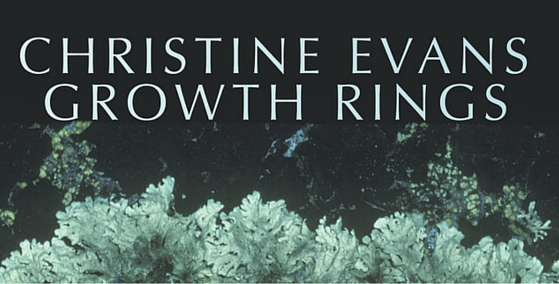
This week’s poem is from Christine Evans’ 2007 Wales Book of the Year shortlisted collection, Growth Rings, published in 2006.

This collection from Christine Evans follows well-received Selected Poems.  Hers is a sensitive and persuasive voice, highly attuned to the vagries of the seasons, to the landscapes and inhabitants of the beautiful Llyn Peninsula in North Wales where the author has made her home.

As well as vibrant short lyrics on everything from ‘Bluebells in Nanhoron’ to jets flying over Wales, there are a series of tender elegiac pieces on relatives, meditations on the last moments of Shelley and the fates of the Brontes, and a number of poems featuring the mysterious Island of Bardsey.

For Christmas

Hubble shows us this:
the star factory in Sagittarius
where time’s a flying strand
looping from a furnace

where, out of the flux, out of the fire,
a boilover of hydrogen and sulphur,
cobalt and vermilion
from the radiant debris,

a scatter of new stars
streams out, seeds of light.
Pinpricks in our darkness:
guides as good as any for the journey.

Order Growth Rings from our website.


Posted on

Friday Poem – The Snow Dome

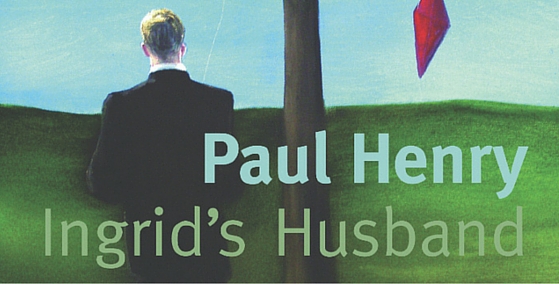
This week’s poem is from Paul Henry’s fifth collection, Ingrid’s Husband, first published in 2007.

Here is a book of ghosts, from the mysterious traveller in the title poem who, mistaken for another man, starts to crave his new alter ego, to the first person of ‘Between Two Bridges’, Henry’s long poem on Newport, who follows his teenage ghost across the city for a night:

He pulls away. The wind puts its lips to an arcade.
A seagull on a barber’s pole waits to open its blades.

How the living haunt themselves is the concern of Ingrid’s Husband, and the author discovers his spirits through an imagery of absences: a child’s signature in the dust of an old guitar; the stone plinth where a cafe once stood; a white balloon drifting down a shopping arcade; a chateau, still furnished with belongings of its vanished owner…. Love continues to underscore the commonplace in Paul Henry’s fifth collection and this lyric poet’s distinctive voice continues to haunt its readers.

The Snow Dome

First sun, then snow … my father floats up the lane
in white jeans, a white rose in his claw.
He cuts a Lear-like figure, drifting alone
through the sun and snow.

Wherever you mother goes, I follow
he mutters, brushing the icing from her stone,
its doorstep to a colder house. It snows

and shines about the ornamental scene.
We can’t see for the petals of the rose.
He says she kissed his bald head in the lane,
first with sun, then snow.

Order Ingrid’s Husband from our website.

Posted on

Criminally Good Reads

I don’t know about you, but when the colder months roll around I always find myself more inclined to pick up a thriller or a good ol’ fashioned whodunnit. There’s a strange kind of comfort in cracking open a book featuring thieves, drug dealers and serial killers whilst snuggled up under a warm blanket with a lovely mug of hot chocolate, knowing that no matter how bad life might seem at times you’re at least better off than whoever you’re reading about.

If you’re anything like me, dear reader, and you do enjoy a bit of detective work at this time of year then you’re in luck! Here at Seren we have a few books that might just peak your interest.

Dark_Mermaids_Web72


Dark Mermaids

by Anne Lauppe-Dunbar

Unhappy West Berlin police officer Sophia is called on to investigate the murder of her childhood friend Käthe, after her beaten body is discovered in Sophia’s local park. Sophia is forced to return to the hometown she fled as a teenager with her enigmatic father Petrus, and Mia – a frightened child who turned up on her doorstep. She must investigate Käthe’s murder and care for a mother she believed abandoned her. As she reluctantly delves into the sordid Stasi secrets of those she grew up with, Sophia uncovers a web of horrors about her own abusive past as a child-swimming star in the former GDR. But her hunt for the truth has not gone unnoticed by those close to her, people who still have too much to hide.

Read our interview with Anne!

the_pembrokeshire_murders


The Pembrokeshire Murders: Catching the Bullseye Killer

by Steve Wilkins with Jonathan Hill

The story of Operation Ottawa, the cold case detection of John Cooper for two Pembrokeshire double killings: the Scoveston Manor murder of Richard and Helen Thomas in 1985 and the Pembrokeshire Coastal Path murder of Peter and Gwenda Dixon in 1989. Detective Chief Superintendent Steve Wilkins tells how he gathered a specialist team to review the murders, used cutting edge forensic techniques to prove Cooper’s involvement in the crimes, and how the tv programme Bullseye led to a crucial identification. The dramatic timeline involves psychological profiling, intimidation by Cooper, the relationship between police and media in the arrest and the predicament of the victims’ families during the long years when the cases remained unsolved.

The combination of painstaking evidence gathering, new forensics, psychological profiling, and careful detection made Operation Ottawa the template for subsequent murder enquiries. Now, for the first time, the lead detective tells the story of how a vicious killer was brought to justice.

Disturbance – Ivy Alvarez


Disturbance

by Ivy Alvarez

Disturbance is a novel in verse by Ivy Alvarez that chronicles a multiple homicide, a tragic case of domestic violence, where a family was gunned down by the husband and father. 

The book features poems in a kaleidoscope of voices from all the characters involved. We first meet the family itself and witness how the father’s controlling attitude gradually escalates into violence. Then we get the aftermath: the authorities, police and neighbours, who all might have helped to prevent this tragedy. This is a very dark book, but a courageous one, ultimately about evil and its presence in our everyday lives. The fact that this family was relatively well-to-do, seemingly prosperous and well-connected, adds another layer of intrigue and mystery. There is some graphic violence, but the emphasis is on the characters and their motivations.

significance_roundel


Significance

by Jo Mazelis

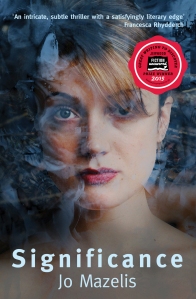
Lucy Swann is trying on a new life. She’s cut and dyed her hair and bought new clothes, but she’s only got as far as a small town in northern France when her flight is violently cut short. When Inspector Vivier and his handsome assistant Sabine Pelat begin their investigation the chance encounters of her last days take on a new significance.

Lucy’s death, like a stone thrown into a pool, sends out far-reaching ripples, altering the lives of people who never knew her as well as those of her loved ones back home.

Find all these titles and more on our website where, if you order two books, you’ll receive a free copy of Christmas in Wales!