Posted on

Friday Poem – ‘Armistice Day ’77, Honiton’, John Tripp

John Tripp Friday Poem Armistice Day

Today, to mark Armistice Day, our Friday Poem is one of remembrance and silence from John Tripp’s Selected Poems.

John Tripp Selected PoemsA well known and popular figure on the poetry scene, John Tripp’s untimely death in 1986 meant the loss of a ’devoted and passionate poet’, as John Ormond calls him in the Introduction to this book. Pithy, regretful, bitter, angry, at times tender, John Tripp’s poetry was always engaged with the issues which most mattered to him.

Selected Poems draws on all John Tripp’s books, together with work published since the last of those collections, Passing Through (1984), and previously unpublished poems.


Armistice Day ’77, Honiton

The two minutes’ silence was cut to one
that November day; it was a busy world.
By chance, on my way to a gig
I walked into a ceremony of six
in the rain: crosses in a ring, and the poppies soaked.

Down two sides of the slab were names
linked to this piece of England – the sound
of country stock grown old in duty
and the acceptance of pointless loss.
Names going back to Minden and before.

(Were these the only ones left
to remember their dead?
Already sixty seconds were lopped
off any dignity. Would their children
forget, as I had forgotten?)

No more came. On some other day
I might have felt an interloper
marring their ritual. At eleven o’clock
the men took off their hats
and we all bowed our heads.

A minute in the rain in a country town
may whisper the whole grief of history.
Picture a knot of seven around that block,
the red wet poppies, and just for a moment
a complete and utter silence in the world.


John Tripp: Selected Poems is available from the Seren website: £4.95


Posted on

Friday Poem – ‘Elegy for David Beynon’, Leslie Norris

Aberfan Friday Poem Elegy for David Beynon by Leslie Norris

Today marks 50 years since the Aberfan disaster, 21 October 1966, when a mountain of coal waste slid into Pantglas school and 19 houses, killing 144 people, 116 of them children.

Today is a day of solemn remembrance, and in this spirit, our Friday Poem is ‘Elegy for David Beynon’ by Leslie Norris, written after a teacher who died trying to shield five children from the slurry.

Leslie Norris was born in Merthyr Tydfil in 1921, and many of his works transform local incidents into poems of great depth and significance. ‘Elegy for David Beynon’ is among his most anthologised poems, and with its poignancy and sincere emotion, it is not hard to see why.


Friday Poem Elegy for David Beynon Leslie Norris

‘Elegy for David Beynon’ is taken from Leslie Norris: The Complete Poems, edited by Meic Stephens.


Posted on

Friday Poem – The Last Soldier

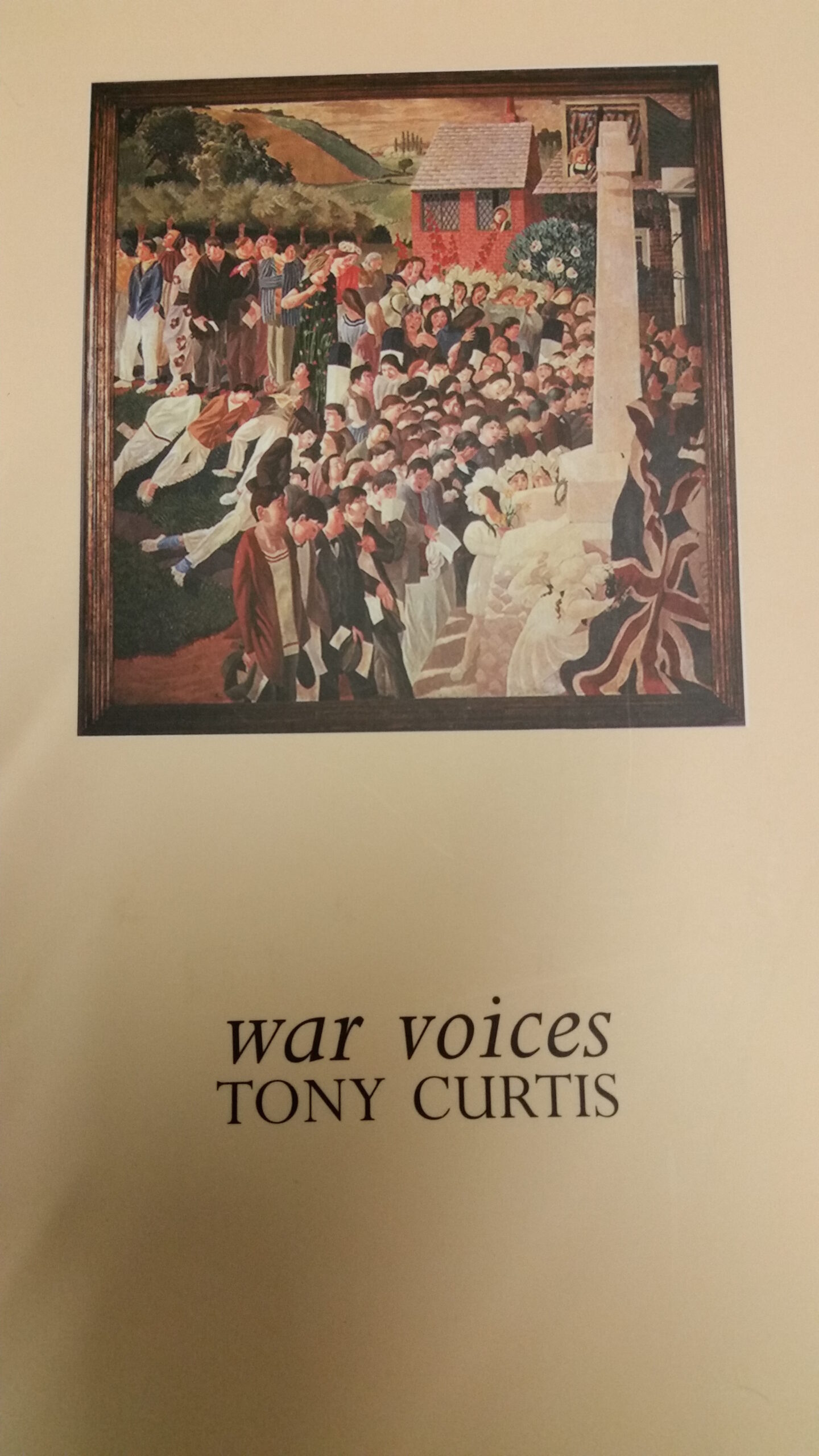
This week’s poem comes from Tony Curtis’ War Voices, first published in 1995.

War and its effects have been an enduring subject throughout the twenty-five year writing career of Tony Curtis. The resulting poetry might have been bleak but for the sensitivity with which Curtis handles the theme, and the bravery and dignity in the face of barbarism which he finds underlying conflict. Poems such as ‘Soup’, shortlisted for the Observer / Arvon Prize and ‘The Death of Richard Beattie-Seaman’, winner of the National Poetry Competition, are a measure of Curtis’s skill in addressing this difficult subject. From Flanders to Bosnia, via Russia and Suez, India and Ireland, Vietnam and the Cold War, these War Voices speak of protest, remembrance and commemoration.

The Last Soldier

The last soldier marches out of the jungle
to the gentlemen of the press and an official welcome.
He salutes, presents the sword
which his parents, thirty years before,
had him swear to use with honour
in war, or on himself. Swathed
in a white cloth, it does not glint in the lights.
The President orders a reception, magnanimously
pardons the crimes of his private war.
A chartered Jumbo flies him home:
his mother’s cheek is leather,
his father’s mind has split.
The crowds scream for a walking-history,
the last spirit of Empire. Too late.
In his absence the Dream has come
and gone.

The bright shells of cars litter his path,
blind-eyed towers monster above him;
selling lights dazzle, pattern unfamiliar streets.
The air cloys with a sweet choking sin.

Back in the jungle, the fronds of evening
finger a clear sky, rainbow birds dash
colours across the deep green.
Minutely, against the background of birds
and the timed whispering of the ocean
his abandoned radio crackles into life:
orders come through.

Order War Voices from our website.