Posted on

Prepare Yourself for Indie Book Day!

Indie-Book-Day-embed

This Saturday is Indie Book Day – hooray!

What is Indie Book Day?

Indie Book Day is an entire day dedicated to supporting and celebrating our independent publishers and bookstores.

Great! How can I get involved?

Simple! To take part in Indie Book Day all you have to do is visit your local independent bookstore on March 21st and buy yourself a book that has been published by an independent publisher – the genre doesn’t matter! Then post a picture of your new book, its cover, or, even better, you with the book and post it on any social media site of your choice using the hashtag #indiebookday.

So, will you take up the challenge?

Look out for some Seren titles in your local independent bookstore this Saturday. Until then, here are some recommendations to whet your appetite!

my_family_and_other_superheroes_covercosta_quicksand coverMy Family and Other Superheroes introduces a vibrant and unique new voice from Wales. The superheroes in question are a motley crew. Evel Knievel, Sophia Loren, Ian Rush, Marty McFly, a bicycling nun and a recalcitrant hippo – all leap from these pages and jostle for position, alongside valleys mams, dads and bamps, described with great warmth. Other poems focus on the crammed terraces and abandoned high streets where a working-class and Welsh nationalist politics is hammered out. This is a post-industrial valleys upbringing re-imagined through the prism of pop culture and surrealism.

Easter 1955. Sugar Hall by Tiffany Murray. £8.99As Lilia Sugar scrapes the ice from the inside of the windows and the rust from the locks in Sugar Hall, she knows there are pasts she cannot erase. On the very edge of the English/Welsh border, the red gardens of Sugar Hall hold a secret, and as Britain prepares for its last hanging, Lilia and her children must confront a history that has been buried but not forgotten.

Love & Fallout

When Tessa’s best friend organises a surprise TV makeover, Tessa is horrified. It’s the last thing she needs – her business is on the brink of collapse, her marriage is under strain and her daughter is more interested in beauty pageants than student politics. What’s more, the ‘Greenham Common angle’ the TV producers have devised reopens some personal history Tessa has tried to hide away. Then Angela gets in touch, Tessa’s least favourite member of the Greenham gang, and she’s drawn back into her muddy past.

Pascale Petit, FauverieThe Fauverie of this book is the big-cat house in the Jardin des Plantes zoo. But the word also evokes the Fauves, ‘primitive’ painters who used raw colour straight from the tube. Like The Zoo Father, Petit’s acclaimed second collection, this volume has childhood trauma and a dying father at its heart, while Paris takes centre stage – a city savage as the Amazon, haunted by Aramis the black jaguar and a menagerie of wild animals. Transforming childhood horrors to ultimately mourn a lost parent, Fauverie redeems the darker forces of human nature while celebrating the ferocity and grace of endangered species. Five poems fromFauverie won the 2013 Manchester Poetry Prize and the manuscript in progress was awarded an Arts Council England Grant for the Arts.

seren_-_the_advantages_of_an_older_manA light-hearted novella exploring the strange case of a Swansea woman who is apparently possessed by the spirit of Dylan Thomas. Naturally all is not as it seems. The woman, who works in the Dylan Thomas Centre, meets a rather different Dylan from the one she knows by repute, one who doesn’t really fit in with the ghosts of other poets in heaven and is desperate to train himself to join the fitter shades of the long distance runners instead. Her own life, which has been lonely and sad, is completely transformed by the encounter.

Jo Mazelis, SignificanceLucy Swann is trying on a new life. She’s cut and dyed her hair and bought new clothes, but she’s only got as far as a small town in northern France when her flight is violently cut short. When Inspector Vivier and his handsome assistant Sabine Pelat begin their investigation the chance encounters of her last days take on a new significance.

Lucy’s death, like a stone thrown into a pool, sends out far-reaching ripples, altering the lives of people who never knew her as well as those of her loved ones back home.
Posted on

Friday Poem – The Love Songs of Davy Blackrock

Boy Running, Paul Henry

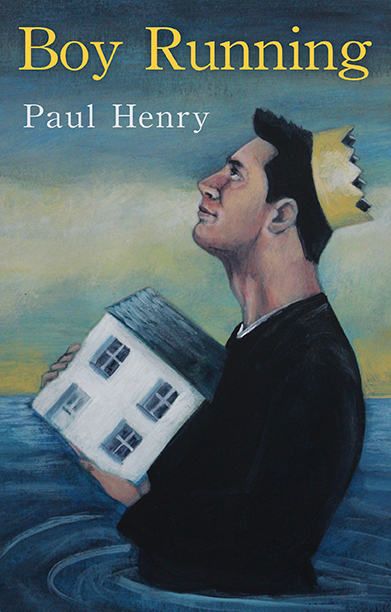
Today’s poem is from Paul Henry’s latest collection, Boy Running, published last month.

Paul Henry has gained a reputation as one of of the best poets in the UK. Boy Running is his beautiful sixth collection and the first to follow ‘The Brittle Sea: New and Selected Poems’. We begin in a ‘Studio Flat’. Cut adrift by marital break-up, the poet must sort through the emotional fallout and the various ‘chattels’ left behind; a sea of characteristic props: tables, lamps, metronomes, pianos, guitars. The poet’s sons are at the heart of this section where pathos is balanced by humour amidst the characters of a small country town.

A second section moves to the Welsh coastal town of Henry’s childhood, Aberystywth, opening with a long poem, ‘Kicking the Stone’ set in the summer of 1969. Also in this section are some familiar characters from earlier poems such as Brown Helen and Catrin Sands.

In the final sequence we meet ‘Davy Blackrock’: washed-up songwriter and modern day alter ego of Dafydd y Garreg Wen (David of the White Rock), alias David Owen (1720-1749), the blind, 18th century harpist and composer who fell asleep on a hill and dreamt the famous song which bears his name. In contrast to David of the White Rock, Davy Blackrock, ‘star of an ashen town’, drags his guitar from street to hotel to bedsit, an unsettled ghost who dreams of the perfect song.

The Love Songs of Davy Blackrock

  “The songs I had are withered
   Or vanished clean,
   Yet there are bright tracks
   Where I have been,”

                         Ivor Gurney – ‘The Songs I Had’

Few remembered them
but by the end
it was enough
that they’d brought love,
some good friends.
What was ambition
after all but the drum
of rain on a glass room,
a distraction from the moon?

He’d sit late for hours, Davy
in those final days,
inventing new chords
in his conservatory,
oblivious to the news,
worrying less about words
than the melody,
trusting his ear,
not counting the bars

and, between downpours
keeping one eye on the stars.

Paul will be launching Boy Running on 27th March at the bear in Crickhowell. Find out more or book tickets here.

Order Boy Running from our website.

Posted on

The Ones That Got Away

2015 is a year of important anniversaries at Seren. Not only does this year bring with it the celebrations for the centenary of WW2 writer Alun Lewis, but it also marks 70 years since the biggest mass-breakout of WW2, which happened right here in Bridgend.

Island Farm Camp was originally built to house the workers at the munitions factory in Bridgend when it was thought they’d much rather live close to their workplace than travel to and fro each day. Not surprisingly the women preferred to travel than to stay in the gloomy rooms provided, but when Europe found itself in need of places to keep POWs Island Farm, with its concrete huts and open fields, proved to be ideal.

70 years ago today, at around 10pm on the 10th March 1945, 70 POWs escaped from Camp 198 – better known as Island Farm – after digging a 70ft tunnel beneath the wire. Evidently, 70 was their lucky number.

Each of the escapees were divided into groups and were given maps, food and even a homemade compass, as well as identity papers which had been produced inside the camp. Some of them made it to Birmingham while others got as far as Southampton, and though all but one were eventually recaptured, it was an astounding feat. Yet it is still unknown as to who actually organised the escape.

70 years on Peter Phillips has taken it upon himself to explore the story of Island Farm in The German Great Escape. Phillips’ expert narrative sets the events at Island Farm against the broad sweep of history, from appeasement and re-armament, to the Blitz, the battles of the GIs who passed through, and the campaigns of the German top brass who were later camp inmates. Taking in tensions between the Wehrmacht and SS, a suspicious death and the British de-Nazification programme, Phillips also explores the regime under which the POWs were kept and their reception by the public in south Wales.

Order The German Great Escape from our website.

Posted on

Friday Poem – A Birthmother’s Catechism

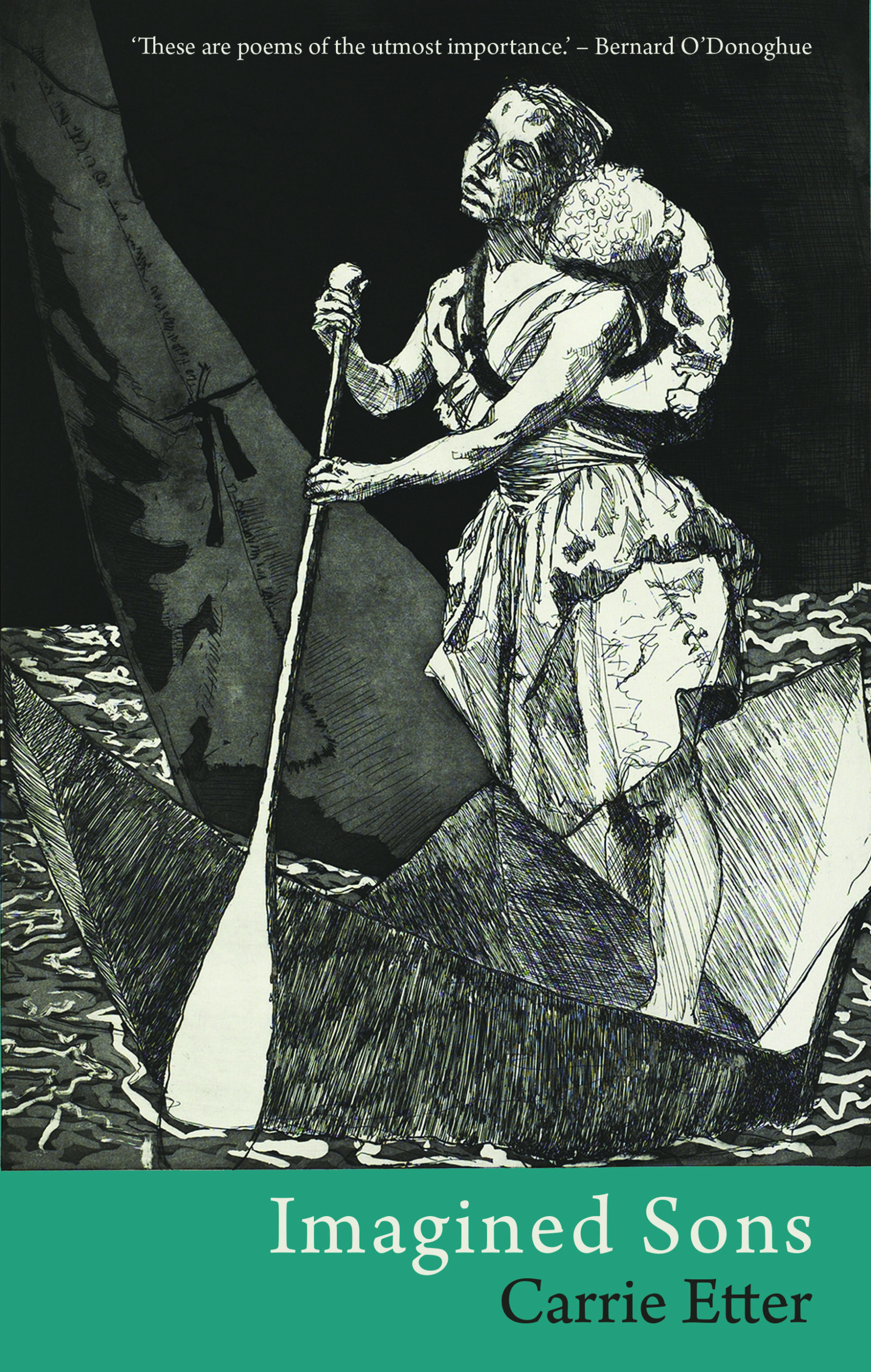
This week’s poem is from Carrie Etter’s Imagined Sons, first published in 2014, which has been shortlisted for the 2014 Ted Hughes Award for New Work in Poetry.

In Imagined Sons  Carrie Etter has written a book of vivid, heartbreaking poems on the experience of giving up a child for adoption. A prize-winning author, lecturer, critic and popular blogger, Etter imagines the possible destinies for the child and presents us with various scenarios from the tragic to the absurd. That the child’s birthday is also Sept. 11th adds a layer of irony and pathos, ‘What is the anniversary of loss?’ – asks the narrator in one of the ‘Birthmother’s Catechism’ poems. A pamphlet containing some of these poems was a Poetry Book Society Choice.

A Birthmother’s Catechism

How did you let him go?

With black ink and legalese

How did you let him go?

It’d be another year before I could vote

How did you let him go?

With altruism, tears, and self-loathing

How did you let him go?

A nurse brought pills for drying up breast milk

How did you let him go?

Who hangs a birdhouse from a sapling?

Order a copy of Imagined Sons from our website.

Posted on

An Interview with Damian Walford Davies

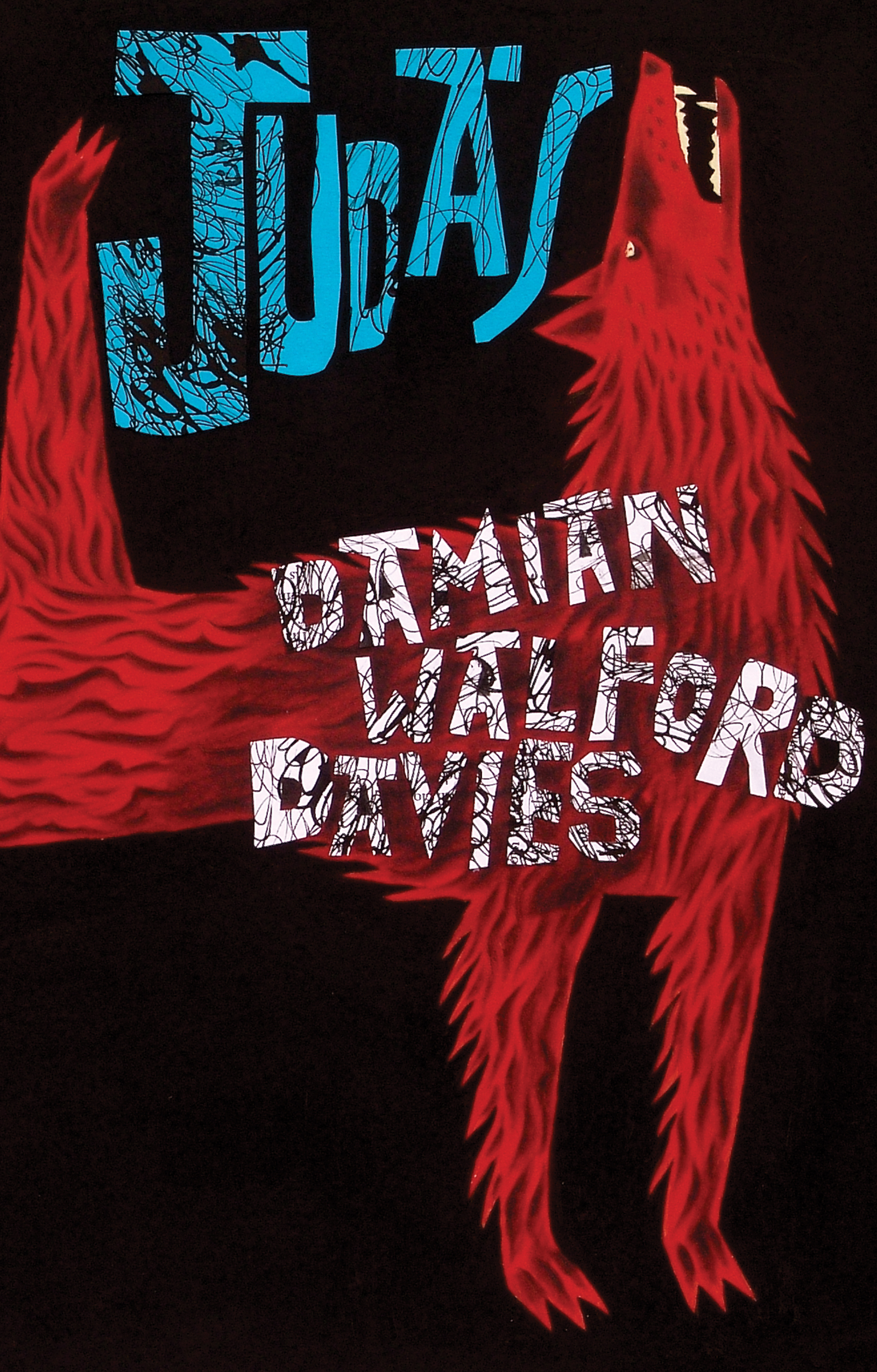
Today we’re chatting to poet Damian Walford Davies about his latest collection, Judas, which you can pre-order from our website here.

Damian is a poet, writer and librettist. He is the author of three Seren collections – Suit of Lights (2009), Witch (2012) and Judas (2015), together with the pamphlet Alabaster Girls (Rack Press, 2015) and the co-written volume, Whiteout (Parthian, 2006). He is Head of the School of English, Communication & Philosophy at Cardiff University, where he specialises in Romanticism, the two literatures of Wales, and Creative Writing.

Had you always wanted to write about Judas, whether it was Judas the man or Judas the metaphor, or did the poems in this collection quietly creep up on you?

Judas creeps up on you, certainly. I’ve always found him (or ‘it’ – Judas is a phenomenon, a problem, a crux (‘cross’), a paradox, a sore point) compelling. (The same with Lazarus, by the way, but that’s another, if related, story . . .) He is contradictorily represented in the canonical gospels, and that’s before we come to the second-century AD gnostic Gospel of Judas, where he is Christ’s confidant. There are a myriad of historical, theological, political and psychological arguments as to why Judas did what he did (if he did). To accept the historicity of Judas – which many scholars of first-century Palestine and early Christianity do not – means recognising him as an elusive figure. He is a no-man as well as a knot of contradictory representations, built up over twenty ideological centuries. (See Susan Gubar’s excellent 2009 biography of Judas.) This is the guy with the dark halo.

What is it you enjoy most about exploring history through poetry?

I like to write against big accepted narratives, intervene in them at personal, psychological levels, offer case studies of emotional quandaries, reveal terror on local, personal scales. I use the dramatic monologue for this, aiming for an imaginative inhabitation of voice and situation, aware at the same time that ventriloquising others has an ethics attached. This is Judas’s speaking platform, throughout. My previous Seren collection, Witch, did similar things, exploring how a witch is ‘made’ in the tense atmosphere of 1640s Suffolk. In Judas, I’m constantly negotiating suggestive gaps in the canonical gospel accounts. One has to be nuanced here, as well as bold. I made the decision from the outset to play with timescales, and so Judas is encountered during the week after the crucifixion, wandering through first-century Jerusalem one minute, but then clocking two women air kissing in the contemporary city’s Sheraton Hotel the next. Judas quotes Bob Dylan. Time is spliced; the Arab-Israeli conflict is as real to him as the Roman occupation. He is disturbed by a history that hasn’t yet happened. So I enjoy querying dogmatic versions of history, indulging in counterfactuals (which is more than a parlour game – it’s a way of changing the future). History always happens somewhere, and (like religion) is in many aspects terrifying. All this is not to say that the collection is iconoclastic, or without belief/faith, or blandly ‘materialist’. Quite the opposite. Multiple ironies mean that there are no final, fixed positions in this collection.

Throughout the collection you play around with many biblical images, such as the ‘thorns’ in ‘Annunciation 1’ and the ‘silver coins’ in ‘Denominations’. I imagine it would be difficult to write a poetry collection titled Judas without them! But did you ever worry about finding a new way to use imagery that has been around for centuries?

I saw it as an opportunity – to inflect, defamiliarise, and recontextualise these ‘core’ images. Judas is a collection in which all these images exist (I hope) in a complex, kinetic, shifting relationship. Did I worry about this? All the time. Poets must always be on edge, edgy. Poetry is about edgework. Judas is published at a time of political-religious crisis and horror. The collection is a reflection on fundamentalism, belief, faith, history, knowing, unknowing, violence, intolerance and human beings as agents and casualties of history. And (of course) beauty, friendship, love, worlds of spice.

You paint a very vivid picture of Jerusalem throughout the collection, picking out places like Yad Vashem in ‘In Vino’ and Ben Yehuda Street in ‘Siloam Pool’. Was giving your poems a specific setting important to you while writing the collection?

It was crucial. I was lucky enough to be able to visit Jerusalem in April 2012, and parts of the volume were written there in a hostel room under the muezzin’s recorded call to prayer and on the hostel’s roof, from which I could see the Al-Aqsa mosque to the east, the Church of the Holy Sepulchre to the west, and a sea of satellite dishes in between. And so the journeys that the shattered Judas takes through the old city are the ones I myself took through the narrow streets – full of managed but mangy colonies of cats – and souqs, around the Baths of Bethesda (a place of deep peace), down to the Garden of Gethsemane (from which I phoned my 93-year-old grandmother, who quite understandably asked ‘How big is it?’), back up to the ‘tufted wall’ of the Temple and through the four quarters of the divided (and machine-gun-patrolled) town. Judas is a map. Gethsemane, by the way, is tiny.

What, if anything, have you learned about Judas and the idea of evil through writing this collection?

He wants answers as much as we do. He’s still waiting.

Pre-order Judas from Seren’s website.

Posted on

Friday Poem – The Sound of a Diamond Planet

Short Days Log Shadows Sheenagh Pugh

The Sound of a Diamond Planet comes from Sheenagh Pugh’s collection Short Days, Long Shadows, published in 2014.

In this, her twelfth collection, noted poet Sheenagh Pugh steps into a new, northern landscape, the Shetland Islands, with poems steeped in the wilder weathers and views of rugged coastlines, sweeping sea-vistas and the hardy historical characters who have inhabited these lands. There is a lovely pared-down spareness, and elegiac formality to poems like ‘Travelling with Ashes’, ‘Staying’, and ‘Trondheim: January’ where the inhabitants appear lost in a ‘strange pink daylight’, and in ‘Gardening’ where ‘White stones are shaped like hearts’. The author’s characteristic dry humour emerges elsewhere as in ‘Extremeophiles’, a paean to bacteria – ‘chancers’ who live without sun. A poet who considers ‘too accessible’ to be the best sort of compliment, Sheenagh Pugh’s work has as much to offer the general reader as it does the specialist, who will admire her artful use of traditional forms.

Sheenagh will be reading at the Stanza Festival on the 5th March. For more information check out our website!

The Sound of a Diamond Planet

I seem to be surrounded
by things not quite there,

like the fieldmice munching
unseen inside my walls,

the spit of sand
uncovered at low tide,

the slick rock waiting to be
a waterfall again.

A planet, they say,
made all of diamond

resonates in its orbit,
light years beyond

human hearing, its brittle sound
broadcast in space.

Order Short Days, Long Shadows from Seren’s website.

Posted on

Top 5 Tips for Getting a Job in Publishing

Our Marketing Assistant, Jess, shares some tips on getting into the publishing industry after university.

It happens to the best of us. You’re enjoying student life, living on spaghetti hoops, cereal, and that questionable looking meat at the back of your fridge that you found for a suspiciously cheap price at the local supermarket. You’ve grown out of the ‘going to lectures in your pyjamas’ stage, but you still feel like a child playing at being a grown up, snuggled comfortably in the safety net that is higher education.

Then it hits you: you’re in your final year of uni. You need to start looking for a job.

Not to worry, my friend, we’ve all been there, and if you think the publishing industry is for you then you’re in luck: here are my Top 5 Tips for Getting a Job in Publishing. From one ex-student to another!

Work Experience

This may seem obvious, but you’d be surprised by the amount of people who are interested in publishing and yet never do any sort of placement, even if it’s just for a few days. The truth is you’re not going to know if publishing’s for you unless you give it a try; the last thing you want is to apply for a job you think you’ll love, only to discover too late that you’ve never hated anything more.

Plus most placements will give you the opportunity to find out which area of publishing you’re the most interested in – you might go into a placement expecting to like Publicity and finding yourself enjoying Marketing more, and once you know that you have a better idea of which vacancies you should be keeping an eye out for!

And perhaps most importantly, work experience gives you the chance to network. You’ll never leave a placement without a few new contacts under your belt, and with any luck one of those contacts could eventually become your employer.

If you’re thinking ‘but I can’t afford to do unpaid work in London’ then you needn’t worry. Our office is based in Bridgend and there are plenty of independent publishers all over the UK, so have a snoop around – you never know what you might find just around the corner!

Get Involved

Do you have your own blog? Do you review the books you read? Have you written for your uni magazine? Are you involved in any societies?

Don’t worry, the answer to all those questions doesn’t have to be a resounding yes. The point I’m trying to make is make sure you get involved in things outside your lectures and use them to build up your CV. Who knows, the fact that you were the Vice President of the Belly Dancing Society might just single you out from the other applicants.

Basically, if you’re interested in being an editor, for example, it certainly wouldn’t hurt if you’d already done some editing for your local newspaper!

Be Realistic

I know from experience that those are the two words no student ever wants to hear, not when your friends and family are telling you that you can do anything. The truth is you can’t expect to go straight into a high-flying job, so don’t be put off if the only vacancies you can find are positions as Editorial Assistants or Marketing Assistants – we all have to start somewhere! Just get your foot in the door, and then you can work your way up to your dream job.

And if we’re being honest, isn’t that way more satisfying than getting everything handed to you on a plate?

Be Open-Minded

So you want to be an Editor, but the only vacancies you can find are in Publicity. Apply anyway! If you’ve done your fair share of work experience there won’t be anything about a different department that’s too alien or intimidating for you, and there’s always the chance that you’ll be able to move between departments. Alternately, you may find yourself enjoying the job you have more than the one you initially wanted!

Keep Trying

And lastly, getting a job in publishing can be hard. We all know that in this climate it’s not unheard of for more than a hundred people to be vying for one job. If you don’t get the job you wanted first time around it doesn’t mean you never will, just keep gaining work experience and keep applying. You’ll get there!

Good luck!

Posted on

Hay Fever

We have Hay fever! And not the runny nose, red eyed kind! May can only mean one thing: The annual Hay literature Festival.  The 2014  festival promises to be a scorcher, with plenty of Seren authors discussing their fantastic books.

 
Sat 24 May, Fictions Memory Emma Healey and Tiffany Murray
Tiffany Murray and Emma Heanley talk about the disturbance of the past in Fictions Memory. Tiffany’s chilling new novel, Sugar Hall, sees Lilia Sugar and her children uncover a past hidden deep within the red gardens of Sugar Hall. Based on the stories of the slave boy that surround Littledean Hall in the forest of dean, this is a truly spooky tale.
10 AM GOOD ENERGY STAGE £5

Tues 27th May Tishani Doshi, Owen Sheers and Fflur Dafydd The Women in the Mabinogion
Doshi, Sheers and Dafydd talk about the leading ladies in their Mabinogion re-tellings.
5.30 PM GOOD ENERGY STAGE £5

Wednesday 28th Florilingua – Shani Rhys James, Carol Ann Duffy, Gillian Clarke and Francesca Rhydderch
A celebration of art and poetry. Carol Ann Duffy and Gillian Clarke read work that responds to the characteristic wild wallpapers and menacing chandeliers of Rhys James’ new touring exhibition of paintings.
8.30PM STARLIGHT STAGE £7

Saturday 31st May Jim Saunders Hay: Landscape, Literature and the Town of Books
Jim Saunders has lived and worked for 25 years in the border country around Hay. In this, his third book, he homes in on the town itself, along with the landscapes, literature and people of this most beautiful part of Britain.
9AM OXFAM MOOT £6

Sunday 1st June  Matthew Francis and Rhian Elizabeth – Deeply Unreliable Narrators
Rhian elizabeth and Matthew Francis talk unreliable narrators. In her debut novel, Six Pounds Eight Ounces, Rhian open ups Hannah Kings Diary on to her crazy world of Glitter and Galmrock, Candyfloss and serial killers, but beware, not all of Hannah’s stories are strictly true…
4PM THE CUBE £5

In addition, Patrick McGuinnes, Cynan Jones, Peter Finch,  Horatio Clare, Rhian Elizabeth and Damian Walford-Davies will all be at this years festival.

To see the full program or to book tickets visit www.hayfestival.com