Posted on

An extract from The Wellspring by Barney Norris

Barney Norris The Wellspring extract

‘A rare duet, in which father and son rediscover a whole world through the redeeming power of art.’
– Declan Kiberd

Barney Norris The WellspringIn The Wellspringacclaimed novelist and dramatist Barney Norris conducts a conversation with his even more acclaimed father, the pianist and composer David Owen Norris, on creativity, cultural identity, and how the two intertwine.

In this free extract, the conversation between father and son turns towards David’s career as a pianist: how it began; the impact of failures and accolades; the strangely altering milestone of 30.

This extract begins on page 87 of The Wellspring.

Playing

BN: I’ve titled this second sequence ‘Playing’. Ostensibly, what I hope to cover here is the bulk of your professional life – your work as a performer. But I have it in my mind as well that what we’re circling is one person’s route into a life, into living well, and I want to draw attention to that as we begin. This book will take the same path everyone does as they find their way into the world – first we listen, then we simulate, then we live. In some lives, I don’t think the path is as easy to trace. Not everyone has a vocation. Not everyone’s entire life can be expressed as the development of a single project. Of course, your life isn’t adequately summarised if we turn it into a single developing theme, either. If we were to exhaustively catalogue everything you’ve ever done, a meaning would emerge that was too diffuse and complex to express – or you might end up with a catalogue of infinite drift, I don’t know how open you are to the idea that lives have inherent meanings at all, or whether it’s fairer to say all narratives are superimposed. But the opportunity we have here is that it’s in the nature of an artist’s career, where the life feeds the work and the enthusiasms are buried deep in childhood and the work is all-consuming, that a narrative can be constructed more easily than is usually the case that expresses something like a linear development through life. So when looking at an artist’s life, you can say things about the way all people move through time more easily than you can with some other careers. The milestones are easier to make out. So for the purposes of this book we’ll read your performing career as a second stage in a development that leads, eventually, to the writing of music. Not an adequate summation, but perhaps it’s an interesting one, you see the two as connected?

DON: It was the break-down of my early composing career that led directly to my performing career. I’ve already hinted that my composing didn’t go down too well in 1970s Oxford, though come to think, I left with a composition scholarship to the Academy. But the contemptuous reaction to my B. Mus exercise a year later – ‘This fugue subject implies harmony’ was one criticism I still recall with some puzzlement – and the prevailing narrow taste in ‘modern music’ funding circles, led me to concentrate on something I did to everyone’s satisfaction, namely, play the piano. Young performers play a wide range of music, partly because they know they need a wide range of experience, and partly for frank commercial reasons, and so I formed hands-on opinions of the work of still-living composers like Tippett & Britten & Messiaen, and I gave innumerable premieres of works by composers now forgotten.

BN: It’s a very interesting environment, the generation of contemporaries one works with at the beginning, before it’s clear who’s really going to make it. I’ve been going through that myself for the last few years – it’s still a bit too soon to tell which of my generation of theatremakers will one day be filed under that ‘now forgotten’. Because there’s no precise formula for identifying the ones who’ll last, is there. It’s not only talent, it’s not only prevalent fashions in funding circles, it’s not only luck, it’s not only hard work, it’s not only whether you choose to have a family, or where you’re from, or who you know; it’s not even whether you’re someone that anyone likes. It’s terrifying, because of course, after the first six months when a few people who thought they were serious wake up and back out, anyone who’s tilting at the windmill of the arts can’t imagine doing anything else, and doesn’t have a back-up plan, even though some will end up needing one. The arts are so hard to break into, you’d never do it if you were capable of doing anything else. But it’s also a very wonderful moment, because, in a Schrodinger sort of way, you live suspended in this moment where anything might be possible for you and your friends – even if in actual fact, when you get to the end, you will look back and find that it wasn’t.

DON: ‘Now forgotten’ sounds callous, doesn’t it? I meant it more as a merciful imprecision. Your list of things that need to slot into place is pretty scary – and very carefully ordered! Academy Professors, as I discovered when I became one, all agreed that we should exert ourselves to the utmost to put students off, because only the students that can’t be put off stand the slightest chance in the business. Good as far as it goes, but things change, become less narrow – good changes as well as bad changes. Some of the less positive changes at institutions of higher education are down to money, which has all sorts of repercussions – not all new courses fill purely educational needs. Then, if half the population is going to university, degrees will need to change, not necessarily for the worse: but we need to make sure that the former methods of study, where they were valuable, can be continued – which has emphatically not happened in secondary school music.

But there are positive changes too. I’m thinking especially of social change. What’s often called dumbing-down (something I’ve hinted at in the previous paragraph) can also be seen as a welcome acceptance that art need not always be on the verge of unintelligibility to be worthy – which is why my music can reach listeners now, though it was so out of tune with the seventies. Another helpful social development is a public acceptance of the portfolio career. We can take real advantage of the new opportunities the twenty-first century has brought us, the communications revolution. I wonder if I could have created a taste for my sort of music back in the seventies, if we’d had the Internet. But it lumbers up too late, like Chesterfield coming to the assistance of Dr. Johnson. Still, it gives us new ways to reach audiences, if only we had time to develop them.

BN: You told me once that the thing to watch for was what happened when everyone turned thirty – it was around then that things started shaking out. Having turned thirty not so long ago, I can increasingly attest to the truth of this. Did that advice come from personal experience?

DON: Observation rather than experience, luckily. There were so many schemes and scholarships that you could compete for till you were thirty. After that, you were on your own, and many winners didn’t make the change into actually earning a living. It’s an age that concentrates the mind in many ways. Clocks are ticking, clocks of self-esteem as well as of biology. Is it still too late to become a bank manager? we used to ask ourselves back in the day, in blissful ignorance, probably, of how difficult it is to be a bank manager.


The Wellspring is available on the Seren website: £12.99

Join our free Book Club for 20% off every book you buy from us.


Posted on

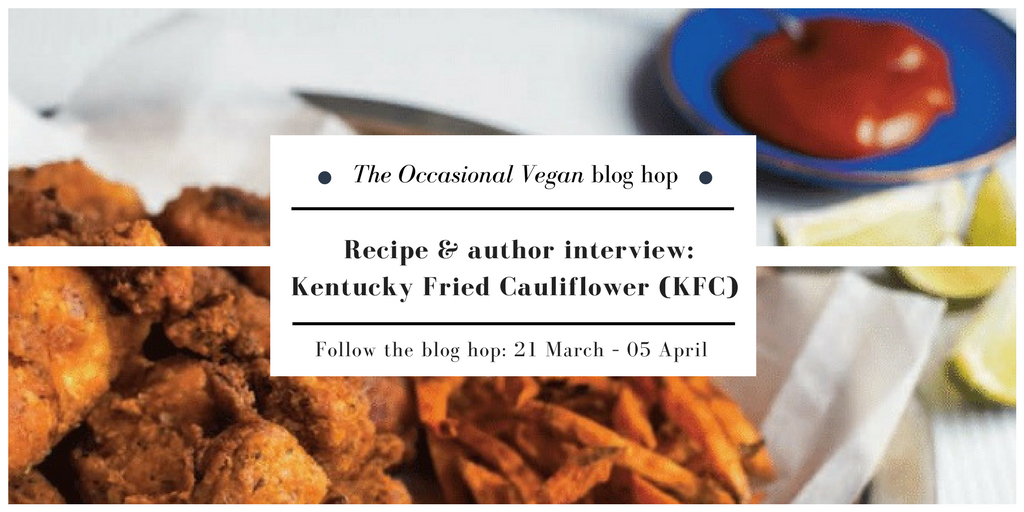
Recipe & Interview with Sarah Philpott – The Occasional Vegan Blog Hop

The Occasional Vegan blog hop KFC recipe

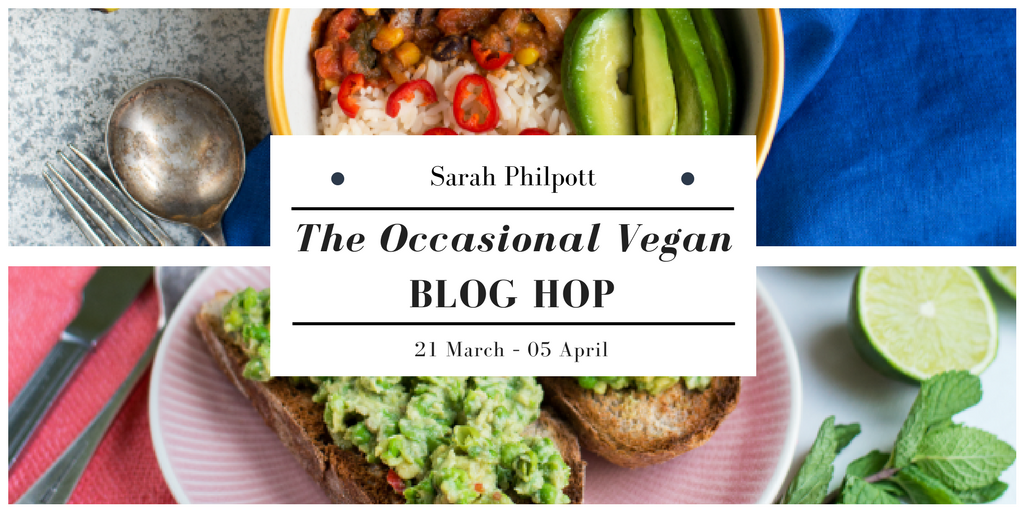
Today marks the beginning of The Occasional Vegan  blog hop – two weeks of recipes, giveaways, reviews and articles from some of the UK’s best foodie blogs. To kick things off we have an interview with author Sarah Philpott, and a free recipe – Kentucky Fried Cauliflower.

The Occasional Vegan Sarah Philpott

The Occasional Vegan, your new cookbook, has just been released and we couldn’t be happier. You describe in the introduction how you dived straight into veganism, giving up meat and dairy cold turkey after making the decision that you wanted to eat more ethically. What was the hardest part about changing your diet so radically and so quickly?

Well, it was a bit of a shock to the system and it took my body a little while to adapt so I was quite tired and hungry at first. That didn’t last for long though, and as my taste buds changed, I soon realised that there was so much food for me to eat. It’s easier now than ever because there are so many vegan alternatives out there and plenty of biscuits, cakes, and even cheeses, to enjoy.

Would you recommend the same approach to others who are considering the vegan diet? And which resources would you recommend, to help with the transition?

Everybody is different and it’s important to do what feels right for you, your body and your lifestyle. If you want to try eating vegan, you can introduce new things gently and gradually, perhaps buying almond milk for your cereal or making a spaghetti bolognese with lentils instead of minced beef. There’s plenty of support out there and we’re a friendly bunch in the vegan community – we don’t preach, we teach! Veganuary is a great resource and there are plenty of great vegan cookery books and blogs out there – some of my favourites are Avant Garde Vegan, Anna Jones and Aine Carlin – and Instagram is full of inspiration, too.

Criticism of veganism often leans towards comments about ‘rabbit food’, kale, and boring salads. What do you have to say to people who think vegan food lacks variety and flavour?

It’s such a myth that vegans don’t like food! Of course, vegans can eat salad all the time, but most of us don’t! And if your salads are boring, you’re not making them right. Cooking as a vegan forces you to be more creative and to play around with different flavours and textures. What’s not to love about that?

What do you cook for your non-vegan friends and family? Do you have a go-to dinner party menu that has proven to be a hit?

Luckily, most of my friends and family don’t mind that I cook without meat and my boyfriend is a vegetarian so that makes things a lot easier. I tend to cook hearty but healthy meals like spaghetti bolognese, chilli, and warming stews and casseroles. My salads always go down well; I like to experiment with different flavours, and beetroot, orange and fennel is a current favourite combination. I also make a mean chocolate mousse.

All of us have times when we fancy eating something naughty – perhaps late at night, or maybe even the next morning. What’s your favourite go-to greasy food?

I don’t think that any food is ‘naughty’, because enjoying a bit of what you fancy is an important part of balanced eating. If I fancy something a bit greasy I’ll sometimes have chips or I’ll make a toasted sandwich with vegan cheese, and if I want a real treat I’ll make KFC – that’s Kentucky fried cauliflower! – which tastes amazing and is surprisingly easy to make. My favourite breakfast is avocado on toast with peanut butter and Marmite because it’s sweet and salty and a good source of protein and healthy fats – don’t knock it until you’ve tried it!

There are masses more vegans now than there have ever been before. Do you think the popularity of plant-based diets will lead to real social, ecological and agricultural change? What would you like to see happen?

I’d like to see more people embrace the idea of veganism, even if they decide not to eat that way all the time. Every little helps and reducing our consumption of animal products can make a real difference. People are a lot more aware of the impact that agriculture has on the environment and the cruelty that animals suffer and I think they want to change that.

And finally, what do you most hope people will get out of your book? 

I hope people will try the recipes and discover that being vegan can be just as delicious – if not more so – as any other way of eating. Giving up meat doesn’t mean that you have to miss out!  

Thank you Sarah for giving us some insight into your vegan experience. And now for a little vegan comfort food…

Kentucky Fried Cauliflower (KFC) with sweet potato fries

KFC vegan

Delicious, cruelty-free and surprisingly easy to make, thisKentucky Fried Cauliflower uses most of the ‘secret’ spices in KFC’s blend. By grounding the flaxseed, you create an egg-like binder which makes the spicy coating stick to the cauliflower. There’s no other way to say this: these are delicious. Seriously good and definitely worth the mess.

Ingredients

–1 large head of cauliflower, cut into largish pieces
– 200ml vegetable oil, or more depending on how shallow your pan is

For the dry coating
– 3 tsp salt
– ½ tsp dried thyme
– ½ tsp dried basil
– ½ tsp dried oregano
– 2 tsp black pepper
– 2 tsp sweet paprika
– 2 tsp smoked paprika
– 1 tsp ground ginger
– 2 tsp brown sugar
– 150g plain flour

For the wet coating
– 2 tbsp ground flaxseed (or linseed) or chia seeds
– 3 tbsp hot sauce
– 1 tbsp Dijon mustard
– 1 tbsp maple syrup
– 70ml water

For the sweet potato fries
– 2 large sweet potatoes, peeled and sliced very thinly
– 1 tbsp olive oil
– 1 tsp smoked paprika
– ½ tsp dried rosemary or thyme
– 1-2 tbsp plain flour or cornflour
– Salt and pepper

Directions
Preheat the oven to 200C. Make the chips by popping everything into a freezer bag and shaking it so that the potato fries are coated. Place them onto greaseproof paper on a baking sheet and roast for 20-25 minutes.

Meanwhile, make the wet coating for your cauliflower. Put the seeds into a food processor or grind in a pestle and mortar. Add to a bowl and mix together with the other ingredients. Stir well and give it a few minutes to thicken.

Make your dry coating. In a large bowl, mix the flour with all the spices, sugar and salt and pepper.

Pour the vegetable oil into a large pan (make sure it’s about 2-3cm high so that the cauliflower pieces are fully submerged when you dip them in) and place on a high heat. Make sure that it doesn’t get too hot – it shouldn’t bubble or splatter.

Now comes the messy bit. Take a cauliflower piece and dip it into the wet coating, making sure to cover both sides. Dip into the flour coating, again covering both sides. Now, repeat the process: roll in the wet coating and then again in the flour mixture.

Using tongs, take the cauliflower and submerge in the oil. Cook for 4-5 minutes, turning occasionally, until brown and crispy. Place on a plate with some kitchen roll to absorb some of the oil. Repeat with all the pieces (you may need to top up the oil), then serve with the sweet potato fries.


The Occasional Vegan is available from all good bookshops, and also the Seren website (£12.99).

Follow the rest of the blog hop, which features 13 fabulous food bloggers – tomorrow, there will be a giveaway and guest post from Sarah on the For the Love of Hygge blog.


Posted on

The Occasional Vegan – Blog Hop

The Occasional Vegan blog hop

Today marks the official release of Sarah Philpott’s The Occasional Vegan and to celebrate we are hosting a blog hop – two weeks of content from some of the UK’s best foodie blogs.

The Occasional Vegan blog hop


What is a blog hop?  A blog hop is when group of bloggers all join up to write about or engage with a certain theme. Our theme is delicious vegan food – specifically the food you’ll find inside Sarah’s stunning new book, The Occasional Vegan.

From March 21 – 05 April, a selection of brilliant bloggers will be sharing recipes, giveaways, reviews and articles about The Occasional Vegan. Get a sneak peek inside the book and find out what experienced bloggers think of it by following along – each blogger will be publishing something new and different.

We will kick things off on the Seren blog with an author interview, recipe and video on March 21, and from there on a different blogger will take the reins each day.

Here’s what you can look forward to:

21 March   Seren – vegan KFC recipe & author interview
22 March   For the Love of Hygge – Finding balance through veganism & free recipe
23 March   Eat Happy Wales – review & giveaway
24 March   Definitely Vegan – recipe & review
26 March   Hungry City Hippy – book giveaway
27 March   Freelancer’s Cookbook – ‘God’s Butter’ recipe
28 March   The Flexitarian – review
29 March   Sareta’s Kitchen – review
30 March   Little Nibble – ‘the parental test’ recipe review
01 April      Wrapped in Newspaper – Meatless Moussaka & book giveaway
02 April     Win Friends with Salad – book & recipe review
03 April     The Rare Welsh Bit
04 April     ScandiNathan
05 April     Vegan Burd


We hope you enjoy this whistle-stop tour of vegan ideas and inspiration – whether you’re new to plant-based meals or otherwise.


Attend The Occasional Vegan book launch party!

Sarah Philpott The Occasional VeganReserve your free tickets for the book launch, which will be taking place at the Cardiff Story Museum on Wednesday 04 April:
https://occasional-vegan.eventbrite.co.uk

You will have the chance to enjoy tasters of food from the book, and also to hear about Sarah’s vegan journey and the inspiration behind her delicious recipes. Sarah will also be available to sign copies of the book.

Families & children welcome.

Please book your free ticket to guarantee your place.


Posted on

Why the Welsh Assembly being named Britain’s best employer for LGBT is no surprise

This is a guest blog by author and activist Norena Shopland, whose new book Forbidden Lives we published in late 2017.

Why the Welsh Assembly being named Britain’s best employer for LGBT is no surprise

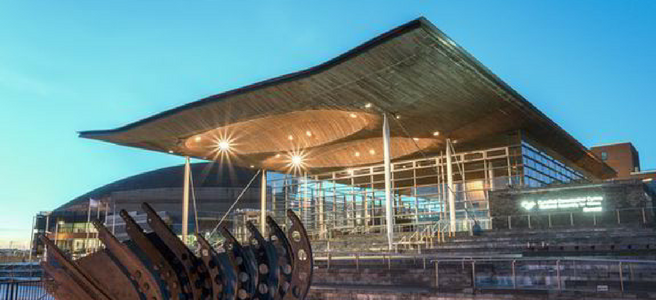
The National Assembly for Wales has just been named Britain’s best employer for LGBT staff in Stonewall’s annual list of top 100 LGBT-inclusive employers. Fifth last year, they made the top spot due to their range of policies for lesbian, gay, bisexual and transgender (LGBT) staff, as well as introducing new measures to improve the workplace for transgender employees.

I have seen first-hand the positive work done by Assembly employees, particularly the LGBT staff network group Prism and Seren Books and I would like to congratulate the Welsh Assembly on their award. It didn’t surprise me though – given how influential people from Wales have been in British LGBT history, and by extension in societal history here and abroad.

Norena Shopland Forbidden LivesThis was something I was made acutely aware of when writing Forbidden Lives: LGBT stories from Wales, and several chapters are dedicated to these influential people.

In 2017 we celebrated the sixtieth anniversary of the Wolfenden Report (1957) and the fiftieth of the Sexual Offences Act (1967). I was delighted to be invited to speak at a House of Commons event on the roles played by people from Wales. I took as my theme that great period of flux in the mid-twentieth century when so much happened with regard to LGBT people: prosecutions against gay men reached its highest point; in 1931 there were 622 prosecutions, a figure which rose to 6,644 in 1955 – because of a law that prohibited gay men from simply being. We know that Alan Turing was convicted for nothing more than confessing he was a homosexual, and whilst gay women and transgender people were not prohibited under law, simply being so was socially unacceptable and discrimination was high. When society began to question the purpose of this law, particularly following the sensational Montagu trial (1954), an increasing number of people began speaking up.

Opponents included Roy Jenkins MP, and Rev. Llywelyn Williams MP from Abertillery among others, but it was Pembrokeshire’s Desmond Donnolly MP who first brought the subject of decriminalising homosexuality up in the House of Commons, a risky move at the time.  Robert Boothby MP pressurised the Home Secretary, David Maxwell-Fyfe into considering the situation and reluctantly Maxwell-Fyfe agreed, tagging homosexuality onto a commissioned report on prostitution, which became known as the Wolfenden Report.

Initially the Wolfenden committee refused to speak to homosexual men, as they could not consider talking to criminals. Welshman Goronwy Rees, described as the most ‘lateral thinking and perceptive member of the committee’, thought differently and complained that few members had ever encountered a homosexual ‘in a social way’. He persuaded John Wolfenden, the chair, to meet some homosexual men and to accept the testimony of Peter Wildeblood, who had been imprisoned following the Montague trial. Wildeblood had subsequently written a book and Wolfenden therefore considered him an ‘attention seeker’. Rees also facilitated the inclusion of Patrick Trevor-Roper, a Harley Street consultant; Carl Winter, the director of the Fitzwillian Museum; and author Angus Wilson. Only these four self-identified homosexual men appeared before the committee but they played an important role in influencing the outcome of the Wolfenden Report.

The recommendation of the report for more leniency towards homosexual men was on the whole positively received, but whilst the recommendations on prostitution were enacted, those on homosexuality were not. Maxwell-Fyfe, having reluctantly commissioned Wolfenden, was now stalling it and Harold Wilson, then Prime Minister and personally supportive of change, felt that it would cost the labour party too many votes.

When it became apparent that nothing was going to happen, Tony Dyson, an English lecturer at Bangor University, wrote to every notable person he could think of, asking them to sign an open letter to The Times requesting Wolfenden be enacted. Writing on Bangor University headed note paper, Dyson was placing himself at great risk of being either arrested, sacked or both. As it happened, the university took no action against him – a progressive reaction at the time. The Times obituary for Dyson in 2002 drew attention to his contribution: ‘it is difficult to comprehend,’ they said, ‘the danger of living as a homosexual before the law was reformed in 1967, with the ever-present threat of criminal proceeding or blackmail.’

On the back of The Times letter, Dyson and others set up the Homosexual Law Reform Society, the first openly gay campaigning group in Britain – others followed. What was needed was someone to spearhead a campaign to get Wolfenden enacted and that person was Leo Abse, Cardiff solicitor and MP for Pontypool. As a backbencher he was able to concentrate on unpopular causes and did much for women’s rights, among other achievements. But even he struggled to get this bill through and it was Roy Jenkins, then Home Secretary, who gave the final push needed for the legislation to pass and so changed British society for good.

Of course others have been at the forefront: Katherine Philips; Mary Lloyd; Cliff Tucker; Cranogwen; John Randell; Cliff Gordon; Jan Morris; Gwen John; Ernest Jones; Cedric Morris; Griff Vaughan Williams; Lady Rhondda – I could go on and on about the number of Welsh people who have influenced LGBT and British life.

Wales is a small country but in LGBT history it has always had a huge presence – and that is why the Welsh Assembly award shouldn’t come as a surprise to anyone.


Posted on

January Sale 2018: Half Price Highlights

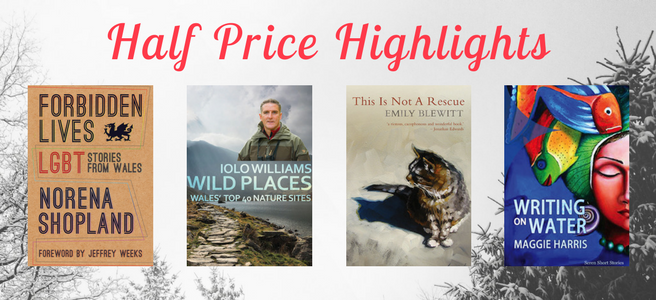
The New Year festivities may have been and gone, but here at Seren we’re still celebrating – all our books are half price until midnight Thursday, 11 January.

You might wonder, “with so much choice, how will I ever decide what to read next?” And to that we say: take a look at our recommendations below. Or ignore them! It’s really up to you…

Best for… curling up with on cold winter nights:

Maria Donovan The Chicken Soup MurderThe Chicken Soup Murder by Maria Donovan
£9.99 £4.99
Clear your diaries before you pick up this addictive, engrossing book – you won’t want to put it down until the mystery has been well and truly unraveled. The narrative follows sharp and imaginative young Michael, who believes his sweet elderly neighbour has been murdered whilst making him chicken soup. Nobody seems to care, so Michael decides to take on the burden of doing the right thing himself: seeking answers, and justice.


Best for… wintery adventures:

Wild Places by Iolo WilliamsWild Places, Iolo Williams
£19.99 £9.99
It’s not only in summer that you can explore Wales’ stunning landscapes – the colder months are filled with beauty too. From the frosty fenland at Magor Marsh to birdwatching at beautiful Dolydd Hafren, Iolo Williams’ stunningly illustrated book will guide you to the best and most nature interesting places Wales has to offer.


Best for… devouring along with your comfort food:

Masque by Bethany W PopeMasque by Bethany W. Pope
£9.99 £4.99
This rich and gothic re-telling of The Phantom of the Opera skillfully fleshes out the dark desires and deadly ambitions of the three central characters: the intensely ambitious Christine finds herself caught between the twin evils of the Phantom’s murderous pursuit of artistic perfection and Raoul’s ‘romantic’ vision of her as a bourgeois wife. Love, lust, adventure, romance, and the monstrous nature of unfulfilled creativity await you here.


Best for… moments of reflection:

Paul Deaton A Watchful AstronomyA Watchful Astronomy by Paul Deaton
£9.99 £4.99
Sombre and exquisite, Paul Deaton’s PBS-recommended debut collection is a thing to be treasured. These quietly intense, formal poems are haunted by the ghost of the author’s father, a figure embodied in glowering mountain ranges, icy blasts of weather, and bits of bleak, monosyllabic dialogue. Nature is also a prime factor and facilitator: both rural and urban scenes are beautifully observed and presented. There is a gift for the visceral here, for tastes and sounds. A rigorous intelligence meets an adept sensitivity.


Best for… satisfying your wanderlust:

The Road to Zagora by Richard Collins
£9.99 £4.99
The gloriously eccentric author stumbles across fresh snow leopard tracks in the Himalayas, is robbed in Peru, and watches a volcanic eruption in Ecuador – all in his quest to visit as many strange and beautiful places as he can after he is diagnosed with Parkinson’s Disease. You will find great humour and honesty here in equal measure, as Collins’ rich descriptions bring the many little wonders of the world to life.


Best for… broadening the mind:

Norena Shopland Forbidden LivesForbidden Lives by Norena Shopland
£12.99 £6.49
Wales has a rich and fascinating LGBT history that has for the most part remained, rather frustratingly, untold. This glorious new book shines much-needed light on key Welsh LGBT figures, from the twelfth century to the present day. Among them are seventeenth century poet Katherine Philips, the Ladies of Llangollen, Henry Paget, artists Gwen John and Cedric Morris, and actor Cliff Gordon.


Best for… brief escapes from reality:

Writing on Water Maggie HarrisWriting on Water by Maggie Harris
£8.99 £4.49
Worlds of heartbreak and tenderness, separation and fierce familial bonds are played out in Maggie Harris’ mesmerising stories, which refuse to loosen their grip on the reader even long after they are finished. These tales transport you into the Caribbean scenes and memories with which they are infused, into dreams and lives, where there is struggle, hardship, and endurance.


Best for… staying under the covers with:

This Is Not A Rescue Emily BlewittThis Is Not A Rescue by Emily Blewitt
£9.99 £4.99
Uplifting and witty, these poems tackle love and cats, Welshness and The Walking Dead. Sharp, satirical poems confront issues such as office lechery, misogyny, domestic violence and depression, whilst consistently subverting expectations. The poet is a whirlwind, whose passions and influences swirl around, chaotic and irresistible.


We hope you enjoy browsing our January sale. The half price offer ends at midnight on Thursday 11 January, so don’t delay – see what you can find before the time runs out.

January Sale half price books


Posted on

Summer Sale Bestsellers

bestsellers summer sale

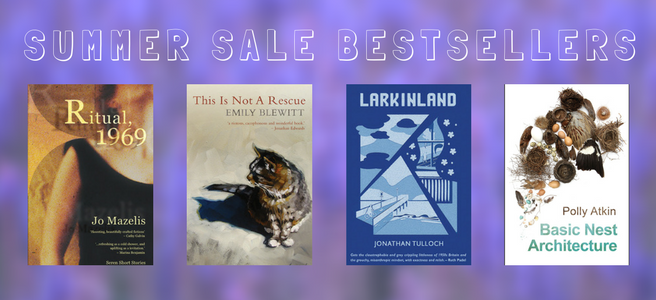
There’s still time to take advantage of our big summer sale, which ends midnight tonight. But what should you buy?

All our books are half price, and that includes a gloriously diverse range of books – everything from novels and short stories to poetry, biography and travel books – so we can’t blame you if you are struggling to choose what to read next. To help you decide, take a look at our sale bestsellers below.


Poetry

This Is Not A Rescue Emily Blewitt1. This Is Not A Rescue, Emily Blewitt
£9.99  £4.99
Top of the charts is young Welsh poet Emily Blewitt’s striking debut collection.
In This Is Not A Rescue, vibrant love lyrics contrast with poems confronting trauma and violence. Lighter themes include an homage to Jane Austen and an irreverent portrait of a Star Wars character.
‘Here is a riotous, cacophonous and wonderful book. Here is an important new voice in British poetry.’
– Jonathan Edwards, author of My Family and Other Superheroes.

Basic Nest Architecture Polly Atkin2. Basic Nest Architecture, Polly Atkin
£9.99  £4.99
Coming in a close second is Polly Atkin’s first collection, which follows her Mslexia Prize-winning pamphlet, Shadow Dispatches. Atkin has already built up a loyal readership for her complex, intelligent, densely metaphorical lyrics, often inspired by the beauties of the Lake District where she has made her home for a decade. The remarkable poems in Basic Nest Architecture are a testament to her persistence and artistry: as well as being profoundly personal, they reach out to the modern world in all it’s complexity and diversity.

Heat Signature Siobhan Campbell3. Heat Signature, Siobhan Campbell
£9.99  £4.99
There is a beautiful ruthlessness to the poetry of Siobhán Campbell, and it comes as no surprise that her latest collection, Heat Signature, is proving so popular in the sale. These are poems of moral tension, of provocation, but they are also artful: full of marvellously terse textures, of clashing consonants, subtle rhymes and insistent rhythms.
The blend of dark comedy, tragedy and politics is entirely typical of Campbell’s complex, thoughtful and profoundly entertaining poetry.

What the Water Gave Me Frida Kahlo Pascale Petit4. What the Water Gave Me: Poems after Frida Kahlo, Pascale Petit
£8.99  £4.49
‘Pascale’s poems are as fresh as paint, and make you look all over again at Frida and her brilliant and tragic life.’ – Jackie Kay, The Observer
What the Water Gave Me contains fifty-two poems in the voice of the iconic Mexican painter, Frida Kahlo. More than just a verse biography, this collection explores how Kahlo transformed trauma into art after the artist’s near-fatal bus accident. Petit, with her vivid style, her feel for nature and her understanding of pain and redemption, fully inhabits Kahlo’s world. Each poem is an evocation of “how art works on the pain spectrum”, laced with splashes of ferocious colour.


Fiction

Ritual, 1969 by Jo Mazelis1. Ritual, 1969, Jo Mazelis
£8.99  £4.49
Jo Mazelis’ darkly beautiful short story collection is your favourite fiction book so far. These subtle, unflinching stories explore the unsettling borderland between reality and the supernatural. Ranging from early twentieth-century France to 1960s South Wales and contemporary Europe, we are introduced, with singular vision and poetic language, to characters caught up in events and feelings they do not fully understand or control.

six pounds eight ounces Rhian Elizabeth2. Six Pounds Eight Ounces, Rhian Elizabeth
£8.99  £4.49
In second place is Rhian Elizabeth’s tragicomic tale of growing up in the South Wales valleys.
Hannah King is a liar, so everyone says. That means her stories of growing up in the Rhondda must be treated with caution. Rhian Elizabeth opens Hannah’s notebook up on her own little world of crazy friends and crazy family, and a crazy school with crazy teachers who aren’t always what they seem. From dolls and sherbet lemons, to a bright student who drops out of school in favour of drink, drugs and glam rock up on an estate which feels like another planet, Hannah, it seems, has always been trouble.

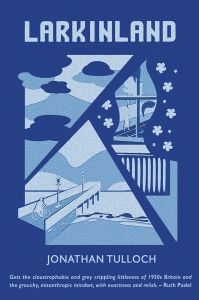
3. Larkinland, Jonathan Tulloch
£9.99  £4.99
Jonathan Tulloch’s remarkable new novel isn’t officially released until 27 July, but that hasn’t stopped it being one of our most popular books in the sale.
A pitch-perfect realisation of Philip Larkin’s poetic world, Larkinland follows the moving misadventures of would-be poet Arthur Merryweather, revealing the loneliness, commonplaces, fears, lusts and hope we all must face. Drawing on meetings with the women in Larkin’s life, Larkinland casts startlingly fresh light on one of Hull’s greatest ever poets.

4. Ibrahim & Reenie, David Lewellyn
£8.99  £4.49
David Lewellyn’s impressive and daringly human book comes in fourth on the fiction list.
Ibrahim is a young Muslim ex-student with a tough few years behind him, and Reenie, a seventy-five year old cockney, has her life’s luggage in a shopping trolley, complete with an orange tent and a cockatiel. Meeting by chance in Newport, the odd couple discover they are both walking from Cardiff to London, and not for charity. Ibrahim & Reenie follows their journey and the unexpected relationship that builds between them.


Non-Fiction

Dark Land, Dark Skies, Martin Griffiths1. Dark Land, Dark Skies, Martin Griffiths
£12.99  £6.49
Proving popular in our non-fiction list is Martin Griffiths’ Celtic re-interpretation of the night sky. Dark Land, Dark Skies is an exploration of how ancient Welsh peoples may have used their legends and beliefs to understand the stars above:  Leo, for instance, becoming a fearsome boar, and Pegasus (coupled to Andromeda on his back) representing the goddess Epona riding her white horse. This is a fascinating book, suitable for both amateur and professional stargazers.

2. Mametz, Aled Hughes
£14.99  £7.49
Aled Hughes’ extraordinary photographs are an artistic commemoration of the Battle of Mametz Wood, the most significant battle in World War I for Welsh troops. Over 4,000 soldiers of the 38th Welsh Division were killed or wounded there in July 1916, and Hughes’ photographs show the lingering evidence of this devastating event: images of actual trees from the war (some ‘embracing’ artillery shells), battlefield detritus, military mementoes, and images of places of modern pilgrimage and remembrance. It’s not hard to see why so many of you have chosen to buy this remarkable book.

Wild Places by Iolo Williams3. Wild Places, Iolo Williams
£19.99  £9.99
We hope all those of you with fresh new copies of Iolo Williams’ Wild Places don’t keep them pristine for long – this book is for exploring Wales’ wilderness with, rain or shine, and is compact enough to take with you on all your journeys. Informative and lavishly illustrated, Wild Places will reveal rarities like the Snowdon lily and the Snowdonia hawkweed, show you where hares box and otters swim, where to spot dolphins and salmon, and where to see Wales’ great variety of hawks and other birds of prey.

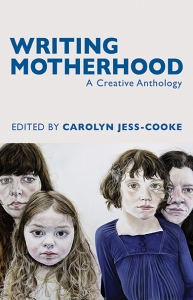
Writing Motherhood Carolyn Jess-Cooke4. Writing Motherhood, ed. Carolyn Jess-Cooke
£12.99  £6.49
Last but certainly not least is the Writing Motherhood anthology, a deeply moving and inspiring selection of poems, interviews and essays by female creatives. Why are still asking female writers with children how they find time to write? This book challenges preconceptions about motherhood as a creative hindrance, portraying the exquisite moments of motherhood as often enriching artistic practice instead.
‘Essential reading for anyone who is a mother, or who had a mother, and is interested in how motherhood and creativity intertwine.’ – Helen Cadbury


The half price sale ends at midnight. Take a look at all we have to offer on the Seren website.

Half price summer sale Seren

Posted on

Half-Price Hidden Gems: Prize-winners from the archives

Half-Price Hidden Gems Seren Archive

Today we shine the spotlight on some hidden gems from the archives – fiction, poetry and non-fiction prize-winners from years passed which, if you haven’t read already, come highly recommended.

We’ve just passed the mid-week hurdle, and that means there’s only a few days left to take advantage of our half price summer sale. If you’re struggling to choose your next read, why not start with one of the extraordinary books below? These are the oldies and goodies from the Seren archive.

John Haynes Letter to PatienceLetter to Patience, John Haynes
Costa Poetry Award Winner, 2006
Set in Patience’s Parlour, a small mud-walled bar in northern Nigeria, at a time of political unrest, Letter to Patience is a vividly atmospheric book-length poem divided into cantos. The poem is not only a biography, or an essay on post-colonialism, it is an epic portrayal of a beautiful and troubled country and of one man’s search for meaning in difficult times.

Touch CoverTouch, Graham Mort
Edge Hill Short Story Prize Winner, 2011
From a young child adrift on an ice-filled lake to an ageing farmer facing life alone, the twenty-one stories display a deep sensitivity to both the natural world and to human relationships. In skilfully crafted prose, vivid with detail, Mort examines the strength and fragility of life and the ties that hold us within it.
Touch spans twenty years of short-story writing, and includes the Bridport prize-winning story ‘The Prince’.

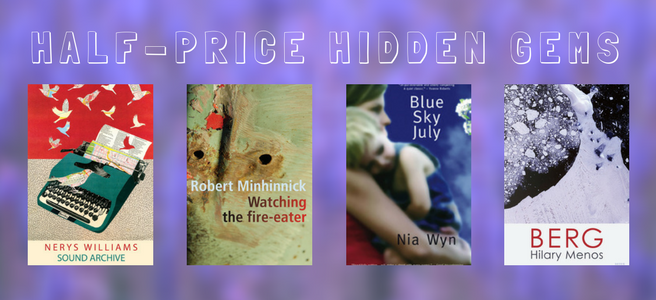
Hilary Menos BergBerg, Hilary Menos
Winner of the Forward Prize, Best First Collection, 2010
In this extraordinarily vibrant debut collection, icebergs floating down the Thames jostle with transvestites in Singapore, aliens wading the Hudson River and the lively crew from the local slaughterhouse. We go shopping with Ingomar the barbarian and watch Bernard Manning gigging at Totnes Civic Hall. Throughout, Menos brings a sophisticated sensibility to her poetry. Her subjects are seen aslant, with ironic as well as tender intentions.


Gift of a Daughter Emyr HumphreysThe Gift of a Daughter, Emyr Humphreys
Wales Book of the Year Winner, 1999
Archaeology lecturer Aled Morgan and his wife Marian flee to Tuscany, and the home of old friends, to escape a family tragedy. Yet even immersed in Etruscan culture, Aled finds that friendships aren’t all they seem, and that his wife has become almost a stranger to him. The Gift of a Daughter is a novel of delusion and self-knowledge, tradition and change, loss and identity in which the pace, plotting, characterisation and dialogue are as faultless as we expect from a writer of Emyr Humphreys’s experience and skill.

Nerys Williams Sound ArchiveSound Archive, Nerys Williams
Winner of the DLR Strong Award, 2011
Shortlisted for both the Forward Prize Best First Collection and the Michael Murphy Prize, Sound Archive is a strikingly original first collection of poems. Using formal strategies similar to modernist painting: abstraction, dislocation, surrealist juxtaposition, the poet conjures a complex music, intriguing narratives, and poems full of atmosphere that query identity, gender, and the dream of art as a vehicle for emotion and meaning. Williams confronts our preconceptions about what it might mean to be a woman writing against the background of two formidable traditions: that of Welsh-speaking Wales and of English literature.

Watching the Fire Eater Robert MinhinnickWatching the Fire-eater, Robert Minhinnick
Wales Book of the Year Winner, 1993
Watching the Fire-eater
covers variety of subjects: third world poverty and the internationalism of alcohol, rugby through the eyes of a vegetarian, nuclear power, sunbathing and a thanksgiving dinner for the demise of Margaret Thatcher. But at the core of this essay collection is a vivid series of attempts to strip away the exhausted mythologies of the writer’s own country and the increasingly-packaged places he visits. Whether in the rainforest or the big match crowd, Minhinnick’s language: acid, imagist, compassionate, celebrates the people he meets and, fleetingly, defines their lives.

Nia Wyn Blue Sky JulyBlue Sky July, Nia Wyn
Barnes & Noble Discovery Prize Winner, 2009
Set between the summers of 1998 and 2005 in Cardiff, Blue Sky July follows the story of a mother whose child suffers a devastating brain injury. It traces her journey into a world hidden away in society’s pockets as she battles against impossible odds to heal him.
Through Wyn’s intimate day by day musings, the book explores the impact of the tragedy on her home life, love life, friendships and connection to the world, as the most extraordinary relationship unfolds between them. Blue Sky July won the Glen Dimplex Biography Prize and was shortlisted for both the Good Housekeeping Book of the Year, and Wales Book of the Year.

Time Being Ruth BidgoodTime Being, Ruth Bidgood
Roland Matthias Prize Winner, 2011
Time Being is Ruth Bidgood’s tenth collection, and a Poetry Book Society Recommendation. It has been said, rightly, that Bidgood’s work is ‘emphatically a poetry of location’ and it is the history and nature of her particular region of mid-Wales that most inspire the author. Her distinctive voice has a quiet authority but also a subtle, conspiratory edge, as if she is letting one in on a secret, unveiling a hidden fact, or making a discovery. She avoids sentimentality, but – unfashionably – not sentiment; an observation can engender joy or sorrow or fear uncluttered by irony. These are ambitious attempts to transcend the lyric and move towards a more epic, multi-faceted form equal to the many experiences of her long life.

The Colour of Dawn, Yanick Lahens
Winner of the RFO Award (2009); Prix Millepages (2008); and Prix Richelieu de la Francophonie (2009)
Port au Prince, Haiti. The police roam the streets and no-one is safe. Fignolé, musician and political radical, is missing. His sisters Joyeuse and Angelique search for their young brother amid the colourful bustle, urban deprivation and political tension of the city. Eventually they will find him, but in the process they will also have found more about themselves than they wanted to know. The Colour of Dawn is a tense, passionate and vividly told story of small victories of hope in the face of a seemingly impossible fight against a monolithic regime.

Bilbao–New York–Bilbao Kirmen UribeBilbao–New York–Bilbao, Kirmen Uribe
Spanish National Literature Prize Winner, 2009
Bilbao–New York–Bilbao takes place during a flight to New York and tells the story of journeys by three generations of the same family. The key to the book is Liborio’s fishing boat, the Dos Amigos: who are these two friends, and what is the nature of their friendship? Through letters, diaries, emails, poems and dictionaries, Kirmen reflects on the art of writing, and the distinction between life and fiction. Kirmen’s novel, translated by Elizabeth Macklin, creates a mosaic of memories and stories that combine to form a homage to a world that has almost disappeared, as well as a hymn to the continuity of life.


Half price summer sale Seren


Save

Posted on

Announcing the Myths & Legends Astronomy Tour of Wales

Myths and Legends Astronomy Tour Wales Martin Griffiths

With it being Wales’ Year of Legends, what better time could there be to discover the rich mythological history of our land? Martin Griffiths’ new astronomy book, Dark Land, Dark Skies, does just that – and now Martin is getting ready to tour Wales with his fascinating Celtic interpretation of the stars.

Dark Land, Dark Skies, Martin GriffithsThe tour kicks off with the Dark Land, Dark Skies book launch, tomorrow, at the Brecon Beacons National Park Visitors Centre, Libanus. Martin will introduce the legendary Welsh heroes, plotting a map of our mythology in the stars above. If the weather allows, we’ll step outside and gaze at the dark sky, the author’s expertise guiding us away from Greek and Roman to instead see mythical Celtic figures far above.
Free places are still available – book now.

Meet us in Pembrokeshire, Snowdonia, Elan Valley and Newtown as the tour continues: at each stop, Martin will reveal more about Welsh mythology and how it can be seen in the stars. These unmissable events will connect you to our culture and change the way you see the night sky.

Myths & Legends Astronomy Tour Wales


Find all the most up-to-date information on these events, including how to purchase tickets, on the Seren Events page.


Posted on

Find a free Seren book this World Book Day

Seren books World Book Day 2017

Today we are celebrating all things literary for World Book Day, now in its 20th year. We want the world to discover our fantastic authors, and to help a few of you do just that, we’ve left a selection of our books all over Cardiff for lucky people to find and keep.

If you’re out in Cardiff today, stop for a coffee in one of the lovely independent cafés and you might well find a Seren book hiding somewhere near you! Take it, enjoy it, and pass it on to someone new to enjoy afterwards to spread the World Book Day love.

Seren books World Book Day book drop
Can you guess which books we’ve hidden? Poetry, fiction, non-fiction – there’s a real mix out there, just waiting to be found.


Happy World Book Day, and happy book hunting…


Posted on

Top of the Non-Fiction: what to buy in the half price sale

Top of the Non Fiction Seren half price sale

There’s still time to take advantage of our big January sale – which ends midnight, Friday 13th (not such an unlucky day, after all!)
All our books are half price, and that includes a gloriously diverse range of non-fiction: everything from biography to art, history to criticism. Here we pick a few of our favourites.

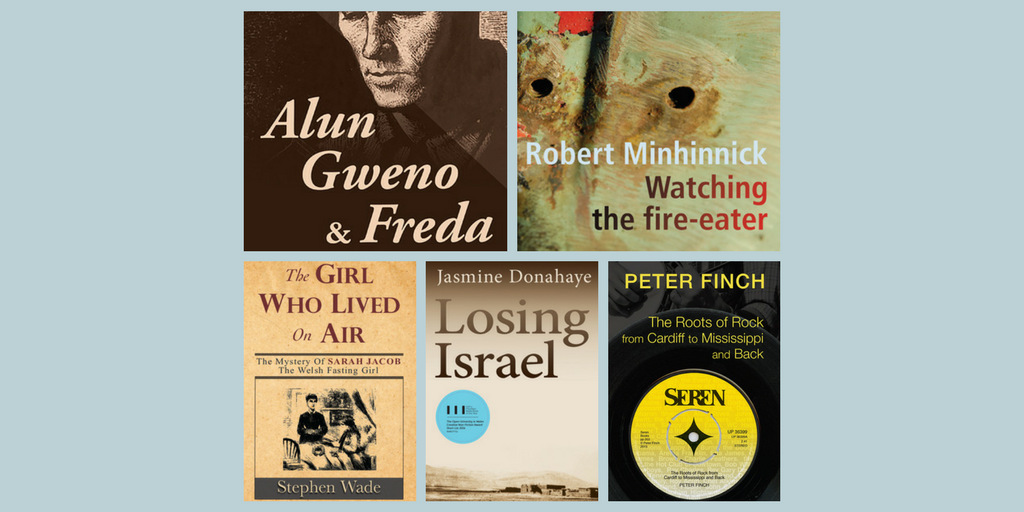
The Girl who Lived on Air by Stephen Wade examines the strange story of The Girl Who Lived on AirSarah Jacob, ‘the Welsh fasting girl’. Though not the first anorexic, she was arguably the first to cause a national furore, and was made to be the centre of a lucrative and also media-hungry ‘spin’ on the nineteenth century nexus of knowledge between science and superstition, folk-belief and religious asceticism. Stephen Wade covers new ground in examining the medical issues surrounding the case, the legal complexities, the prison life of Sarah’s parents, and the significance of folklore and superstition.
Alun Lewis biographer John Pikoulis covers new ground in Alun, Gweno & Alun, Gweno & Freda by John PikoulisFreda, which examines Lewis’ life and writing through the particular prism of his relationships with his wife, Gweno, and Freda Aykroyd, an ex-patriot in India whose house provided respite for British officers on leave. The book argues that Lewis’s charged relationships with these two women were the key to both his writing and his mental health, and goes on to explore the circumstances surrounding Lewis’ sudden death, and weigh into the ongoing debate over whether it was accidental, or suicide.
Losing Israel by Jasmine Donahaye is more than biography. This moving and honest losing_israelrgbwelsh-book-of-the-yearmemoir, which won the Wales Book of the Year, Non-Fiction Category (2016), recounts the author’s struggles with identity and history after she stumbles upon the collusion of her family in the displacement of Palestinians in 1948. Biography, travel writing and birdwatching are all weaved together in this fascinating re-evaluation of memory, family and cultural identity.
Robert Minhinnick’s Watching the Fire Eater, newly back in stock, takes us Watching the Fire Eater Robert Minhinnickfrom Copacabana to urban Yorkshire, from New Mexico to a Welsh funfair, from The Netherlands to the Clare coast. Minhinnick’s essays cover a variety of subjects – sunbathing, third world poverty, the demise of Margaret Thatcher, to name a few – but at the core this is a vivid series of attempts to strip away the exhausted mythologies of the writer’s own country and the increasingly-packaged places he visits.
The Roots of Rock, from Cardiff to Mississippi and Back is Peter Finch’s The Roots of Rock, from Cardiff to Mississippi and Backserenade to rock and popular music, and an infectiously nostalgic trip from the 1950s onwards that is guaranteed to enthrall music lovers. From an old valve radio playing in the Cardiff suburbs in the ’50s to live music today in America and beyond, Peter Finch tours countries and decades to illustrate how rock and pop has evolved, giving us sharp-eyed accounts of gigs from Champion Jack Dupree to the Garth Mountain Boys, visits to musical shrines and theme parks – Dollywood, Grand Ole Opry, Graceland, Stax – and music, lots and lots of music.


See our full Non-Fiction list on the Seren website, and hurry – sale ends midnight, Friday 13 January.

Save