Posted on

Friday Poem – ‘Without Narcissus’, Rhiannon Hooson

without narcissus rhiannon hooson

Last night, we welcomed a chilly December in Chapter Arts, with Rhiannon Hooson reading poems from her debut collection, The Other CityIt seemed appropriate to have Friday’s Poem from this beguiling new release, for those who missed out.

screenshot-2016-12-02-12-02-07
Rhiannon reading to a full house at December’s First Thursday event

the-other-city_quicksand-cover-copyWith a sharp focus and beautiful resonance, the deeply felt poems from The Other City  tend to travel in distinct streams: some reference and re-make narratives from classical Greek myth; some rework elements of Welsh history, both ancient, and modern. There are also a number of poems exploring the idea of otherness and the uncanny, where actions are done and undone, and the familiar made unfamiliar.


Without Narcissus

The lack of his blindness shocks the silver water black.
Your palm’s slap against its surface is looped silence:
bare shoulders with their heron stoop,
the wet ropes of your black hair, the empty water
and the stiff-leafed lilies which break for sharp fingers,
their pink throats silent and smiling. Speak.

Over the water the red rock leans and watches.
Your nails like fish-scales break against
the cool shadow of its noon, and the silence. Speak.
Even the fish have voices, even the rough
hush of the trees, even the birds.You press your body
to the dark-loomed sediment and learn its silence, touch the red
heat of your mouth to the rock and learn the syllables
of its unspeech. Speak.

Birds watch you writing the mangled sign of your name
wet hair strung across the tangled mats of cress,
white fingers and their fish-belly pallor, your white lips
kissed against the petals of the lilies.You can speak
their silence back to them so well, so well.


Buy your copy of The Other City now: £9.99
Join our free, no-purchase-necessary Seren Book Club for 20% off every time you shop with us

Save

Posted on

Seren Advent Calendar: 24 days of offers

Seren Advent Calendar 24 days of offers

Here’s a special Seren advent calendar– instead of chocolate, you’ll find 24 fantastic book offers to enjoy.

Each day in December we’ll reveal a different book, available half price for one day only. We’ll have a range of poetry, fiction, biography, art, photography and Welsh interest titles included, so there are sure to be surprises to delight everyone.

We’ll be updating this blog post every day with the latest offer, so keep your eyes peeled!

1st December: 50% off Wales’ Best One Hundred Churches
2nd December: 50% off Masque
3rd December: 50% off Leslie Norris: The Complete Poems
4th December: 50% off Star-Shot
5th December: 50% off Losing Israel
6th December: 50% off Significance
7th December: 50% off A Formula for Night: New and Selected Poems
8th December: 50% off Writing the Picture
9th December: 50% off The Immigration Handbook
10th December: 50% off American Sycamore
11th December: 50% off The Road to Zagora
12th December: 50% off House of Small Absences
13th December: 50% off Borderlands
14th December: 50% off Limestone Man
15th December: 50% off A Boat Called Annalise
16th December: 50% off The Harp in Wales
17th December: 50% off Morlais
18th December: 50% off Newspaper Taxis: Poetry After The Beatles
19th December: 50% off Men Who Played the Game
20th December: 50% off
Swimming on Dry Land
21st December: 50% off Playing House
22nd December: 50% off The Rivalry of Flowers

23rd December: 50% off the New Stories from the Mabinogion complete signed box setNew Stories from The Mabinogion box set
£100
   £50
In New Stories from the Mabinogion ten great authors have taken the Celtic myth cycle as a starting point to give us masterly re-workings with a modern twist in a series both various and wonderful. This box set contains all ten contemporary tales, signed by the authors – Owen Sheers, Gwyneth Lewis, Horatio Clare, Cynan Jones, Niall Griffiths, Russell Celyn Jones, Tishani Doshi, Fflur Dafydd, Lloyd Jones and Trezza Azzopardi.


Each offer ends at midnight on the specified day.


Save

Save

Save

Save

Save

Save

Save

Save

Save

Save

Save

Posted on

Friday Poem – ‘Bluetit Feeding’, Ruth Bidgood

friday poem bluetit feeding ruth bidgood

Our Friday Poem this week is a careful portrayal of the fragility and beauty of nature. So take some time away from the Black Friday madness, and enjoy Ruth Bidgood’s ‘Bluetit Feeding’.

New & Selected Ruth Bidgood Friday Poem Bluetit Feeding‘Bluetit Feeding’ is taken from New and Selected Poems. This generous selection of work highlights the steady accumulation of a significant oeuvre. Bidgood’s ostensible subjects are the storied landscape and history of her region of mid-Wales, the hills and valleys of Powys and Breconshire, but her themes frequently have a wider reach, a spiritual depth that is often darkly suggestive and mysterious.


Bluetit Feeding

Early at the window in starved winter
a little knot of energies, a beaky hunger
fluffed and sleeked, taps, prises
unsucculent scraps of cracked putty,
swallows with a ripple of tiny throat.

Behind it climbs a bleak pale hill
stained with ruts of December bracken.
White morning moon is barely seen
on hardly darker sky that seems
opaque, a barrier against pressure
of immensities. Imperceptibly
the chill day flows out to black deeps.

The bluetit pauses in its arid feeding,
flirts a crisp wing. Half-handful of warmth,
it stays for a moment sill,
compellingly centre-stage, diminishing
to a backdrop the hill, dull morning sky,
pale echo of moon, black vertiginous
trenches of space-ocean, myriads
of molten and frozen, dying and rising worlds.


Buy your copy of New & Selected Poems now: £9.99
Join our free, no-purchase-necessary Seren Book Club for 20% off every time you shop with us

Posted on

Friday Poem – ‘On the Sudden Passing of a Crow’, Eoghan Walls

Friday Poem On the Sudden Passing of a Crow Eoghan Walls

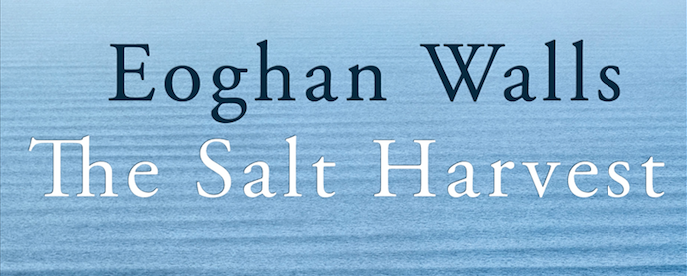
Happy Friday, everyone. This week our Friday Poem is taken from Eoghan Walls’ debut collection, The Salt Harvest. Eoghan has just been shortlisted for the prestigious Manchester Poetry Prize – so do send all your good luck his way.

the_salt_harvest72Dark and evocative, the poems in The Salt Harvest involve rich, multi-layered descriptions of the natural world, and cast a sardonic and tender eye on the human condition. The climates of Walls’ native Ireland inspire both the muscular imagery and the complex forms of work. Also apparent is an ambivalent, often deeply ironic attitude towards a culture once steeped in religion, whilst threads of humour and an imaginative playfulness run throughout.


on the sudden passing of a crow eoghan walls


The Salt Harvest is available from the Seren website: £8.99 (£7.19 for Book Club members)


The Seren Book Club is free a free, no-purchase-necessary subscription and and gives you 20% off all orders from the Seren website. Sign up now and save money every time you shop with us.


Posted on

Friday Poem – ‘Armistice Day ’77, Honiton’, John Tripp

John Tripp Friday Poem Armistice Day

Today, to mark Armistice Day, our Friday Poem is one of remembrance and silence from John Tripp’s Selected Poems.

John Tripp Selected PoemsA well known and popular figure on the poetry scene, John Tripp’s untimely death in 1986 meant the loss of a ’devoted and passionate poet’, as John Ormond calls him in the Introduction to this book. Pithy, regretful, bitter, angry, at times tender, John Tripp’s poetry was always engaged with the issues which most mattered to him.

Selected Poems draws on all John Tripp’s books, together with work published since the last of those collections, Passing Through (1984), and previously unpublished poems.


Armistice Day ’77, Honiton

The two minutes’ silence was cut to one
that November day; it was a busy world.
By chance, on my way to a gig
I walked into a ceremony of six
in the rain: crosses in a ring, and the poppies soaked.

Down two sides of the slab were names
linked to this piece of England – the sound
of country stock grown old in duty
and the acceptance of pointless loss.
Names going back to Minden and before.

(Were these the only ones left
to remember their dead?
Already sixty seconds were lopped
off any dignity. Would their children
forget, as I had forgotten?)

No more came. On some other day
I might have felt an interloper
marring their ritual. At eleven o’clock
the men took off their hats
and we all bowed our heads.

A minute in the rain in a country town
may whisper the whole grief of history.
Picture a knot of seven around that block,
the red wet poppies, and just for a moment
a complete and utter silence in the world.


John Tripp: Selected Poems is available from the Seren website: £4.95


Posted on

Friday Poem – ‘Seamus on the Tube’, Tony Curtis

Friday Poem Seamus on the Tube Tony Curtis

Last night saw us at Chapter, Cardiff, with Tony Curtis and Cynan Jones for November’s First Thursday event, and today we are featuring one of the new poems Tony read on the night – for all of you who missed his entertaining performance.

From left: Tony Curtis, Amy Wack (Seren Poetry Editor), Cynan Jones

From the Fortunate Isles: New and Selected Poems, Tony CurtisTony Curtis has been writing poetry for fifty years, and his new collection, From the Fortunate Isles: New and Selected Poems contains poems from ten of his published collections, as well as fifty pages of new poems. This is a poet whose themes and variations remain consistent: a deep affection for his roots in West Wales, tender attachments to family, a profound interest in the wars of the last century, and an abiding fascination for all art forms, particularly painting and poetry.


Seamus on the Tube

Looking away, not looking away –
The happenstance of what may change everything;
Those standing commuters moving off at Charing Cross
For the Bakerloo Line and then your eyes lifting

Above those seated opposite, as one does, to read
Between faster Broadband and Las Vegas –
“Where your accent is an aphrodisiac,” it says,
And where “what happens here, stays here,”

The Railway Children where in the white cups
Of the telegraph wires a young boy knows
That words are carried in the shiny pouches of raindrops.
Like this poem carried for you in the red and white Tube

On the Northern Line in cold January’s real freeze;
Snow is promised in the suburbs so everyone’s scarved
Against the weather. Words taking you back to the fifties
And his boyhood summers before everything changed.

Reaching Warren Street, you’ve read it
Four or five times, absorbed the innocent wisdom
And sense of the thing. Those people opposite
See a crazy old man mouthing words, appearing to sing.


Buy your copy of From the Fortunate Isles now: £12.99

Claim 20% off when you become a Seren Book Club member

Posted on

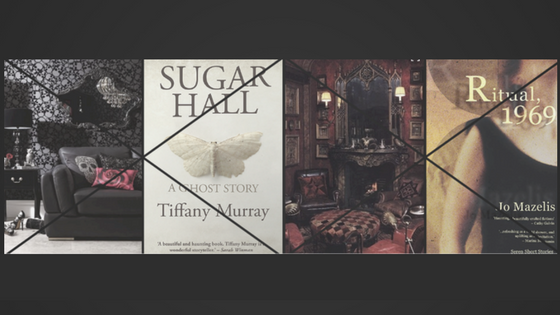
Free extracts from our favourite Halloween books: read them if you dare…

read these free extracts from our favourite Halloween books

Get yourself in the Halloween spirit – read these chilling extracts from our favourite spine-tingling stories.

trick or treat: happy Halloween from Seren

Ritual, 1969 by Jo MazelisRitual 1969 by Jo Mazelis
From ‘The Twice Pricked Heart’:


When Margaret returned to the cottage she saw that her father and stepmother had retired to bed, though it was not yet night.
She put Esmerelda in a chair and the child settled down to sleep as she sang softly to her. The light in the room was made strange by the dark sky and glittering snow. The quiet of the house seemed to swell with each passing second. Margaret sat upon the settle and took up the workbasket and began to mend her father’s shirt. It was torn under the arm and this she made good before turning it over to inspect it for other signs of wear. She froze at what she saw, for there on the chest where it lay over his heart she found a small puncture hole, the edges of which were stained in a halo of what must be dried blood. She gasped to see this for to her mind such a wound was unlikely to strike the same place twice.
A chill crept over her flesh and looking up she saw that the sun was at the lowest point in the sky and shadows filled the room. Then while she looked about her she saw a movement in the darkest corner of the room that she likened to a moving cloth, such as a woman’s cloak, for there was a sort of fluttering wavelike movement to it. Never had she perceived the like before and there was nothing in the room to cast such a shadow.
She kept to her place too terrified to move or make a sound, then just at the moment when she had made up her mind to gather Esmerelda in her arms and flee the house, she heard a step upon the stair and there was the sailor’s eldest daughter, dressed in her shift and a wrap, her cheeks aglow, her eyes bright and her lips red and wet and swollen.
‘Bring me cheese,’ she said, ‘and bread and wine.’

Want to keep reading? Buy your copy of Ritual, 1969 now: £8.99


Sugar Hall Tiffany Murrayfrom Sugar Hall by Tiffany Murray:


His cry echoed in the empty shed, his breath coming out in puffs of white. Dieter thought about London: he thought of the broken buildings and the cracks, he thought of the wide spaces and the rubble, and he thought of all those adventures he was missing. He gazed up at the dust dancing and the cobwebs pulsing, and Dieter heard a noise.

‘Pop!’ it said. Then,‘Pap!’

There were sparks and a shimmer that had to settle. Then, by the window and the filthy crates, there was a boy’s face.

The face was moving as if the boy was already standing up, but there was no body beneath it.

The Cheshire Cat, Dieter thought, as the face moved towards him. He gripped his pa’s crisp shirt tight, he stopped breathing, but he was determined that this time he wouldn’t run away.

The face was making a strange noise, as if tiny wings were fluttering in its throat. Dieter felt the balloon’s skin crackle beneath him; there was electricity: a crackle beneath his bottom and a crackle in the air.

He’s not a duppy, Cyn, Dieter thought, he won’t hurt me.

‘I – I brought you this shirt, these trousers,’ Dieter said. ‘I thought you’d be cold.’

Then Dieter wondered how the boy could use the shirt if he didn’t have a body.

A hot breeze of golden sparks cut through the freezing air and suddenly the boy was all there: his chest, his arms and legs, his neck and around that a silver collar. The boy shook himself and stretched up: Dieter had never seen anyone so naked, not even himself. The boy walked from those filthy storage chests and it was soundless, but Dieter watched the pitpat, pitpat of his footprints in the dust. Pitpat, pitpat; like steps in the sand and no one there.

The boy was thin. He was small, but Dieter couldn’t tell how old he was.

The boy hunched over and bent into a squat. His arms dropped, hands palmup and circling in the dust like little fish. The golden sparks were gone and Dieter saw the boy was pale for all his blackness.

Want to keep reading? Buy your copy of Sugar Hall now: £8.99


Masque by Bethany W PopeFrom Masque by Bethany Pope:


It was my job to see that she was properly dressed for company, to escort her to the room to meet her lover and the other admiring gentlemen, and then to change the subject any way I could when her natural whimsy took a turn for the disgusting as it often might.

One night, while De Changy was speaking to his managers (this was, you remember, two sets of managers back) she started speaking to a tall, nearly skeletal man who had appeared, dressed in a cloak and dinner jacket, a fine fedora aslant, shadowing a face as bland and unlined as a new-born baby’s. Her laughter had grown its most dangerous edge, the short hairs on my neck, cheeks, and arms rose in fear. La Sorelli was sweet, and she had a good heart, but her tongue could suddenly become impolitic and there were many investors present there this evening.

Annie and the stranger were standing at the point where the glorious stairs that make the Palais Garner famous intersect and form an enormous marble Y, glittering in the light refracted in a thousand tear-shaped crystals that drip from the tremendous chandeliers and gaslight torches. Whoever he was, he stood terribly erect, his gloved hands hidden behind his narrow waist, clutching a fine ebony stick. My friend, who I was meant to be watching, was sloppily drunk, spreading her barely covered breasts against the wide, pink-veined bannister. I could not read his face as he looked at her, his features were oddly stiff, expressionless, but the arch of his body signalled contempt. I rushed to her side, a quickly as I could, pleased that my new silk shoes did not slap against the carved stone stairs, pleased that I did not slip and crack my skull against the pavement…

Want to keep reading? Buy your copy of Masque now: £9.99


Bonus: download Jaki McCarrick’s short story, ‘Blood’, for free!
‘Blood’ from The Scattering by Jaki McCarrickShabby academic Fred Plunkett, working alone in his aunt’s Victorian house, has his peace disturbed by a sleek intruder with matt red lipstick, a lampblack dress and high, plastic heels. Lara claims to be researching vampires and the theory that Dracula fled his native Transylvania to take refuge in the Cooley Mountains of Ireland, in Fred’s home town. But when she smiles, submerged thoughts of blood and desire begin to wake in Fred’s mind…

Download ‘Blood’ for free from amazon.co.uk

‘Blood’ is one of nineteen stories in Jaki McCarrick’s critically acclaimed short story collection, The Scattering, available from the Seren website: £8.99



Posted on

Friday Poem – ‘Reasons for his absence’, Darío Jaramillo Agudelo (translated by Richard Gwyn)

Friday Poem Dario aramillo Agudelo Richard Gwyn

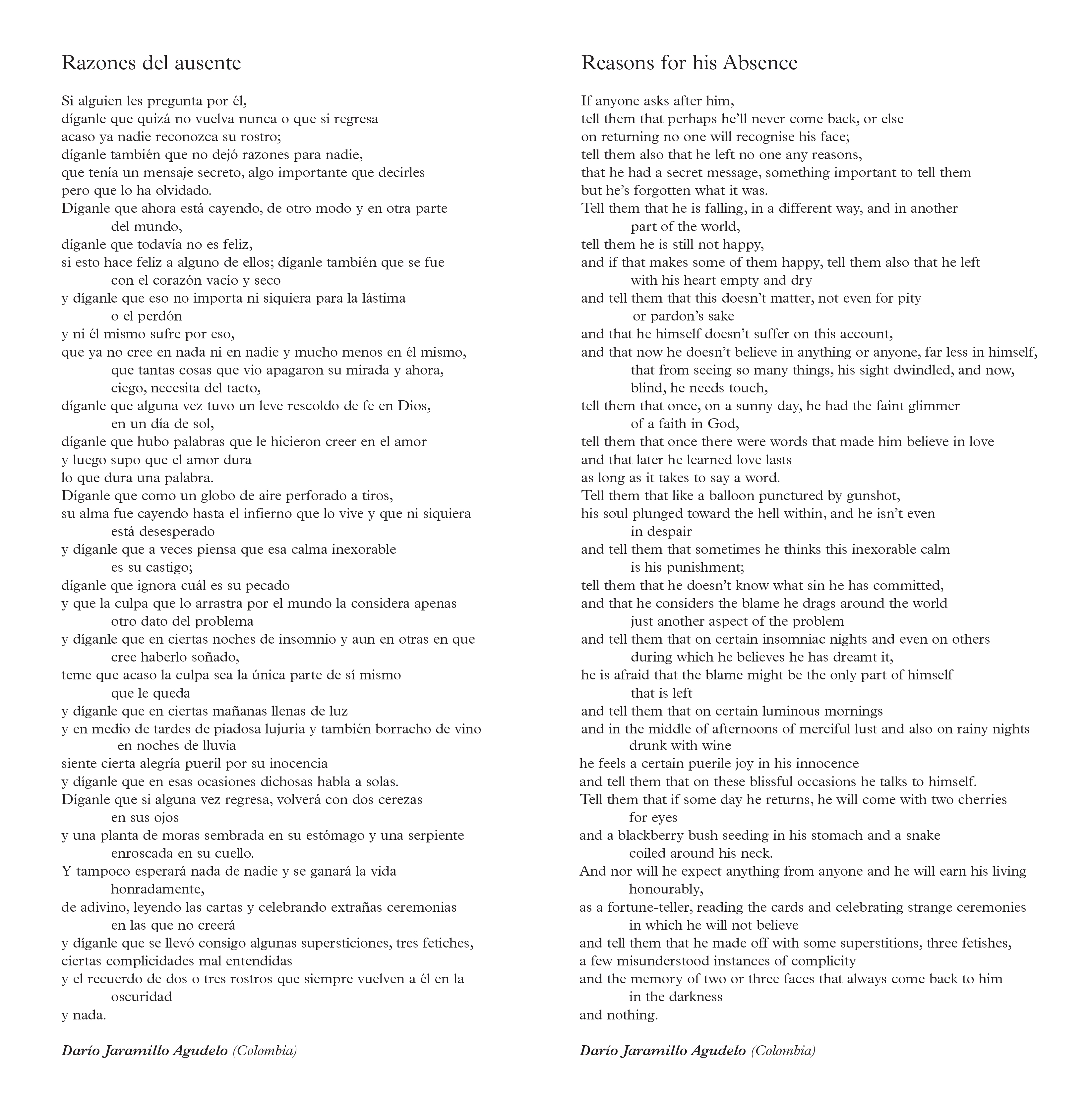
This week our Friday Poem is ‘Reasons for his absence’ by Darío Jaramillo Agudelo, from Richard Gwyn’s hot-off-the-press anthology, The Other Tiger: Recent Poetry from Latin America.

The Other Tiger by Richard GwynThe Other Tiger (the title is a nod to Borges – “the one not in this poem”) is a much-needed bilingual anthology of contemporary poetry, containing 156 poems by 97 South and Latin American poets. It includes work from Argentina, Colombia, Mexico, Peru, Nicaragua, Chile, Uruguay, Venezuela, Cuba, the Dominican Republic, Ecuador, Costa Rica, Bolivia and El Salvador.


About Darío Jaramillo Agudelo
Agudelo is an internationally acclaimed poet, novelist and essayist. He graduated in law and economics from the Universidad Javeriana of Bogotá, and worked for many years in various roles with state cultural and arts organisations. He has been shortlisted or winner of several awards for his work, including the Colombian National Eduardo Cote Lamus prize for poetry (1978), and the José María de Pereda Prize for the short novel (2010). The most recent edition of his Selected Poems is his personal anthology Basta cerrar los ojos (México DF: Era, 2014).

A note on ‘Reasons for his absence’, from Richard Gwyn:
I was attracted to this poem by its epistolary style, and by the device of news being relayed about an absent party. The lack of clarity surrounding the reasons for the man’s absence holds particular poignancy in a country such as Colombia, where ‘disappearances’ were – at the time of the poem’s composition, in the late 1970s – already becoming an everyday occurrence. The slightly elevated or ‘baroque’ language and incantatory style creates a strange juxtaposition with the content, which describes a life of sensual dissolution. The curiosity is stirred by the profound sense of loss or lack with which the absentee seems infused, wherever he is. Whether his exile is literal or metaphoric is never made clear.

My principal concern with the translation of this poem concerned the title. The Spanish noun ‘razón’ can mean a range of things, including ‘reason’ or ‘information’, or even ‘explanation’, depending on context. Similarly ‘ausente’ – here a noun, but commonly an adjective – could be translated in a number of ways: ‘the absent one’ sounded too much like translatorese, ‘the missing person’ subject to over-interpretation in the context of recent Latin American history. In the end I chose ‘his absence’, which deviates from the original in a grammatical sense but conveys the meaning of the phrase accurately. A second concern was the repetition in the Spanish of ‘díganle’ (literally: tell him), which, since it refers back to ‘alguien’ (anyone) in line 1, I chose to translate as the generic ‘tell them’.

 I attempted to re-create the long, rolling cadences of the original in my translation, alongside the reiteration of the introductory ‘tell them that . . .’.

I have also tried to reproduce the bereft tone that reflects the absentee’s solitude, and the distance he has chosen to maintain from those he left behind.

 When I read this poem out loud at an event – as I do from time to time – it still makes the hairs on the back of my neck stand on end. I can’t say that happens with many poems, but with this one it happens every time.

Reasons for his Absence
(click to enlarge image)

Project1 the other tiger new order_Layout 1

Buy your copy of The Other Tiger now: £14.99
Claim 20% off when you become a Seren Book Club member

Save

Save

Posted on

Halloween tips for book lovers: have a spooktacular night in

halloween tips for book lovers spooktacular night in

If the thought of venturing outside gives you a fright, then why not stay in for the night? All Hallow’s Eve is right around the corner, and that means frights, delights, and a healthy dose of Halloween literature.

What could be better than a cosy night at home, candles flickering, the wind howling outside, and a good book in your hands? Staying in is the new going out, and we’re here to tell you how to make the most of Halloween from home.

1. Set the scene
It’s all in the detail – hang up some spooky decorations, dim the lights and set some tall candles ablaze.

2. Play that spooky music
Some gorgeously gothic music will set you up for a night of horror. This Best of Dark Classical Music playlist should do the trick.

3. Choose your Halloween reading
Ghost stories, gothic, true crime or thriller – choose your poison. Take a look below for our spooktacular selection of dark and chilling literature…

Masque by Bethany W Pope

Masque, Bethany W. Pope
£9.99
This richly gothic re-telling of Gaston Leroux’s The Phantom of the Opera takes us to 19th Century Paris, where aspiring opera singer Christine is trapped between theatre owner Raoul’s ‘romantic’ vision of her as a bourgeois wife, and the mysterious Phantom’s murderous pursuit of artistic perfection.
Love, lust, adventure, romance, and the monstrous nature of unfulfilled creativity await you here. Everyone wears a mask. Look beneath it, if you dare…

Sugar Hall Tiffany MurraySugar Hall, Tiffany Murray
£8.99
Easter 1955. As Lilia Sugar scrapes ice from the inside of the windows and rust from the locks in Sugar Hall, she knows there are pasts she cannot erase. The red gardens of Sugar Hall hold a secret, and Lilia and her children must confront a history that has been buried but not forgotten.
This superbly chilling ghost story (named by David Mitchell as one of his six favourites) will have you on the edge of your seat.

Ritual, 1969 by Jo MazelisRitual, 1969, Jo Mazelis
£9.99
What are little girls made of? What will they become? From the playground to adulthood the path is beset with misunderstandings, missed dates and hidden traps for the unwary.
This darkly gothic collection of stories explores the unsettling borderland between reality and the supernatural. Ranging from early twentieth-century France to 1960s South Wales and contemporary Europe, Jo Mazelis’ stories portray characters caught up in events and feelings they do not fully understand or control. Not all is as it seems in a world where first impressions may only conceal disguises and false trails – and there’s no going back…

Sean Tyrone A Symphony of HorrorsSeán Tyrone: A Symphony of Horrors, Mark Ryan
£8.99
The brilliantly evoked valleys town of Aberuffern (the mouth of hell) becomes the central motif of this short novel, inspired by the Mexican novel Pedro Paramo by Juan Rulfo.
This is lively, blackly humorous and intelligent storytelling.


Witch, Damian Walford Davies
£8.99
With the narrative pull of a novel and the vibrancy of a play for voices, Damian Walford Davies’s Witch offers a thrilling portrait of a Suffolk village in the throes of the witchcraft hunts of the mid-seventeenth century. The poems in this collection are dark spells, compact and moving: seven sections, each of seven poems, each of seven couplets, are delivered by those most closely involved in the ‘making’ of a witch.

Murder-at-the-StarMurder at the Star, Steve Adams
£9.99
The murder of God-fearing, bible-quoting, partially deaf Thomas Thomas at the branch of Star Stores he managed in Garnant, South Wales has remained an unsolved mystery since it happened in 1921. Over £126 was missing from the store safe, yet there were oddities about the attack which suggested this was more than a robbery that went tragically wrong.
In classic cold case fashion, journalist Steve Adams’s extensive researches have finally identified the killer, and the almost century-old case can finally be closed…

Happy Halloween one and all, we hope you have a frightfully good evening.

hoppip halloween art animation film

Save

Save

Save

Posted on

The true story behind Alun Lewis’ poem, ‘Burma Casualty’

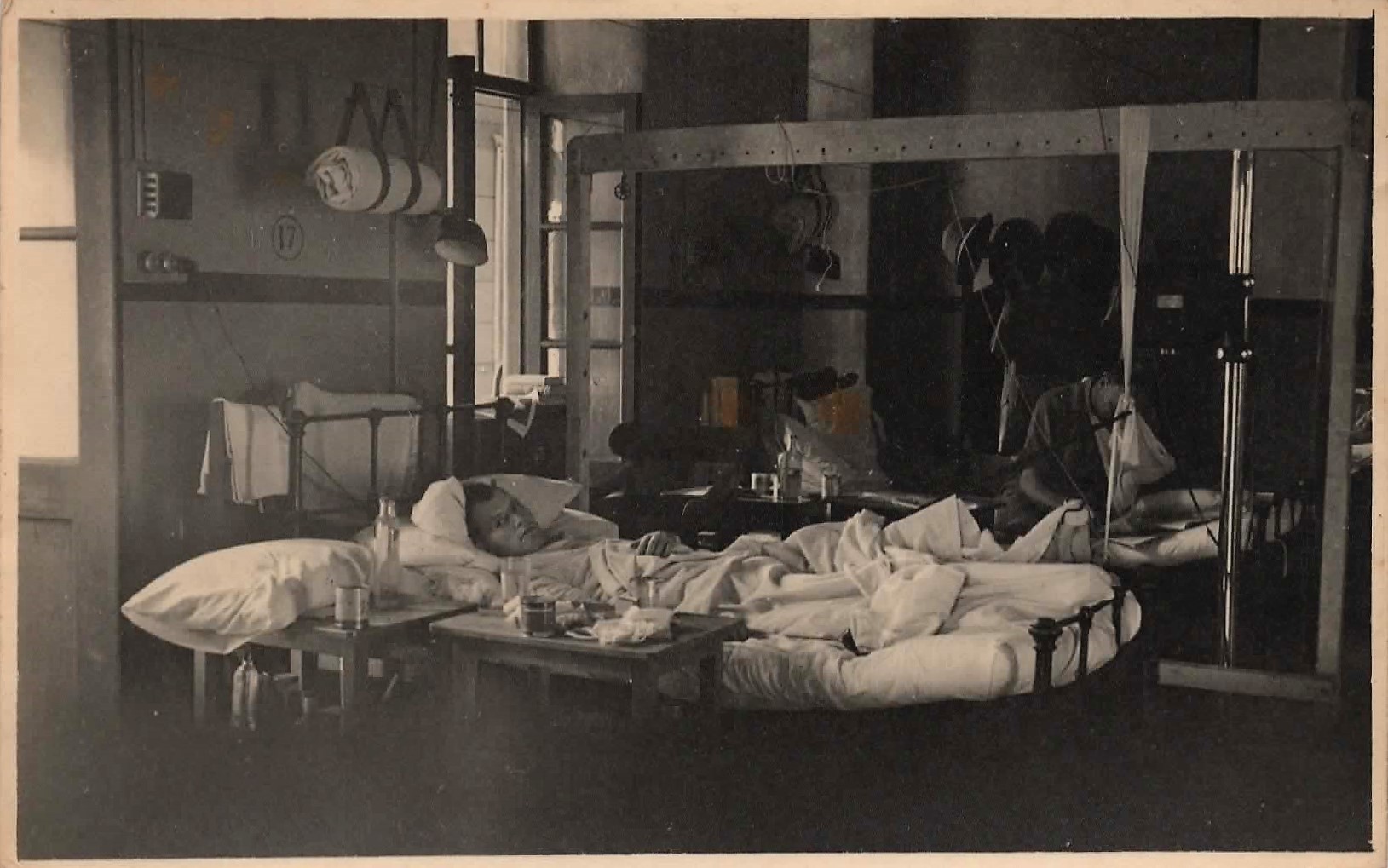
In January 1943, after fracturing his jaw during a regimental football match, Alun Lewis spent 6 weeks in Poona Hospital. In this blog post, Maggie Evans, whose father lay injured in Poona in the bed next to Lewis’, tells the true story behind the poem ‘Burma Casualty’.

As a child, “My Dad’s in a poem”, was my default position when any Dad boasting was called for.  “Don’t believe you”, was the usual reply, but here I had them.  I could run to the shelf and produce the evidence. There, in a slim volume entitled Ha! Ha! Among the Trumpets, was the poem, entitled ‘Burma Casualty’ and even more exciting, with a dedication – To Capt. G. T. Morris, Indian Army – My Dad!

It was years before I actually read the poem and even longer before I was capable of understanding it, but the magic of a special poem about my own special Dad has never faded.

Dad was born on 12th July 1911 in the Eastern Valley of South Wales. His given names were Thomas Griffiths but he was always known as “Griff”. To me and my two older brothers he was just our Dad, and the fact that he had one stiff leg shorter than the other and had to wear funny, built up shoes was of no consequence. We were children of the Second World War and post War period – war wounds were common. Dad didn’t ever let this hamper him. He wouldn’t accept a Disabled Badge for instance, and wouldn’t countenance anyone thinking of him in this way. He carried us on his shoulders and took us swimming and walking just like any other Dad and so I never fully understood the extent of his injuries until recently, when following a house move, I found bundles of his letters and photographs from that time. Reading the letters he sent from hospital in Poona sent me straight back to the poem – and now for perhaps the first time I was able to understand it.

In February 1942 Dad was fighting in the Burma Campaign with the 17th Indian Division which was decimated at the Battle of Sittang Bridge during a retreat from the Japanese. He was badly wounded, carried off the bridge by unknown hands, and ended up in hospital in Poona where he remained until late 1943.  Earlier that year he had for six weeks a new neighbouring bedfellow – one Alun Lewis, also a Welshman, who had sustained a shattered jaw in a football match. The sharing of his experiences with Alun resulted in ‘Burma Casualty’.

Thomas “Griff” Griffiths in Poona Hospital
Thomas “Griff” Griffiths Morris in Poona Hospital

Re-reading the poem now reveals how much Dad shared with Alun of his pain and fear – showing that at times he might have welcomed death as a release from his own physical pain and from the loss of so many comrades.

Thomas Griffiths and his wife on their wedding day
Thomas Griffiths Morris and his wife on their wedding day

But his letters to his sister from the same time show that as he recovered, his focus was on re-stablishing his family life with my Mum, his childhood sweetheart, and my oldest brother, born in 1940, whom he had never met.  He resisted Death, the ‘beautiful singing sexless angel’, preferring ‘his wife’s sweet body and her wilful eyes’ (though, like any child, however advanced in age, I confess to being unable to think of my mother in these terms without feeling slightly queasy!)


Dad never spoke of his experiences of jungle warfare and rarely mentioned his time in hospital. When pressed, he spoke of his friend, Alun Lewis, as something of a tortured soul. As an adult I have come to understand and love Alun’s poetry, not because he allowed my childhood self to hold its own on the boasting front, but for his luminous verse with its dark undercurrents. I can now say with pride, “my Dad knew a true poet’.

burma-casualty


‘Burma Casualty’ is one of the many poems featured in Alun Lewis: Collected Poems. Buy your copy now from our website: £9.99.