Posted on

An Easter Egg from Seren

easter egg 30% off sale

Happy Easter everyone! We have a special Easter egg on the website for you: 30% off books across the Seren store.

The Easter holiday carries with it the message of new beginnings, so why not begin a new book? Our 30% offer includes our gorgeous poetry, fiction and non-fiction titles, so there is something for everyone.

easter egg 30% off


We hope you find something new to bury your nose in this Easter.

Offer ends midnight, Monday 28th March.

Shop now


Posted on

Happy St Patrick’s Day 2016

st patricks day 2016

Happy St Patrick’s Day to every one of you, far and wide.

St Patrick's Day 2016


And here’s our bookish Irish flag in honour of the day, pieced together using just a few of our green, white and orange books.

Here is the full list of titles featured in our St Patrick’s Day ‘flag’:

Poetry and Privacy: Questioning Public Interpretations of Contemporary British and Irish Poetry;
The Ivy Hides the Fig-Ripe Duchess;

The Scattering;
The Dragon and the Crescent;
Crossing Over;
Masculine Happiness;
Bilbao – New York – Bilbao;
The Woman at the Window;
All the Souls;
The Hitting Game;
Dirt Roads;
Big Low Tide;
Zen-Cymru;
Christmas in Wales;
The Shop;
If You Fall I Will Catch You;
Midas’ Daughter;
Eros Proposes a Toast;
The Visitations;
Playing House;
Midnight, Dhaka;
Daniel’s Beetles.

We have been lucky enough to add some great Irish and Ireland-based authors to our list over the years who have written some gorgeous books.

Of special mention (and visible in the ‘flag’, above) is Jaki McCarrick’s The Scattering, a collection of nineteen stories, many of which are set on the Irish border. One of the stories ‘The Visit’ won the Wasafiri Prize for new fiction, and many have been published to much acclaim in literary magazines.

Another Irish voice that has recently appeared is Helen Blackhurst. Her debut novel Swimming on Dry Land, which follows a family’s quest for a new life in the Australian outback (as well as their search for missing 4-year-old daughter Georgie), was released just before Christmas.

In Liam Carson’s family memoir Call Mother a Lonely Field, the author’s Irish-speaking, West Belfast childhood is described through still-present echoes of the Second World War, dystopian science fiction, American comic books and punk rock. The memoir was shortlisted for the RSL Ondaatje Prize 2013.

We hope you enjoy St Patrick’s Day!

st patricks day patrick flag ireland irish


Posted on

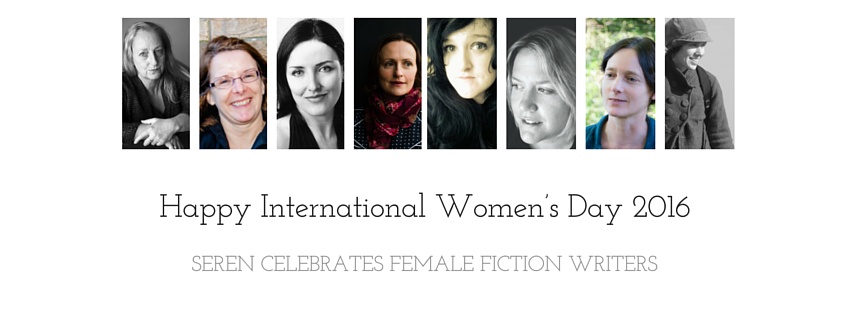
International Women’s Day: celebrating Seren’s female fiction writers

International Women’s Day 2016 has arrived. We celebrate this year by highlighting just a few of the talented women we’ve been fortunate enough to publish. There will always be more names to mention and more works to appreciate, and you can find countless gorgeous books written by women on our website. But none-the-less, we hope you enjoy hearing about just a few of the Seren women writers and their achievements.

In this second International Women’s Day blog post, Fiction Editor Penny Thomas highlights just a few of the novels and short story collections by women we have published over the years. Penny has a talent for finding gorgeously written fiction, much of which is written by female authors.

Penny: Over the past few years at Seren we’ve had the pleasure to publish many wonderful women fiction writers from Leonora Brito to Sian James, from Francesca Rhydderch to Jo Mazelis. In the last few years alone we have published novels, short stories and novellas by dozens of women authors, writing stories set around the globe – from WW2 Hong Kong, to the US, the Irish borders, northern France, or Patagonia, or closer to home by the River Severn, Newport Pembs, Tonypandy or Swansea, not to mention exploring the mysteries of the Mabinogion. All have fresh voices, varied and vital writing styles and something to say about their world. 

the_rice_paper_diariesthe scattering star-shotsix pounds eight ounces


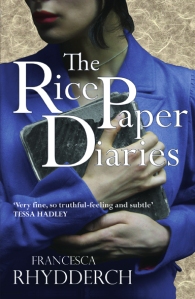
Francesca Rhydderch’s debut novel The Rice Paper Diaries was Wales fiction book of the year in 2014 and has since published in China too. Based on the experiences of her great aunt, it explores the life of a west Wales girl, travelling as a young bride to the expat community of Hong Kong in 1940, just before the Japanese invaded.

The Scattering by Jaki McCarrick is a collection of nineteen stories, many set on the Irish border. These stories explore states of liminality: life on the Irish border, dual identities, emigration, being between states – certainty and doubt, codependency and freedom. Some explore themes of catastrophe and constraint. All explore what it means to be alive in a fraught and ever-changing world. This first collection from prizewinning author and playwright, Jaki McCarrick explores the dark side of human nature, often with a postmodern ‘Ulster gothic’ twist.

Star-Shot by Mary-Ann Constantine is a modern-day fable and gives us a network of lonely souls set around Cardiff museum, finding strength in their unlikely relationships with each other to fight the silences invading the city.

Six Pounds Eight Ounces by Rhian Elizabeth brings us Hannah King, the ‘honest’ account of a Rhondda girl who may or may not have lied her way through her schooldays, swapping Barbies and books for Glam Rock and glitter.

Sugar Hall by Tiffany Murray. £8.99 Love & Fallout Dark_Mermaids_Web72 swimming_on_dry_land_72


Sugar Hall, a ghost story by Tiffany Murray delves deep into the red mud and murky colonial past of a crumbling post-war mansion on the edges of the River Severn and the secrets it holds.

Love and Fallout by Kathryn Simmonds combines the female relationships at the 1980s’ Greenham Common anti-nuclear camp with a modern day tale of mother and daughter relationships to great effect.

Dark Mermaids by Anne Lauppe Dunbar dives into East German noir with the tale of former child GDR swimmer Sophia, called upon to investigate the doping horrors of her own forgotten past.

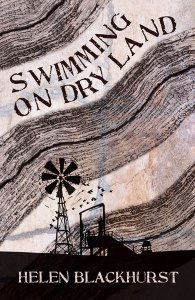
Swimming on Dry Land by Helen Blackhurst tells the tale of the Harvey family, uprooted to Australia in a search for paradise, but finding themselves adrift in an alien landscape.

Our female fiction authors have also won awards for their writing.

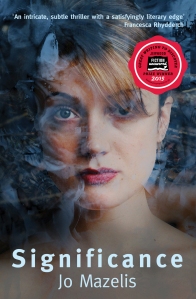
significanceSignificance by Jo Mazelis
£9.99
Winner of a 2015 Jerwood Fiction Uncovered award, Significance is ‘feminist, Francophile, urban noir’ focusing on the murder of Lucy Swann and the ripples this event stirs in the lives of all in her vicinity.


american_sycamoreAmerican Sycamore by Karen Fielding
£9.99
American Sycamore takes us into the lives of congenial American fly-fisherman Billy and his younger sister Alice as they meander alongside the Susquehanna River in an offbeat coming-of-age novel of death, madness and fishing. Gold winner in the Mid-Atlantic Best Regional Fiction category of the 2015 Independent Publisher Book Award.


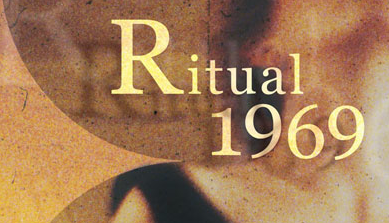
A Bird Becomes A Stone from Ritual, 1969 by Jo Mazelis2016 will be another exciting year for fiction published by women writers, with Jo Mazelis’ haunting new short story collection Ritual, 1969 arriving in April (now available to pre-order), Bethany W. Pope’s Masque (a richly gothic retelling of The Phantom of the Opera) in June, and other delights later in the year.


Posted on

Happy St David’s Day 2016

happy st davids day 2016

Dydd Gŵyl Dewi Hapus! Happy St David’s Day to one and all.

This is a day to celebrate Welshness, so that means warm Welsh cakes, bunches of fresh daffodils and one or two good Welsh books to read.

Why not celebrate this St David’s Day by investing in a new book published by one of the fabulous Welsh publishers? Visit your local bookshop or gwales.com to see the great selection of Welsh books out there.

happy St David's Day


Want to know more about our Welsh publishing friends? Read a little about each of them below.

Parthian’s long list of gorgeous titles include Rebecca F. John’s award-winning short story collection Clown’s Shoes.

Firefly Press have loads of great children’s books including Branford Boase-longlisted Aubrey and the Terrible Yoot.

Honno has a well-deserved reputation for publishing some of the best women’s literature in Wales.

Gwasg Carreg Gwalch publishes an astounding range of Welsh interest books for adults, children and visitors to Wales in both Welsh and English language.

Cinnamon are an innovative press, publishing fiction, poetry and non-fiction books, not defined by genre but by their ability to be thought-provoking and to say something new.

Gomer is the oldest publisher still running in Wales and publishes across the board with children’s titles, plays, poetry, bilingual books and more.

Graffeg have produced and published over 100 illustrated books since 2003, with titles about food, arts, culture, heritage and architecture, gardens, landscapes, photography, sport and lifestyle.

Y Lolfa started out as unofficial printers to the new, activist Welsh Language Society in the ’60s, and have evolved to produce an ever-widening range of popular books in both Welsh and English.

University of Wales Press publishes around 70 new books and journals a year, primarily in the fields of European studies, philosophy, literature, history, Welsh and Celtic studies.

And lastly there’s us here at Seren, bringing new poetry, fiction and non-fiction to you each year. From our list we suggest Jerwood Fiction Uncovered Prize-winner Significance, Man Booker Prize-longlisted The Last Hundred Days or Costa Poetry Award-winner My Family and Other Superheroes for some extra-special St David’s Day reading.

There is an astounding amount of literature produced in Wales each year, everything from fiction, to guide books, to scholarly material. We hope you find a new book to fall in love with this St David’s Day. Support Welsh publishing, because #WelshBooksMatter.


Posted on

Short Story of the Month | ‘A Bird Becomes A Stone’ by Jo Mazelis

Our January Short Story of the Month, still available to read, is ‘A Bird Becomes A Stone’ by Jo Mazelis, which features in her beautiful new collection Ritual, 1969, due to be published April 2016.
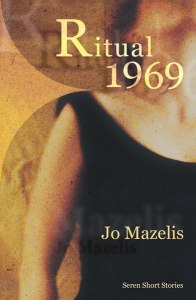
A Bird Becomes A Stone from Ritual, 1969 by Jo Mazelis

This, her third collection, welcomes you to a darkly disquieting world of make-believe and performance, where nothing is quite as it seems and first impressions may only lead to further disguises and false trails. Twins, circus acts, playground games and play-acting, the path from the schoolyard to adulthood is beset with misunderstandings, missed dates and traps for the unwary.

Awarded a Jerwood Fiction Uncovered Prize for her debut novel Significance, Jo has also had numerous short stories in anthologies and listed for awards, including five short-listings for the Rhys Davies short-story prize. Several of her stories have been broadcast on Radio 4.


A Bird Becomes A Stone

This is an extract. Read the full short story for free on our website.

The film Sarah had volunteered to act in was written and directed by a Welsh girl called Catrin, who was at college in Bristol. She’d brought a crew of other students to Wales, one to do sound, another was a cameraman. There was also a sulky girl with bad skin called Morgana whose role was not explained. They drove in a grubby white VW van up to the Brecon Beacons, careering and bumping along narrow tracks in search of good locations. The cameraman drove and the girl with bad skin sat up front because she claimed she’d get carsick otherwise. So the other three had to suffer in the back, wedged in among the film equipment and two plastic sacks of what seemed to be dirty laundry but turned out to be props and costume.

Sarah played the main role. According to the storyboard a lot of footage would consist of her running through woods, along a shoreline (brooding clouds and crashing waves in the background) and along treacherous mountain paths. The schedule demanded that they shoot with her for three days, then on the fourth and fifth days another actor would join them. He was to play a man who had molested her as a child. The chief premise of the film was that every impression in the early sequences led the audience to believe she was being chased, but actually it emerged that her character was the pursuer. The hunted becomes the hunter.

They parked at a lay-by above a stream. The day was still and unusually warm, white puffs of cumulus clouds moved lazily across a yawning blue sky.

‘This weather is crap,’ Catrin said.

The girl with the bad skin sat on a rock and stared hatefully at the rest of them as they unloaded the van.

From eleven o’clock until almost two, Sarah helped Catrin and the sound man scatter torn white sheets along the side of the stream while the cameraman shouted directions at them. At two they stopped for a lunch made by Catrin’s mother. Sandwiches with cheap white bread, some sort of meat that might have been pork or possibly turkey, hard-boiled eggs, crisps and an assortment of chocolate-covered biscuits which were warm and sticky and reminded her too much of long journeys in the back of her parents’ car; of her loneliness as an only child.

After lunch Sarah climbed into the back of the van and struggled into the costume they had brought for her; a grubby, ivory-coloured floor length dress. It had a plunging front and tied behind her neck leaving her back bare. It was made of artificial satin and the rough skin on her hands caught on it like tiny barbs.

In this scene she was meant to wander along by the stream charting a course between one discarded rag and another. Catrin showed Sarah some photographs taken after a battle; women searching for their menfolk in a field littered with the corpses of soldiers, explaining that this was the atmosphere she wanted to convey.

Sarah set off barefoot; in places mud oozed between her toes. The dress was thin, she shivered as the sun began to drop behind the mountains, but she persevered.

That night Sarah dreamt that she was filming the scene over and over, but her dream was invaded by the war photograph and as she stared at each flung-down rag, the torn scraps came to life turning into dreadful ghosts with scarred and half-flayed skin who moaned and tried to touch her.

The next day Catrin was overjoyed as weighty blue-grey cumulonimbus began to gather behind the mountains threatening an approaching storm.

‘We’re going further north today, then as far as Dolgellau on Thursday.’

There was little time wasted on the second day; they parked on a bleak mountain with a ribbon-like road running through it. Plynlimon hunkered under dark skies to the north.

‘Now just run towards the camera but look beyond it, not directly at it.’

She ran. Barefoot in wet grass peppered with shiny black sheep droppings, her long dress saturated up to her thighs. A few times she fell but pulled herself up and stumbled on.

‘That was brilliant! It looks so real when you fall,’ Catrin said.

‘Hey,’ the sound guy said, touching her arm gently. ‘Is that blood? Did you hurt yourself?’

She looked down; the dress was torn over her right knee, bright crimson blood mixed with muddy grey stains. She lifted her dress, her knee was grazed and in one place a small cut sent a trickle of red coursing down her leg and over the arch of her foot.

Continue reading ‘A Bird Becomes A Stone’ here.


Jo Mazelis’ new collection, Ritual, 1969, will be published by Seren in April 2016. More information coming soon to the Seren website.

Posted on

Remember, Remember

Our Marketing Assistant, Jess, discusses the relationship between history, identity and literature.

Remember, remember!
The fifth of November,
The Gunpowder treason and plot;
I know of no reason
Why the Gunpowder treason
Should ever be forgot!

It’s been 410 years since Guy Fawkes tried to blow up parliament and we’re still talking about it. Granted trying to blow up the Houses of Parliament (with the king inside) is a pretty big deal, and it’s fascinating to think what Britain might have become if Fawkes had succeeded. Would it even be much different to the way it is now?

We have this idea that we must remember the important moments in history because if we do they won’t happen again. If we remember that Hitler was a bad man we’ll be able to prevent anyone like him from rising to power again, and if we remember that trying to prevent interracial marriage is just plain silly we’ll be a better society. Of course that’s not quite how the world works. Sadly there are still plenty of horrible people in politics, and it’s only in recent years – this year in the case of the United States – that gay marriage has been legalised.

Basically, we never learn, and this is true of our own histories too.

No matter who we are, where we go or what we do, we always find ourselves drawn back to our pasts; our decisions and experiences creep up on us like waves, slowly advancing until we’re caught in the tide and pulled back to something we’d forgotten, whether by accident or by choice. It could be anything from a faint whiff of perfume that reminds you of your grandmother’s old house, or a song you hear that takes you right back to your school days because it was playing everywhere and dammit now it’s stuck in your head again. You’ll be humming it for weeks.

This is particularly true of writers, or at least that’s what I’ve discovered in my experience. Authors can write a huge amount of different stories in their lifetime, but no matter how different the story is, no matter how different the characters or the setting are, there will always be those themes that authors just can’t help going back to.

It’s true of our authors, too. In Anne Lauppe-Dunbar’s debut novel, Dark Mermaids, published earlier this year, our protagonist Sophia finds herself haunted by her past no matter how hard she tries to run from it. Set in Germany, the book itself is something of a link back to Anne Lauppe-Dunbar’s own family history; I interviewed Anne here about her startling debut, and wasn’t at all surprised to discover that she’s working on another novel set in Germany. I’ve had the pleasure of meeting Anne in person, and it’s clear from the way she talks about her writing how passionate she is about these Germany-based stories.

Francesca Rhydderch’s prize-winning debut, The Rice Paper Diaries, also draws on personal family history, and the characters in Mary-Ann Constantine’s debut, Star-Shot, just can’t help being drawn to the National Museum Cardiff, a building that is literally full of our history.

Then we have our New Stories from the Mabinogion. Our authors took the tales from The Mabinogion and placed them wherever, and whenever, they saw fit, leaving us with stories set during the Second World War and stories set in outer space. Fairy tales, folktales and legends are the first stories we’re ever introduced to, and we continue to come across them even when we might not realise it. What is Pretty Woman if not a slightly updated Cinderella story? What is The Phantom of the Opera if not yet another spin on Beauty and the Beast?

Try as we might we can’t stop returning to these old stories, whether they’re stories everyone knows or stories from our own personal histories. They just keep coming back, and all we can do is keep telling them.

Posted on

What’s a Book Worth?

What's a Book Worth-

At the beginning of the month, the launch of writer and historian Mathew Lyons’ campaign What’s a Book Worth? was announced.

The aim of the campaign is to look beyond the monetary worth of the books we own and love, and instead is asking readers to film themselves talking about the books that mean the most to them and to share their video on Twitter using the hashtag #WhatsABookWorth on Monday 28th September. If you’re a little camera shy, then an alternative way to spread the love is to write a short blurb for a book you love instead, and share it on social media.

If you want to know a little more about the campaign then check out this article on The Bookseller, the What’s a Book Worth? website and follow @WhatsABookWorth on Twitter! We’ll be keeping an eye on the hashtag on Monday, and we can’t wait to see some of your favourite books – we may even share some of our own!

Posted on

Forthcoming Title: ‘Jonah Jones: An Artist’s Life’

To be released on 18th July 2011.
Author:

Peter Jones

Sculptor, painter, letter cutter, stained glass artist, novelist, travel writer, academic and administrator; Jonah Jones (1919-2004) was a twentieth century renaissance man.
Born near Newcastle into a family of miners he became a librarian before reluctantly volunteering for a non-combatant role in the Medical Corps during he second world war. He saw action in North Africa but also met a number of artists and craftsmen in the RAMC who fired his own passion to become an artist. After the war, now married and having survived severe case of TB he settled in his family’s homeland of Wales and began his ‘on the job’ education as a sculptor and letter cutter. Much of his early work was at Clough Williams-Ellis’s Portmeirion villages. The two became close friends and Jones widened his circle to include Richard Hughes, Bertrand Russell, John Cowper Powys and Huw Wheldon.

In a varied career Jonah Jones produced intimate sculptures, monumental installations, and beautiful inscriptions, in addition to writing novels published by leading London houses, a biography of Clough Williams-Ellis and a hugely regarded survey of the lakes of North Wales.

Posted on

Forthcoming Title: ‘Second Chance’

To be released July 18th 2011.
Author:

Sian James

Kate Rivers has it all; London life, successful acting career, and caring lover Paul. So why, when she is unexpectedly recalled to the Welsh village where she grew up, are both her past and her present such a struggle to come to terms with? Where is Paul when she needs him, and why does her handsome cousin Rhydian seem to feature so much in both her memory and her present dilemma? First Published in 2000, this classic tale is told with skill and sympathy by novelist Sian James.