This week’s Friday Poem is ‘Antipodes’ by Glyn Edwards from his new collectionIn Orbit.
Glyn Edwards’s new collection In Orbit is a sustained narrative of love, loss and longing. Using a variety of innovative forms, these poems explore grief and how we come to terms with losing someone close to us. The natural world offers sustenance and a new perspective in the face of intense emotions as a man struggles to come to terms with news of a beloved teacher’s death.
Create your free Seren account and enjoy 20% off every book you buy from us.
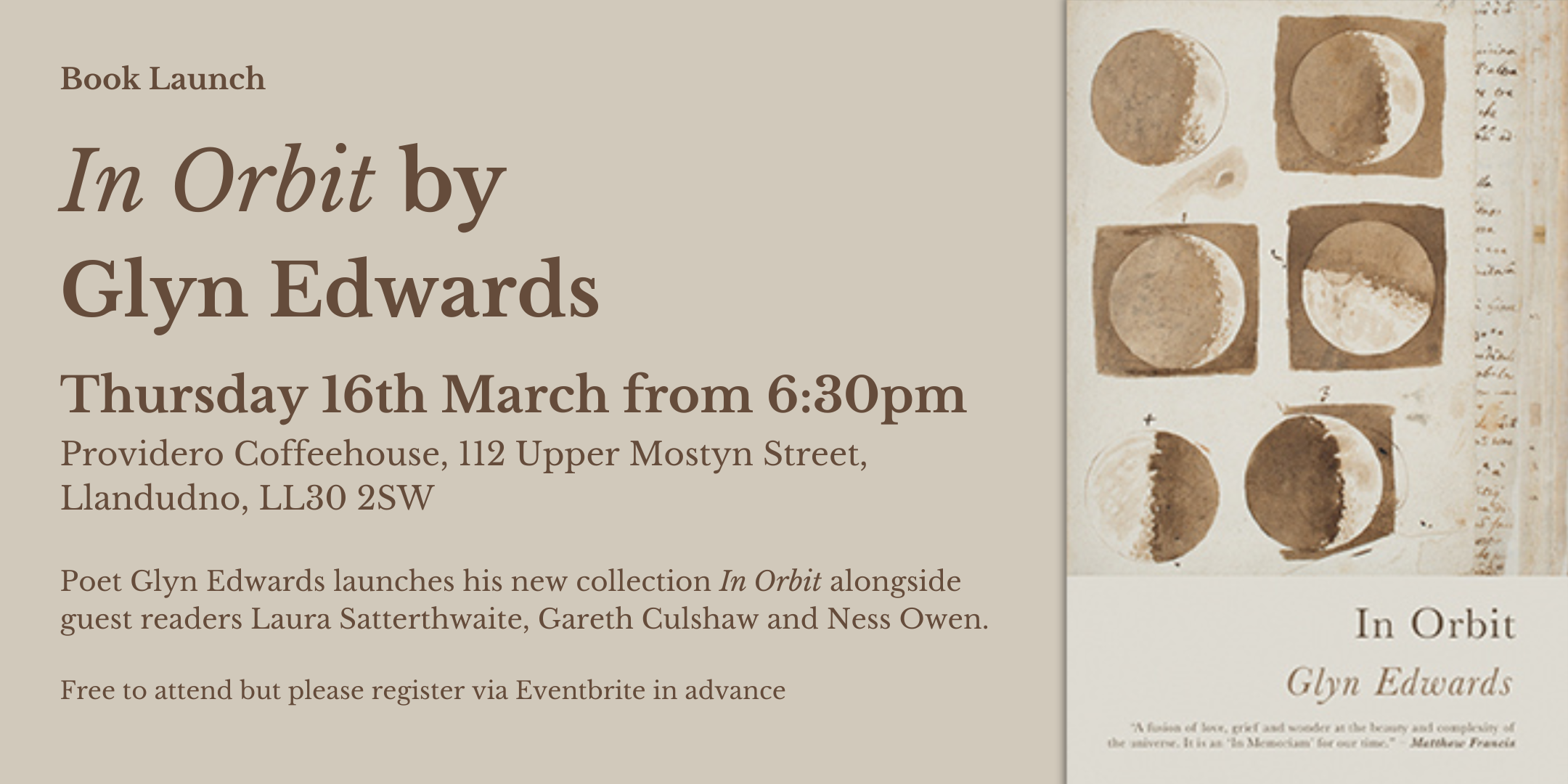
Join us at Providero Coffeehouse in Llandudno on Thursday 16th March for the launch of In Orbit. Register for free here www.eventbrite.co.uk/e/549134123947.
Introduced and edited by Cary Archard, Welsh Retrospective collects poems from the across the career of renowned Welsh writer Dannie Abse. Well-loved poems such as ’Return to Cardiff’ and ’In the Theatre’, sit alongside many previously uncollected poems. Vivid character portraits of Aunt Alice and Cousin Sidney sit next to tributes to poet predecessors, Dylan Thomas and Vernon Watkins. Some poems draw on Jewish writings, others on Welsh language literature. This collection is a fascinating insight into Dannie Abse’s Wales and his versatility as a poet. His Wales was anything but parochial, his poems effortlessly universal. As we approach his centenary in 2023, readers of this collection will once again be struck by Abse’s gift for accepting mortality with wise optimism.
In Homelands, his debut collection, Eric Ngalle Charles draws on his early life raised by the matriarchs of Cameroon, being sent to Moscow by human traffickers, and finding a new home in Wales. Rich in tone, subject and emotion, Charles’ poetry moves between the present and the past, between Africa and Europe, and between despair and hope. It discovers that historical injustices now play out in new forms, and that family tensions are as strong as the love within a family. Despite the difficulties Charles has faced, Homelands contains poems of fondness, warmth and humour and, as he returns to Cameroon to confront old ghosts, forgiveness.
When Miriam fell in love with Padraig life seemed simple. But soon she discovered that love is a treacherous business. Everything changed when she met Daniel. She was taken down an unexpected path which would dictate and dominate the rest of her life.
Spanning three generations of a North Wales family in a Welsh-speaking community, Miriam,Daniel and Me is an absorbing and compelling story of family discord, political turmoil, poetry, jealousy… and football.
The Edge of Cymru is the story of Julie Brominicks’ walk around Wales in the course of a year. As an educator she knew a lot about the country’s natural resources. But as a long established incomer from England and more recent Welsh learner, she wanted to know more about its history, about Wales today, and her place in it.
As her walk unwinds the history of Wales is also unwound, from the twenty-first century back to pre-human times, often viewed through an environmental lens. Brominicksʼ observations of the places and people she meets on her journey make a fascinating alternative travelogue about Wales and the lives its people live. Her writing is lyrical, with engaging and striking coinages and images which carry the reader along too, entertained and informed. A quest of personal discovery, the narrative of The Edge of Cymruis also a refreshingly different way of looking at place, identity, memory and belonging.
A Last Respect – Ed. Glyn Mathias and Daniel G. Williams
A Last Respect celebrates the Roland Mathias Prize, awarded to outstanding poetry books by authors from Wales. It presents a selection of work from all eleven prize-winning books, by Dannie Abse, Tiffany Atkinson, Ruth Bidgood, Ailbhe Darcy, Rhian Edwards, Christine Evans, John Freeman, Philip Gross, Gwyneth Lewis, Robert Minhinnick, and Owen Sheers. It is a who’s who of contemporary poetry which shows the form in good health in Wales.
The fifty-four poems included are wide-ranging in style and subject – relationships, nature, environmental issues, mortality, time, war, Wales, poetry itself, even the minefield of parents’ evenings. They are inventive, experimental, formal, original and, as prize-winners, of the highest quality.
This combination of prizewinning poems and informative commentary makesA Last Respect a must-have book of writing from Wales.
Wales is full of wildlife sites and in Wild Placestelevision naturalist Iolo Williams picks his favourite forty from the many nature reserves scattered around the country. From Cemlyn on Anglesey to the Newport Wetlands, from Stackpole in Pembrokeshire to the Dee Estuary, Williams criss-crosses Wales. His list takes in coastal sites from marshes to towering cliffs – plus Skomer and other islands – mountains, valleys, bogs, meadows, woods and land reclaimed from industry. These wild places vary in size from the vastness of bog at Tregaron to the hidden gem that is the daffodil wood at Coed-y-Bwl. They include sites of international significance, like Skomer Island, and the managed beauty of the former open cast site, Parc Slip.
The short story has long been a popular form with writers and readers in Wales. The Green Bridge collects work by 25 of the country’s foremost writers of the twentieth century in an entertaining and varied anthology. Horror, satire, humour, war, tales of the aristocracy, of navvies, love, and madness, industry the countryside, politics and sport: these stories provide insight into the changing values of Wales and the world. This is enjoyable reading for those who know Wales and its authors, and for newcomers to both.
A city burns in a crisis − because the status quo has collapsed and change must come. Every value, relationship and belief is shaken and the future is uncertain.
In the twenty-six stories in A City Burning, set in Wales, Northern Ireland and Italy, children and adults face, in the flames of personal tragedy, moments of potential transformation. On the threshold of their futures each must make a choice: how to live in this new ‘now’. Some of these moments occur in mundane circumstances, others amidst tragedy or drama.
Over the past two centuries the South Wales Valleys have gone from idyllic rural landscape to the engine room of the British Empire to post industrial decline. Building on the success of their book Walking Cardiff, Peter Finch and John Briggs explore how the Valleys have changed, and how they are evolving for the twenty-first centuries in their new book Walking the Valleys.
The informative texts can be used as both a route finder and a literary entertainment in themselves. John Briggs’s lively photographs provide further detail and each walk is illustrated with a map. Armchair walkers will find the book as interesting and as useful as those actually pull on their boots. And natives and visitors alike will find a new discovery around every corner.
As we publish her new collection Republic, poet Nerys Williams gives us an insight into the music which accompanied its writing.
Listening to Republic
Writing Republic I found that post punk music of the 80s and 90s became key in an attempt to articulate a relationship between community, language and culture. Given the current preponderance of School Disco compilations, initially it might seem that retreating to the music of the 80s and 90s is another variant in communal nostalgia. This is not the intention of Republic. I believe that music carries an energy for future action and desire for change. What you learn over the years changes how you listen to those important early albums. Context shifts meaning.
Republic is an anti-memoir, it came from a need to transcribe the voices of a community (as opposed to a single voice) and a refutation of the easy and often predictable epiphanies of some memoirs. Music has a voice throughout this volume. Music is not a soundtrack or sonic wallpaper. Some of the lyrics I cite are just as beloved to me as Emily Dickinson’s poetry.
The sounds in this discography list are eclectic – moving from SKA, 80s pop, Welsh language electronica and rave to 90s shoegazing, jazz samba and classical minimalism.
I grew up in a part of West Wales which in the early 80s had an ambivalent relationship to the Welsh language. Welsh bilingual education was still an experiment. The 11+ existed to partition kids. English language music culture was king. Crucially Welsh language post punk music gave me a love of language that no primer could ever do.
In the late 1980s Fideo 9 on S4C, with is wonderful presenter Eddie Ladd, pushed boundaries. It was a relief to watch bands with strong female leads like Fiona Owen of Eirin Peryglus and Patricia Morgan from Datblygu performing in videos and asserting a space for non-rock female personas. Before the web, encountering such bands as Datblygy, Anhrefn, Y Cyrff onthe TV and at gigs arranged by Cymdeithas yr. Iaith, felt like finding a community. An outsider Wales which was vibrant and questioning.
The range was broad: moving from the reggae dub of Llwybr Llaethog, the malleable beats of Pop Negatif Wastad and guitar riffs of The Crumblowers to Traddodiad Ofnus’s socialist love letters and Tŷ Gwydr’s dance utopianism. Welsh language music was part of a global community. Datblygu could be cued between Le Mystère Des Voix Bulgares and The Sugarcubes.
Republic offers a full discography. A Spotify playlist accompanies the book giving a sense not only of the period, but also issues that remain. Elfyn Presli’s “Jackboots Maggie Thatcher” and The Specials’ “Ghost Town” have not lost their resonance, or their relevance. There are some bands (especially Welsh bands from the listing above) whose work cannot be located on Spotify. Archive recordings exist on various web platforms (such as Ffarout’s YouTube channel). But I want to stress that Apple Music and Bandcamp offer ways of financially contributing to Welsh bands and labels through subscription downloads.
Writing this, on Welsh language music day 10th February 2023, I am grateful to those 1980s bands who were never able to get any sustainable income from their music, but did it anyhow. I thank those bands who loaded their vans and cars, went cross-country in the cold and rain to visit run down country hotels. I hug those band members who having travelled on B roads, played to drunken audiences. I acknowledge those experimentalists who often faced jeering or apathy. I salute the women who organised gigs and Cymdeithas cells tirelessly. I carry this archive of voices with me (with recent updates).
Nerys Williams
Full Discography (by section number)
8
Elfyn Presli ‘Jackboots Maggie Thatcher’ The First Cuts Are The Deepest (Words of Warning, 1987)
Coldplay A Rush of Blood to the Head (Parlaphone, 2002)
PJ Harvey Let England Shake (Island, 2011)
In her explosive new poetry collection Republic Nerys Williams opens a window on life in rural west Wales during the 1980s and 90s. English and Welsh-language post-punk bands, politics, feminism and family life are thrown together on the page as she questions what makes a republic?
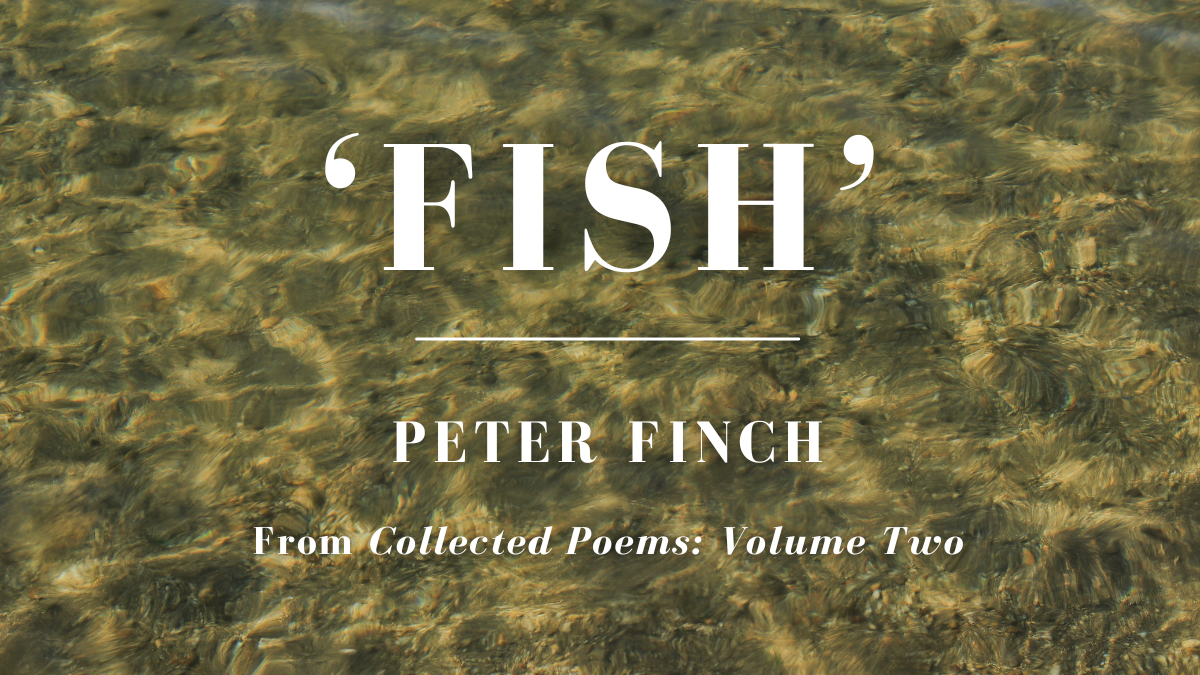
Peter Finch’s remarkable career spans over fifty years. He has been taking poetry to places it didn’t know it wanted to go from the beginning; blending the avant-garde, concrete, visual, sound, performance and more conventional forms to create something unique. His new two-volume Collected Poems, edited by Andrew Taylor, cement his reputation as one of Britain’s leading poets.
Volume One brings together work from long lost chapbooks, broadsheets and limited editions, as well as more conventionally published work. Volume Two focuses on the second half of Finch’s career with poems from later collections sitting alongside works from his prose books and those engraved in the public realm on sculptures, walls and buildings, particularly in his native Cardiff. Nerys Williams and Ian McMillan provide appreciative forewords to each volume.
Order the Collected Poems Complete Set on the Seren website for £30.00, or buy them individually for £19.99 each.
This week’s Friday Poem is ‘The way you knew’ by Alison Binney from her Mslexia award-winning pamphlet Other Women’s Kitchens.
Other Women’s Kitchens is Alison Binney’s debut pamphlet of poems and introduces us to a poet who writes with flair and feeling about coming out and coming of age as a gay woman in 21st century Britain. The collection explores the challenges of discovering and owning a lesbian identity in the 1980s and 1990s and the joy of finding both love and increased confidence in that identity as an adult. An adroit admixture of the heart-wrenching and the humorous, the book features shaped and ‘found’ pieces, traditional narrative and compact prose poems. Beautifully entertaining, pointedly political and often very funny, Other Women’s Kitchens is essential reading.
This week’s Friday Poem is ‘You and I are ghosts in the future’s forest’ by Rhiannon Hooson from her latest collection Goliat.
Goliat is the second collection by Rhiannon Hooson, a follow-up to her Wales Book of the Year shortlisted debut, The Other City. An intelligent and beautiful book, Goliat offers absorbing stories of a precarious world on the brink of climate emergency. Employing startling imagery and a deep sense of history, these poems explore the irreplaceable beauty of a wild world, and the terrible damage that humans might do to each other and the earth.
This week’s Friday Poem is ‘Candlemas’ by Hilary Llewellyn-Williams from her new and selected poems The Little Hours.
The Little Hours: New and Selected Poems is a landmark volume which collects key poems from the career of Hilary Llewellyn-Williams, one of the outstanding poets of her generation in Wales. In addition to the classic sequences ‘The Tree Calendar’ and ‘Book of Shadows’, the book also includes ‘The Little Hours’, a sequence of new work arranged according to the traditional monastic hours. Llewellyn-Williams is one of the earliest environmental poets; her response to nature always profound, passionate and keenly observed. The Little Hours will remind readers of her many strengths and beauties and shows new readers the breadth and talent of a writer whose eye for vivid imagery and startling detail has always astounded.
This week’s Friday Poem is ‘[ correspondence : another year ]’ by Sammy Weaver from her pamphlet Angola, America which won the Mslexia Poetry Pamphlet Competition.
Angola, America, winner of the Mslexia Poetry Pamphlet Competition 2021, takes its name from a prison in Louisiana in the southern United Sates. In these strikingly original, thoroughly contemporary, and deeply moving poems, we are immersed in the world the inmates must endure. From the first poem, when we witness a home-made tattoo and understand that this scarring and incision is a “map in the connective tissue of pain and loss”, we are drawn into this world in a way that is carefully observed and beautifully empathetic.
Create your free Seren account and enjoy 20% off every book you buy direct from us.
Join us online from 7:30pm on Thursday 2nd February to hear Sammy Weaver reading from Angola, America alongside Kathryn Bevis at Seren Virtual First Thursday. Tickets are £2 (plus Eventbrite admin fee).
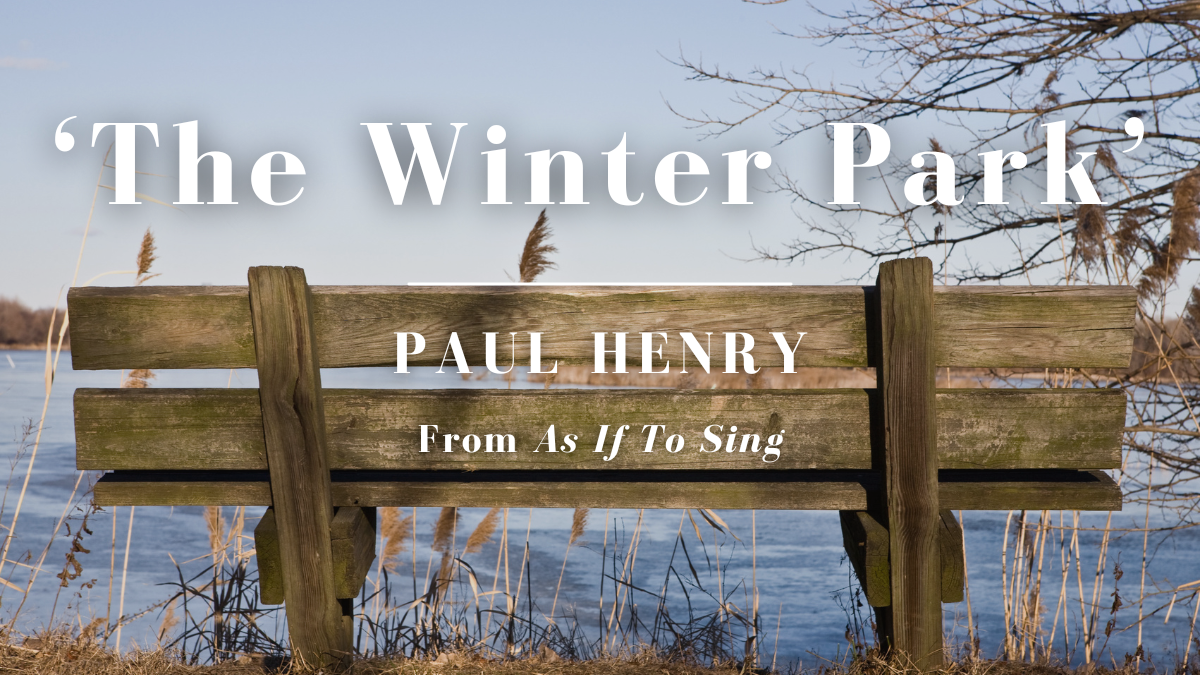
This week’s Friday Poem is ‘The Winter Park’ by Paul Henry from his collection As If To Sing.
The power of song, to sustain the human spirit, resonates through As if to Sing. A trapped caver crawls back through songs to the sea; Welsh soldiers pack their hearts into a song on the eve of battle, ‘for safe-keeping’; a child crossing a bridge sings ‘a song with no beginning or end’… Rich in the musical lyricism admired by readers and fellow poets, As if to Sing is an essential addition to this Paul Henry’s compelling body of work.
“A poet at the top of his game.” – Radio Wales Review Show
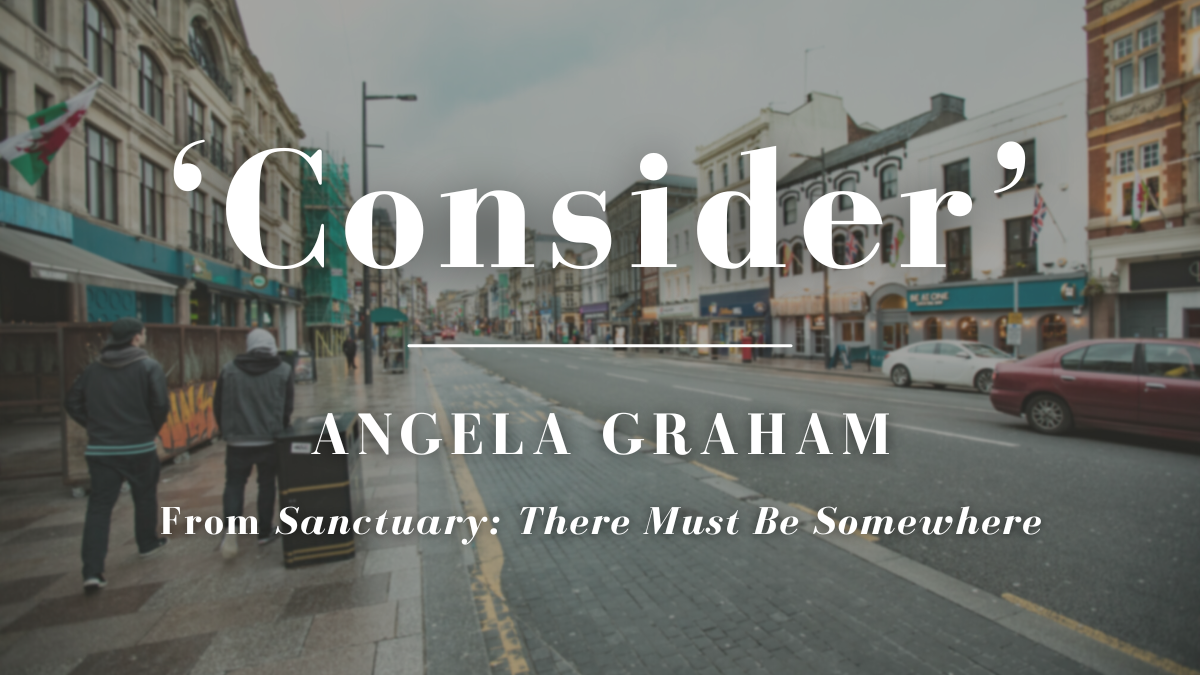
Sanctuary is – urgent. The pandemic has made people crave it; political crises are denying it to millions; the earth is no longer our haven. In Sanctuary: There Must Be Somewhere, Angela Graham and five other writers from Wales and Northern Ireland, addresses the many meanings of sanctuary from the inside. How we can save the earth, ourselves and others? How valid is the concept of a ‘holy’ place these days? Are any values still sacrosanct? We all deserve peace and security but can these be achieved without exploitation?
With Phil Cope, Viviana Fiorentino, Mahyar, Csilla Toldy and Glen Wilson










![[ correspondence : another year ]
the grey static of the dashboard ignites into a ringtone
ignites into a w
oman’s voice pale-polite
as a white picket fence in the still of morning:
hello, this is a free call from ______
an incarcerated individual at louisiana state penitentiary,
this call is not pr
ivate & may be monitored,
you may start the conversation now
& the line ignites into song as you sing to me
happy birthday & because birth is death in reverse
i imag
ine blowing a candle out backwards, sucking
the orange talons into the prison of my lungs,
the w
ax congealing up the wick, the match lying
down in its box, the rush of our bodies diminishing
inside the bodies of our mothers](https://serenbooks.files.wordpress.com/2023/01/screenshot-2023-01-25-at-12.03.25.png)