Posted on

An Interview with Kim Moore

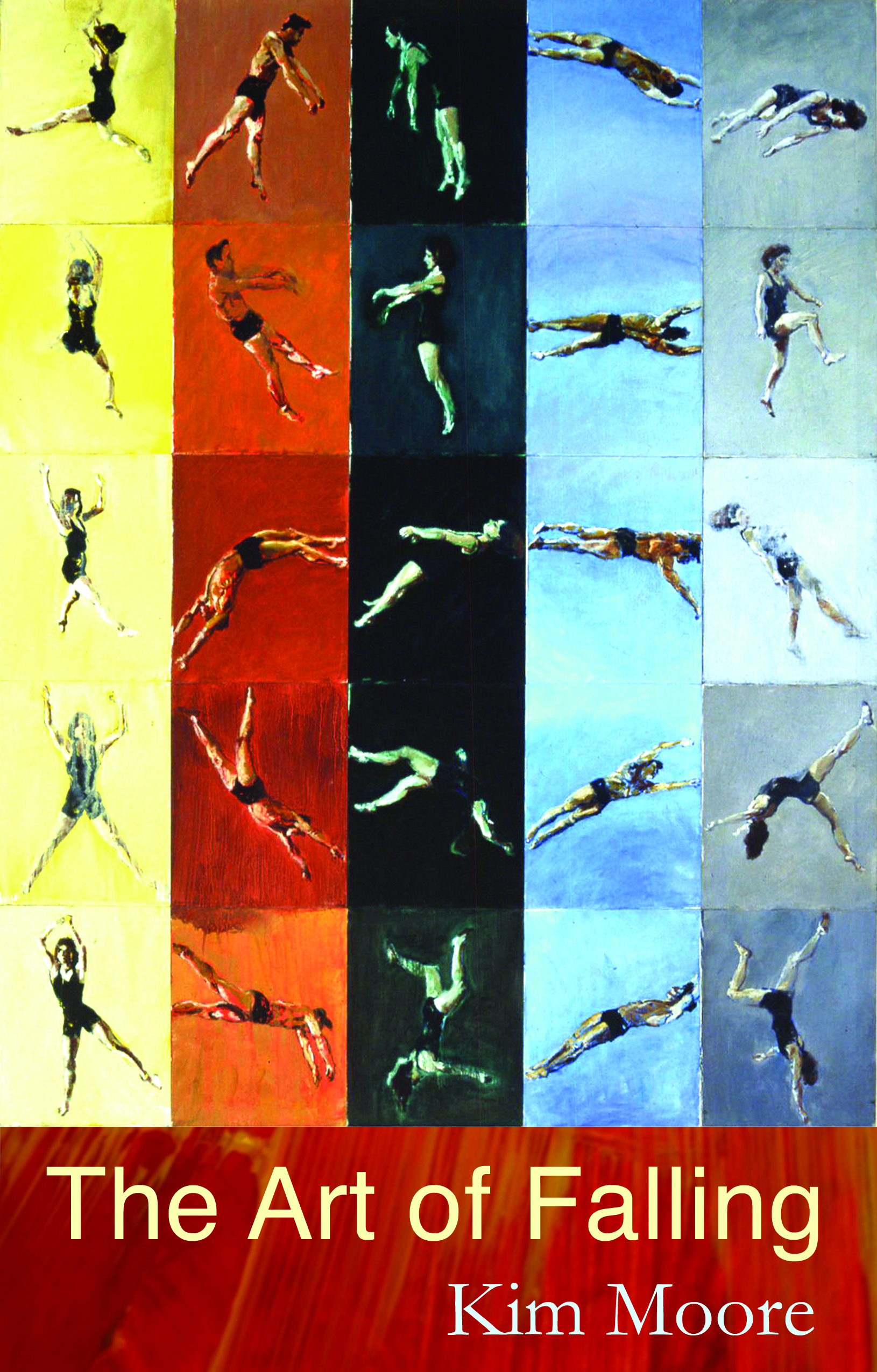
Today we’re talking to poet Kim Moore about her debut collection, The Art of Falling, which you can order from our website here.

Kim Moore lives in Barrow, Cumbria. She has an MA from Manchester Metropolitan University. Her poems have been published in the TLS, Poetry Review, Poetry London, and elsewhere. She regularly appears at festivals and events, her prize-winning pamphlet, If We Could Speak Like Wolves (Smith-Doorstop) was chosen as an Independent Book of the Year in 2012 and was shortlisted for other prizes. Moore won an Eric Gregory Award in 2011 and the Geoffrey Dearmer Prize in 2010. In 2014 she won a Northern Promise award. She writes a thoughtful blog and has a wide social media following. The Art of Falling (Seren 2015) is her debut collection.

Has the idea of falling, be it literally or metaphorically, always fascinated you, or did you find yourself writing about the many ways in which we fall purely for this collection?

The short answer is no, not consciously, but unconsciously. I think the concept of falling must have been something that has always been in the background. My father is a scaffolder and has had two serious falls – once when my twin sister and I were born and then again when I was twenty-one when he fell thirty feet from scaffolding and was lucky to survive. However, I didn’t realise I was writing about falling a lot until I wrote the title poem of the collection – and I only wrote that because David Tait, a good friend and wonderful poet set me a challenge to write a poem about falling. We used to take it in turns to do this – to set each other challenges – I didn’t even think at the time to ask him why, or what type of falling he meant. I actually forgot all about it and didn’t write the poem until six months later but looking back, the seed was definitely planted in that moment. Once I’d written the poem I realised that there were lots of poems about different types of falling throughout the collection – the book was maybe three quarters done by this point, so maybe I was just being very slow on the uptake.

In poems such as ‘My People’ and ‘A Psalm for the Scaffolders’ there’s a real sense of proud, working-class history. Is it fair to say you have a fondness for writing about the ‘every day’ hero?

‘My People’ is one of the poems I feel most guilty about writing because as well as hopefully communicating my pride, love and admiration for the people and background I came from, I’m being quite critical as well. It was an exhilarating poem to write, but it was also quite nerve-wracking. My people are ‘the type of people who would argue with their teacher if the child has detention’. Now I’m a teacher so I see it from both sides, of course. I actually wrote it when my husband started tracing his family tree and got quite far back and I realised I couldn’t. The poem was a way of finding out who my people were.

As for ‘A Psalm for the Scaffolders’ I definitely have a fondness for writing about my poor old dad! I think he likes it though – and to me it is really interesting because his life and the way he has worked, doing the same job since he left school is a way of working that is dying out, I think. I have a lot of admiration for that, for the physical hard graft of doing the same job for forty odd years.

I couldn’t help noticing the recurring animal imagery throughout The Art of Falling. There are plenty of wolves amongst your poems – ‘And the Soul’; ‘If We Could Speak Like Wolves’; ‘How Wolves Change Rivers’ – and also the incredibly powerful poems ‘The Language of Insects’ and ‘When I Was a Thing with Feathers’. In what way do animals help you to explore human nature through your writing?

I have never managed to answer this question about what the wolves mean in my poems, so I will skip over that one. Part of me also wants to duck out of answering it – I don’t really want to know. I like that they wander in and out of my poems when they feel like it though.

Halfway through writing the sequence which makes up the central sequence of this book, I got lost. I couldn’t find a way of saying what I wanted to say. I didn’t want to write a narrative sequence, with a beginning, a middle and an end. I started reading Ovid’s Metamorphoses and that is when everything shifted for me and I was able to carry on writing. The poems have a lot of animals in them, but perhaps more importantly, they have a lot of transformation in them, which was a way I found of writing about violence and the loss of not just identity, but of speech.

You play the trumpet, so I imagine there must be many musicians you admire. What is it about John Lennon and Wallace Hartley that made you want to write about them in particular?

It is actually obsessive people in general that I like writing about – and most musicians are obsessive – you have to be to practice enough to be good.

I actually wrote the John Lennon poem to take part in a competition to write a poem about John Lennon. It is what I call a research poem – I went to the library and read as many books about John Lennon as I could find and then wrote the poem, putting together the things that I read that interested me.

As for Wallace Hartley, I was helping to put together a project as part of my work as a music teacher. I read that he was found with his violin still with him and it was this that made me want to write something about him.

Congratulations on the publication of your debut collection! What are your future plans for your writing?

Thank you! My future plans are pretty simple – just to keep writing, and to always read more than I write. In September, I’ll only be working 2 days as a music teacher so this will hopefully give me a little bit more time. I haven’t written for the last six months – basically since I handed in the final proofs of the book, and then I’ve just started writing again last week, strangely coinciding with the book being delivered. I’ve started writing a few poems about scaffolding and a few poems about running which is my new obsession at the minute so I’m planning on carrying on with those.
Order The Art of Falling from our website.

Posted on

Friday Poem – Edward Hopper on Long Island

Tailor's Three Sons Mara Bergman

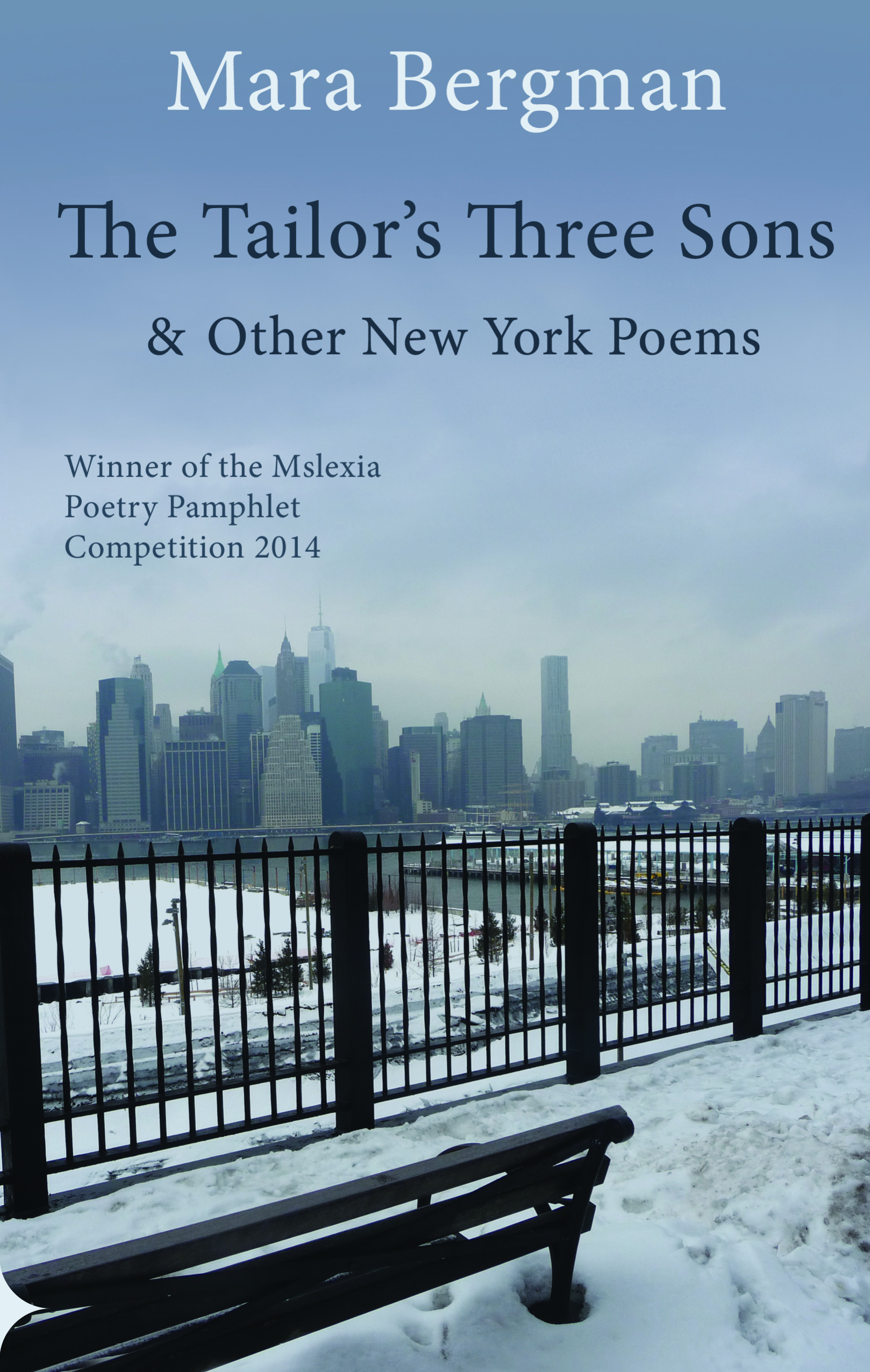
Today’s poem is from Mara Bergman’s pamphlet The Tailor’s Three Sons & Other New York Poems, which won the 2014 Mslexia Women’s Poetry Pamphlet Competition!

The Tailor’s Three Sons & Other New York Poems, the Mslexia magazine prize-winning pamphlet published by Seren, is the fruit of author Mara Bergman’s rich memories of her childhood on Long Island and Manhattan. Now living in the UK, she looks back and assembles an appealing cast of characters for us: a grandmother who lives with precarious memories of war-torn Europe in a ‘railroad apartment’ where passing trains make ‘a whole room shake’; a cousin Sharon who makes a weekly pilgrimage to a nail salon, the bottles of nail varnish, ‘lined up like sweets’. There is the ghost of an uncle, spotted in the likeness of a man on the London-Hastings train. We meet an ‘Englishman in New York’ and experience, along with the author, ‘East 13th Street or How I Met My Husband’.

The title poem is inspired by the author’s visit to the Tenement Museum in New York’s Lower East Side, where Bergman vividly imagines the lives of immigrants when many thousands docked in ships at Ellis Island and the Lower East Side was ‘the most crowded place on the planet’. She envisions the lives of the tailor’s three sons she learns about during a museum tour: ‘afternoons they’d elbow through the teeming streets’, come home to a bowl of soup and share a single sofa for a bed. These poems are written with a great deal of warmth and empathy and with a quietly deceptive casual tone. We can see the author, as a small ‘Girl with a Pen’ entranced by her reading a biography of Charlotte Brontë.

Mara Bergman says: ‘I am fascinated by people and their stories. Having lived in England for many years, I often think, What if… and have tried, in my writing, somehow to meld my life in England with the one I left in New York. Here are poems about people, the process of work and art, and distance, in time and place.’

Edward Hopper on Long Island

He left the neon-lit cafés and deserted stations
for a winter of snow, mounds of it,
steeped on decks through a neighbourhood
where he didn’t know a soul.
He had given up city lights, city life,
to see the sun rise from a corner of a garden,
a flock of geese pummel across clouds.
At last the chance to study the filaments
of a squirrel’s tail, the shock of red cardinal.
He’d go to bed later and later,
wake up earlier until
there was no discernible difference
between darkness and light.
Three a.m., looking out on the snow
when a plane passed over the row of split-
levels, he spotted that thin divide
where streetlight met houselight – light
on the side of a building his favourite thing.
Maybe he wasn’t so far from his life,
maybe it was then he stopped questioning
what he was doing amid the snowlight
and a pale orange glow
over the telephone wire, heat steaming.

Order The Tailor’s Three Sons & Other New York Poems from our website.

Posted on

Why Short Stories Are Worth Reading

In the publishing world, there’s one thing that’s almost always guaranteed: short stories don’t sell. But why?

Short stories are the first stories we’re ever introduced to, they’re our stepping stone into the world of storytelling. Whether they were told around campfires, painted on cave walls or sewn into tapestries, short stories have been passed down throughout the generations for as long as we’ve been able to tell them. From the Brothers Grimm to the Mabinogion to the many voices that make up the 1001 Nights, the short tales and fables our ancestors leave us are some of our first teachers: lessons such as ‘don’t stray off the path’ and ‘slow and steady wins the race’ are the product of short stories, not epic novels.

As adults we don’t need these kinds of stories – or so we might like to tell ourselves – we move on, quite literally, to bigger things, and yet nowhere does it say that short stories are only meant for children. After all, the Grimm’s Fairy Tales were initially meant for everyone, not just younger readers. To tell a story both well and concisely takes real skill, which is one of the many reasons why short story collections are so worth reading. Here at Seren we’ve published several collections, from Mary-Ann Constantine’s haunting All the Souls to Graham Mort’s upcoming Terroir, and they’re an ideal way to get a taste of an author’s style before you dip into their longer fiction.

Short story anthologies can be even better. With the recent publication of New Welsh Short Stories, we released a collection of stories by both new and established Welsh authors such as Jo Mazelis, Robert Minhinnick, and Stevie Davies just to name a few. Anthologies are the perfect way to read widely within one book, to try out new authors or revisit old favourites, meaning there’s always a story for everyone. They might even teach us the odd lesson or two.

By limiting ourselves to novels we miss out not only on some of the world’s most finely crafted fiction, but on the chance to discover new authors we may never have stumbled upon otherwise.

Order New Welsh Short Stories from our website.

Posted on

Friday Poem – Corpus

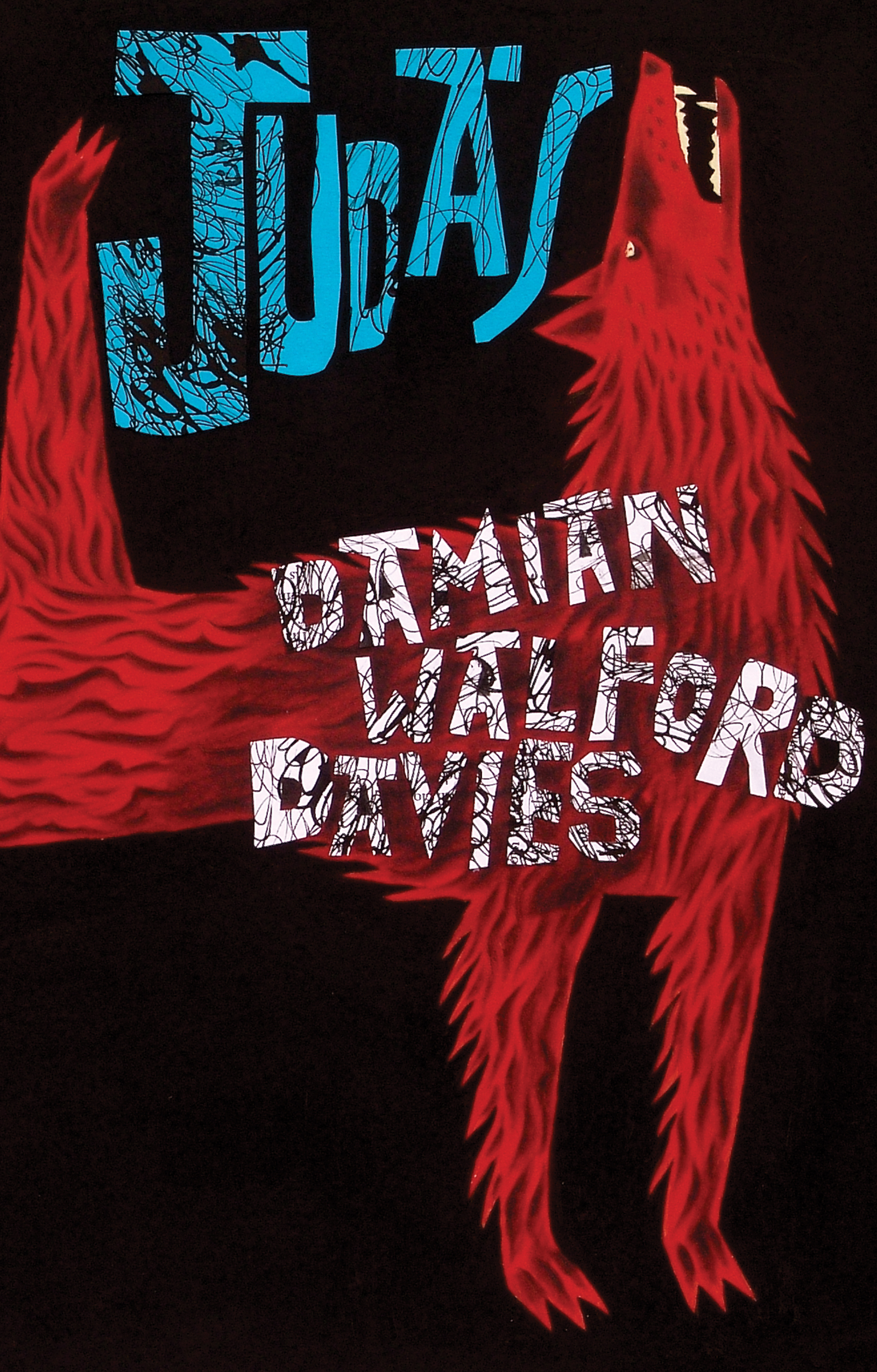
An Easter themed poem  for this week’s installment. ‘Corpus’ comes from Damian Walford Davies’ latest collection, Judas.

A shattered Judas Iscariot – that byword for betrayal – tells his own story in Damian Walford Davies’ compelling and finely wrought new collection from Seren.

We follow Judas over the course of five days as he moves through first-century Jerusalem trying to make sense of the bewildering events surrounding the life and execution of Jesus. But this is a man for whom the future is as real as his anguished and traumatized present, and for whom the Arab-Israeli conflict is as urgent as the tension between the Romans and Jews. Emphasising our compulsion to create, and challenge, gospel truths, Judas gives voice to man caught up in the promise and violence of history.

In short-lined, intensely suggestive dramatic monologues, Damian Walford Davies vividly summons moments of fear and swagger, doubt and passion, despair and nonchalance as an outlaw Judas finds himself haunted by his chequered and extraordinary past. Familiar stories are rendered strange and uncanny as the reader is caught in multiple ironies. As striking as the unnerving images on the news loops of our TV and computer screens, these poems locate us on the hazardous streets of a divided city with a companion-guide who shares with us his own troubling and troubled version of history.

Drawing on conflicting representations of Judas spanning twenty centuries, this chain of poems sets out to challenge orthodoxies and easy pieties. Judas offers an imaginative map of ancient enmities – and dares to hint at resolutions – in the form of a dramatic autobiography of the man whose most famous act (they say) was a kiss in the dark.

Corpus

What can I say? I wasn’t there:
neither ready to relieve him
of the transom’s heft

at Via Dolorosa, Station number five;
nor standing with his mother
on the quarry’s scree

to watch his wrists
spiked expertly
between electric nerve

and bone, and hear him
gurgle, drowning in the liquor
of his lungs. I could have tracked

the trail of blood
from here to where the last gob
hit the ground. The morning

had an air of perfect
commonplace. I howled,
so silently I know he heard.

Order Judas from our website.

Posted on

Recommended Reads this Easter!

There’s no denying that Christmas is a fantastically fun time of year, but a lot of stress, tears and an inordinate amount of planning goes into it – just 1 day out of 365 – meaning we barely get a chance to acknowledge it until the day’s over and done with, and we have to spend January living off what seems like an endless supply of turkey sandwiches.

Easter is a much more mellow holiday; a chance to enjoy a long weekend with a pile of chocolate and celebrate that spring has arrived at last! What better way to spend a weekend like that than with a good book?

judas cover rgbDamian Walford Davies’ latest collection, Judas, is a perfect read for this time of year. No matter your opinion of Judas, we guarantee this collection will both fascinate and horrify you, and by the end of it you may find your perception of the most famous traitor has changed. Check out our interview with Damian here!

If you’d prefer to take a step back from the religious elements of the holiday, perhaps Philip Gross aA Fold in the River_Layout 1nd Valerie Coffin Price’s A Fold in the River would be more to your taste. The arrival of spring brings out the green fingers in everyone, and with their marriage of poetry and paintings dedicated to the landscape around the River Taff this collection is an evocative tribute to our natural world.

Perhaps youseren_-_the_advantages_of_an_older_man‘d prefer to read prose, and if you’re in the mood for something fun and quick to enjoy over the weekend then why not read Gwyneth Lewis’s Advantages of the Older Man? In this light-hearted novella a young Swansea woman finds herself possessed by the restless spirit of Dylan Thomas, who is in the middle of a mid-afterlife crisis himself.

Sugar Hall by Tiffany Murray. £8.99Sugar Hall is the ideal read for you if you’re in the mood for something a little spookier this Easter. Set during the Easter of 1955 on the edge of the English/Welsh border as Britain prepares for its last hanging, Tiffany Murray’s chilling ghost story is inspired by the tales of the slave boy that surround Littledean Hall in Gloucestershire.

You can find all of these books, and many more, on our website. From all of us at Seren, we hope you have a wonderful Easter!

Posted on

Friday Poem – Fireweed

Today’s poem – and painting! – is from A Fold in the River by Philip Gross and Valerie Coffin Price, due to be released at the end of the month.

A Fold in the River is the fruit of collaboration between T.S. Eliot prize-winning poet Philip Gross and the visual artist Valerie Coffin Price. Philip Gross once lived on the banks of the River Taff in Wales and his journals are the source for the powerful poems. Valerie Price revisited the walking route along the river and evolved the beautiful prints and drawings that accompany the poems.

p66-7 Tipsy Pinkrgb

Fireweed

a tipsy pink, a night out
on the palette – mixing

Bloody Marys, lipstick,
a hint of the flare-up to come

*

as kids we played on bombsites,
the badlands of railway lines,

untimely places – back then
there was no such thing as waste

*

always first on the scene,
a bit too soon, after disasters

see us in the background
of the newsreel, inappropriately
dressed

*

one day, all this will be wisps
of white, of seed like grown smoke

forgetting ourselves into the future
wildly, willy-nilly, with a will

Pre-order A Fold in the River from our website.

Posted on

Jeremy Hooker on A Fold in the River

Today we’re sharing with you poet and literary critic Jeremy Hooker’s speech from the exhibition of the upcoming release A Fold in the River, a marriage of visual art and poetry by Philip Gross and Valerie Coffin Price.

This book of words and paintings and this exhibition are works of beauty. Beauty is now a rare concept, and therefore a necessary one. The American photographer, Robert Adams, who is also a lucid and profound thinker about art and life, defines beauty as Form, ‘a synonym for the coherence and structure underlying life’. Beauty is shape, pattern; Adams even describes it as ‘the order in art that mirrors the order in the Creation itself’.

It isn’t to be confused with the neat and tidy. Adams quotes the American poet, A. R. Ammons: ‘the shapes nearest shapelessness awe us most, suggest the god’. That would seem to be especially appropriate to arts whose subject is water. And if we cavil at the idea of ‘order in the Creation’, even in an age familiar with Chaos theory, we may reflect that without water there would be no life on this planet, and we wouldn’t be here to celebrate a poet and a painter, and poems and paintings about a river.

But the River Taff – beautiful? Dai Smith recently described it as our ‘umbilical cord to modernity’ – the river that carried coal and iron, and bore Wales into the modern world. Hence its reputation to those who don’t know it, as a dirty or formerly dirty old river, a rough and rather disreputable one, something that corresponds to the cliché, Taffy. People familiar with the cliché alone, or with the Taff only in its more urban stretches, may snort with disbelief at the idea that it’s beautiful. But what do they know? If it doesn’t have the well-known attractions of Severn or Wye or Usk, if no one ever thought of calling it Sabrina, it is at least free of clichéd notions of beauty. The poet and painter know that it is ‘other thing’, as Philip Gross calls it: something beyond our knowledge. But what there is to know, the particular beauty of it, their words and visual images show.

A Fold in the River is a three-way collaboration, between a poet, a painter and a river. The river has many moods and many voices, which the poet interprets. It is rich in colourful appearances and quick with subtle movements. Valerie Coffin Price represents these beautifully – water colours, and colours of surrounding vegetation: silvers and purples and greens and yellows, flecks of fire-red, a mix of colours we’ve no words for, as water and its reflections exhaust our vocabulary. In some paintings words are carried by the water or emerge from it or drown in it, as the minds of poet and painter converse over the same element.

Al that they show is native to south Wales but has a touch of the exotic appropriate to the magic of the subject, a quality perhaps best seen by artists who themselves have a touch of foreignness. Valerie Coffin Price has followed in the footsteps of ancestors who travelled in far-flung places, as well as being intimate with Welsh river and border landscapes. Philip Gross is as much an English poet as anyone can be who is Cornish and Estonian. And their book has something of an Oriental spirit, combining Tao of the water-course way with the concertina form of Orihon, a book style originating from the Tang dynasty in China and later developed in Japan. One doesn’t need to know this to enjoy the book or exhibition, but effects of folding and looping influence its formal magic, and are manifest in the art work.

Poetry Philip Gross has published since he came to live in Wales suggests that he should be named the water-poet, if John Taylor, in the seventeenth century, hadn’t claimed the title for himself. There is an affinity between Gross’s style and water, especially in a particular quality of play. Here’s an example from ‘A coal pebble’:

: greyish, with a slight glint at one angle, not quite

stone, but oval and wafery, light to the touch.

(Skimmed low, it could walk on the water

almost, right up to that panicky

teeter at the end.)

The writing is based on close observation, often beginning with immediate notations, and develops through image and skilful word choice. It combines the recognisable with the miraculous, as in the image of the skimmed stone almost able to walk on water subsiding with ‘that panicky teeter’, which is a delightful, accurate rendering of something we’ve all seen. As here, Gross works with personifications which suggest an animism harking back to childhood, without reducing the awe-inspiring ‘other’ being of the elemental world.

The movement of the verse is from surface to depth, in this instance from the stone to its prehistory and social and metaphysical meaning through time, as the coal pebble recalls the Deep Navigation mine at Treharris:

A cave-diver

might yet stoop and crawl

through the long sump

dragging his budget of air behind him, half

astronaut, half miner of that worked-out near-

unreachable inner space, peering

into the night of the male

soul, a lamp in his hat.)

A Fold in the River delves deeply into history and geology, from the social present back to the swamps in which coal was laid down. It remembers the cost of industrial history, in which water has played a necessary but also a tragic part, as in the fate of Aberfan.

The poet’s quickness of mind matches the river’s moods and movements, and the painter’s art captures them, so that the Taff flows through the pages and the paintings. The book is instinct with the collaboration of poetic and artistic intelligence. Philip Gross is a profoundly witty poet – witty in the sense of both humour and intelligence, as in this passage about ‘the will of water’ from ‘The Long Game’:

This is what drips

in empty workings,

what leaks from the iron lode,

rust blood … Compared to this, a century

is Basho’s

moment: old

                   pond – frog jumps – sound

         of water … Still, we have our work: to be

reflections

who reflect

on all that throws them,

who catch at the swerves and feints of how

the water plays

the light, the light

the water; who are in the game

of knowledge (as the manager said: not

a matter of life and death …

             more important than that. )

I don’t know of another poet who could round off philosophical reflection as quick-witted as this with the comedy of the football manager’s remark. And as ‘the water plays/the light, the light/the water’ so Valerie Coffin Price’s art-work makes equivalent quick transactions of grave and subtle luminosity.

Much is enfolded in A Fold in the River, including a word of my own:

… AND SUDDENLY FLOOD – the river was a cat, a kitten – slightly feral – now suddenly today, a whiff of tiger.

I say this to Jeremy. He’s been walking up the

hill behind their house. The streams, he says, are bristling.

I’ve no recollection of having said this. The moral could be: if you’re a poet be careful what you say aloud. In fact, it’s a pleasure to have a small part in such a beautiful book.

Paul Kingsnorth in a recent article about English identity expressed the opinion that ‘the antidote’ to ‘global distancing of humanity from the rest of nature is the slow, messy business of getting to know a landscape’. Nowadays this applies equally to Wales, and doesn’t exclude English or Cornish or Estonian settlers. Philip and Zélie Gross made their home on the banks of the river Taff, and lived in that ‘messy landscape’. Valerie Coffin Price too has lived with the river. Philip and Valerie conversed with each other and with the Taff, and Valerie’s paintings have a life corresponding to the river’s colours and movements, and at times incorporate or flow over or with the poet’s words. The result is an art work with Form, a shape in words and visual images, and a beautiful book. For this, the fourth and fifth collaborators, the publisher and the curator of the exhibition, are owed special debts of gratitude.

Pre-order A Fold in the River from our website.

Posted on

Happy Indie Book Day!

Indie-Book-Day-embed

Our Marketing Assistant, Jess, shares her thoughts on why it’s worth supporting our independent publishers.

Today it’s Indie Book Day!

In a world where the big names in publishing are producing bestsellers and you can sit back and wait for an online store to deliver them to your house, why should we support our independent businesses?

The first thing we must remember about publishing is that it’s a business like any other. Businesses succeed when they make money, and they make money by producing products that sell. When something is successful in the publishing world, it appears in everything; would vampires have been everywhere were it not for the commercial success of Twilight? No. Would dystopia have made a comeback were it not for the popularity of The Hunger Games? Definitely not.

This isn’t bad by any means. Publishers will only produce what is selling, and if a particular genre or sub-genre is selling then we can assume that it’s also being read and enjoyed because, ultimately, publishers wouldn’t exist without their readers. However, for the readers out there who aren’t interested in the hype – the readers who don’t like vampires and have enough problems with their own government to worry about anyone else’s – it’s easy to get a little lost when it comes to finding what you want to read next. How are you supposed to find those hidden gems when they’re rarely being talked about?

For the independent publisher, however, the hidden gem is their specialty. The independent publisher can watch the hype, even support it, and then publish books that they believe are worth reading, regardless of whether or not they fit into what’s currently most popular. When you support your independent publisher, what you’re also supporting is individuality. You’re supporting books that might not otherwise get the attention they deserve because they don’t include male leads who sparkle.

I won’t go so far as to say independent publishers are ‘better’, because frankly I think that’s petty, but they are businesses that produce content for the readers out there who want something just a little different. It’s for that reason that I’m proud to work for an independent publisher, and I hope you’re proud to support them.

Happy Indie Book Day!

Posted on

Prepare Yourself for Indie Book Day!

Indie-Book-Day-embed

This Saturday is Indie Book Day – hooray!

What is Indie Book Day?

Indie Book Day is an entire day dedicated to supporting and celebrating our independent publishers and bookstores.

Great! How can I get involved?

Simple! To take part in Indie Book Day all you have to do is visit your local independent bookstore on March 21st and buy yourself a book that has been published by an independent publisher – the genre doesn’t matter! Then post a picture of your new book, its cover, or, even better, you with the book and post it on any social media site of your choice using the hashtag #indiebookday.

So, will you take up the challenge?

Look out for some Seren titles in your local independent bookstore this Saturday. Until then, here are some recommendations to whet your appetite!

my_family_and_other_superheroes_covercosta_quicksand coverMy Family and Other Superheroes introduces a vibrant and unique new voice from Wales. The superheroes in question are a motley crew. Evel Knievel, Sophia Loren, Ian Rush, Marty McFly, a bicycling nun and a recalcitrant hippo – all leap from these pages and jostle for position, alongside valleys mams, dads and bamps, described with great warmth. Other poems focus on the crammed terraces and abandoned high streets where a working-class and Welsh nationalist politics is hammered out. This is a post-industrial valleys upbringing re-imagined through the prism of pop culture and surrealism.

Easter 1955. Sugar Hall by Tiffany Murray. £8.99As Lilia Sugar scrapes the ice from the inside of the windows and the rust from the locks in Sugar Hall, she knows there are pasts she cannot erase. On the very edge of the English/Welsh border, the red gardens of Sugar Hall hold a secret, and as Britain prepares for its last hanging, Lilia and her children must confront a history that has been buried but not forgotten.

Love & Fallout

When Tessa’s best friend organises a surprise TV makeover, Tessa is horrified. It’s the last thing she needs – her business is on the brink of collapse, her marriage is under strain and her daughter is more interested in beauty pageants than student politics. What’s more, the ‘Greenham Common angle’ the TV producers have devised reopens some personal history Tessa has tried to hide away. Then Angela gets in touch, Tessa’s least favourite member of the Greenham gang, and she’s drawn back into her muddy past.

Pascale Petit, FauverieThe Fauverie of this book is the big-cat house in the Jardin des Plantes zoo. But the word also evokes the Fauves, ‘primitive’ painters who used raw colour straight from the tube. Like The Zoo Father, Petit’s acclaimed second collection, this volume has childhood trauma and a dying father at its heart, while Paris takes centre stage – a city savage as the Amazon, haunted by Aramis the black jaguar and a menagerie of wild animals. Transforming childhood horrors to ultimately mourn a lost parent, Fauverie redeems the darker forces of human nature while celebrating the ferocity and grace of endangered species. Five poems fromFauverie won the 2013 Manchester Poetry Prize and the manuscript in progress was awarded an Arts Council England Grant for the Arts.

seren_-_the_advantages_of_an_older_manA light-hearted novella exploring the strange case of a Swansea woman who is apparently possessed by the spirit of Dylan Thomas. Naturally all is not as it seems. The woman, who works in the Dylan Thomas Centre, meets a rather different Dylan from the one she knows by repute, one who doesn’t really fit in with the ghosts of other poets in heaven and is desperate to train himself to join the fitter shades of the long distance runners instead. Her own life, which has been lonely and sad, is completely transformed by the encounter.

Jo Mazelis, SignificanceLucy Swann is trying on a new life. She’s cut and dyed her hair and bought new clothes, but she’s only got as far as a small town in northern France when her flight is violently cut short. When Inspector Vivier and his handsome assistant Sabine Pelat begin their investigation the chance encounters of her last days take on a new significance.
Lucy’s death, like a stone thrown into a pool, sends out far-reaching ripples, altering the lives of people who never knew her as well as those of her loved ones back home.

Posted on

Friday Poem – The Love Songs of Davy Blackrock

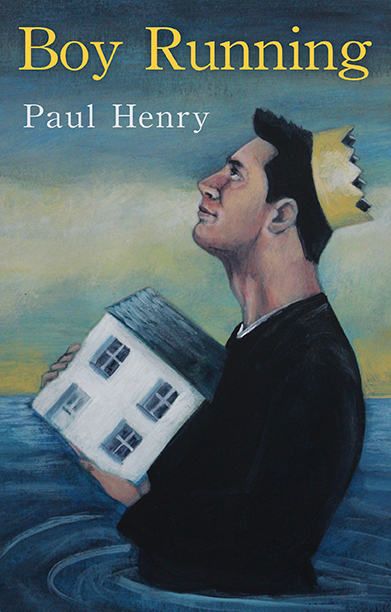
Boy Running, Paul Henry

Today’s poem is from Paul Henry’s latest collection, Boy Running, published last month.

Paul Henry has gained a reputation as one of of the best poets in the UK. Boy Running is his beautiful sixth collection and the first to follow ‘The Brittle Sea: New and Selected Poems’. We begin in a ‘Studio Flat’. Cut adrift by marital break-up, the poet must sort through the emotional fallout and the various ‘chattels’ left behind; a sea of characteristic props: tables, lamps, metronomes, pianos, guitars. The poet’s sons are at the heart of this section where pathos is balanced by humour amidst the characters of a small country town.

A second section moves to the Welsh coastal town of Henry’s childhood, Aberystywth, opening with a long poem, ‘Kicking the Stone’ set in the summer of 1969. Also in this section are some familiar characters from earlier poems such as Brown Helen and Catrin Sands.

In the final sequence we meet ‘Davy Blackrock’: washed-up songwriter and modern day alter ego of Dafydd y Garreg Wen (David of the White Rock), alias David Owen (1720-1749), the blind, 18th century harpist and composer who fell asleep on a hill and dreamt the famous song which bears his name. In contrast to David of the White Rock, Davy Blackrock, ‘star of an ashen town’, drags his guitar from street to hotel to bedsit, an unsettled ghost who dreams of the perfect song.

The Love Songs of Davy Blackrock

  “The songs I had are withered
   Or vanished clean,
   Yet there are bright tracks
   Where I have been,”

                         Ivor Gurney – ‘The Songs I Had’

Few remembered them
but by the end
it was enough
that they’d brought love,
some good friends.
What was ambition
after all but the drum
of rain on a glass room,
a distraction from the moon?

He’d sit late for hours, Davy
in those final days,
inventing new chords
in his conservatory,
oblivious to the news,
worrying less about words
than the melody,
trusting his ear,
not counting the bars

and, between downpours
keeping one eye on the stars.

Paul will be launching Boy Running on 27th March at the bear in Crickhowell. Find out more or book tickets here.

Order Boy Running from our website.