Posted on

Gold for American Sycamore at the Independent Publisher Book Awards

Karen Fielding’s American Sycamore has won Gold in the Mid-Atlantic Best Regional Fiction category of the 2015 Independent Publisher Book Awards.
Digital magazine Independent Publisher have been promoting independent publishers, from self-published authors to university presses, since 1983. For the past 19 years their Independent Publisher Book Awards – the “IPPYs” – have been increasing the recognition of these publishers in the wider publishing world, attracting entries from around 2,000 publishers every year from the US, Canada, and English-speaking countries outside of North America.
Karen’s debut, coming-of-age novel, consisting of madness, death and fishing, can now boast its status as a winner of one of the oldest independent book awards in operation. The reward for such an achievement is publicity; winners of the IPPYs are advertised on Independent Publisher, Publisher Weekly and Shelf Awareness, and are also promoted internationally in a press release sent to over 2,000 publishing industry media outlets and an average of 50 articles.
Two free passes to the IPPY gala, held during BookExpo America in New York City, are given to each winner, meaning Karen, alongside the winners of the other categories, will be celebrating her success in style.

Posted on

Jonathan Edwards Shortlisted for The 2015 Roland Mathias Prize for Poetry

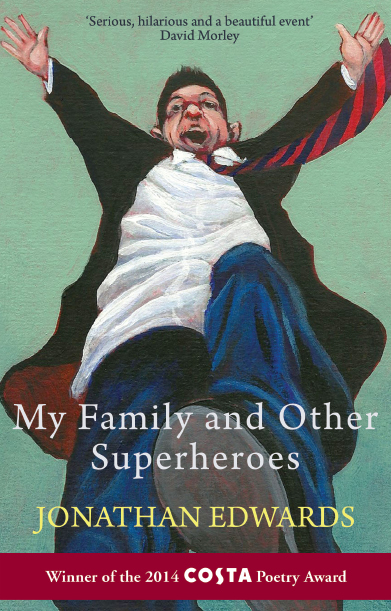
This cover shows a colourful painting of a school boy stomping with excitement viewed as if looking from the ground. The text reads: My Family and Other Superheroes, Jonathan Edwards.

Jonathan Edward’s has been shortlisted for Wales’ top poetry prize: The Roland Mathias Prize for Poetry for his best selling collection, My Family and Other Superheroes.
The Roland Mathias prize for poetry is one of the categories at the Wales Book of the Year awards. Three books are chosen in each of the Poetry, Fiction and Non-Fiction categories in both Welsh and English. The winner of each category will then compete against the other category winners for the overall accolade of book of the year.
The Wales Book of the Year Award is presented annually to a book either written by a writer born or living in Wales or that has a strong connection to Wales and Welsh culture.
Jonathan adds the shortlisting to an already impressive list of accolades. His debut collection, My Family and Other Superheroes, which combines pop culture with familial relationships, has already picked up the Costa Prize for poetry as well as being shortlisted for the Fenton-Aldeburgh Best First Collection.
Jonathan will compete for the £2000 prize against Tiffany Atkinson and Patience Agbabi. If he wins his category, he will be in the running for the overall £6000 Wales Book of the Year award. Previous recipients of the prize include fellow Seren authors Owen Sheers for Pink Mist (2014) and Rhian Edwards for her debut collection Clueless Dogs (2013, Seren).

Posted on

Pascale Petit Shortlisted for 2015 Hippocrates Prize for Poetry and Medicine

Pascale Petit has been shortlisted for the Hippocrates Prize for Poetry and Medicine, in the Open category. The shortlisted poem is entitled ‘In the Giraffe House’ which is from Pascale’s next collection in progress Mama Amazonica. Now in its 5th year, the short-listed entries have been selected from around 1000 entries, from 31 countries by judges poet Rebecca Goss, psychiatrist Professor Femi Oyebode and doctor and writer Theodore Dalrymple. At £5000 first prize in both Open and NHS categories, this is one of the highest value poetry awards in the world for a single poem. The winners will be announced at an International Symposium on Poetry and Medicine at the Medical Society of London on Friday May 22nd 2015. Pascale’s latest collection Fauverie is available from Seren.

Posted on

Friday Poem – Goodbye

Today it’s the 70th anniversary of VE Day, marking 70 years since the end of the Second World War in Europe, and so today’s poem comes from Alun Lewis’s Collected Poems.

Alun Lewis (1915-1944), the remarkable poet and story writer, died, aged 28, in Burma during the Second World War. Some critics see him as the last of the great Romantic poets, a twentieth century Keats. Others view him as the bridge between pre-war poets like Auden and Yeats to post-war poets such as Hughes and Gunn. He was born and raised in Depression-struck south Wales and, following degrees in history at Aberystwyth and Manchester, became a teacher there. Early in 1940, despite his pacifist inclinations he enlisted and, after long periods of training, joined the war in India.

Becoming a soldier galvanised Lewis’s writing. By 1944 he had written two collections of poems and one of short stories, all published to considerable acclaim. Firmly established with Keith Douglas as the leading writer of the Second World War, Lewis’s death in an accident while on active service was a huge loss to English literature. Collected Poems comprises a body of work which has endured and which transcends the label ‘war poetry’; it is complete in itself and full of promise of greater things.

Goodbye

So we must say Goodbye, my darling,
And go, as lovers go, for ever;
Tonight remains, to pack and fix on labels
And make an end of lying down together.

I put a final shilling in the gas,
And watch you slip your dress below your knees
And lie so still I hear your rustling comb
Modulate the autumn in the trees.

And all the countless things I shall remember
Lay mummy-cloths of silence round my head;
I fill the carafe with a drink of water;
You say ‘We paid a guinea for this bed,’

And then, ‘We’ll leave some gas, a little warmth
For the next resident, and these dry flowers,’
And turn your face away, afraid to speak
The big word, that Eternity is ours.

Your kisses close my eyes and yet you stare
As though god struck a child with nameless fears;
Perhaps the water glitters and discloses
Time’s chalice and its limpid useless tears.

Everything we renounce except our selves;
Selfishness is the last of all to go;
Our sighs are exhalations of the earth,
Our footprints leave a track across the snow.

We made the universe to be our home,
Our nostrils took the wind to be our breath,
Our hearts are massive towers of delight,
We stride across the seven seas of death.

Yet when all’s done you’ll keep the emerald
I placed upon your finger in the street;
And I will keep the patches that you sewed
On my old battledress tonight, my sweet.

Order Alun Lewis: Collected Poems from our website.

Posted on

Dear Mr Gove

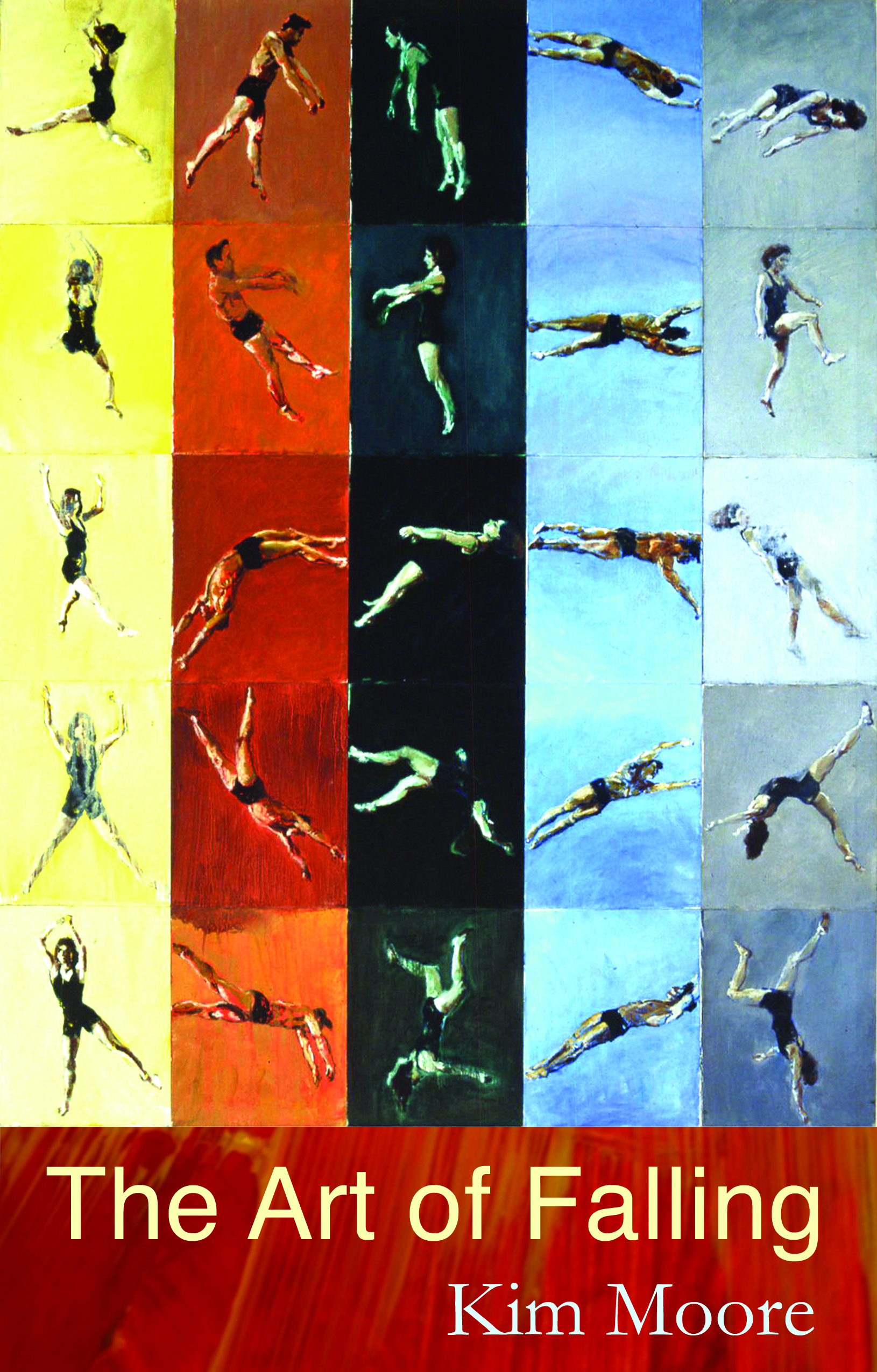
The Art of Falling Kim Moore

A special political poetry broadcast from Kim Moore’s The Art of Falling. Don’t forget to vote in today’s general election. You can listen to Kim read Dear Mr Gove here.

Dear Mr Gove

dear Mr Gove today I taught the children not to sit like bags of small
potatoes in their chairs I taught them how to breathe with their bellies
like babies do when they are sleeping we pretended we were balloons
of different colours filling up with air dear Mr Gove we played long note
beat that we looked up who holds the world record for the longest note
it was a clarinet player who managed to play for one minute and thir–
teen seconds without taking a breath we held our notes as if we were
monks singing a drone in a cathedral where the roof rises like a giant
wing against the sky dear Mr Gove today the whole class played hot
cross buns we talked about the great height of the note E we held thin
blue straws between our lips and some of us went on to play an E
and some of us fell towards a low A with its ledger line hovering above
it and another piercing its poor head dear Mr Gove we are brilliant at
trying some of us know what crotchets and minims are and we will
know this all our lives but some of us still call them black and white
notes we make up sayings to help us read like Elephants Go Bananas
Doing Flips like Electric Green Brains Dance Forever we play the riff
to Eye of the Tiger and sing along in the voices of tigers if tigers had
voices like ours today Mrs Johnson forgot how to play a D and Harry
told her which valves to press I do not know how to measure this Mr
Gove please send help and there is also the problem of Matthew who
cannot read or write too well but who can play Mary Had A Little
Lamb with perfect pitch there is the problem of his smile afterwards
and how we write this down today we watched the muppets singing
Bohemian Rhapsody for no good reason other than that it was fun and
while I am confessing small transgressions last week we watched Mr
Bean play an invisible drum kit the children have been playing an invis–
ible drum kit in the playground dear Mr Gove I did not stop them
today we talked about the muscles in the lip and tongue we did not
know we had control of so many muscles we tried to look like musi–
cians Mr Gove please help us

Posted on

Friday Poem – Street Scene

house of small absences

Today’s poem is from Anne-Marie Fyfe’s latest collection, House of Small Absences, due for release this month.

Anne-Marie Fyfe’s poems have long dwelt on the role that the spaces we inhabit, the places in which we find security, play in our lives: House of Small Absences is an observation window into strange, unsettling spaces—a deserted stage-set, our own personalised ‘museum’, a Piedmont albergo, underground cities, Midtown roof-gardens, convent orchards, houseboats, a foldaway circus, a Romanian sleeper-carriage—the familiar rendered uncanny through the distorting lenses of distance and life’s exigencies, its inevitable lettings-go…

Street Scene

‘Nowhere’ is a setting, a situation and a state of mind.
It’s not on any map, but you know it when you’re there.
– Don George, Tales from Nowhere

When you turn your back on the street
and walk away one block, then two,
the over-familiar street-view’s exposed
as propped-up storefronts and verandahs,
sceneries of wings and facades
that could shudder and collapse
in the whish of the tenderest summer breeze.

The scene’s drained first of Technicolor
and then slips slowly out of focus,
passers-by strutting staccato
into the maze of tram-line junctions
that never make it into town’s gazetteer.

Each new city block takes you further
from the grip of a reality that’s already
packing-up shop behind you, shipping
for storage or the next production.
You’d do best to maintain a brisk walking pace.

Pre-order a copy of House of Small Absences from our website.

Posted on

Revealing the Independent Publishers

Last week we put together some logos of six different independent publishers, some of them British and some of them not, to see if you could identify any of them by their logos alone. Today we’re going to reveal which publishers those logos belong to, and tell you just a little about them!

persephone books

Persephone Books was founded in 1999 by Nicola Beauman, whose original concept was to publish a handful of lost or out-of-print books each year. The majority of these books would be inter-war novels and short stories written by women, and so the name Persephone was chosen as a symbol for female creativity. Though they sell the majority of their books online, they also have a bookshop in London where they are based.

honno_logo

A little earlier, Honno Press was founded by a group of volunteers in 1986 who wanted to increase the opportunities for women in the realms of Welsh publishing. They asked for support from the Welsh public, and in the first 6 months 400 people became shareholders in the company. To this day they still only publish work by the womenof Wales, and have published everything from fiction to poetry to non-fiction. They are based in Aberystwyth.

tpp

Twelfth Planet Press are a little further afield – in Australia, to be exact! Founded in 2009 and based in Yokine, Western Australia, Twelfth Planet Press specialises in speculative fiction, whether it’s Fantasy, Science Fiction, Horror, or any sub genre in between! Their aim is to publish fresh fiction away from the typical work seen in the speculative fiction genre today, as well as to promote Australian fiction to a wider audience and give a louder voice to women writers.

2ravens

A little closer than that, Two Ravens Press is based in Scotland. Founded near Ullapool in 2006, they later moved to the Port of Ness in 2013. Quite possibly the most remote independent publisher in Britain, they publish contemporary literary fiction, non-fiction and poetry, some of which has won a variety of major literary awards.

gomer

Back to Wales now, to a publisher who may be a little more familiar to many of you. Gomer Press was founded back in 1892, and to this day it’s still run by the same family! They specialise in English and Welsh books for both children and adults, whether it’s fiction, non-fiction or poetry, and are based in Llandysul, west Wales.

Mercier

Based in Cork, Mercier Press are Ireland’s oldest independent publishers, having been around since 1944. Mercier rose to prominence publishing books which explored topics such as religion, women’s rights, domestic violence, the sexual revolution and drug abuse, some of which had previously been banned in Ireland. They publish both fiction and non-fiction, and offer an alternative voice to the Irish publishing world.

So, did you guess any correctly?

Posted on

Friday Poem – Finding a Fossil

Today’s poem is from John Ormond’s Collected Poems, edited by Rian Evans and introduced by Patrick McGuinness, which is due to be released next month.

John Ormond (1923-1990) is one of the remarkable generation of poets born in south Wales in the early 1920s which includes Dannie Abse and Leslie Norris. A journalist on Picture Post during its heyday in the 1940s, he was a friend of fellow Swansea writers Dylan Thomas and Vernon Watkins, both of whom were key influences on a poetry of consistently high standards. A significant number of his poems, many of them elegiac, probe his Welsh roots, demonstrating an abiding concern with family and locality. Others focus on particular aspects of the natural world, seeking to capture their elusive quiddities. Stylistically, they vary from the extremely plain to the highly-wrought; are witty and ironic, paradoxical and conceited. Typically unsentimental, shapely and meticulously crafted, his are the poems of a sensibility which delights in explorations, probes complex themes and problematical areas of feeling, and refuses to settle for easy answers.

In addition to his writing Ormond had a distinguished career with BBC Wales as a director and producer of documentary films, which include studies of Welsh painters and writers such as Ceri Richards, Kyffin Williams, Dylan Thomas, Alun Lewis and R.S. Thomas. The insight and visual awareness which mark his films also inform his poetry, a selection of which was published in the Penguin Modern Poets series.

This Collected Poems edited by Rian Evans, draws together all of Ormond’s work, including unpublished material. It includes an Introduction by poet, novelist and critic Patrick McGuinness, notes and commentary of the poems re their geneses, backgrounds, allusions and meanings, and a bibliography of Ormond’s prose writing, films and writing about him. An index of titles and first lines completes this essential book.

Finding a Fossil

Maidenhair fern in flint;
An ancient accident
Shows me time’s imprint.

A leaf preserved and pressed
Between leaves of stone; crossed
Rest and unrest.

An image that grew green
Took ground in the rock grain:
Dark; now light again.

Luck interlaced each line
And dying vein with stone.
They return to the same sun.

The casual life of fronds,
Air and the tongues of friends;
Green begins, grey ends;

Except that remembered shapes
Live, and that at one’s lips
Love speaks as loves lapse.

Graftings (so fused in chance
Among cold stars that dance
Gestures of permanence)

Persist and contrive to invent
From fragment and element
A mindful firmament.

Pre-order a copy of John Ormond’s Collected Poems from our website.
Posted on

How Well Do You Know Your Independent Publishers?

When you go iPrintnto a bookshop and see our signature star on one of the spines, we hope you immediately think of us and know that the book you’re about to pick up has been published by an independent publisher that prizes quality over quantity and individuality over hype.

But how well do you know your independent publishers? If you were given nothing but a logo, could you identify a specific publisher?

Below are the logos of six independent publishers – some of them are British, and some of them are international – how many of them do you know? Leave your guesses in the comments below. You have until next week!

publog1publog2 (1)

Posted on

Friday Poem – A Psalm for the Scaffolders

Today’s poem is from Kim Moore’s debut collection, The Art of Falling. Check out our interview with Kim here.

Kim Moore lives in Barrow, Cumbria. She has an MA from Manchester Metropolitan University. Her poems have been published in the TLS, Poetry Review, Poetry London, and elsewhere. She regularly appears at festivals and events, her prize-winning pamphlet, If We Could Speak Like Wolves (Smith-Doorstop) was chosen as an Independent Book of the Year in 2012 and was shortlisted for other prizes. Moore won an Eric Gregory Award in 2011 and the Geoffrey Dearmer Prize in 2010. In 2014 she won a Northern Promise award. She writes a thoughtful blog and has a wide social media following. The Art of Falling (Seren 2015) is her debut collection.

A Psalm for the Scaffolders

who balanced like tightrope walkers,
who could run up the bracing
faster than you or I could climb
a ladder, who wore red shoes
and worked bare-chested,
who cut their safety vests in half,
a psalm for the scaffolders
and their vans, their steel
toe-capped boots, their coffee mugs,
a psalm for those who learnt
to put up a scaffold standing
on just one board, a psalm
for the scaffolder who could put
a six-inch nail in a piece of wood
with just his palm, a psalm
for those who don’t like rules
or things taking too long, who now
mustn’t go to work uncovered,
who mustn’t cut their safety vests
or climb without ladders, who must
use three boards at all times,
a psalm for the scaffolders
who fall with a harness on,
who have ten minutes to be rescued,
a psalm for the scaffolder who fell
in a clear area, a tube giving way,
that long slow fall, a psalm for him,
who fell thirty feet and survived,
a psalm for the scaffolder
who saw him fall, a psalm for those
at the top of the buildings, the wind whistling
in their ears, the sky in their voices,
for those who lift and carry
and shout and swear, for those
who can recite the lengths of the boards
and tubes like a song, a psalm for them,
the ones who don’t like heights
but spent their whole life hiding it,
a psalm for those who work too long,
a psalm for my father, a psalm for him.

Order The Art of Falling from our website.