For this week’s Friday Poem we have ‘In September’ by John Ormond, from his Collected Poems, edited by Rian Evans. The poem was written for Glenys in celebration of their wedding anniversary, which fell on the 21st September. Since the two were married in 1946, that would have been 70 years ago.
Penned late on the night of the 20th of September, probably 1970, because he’d forgotten to buy a card, it was deemed by them both to be infinitely preferable. Memories of key moments in their courtship are woven into the lines, while the storm door was the big black outer door of their home in Conway Road. The poem appeared in various anthologies: one which pleased Ormond was the Almanacco internazionale dei Poeti 1975 (La Pergola Edizioni) containing the Italian translation ‘In Settembre’ by the eminent translator, poet and critic Roberto Sanesi.
In September
Again the golden month, still
Favourite, is renewed;
Once more I’d wind it in a ring
About your finger, pledge myself
Again, my love, my shelter,
My good roof over me,
My strong wall against winter.
Be bread upon my table still
And red wine in my glass; be fire
Upon my hearth. Continue,
My true storm door, continue
To be sweet lock to my key;
Be wife to me, remain
The soft silk on my bed.
Be morning to my pillow,
Multiply my joy. Be my rare coin
For counting, my luck, my
Granary, my promising fair
Sky, my star, the meaning
Of my journey. Be, this year too,
My twelve months long desire.
John Ormond: Collected Poems draws together all of Ormond’s work, including unpublished material. It includes notes and commentary of the poems, and a bibliography of Ormond’s prose writing, films and writing about him. An index of titles and first lines completes this essential book.
From the Fortunate Isles, published in celebration of the author’s 70th year, features poems from ten of Curtis’ published collections as well as a substantial number of new poems. This is a poet whose themes and variations remain consistent: a profound interest in the wars of the last century, an abiding fascination for all art forms, particularly painting and poetry, tender attachments to family, and (most evident in the poem below), a deep affection for his roots in West Wales.
A Pembrokeshire Artist John Knapp Fisher (1931 -2015)
An evening with the rain coming in,
that sea so cold and unsettled, a heavy graphite,
you’d not have gone out with your mackerel lines
in the Viking or any of her successors
from the stone-brick embrace of Porthgain.
We’ve eaten our fill at your wake, John,
the Sloop Inn squeezed tight
with suits, black ties and memories.
Wives, patrons, grandchildren.
Photos of you through all seven ages on the screen.
Inland to Wolf ’s Castle and as far south as the cathedral
the farms, haggards and holiday lets
shrug down for the cold night.
You’d have worked to conjure the reluctant light
discovered in them under this empting, moonless sky.
And the first scurp coming would have dabbed
your paper, blossomed and been coaxed,
smudged, into the finished sketch.
Now the county will have to sing its own spirit,
compose its own shape, keep its own watch.
If you would like to listen to Tony read from his forthcoming collection and other books in his native Pembrokeshire, don’t miss his event at the Llangwm Literary Festival, Saturday 12th August. More details here.
Today marks the start of the National Eisteddfod, this year in Abergavenny, and our Friday Poem talks of an area just a few miles north – Ysgyryd Fawr, or The Skirrid. The poem is taken from Abergavenny poet Owen Sheers’ second collection, Skirrid Hill.
Ideas of separation and divorce are important in Owen Sheers’ eagerly-awaited follow up to his acclaimed debut collection The Blue Book. The geographical divides of borders, the separation of the dead and the living, the movement from childhood to adulthood, the ending of relationships. Such divides are both moments of ‘mark-making’ and moments of absence. In this collection it is often the awareness of such separation – past or impending – and the juxtaposition of these diverse states – that provides the friction from which the poems are born.
Skirrid Fawr
Just like the farmers who once came to scoop
handfuls of soil from her holy scar,
so I am still drawn to her back for the answers
to every question I have never known.
To the sentence of her slopes,
the blunt wind glancing from her withers,
to the split view she reveals
with every step along her broken spine.
This edge of her cleft palate,
part hill, part field,
rising from a low mist, a lonely hulk
adrift through Wales.
Her east-west flanks, one dark, one sunlit,
her vernacular of borders.
Her weight, the unspoken words
of an unlearned tongue.
The winners of the Poetry, Non-Fiction and Fiction Categories, and the overall Wales Book of the Year Winner, will be announced in just two weeks. Seren have two titles in the running for the awards, and before we find out the results, we thought you might enjoy reading an extract from each of our nominated books. Look below and you’ll find an extract fromBoy Runningby Paul Henry (shortlisted for the Open University in Wales Creative Non-Fiction Award).
Studio Flat
Socks hang like bats from a skylight.
They may be dry in time for the moon.
The camp site owner’s water-feature
drains more blood from the sun.
Cars queue for the narrow bridge.
Birds catch their pulses and fly.
I am suddenly old. What’s an attic
but a bungalow in the sky.
And where are you, my sons?
I heard your voices in the bells
of snowdrops pulled by the wind.
These tulips have lost their smell.
Perhaps I could tell you, one day
where the snowdrops went, why old men
dry their socks on the moon, and what
darkened the skylight, just then.
Ring
I can’t get the ring out of my finger. How long till it disappears this ghost ring, twenty years deep? I’m branded. Is it the same with you? Your fingers were slenderer than mine.
We hope you enjoyed reading this free extract fromBoy Runningby Paul Henry. Keep an eye on the Seren blog, as we will be announcing the Wales Book of the Year Awards results in just over two weeks time.
About Boy Running: Paul Henry has gained a reputation as one of of the best poets in the UK. Boy Running is his beautiful sixth collection and the first to follow The Brittle Sea: New and Selected Poems. Also a singer-songwriter, Henry is known for his precise lyricism, intimate tone and a cast of characters inspired (like Dylan Thomas) by his childhood by the sea in Aberystwyth, West Wales.
On this day, one of the best-known English-language poets of the Second World War came into the world. Alun Lewis was born on 1 July 1915 in Cwmaman, Wales.
A year later, on 1 July 1916, the British Army would see its bloodiest day as The Battle of the Somme commenced, and over 57,000 British Soldiers became casualties on the first day alone.
Our Friday Poem this week is both in celebration of Alun Lewis’ birth, and in remembrance of all those who fought and died on the Somme.
Alun Lewis Some critics see Lewis as the last of the great Romantic poets, a twentieth century Keats. Others view him as the bridge between pre-war poets like Auden and Yeats to post-war poets such as Hughes and Gunn. He was born and raised in Depression-struck south Wales and, following degrees in history at Aberystwyth and Manchester, became a teacher there. Early in 1940, despite his pacifist inclinations he enlisted and, after long periods of training, joined the war in India.
‘All Day It Has Rained’ was written whilst Lewis was stationed with the Royal Engineers at Longmoor, Hampshire. It is among the poems featured in Alun Lewis: Collected Poems.
All Day It Has Rained
All day it has rained, and we on the edge of the moors
Have sprawled in our bell-tents, moody and dull as boors,
Groundsheets and blankets spread on the muddy ground
And from the first grey wakening we have found
No refuge from the skirmishing fine rain
And the wind that made the canvas heave and flap
And the taut wet guy-ropes ravel out and snap.
All day the rain has glided, wave and mist and dream,
Drenching the gorse and heather, a gossamer stream
Too light to stir the acorns that suddenly
Snatched from their cups by the wild south-westerly
Pattered against the tent and our upturned dreaming faces.
And we stretched out, unbuttoning our braces,
Smoking a Woodbine, darning dirty socks,
Reading the Sunday papers – I saw a fox
And mentioned it in the note I scribbled home; –
And we talked of girls and dropping bombs on Rome,
And thought of the quiet dead and the loud celebrities
Exhorting us to slaughter, and the herded refugees:
Yet thought softly, morosely of them, and as indifferently
As of ourselves or those whom we
For years have loved, and will again
Tomorrow maybe love; but now it is the rain
Possesses us entirely, the twilight and the rain.
And I can remember nothing dearer or more to my heart
Than the children I watched in the woods on Saturday
Shaking down burning chestnuts for the schoolyard’s merry play,
Or the shaggy patient dog who followed me
By Sheet and Steep and up the wooded scree
To the Shoulder o’ Mutton where Edward Thomas brooded long
On death and beauty – till a bullet stopped his song.
Want to see more Alun Lewis titles? Take a look at our website for biographies, short stories, poetry, and Lewis’ previously unpublished 1930’s novel, Morlais.
The coming months will see the commemoration of one of the most notorious battles in history. The Battle of the Somme, fought between July 1st and November 18th 1916, has left an indelible mark on the history of the twentieth century and, for Britain in particular, it symbolises the horrors of modern warfare.
One hundred and forty one days of horror. The casualties are well documented: the first day alone saw 57,470 British casualties, 19,240 of whom were killed. The second day, with 30,000 British casualties, was not much better. Add to that the French and German losses and you have total losses of dead and injured easily exceeding 1,000,000.
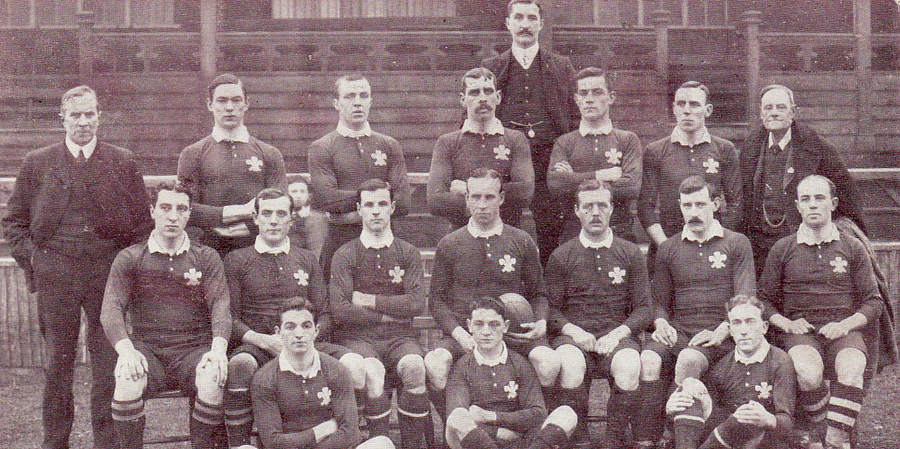
It was inevitable that many British sportsmen would be among the dead. Heart of Midlothian, Scotland’s table topping football team, lost 3 players on the first day while English cricket saw 3 notable all-rounders, Booth, Jeeves and Burns make the ultimate sacrifice. Welsh goalkeeper Leigh Roose, English footballers Evelyn Lintott and Donald Bell VC and England rugby captain Lance Slocock met the same fate. But what of Welsh rugby? What sacrifices were made by this small nation, a nation which was just at the close of its first rugby ‘Golden Era’? The answer is stark. The total number of Welsh rugby internationals to die as a result of the Great War was 13, 14 if one includes ‘Hop’ Maddock who died in December 1921 as a result of illness which had its roots in the battlefields of the Somme. No less than 5 of these unlucky and brave young men met their death on the Somme.
Charles Meyrick Pritchard
The first to appear in Mike Rees’ book, Men Who Played the Game: Sportsmen who gave their life in the Great War, is a true man of Newport, Charles Meyrick Pritchard. Charlie was the son of John Pritchard, a founder member of the Newport Rugby Club and part of a family that ran a wine and spirit business. Following an education at Newport Intermediate School and Long Ashton, Bristol, Charlie joined Newport RFC and by 1904 this twenty two year old, thirteen stone, six foot tall version of the modern backrow forward was in the Welsh team. A year later he was taking his place on the field to decide the unofficial championship of the world. The New Zealand All Blacks arrived in Cardiff unbeaten to be challenged by a strong Welsh team and Charlie was to play a huge part in what many regard as the most important match in rugby history. Wales deservedly won a thrilling, controversial match 3-0 but, although it was Teddy Morgan who scored the try, Charlie was the inspiration. Fellow players had no doubt in telling anybody who was not too excited to listen that Charlie had played a key role, “knocking ‘em down like ninepins” according to George Travers, a fellow hero and club colleague. Others talked of his willingness to be in the thick of the fight, disrupting the hitherto invincible All Blacks with his devastating tackling. Following this victory Charlie’s fame was assured but his career didn’t end there. In 1906 he was made captain of Newport, a position that he held for 3 years. On the international field he won a further 10 caps, (14 in all), a figure that would have been higher but for injury. He played in the championship winning Wales team of 1906 and in the first Grand Slam success in 1908. After missing out on a second Grand Slam in 1909, Charlie played his last game for Wales in 1910.
With the outbreak of war Charlie was quick to enlist. He joined the South Wales Borderers as a temporary Second Lieutenant in May 1915, was promoted to lieutenant at the end of July and was made a captain in the 12th Battalion the following October. Following a period of training, Charlie arrived on the Western Front in June 1916 in time for the Somme offensive and was quickly into the action. He and his men had been forced to take cover in the long grass from their own bombs and struggled to avoid the German searchlights. On the night of 12th/13th August Charlie was instructed to lead a raiding party on the German trenches with a view to taking as many prisoners as possible. He led his men into the trenches showing exceptional bravery in the process and, despite being wounded in the wrist, continued to encourage and lead his men in what was to prove to be a successful raid. He took one of the enemy prisoner but was wounded once again, taken back to the British front line and then to No1 Casualty Clearing Station shortly before dawn on the wet morning of August 13th. Here his concern for the success of the raid and his devotion to duty came to the fore asking, “Have they got the Hun?” “Yes” he was told, “Well I have done my bit,” Charlie replied, the last words that he was known to speak. He died, without ever leaving the Clearing Station, on August 14th 1916.
His commanding officer, Lieutenant Colonel Alexander, wrote to the family describing Charlie as being “as brave as a lion” and talking about how his death had “cast a gloom” over the whole Battalion. Others spoke of the deep affection in which he was held, the fine example that he set as to what a sportsman should be and his “private tenderness” who was “loved by all who came into contact with him”. Attempts to grant him the Distinguished Order failed, as only living soldiers were eligible, although he was given a Mention in Dispatches. Charlie was buried in Choeques Military Cemetery, one of 86 members of Newport Athletic Club who lost their lives in The Great War and remembered on the Memorial Gates at Rodney Parade. The thirty two year old left in Llwynderi Road, Newport, a grieving widow with two young children and the legacy of a true Welsh rugby hero.
John Lewis Williams
A second significant Welsh rugby player with Newport connections had already died on the Somme. John Lewis Williams is quite properly remembered as a prolific wing for both Cardiff and Wales, the most capped Welsh international to die in the conflict. However Johnnie Williams began his career at Newport in 1899 after leaving Cowbridge Grammar School. Born in Whitchurch in March 1882, Johnnie had an illustrious rugby career. After winning his first cap against the 1906 Springboks he went on to score a record seventeen tries in seventeen internationals, a record that was later equalled by Ken Jones and beaten by both Gerald Davies and Gareth Edwards in 1976. Illustrious company indeed! Noted for his swerve and sidestep, Johnnie was an integral part of three Wales Grand Slam winning teams in 1908, 1909 and 1911, one of the handful of Welsh players to achieve such a feat. Unsurprisingly, Johnnie also toured with the British Isles team which visited Australia and New Zealand in the summer of 1908 where he played in two of the three tests, scoring twelve tries on the trip. While making the long sea journey to the Southern Hemisphere, Johnnie earned himself a supplement to his two shillings a day out of pocket expenses by writing articles for the South Wales Daily News and the South Wales Echo. A well-educated man who earned his living as a principal clerk in a coal exporters based in Cardiff Coal Exchange, Johnnie was given the captaincy of his country for the game against France in Paris in 1911 due to his ability to speak French at the post match dinner. A couple of weeks later he played his seventeenth and final match for Wales in the victory over Ireland. His record was impressive with only two defeats in his Wales international career.
On the outbreak of war Johnnie joined the 16th Battalion of the Royal Welch Regiment and was, by July 1916, in the thick of the action on the Somme, in particular at Mametz Wood, a place synonymous with the Welsh losses in the Great War. The action which took place at Mametz between 7th and 12th July 1916 saw the 16th Royal Welch and the 11th South Wales Borderers suffer the most appalling losses. Johnnie went over the top on 7th July but heavy machine gun fire cut them down. Johnnie was severely wounded and his left leg was amputated. Infection set in and, although he was able to write to his wife Mabel that he was in good spirits, Johnnie died of wounds on 12th July. He was one of 190 officers and 3,803 other ranks who were casualties at Mametz. He had fought in distinguished company – the poets Siegfried Sassoon, Robert Graves and David Jones as well as the writers Frank Richards and Llewellyn Wyn Griffith all fought at Mametz but, unlike Johnnie, they survived to commit their experiences to paper. Johnnie was not so lucky. He left his wife of a mere eighteen months a widow in their Penarth home. His reputation as one of the great Welsh wings, however, remains firmly intact.
Dick Thomas
Alongside Johnnie, another Welsh international rugby player also made the supreme sacrifice. Born in Ferndale in October 1883, Dick Thomas had spent his early years working underground as a collier before joining the police force based in Mountain Ash. Dick, by now playing for Mountain Ash after short spells with Penygraig and Cardiff, had made his debut for Wales in the same game as Johnnie made his international bow. Although on the losing side against South Africa, Dick went on to win three more caps and contributed to victories in each of the 1908 and 1909 Grand Slam seasons. Only illness prevented him from winning more caps and possibly becoming a regular in the Welsh pack of this ‘Golden Era’. Dick was known as a tough uncompromising forward, who was also a Glamorgan Police heavyweight boxing champion. Never one to shirk a challenge, he went over the top on 7th July. His body was never found and he is remembered on the Thiepval Memorial, one of the 72,195 names on that ‘memorial to the missing’.
David ‘Dai’ Watts
Dick Thomas is not the only Welsh international named on the Thiepval Memorial. One week after Dick was lost and just three days after Johnnie Williams succumbed to his wounds, Dai Watts, a tough forward born in Maesteg in March 1886, was killed in action at Bazentin Ridge on 14th July. After a career spent playing for smaller valley clubs, Dai joined his hometown club, Maesteg where he became the first player from this club to be capped. Following impressive games for the Glamorgan League and then Glamorgan County, Dai was picked for the first international of 1914 against England. Wales lost this game 10-9, a match they should have won due to the supremacy of their forwards. England went on to win the Grand Slam under the captaincy of Ronnie Poulton, the glamorous young England centre who was killed in 1915, while the Welsh pack remained unchanged for their three subsequent victories and cement their reputation as ‘The Terrible Eight’. A long rugby career at international level appeared to be Dai’s destiny.
It was not to be. In the autumn of 1914 Dai joined the 7th (Service) Battalion, The King’s (Shropshire Light Infantry). In July 1916 they were involved in the Battle of Bazentin Bridge. At 3.25am on 14th July the KSLI were ordered to attack. Confronted by uncut wire they became easy targets and Dai was one of the 171 who lost their lives in this attack. There are no records of how this toughest of forwards met his end, only that his body was never recovered and that he left a widow and two children.
The third and final Welsh international named on the Thiepval Memorial is a player of a very different type to the tough, uncompromising miners, the forwards Dick Thomas and Dai Watts. Horace Wyndham Thomas was an outside half educated at Monmouth School and Cambridge University where he was a choral scholar. Born in Pentyrch near Cardiff in 1890, he originally attended Bridgend Grammar School before winning a scholarship at Monmouth. Both at Monmouth and Cambridge Wyndham excelled in a range of sports. Injury and choral duties prevented him gaining his ‘Blue’ but he finally achieved this in 1912 when he played his part in a Cambridge victory. Four days later this brilliant and elusive outside half made his debut for Wales in the match against the Springboks, a game which he nearly won for Wales with a late drop goal attempt which sailed narrowly wide. Many who saw this effort were adamant that the ball had actually gone through the posts and that Wales were ‘robbed’. He kept his place for the game against England a few weeks later but, although he played in this match, Wyndham had been offered a job with a firm of shipping agents in Calcutta. Immediately after the game Wyndham sailed to India to fulfil a five year contract, a huge loss to Welsh rugby. It was expected that Wyndham would be the Welsh outside half for years to come.
When war broke out Wyndham resigned his job and headed home to join the 14th (Reserve) Rifle Brigade. In August he was to be found on the Somme and on 3rd September he was attempting to capture trenches above the Ancre. The assault resulted in over 400 casualties, one of whom was Second Lieutenant Horace Wyndham Thomas. His body was never found and his name joined those fellow players on the Thiepval Memorial. Of all the Welsh internationals killed in the Great War perhaps Wyndham Thomas was the player whose potential was greatest and unfulfilled. Lost to rugby far too soon, Wyndham, with all his brilliance and talent, perfectly represents the sacrifices made by that generation of rugby players one hundred years ago.
The stories of these players, (with the exception of Dai Watts), are included in Men Who Played the Game. Mike Rees has included the contributions of sportsmen in The Great War from all corners of Britain and the wider Empire but, during this summer of 2016, none of the stories have greater significance than those of the Welsh rugby heroes on the Somme. It is fitting that we now remember their sacrifice made a century ago.
The winners of the Poetry, Non-Fiction and Fiction Categories, and the overall Wales Book of the Year Winner, will be announced in just under a month. Seren have two titles in the running for the awards, and before we find out the results, we thought you might enjoy reading an extract from each of our nominated books. Look below and you’ll find an extract fromLosing Israelby Jasmine Donahaye (shortlisted for the Open University in Wales Creative Non-Fiction Award).
1 – Motherland
It is the year of clogs and flared skirts, of shiny striped shirts with big collars, the year the PLO infiltrates by boat on the coast north of Tel Aviv and takes a bus-load of passengers hostage. It is spring, 1978 and I am ten years old. Security at El Al Airlines is high. I know the names Abu Nidal and Abu Jihad and Leila Khaled – Leila Khaled, that woman who is somehow not really a woman, but a terrorist.
Israel is an impression of barbed wire and rusting yellow warning signs on the beaches, the scent of orange blossom and the stink of sewage, hot nights and ruins – and a huge sprawling network of strangers who are relatives. It is my mother’s first return home after fifteen years of self-imposed exile, and it opens in me a wound I can never heal – a longing to come home to a place that can’t be home.
Now whenever I return, it is the long straight road through the valley to the kibbutz that catches at me – after Afula, that dusty way-station; after the last turnings, where it straightens out into the old Roman road that runs through the Jezreel Valley or the Plain of Esdraelon or Marj Ibn Amer, depending on your political orientation, or language, or biblical inclination. ‘The Ruler Road’ my mother called it, that first time we went back in 1978. The mass of Mount Gilboa rises on your right, and far off in the distance there’s a shimmering above the road where the border lies, some twenty kilometres away. Beyond it rise the Jordanian mountains, the mountains of Gilad or Gilead, after which my grand-father Yair named himself and my family – Hagiladi, a man of that place. On either side of the road stretch the fishponds, where you can see white-fronted blue and chestnut Smyrna kingfishers, and pied kingfishers and black-winged stilts; and then, looming up under Gilboa, the complex of the prison moves into sight, watchtowers and barbed wire topping the long external wall, which runs alongside the dusty road. A short distance beyond the prison a trilingual green metal sign points out the left turning to the kibbutz.
Through every return, the kibbutz lies like a magnet at the centre, exerting a force that pulls each journey into a curve inward to its core. Even now, after I have learned its other story, it exerts its pull. This is where my mother is from, and so I have always felt that this is in some way where I am from, too. No matter what I learn about its history, what I feel about its government’s acts, its citizens’ electoral choices, what I think about its political foundations and exclusions, Israel is inextricably caught up with my mother – my inaccessible, elusive mother, who left her community and her country, but inwardly never left, who carried her home all the years of my childhood not in a book, as some anti-Zionists will say the ‘true’ Jew does, but in the locked chamber of her heart.
We hope you enjoyed reading this free extract from Losing Israel by Jasmine Donahaye. Keep an eye on the Seren blog, because next week we will be publishing an extract from Paul Henry’s gorgeous poetry collection, Boy Running, which is shortlisted in the Wales Book of the Year, Roland Mathias Poetry Award category.
About Losing Israel: In Losing Israel the search for her family’s past and the part her forebears played in the newly created Israel reveals unsettling knowledge about kibbutzim and land clearances in northern Israel. Challenged by this new and unwonted information, Donahaye’s notion of history and her understanding of Israel, of her grandparents and of her identity is completely transformed.
This week our Friday Poem is taken from Peter Finch’s collection Zen Cymru.
Not one for quiet meditations, Finch’s voice in Zen Cymru is: loud, bewildered, satirical, furious, sad, fearful and funny. This is a Wales that missed its revolution in ‘I Chew Gum and Think of Rifles’. This is a Wales beset by: rain, the ghosts of hard-drinking poets, of holy wells guarded by heifers, of sports crowds, Ikea, sheep, “enormous storm clouds”, and the ‘Entry of Christ Into Cardiff, 2005’.
Finch is a well-known performance poet and his poems have the immediacy and the dramatic impact of pieces conceived for the stage. Formal innovation is allied with themes that are resonant and deeply humane.
Hunting For The Man With Huge Ear Lobes
It’s difficult discussing Buddhism over
whiskey. It makes you laugh.
When you reach the tenets which
concern eternal suffering it’s hard.
I imagine my father here with me. I am
explaining reincarnation but he won’t
have any of it. I am no returned wood louse,
he insists. The bottle on the table
between us is going down at a terrific rate.
We aren’t anything, says my father,
any of us, and when we go it’s just
dark, you can’t figure it, can you?
He’s drunk, my father,
he waves his hands, this is how it is.
My father tells me alcohol is best consumed
lying down. Less chance of hurting
the living. We try this. His face still has that
lopsided look it had when I last saw him
flat-out in the morgue.
He is the greater vehicle, I am the lesser.
We drive on in the darkness looking for a
smiling man with huge ear lobes. He’ll
have the answer, I say. No, says my father,
breathing softly. No he won’t.
Join us for a night of gothic romance as Bethany W. Pope reads from Masque, her rich and psychological re-telling of Gaston Leroux’s classic, The Phantom of the Opera.
The event is at the new Octavo’s Book Cafe & Wine Bar in Cardif Bay, Wednesday 22 June, 5:00-7:00pm, and is free for all to attend.
Bring your friends, have a glass of something decadent, and listen to the story unfold.
About Masque: Masque is a richly gothic retelling of Gaston Leroux’s phantom of the opera story by debut novelist Bethany W Pope. Centre stage is promising young singer Christine, who, despite being devoted to her art, attracts the attention of both the Phantom (Erik), and rich Parisian theatre owner Raoul.
The intensely ambitious Christine finds herself caught between the twin evils of the Phantom’s murderous pursuit of artistic perfection and Raoul’s ‘romantic’ vision of her as a bourgeois wife. Her own desire to follow her operatic career becomes her guiding light, but none of the three leading characters can control the directions in which their passions lead them, while the beautiful masked skull of the opera house itself looms large over their respective fates. The resulting mix of love, rage, art and murderous intent, is explosive.
Love, lust, adventure, romance, and the monstrous nature of unfulfilled creativity await you here.
Everyone wears a mask. Look beneath it, if you dare.
Set aside thirty minutes to watch author Richard Collins’ honest, moving and sometimes humorous video about his experience of suffering from Parkinson’s disease. About the video, he says: ‘I hope that it will give people a better understanding of this entertaining illness.’
Collins’ diagnosis in 2006 led to some years of extensive travelling, in the Himalayas, the Andes, the Middle East and North Africa, which he recorded in The Road to Zagora (Seren, 2015), a wonderful combination of travel and memoir. But a decade later Richard’s situation has worsened and he has moved from writing to making this video in which horizons have closed in and he has become more reliant on himself, and others. This is a revealing glimpse into a world we seldom see in person. You’ll learn about Mr Parkinson (as Collins calls his condition), about Richard’s enduring left-fielded take on life and, quite possibly, a little about yourself.

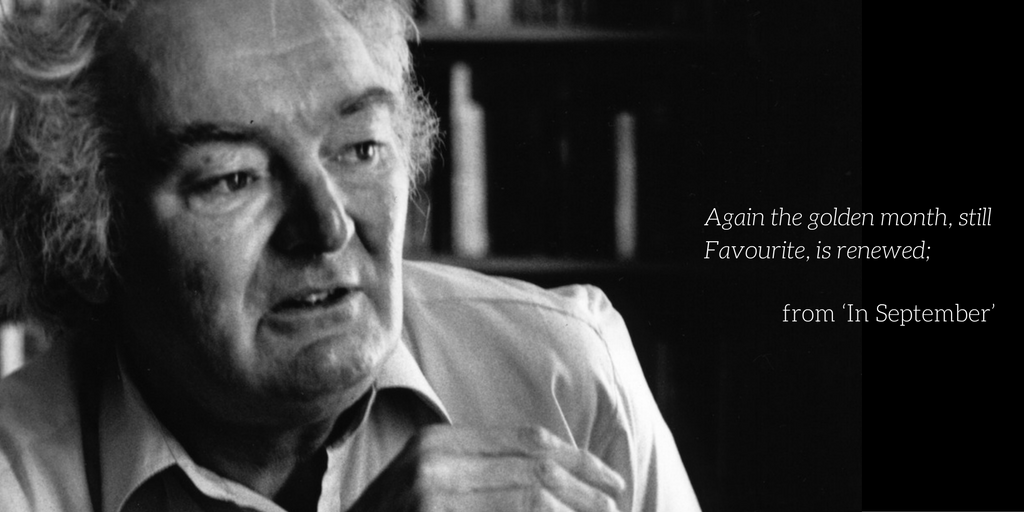
 Penned late on the night of the 20th of September, probably 1970, because he’d forgotten to buy a card, it was deemed by them both to be infinitely preferable. Memories of key moments in their courtship are woven into the lines, while the storm door was the big black outer door of their home in Conway Road. The poem appeared in various anthologies: one which pleased Ormond was the Almanacco internazionale dei Poeti 1975 (La Pergola Edizioni) containing the Italian translation ‘In Settembre’ by the eminent translator, poet and critic Roberto Sanesi.