Posted on

Author Appearances at the Seren Christmas Pop-Up Shop

chapter pop-up shop author appearances

The Seren pop-up bookshop is returning to Chapter, Cardiff, for its third year. You’ll find us in Chapter’s entrance hall, Friday 9th to Monday 12th December.

Come and have a browse of our books, take advantage of free Christmas gift wrapping, and chat with Seren staff about publishing, writing, reading – and your love of books. We look forward to seeing you!

When: 9-12 December, 10am–8pm
Where: Chapter Arts Centre, 40 Market Road, Cardiff, CF5 1QE

Seren authors will also be stopping by, so why not come along and grab a special signed Christmas gift or two?

author-appearances-chapter-pop-up-16


Peter Finch will be joining us on Saturday. A poet, author and critic, Peter is author of the hugely popular Real Cardiff trilogy, and series editor for the Real Series. He has published numerous poetry collections, including perennial bestseller Zen Cymru, and his Selected Later Poems. His latest book, The Roots of Rock, from Cardiff to Mississippi and Back, explores the evolution of rock and popular music, and is the perfect gift for the music lover in your life.

David Foster-Morgan will be coming to the pop-up shop on Sunday. David has been widely published in a number of journals including Poetry Wales, Envoi, Smiths Knoll and The Interpreter’s House, and was recently shortlisted in the Times Literary Supplement Poetry Competition. Masculine Happiness is his innovative debut collection, and signed copies will be available if you come along at 12.


We look forward to seeing you at the Seren Christmas pop-up shop!


Posted on

Friday Poem – ‘Without Narcissus’, Rhiannon Hooson

without narcissus rhiannon hooson

Last night, we welcomed a chilly December in Chapter Arts, with Rhiannon Hooson reading poems from her debut collection, The Other CityIt seemed appropriate to have Friday’s Poem from this beguiling new release, for those who missed out.

screenshot-2016-12-02-12-02-07
Rhiannon reading to a full house at December’s First Thursday event

the-other-city_quicksand-cover-copyWith a sharp focus and beautiful resonance, the deeply felt poems from The Other City  tend to travel in distinct streams: some reference and re-make narratives from classical Greek myth; some rework elements of Welsh history, both ancient, and modern. There are also a number of poems exploring the idea of otherness and the uncanny, where actions are done and undone, and the familiar made unfamiliar.


Without Narcissus

The lack of his blindness shocks the silver water black.
Your palm’s slap against its surface is looped silence:
bare shoulders with their heron stoop,
the wet ropes of your black hair, the empty water
and the stiff-leafed lilies which break for sharp fingers,
their pink throats silent and smiling. Speak.

Over the water the red rock leans and watches.
Your nails like fish-scales break against
the cool shadow of its noon, and the silence. Speak.
Even the fish have voices, even the rough
hush of the trees, even the birds.You press your body
to the dark-loomed sediment and learn its silence, touch the red
heat of your mouth to the rock and learn the syllables
of its unspeech. Speak.

Birds watch you writing the mangled sign of your name
wet hair strung across the tangled mats of cress,
white fingers and their fish-belly pallor, your white lips
kissed against the petals of the lilies.You can speak
their silence back to them so well, so well.


Buy your copy of The Other City now: £9.99
Join our free, no-purchase-necessary Seren Book Club for 20% off every time you shop with us

Save

Posted on

Friday Poem – ‘Bluetit Feeding’, Ruth Bidgood

friday poem bluetit feeding ruth bidgood

Our Friday Poem this week is a careful portrayal of the fragility and beauty of nature. So take some time away from the Black Friday madness, and enjoy Ruth Bidgood’s ‘Bluetit Feeding’.

New & Selected Ruth Bidgood Friday Poem Bluetit Feeding‘Bluetit Feeding’ is taken from New and Selected Poems. This generous selection of work highlights the steady accumulation of a significant oeuvre. Bidgood’s ostensible subjects are the storied landscape and history of her region of mid-Wales, the hills and valleys of Powys and Breconshire, but her themes frequently have a wider reach, a spiritual depth that is often darkly suggestive and mysterious.


Bluetit Feeding

Early at the window in starved winter
a little knot of energies, a beaky hunger
fluffed and sleeked, taps, prises
unsucculent scraps of cracked putty,
swallows with a ripple of tiny throat.

Behind it climbs a bleak pale hill
stained with ruts of December bracken.
White morning moon is barely seen
on hardly darker sky that seems
opaque, a barrier against pressure
of immensities. Imperceptibly
the chill day flows out to black deeps.

The bluetit pauses in its arid feeding,
flirts a crisp wing. Half-handful of warmth,
it stays for a moment sill,
compellingly centre-stage, diminishing
to a backdrop the hill, dull morning sky,
pale echo of moon, black vertiginous
trenches of space-ocean, myriads
of molten and frozen, dying and rising worlds.


Buy your copy of New & Selected Poems now: £9.99
Join our free, no-purchase-necessary Seren Book Club for 20% off every time you shop with us

Posted on

Win a signed copy of Wild Places by Iolo Williams

win a copy of wild places by iolo williams

Show us your favourite nature place in Wales win a copy of Iolo Williams’ new guide book, Wild Places: Wales’ Top 40 Nature Sites.

We’re giving away a signed copy of Wild Places, Iolo Williams’ stunning new guide to Wales’ best wildlife and nature sites. All you have to do to win is head to Twitter and tell us your top nature place.

Win a signed copy of Wild Places by Iolo Williams

Follow us (@SerenBooks) and use the hashtag #WildPlacesWales to tell us where you think tops the list of Wales’ best wild places. Add a photo if you can! We’ll pick the winner on 16th December – our favourite comment will take the prize.

We’ve already had some great responses – here are a few of the places chosen so far…

https://twitter.com/dhboughton/status/800722011433607169


Can you think of an even better wild place in Wales? If so, tell us now and you’ll be in the running to win this fantastic new book, signed by the author.


Entries close 16/12/16. Winner will be chosen from all Twitter comments. Prize cannot be exchanged or substituted.


Posted on

Friday Poem – ‘Seamus on the Tube’, Tony Curtis

Friday Poem Seamus on the Tube Tony Curtis

Last night saw us at Chapter, Cardiff, with Tony Curtis and Cynan Jones for November’s First Thursday event, and today we are featuring one of the new poems Tony read on the night – for all of you who missed his entertaining performance.

From left: Tony Curtis, Amy Wack (Seren Poetry Editor), Cynan Jones

From the Fortunate Isles: New and Selected Poems, Tony CurtisTony Curtis has been writing poetry for fifty years, and his new collection, From the Fortunate Isles: New and Selected Poems contains poems from ten of his published collections, as well as fifty pages of new poems. This is a poet whose themes and variations remain consistent: a deep affection for his roots in West Wales, tender attachments to family, a profound interest in the wars of the last century, and an abiding fascination for all art forms, particularly painting and poetry.


Seamus on the Tube

Looking away, not looking away –
The happenstance of what may change everything;
Those standing commuters moving off at Charing Cross
For the Bakerloo Line and then your eyes lifting

Above those seated opposite, as one does, to read
Between faster Broadband and Las Vegas –
“Where your accent is an aphrodisiac,” it says,
And where “what happens here, stays here,”

The Railway Children where in the white cups
Of the telegraph wires a young boy knows
That words are carried in the shiny pouches of raindrops.
Like this poem carried for you in the red and white Tube

On the Northern Line in cold January’s real freeze;
Snow is promised in the suburbs so everyone’s scarved
Against the weather. Words taking you back to the fifties
And his boyhood summers before everything changed.

Reaching Warren Street, you’ve read it
Four or five times, absorbed the innocent wisdom
And sense of the thing. Those people opposite
See a crazy old man mouthing words, appearing to sing.


Buy your copy of From the Fortunate Isles now: £12.99

Claim 20% off when you become a Seren Book Club member

Posted on

Friday Poem – ‘Elegy for David Beynon’, Leslie Norris

Aberfan Friday Poem Elegy for David Beynon by Leslie Norris

Today marks 50 years since the Aberfan disaster, 21 October 1966, when a mountain of coal waste slid into Pantglas school and 19 houses, killing 144 people, 116 of them children.

Today is a day of solemn remembrance, and in this spirit, our Friday Poem is ‘Elegy for David Beynon’ by Leslie Norris, written after a teacher who died trying to shield five children from the slurry.

Leslie Norris was born in Merthyr Tydfil in 1921, and many of his works transform local incidents into poems of great depth and significance. ‘Elegy for David Beynon’ is among his most anthologised poems, and with its poignancy and sincere emotion, it is not hard to see why.


Friday Poem Elegy for David Beynon Leslie Norris

‘Elegy for David Beynon’ is taken from Leslie Norris: The Complete Poems, edited by Meic Stephens.


Posted on

The true story behind Alun Lewis’ poem, ‘Burma Casualty’

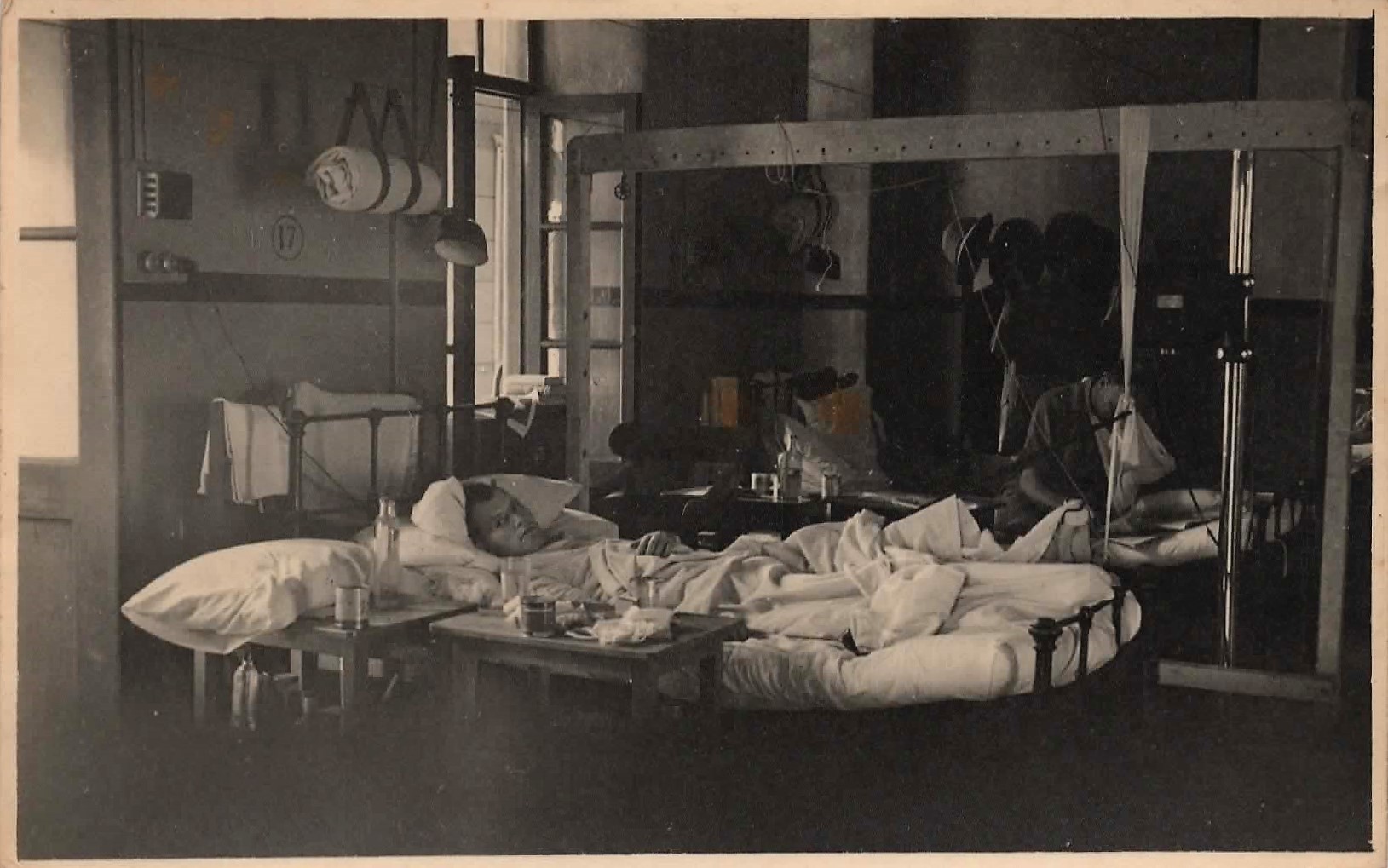
In January 1943, after fracturing his jaw during a regimental football match, Alun Lewis spent 6 weeks in Poona Hospital. In this blog post, Maggie Evans, whose father lay injured in Poona in the bed next to Lewis’, tells the true story behind the poem ‘Burma Casualty’.

As a child, “My Dad’s in a poem”, was my default position when any Dad boasting was called for.  “Don’t believe you”, was the usual reply, but here I had them.  I could run to the shelf and produce the evidence. There, in a slim volume entitled Ha! Ha! Among the Trumpets, was the poem, entitled ‘Burma Casualty’ and even more exciting, with a dedication – To Capt. G. T. Morris, Indian Army – My Dad!

It was years before I actually read the poem and even longer before I was capable of understanding it, but the magic of a special poem about my own special Dad has never faded.

Dad was born on 12th July 1911 in the Eastern Valley of South Wales. His given names were Thomas Griffiths but he was always known as “Griff”. To me and my two older brothers he was just our Dad, and the fact that he had one stiff leg shorter than the other and had to wear funny, built up shoes was of no consequence. We were children of the Second World War and post War period – war wounds were common. Dad didn’t ever let this hamper him. He wouldn’t accept a Disabled Badge for instance, and wouldn’t countenance anyone thinking of him in this way. He carried us on his shoulders and took us swimming and walking just like any other Dad and so I never fully understood the extent of his injuries until recently, when following a house move, I found bundles of his letters and photographs from that time. Reading the letters he sent from hospital in Poona sent me straight back to the poem – and now for perhaps the first time I was able to understand it.

In February 1942 Dad was fighting in the Burma Campaign with the 17th Indian Division which was decimated at the Battle of Sittang Bridge during a retreat from the Japanese. He was badly wounded, carried off the bridge by unknown hands, and ended up in hospital in Poona where he remained until late 1943.  Earlier that year he had for six weeks a new neighbouring bedfellow – one Alun Lewis, also a Welshman, who had sustained a shattered jaw in a football match. The sharing of his experiences with Alun resulted in ‘Burma Casualty’.

Thomas “Griff” Griffiths in Poona Hospital
Thomas “Griff” Griffiths Morris in Poona Hospital

Re-reading the poem now reveals how much Dad shared with Alun of his pain and fear – showing that at times he might have welcomed death as a release from his own physical pain and from the loss of so many comrades.

Thomas Griffiths and his wife on their wedding day
Thomas Griffiths Morris and his wife on their wedding day

But his letters to his sister from the same time show that as he recovered, his focus was on re-stablishing his family life with my Mum, his childhood sweetheart, and my oldest brother, born in 1940, whom he had never met.  He resisted Death, the ‘beautiful singing sexless angel’, preferring ‘his wife’s sweet body and her wilful eyes’ (though, like any child, however advanced in age, I confess to being unable to think of my mother in these terms without feeling slightly queasy!)


Dad never spoke of his experiences of jungle warfare and rarely mentioned his time in hospital. When pressed, he spoke of his friend, Alun Lewis, as something of a tortured soul. As an adult I have come to understand and love Alun’s poetry, not because he allowed my childhood self to hold its own on the boasting front, but for his luminous verse with its dark undercurrents. I can now say with pride, “my Dad knew a true poet’.

burma-casualty


‘Burma Casualty’ is one of the many poems featured in Alun Lewis: Collected Poems. Buy your copy now from our website: £9.99.


Posted on

Short Story of the Month | ‘Intervals in making lace’ by Diana Powell

short story intervals in making lace diana powell

Our new short story of the month is ‘Intervals in Making Lace’ by Diana Powell. This is one of a collection of stories set in the Black Mountains, where a group of women artists gather to work. As they do so, they spin tales of their childhoods, coloured by the folklore and landscape of their surroundings. But what do they really remember?

Diana Powell Intervals in making laceDiana Powell was born and brought up in Llanelli, and studied English at Aberystwyth University. She writes mainly short stories and novels. She won the last PENfro short story prize, and the 2013 Allen Raine Award. This year, she was a runner-up in the Cinnamon competition, and was longlisted for the Sean O Faolain, and the Over the Edge. Her work has appeared in a number of print publications, including The Lonely Crowd and Brittle Star.


Intervals in making lace

This is an extract. Read the full short story for free on our website.


………

………………..

…………………………

How do you describe a gap? It is, after all, a place with nothing there. You could say ‘an opening with two clear ends’ perhaps – like a break in a fence or a mountain pass (both easily found in our hilly, farm-shod landscape). Or holes in a fishing net; a clearing in a wood …  to let water out; to let light, animals, people, gather.

All these are gaps. All physical entities (although there is nothing there). There are plenty of examples both natural and man-made, difficult, but not impossible, to explain.

But how do you make sense of the other kind of gap – the less substantial, belonging to the mind, or the spirit?

Recently, I have been enduring such a gap in my life: a break in its normal proceedings. An accident. It was an accident: all my own fault, of my own making. There is no one else to blame.

Just like then, whatever they may have said.

‘Foolish Bron! Daydreaming again!’ Words from the past echo down to me. The voices of my mother and father, or sisters, fondly scolding. ‘Off in cloud-cuckoo-land, Bron? Again?’ True, then; true, now. For yes, I was daydreaming. You’d think I would have learnt … I had learnt! For a long time, I had! But no, my thoughts wandered away, and my body followed, leaving the stove on, and the towel draped too close. Easily done; it could happen to anyone! Though there are, no doubt, those who whisper about my fondness for a glass of whisky; a second glass. Those such as the old women in the Square, who tutt behind me as the till girl in Mace slips the bottle into a brown paper bag; all the while dismissing and excusing, somehow, their own favoured tipples – as if sherry and gin do not count as the devil’s potions, brewed to steal your wits and lead you to Hell.

But there was no whisky that night, though I am happy to admit to it on other occasions. After all, it is a quick, easy way of making gaps in your existence, if that is what you are after.

So … there was a fire, as testified by those who pulled me from it, and by the charred detritus of my worldly goods – and of my body. Yes, my body bears witness, but not my mind. Not my consciousness, for I remember nothing. Even the knowledge of the stove and tea towel were presented to me later. Lucky, some say. Better that way – to have been pushed into such dense oblivion by the fumes, and to fall from that into an even deeper chasm of unconsciousness (the greatest depth of my gap), so that I did not know the worst of the pain, or the prodding, patching and finishing that was needed to put me back together again, into some reasonable fashion. Did not know … until I finally woke and had to face the torment, and battle through it (such floundering, such darkness, then!) Making tentative steps forward into painful reality, interspersed with welcome lapses back into insensibility … one step forward, two steps back. Onwards, upwards, until…

Until I am here. Now. Again. Yes, I have come through on the other side. For there is always this about gaps – the suggestion that they can be bridged or crossed; that they are something to emerge from. It may take time, and much effort. But, with some luck, and hope, you can make it. Maybe.

That is how it seems to me now – now that I am trying to put my life back together, and make sense of it all. Yet, in truth, none of what happened should have been strange to me. I should have been prepared. I should have known all about absences from consciousness; lapses from reality. I should have remembered. But back then we called such things by different names. We wrapped them in strange words, or wove them into magical imaginings, all meant to cloak, disguise or simply hide them. And so the truth was left unsaid, replaced by uncertainty and bewilderment. Another kind of gap; a deep, churning river that you struggled through, leaving you reaching for understanding like a drowning man gasping for air. But since I came back here, amongst you, memories have been returning – not from the accident, but from my earliest years, as if they are needed now. Like the echoing words, they flash into my mind, clear, not clouded. And beyond them, something else is taking shape – something not fixed, yet, not fully revealed, but which, if I start with what is definite, will also, perhaps, become more clear, so that I, too, will have some kind of story…


Continue reading ‘Intervals in making lace’ for free here.


Posted on

50th Anniversary of the Severn Bridge | An extract from Edging the Estuary

Severn Bridge

The original £8m Severn bridge was opened by the Queen on 8 September 1966, heralding a new economic era for South Wales. In celebration, here is an extract from Edging the Estuary by Peter Finch, in which Peter meets the men continuing the traditional method of Lave net fishing on the River Severn, at times directly below the bridge.

Edging the Estuary Peter FinchAbout Edging the Estuary:
In the Middle Ages the port of Cardiff stretched from Chepstow to Gower. Peter Finch, archetypal Cardiffian, sets out to explore his heritage, walking the Welsh side of the Severn Estuary and reclaiming his personal memories in addition to discovering the lives of others. And with a detour to Maismore, the highest tidal point of the estuary, he walks the English side too, taking in the differences with Wales, reviving past links and looking at his homeland from abroad. On his journey he sees the estuary as border, a highway for trade and ideas, an industrial zone, and a place where people spend their leisure. Rich in anecdote, evocative in description, Finch’s book takes in villages and cities, power stations and fishermen, castles and caravans, leg-aching walks and deckchairs on the beach.

The Lave Fishing Grounds

The novelist and poet Richard Brautigan went trout fishing in America. There the fish were made of a precious and intelligent metal. Trout steel in the snow-filled rivers. Among them he found the dharma or the Buddha, or love or something. I’d never done any of that. I’d never really thought much about fishing anyway other than logging that lots of people did it. Blokes in wool hats sitting on piers, pond sides, river edges waiting and on their faces that distant look. It seemed all about waiting. And I couldn’t be doing with that.
At the end of Black Rock Road, to the east of Sudbrook, is the small park the council has created facing Black Rock. In a corner is the Black Rock Lave Net Heritage Fishery’s hut. Hand built in local stone. A salmon in wrought iron adorns the front. For most of the year the hut is closed and locked but today it’s not. Martin Morgan, a fifty-year-old steelworker from Undy, is in action out front. Spread on the grass he has replicas of the fishtraps that have been used in these waters since medieval times. They’ve now been banned by the Environment Agency in an attempt to conserve fish stocks. “There used to be other methods of fish catching that are gone too,” Martin tells me. “Stock boats, drift nets, tuck nets. Those ways are over.”
The putt, a great ten-foot-long assemblage of bent willow in the shape of an open-mouthed giant cone, is the older method. The example Martin shows me is a replica made from an ancient original pulled from the river muds. These things go back to the eleventh century. The cone would be pegged to the river bed facing an ebb tide and once a salmon had swum in, it couldn’t then get back out.
Also on show are replicas of putchers – smaller five-foot cones made originally of woven hazel or willow but from the 50s onwards of aluminium mesh.These would be assembled in racks known as engines with sometimes a hundred or more in a single array. These would be strung out across the river like radar sets. Salmon was the target but they also caught whitefish and eels and anything else that drifted in.
These were the fixed engines, the fish henges. In the sixteenth century, Rawlins White, the Cardiff martyr, operated something similar at the Rhymney River mouth. The remains of ancient putcher racks have been discovered by estuarial archaeologists in waders, stepping through the glutinous mud between the river’s rapid tides. The largest, containing some fifteen hundred baskets swung out into the waters opposite Goldcliff.
The archaeologist J.R.L. Allen has used aerial photographs of the Estuary to uncover a complex pattern of fish traps dating from Mesolithic times to virtually the present day. His shots show putcher lines running just off the river shores like the claw prints of giant birds. Further out are the remains of rod and wattle fencing, formed into complexes of stone and woodposted weir. Fish dams, intertidal fish pools, fish gullies. Fish capture has gone on in these waters for thousands of years. But it’s all banned now. Regarded as being as bad as fishing with dynamite. All that’s left are the lave fishers. Eight of them. The Environment Agency refuses to issue any more licences.
Lave fishing uses large Y-shaped nets each individually made by the fisherman. The net has willow arms known as rimes hinged onto a stout handle called the rock staff, made of ash. Fishermen wade into an outgoing tide and wait. They can stand for hours with the Severn’s tides falling around them. They call this cowering. Much more exciting is stalking, where the fisherman spots a fish moving over the sandbanks and gives chase.
Caught fish are dispatched with a short wooden baton known as a knocker. Weights are anything from five to seventeen pounds. The record was held by Martin’s great grandfather. He landed a monster that weighed in at fifty-six pounds. There’s a silver-coloured replica back at the hut. The net they also knit themselves. It was once made of hemp. Smacker Williams, in Sudbrook in the 1960s, could knit a single net in a day. That was going some. When he went, the practice died out, but Martin’s fishermen have revived it. They use nylon cord today.
At the Heritage Fishery they are all lave fishermen, although as the season is so short they double up for the rest of the year with rod and line. They used to fish from February right through until October but the Environment Agency have now got them down to a mere three months. 1st June to the 31st August. They’re allowed to catch an absolute total of fifteen fish, five a month, and that’s it. Not much. Martin thinks the Agency would be happiest if it could close the lave fishermen down.
The Agency is at odds with the Heritage authorities who see the Black Rock fishermen as a relic of Wales’ traditional past and something to be encouraged. Martin tells me that last week they had a camera team along from Wedi Saith who brought a Teifi coracle fisherman with them to compare traditions. We’re out on the mud now, walking through the glutinous slime to get into the fishermen’s tiny boat. “You take care,” says Martin. “We’ve had camera crews slip here and go sprawling. They always somehow manage to save their equipment, though.” In my Homebase green wellingtons I take it slow.
The fishing grounds all have names that don’t appear on most maps. Grandstand, The Hole, The Monkey Tump, Lighthouse Vere, The Marl, The Looby and Gruggy. We row west of the Second Severn Crossing to anchor in waters that are moving at around five knots and are at least eight feet deep. “This new bridge was built right across our traditional fishing grounds,” Martin tells me.We watch his brother Richard in the distance striding along the shoreline, net over his shoulder. “It’s made the mudbanks shift and created new ones but we can still fish.”
He and Tim Bevan, a tinplate printer from Sudbrook, are in the water now, chest deep, nets below the surface, that look of concentrated desire mixed with endless patience on their faces. Catching fish is all a matter of getting the wind in the right place and the spring tide flowing. “Are things right today?” I ask. “Could be.” But in the end it turns out they’re not.
During the two-hour window between tide ebb and flow I watch the water drop more than four feet. Fields of rocks emerge around me. Hundreds of boulders running in all directions like this was the Russian Steppes. The brown water slows from a rush to a drifting crawl.You can hear the muted traffic roar on the bridge high above. But the water itself is silent. The boat shifts on its anchor mooring then bumps against rocks below. Martin has walked off hundreds of yards into the distance. His brother, once separated from us by a river depth too great to navigate, now strides across, net over his shoulders, nothing caught where he was either.
Looking west the river runs off into a silver distance that points right out into the Atlantic. You’d think there’d be ship traffic but there is none. Nothing floats by. Just the ripples. “It would have been better if we’d caught something,” says Martin. But half of fishing is the activity itself. Richard Fox and Rob Evans, two other Lave Fisherman in action today have been working the river east of the bridge. “They’ve not been with us that long,” says Martin. “And they’re the only two who haven’t caught their first fish.We’ve two more days left. They’ll be out tonight, 2.00 am, fishing in the dark, just to catch up.”
We’re back on shore now. The fishiest thing we’d seen all day was a tiny mullet about five inches long that Tim had in his net and then threw back. I missed that, too busy taking photos of English coast, power stations, or Sudbrook from the estuary distance, pumping station and the Seven Tunnel Great Spring outfall, still rushing fresh water into the river after all these years.
The EU control that limits catches is contained in Annex 11 of the EC Habitats Directive (council directive 92/43/EEC). It ripples off the tongue. But irrelevant today. Down the pub now, yes.


Buy your copy of Edging the Estuary now: £9.99

Claim 20% off when you join the Seren Book Club

Save

Posted on

Friday Poem – ‘Autumn Elegy’, Leslie Norris

Friday Poem Autumn Elegy Leslie Norris

Our Friday Poem this week marks the coming of autumn, and is taken from Leslie Norris: The Complete Poems, edited by Meic Stephens.

Leslie Norris Collected PoemsThis landmark publication of over 300 poems is a testament to a publishing life of more than sixty years. The late Leslie Norris, who died in 2007 at the age of 86, was best known as a nature poet and elegist of passion and rare expression. Lyrical and individual, to his closely observed poems, each word weighed and in its correct place, Norris introduces a strong metaphysical element which makes the poems, as Edward Lucie-Smith noted, “much larger than the sum of their parts”.


Autumn Elegy

September. The small summer hangs its suns
On the chestnuts, and the world bends slowly
Out of the year. On tiles of the low barns
The lingering swallows rest in this timely

Warmth, collecting it. Standing in the garden,
I too feel its generosity; but would not leave.
Time, time to lock the heart. Nothing is sudden
In Autumn, yet the long, ceremonial passion of

The year’s death comes quickly enough
As form veins shut on the sluggish blood
And the numberless protestations of the leaf
Are mapped on the air. Live wood

Was scarce and bony where I lived as a boy.
I am not accustomed to such oppulent
Panoply of dying. Yet, if I stare
Unmoved at the flaunting, silent

Agony in the country before a resonant
Wind anneals it, I am not diminished, it is not
That I do not see well, do not exult,
But that I remember again what

Young men of my own time died
In the Spring of their living and could not turn
To this. They died in their flames, hard
War destroyed them. Now as the trees burn

In the beginning glory of Autumn
I sing for all green deaths as I remember
In their broken Mays, and turn
The years back for them, every red September.


Buy your copy of Leslie Norris: The Complete Poems now: £25.00

Claim 20% off when you become a Seren Book Club member