Posted on

Sacrifices made a century ago: Welsh rugby heroes on the Somme

Sacrifices made a century ago welsh rugby heroes on the Somme

The coming months will see the commemoration of one of the most notorious battles in history. The Battle of the Somme, fought between July 1st and November 18th 1916, has left an indelible mark on the history of the twentieth century and, for Britain in particular, it symbolises the horrors of modern warfare.

One hundred and forty one days of horror. The casualties are well documented: the first day alone saw 57,470 British casualties, 19,240 of whom were killed. The second day, with 30,000 British casualties, was not much better. Add to that the French and German losses and you have total losses of dead and injured easily exceeding 1,000,000.

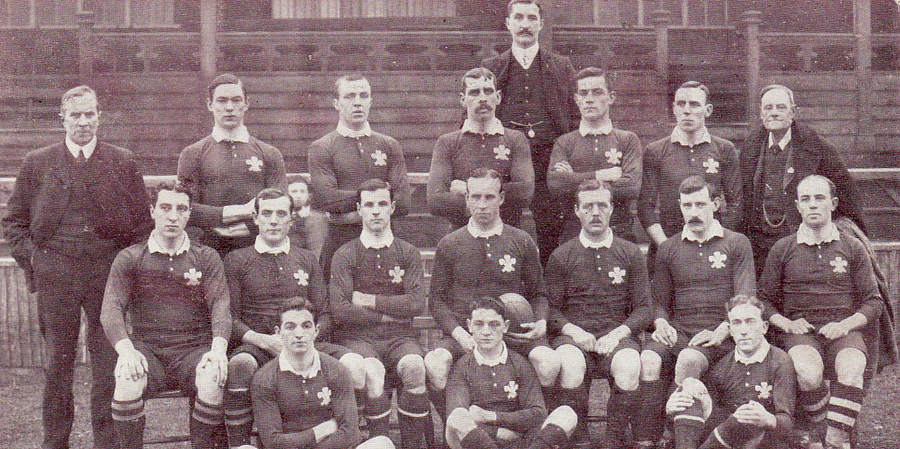
It was inevitable that many British sportsmen would be among the dead. Heart of Midlothian, Scotland’s table topping football team, lost 3 players on the first day while English cricket saw 3 notable all-rounders, Booth, Jeeves and Burns make the ultimate sacrifice. Welsh goalkeeper Leigh Roose, English footballers Evelyn Lintott and Donald Bell VC and England rugby captain Lance Slocock met the same fate. But what of Welsh rugby? What sacrifices were made by this small nation, a nation which was just at the close of its first rugby ‘Golden Era’? The answer is stark. The total number of Welsh rugby internationals to die as a result of the Great War was 13, 14 if one includes ‘Hop’ Maddock who died in December 1921 as a result of illness which had its roots in the battlefields of the Somme. No less than 5 of these unlucky and brave young men met their death on the Somme.

Charles Meyrick Pritchard

The first to appear in Mike Rees’ book, Men Who Played the Game: Sportsmen who gave their life in the Great War, is a true man of Newport, Charles Meyrick Pritchard. Charlie was the son of John Pritchard, a founder member of the Newport Rugby Club and part of a family that ran a wine and spirit business. Following an education at Newport Intermediate School and Long Ashton, Bristol, Charlie joined Newport RFC and by 1904 this twenty two year old, thirteen stone, six foot tall version of the modern backrow forward was in the Welsh team. A year later he was taking his place on the field to decide the unofficial championship of the world. The New Zealand All Blacks arrived in Cardiff unbeaten to be challenged by a strong Welsh team and Charlie was to play a huge part in what many regard as the most important match in rugby history. Wales deservedly won a thrilling, controversial match 3-0 but, although it was Teddy Morgan who scored the try, Charlie was the inspiration. Fellow players had no doubt in telling anybody who was not too excited to listen that Charlie had played a key role, “knocking ‘em down like ninepins” according to George Travers, a fellow hero and club colleague. Others talked of his willingness to be in the thick of the fight, disrupting the hitherto invincible All Blacks with his devastating tackling. Following this victory Charlie’s fame was assured but his career didn’t end there. In 1906 he was made captain of Newport, a position that he held for 3 years. On the international field he won a further 10 caps, (14 in all), a figure that would have been higher but for injury. He played in the championship winning Wales team of 1906 and in the first Grand Slam success in 1908. After missing out on a second Grand Slam in 1909, Charlie played his last game for Wales in 1910.

With the outbreak of war Charlie was quick to enlist. He joined the South Wales Borderers as a temporary Second Lieutenant in May 1915, was promoted to lieutenant at the end of July and was made a captain in the 12th Battalion the following October. Following a period of training, Charlie arrived on the Western Front in June 1916 in time for the Somme offensive and was quickly into the action. He and his men had been forced to take cover in the long grass from their own bombs and struggled to avoid the German searchlights. On the night of 12th/13th August Charlie was instructed to lead a raiding party on the German trenches with a view to taking as many prisoners as possible. He led his men into the trenches showing exceptional bravery in the process and, despite being wounded in the wrist, continued to encourage and lead his men in what was to prove to be a successful raid. He took one of the enemy prisoner but was wounded once again, taken back to the British front line and then to No1 Casualty Clearing Station shortly before dawn on the wet morning of August 13th. Here his concern for the success of the raid and his devotion to duty came to the fore asking, “Have they got the Hun?” “Yes” he was told, “Well I have done my bit,” Charlie replied, the last words that he was known to speak. He died, without ever leaving the Clearing Station, on August 14th 1916.

His commanding officer, Lieutenant Colonel Alexander, wrote to the family describing Charlie as being “as brave as a lion” and talking about how his death had “cast a gloom” over the whole Battalion. Others spoke of the deep affection in which he was held, the fine example that he set as to what a sportsman should be and his “private tenderness” who was “loved by all who came into contact with him”. Attempts to grant him the Distinguished Order failed, as only living soldiers were eligible, although he was given a Mention in Dispatches. Charlie was buried in Choeques Military Cemetery, one of 86 members of Newport Athletic Club who lost their lives in The Great War and remembered on the Memorial Gates at Rodney Parade. The thirty two year old left in Llwynderi Road, Newport, a grieving widow with two young children and the legacy of a true Welsh rugby hero.

John Lewis Williams
John Lewis Williams

A second significant Welsh rugby player with Newport connections had already died on the Somme. John Lewis Williams is quite properly remembered as a prolific wing for both Cardiff and Wales, the most capped Welsh international to die in the conflict. However Johnnie Williams began his career at Newport in 1899 after leaving Cowbridge Grammar School. Born in Whitchurch in March 1882, Johnnie had an illustrious rugby career. After winning his first cap against the 1906 Springboks he went on to score a record seventeen tries in seventeen internationals, a record that was later equalled by Ken Jones and beaten by both Gerald Davies and Gareth Edwards in 1976. Illustrious company indeed! Noted for his swerve and sidestep, Johnnie was an integral part of three Wales Grand Slam winning teams in 1908, 1909 and 1911, one of the handful of Welsh players to achieve such a feat. Unsurprisingly, Johnnie also toured with the British Isles team which visited Australia and New Zealand in the summer of 1908 where he played in two of the three tests, scoring twelve tries on the trip. While making the long sea journey to the Southern Hemisphere, Johnnie earned himself a supplement to his two shillings a day out of pocket expenses by writing articles for the South Wales Daily News and the South Wales Echo. A well-educated man who earned his living as a principal clerk in a coal exporters based in Cardiff Coal Exchange, Johnnie was given the captaincy of his country for the game against France in Paris in 1911 due to his ability to speak French at the post match dinner. A couple of weeks later he played his seventeenth and final match for Wales in the victory over Ireland. His record was impressive with only two defeats in his Wales international career.

On the outbreak of war Johnnie joined the 16th Battalion of the Royal Welch Regiment and was, by July 1916, in the thick of the action on the Somme, in particular at Mametz Wood, a place synonymous with the Welsh losses in the Great War. The action which took place at Mametz between 7th and 12th July 1916 saw the 16th Royal Welch and the 11th South Wales Borderers suffer the most appalling losses. Johnnie went over the top on 7th July but heavy machine gun fire cut them down. Johnnie was severely wounded and his left leg was amputated. Infection set in and, although he was able to write to his wife Mabel that he was in good spirits, Johnnie died of wounds on 12th July. He was one of 190 officers and 3,803 other ranks who were casualties at Mametz. He had fought in distinguished company – the poets Siegfried Sassoon, Robert Graves and David Jones as well as the writers Frank Richards and Llewellyn Wyn Griffith all fought at Mametz but, unlike Johnnie, they survived to commit their experiences to paper. Johnnie was not so lucky. He left his wife of a mere eighteen months a widow in their Penarth home. His reputation as one of the great Welsh wings, however, remains firmly intact.

Dick Thomas
Dick Thomas

Alongside Johnnie, another Welsh international rugby player also made the supreme sacrifice. Born in Ferndale in October 1883, Dick Thomas had spent his early years working underground as a collier before joining the police force based in Mountain Ash. Dick, by now playing for Mountain Ash after short spells with Penygraig and Cardiff, had made his debut for Wales in the same game as Johnnie made his international bow. Although on the losing side against South Africa, Dick went on to win three more caps and contributed to victories in each of the 1908 and 1909 Grand Slam seasons. Only illness prevented him from winning more caps and possibly becoming a regular in the Welsh pack of this ‘Golden Era’. Dick was known as a tough uncompromising forward, who was also a Glamorgan Police heavyweight boxing champion. Never one to shirk a challenge, he went over the top on 7th July. His body was never found and he is remembered on the Thiepval Memorial, one of the 72,195 names on that ‘memorial to the missing’.

David ‘Dai’ Watts
David ‘Dai’ Watts

Dick Thomas is not the only Welsh international named on the Thiepval Memorial. One week after Dick was lost and just three days after Johnnie Williams succumbed to his wounds, Dai Watts, a tough forward born in Maesteg in March 1886, was killed in action at Bazentin Ridge on 14th July. After a career spent playing for smaller valley clubs, Dai joined his hometown club, Maesteg where he became the first player from this club to be capped. Following impressive games for the Glamorgan League and then Glamorgan County, Dai was picked for the first international of 1914 against England. Wales lost this game 10-9, a match they should have won due to the supremacy of their forwards. England went on to win the Grand Slam under the captaincy of Ronnie Poulton, the glamorous young England centre who was killed in 1915, while the Welsh pack remained unchanged for their three subsequent victories and cement their reputation as ‘The Terrible Eight’. A long rugby career at international level appeared to be Dai’s destiny.

It was not to be. In the autumn of 1914 Dai joined the 7th (Service) Battalion, The King’s (Shropshire Light Infantry). In July 1916 they were involved in the Battle of Bazentin Bridge. At 3.25am on 14th July the KSLI were ordered to attack. Confronted by uncut wire they became easy targets and Dai was one of the 171 who lost their lives in this attack. There are no records of how this toughest of forwards met his end, only that his body was never recovered and that he left a widow and two children.

The third and final Welsh international named on the Thiepval Memorial is a player of a very different type to the tough, uncompromising miners, the forwards Dick Thomas and Dai Watts. Horace Wyndham Thomas was an outside half educated at Monmouth School and Cambridge University where he was a choral scholar. Born in Pentyrch near Cardiff in 1890, he originally attended Bridgend Grammar School before winning a scholarship at Monmouth. Both at Monmouth and Cambridge Wyndham excelled in a range of sports. Injury and choral duties prevented him gaining his ‘Blue’ but he finally achieved this in 1912 when he played his part in a Cambridge victory.  Four days later this brilliant and elusive outside half made his debut for Wales in the match against the Springboks, a game which he nearly won for Wales with a late drop goal attempt which sailed narrowly wide. Many who saw this effort were adamant that the ball had actually gone through the posts and that Wales were ‘robbed’. He kept his place for the game against England a few weeks later but, although he played in this match, Wyndham had been offered a job with a firm of shipping agents in Calcutta. Immediately after the game Wyndham sailed to India to fulfil a five year contract, a huge loss to Welsh rugby. It was expected that Wyndham would be the Welsh outside half for years to come.

When war broke out Wyndham resigned his job and headed home to join the 14th (Reserve) Rifle Brigade. In August he was to be found on the Somme and on 3rd September he was attempting to capture trenches above the Ancre. The assault resulted in over 400 casualties, one of whom was Second Lieutenant Horace Wyndham Thomas. His body was never found and his name joined those fellow players on the Thiepval Memorial. Of all the Welsh internationals killed in the Great War perhaps Wyndham Thomas was the player whose potential was greatest and unfulfilled. Lost to rugby far too soon, Wyndham, with all his brilliance and talent, perfectly represents the sacrifices made by that generation of rugby players one hundred years ago.

Men_Who_Played_the_GamergbThe stories of these players, (with the exception of Dai Watts), are included in Men Who Played the Game. Mike Rees has included the contributions of sportsmen in The Great War from all corners of Britain and the wider Empire but, during this summer of 2016, none of the stories have greater significance than those of the Welsh rugby heroes on the Somme. It is fitting that we now remember their sacrifice made a century ago.
Save

Save

Save

Posted on

An extract from Losing Israel | Wales Book of the Year shortlist

An extract from Losing Israel by Jasmine Donahaye Wales Book of the Year shortlist

The winners of the Poetry, Non-Fiction and Fiction Categories, and the overall Wales Book of the Year Winner, will be announced in just under a month. Seren have two titles in the running for the awards, and before we find out the results, we thought you might enjoy reading an extract from each of our nominated books. Look below and you’ll find an extract from Losing Israel by Jasmine Donahaye (shortlisted for the Open University in Wales Creative Non-Fiction Award).

1 – Motherland

It is the year of clogs and flared skirts, of shiny striped shirts with big collars, the year the PLO infiltrates by boat on the coast north of Tel Aviv and takes a bus-load of passengers hostage. It is spring, 1978 and I am ten years old. Security at El Al Airlines is high. I know the names Abu Nidal and Abu Jihad and Leila Khaled – Leila Khaled, that woman who is somehow not really a woman, but a terrorist.
Israel is an impression of barbed wire and rusting yellow warning signs on the beaches, the scent of orange blossom and the stink of sewage, hot nights and ruins – and a huge sprawling network of strangers who are relatives. It is my mother’s first return home after fifteen years of self-imposed exile, and it opens in me a wound I can never heal – a longing to come home to a place that can’t be home.
Now whenever I return, it is the long straight road through the valley to the kibbutz that catches at me – after Afula, that dusty way-station; after the last turnings, where it straightens out into the old Roman road that runs through the Jezreel Valley or the Plain of Esdraelon or Marj Ibn Amer, depending on your political orientation, or language, or biblical inclination. ‘The Ruler Road’ my mother called it, that first time we went back in 1978. The mass of Mount Gilboa rises on your right, and far off in the distance there’s a shimmering above the road where the border lies, some twenty kilometres away. Beyond it rise the Jordanian mountains, the mountains of Gilad or Gilead, after which my grand-father Yair named himself and my family – Hagiladi, a man of that place. On either side of the road stretch the fishponds, where you can see white-fronted blue and chestnut Smyrna kingfishers, and pied kingfishers and black-winged stilts; and then, looming up under Gilboa, the complex of the prison moves into sight, watchtowers and barbed wire topping the long external wall, which runs alongside the dusty road. A short distance beyond the prison a trilingual green metal sign points out the left turning to the kibbutz.
Through every return, the kibbutz lies like a magnet at the centre, exerting a force that pulls each journey into a curve inward to its core. Even now, after I have learned its other story, it exerts its pull. This is where my mother is from, and so I have always felt that this is in some way where I am from, too. No matter what I learn about its history, what I feel about its government’s acts, its citizens’ electoral choices, what I think about its political foundations and exclusions, Israel is inextricably caught up with my mother – my inaccessible, elusive mother, who left her community and her country, but inwardly never left, who carried her home all the years of my childhood not in a book, as some anti-Zionists will say the ‘true’ Jew does, but in the locked chamber of her heart.


We hope you enjoyed reading this free extract from Losing Israel by Jasmine Donahaye. Keep an eye on the Seren blog, because next week we will be publishing an extract from Paul Henry’s gorgeous poetry collection, Boy Running, which is shortlisted in the Wales Book of the Year, Roland Mathias Poetry Award category.


Losing IsraelAbout Losing Israel:
In Losing Israel the search for her family’s past and the part her forebears played in the newly created Israel reveals unsettling knowledge about kibbutzim and land clearances in northern Israel. Challenged by this new and unwonted information, Donahaye’s notion of history and her understanding of Israel, of her grandparents and of her identity is completely transformed.

Buy your copy now: £12.99 direct from the Seren website (sign up to be a Seren Book Club Member to claim 20% off)

Save

Posted on

Richard Collins: My Experience of Parkinson’s Disease

Set aside thirty minutes to watch author Richard Collins’ honest, moving and sometimes humorous video about his experience of suffering from Parkinson’s disease. About the video, he says: ‘I hope that it will give people a better understanding of this entertaining illness.’

Collins’ diagnosis in 2006 led to some years of extensive travelling, in the Himalayas, the Andes, the Middle East and North Africa, which he recorded in The Road to Zagora (Seren, 2015), a wonderful combination of travel and memoir. But a decade later Richard’s situation has worsened and he has moved from writing to making this video in which horizons have closed in and he has become more reliant on himself, and others. This is a revealing glimpse into a world we seldom see in person. You’ll learn about Mr Parkinson (as Collins calls his condition), about Richard’s enduring left-fielded take on life and, quite possibly, a little about yourself.


The Road to ZagoraYou can buy The Road to Zagora from our website. Sign up to the Seren Book Club for 20% off.

Posted on

Books for your Summer Break

Books for your Summer Break

The warm weather has arrived so here at Seren we’ve been thinking about books for your summer break. Which titles do we recommend stuffing into your suitcase? Read on to find out our top picks.

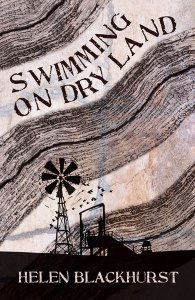
1. Swimming on Dry Land, Helen Blackhurst
swimming_on_dry_land_72Set in the blistering Australian outback, Blackhurst’s writing is so vivid that even if (like us) you’re experiencing mild Welsh weather, you might start to feel the prickling heat she conjures.
Swimming on Dry Land tells the story of the Harvey family, who move to the fictional mining town of Akarula in outback Australia in search of paradise, and instead find deceit, mystery and superstition. Georgie, the youngest, is missing – and she’s not the first to vanish into the landscape. As the family searches for their lost daughter, their dream-like vision of life in Akarula collapses around them. And as the history of the landscape unfolds, new possibilities and answers to the mysterious disappearances slowly suggest themselves.

2. The Road to Zagora, Richard Collins
The Road to ZagoraAfter he is diagnosed with Parkinson’s Disease, Richard Collins decides to see as much of the world as possible while he still can. India, Nepal, Turkey, Morocco, Peru, Equador and even our very own Wales – Collins travels to them all, taking each day as it comes, accompanied by his partner Flic, as well as ‘Mr Parkinson’. Leaving the tourist trails, they visit places of extremes: the Himalayas, rainforests, deserts. The difficulties of rough terrain, altitude, extremes of climate for a person with Collins’ condition are an ongoing strand of his narrative; but although the hardships aren’t ignored, any sentiment or self-pity is denied through Collins’s resolute and independent-mindedness.
The Road to Zagora is dramatic, honest, and at times humerous too. Collins has written a memorable journey around the world, and the self.

3. The Man at the Corner Table, Rosie Shepperd
the man at the corner table rosie shepperdIn these poems the voice is one of urban sophistication; it has a merciless charm that teases and tempts us with sensual evocations of food and place.
Tastes, scents, colours and textures surprise and entice, and there is a winning insistence on detail offered with an irony that blends into satire.
Comedy, grief and loss combine like the distinct yet complimentary flavours in a dish – these poems are exquisite meals, to be devoured amidst surprising intimacies.

4. Foreign Bodies, Candy Neubert
foreign bodiesFresh from the UK and on an idyllic holiday in the Phillippines, Emma thinks she has fallen in love with a place, a person, and pursues the man of her dreams with a colonial zeal. But for all her poetic sensibilities, she seems unaware of the destruction she is capable of leaving in her wake.
A beautifully written first novel, Foreign Bodies explores the spaces between people, and the nature of encounters in romantic idylls on the other side of the world.

5. Dark Mermaids, Anne Lauppe-Dunbar
Dark_Mermaids_Web72It is the Olympic summer so what better time to read Anne Lauppe-Dunbar’s gripping thriller, Dark Mermaids, which tells a shocking yet enduringly familiar story of the horrors of a political system that doped its youngsters to sporting superhero status, and then left them to fend for themselves.
Dark Mermaids follows West Berlin police officer Sophia as she is called to investigate the murder of her childhood friend Käthe. The search for Käthe’s killer draws Sophia back into her abusive past as a child swimming star in the former GDR, and as the web of half-remembered horrors starts to unravel, those close to Sophia begin to take notice. There are some who still have much to hide, and they will go to great lengths to stop their secrets from surfacing.
Dark Mermaids was shortlisted for the Cross Sports Book Awards, 2016.

6. The Roots of Rock, Peter Finch
The Roots of Rock, from Cardiff to Mississippi and BackFrom 1950s Cardiff suburbia to modern-day America and beyond, Peter Finch follows the trail of twentieth century popular music. The Roots of Rock: from Cardiff to Mississippi and Back mixes musical autobiography with an exploration of the physical places from which this music comes.
Finch gives us sharp-eyed accounts of gigs from Champion Jack Dupree to the Garth Mountain Boys, muses on the importance of the Dansette record player, ponders why Elvis never came to Wales (except multiply in Porthcawl’s legendary Elvis Festival), visits musical shrines and theme parks, and even recalls his own attempt to start a band. You’ll find all kinds of music here – everyone from Ray Charles to Taylor Swift – and each chapter is accompanied by a multi-track playlist, making this the perfect book for anyone who loves music, history, and culture.

7. A Boat Called Annalise, Lynne Hjelmgaard
A Boat Called Annalise Lynne HjelmgaardBeautifully evocative of life on a sailboat, Lynne Hjelmgaard’s poems trace a journey this much-travelled author took on a sailboat to the Caribbean and back to Europe with her husband.
The couple’s relationship is poised on tensions, beautifully observed, as masculine/ feminine, the need to assert and/or withdraw in the face of the turbulent seascape. The paradise-like destination is reached and later we learn that life goes on, there is illness and loss, and in the final section, the tone becomes movingly elegiac.
Hjelmgaard’s poems are beautifully poised, full of clear-eyed and frequently humorous observations. Her work is full of sentiment without being sentimental. We hope you enjoy your trip on A Boat Called Annalise.

We hope you like our summer selections. And if you’re struggling to fit all the books that have caught your eye into your suitcase, why not explore our range of eBooks? Whether you have a Kindle, a Kobo or any other e-reader, we have a whole host of books you can download instantly. See below for the latest digital additions to our list…

Losing IsraelLosing Israel, Jasmine Donahaye
Amazon: £10.00
Kobo: £7.19
In Losing Israel the search for her family’s past and the part her forebears played in the newly created Israel reveals unsettling knowledge about kibbutzim and land clearances in northern Israel. Challenged by this new and unwonted information, Donahaye’s notion of history and her understanding of Israel, of her grandparents and of her identity is completely transformed.

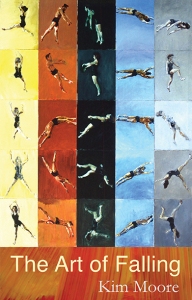
The Art of Falling Kim MooreThe Art of Falling, Kim Moore
Amazon: £9.48
Kobo: £7.19
“The poems of The Art of Falling are fearless. There are more good poems filling Kim Moore’s first collection than many poets will produce in a lifetime.” – Alison Brackenbury
In this startling debut, Kim Moore writes with a compelling directness and power about her life and the lives of others.

The World, The Lizard and Me - Gil CourtemancheThe World, the Lizard and Me, Gil Courtemanche

Amazon: £9.48
Kobo: £7.19
A novel of testament to the children caught up in the civil wars of Central Africa, The World, the Lizard and Me follows criminal invetigator Claude Tremblay as he pursues a warlord charged with creating child soldiers in the Congo.


Want to see more Seren eBooks? See our full eBook list on Kobo or search by title on Amazon.

Posted on

Remembering Leigh Roose – ‘The Prince of Goalkeepers’

Remembering Leigh Roose

It’s Euro 2016 and Wales is in the finals! Historian Mike Rees looks back into Wales’ sporting history to remember goalkeeping legend Leigh Roose, who found glory on the football field and died a hundred years ago, at the Somme.

Mike Rees’  book Men who Played the Game looks at the development and importance of sport in Britain and the Empire leading up to the outbreak of the First World War, and the part played by sportsmen in the conflict.

On the eve of Wales’s participation in the finals of a major international football tournament for the first time since 1958, it is likely many of you may be reflecting on past glories achieved by Welshmen on the football field.
You might well consider the achievements of Wales first ‘football superstar’ Billy Meredith, talisman of both Manchester City and Manchester United in the early years of the twentieth century or the ‘Gentle Giant’ that was John Charles, revered from Swansea to Turin where he won multiple league championships and cups as the focal point of a brilliant Juventus team. More likely, you’ll consider the incomparable Ryan Giggs, with his sack full of medals, or the striking prowess of Ian Rush or Mark Hughes. But as Gareth Bale, the latest Welsh superstar, graces the football stadiums of France this summer how many will remember Leigh Roose, the first renowned Wales goalkeeper and predecessor of Jack Kelsey in 1958 or Neville Southall in the 1980’s and ‘90’s? As we move towards the centenary of Roose’s demise on the battlefields of the Somme, perhaps it is time to ensure that a new generation is made aware of the exploits of this remarkable Welshman.

Remembering Leigh RooseThe process of remembering Leigh Roose has already begun. Pupils from Wrexham are creating a collage with a particular focus on his part in the first international match to be caught on film, the game between Wales and Ireland at the Racecourse, Wrexham on 2nd April 1906. This will be displayed in Eagles Meadow shopping centre, Wrexham and bring his name to many for the first time – recognition that is long overdue.

Leigh Richmond Roose was born at Holt, near Wrexham on 26th November 1877, the son of a Presbyterian minister, the fourth of five boys. Despite losing his mother to cancer at the age of four, he had a comfortable middle class upbringing which led to him gaining a degree in Bacteriology from UCW Aberystwyth in 1899. Leigh enjoyed his time at ‘Aber’, particularly his experience of playing for the town football team in his favourite position, that of goalkeeper. So successful was he that in February 1900 he was chosen to play for Wales in the match against Ireland, the first of his 24 caps. A host of professional clubs sought his signature but by now Leigh was working in King’s College, London, fully intending to pursue a medical career. In the summer of 1901, however, he relented and signed for Stoke.

It was not long before this six foot, thirteen stone athlete made his mark. He became known for his reckless bravery, total dominance of his penalty area, his startling reflexes and resulting shot-stopping. Playing often as a modern day sweeper, Leigh left the confines of his area to start attacks, carrying the ball to the half way line, as he was permitted to do. So effective was this tactic that in 1912 the laws were changed in order to prevent goalkeepers handling the ball outside the penalty area. Leigh was also prepared to impose himself in other ways. It was not uncommon for him to be involved in the occasional scuffle or dispute with authority, sometimes over his travel expenses, on other occasions, disputes with the opposition. Leigh was also an entertainer – his gymnastic ability used to swing from the crossbar when things were quiet at his end of the pitch. Crowds loved him, even more so when Wales won their first Home International championship in 1907. Although top league and cup medals eluded him, Leigh was always challenging for honours at Everton from 1904 and later at Sunderland. He became one of the country’s best known footballers whose lifestyle as an eligible young man in Savile Row suits predates David Beckham by ninety years. His affair with the ‘Queen of the Music Hall’, Marie Lloyd would delight the tabloids of the 21st century. However nothing lasts for ever and, following a spell as player coach at Arsenal, Leigh retired to his medical commitments and the after dinner circuit in 1912.

When war broke out Leigh joined the Royal Army Medical Corps and was quickly despatched to the Dardanelles where he served in Gallipoli. Here he worked in hospitals treating hundreds of serviceman injured in that futile encounter. However Leigh wanted to see the action for himself and, following his return to London, he joined the 9th Battalion of the Royal Fusiliers. His wish for action was soon granted. Leigh was awarded the Military Medal after he had taken part in the capture of Ration Trench near Dainville and the subsequent resistance to the German counter-attack. In October 1916 Leigh was once again in action. The 9th Royal Fusiliers advanced on the Albert-Bapaume Road and this led to the capture of Le Sars but the cost was disastrous. Three hundred and thirty two officers and private soldiers were killed or injured in the action. Leigh was seen running across No Man’s Land firing his gun with no concern for his own safety. He was last seen lying in a crater, probably already dead. Leigh’s body was never discovered and he is remembered, his name engraved and incorrectly spelt, on the Thiepval Memorial to the missing. Thirty eight year old Leigh is one of the 72,000 names remembered on that most impressive of memorials.

Leigh’s death was keenly felt by all who knew him. Mike Rees, in his recent book Men Who Played the Game, quotes the Athletic Times which described him as “dexterous though daring, valiant though volatile”. But Rees also concludes that this is only part of the story and that Leigh Roose, along with Billy Meredith, did more to put Welsh football on the map than any other player. That, coupled with his ability to entertain thousands of spectators, demands that he be remembered as a sportsman of real significance, one who died as bravely as he played. During this summer of exciting Welsh football, a century after Leigh made the ultimate sacrifice, he deserves to be remembered.


Posted on

International Dylan Thomas Day 2016 | News and Offers

international dylan day 2016 offers

Happy International Dylan Thomas Day! This year is the second annual celebration of Dylan Thomas, held on 14th May to mark the date Under Milk Wood was first read on stage at 92Y The Poetry Center, New York in 1953.

International Dylan Thomas Day 2016 Dylan Day offers Seren

We have a number of Dylan Thomas related books in our store, and for today only, these titles are 50% off:

dylanday

Dylan Remembered: Volume One: 1914-1934, ed. David N. Thomas
Paperback:
£12.95

£6.48
Hardback:
£25.00
£12.50
This is the first of two volumes of transcribed interviews about the poet Dylan Thomas. Journalist, broadcaster, and author Colin Edwards interviewed numerous sources close to Thomas for a planned biography of the poet, but he was unable to begin work before his early death. The transcribed tapes have been edited into two collections, with the second due in 2004. Startling new information about Thomas’s life and writing is disclosed, including influences on his writing and the sources from which he drew inspiration and storylines.

Dylan Remembered: Volume Two: 1914-1934, ed. David N. Thomas
Paperback:
£12.95

£6.48
Hardback:
£25.00
£12.50
This second volume culled from the Colin Edwards Archive of interviews with Dylan Thomas’ family, friends and colleagues made during the 1960s covers Thomas’ ‘adult’ life from his move, aged 20, to London to become a professional writer to his death in New York 51 years ago. It is a story which we think we know, but the archive sheds new – often contradictory – light on a life which has been much mythologised.

Fatal Neglect: Who Killed Dylan Thomas, David N. Thomas
£9.99
£5.00
Who and what killed Dylan Thomas? The death of this iconic writer, in New York in November 1953, remains shrouded in mystery fifty-five years later. What might have been a triumphant new departure in his career and life with the first production of Under Milk Wood, and plans to work on operas with Igor Stravinsky and Samuel Barber turned instead into a requiem for man whose life spiralled out of control.
Leading Dylan Thomas authority David N. Thomas draws on his extensive research, and uncovers startling new evidence, to produce the definitive answers in a superbly written account which balances historical context with forensic detail, Thomas’ character with the demands made upon him by friends, lovers and his reading public.. His verdict is a chilling study of a poet, a place and a death.

Advantages of the Older Man, Gwyneth Lewis
£7.99
£4.00
A light-hearted novella exploring the strange case of a Swansea woman who is apparently possessed by the spirit of Dylan Thomas. Naturally all is not as it seems. The woman, who works in the Dylan Thomas Centre, meets a rather different Dylan from the one she knows by repute, one who doesn’t really fit in with the ghosts of other poets in heaven and is desperate to train himself to join the fitter shades of the long distance runners instead. Her own life, which has been lonely and sad, is completely transformed by the encounter.
Fluent and entertaining, the story is written with all the confidence and panache you would expect from the former national poet, also a playwright and award-winning author of fiction and non-fiction. Alongside the humour there is a warmth and pathos, and some pithy observations on poets and poetry and the nature of fame.

This offer ends midnight, 14th May, so take advantage before the time runs out!

And as always, there are events running all across the UK in celebration of Dylan Day, so when you’re finished browsing our website take a look on the Literature Wales website to find a Dylan Day event near you.

Posted on

Spring into a New Series: discover New Stories from the Mabinogion

Spring into a New Series Mabinogion

The sun has started to shine, flowers are blooming, so why not ‘spring’ into a new series?

Spring into a new series kobo sale

If you haven’t yet discovered our New Stories from the Mabinogion series, then now is the perfect time. Until 14 April, the first book in the series, White Ravens by Owen Sheers, is only 99p in the Kobo Spring into a New Series sale.

The eleven stories in the Mabinogion come from two medieval Welsh manuscripts, with roots dating back many centuries earlier. They bring us Celtic mythology, Arthurian romance, and their own view of the Island of Britain. There is enchantment and shapeshifting, conflict, peacemaking, love and betrayal. In this series commissioned by Seren, the old tales are at the heart of the new. Each author reinvents a story in their own way: creating fresh, contemporary tales that speak to us as much of our own world as of events long gone. Based on ‘Branwen, Daughter of Llyr’, White Ravens is a haunting novella from an acclaimed writer.

“a gripping contemporary story… brilliantly absorbs the magical elements of the original” The Guardian

So what are you waiting for? If you have an e-book reader then don’t hesitate – go to the Kobo store and purchase your eBook copy for only 99p. And if you would prefer a paperback, you can find all eleven stories on our website.


Posted on

An Easter Egg from Seren

easter egg 30% off sale

Happy Easter everyone! We have a special Easter egg on the website for you: 30% off books across the Seren store.

The Easter holiday carries with it the message of new beginnings, so why not begin a new book? Our 30% offer includes our gorgeous poetry, fiction and non-fiction titles, so there is something for everyone.

easter egg 30% off


We hope you find something new to bury your nose in this Easter.

Offer ends midnight, Monday 28th March.

Shop now


Posted on

Happy St Patrick’s Day 2016

st patricks day 2016

Happy St Patrick’s Day to every one of you, far and wide.

St Patrick's Day 2016


And here’s our bookish Irish flag in honour of the day, pieced together using just a few of our green, white and orange books.

Here is the full list of titles featured in our St Patrick’s Day ‘flag’:

Poetry and Privacy: Questioning Public Interpretations of Contemporary British and Irish Poetry;
The Ivy Hides the Fig-Ripe Duchess;

The Scattering;
The Dragon and the Crescent;
Crossing Over;
Masculine Happiness;
Bilbao – New York – Bilbao;
The Woman at the Window;
All the Souls;
The Hitting Game;
Dirt Roads;
Big Low Tide;
Zen-Cymru;
Christmas in Wales;
The Shop;
If You Fall I Will Catch You;
Midas’ Daughter;
Eros Proposes a Toast;
The Visitations;
Playing House;
Midnight, Dhaka;
Daniel’s Beetles.

We have been lucky enough to add some great Irish and Ireland-based authors to our list over the years who have written some gorgeous books.

Of special mention (and visible in the ‘flag’, above) is Jaki McCarrick’s The Scattering, a collection of nineteen stories, many of which are set on the Irish border. One of the stories ‘The Visit’ won the Wasafiri Prize for new fiction, and many have been published to much acclaim in literary magazines.

Another Irish voice that has recently appeared is Helen Blackhurst. Her debut novel Swimming on Dry Land, which follows a family’s quest for a new life in the Australian outback (as well as their search for missing 4-year-old daughter Georgie), was released just before Christmas.

In Liam Carson’s family memoir Call Mother a Lonely Field, the author’s Irish-speaking, West Belfast childhood is described through still-present echoes of the Second World War, dystopian science fiction, American comic books and punk rock. The memoir was shortlisted for the RSL Ondaatje Prize 2013.

We hope you enjoy St Patrick’s Day!

st patricks day patrick flag ireland irish


Posted on

50% Off All Books: Editors’ Picks

50% off all books this week

2016 has arrived and with it, our January sale. For one week only, enjoy 50% off all books available on our website!

That being said, we know choosing which books to buy can be a little tricky so our three editors are on hand to give their book recommendations. Be it poetry, fiction or non-fiction that tickles your fancy, we have suggestions for one and all.

Mick Felton Non-Fiction Editor
Mick Felton – Non-Fiction Editor

As our non-fiction editor, Mick sees a wide variety of books each year, including everything from history, crime, autobiography, music and sport. So which two books does Mick think you need most on your shelf?


The Road to Zagora by Richard Collins
The Road to Zagora

After being diagnosed with Parkinson’s Disease, Richard Collins sets off with his partner Flic on a once-in-a-lifetime adventure. The Road to Zagora is a singular travel book which takes in India, Nepal, Turkey, Morocco, Peru, Equador and Wales.
Though not shy about the hardships of the disease, any sentiment of self-pity is denied through Collins’s resolute and independent-mindedness and the quality of writing.
£9.99  £5.00

Losing Israel by Jasmine Donahaye
Losing Israel

After discovering by chance that her family had colluded in the eviction of Palestinians in 1948, Jasmine Donahaye set out to learn the story of what happened. Her discoveries challenged everything she thought she knew about the country and her family. Losing Israel is a moving and honest account which spans travel writing, nature writing and memoir. Jasmine explores the powerful and competing attachments people feel for their country and its history, by attempting to understand and reconcile her conflicted attachments, rooted in her family story – and in a love of Israel’s birds.
£12.99 £6.50


Amy Wack Poetry Editor
Amy Wack – Poetry Editor

Amy has read and enjoyed a dazzling array of poetry over the twenty-plus years she’s been with us. Trying to narrow down her choices to just two books was hard, but here goes…


A Formula for Night: New and Selected Poems by Tamar YoseloffTamar_quicksand cover

The eagerly awaited summation of Tamar’ work, encompassing selections from four published print volumes: Sweetheart, Barnard’s Star, Fetch and The City with Horns; and poems from her collaborations with artists: Formerly, Marks and Desire Paths.
The book also includes a generous selection of beautiful new poems, which are often artful explorations of paradox: death/birth, dark/light, clarity/mystery.
£12.99 £6.50

House of Small Absences by Anne-Marie Fyfe
House of small absences
Anne-Marie Fyfe’s poems have long dwelt on the role that the spaces we inhabit, the places in which we find security, play in our lives: House of Small Absences is an observation window into strange, unsettling spaces—a deserted stage-set, our own personalised ‘museum’, a Piedmont albergo, underground cities, Midtown roof-gardens, convent orchards, houseboats, a foldaway circus, a Romanian sleeper-carriage—the familiar rendered uncanny through the distorting lenses of distance and life’s exigencies, its inevitable lettings-go.
£9.99 £5.00
Penny Thomas


Penny Thomas – Fiction Editor

Which fictional words would Penny have you delve into first? We’ve published a beautifully varied range of books, and below are just two of Penny’s favourites.

Swimming on Dry Land by Helen Blackhurst
swimming_on_dry_land_72
Twelve-year-old Monica Harvey is looking for her sister Georgie, who has disappeared. The Harvey family has recently moved to Akarula, south-west Australia, having been persuaded to set out in search of a new life by their rich Uncle Eddie, who owns the town. Unbeknownst to them, Georgie isn’t the first person to vanish.
As their dream-like vision of life in outback Australia begins to be tainted my mystery and deceit, the history of the land unfolds and answers to the strange disappearances slowly suggest themselves.
£9.99 £5.00

Foreign Bodies by Candy Neubert
foreign bodies
Fresh from the UK, Emma thinks she has fallen in love with a place, a person, and pursues the man of her dreams with a colonial zeal. But for all her poetic sensibilities, she seems unaware of the destruction she is capable of leaving in her wake.

A beautifully written first novel, Foreign Bodies explores the spaces between people, and the nature of encounters in romantic idylls on the other side of the world.
£7.99 £4.00


Don’t forget, absolutely everything on our website is 50% off– so if you’re eager to see beyond our suggestions, then go forth and discover a new read for the New Year on our website.

https://media.giphy.com/media/VcizxCUIgaKpa/giphy.gif

Half price offer ends midnight, Sunday 10th January. Happy book hunting!