Posted on

Summer sale, half-price spotlight: Alun Lewis

Half price Alun Lewis summer sale

Our Legend of the Month’s extraordinary war poetry, short stories, and biographies (written by John Pikoulis) are all included in the half-price summer sale – and the offer ends this Sunday.

Who was Alun Lewis?
Alun Lewis was born on the 1st July, 1915 in Cwmaman. A pacifist by nature, Lewis nevertheless eventually joined the Royal Engineers as World War Two broke out, and later qualified as a Second Lieutenant despite how unhappy military life made him. In December 1942, he arrived at a new station in Nira, India, and in the same year his poetry collection Raiders’ Dawn was published. It would be the only collection published during his lifetime. Lewis died on 5th March, 1944, in what many maintain to be a tragic accident. After his death came the publication of his second collection of poetry, Ha! Ha! Among the Trumpets (1945), followed by Letters from India (1946) and In the Green Tree (1948). Most recently, Lewis’ lost novel from the 1930s, Morlais, (2015) has been brought into print for the first time, marking the centenary of this great writer’s birth.

See below for our selection of Alun Lewis titles.

Alun, Gweno & Freda by John PikoulisAlun, Gweno & Freda, John Pikoulis
£14.99  £7.49
Alun Lewis maried Gweno Ellis in 1941, but they were almost immediately separated as Lewis prepared for his deployment with the British army’s Royal Engineers. Alun, Gweno & Freda delves into the charged relationships Lewis maintained with Gweno, and with Freda Ackroyd, an expatriate in India, arguing both were key to his writing and his mental health. The circumstances surrounding Lewis’ death by a single shot from his own gun are illuminated, too, contributing to the ongoing debate about whether this was an accident or suicide.

Alun Lewis Collected PoemsAlun Lewis: Collected Poems, ed. Cary Archard
£9.99  £4.99
Lewis’ remarkable body of poetic work is skillfully brought together by editor Cary Archard. The Collected Poems includes the complete texts of his two published books, Raiders’ Dawn (1942) and Ha! Ha! Among the Trumpets (1945), reprinted in chronological order and retaining the important
original section headings under which Lewis chose to arrange and group his poetry. Lewis’s two collections are a remarkably detailed and full account of the experience of becoming a soldier and going to war. As Archard states, ‘no-one can read this collection of poems, together in one volume for the first time, without being struck by how the singularity of his voice permeates a surprising diversity of forms’.

Morlais Alun LewisMorlais, Alun Lewis
£12.99  £6.49
South Wales. The Depression. Choices for young people are limited yet miner’s son Morlais Jenkins seems destined to follow the educational route out of Glannant, despite his lowly background. When the local colliery owner and his wife offer to adopt Morlais on the death of their son, his parents recognise the opportunity for an even brighter future for Morlais. But what price must each of them pay? As the story unfolds through turbulent times in their mining village, Morlais comes to a new understanding of life as he grows from a young boy into a young man.
Founded on vivid and authentic passages of everyday life, Morlais is an enthralling story of place and people and shows what an exciting talent was lost when Alun Lewis died aged only twenty-eight.

Alun Lewis: A Life, John PikoulisAlun Lewis: A Life, John Pikoulis
£8.95  £4.47
From his childhood days in the depressed valleys of South Wales, Lewis felt he had a vocation to be a writer. Pikoulis traces Lewis’s development from the remarkable schoolboy stories written as an unhappy boarder, through his university education at Aberystwyth and Manchester to his return to the valleys as a teacher. Lewis’s poems and stories, authentic and moving, were popular with both readers and critics, catching the tone of the ’phoney war’ years, and later the disturbing but exciting experience of his war in India. His vivid letters home, which have been compared to Keats’ letters, capture both the atmosphere of war and the essence of Lewis’s character, and Pikoulis draws on them to portray a fascinating man and writer.

 

Half price summer sale Seren


Posted on

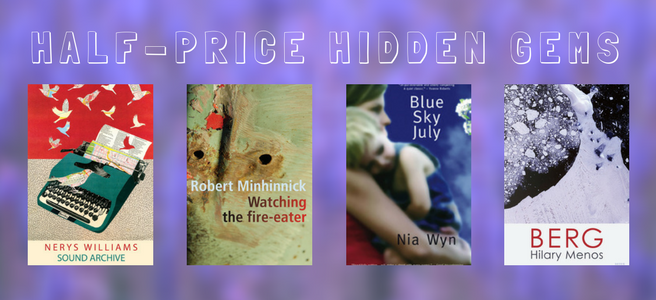
Half-Price Hidden Gems: Prize-winners from the archives

Half-Price Hidden Gems Seren Archive

Today we shine the spotlight on some hidden gems from the archives – fiction, poetry and non-fiction prize-winners from years passed which, if you haven’t read already, come highly recommended.

We’ve just passed the mid-week hurdle, and that means there’s only a few days left to take advantage of our half price summer sale. If you’re struggling to choose your next read, why not start with one of the extraordinary books below? These are the oldies and goodies from the Seren archive.

John Haynes Letter to PatienceLetter to Patience, John Haynes
Costa Poetry Award Winner, 2006
Set in Patience’s Parlour, a small mud-walled bar in northern Nigeria, at a time of political unrest, Letter to Patience is a vividly atmospheric book-length poem divided into cantos. The poem is not only a biography, or an essay on post-colonialism, it is an epic portrayal of a beautiful and troubled country and of one man’s search for meaning in difficult times.

Touch CoverTouch, Graham Mort
Edge Hill Short Story Prize Winner, 2011
From a young child adrift on an ice-filled lake to an ageing farmer facing life alone, the twenty-one stories display a deep sensitivity to both the natural world and to human relationships. In skilfully crafted prose, vivid with detail, Mort examines the strength and fragility of life and the ties that hold us within it.
Touch spans twenty years of short-story writing, and includes the Bridport prize-winning story ‘The Prince’.

Hilary Menos BergBerg, Hilary Menos
Winner of the Forward Prize, Best First Collection, 2010
In this extraordinarily vibrant debut collection, icebergs floating down the Thames jostle with transvestites in Singapore, aliens wading the Hudson River and the lively crew from the local slaughterhouse. We go shopping with Ingomar the barbarian and watch Bernard Manning gigging at Totnes Civic Hall. Throughout, Menos brings a sophisticated sensibility to her poetry. Her subjects are seen aslant, with ironic as well as tender intentions.


Gift of a Daughter Emyr HumphreysThe Gift of a Daughter, Emyr Humphreys
Wales Book of the Year Winner, 1999
Archaeology lecturer Aled Morgan and his wife Marian flee to Tuscany, and the home of old friends, to escape a family tragedy. Yet even immersed in Etruscan culture, Aled finds that friendships aren’t all they seem, and that his wife has become almost a stranger to him. The Gift of a Daughter is a novel of delusion and self-knowledge, tradition and change, loss and identity in which the pace, plotting, characterisation and dialogue are as faultless as we expect from a writer of Emyr Humphreys’s experience and skill.

Nerys Williams Sound ArchiveSound Archive, Nerys Williams
Winner of the DLR Strong Award, 2011
Shortlisted for both the Forward Prize Best First Collection and the Michael Murphy Prize, Sound Archive is a strikingly original first collection of poems. Using formal strategies similar to modernist painting: abstraction, dislocation, surrealist juxtaposition, the poet conjures a complex music, intriguing narratives, and poems full of atmosphere that query identity, gender, and the dream of art as a vehicle for emotion and meaning. Williams confronts our preconceptions about what it might mean to be a woman writing against the background of two formidable traditions: that of Welsh-speaking Wales and of English literature.

Watching the Fire Eater Robert MinhinnickWatching the Fire-eater, Robert Minhinnick
Wales Book of the Year Winner, 1993
Watching the Fire-eater
covers variety of subjects: third world poverty and the internationalism of alcohol, rugby through the eyes of a vegetarian, nuclear power, sunbathing and a thanksgiving dinner for the demise of Margaret Thatcher. But at the core of this essay collection is a vivid series of attempts to strip away the exhausted mythologies of the writer’s own country and the increasingly-packaged places he visits. Whether in the rainforest or the big match crowd, Minhinnick’s language: acid, imagist, compassionate, celebrates the people he meets and, fleetingly, defines their lives.

Nia Wyn Blue Sky JulyBlue Sky July, Nia Wyn
Barnes & Noble Discovery Prize Winner, 2009
Set between the summers of 1998 and 2005 in Cardiff, Blue Sky July follows the story of a mother whose child suffers a devastating brain injury. It traces her journey into a world hidden away in society’s pockets as she battles against impossible odds to heal him.
Through Wyn’s intimate day by day musings, the book explores the impact of the tragedy on her home life, love life, friendships and connection to the world, as the most extraordinary relationship unfolds between them. Blue Sky July won the Glen Dimplex Biography Prize and was shortlisted for both the Good Housekeeping Book of the Year, and Wales Book of the Year.

Time Being Ruth BidgoodTime Being, Ruth Bidgood
Roland Matthias Prize Winner, 2011
Time Being is Ruth Bidgood’s tenth collection, and a Poetry Book Society Recommendation. It has been said, rightly, that Bidgood’s work is ‘emphatically a poetry of location’ and it is the history and nature of her particular region of mid-Wales that most inspire the author. Her distinctive voice has a quiet authority but also a subtle, conspiratory edge, as if she is letting one in on a secret, unveiling a hidden fact, or making a discovery. She avoids sentimentality, but – unfashionably – not sentiment; an observation can engender joy or sorrow or fear uncluttered by irony. These are ambitious attempts to transcend the lyric and move towards a more epic, multi-faceted form equal to the many experiences of her long life.

The Colour of Dawn, Yanick Lahens
Winner of the RFO Award (2009); Prix Millepages (2008); and Prix Richelieu de la Francophonie (2009)
Port au Prince, Haiti. The police roam the streets and no-one is safe. Fignolé, musician and political radical, is missing. His sisters Joyeuse and Angelique search for their young brother amid the colourful bustle, urban deprivation and political tension of the city. Eventually they will find him, but in the process they will also have found more about themselves than they wanted to know. The Colour of Dawn is a tense, passionate and vividly told story of small victories of hope in the face of a seemingly impossible fight against a monolithic regime.

Bilbao–New York–Bilbao Kirmen UribeBilbao–New York–Bilbao, Kirmen Uribe
Spanish National Literature Prize Winner, 2009
Bilbao–New York–Bilbao takes place during a flight to New York and tells the story of journeys by three generations of the same family. The key to the book is Liborio’s fishing boat, the Dos Amigos: who are these two friends, and what is the nature of their friendship? Through letters, diaries, emails, poems and dictionaries, Kirmen reflects on the art of writing, and the distinction between life and fiction. Kirmen’s novel, translated by Elizabeth Macklin, creates a mosaic of memories and stories that combine to form a homage to a world that has almost disappeared, as well as a hymn to the continuity of life.


Half price summer sale Seren


Save

Posted on

Short Story of the Month | ‘Swimming’ by Katie Munnik

Katie Munnik Swimming Short Story

July’s featured Short Story of the Month is ‘Swimming’ by Katie Munnik. Katie is a Canadian writer living in Cardiff whose prose, poetry, creative non-fiction and reviews have appeared in several magazines and anthologies; her first collection of short fiction will be published by Wild Goose this autumn. In ‘Swimming’ she paints a vivid picture of a hot day on the beach, a suggestion of something sinister hidden by the calmness of the sea.


Swimming

This is an extract. Read the full short story for free on our website.


Light and water and sand and warmth. Peace on the way here, too, which can’t be guaranteed these days. Seems of late we’re getting slammed doors and tears every day, and then I stand in the kitchen, taking long, deep breaths. It’s not as if I can’t remember what it’s like to be her age, but try convincing her of that. In such a rush to grow up. She doesn’t see how soon it will all be coming her way; how few years we have left before she’ll be leaving. We could almost count it out in months.

But not today.

Today, she is relaxed. Stretched out on a beach towel, her pale skin courting that perfect, golden glow and her nose already freckling. Long-limbed and lovely. She’s lying on her belly, reading a paperback from the library and chewing on a pencil. From time to time, she underlines something or scribbles in the margin. I’m only watching out the corner of my eye and I wonder what she’s adding to the story, but I don’t ask.

We left her dad at home, working on the new cedar deck. He’ll be sunburnt and spent when we get home, his skin covered in sawdust. He’ll be happy.

This beach is a favourite of mine. It’s not far from the city – only half an hour in the car – and we usually have the place to ourselves. My mum loved it here and used to bring us along on the bus, with a travelling rug and a thermos in the tote bag and her long hair tied back in a scarf. I’d steal her sunglasses and pull faces, pretending to be a bug, and she’d take them back and set them on top of her head, then straighten my pigtails and tell me to go collect some shells. She looked like a movie star, my mum. She’d like to be here now, I’m sure. I’d like that, too.

The sun is already hot on the sand and my skin feels tight. ‘You okay here?’ I ask, ‘I was thinking of going in for a swim.’

‘Fine, Mum.’ She doesn’t look up from the page and her voice is soft and distracted.

The sand is warm and dry under my feet. A breeze blows gently. Not enough to turn the pages of a book. The horizon looks hazy, and I wonder if it’s the heat. Does heat do that over water? I’m wondering about this when I hear a call from the dunes, so I turn to look back and there’s my daughter looking up from her book. Then I hear the crow call again. I smile, catching my mistake, and my daughter waves her hand and lets out an echoing caw. I wave back and turn again to the sea.

The water is cold, but it always is and I don’t hesitate. Step after step after step until I can lower myself in and let the water catch my weight. Long strokes pushing out, the water deepens under me. Further along the coast, there are rocky stretches and cliffs, too, but this bay is gentle and so is the sea. Everything is quiet. The birds must be further out, fishing where the water is deeper or tucked away on their cliffs to watch the world. All I can hear is the sea’s song, lapping and rippling around me.

I swim out a hundred strokes, counting with each breath.

A wave catches me with my eyes closed, mouth open, and I flip onto my back, full of sea. I spit out my breath and taste my heart in my mouth, wondering how a wave caught me unaware like that. I’m blinking now and everything shatters into reflected light as I find the surface again and try to balance, but another wave is coming, so I take a breath and tuck myself safely under the surface. The strength of the running water somersaults me and I can’t fight it. Surfacing again, I look for the next wave, but there isn’t one. The sea is flat…


Continue reading ‘Swimming’ for free here.


Posted on

Book giveaway: win a copy of Mr Vogel by Lloyd Jones

Book giveaway Mr Vogel Lloyd Jones

This month we are giving away a copy of Lloyd Jones’ stunning novel, Mr Vogel, which is newly back in print.

To enter, simply sign up to the Seren newsletter before 1st June:
https://www.serenbooks.com/newsletter/signup

Book giveaway Mr Vogel Lloyd Jones


About Mr Vogel:
Lloyd Jones Mr Vogel
Following a bout of alcoholism which almost killed him, Lloyd Jones decided to recuperate by walking around Wales. It was this epic walk which inspired Jones to write Mr Vogel – one of the most original and engaging novels to appear from – and about – Wales in recent years.
The novel begins with the discovery, in the attic of a second-hand bookshop, of an account of a lame man’s mysterious quest – the so-called ’Vogel Papers’. Our guide, a Welshman, becomes obsessed with the Vogel Papers: his investigations take him across three continents and around his homeland – from Anglesey to Pembrokeshire, from Bangor to the Black Mountains – in search of a strange man known only as Mr Vogel.


We will pick a winner at random from all our email subscribers on 1st June. Make sure you have signed up to Seren News before then to be in with a chance of winning!

Why not give your friends a chance to win too, by recommending that they sign up to our newsletter before the end of the month using this link?
www.serenbooks.com/newsletter/signup


Posted on

Seren’s women on the books that have inspired us

Seren's women on the books that have inspired us

To mark International Women’s Day 2017, Seren’s female staff have come together to shine the spotlight on the books that have inspired us. Countless works of literature written by female writers have changed the world; the few mentioned here have personally changed us.

Sunshine, Melissa Lee-Houghton (Penned in the Margins, 2016)
Sunshine Melissa Lee HoughtonSuggested by Rebecca Parfitt, Editorial Assistant for Poetry Wales

“It both shocked and enthralled me in equal measure. Here is a poet laying her soul and body bare for all to see and its as uncomfortable as it is beautiful. Her poems have an energy that crackles on the page and her verse often long and sprawling as to almost seem unkempt. A truly authentic and honest contemporary female voice.”


A Girl Is a Half-Formed Thing, Eimear McBride (Galley Beggar Press, 2013)
A Girl is a Half-formed ThingSuggested by Rosie Johns, Marketing & Communications Officer

“Girlhood, growth and sexuality – this book is uncompromising in its depiction of the protagonist’s agonising journey through all of these. After puberty, she is seen by the men in her life (including her uncle) as a simply sexual thing. In reality she is fragmented, transgressive, troubled. There is nothing toned-down or dishonest about this book which, sadly, might explain the author’s staggering 9-year search for a publisher.”


Shakespeare’s Wife by Germaine Greer
Shakespeare's WifeSuggested by Amy Wack, Poetry Editor

“I’m a fan of this book by Greer, a scholarly and provocative imaginary life of Anne Hathaway, Shakespeare’s wife. Greer constructs a plausible and sometimes unexpected Elizabethan England based mostly on her research sifting the actual records from Stratford at the time. I know Greer can be wrong-headed and stubbornly persistent, but I always appreciate that her goal is to get people to think, to argue back, to defy received opinions!”


International Women’s Day has been observed since the early 1900s, and commemorates the moment for women’s rights. The day is also an opportunity to celebrate women’s achievements. This year the campaign centres around calling people to #BeBoldForChange – to help forge a better working world, and a more gender-inclusive world. Join in and be bold.

Posted on

Find a free Seren book this World Book Day

Seren books World Book Day 2017

Today we are celebrating all things literary for World Book Day, now in its 20th year. We want the world to discover our fantastic authors, and to help a few of you do just that, we’ve left a selection of our books all over Cardiff for lucky people to find and keep.

If you’re out in Cardiff today, stop for a coffee in one of the lovely independent cafés and you might well find a Seren book hiding somewhere near you! Take it, enjoy it, and pass it on to someone new to enjoy afterwards to spread the World Book Day love.

Seren books World Book Day book drop
Can you guess which books we’ve hidden? Poetry, fiction, non-fiction – there’s a real mix out there, just waiting to be found.


Happy World Book Day, and happy book hunting…


Posted on

Seren’s Top Ten Literary Romances

seren top ten literary romances

Valentine’s Day needn’t be a cause for stress when there are so many great literary romances to get lost in. Happy ending or otherwise, love in literature is beautiful and intense – the perfect distraction on this much-maligned day of devotion. Here are the Seren team’s top ten literary romances – in no particular order.

  1. Jayne Eyre and Edward Rochester – Jayne Eyre
    Unassuming and lacking in contemporary beauty, Jayne is perhaps not the convential heroine figure, yet her honesty and intelligence captures our hearts as well as that of wealthy Edward Rochester, whose impulsiveness and secrecy derails their budding romance. Rekindled much later after great suffering, their love seems all the more pure.
  2. Claire Abshire and Henry DeTamble – The Time Traveler’s Wife
    ‘I am at a loss because I am in love with a man who is standing before me with no memories of me at all’. Claire and Henry’s romance is unconvential and at times agonising, but each moment time-travelling Henry is brought back to Claire is cherished by both.
  3. Emma Woodhouse and George Knightley – Emma
    Like a slow burn, Emma’s imperceptible love grows out of friendship for the frank and critical Mr Knightly – the only character whose genuine concern and care for Emma is strong enough to prompt such well-meaning rebukes. Their romance is compassionate and selfless, and each improves the other through their genuine affection.
  4. Catherine Ernshaw and Heathcliff – Wuthering Heights
    Both strong, wild and passionate, Catherine and Heathcliffe fall prey to an obsessive kind of love, all-consuming in its intensity, to the ruin of both. Heathcliff is not our typical romantic hero – his coarse brutality turning him into something monstrous – yet his enduring love for Catherine, which dominates him even after her death, makes for a captivating and unforgettable story.
  5. Beatrice and Benedick – Much Ado About Nothing
    The will-they-won’t-they romance between Beatrice and Benedick begins with the two on equal footing – both clever, witty and utterly opposed to marriage. Throughout the play they continue to be evenly matched,  their heated linguistic duels blossoming into love. Each has the power to turn the other into the best (or worst) version of themselves, and the “merry war” of witty insults between Beatrice and Benedick ends with a romance we will remember always.
  6. Emma Morley and Dexter Mayhew – One Day
    This much-loved contemporary romance opens with Emma and Dexter’s one-night-stand, which unbeknownst to both characters will define the tragectory of their lives. Though ultimately tragic, the love between Emma and Dexter endures over decades of separation, and is captivating in its intensity.
  7. Hazel Lancaster and Augustus Waters – The Fault in Our Stars
    A short and hearbreaking romance, Hazel and Augustus stole hearts in the book and on the big screen as we followed them in their battles against cancer, love and loss. Embodying Tennyson’s phrase, “’Tis better to have loved and lost than never to have loved at all”, the story ends with neither character regretting having pursued their doomed relationship.
  8. Pip and Estella – Great Expectations
    Arguably one of Dickens’ strongest female characters, Estrella is cold and cruel to Pip as a child, rejecting the notion of romance and warning him to stay away from her. Pip, passionately in love, continues to pursue Estrella even after her marriage to the repugnant Drummle, and as the novel draws to a close, we are teased with the notion that Pip and Estella may finally be united.
  9. Margaret Hale and John Thornton – North and South
    An intelligent and wealthy mill owner, Mr Thornton represents all that genteel Margaret Hale is prejudiced against. He comes to love Margaret both because and in spite of her pride, and this passionate love persists even after she refuses his preposal and he comes to (wrongly) believe she has another lover. Margaret’s prejudices against the North and about social class slowly alter and when re-introduced to Thornton much later, the two finally declare their love.
  10. Elizabeth Bennet and Fitzwilliam Darcy – Pride and Prejudice
    How could we leave off this most famous of literary romances? Elizabeth Bennett and Mr Darcy both have their flaws – quick to jump to conclusions, Elizabeth misjudges Darcy from the start and he, falling prey to his pride, looks down upon her socially inferior family. Through hatred, to begruding respect and finally love, the two overcome their initial failings, and eventually embark upon a joyous marriage.


We hope you enjoyed this short list of great literary romances – though there are plenty more out there we haven’t mentioned. Happy Valentine’s Day, book lovers!

Seren literary romances love heart

And before we go, a couple of honorary mentions from the Seren list:

Dark_Mermaids_Web72Sophia and Hajo – Dark Mermaids
In Sophia’s struggles to investigate her friend’s murder and come to terms with her own abusive childhood as a young swimming star, fellow police officer Hajo begins as a wishful fantasy, his thick dark curly hair something coveted from a distance. But by the novel’s close, we see the two united, Sophia’s torment dulled by the reciprocated feelings from one whose love is patient, gentle, and pure.

Masque by Bethany W PopeChristine and The Phantom – Masque
In her pursuit of artistic perfection, young opera singer Christine encounters the Phantom, whose mentorship and murderous control of the theatre propel her to new heights. Much unlike Gaston Leroux’s original story, in Masque the Phantom is a complex character with great emotional depth, and ultimately Christine comes to recognise, despite his monstrous faults and physical deformity, that she admires and loves him.


Save

Posted on

Win a copy of Significance, Jo Mazelis’ Jerwood Prize-winning novel

Win a copy of Significance Jo Mazelis Jerwood Prize-winning novel

Enter our giveaway to win a copy of Jo Mazelis’ award-winning novel, Significance.

To enter, simply sign up to the Seren newsletter before 1st March:
https://www.serenbooks.com/newsletter/signup

Significance giveaway Jo Mazelis

Significance was a Jerwood Fiction Uncovered Prize-winner, 2015. Up for grabs in this giveaway is a copy of the new edition of the book, printed to commemorate the Jerwood Fiction Uncovered announcement.

About Significance:
Lucy Swann is trying on a new life. She’s cut and dyed her hair and bought new clothes, but she’s only got as far as a small town in northern France when her flight is violently cut short. When Inspector Vivier and his handsome assistant Sabine Pelat begin their investigation, the chance encounters of her last days take on a new significance.
Lucy’s death, like a stone thrown into a pool, sends out far-reaching ripples, altering the lives of people who never knew her as well as those of her loved ones back home.

Quite unlike any literary crime novel you will have read before, Significance takes the chance encounters of Lucy Swann’s last days and examines the characters she meets so fleetingly in unnerving detail. This is a murder mystery where the murder remains backstage, overshadowed by the many intermingling lives Lucy has brushed so briefly against.


The winner of this giveaway will be chosen at random from all our email subscribers on 1st March 2017, so make sure you sign up to Seren News before this deadline to be in with a chance of winning.

Feeling generous? Why not invite your friends to enter, by signing up using the link below:
http://serenbooks.com/newsletter/signup


Posted on

Short Story of the Month | ‘Spoiled’ by Jaki McCarrick

Short Story Spoiled by Jaki McCarrick

January’s Short Story of the Month is ‘Spoiled’ by Jaki McCarrick, an award-winning writer of plays, poetry and fiction – including The Scattering, one of our best-selling short story collections. ‘Spoiled’ takes us to Paris, where we see a troubled woman adrift, and an enigmatic priest whose sermons she attends.


Spoiled

This is an extract. Read the full short story for free on our website.


He had quoted from one of the Narnia chronicles, something she could clearly remember reading once, from Prince Caspian, in which Lucy, faced with a difficult river journey, asks Aslan to promise she will be safe and Aslan cannot promise. The priest had said that this was the meaning of faith: to go forth without a promise of anything. Mary had been astonished by him and by what she was listening to in the small bright chapel in Paris. During the week she had thought of his sermon often. And of how she had been encouraged by it not to dwell on the thing she had done, that ‘sin’ for which she knew she was truly sorry. She had cried in the church, but was somehow able to choke back the tears so that Susan and Yves and the children would not see. Though Tristan, Susan’s oldest, had seen.
Mary had not wanted to go to the service at all. For what kind of Catholic was she? Beyond lapsed, that was certain. Nonetheless, she went again with Susan and family on the following Sunday. This time she did not like the homily: something about St. Paul and the Jews which she hated because it smacked of anti-Semitism and she felt uncomfortable listening to it and had wanted to walk out. Tristan also saw this reaction in her, her face reddening with rage at the words spoken by the pompous-sounding reader who’d come up to the altar, and her nephew had nudged her, playfully. But then when he began to speak, Father Cal astonished her again. It was not what he said, but how. A couple and their children had been making noise in the front row and though people were openly telling them to hush, they continued. Rather than raise his voice above the rattle of the children and their equally distracted parents, Father Cal did the opposite: his voice quietened, so that Mary began to hear birdsong from outside in the courtyard, and it became the job of those amassed in the chapel to hear Father Cal and not his to reach out to them.
But then, Father Calum O’Neil had been always astonishing. A brilliant student, he shocked his family in his late-teens by declaring his vocation to God. The journey from seminary to curate in a small town in Tyrone to this Paris posting had taken him a mere fifteen years. Fluent in several languages, he had almost completed a PhD at Aberystwyth University and had published several papers, two books. He pursued brilliance and it, seemingly, had pursued him. He would only be in the city for a few months, had broken off his PhD studies to cover for the elderly chaplain whose brethren were this group of mostly Irish ex-pats, some of whom lived in the suburbs but who travelled all the way in by car or train each Sunday to attend the English-language mass in Trinite d’Estienne d’Orvres in the 9th arrondissement.
On the third Sunday, Susan decided they should all stay for the after-service tea and cake. The tea was from home and the cake was a freshly baked tea-brack. (Each Sunday an army of mostly middle-aged women – African, Irish, French – who worked voluntarily for the Church, would swan into the courtyard at the commencement of the service and silently dress and set the table, so that when the worshippers emerged a glorious spread would be ready for them as if by magic.)
Tristan nudged Mary as the priest finally appeared, his white and golden robes now gone in favour of a pale-blue short-sleeved shirt and dog-collar. He walked purposefully towards the congregation of thirty or so people gathered about the long table beneath the metal and glass awning of the chapel. Mary was about to chastise her nephew for teasing her yet again when Father Cal sidled up to them and stuck out his hand. She met Father Cal’s hand with hers and flashed a look up at him. She quietened the nervous movement of her mouth by biting her teeth together, even though she knew this action made her look old.
‘Susan’s sister?’ Father Cal said.
‘Yes,’ Mary answered.
‘Bonjour, Père Cal,’ Tristan said.
‘Bonjour, Tristan,’ the priest said, and smiled. He ran his hand through the boy’s hair in a rough but playful manner. Tristan laughed and ran towards another boy who was kicking a white football by a large pink-flowered chestnut tree at the back of the courtyard.
‘I’m Mary,’ Mary said.
‘How long are you in Paris for?’ he asked. She shuffled uncomfortably as she was not sure for how long she would continue to be in the city – but knew her sister’s invitation to have a change, forget about what had happened at home, was certainly not an open one. At most, Mary thought, they will only be able to stick me another month.

Continue reading ‘Spoiled’ for free here


Posted on

Top of the Non-Fiction: what to buy in the half price sale

Top of the Non Fiction Seren half price sale

There’s still time to take advantage of our big January sale – which ends midnight, Friday 13th (not such an unlucky day, after all!)
All our books are half price, and that includes a gloriously diverse range of non-fiction: everything from biography to art, history to criticism. Here we pick a few of our favourites.

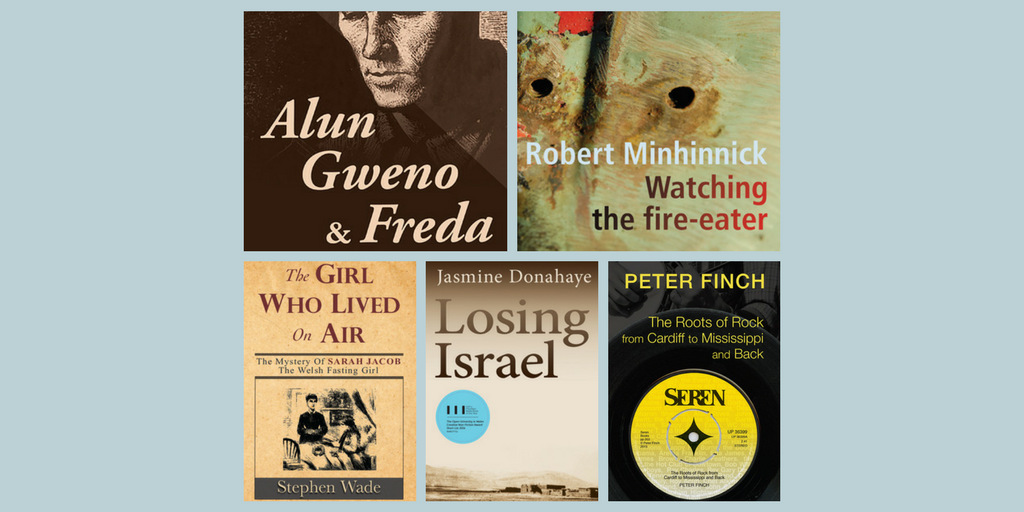
The Girl who Lived on Air by Stephen Wade examines the strange story of The Girl Who Lived on AirSarah Jacob, ‘the Welsh fasting girl’. Though not the first anorexic, she was arguably the first to cause a national furore, and was made to be the centre of a lucrative and also media-hungry ‘spin’ on the nineteenth century nexus of knowledge between science and superstition, folk-belief and religious asceticism. Stephen Wade covers new ground in examining the medical issues surrounding the case, the legal complexities, the prison life of Sarah’s parents, and the significance of folklore and superstition.
Alun Lewis biographer John Pikoulis covers new ground in Alun, Gweno & Alun, Gweno & Freda by John PikoulisFreda, which examines Lewis’ life and writing through the particular prism of his relationships with his wife, Gweno, and Freda Aykroyd, an ex-patriot in India whose house provided respite for British officers on leave. The book argues that Lewis’s charged relationships with these two women were the key to both his writing and his mental health, and goes on to explore the circumstances surrounding Lewis’ sudden death, and weigh into the ongoing debate over whether it was accidental, or suicide.
Losing Israel by Jasmine Donahaye is more than biography. This moving and honest losing_israelrgbwelsh-book-of-the-yearmemoir, which won the Wales Book of the Year, Non-Fiction Category (2016), recounts the author’s struggles with identity and history after she stumbles upon the collusion of her family in the displacement of Palestinians in 1948. Biography, travel writing and birdwatching are all weaved together in this fascinating re-evaluation of memory, family and cultural identity.
Robert Minhinnick’s Watching the Fire Eater, newly back in stock, takes us Watching the Fire Eater Robert Minhinnickfrom Copacabana to urban Yorkshire, from New Mexico to a Welsh funfair, from The Netherlands to the Clare coast. Minhinnick’s essays cover a variety of subjects – sunbathing, third world poverty, the demise of Margaret Thatcher, to name a few – but at the core this is a vivid series of attempts to strip away the exhausted mythologies of the writer’s own country and the increasingly-packaged places he visits.
The Roots of Rock, from Cardiff to Mississippi and Back is Peter Finch’s The Roots of Rock, from Cardiff to Mississippi and Backserenade to rock and popular music, and an infectiously nostalgic trip from the 1950s onwards that is guaranteed to enthrall music lovers. From an old valve radio playing in the Cardiff suburbs in the ’50s to live music today in America and beyond, Peter Finch tours countries and decades to illustrate how rock and pop has evolved, giving us sharp-eyed accounts of gigs from Champion Jack Dupree to the Garth Mountain Boys, visits to musical shrines and theme parks – Dollywood, Grand Ole Opry, Graceland, Stax – and music, lots and lots of music.


See our full Non-Fiction list on the Seren website, and hurry – sale ends midnight, Friday 13 January.

Save