Posted on

Friday Poem – Masculine Happiness

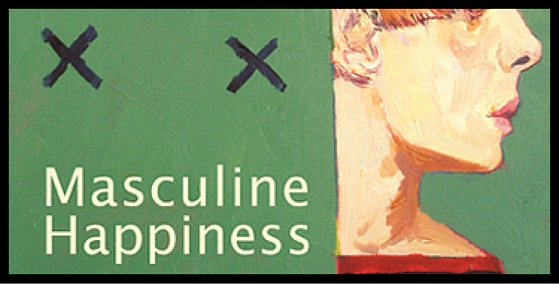
This week’s poem is from David Foster-Morgan’s debut collection, Masculine Happiness, which was released this week!

Masculine Happiness is the provocative debut poetry collection by David Foster-Morgan. Born and based in Wales, Foster-Morgan has long been a presence in the poetry world, having had poems published widely in magazines and with appearances at workshops, festivals, and events including ‘slams’ where his quiet style and obvious integrity frequently beat louder and less subtle voices to a prize. His debut collection, some years in the making, is inspired in part by his reading of American literature: the conversational tone of Frank O’Hara (‘F’OH’) and the long-lined garrulity of Allen Ginsberg, (‘Allen Ginsberg returns to Llantony Priory’) as well as the models of masculinity handed out to us by Hollywood characters like John Wayne (‘Masculine Happiness’). His ambivalence toward the idea of the ‘hero’ and his observation of the fate of those who have been lauded, like the conflicted protagonist of ‘The City Legend’, is a fruitful area for exposition.

This is also a writer who casts a cold eye on the natural world, at one point lauding a landscape and the next, mourning its depredation. In the poem ‘Meeting my Eagle’ the narrator comments: ‘Polar magnets, our feel for each other is/strongest at the point of turning away.’  The poet observes, interacts and resists the urge to rhapsodise. The author’s philosophical education informs his frequent changes of character and point of view. This erasure of ego is characteristic. We also see into the minds of people like the ‘Machine Gun Killer’, made frightening due to the author eschewing gory melodrama in favour of cool accuracy. We are poised with this professional killer, ‘behind the muzzle’s flare, breathing the pepper exhaust, transported on the recoil’s shudder.’

There is also a considerable amount of humour here, along with astute satire and insightful character poems.

Foster-Morgan’s work repays the careful attention of thoughtful readers.

Masculine Happiness

John Wayne is warm, tired and had
just the right number of drinks. Firelight
and the stars of Arizona surround his bed:
a saddle blanket rolled out in the desert night.

News headlines of a foreign war: the reporter’s
hair and blue eyes match her checked scarf;
and a voice behind me starts: who’s having her,
insulted when I won’t laugh as he starts to laugh.

On another channel Bob Mitchum’s an old sea captain:
safe on land while his son’s submarine is overdue;
drinking cognac from a dark bottle, he finishes it all,
and floats into the sleep of drunk and drowned men.
Sick the next morning, his steps slow and unsure,
like a shipwrecked sailor exploring a new shore.

Order Masculine Happiness from our website.

Posted on

Remember, Remember

Our Marketing Assistant, Jess, discusses the relationship between history, identity and literature.

Remember, remember!
The fifth of November,
The Gunpowder treason and plot;
I know of no reason
Why the Gunpowder treason
Should ever be forgot!

It’s been 410 years since Guy Fawkes tried to blow up parliament and we’re still talking about it. Granted trying to blow up the Houses of Parliament (with the king inside) is a pretty big deal, and it’s fascinating to think what Britain might have become if Fawkes had succeeded. Would it even be much different to the way it is now?

We have this idea that we must remember the important moments in history because if we do they won’t happen again. If we remember that Hitler was a bad man we’ll be able to prevent anyone like him from rising to power again, and if we remember that trying to prevent interracial marriage is just plain silly we’ll be a better society. Of course that’s not quite how the world works. Sadly there are still plenty of horrible people in politics, and it’s only in recent years – this year in the case of the United States – that gay marriage has been legalised.

Basically, we never learn, and this is true of our own histories too.

No matter who we are, where we go or what we do, we always find ourselves drawn back to our pasts; our decisions and experiences creep up on us like waves, slowly advancing until we’re caught in the tide and pulled back to something we’d forgotten, whether by accident or by choice. It could be anything from a faint whiff of perfume that reminds you of your grandmother’s old house, or a song you hear that takes you right back to your school days because it was playing everywhere and dammit now it’s stuck in your head again. You’ll be humming it for weeks.

This is particularly true of writers, or at least that’s what I’ve discovered in my experience. Authors can write a huge amount of different stories in their lifetime, but no matter how different the story is, no matter how different the characters or the setting are, there will always be those themes that authors just can’t help going back to.

It’s true of our authors, too. In Anne Lauppe-Dunbar’s debut novel, Dark Mermaids, published earlier this year, our protagonist Sophia finds herself haunted by her past no matter how hard she tries to run from it. Set in Germany, the book itself is something of a link back to Anne Lauppe-Dunbar’s own family history; I interviewed Anne here about her startling debut, and wasn’t at all surprised to discover that she’s working on another novel set in Germany. I’ve had the pleasure of meeting Anne in person, and it’s clear from the way she talks about her writing how passionate she is about these Germany-based stories.

Francesca Rhydderch’s prize-winning debut, The Rice Paper Diaries, also draws on personal family history, and the characters in Mary-Ann Constantine’s debut, Star-Shot, just can’t help being drawn to the National Museum Cardiff, a building that is literally full of our history.

Then we have our New Stories from the Mabinogion. Our authors took the tales from The Mabinogion and placed them wherever, and whenever, they saw fit, leaving us with stories set during the Second World War and stories set in outer space. Fairy tales, folktales and legends are the first stories we’re ever introduced to, and we continue to come across them even when we might not realise it. What is Pretty Woman if not a slightly updated Cinderella story? What is The Phantom of the Opera if not yet another spin on Beauty and the Beast?

Try as we might we can’t stop returning to these old stories, whether they’re stories everyone knows or stories from our own personal histories. They just keep coming back, and all we can do is keep telling them.

Posted on

Rosie Shepperd Awarded Second Place in LPF Poetry Competition

This year’s Ledbury Poetry Festival Poetry Competition had a record number of entries (over 1,500!) and after much deliberation, Judge Deryn Rees-Jones has awarded the Second Prize to Rosie Shepperd, for her poem ‘Break’.
Polly Atkin (Shadow Dispatches) was also commended for her poem ‘Gloria’.
All winners have been invited to read at the Ledbury Poetry Festival in 2016, and you can read all the winning poems (including Rosie’s) here.
To see the full list of competition winners, visit the Ledbury Poetry Festival website.
Rosie Shepperd’s debut poetry collection, The Man at the Corner Table was published in July. 

Posted on

Friday Poem – Witch

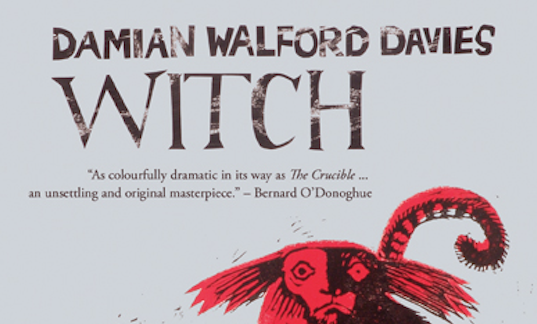
Witch by Damian Walford Davies

This week’s poem is a section from Damian Walford Davies’ second collection Witch, just in time for Halloween!

With the narrative pull of a novel and the vibrancy of a play for voices, Damian Walford Davies’ Witch offers a thrilling portrait of a Suffolk village in the throes of the witchcraft hunts of the mid-seventeenth century. The poems in this collection are dark spells, compact and moving: seven sections, each of seven poems, each of seven couplets, are delivered by those most closely involved in the ‘making’ of a witch. The speakers – from Thomas Love the priest, the villagers who slowly succumb to suspicion and counter-accusation, the ‘discoverer of witches’ Francis Hurst, and the ‘witch’ herself – authentically conjure a war-torn society in which religious paranoia amplifies local grievances to fever pitch. Witch is a damning parable that chimes with the terror and anxieties of our own haunted age.

An extract from Witch

She was threshing out
a prayer from deep inside

her chained throat’s
gabble. The air was dizzy

with her dirt. Which art,
she kept repeating,

which art in, as if the once
lithe tongue were damned

to dwell on it. Hustling
clouds let sunlight flush

in pools; she sprang
and chased it, thwacking,

thwacking back again
along her jangling leash.

Did they expect she’d
partner them in one

last meek pavane?
She scratched and bit,

lapsed sullen. At the gate
they bound her wrists

until the knot was
knuckled like a fist

and dragged her bucking
in the dirt. I followed

in her rut and fierce
curlicues, like the carving

of the vine stock’s sudden
flourish into grapes.

Shouldered like a sheaf,
bare hockshins shocking

white, she felt the press
of bodies pitching up

against the pikes. Each
rung made her trussed

bulk skip. He botched
the roping-up, the halter

like a bridle round her
mouth. She turned to him

with squally eyes. Her feet
on his, he held her like

a husband by the waist,
and let her go.

Order Witch from our website.

Posted on

Frighteningly Good Halloween Discount!

This weekend you can get 50% off our spooky titles, just in time for Halloween!
Until Monday 2nd November, you can get 50% off these selected titles when you order from our website:
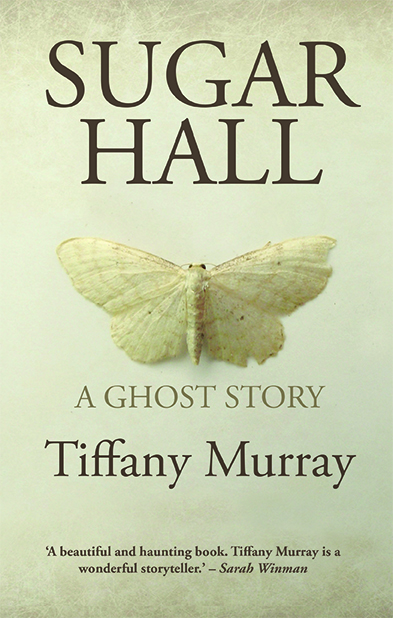
Sugar Hall by Tiffany Murray
Witch by Damian Walford Davies
All the Souls by Mary-Ann Constantine
Sing Sorrow Sorrow ed. by Gwen Davies
Use the coupon Halloween when you go to the check out, and any of those above titles will be half price!
Why miss out? ‘Tis the season to be scary! (Fa la la la la, la la la-ahhh!)

Posted on

Friday Poem – The Witch Bag

This week’s poem comes from Sarah Corbett’s second collection, The Witch Bag, published in 2002.

“Poetry as white-knuckle ride” is how Poetry Wales described Sarah Corbett’s debut, The Red Wardrobe. Her eagerly-awaited second collection, The Witch Bag, is as powerful as its predecessor, and is sure to cement Corbett’s reputation as one of the rising stars of British poetry. The title poem evokes a spellbinder who is both “weightless, thin as pond moss” and “blacker than the pond’s belly.” ’The Kitchen God’ is a series of erotic love sonnets; ’My Son the Horse’ is part of an astonishing group of poems about the birth of a son; ’Czech Pieces’ records vivid impressions of Eastern Europe; the final section focuses on the death of a father. This poet, in sensuous and evocative language, conjures intimate worlds; her subjects are often fearlessly personal: birth, death, and love in all its manifestations.

The Witch Bag

Remember me. I am the woman
who shook her fisted nipples
at the moon,
bearing down the dark streets
that could not take her.

My face broke in two
as I ate its bright cheek,
my hands sudden as marshlight
held before me
into the dark nights that followed.

I am the woman who flew
not only in her dreams,
but remembered the spell as she woke
and hunted sighs like ticks,
dipping and turning as she went.

That woman, weightless thing,
thin as pond moss,
blacker than the pond’s black belly.
She hooks its clammy limbs around her own
and sucks the water into herself.

That woman, without a world,
who goes hopping with one boot
between twilights,
a bagful of grave treasures
lost and lost again –

mask of hair, milk tooth,
heel-bone, blood-purse, name.

Order The Witch Bag from our website.

Posted on

Our Recommended Reads for Halloween!

recommended reads for halloween

halloweengif

Start carving your pumpkins and stocking up on sweets, because Halloween is on the way!

What do you mean it’s too early? It’s never too early, and here at Seren we have even more reason to celebrate, because the earliest roots of Halloween date back to the harvest festivals in the Celtic nations, like Wales.

tmyk

Okay, okay, maybe it’s a tad early to dig those skeletons out of your closet and dangle them from your wall, but it’s never too early – or too late, for that matter! – to read something that will put you in the mood for the spookiest time of the year…

sing_sorrow_sorrow_72

Sing Sorrow Sorrow
ed. Gwen Davies

Sing Sorrow Sorrow is a chilling collection of supernatural myth and otherworldly horror stories from some of Wales’ most exciting new and established authors.

From the dark waters of the Styx to the circling birds of the Mabinogion, from the lonely house to cities of the mind, the contemporary stories in Sing Sorrow Sorrow grow out of European folk, fable, fairy tale and legend – all tales which belong to the domain of the underworld. There are ghosts, murderesses, blood-soaked enchantment, black humour and stories with the darkest twists of the imagination – draw the chair nearer the fire and enjoy.

With contributions from Niall Griffiths, Maria Donovan, Deborah Kay Davies, Gee Williams, Richard Gwyn, Tristan Hughes, Cynan Jones, Matthew Francis, Anne Lauppe-Dunbar, Mary-Ann Constantine, Zillah Bethell, Dai Vaughan, Imogen Herrad, Lloyd Jones, Euron Griffith, Jo Mazelis Glenda Beagan, Alan Bilton, Roshi Fernando, Christine Harrison, Jon Gower, Charlotte Greig.

witch72

Witch
by Damian Walford Davies

With the narrative pull of a novel and the vibrancy of a play for voices, Damian Walford Davies’ Witch offers a thrilling portrait of a Suffolk village in the throes of the witchcraft hunts of the mid-seventeenth century. The poems in this collection are dark spells, compact and moving: seven sections, each of seven poems, each of seven couplets, are delivered by those most closely involved in the ‘making’ of a witch. The speakers – from Thomas Love the priest, the villagers who slowly succumb to suspicion and counter-accusation, the ‘discoverer of witches’ Francis Hurst, and the ‘witch’ herself – authentically conjure a war-torn society in which religious paranoia amplifies local grievances to fever pitch. Witch is a damning parable that chimes with the terror and anxieties of our own haunted age.

20660874

Sugar Hall
by Tiffany Murray

Easter 1955. As Lilia Sugar scrapes the ice from the inside of the windows and the rust from the locks in Sugar Hall, she knows there are pasts she cannot erase. On the very edge of the English/Welsh border, the red gardens of Sugar Hall hold a secret, and as Britain prepares for its last hanging, Lilia and her children must confront a history that has been buried but not forgotten.

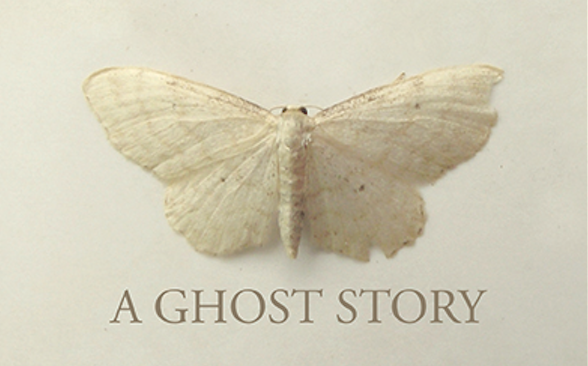
Based on the stories of the slave boy that surround Littledean Hall in the Forest of Dean, this is a superbly chilling ghost story from Tiffany Murray.

You can order all of these books and more from our website!

Posted on

Dai George in The Guardian

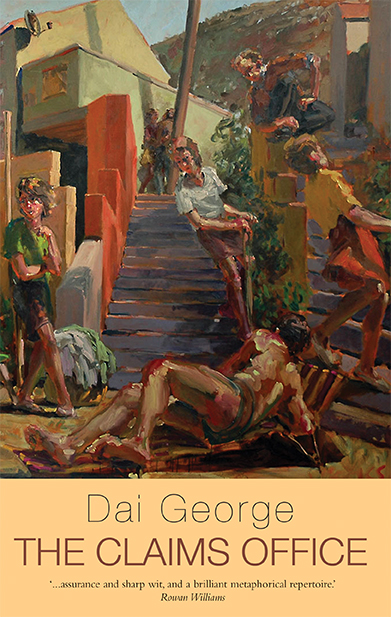
The poem ‘Claimant’ by Dai George is Carol Rumens’ Poem of the Week in The Guardian! ‘Claimant’ is one of the poems featured in The Claims Office, Dai’s stunning debut collection, published by Seren. You can read ‘Claimant’ on The Guardian’s website, here.
The Claims Office was published in 2013 and has really cemented Dai’s status as one of the most promising emerging voices in British poetry. The collection is elaborate and strange, drawing together narrative aspects, textures and imagery. If you enjoy reading ‘Claimant’, then why not delve into the full poetry collection?

Posted on

Friday Poem – The Formula for Night

Tamar Yoseloff A Formula for Night

This week’s poem comes from Tamar Yoseloff’s latest collection, A Formula for Night: New and Selected Poems.

Tamar Yoseloff is a poet whose career has been profoundly influenced by the visual arts. A Formula for Night: New and Selected Poems is the eagerly awaited summation of her work, encompassing selections from four published print volumes: Sweetheart, Barnard’s Star, Fetch and The City with Horns (now mostly out of print); and poems from her collaborations with artists: Formerly, Marks and Desire Paths. The book also includes a generous selection of beautiful new poems. The title poem is based upon an installation by Welsh artist Cerith Wyn Evans. An image from his work, a light sculpture, is used for the cover of the book. 

The poet’s first collection, Sweetheart, was a PBS Special Commendation and the winner of the Jerwood/Aldeburgh First Collection Prize. She was the recipient of an Arts Council New Writing award which helped her complete her second manuscript, later published as Barnard’s Star. Of her collaborations, Marks was published as a limited-edition artist’s book and pamphlet by Pratt Contemporary Art in 2007. Desire Paths was a limited-edition portfolio produced by Galerie Hein Elferink in the Netherlands. Both books feature work by artist Linda Karshan.

More recently, Formerly, a chapbook of poems based on forgotten London locations, with accompanying photographs by Vici MacDonald, was the debut publication of their co-founded imprint, Hercules Editions. Formerly was shortlisted for the Ted Hughes Award in 2012.  Exhibitions of the poems and photographs have appeared in two venues in London: the Poetry Society’s Poetry Café and the Saison Poetry Library at the Southbank.

The new poems are often artful explorations of paradox: death/birth, dark/light, clarity/mystery. In the ‘Swimmer of Lethe’  the protagonist says: ‘I’ve mastered surface/ here everything is under.’ Atmospheres are conjured, surfaces interrogated and humans are often found woefully or wonderfully implicated in their settings in unexpected ways. A misunderstood creature, the ‘Muntjac’, is seen with tender clarity ‘Now white with May/tar and fern on his delicate hooves…’. The poet’s vocabulary is spiky, sometimes ferociously so. Sex is another paradox, its violence at times palpable: from ‘Pictures of Spring’:  ‘I bend and break, bend/ and break, contort my limbs/ into these lovelocked shapes.’  ‘Hospital Time’: ‘collapses, folds the days into sterile gauze,/
a thousand different words for hurt’ beautifully evokes the estranging, atmosphere of a hospital but slowly evolves to become a moving elegy to the poet’s mother. 

The Formula for Night

It’s getting late. Light
floods the public bar,
you’re the final one to leave.
The mirror’s silver eye
gives you back yourself, precise.
You’ve lived your life through
glass, you miss the brush

of skin, someone whispering
your name.You hear it now,
a calling on the wind, insistent,
a small but steady flame.
You carry in your bones a gasp
of summer heat, the formula
for night.You arrive at the end-

of-pier reveal – the heart-stop hour,
when this world briefly yields
to the next: a door that creaks
an inch or two to catch
a blinding beam. You want
to understand what can’t
be seen, the fact behind

the trick, the wires hidden
from your view, the blue breath
that powers the machine.
Raise your eyes to read the stars –
streetlight’s glare has cast them
dark; once-bright bulbs,
trembling elements crack

and fizzle as they die. Their light
is obsolete. But close
your eyes, and still you find
gold impressed beneath
your lids, a moment lived.
And when you open them again,
darkness is what’s left.

Order A Formula for Night: New and Selected Poems from our website.

Posted on

Friday Poem – The Death of Doc Emmett Brown in Back to the Future

my family and other superheroes

This week’s poem comes from Jonathan Edwards’ Costa Award-winning debut collection, My Family and Other Superheroes.

My Family and Other Superheroes introduces a vibrant and unique new voice from Wales. The superheroes in question are a motley crew. Evel Knievel, Sophia Loren, Ian Rush, Marty McFly, a bicycling nun and a recalcitrant hippo – all leap from these pages and jostle for position, alongside valleys mams, dads and bamps, described with great warmth. Other poems focus on the crammed terraces and abandoned high streets where a working-class and Welsh nationalist politics is hammered out. This is a post-industrial valleys upbringing re-imagined through the prism of pop culture and surrealism. If the author’s subjects have something in common with RS Thomas, or even Terry Street-era Douglas Dunn, his technique and approach owe at least as much to contemporary American poets like James Tate and David Wojahn.

The Death of Doc Emmett Brown in Back to the Future

I sit here in the darkness with my father,
slurping Pepsi, passing popcorn round.
The Libyans come fast around the corner,

pump Doc Brown with automatic fire.
My feet are dangling, inches from the ground.
I sit here in the darkness with my father,

as Marty hits 88 miles an hour,
goes back to ’55, to warn Doc Brown.
The Libyans come fast around the corner,

pump Doc Brown with automatic fire:
he gets up, dusts his bulletproof vest down.
I sit here in the darkness with my father,

who starts to gently snore. Now time goes quicker:
the cinema’s knocked down, moved out of town;
the Libyans come fast around the corner

on DVD. My boy asks for Transformers
instead as, from the wall, his bamp looks down.
I sit here in the darkness with my father.
The Libyans come fast around the corner. 

Order My Family and Other Superheroes from our website.