With the 50th anniversary of the moon landings taking place this week, we thought it pertinent that we share some moon-themed writing from our authors. ‘Transit of Moira’ comes from Maria Donovan’s collection of short stories Pumping Up Napoleon.
 In Pumping Up Napoleon, Maria Donovan takes us on a bizarre, funny and often touching tour of death and laughter, love and space travel. Her light, humorous touch allows darker strands to surface repeatedly – dislocated, lonely lives, out of sync with their surroundings are set alongside human oddity and tenderness. These understated, well-crafted stories constantly surprise and engage, producing a fine, enjoyable and thought-provoking collection.
Transit of Moira
At ten-past-midnight by the Tokyo clock, Gavin started floating down the service corridor. Most of the passengers were Japanese and would be strapped to their bunks by now; the only people he expected to be awake were a contingent from the West Country of England, playing endless games of gin rummy in the recreation pod. It seemed like a safe time to go clean the glass in the Bubble Observatory.
He was therefore intensely annoyed to catch sight of a pair of beige open-toed sandals of the kind old ladies wear – the ones with the patterns of little holes punched in the leather – floating ahead of him, kicking a little up and down as if their owner thought she was swimming. Further up were light-brown nylons, the flapping edges of a petticoat and an orange-and-yellow flower-print dress – an ensemble Gavin mentally labelled ‘hideous’. She wasn’t supposed to be in here. This corridor was for crew only. She wasn’t even suitably dressed for zero gravity! Gavin didn’t say anything as he hauled past her, just turned and glared.
She was a silver-haired old lady with a determined but contented look on her face and all she did was nod and smile at him, which annoyed Gavin even more. When he got to the Bubble Observatory, well ahead of her, he thought about bolting the door behind him, but it was against regulations. Suppose she couldn’t manage to get back the way she’d come? He couldn’t really leave her floating there all night, like some over-fed, expiring goldfish.
Gavin rose to the top of the Bubble and began wiping the glass with his specially-impregnated rags; gone were the days when he could dream of space travel scented by leather seats and mood perfume. As usual, the glass was covered in finger marks and, as usual, Gavin wondered why people couldn’t just hold on to the handles that were put there for the purpose. How many more times would he have to wipe the breath and snot and sweat of the world’s most boring passengers off this glass before he could retire? He could count the days, but unfortunately there were still three-thousand-and-twenty-four to go (Gavin was younger than he looked). By then, as he well knew, if he spent all his time in weightlessness, his wasted body would be useless back on Earth. He’d be condemned to spend the rest of his years in space or on the Moon, breathing canned air. But what did it matter? Wherever he went, he was sure to end up surrounded by scuffed plastic.
Earth; people always said the same things about it: ‘It’s so beautiful; it’s so blue; it looks just like a marble’. When he looked down at it, he always reminded himself that, though it did look peaceful from up here, really it was as busy as hell and full of tortures. You knew that once you stepped off the ferry you’d be put in line, processed, stamped, herded, sent here and there, told where you could stop and where you couldn’t. He was glad to be up here, on the out-trip, going lunar.
‘I always said I’d see the Moon before I die.’ The voice at Gavin’s elbow startled him.
She bobbed gently, using, he noted at once, the appropriate handles. This ought to have soothed him, but the fact that she was smiling, evidently quite at peace with herself and the Universe, irritated Gavin so much he broke the company code and retorted: ‘It’s not all it’s cracked up to be, you know.’
‘No?’ she said. ‘It looks good from here.’
They were long past the Neutral Point and accelerating towards the Moon, though you couldn’t tell how fast the ship was going. Behind them the Earth had dwindled to a bright blue disk; the lunar sphere hung before them, pockmarked, shadowed and mysteriously empty, apart from the sprinkle of red and white lights on the Sea of Tranquillity. Stubbornly, Gavin persisted. ‘Neil Armstrong’s footprint,’ he said. ‘I ask you. How does anybody know for sure that’s Neil Armstrong’s footprint?’
‘Have you seen it?’ said the old lady. ‘I’m Moira, by the way.’
Gavin didn’t give his name and he even put his hand over his name badge, as if he were putting hand on heart. He said, ‘I’ve never seen it and I don’t want to. You might as well look at my footprint in the dust.’
‘You’re probably right,’ said Moira. ‘Or mine. Perhaps I’d like to see mine.’
‘The Moon is full of footprints. It’s not like you think it’s going to be.’
‘How do you know what I think?’ said Moira, her head on one side as if she really did have a mild interest in his answer.
‘You’ll see. It’s all canned music and souvenirs. You can’t just wander about. They make you see things whether you want to or not.’
‘Is that so bad?’ said Moira. ‘It is for some people,’ muttered Gavin sulkily. ‘Anyway, I got cleaning to do. And,’ he added as a clincher, ‘I’m not supposed to talk to you passengers.’
Without asking, she took a cloth from his pack and began making circular motions on the glass. ‘Look at that,’ said Moira. ‘My face among the stars.’ When she said it, Gavin looked at his own reflection, something he usually avoided doing as much as possible. He was wearing the expression of a man with a bitter taste in his mouth.
Moira didn’t speak again for some time. She rubbed at the glass with her borrowed cloth and looked at the lights in the dark. ‘Have you ever seen a shooting star?’ she said.
Gavin couldn’t resist scoffing: ‘Not up here,’ he said. ‘And not down there.’ He pointed at the Moon. ‘No atmosphere!’ In the weak lunar orbit things either disappeared off into space or kept going round and round, eventually falling onto the surface, where they stayed, because no one would go and pick them up.
He remembered his first trip, leaving home, when it had all seemed like a big adventure, as well as something to do until a better job came along. How he’d loved to see those bright streaks of burning rubbish flare and fizzle out as they tried to touch the Earth. But now, he knew it was just another kind of pollution. Soon the rest of the Solar System would be polluted too, and eventually the Galaxy and then the Universe…
A flash of diamond-bright sparks flew past the window, ice crystals catching the light of the sun. ‘Oh!’ exclaimed Moira. ‘How lovely!’
‘Urine,’ said Gavin. ‘It’s the voiding hour.’
‘Isn’t it marvellous,’ said Moira, shaking her head, ‘how even your own waste products can look wonderful in space?’
Gavin couldn’t bear it; he gritted his teeth and rubbed harder, as if he might rub out the stars, while Moira made dreamy circles with her cloth. ‘I’ve always wanted to be an astronaut,’ she said.
‘It’s nothing special,’ said Gavin. ‘These days everyone’s an astronaut.’
Moira was in the Observatory often after that, or bouncing off the walls of the service corridor, poking into spaces no passenger should know about. Though Gavin saw her, he always hid until she’d gone away. So he couldn’t tell the Captain anything much about her when she went missing.
They had docked in the orbit of the Moon by then, and the passengers had all disembarked. Moira’s absence wasn’t noticed until the whole contingent went through immigration and the numbers didn’t add up. A search was made of the area, all the restrooms were checked, and every cupboard in the transit shuttle was opened. There was no sign of Moira.
Gavin and the rest of the ferry crew were put on alert and ordered to check every locked and unlocked space on board the ship and every item of inventory for clues. Then Gavin was summoned to the Captain’s quarters. ‘You were seen talking to her in the Observatory,’ he said. ‘We have it on visual. What were you talking about?’
‘Nothing much,’ said Gavin.
‘What we’re after,’ said the Captain, ‘is some clue as to her state of mind. We’re not trying to apportion blame.’
Not yet, thought Gavin. Blame will surely follow.
‘How did she seem to you?’ said the Captain. Gavin tried to remember. She had smiled a lot – and she said she wanted to see the Moon before she died.
‘Captain!’ A voice in the air interrupted Gavin’s thoughts before he uttered them. ‘One of our space suits is missing.’
At first no one believed an old lady like that would know how to operate an airlock or even want to try. The space suit was fitted with a standard locator device, but it had been turned off. There was a whisper among the crew that murder had been done, and some of them looked sideways at Gavin. He didn’t mind: it would encourage them to leave him alone.
Then the visuals for that area were checked again and the whole crew saw Moira standing in the airlock and waving goodbye. She even blew a kiss as she stepped out backwards into space.
That night, with a full set of new passengers safely on board, the story was officially put to rest. It seemed Moira had no relatives on Earth to inform and so the Captain would be spared the difficulty of writing any letters of regret.
Half-past-one by the Tokyo clock. The ferry left the Moon’s orbit and Gavin went back to polishing the Bubble Observatory. It was quiet; just how he liked it. But the smell of the cleaning rags caught the back of his throat. Angrily, he rubbed harder.
Then his heart lurched as a star-shaped object crossed the face of the Moon. He knew at once what it must be: Moira in her white suit, spreading her arms and legs to the Sun.
Pressing his fingers to the glass, Gavin saw himself – a ghastly open-mouthed reflection superimposed on the face of the receding Moon – and it scared him. But what made him truly uneasy was the suspicion that, if he had been able to get up close, he would have seen that Moira was still smiling.
Pumping Up Napoleon is available on the Seren website: £6.99
Maria Donovan is a native of Dorset and has strong connections with Wales and Holland. Past career choices include training as a nurse in the Netherlands, busking with music and fire around Europe and nine years as a lecturer in Creative Writing at the University of Glamorgan. Her fiction is often offbeat, exploring uneasy relationships, mind and body: ‛My Own CVA’ was a prizewinner in a competition run by The Lancet; and ‘My Cousin’s Breasts’ was shortlisted for the Fish Short Story Prize. Her flash fiction story ‘Chess’ won the Dorset Award in the Bridport Prize 2015.
Maria’s debut novel The Chicken Soup Murder was published in 2017 and was shortlisted for the Rubery Book Award, fiction category.
The Chicken Soup Murder is available on the Seren website: £9.99
Create your free Seren account and enjoy 20% off every book you buy from us.


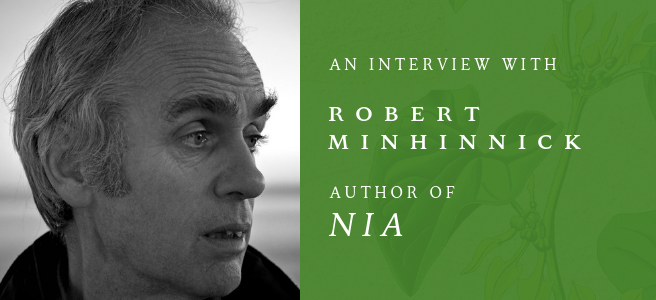
 Robert Minhinnick is one of Wales’ (some would say Britain’s) most eminent writers. Next month we publish his latest novel




 vivid and moving. It opens with poems inspired by her home in the Lake District, and the landscape and famous Romantic poets such as Wordsworth and Keats, who have walked there and written about the fells and lakes. Nature is a guiding presence, but the author’s personal story, of enduring a little-known and sometimes debilitating illness, is also the backdrop to this striking poetry. Formally, this work is more akin to the metaphysical poets in its fervent use of metaphor, in its multiple layers of meaning and in its quest for answers to the most pressing questions of mortality.




 We’re incredibly pleased to hear that Maria Donovan has been long-listed for the Hall & Woodhouse DLF Local Writing Prize for her book The Chicken Soup Murder. It’s a huge achievement considering this year the DLF received over 70 entries, and we’re all crossing our fingers for the next round!