Posted on

Friday Poem – ‘Nativity’, Caroline Smith

Our Friday Poem this week is a modern-day parallel to the Nativity story, where we see the hardships faced by a migrant couple upon the birth of their child.

The Immigration Handbook Caroline Smith‘Nativity’ is taken from Caroline Smith’s collection, The Immigration Handbook, which tells the stories of immigrants seeking citizenship in the UK – their hopes, their anguish, the bureaucracy they face, and their small moments of triumph. In these strikingly moving poems, the characters step vividly off the page, and we listen to their often harrowing stories as if first-hand. Caroline Smith’s poems are a moving record of global people movement, the story of our time.


Nativity

She lay on the sofa
its hard cushions
squashed down into the corner
under the heavy paisley quilt
she’d found there.
There was nothing
left to eat in the fridge,
its door nudged open
swollen with ice,
the fibrous cold
stealing into the room.
Just ice and knots of sweetcorn
heaped in a corner
like rancid yellow straw,
and a bottle of baby milk
left by the Kosovan family
housed there before her.
She’d heard they’d been allowed to stay.
Baby John Harris Farruku
brother to Adriatuk, Flutura and Etmir,
born three days inside the amnesty.
His birth had allowed
the family to begin again
given them the hope
of an ordinary life.


The Immigration Handbook is available from the Seren website: £9.99

Join our free, no-purchase-necessary Book Club for 20% off every time you shop with us

Posted on

Friday Poem – ‘The Infants’ Christmas Concert’, Tony Curtis

Christmas is fast approaching, so our Friday Poem this week is a festive one from Tony Curtis, originally published in Letting Go (1983) and again, just recently, in Tony’s new From the Fortunate Isles: New & Selected Poems.

From the Fortunate Isles: New and Selected Poems, Tony CurtisFrom the Fortunate Isles features poems from ten of Tony’s published collections, as well as a substantial number of new poems. This is a poet whose themes and variations remain consistent: a deep affection for his roots in West Wales, tender attachments to family, a profound interest in the wars of the last century, and an abiding fascination for all art forms, particularly painting and poetry.


The Infants’ Christmas Concert

A moment of hush, held breath –
the fairies and robbers, the soldiers
and dancers are in position
– then the piano begins.
This sounds otherworldly,
each note a drop of water falling distantly.

Angels swallow trumpets,
a robot trips and turtles in his cardboard shell;
the ballerina crumples and cries.
They may not know why, but still
perform for us the pattern of sentiment,
superstition and love: we sigh,
smile, laugh and applaud.

“The Rich Man gave them a bag of gold
and everyone cheered on the day
the church had a new bell.”
The couple are starched in best white –
as the singing swells, they marry
and claim their gold.
It is intensely sad and fleetingly
realises the ghosts of our innocence.

Flashlights – the year’s frozen
for this instant.
Keep that – don’t move – stay there,
stay somewhere like that for ever.

It all builds to The Nativity:
Joseph, Mary and the three glittering Kings
change without age, time after time.
Only the baby Jesus doll remains,

a scarred and worn wooden face held magically
fresh each year in the laundered swaddling.
The audience – parents and children in arms,
grandparents and neighbours, point and giggle,
there’s a glow and, finally, we all sing.

This has worked some sort of renewal,
some sort of an ending.


From the Fortunate Isles: New & Selected Poems is available from our website: £9.99
Join our free, no-purchase necessary Book Club and receive 20% off every time you shop with us.

Posted on

Friday Poem – ‘Without Narcissus’, Rhiannon Hooson

without narcissus rhiannon hooson

Last night, we welcomed a chilly December in Chapter Arts, with Rhiannon Hooson reading poems from her debut collection, The Other CityIt seemed appropriate to have Friday’s Poem from this beguiling new release, for those who missed out.

screenshot-2016-12-02-12-02-07
Rhiannon reading to a full house at December’s First Thursday event

the-other-city_quicksand-cover-copyWith a sharp focus and beautiful resonance, the deeply felt poems from The Other City  tend to travel in distinct streams: some reference and re-make narratives from classical Greek myth; some rework elements of Welsh history, both ancient, and modern. There are also a number of poems exploring the idea of otherness and the uncanny, where actions are done and undone, and the familiar made unfamiliar.


Without Narcissus

The lack of his blindness shocks the silver water black.
Your palm’s slap against its surface is looped silence:
bare shoulders with their heron stoop,
the wet ropes of your black hair, the empty water
and the stiff-leafed lilies which break for sharp fingers,
their pink throats silent and smiling. Speak.

Over the water the red rock leans and watches.
Your nails like fish-scales break against
the cool shadow of its noon, and the silence. Speak.
Even the fish have voices, even the rough
hush of the trees, even the birds.You press your body
to the dark-loomed sediment and learn its silence, touch the red
heat of your mouth to the rock and learn the syllables
of its unspeech. Speak.

Birds watch you writing the mangled sign of your name
wet hair strung across the tangled mats of cress,
white fingers and their fish-belly pallor, your white lips
kissed against the petals of the lilies.You can speak
their silence back to them so well, so well.


Buy your copy of The Other City now: £9.99
Join our free, no-purchase-necessary Seren Book Club for 20% off every time you shop with us

Save

Posted on

Friday Poem – ‘Bluetit Feeding’, Ruth Bidgood

friday poem bluetit feeding ruth bidgood

Our Friday Poem this week is a careful portrayal of the fragility and beauty of nature. So take some time away from the Black Friday madness, and enjoy Ruth Bidgood’s ‘Bluetit Feeding’.

New & Selected Ruth Bidgood Friday Poem Bluetit Feeding‘Bluetit Feeding’ is taken from New and Selected Poems. This generous selection of work highlights the steady accumulation of a significant oeuvre. Bidgood’s ostensible subjects are the storied landscape and history of her region of mid-Wales, the hills and valleys of Powys and Breconshire, but her themes frequently have a wider reach, a spiritual depth that is often darkly suggestive and mysterious.


Bluetit Feeding

Early at the window in starved winter
a little knot of energies, a beaky hunger
fluffed and sleeked, taps, prises
unsucculent scraps of cracked putty,
swallows with a ripple of tiny throat.

Behind it climbs a bleak pale hill
stained with ruts of December bracken.
White morning moon is barely seen
on hardly darker sky that seems
opaque, a barrier against pressure
of immensities. Imperceptibly
the chill day flows out to black deeps.

The bluetit pauses in its arid feeding,
flirts a crisp wing. Half-handful of warmth,
it stays for a moment sill,
compellingly centre-stage, diminishing
to a backdrop the hill, dull morning sky,
pale echo of moon, black vertiginous
trenches of space-ocean, myriads
of molten and frozen, dying and rising worlds.


Buy your copy of New & Selected Poems now: £9.99
Join our free, no-purchase-necessary Seren Book Club for 20% off every time you shop with us

Posted on

Friday Poem – ‘On the Sudden Passing of a Crow’, Eoghan Walls

Friday Poem On the Sudden Passing of a Crow Eoghan Walls

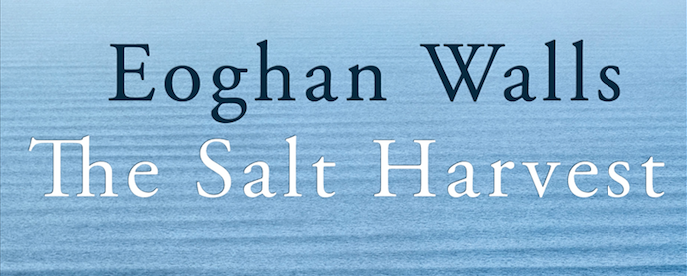
Happy Friday, everyone. This week our Friday Poem is taken from Eoghan Walls’ debut collection, The Salt Harvest. Eoghan has just been shortlisted for the prestigious Manchester Poetry Prize – so do send all your good luck his way.

the_salt_harvest72Dark and evocative, the poems in The Salt Harvest involve rich, multi-layered descriptions of the natural world, and cast a sardonic and tender eye on the human condition. The climates of Walls’ native Ireland inspire both the muscular imagery and the complex forms of work. Also apparent is an ambivalent, often deeply ironic attitude towards a culture once steeped in religion, whilst threads of humour and an imaginative playfulness run throughout.


on the sudden passing of a crow eoghan walls


The Salt Harvest is available from the Seren website: £8.99 (£7.19 for Book Club members)


The Seren Book Club is free a free, no-purchase-necessary subscription and and gives you 20% off all orders from the Seren website. Sign up now and save money every time you shop with us.


Posted on

Friday Poem – ‘Armistice Day ’77, Honiton’, John Tripp

John Tripp Friday Poem Armistice Day

Today, to mark Armistice Day, our Friday Poem is one of remembrance and silence from John Tripp’s Selected Poems.

John Tripp Selected PoemsA well known and popular figure on the poetry scene, John Tripp’s untimely death in 1986 meant the loss of a ’devoted and passionate poet’, as John Ormond calls him in the Introduction to this book. Pithy, regretful, bitter, angry, at times tender, John Tripp’s poetry was always engaged with the issues which most mattered to him.

Selected Poems draws on all John Tripp’s books, together with work published since the last of those collections, Passing Through (1984), and previously unpublished poems.


Armistice Day ’77, Honiton

The two minutes’ silence was cut to one
that November day; it was a busy world.
By chance, on my way to a gig
I walked into a ceremony of six
in the rain: crosses in a ring, and the poppies soaked.

Down two sides of the slab were names
linked to this piece of England – the sound
of country stock grown old in duty
and the acceptance of pointless loss.
Names going back to Minden and before.

(Were these the only ones left
to remember their dead?
Already sixty seconds were lopped
off any dignity. Would their children
forget, as I had forgotten?)

No more came. On some other day
I might have felt an interloper
marring their ritual. At eleven o’clock
the men took off their hats
and we all bowed our heads.

A minute in the rain in a country town
may whisper the whole grief of history.
Picture a knot of seven around that block,
the red wet poppies, and just for a moment
a complete and utter silence in the world.


John Tripp: Selected Poems is available from the Seren website: £4.95


Posted on

Friday Poem – ‘Seamus on the Tube’, Tony Curtis

Friday Poem Seamus on the Tube Tony Curtis

Last night saw us at Chapter, Cardiff, with Tony Curtis and Cynan Jones for November’s First Thursday event, and today we are featuring one of the new poems Tony read on the night – for all of you who missed his entertaining performance.

From left: Tony Curtis, Amy Wack (Seren Poetry Editor), Cynan Jones

From the Fortunate Isles: New and Selected Poems, Tony CurtisTony Curtis has been writing poetry for fifty years, and his new collection, From the Fortunate Isles: New and Selected Poems contains poems from ten of his published collections, as well as fifty pages of new poems. This is a poet whose themes and variations remain consistent: a deep affection for his roots in West Wales, tender attachments to family, a profound interest in the wars of the last century, and an abiding fascination for all art forms, particularly painting and poetry.


Seamus on the Tube

Looking away, not looking away –
The happenstance of what may change everything;
Those standing commuters moving off at Charing Cross
For the Bakerloo Line and then your eyes lifting

Above those seated opposite, as one does, to read
Between faster Broadband and Las Vegas –
“Where your accent is an aphrodisiac,” it says,
And where “what happens here, stays here,”

The Railway Children where in the white cups
Of the telegraph wires a young boy knows
That words are carried in the shiny pouches of raindrops.
Like this poem carried for you in the red and white Tube

On the Northern Line in cold January’s real freeze;
Snow is promised in the suburbs so everyone’s scarved
Against the weather. Words taking you back to the fifties
And his boyhood summers before everything changed.

Reaching Warren Street, you’ve read it
Four or five times, absorbed the innocent wisdom
And sense of the thing. Those people opposite
See a crazy old man mouthing words, appearing to sing.


Buy your copy of From the Fortunate Isles now: £12.99

Claim 20% off when you become a Seren Book Club member

Posted on

Friday Poem – ‘Reasons for his absence’, Darío Jaramillo Agudelo (translated by Richard Gwyn)

Friday Poem Dario aramillo Agudelo Richard Gwyn

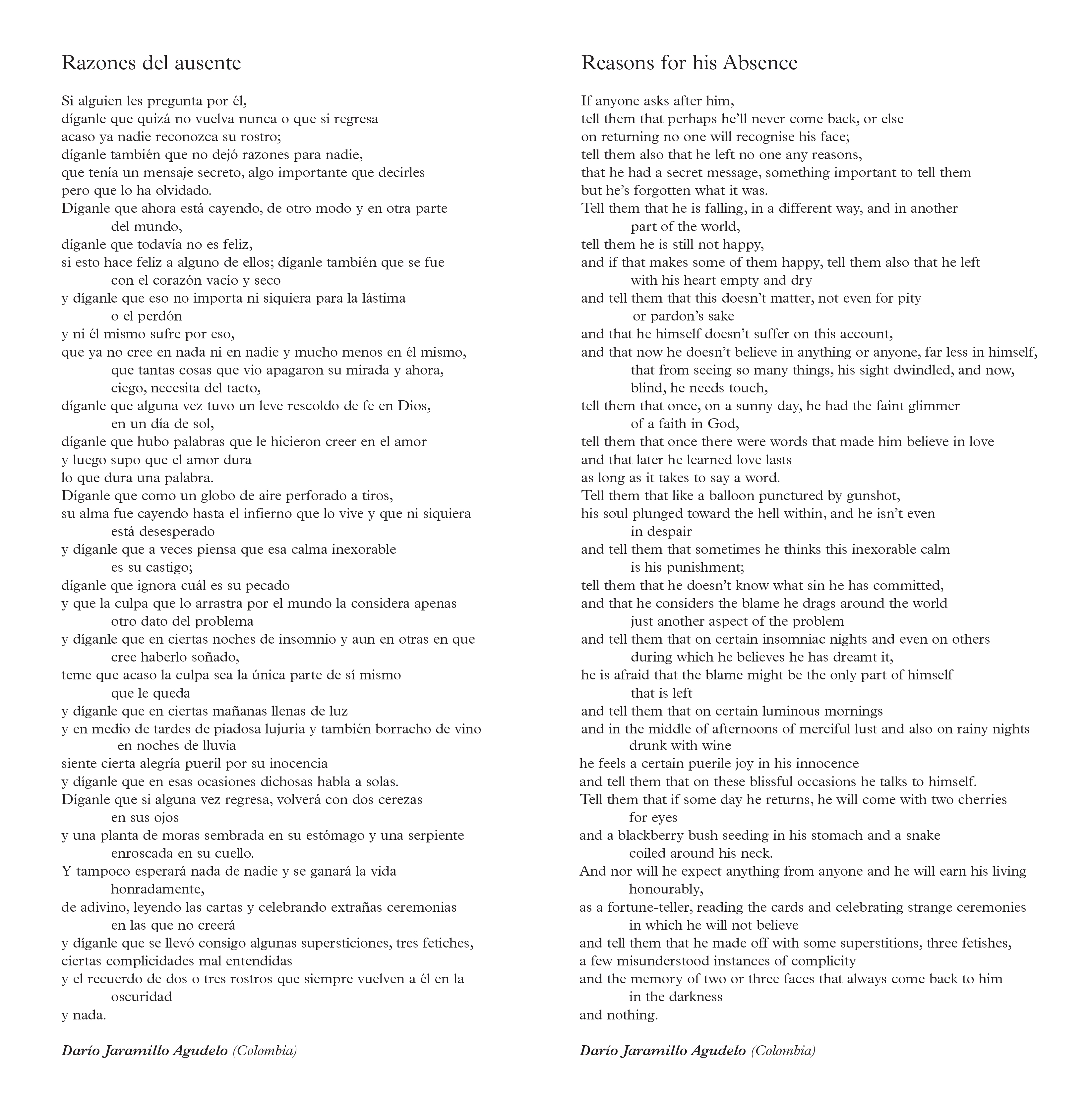
This week our Friday Poem is ‘Reasons for his absence’ by Darío Jaramillo Agudelo, from Richard Gwyn’s hot-off-the-press anthology, The Other Tiger: Recent Poetry from Latin America.

The Other Tiger by Richard GwynThe Other Tiger (the title is a nod to Borges – “the one not in this poem”) is a much-needed bilingual anthology of contemporary poetry, containing 156 poems by 97 South and Latin American poets. It includes work from Argentina, Colombia, Mexico, Peru, Nicaragua, Chile, Uruguay, Venezuela, Cuba, the Dominican Republic, Ecuador, Costa Rica, Bolivia and El Salvador.


About Darío Jaramillo Agudelo
Agudelo is an internationally acclaimed poet, novelist and essayist. He graduated in law and economics from the Universidad Javeriana of Bogotá, and worked for many years in various roles with state cultural and arts organisations. He has been shortlisted or winner of several awards for his work, including the Colombian National Eduardo Cote Lamus prize for poetry (1978), and the José María de Pereda Prize for the short novel (2010). The most recent edition of his Selected Poems is his personal anthology Basta cerrar los ojos (México DF: Era, 2014).

A note on ‘Reasons for his absence’, from Richard Gwyn:
I was attracted to this poem by its epistolary style, and by the device of news being relayed about an absent party. The lack of clarity surrounding the reasons for the man’s absence holds particular poignancy in a country such as Colombia, where ‘disappearances’ were – at the time of the poem’s composition, in the late 1970s – already becoming an everyday occurrence. The slightly elevated or ‘baroque’ language and incantatory style creates a strange juxtaposition with the content, which describes a life of sensual dissolution. The curiosity is stirred by the profound sense of loss or lack with which the absentee seems infused, wherever he is. Whether his exile is literal or metaphoric is never made clear.

My principal concern with the translation of this poem concerned the title. The Spanish noun ‘razón’ can mean a range of things, including ‘reason’ or ‘information’, or even ‘explanation’, depending on context. Similarly ‘ausente’ – here a noun, but commonly an adjective – could be translated in a number of ways: ‘the absent one’ sounded too much like translatorese, ‘the missing person’ subject to over-interpretation in the context of recent Latin American history. In the end I chose ‘his absence’, which deviates from the original in a grammatical sense but conveys the meaning of the phrase accurately. A second concern was the repetition in the Spanish of ‘díganle’ (literally: tell him), which, since it refers back to ‘alguien’ (anyone) in line 1, I chose to translate as the generic ‘tell them’.

 I attempted to re-create the long, rolling cadences of the original in my translation, alongside the reiteration of the introductory ‘tell them that . . .’.

I have also tried to reproduce the bereft tone that reflects the absentee’s solitude, and the distance he has chosen to maintain from those he left behind.

 When I read this poem out loud at an event – as I do from time to time – it still makes the hairs on the back of my neck stand on end. I can’t say that happens with many poems, but with this one it happens every time.

Reasons for his Absence
(click to enlarge image)

Project1 the other tiger new order_Layout 1

Buy your copy of The Other Tiger now: £14.99
Claim 20% off when you become a Seren Book Club member

Save

Save

Posted on

Halloween tips for book lovers: have a spooktacular night in

halloween tips for book lovers spooktacular night in

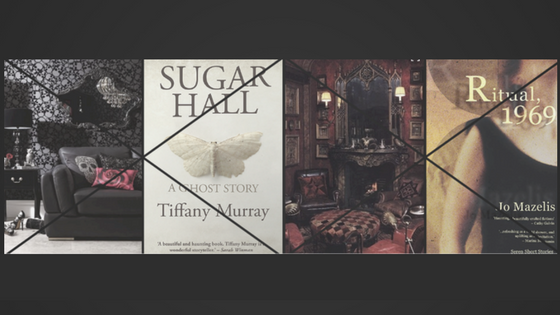
If the thought of venturing outside gives you a fright, then why not stay in for the night? All Hallow’s Eve is right around the corner, and that means frights, delights, and a healthy dose of Halloween literature.

What could be better than a cosy night at home, candles flickering, the wind howling outside, and a good book in your hands? Staying in is the new going out, and we’re here to tell you how to make the most of Halloween from home.

1. Set the scene
It’s all in the detail – hang up some spooky decorations, dim the lights and set some tall candles ablaze.

2. Play that spooky music
Some gorgeously gothic music will set you up for a night of horror. This Best of Dark Classical Music playlist should do the trick.

3. Choose your Halloween reading
Ghost stories, gothic, true crime or thriller – choose your poison. Take a look below for our spooktacular selection of dark and chilling literature…

Masque by Bethany W Pope

Masque, Bethany W. Pope
£9.99
This richly gothic re-telling of Gaston Leroux’s The Phantom of the Opera takes us to 19th Century Paris, where aspiring opera singer Christine is trapped between theatre owner Raoul’s ‘romantic’ vision of her as a bourgeois wife, and the mysterious Phantom’s murderous pursuit of artistic perfection.
Love, lust, adventure, romance, and the monstrous nature of unfulfilled creativity await you here. Everyone wears a mask. Look beneath it, if you dare…

Sugar Hall Tiffany MurraySugar Hall, Tiffany Murray
£8.99
Easter 1955. As Lilia Sugar scrapes ice from the inside of the windows and rust from the locks in Sugar Hall, she knows there are pasts she cannot erase. The red gardens of Sugar Hall hold a secret, and Lilia and her children must confront a history that has been buried but not forgotten.
This superbly chilling ghost story (named by David Mitchell as one of his six favourites) will have you on the edge of your seat.

Ritual, 1969 by Jo MazelisRitual, 1969, Jo Mazelis
£9.99
What are little girls made of? What will they become? From the playground to adulthood the path is beset with misunderstandings, missed dates and hidden traps for the unwary.
This darkly gothic collection of stories explores the unsettling borderland between reality and the supernatural. Ranging from early twentieth-century France to 1960s South Wales and contemporary Europe, Jo Mazelis’ stories portray characters caught up in events and feelings they do not fully understand or control. Not all is as it seems in a world where first impressions may only conceal disguises and false trails – and there’s no going back…

Sean Tyrone A Symphony of HorrorsSeán Tyrone: A Symphony of Horrors, Mark Ryan
£8.99
The brilliantly evoked valleys town of Aberuffern (the mouth of hell) becomes the central motif of this short novel, inspired by the Mexican novel Pedro Paramo by Juan Rulfo.
This is lively, blackly humorous and intelligent storytelling.


Witch, Damian Walford Davies
£8.99
With the narrative pull of a novel and the vibrancy of a play for voices, Damian Walford Davies’s Witch offers a thrilling portrait of a Suffolk village in the throes of the witchcraft hunts of the mid-seventeenth century. The poems in this collection are dark spells, compact and moving: seven sections, each of seven poems, each of seven couplets, are delivered by those most closely involved in the ‘making’ of a witch.

Murder-at-the-StarMurder at the Star, Steve Adams
£9.99
The murder of God-fearing, bible-quoting, partially deaf Thomas Thomas at the branch of Star Stores he managed in Garnant, South Wales has remained an unsolved mystery since it happened in 1921. Over £126 was missing from the store safe, yet there were oddities about the attack which suggested this was more than a robbery that went tragically wrong.
In classic cold case fashion, journalist Steve Adams’s extensive researches have finally identified the killer, and the almost century-old case can finally be closed…

Happy Halloween one and all, we hope you have a frightfully good evening.

hoppip halloween art animation film

Save

Save

Save

Posted on

Friday Poem – ‘Elegy for David Beynon’, Leslie Norris

Aberfan Friday Poem Elegy for David Beynon by Leslie Norris

Today marks 50 years since the Aberfan disaster, 21 October 1966, when a mountain of coal waste slid into Pantglas school and 19 houses, killing 144 people, 116 of them children.

Today is a day of solemn remembrance, and in this spirit, our Friday Poem is ‘Elegy for David Beynon’ by Leslie Norris, written after a teacher who died trying to shield five children from the slurry.

Leslie Norris was born in Merthyr Tydfil in 1921, and many of his works transform local incidents into poems of great depth and significance. ‘Elegy for David Beynon’ is among his most anthologised poems, and with its poignancy and sincere emotion, it is not hard to see why.


Friday Poem Elegy for David Beynon Leslie Norris

‘Elegy for David Beynon’ is taken from Leslie Norris: The Complete Poems, edited by Meic Stephens.