Posted on

Friday Poem – Corpus

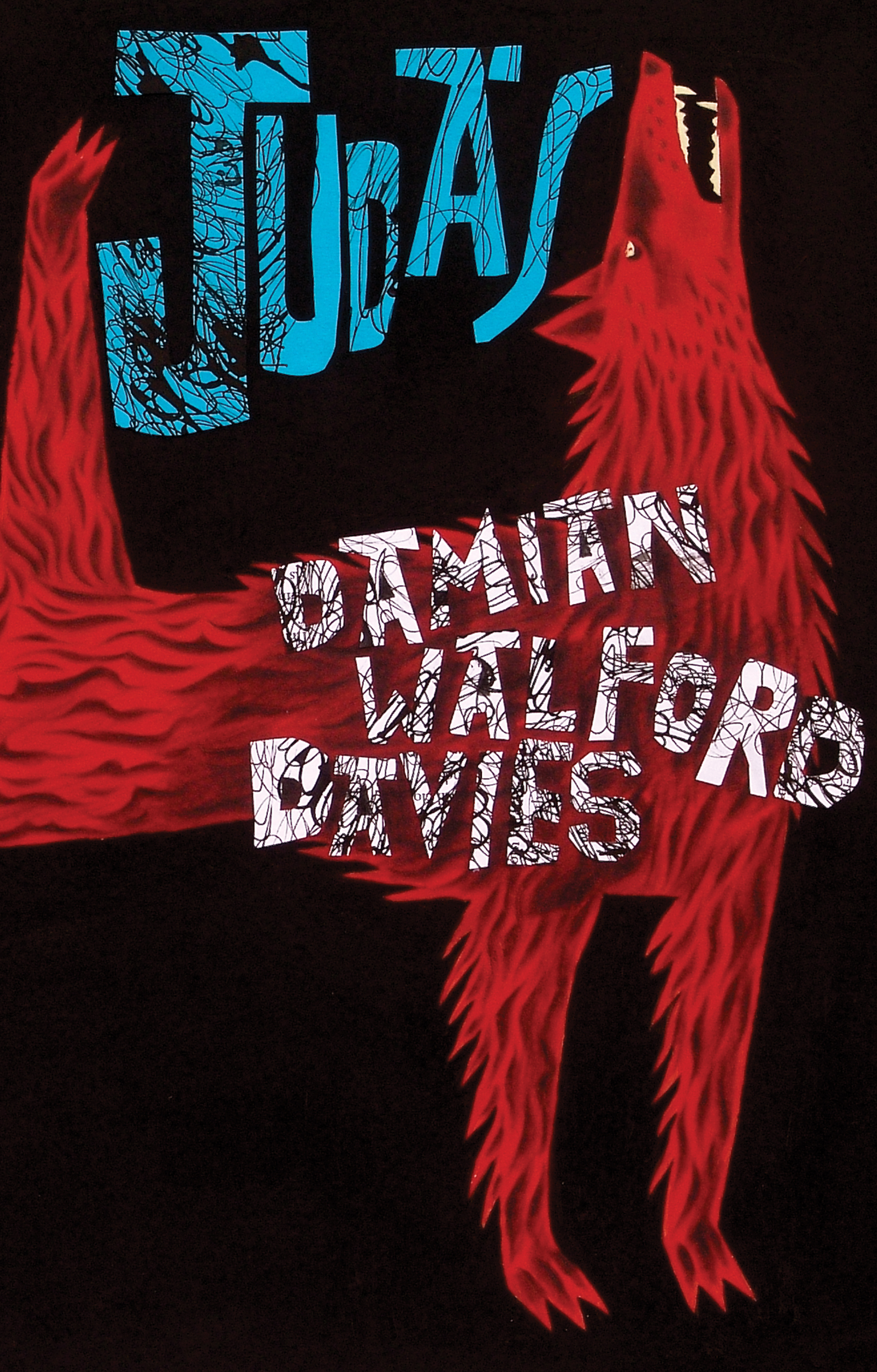
An Easter themed poem  for this week’s installment. ‘Corpus’ comes from Damian Walford Davies’ latest collection, Judas.

A shattered Judas Iscariot – that byword for betrayal – tells his own story in Damian Walford Davies’ compelling and finely wrought new collection from Seren.

We follow Judas over the course of five days as he moves through first-century Jerusalem trying to make sense of the bewildering events surrounding the life and execution of Jesus. But this is a man for whom the future is as real as his anguished and traumatized present, and for whom the Arab-Israeli conflict is as urgent as the tension between the Romans and Jews. Emphasising our compulsion to create, and challenge, gospel truths, Judas gives voice to man caught up in the promise and violence of history.

In short-lined, intensely suggestive dramatic monologues, Damian Walford Davies vividly summons moments of fear and swagger, doubt and passion, despair and nonchalance as an outlaw Judas finds himself haunted by his chequered and extraordinary past. Familiar stories are rendered strange and uncanny as the reader is caught in multiple ironies. As striking as the unnerving images on the news loops of our TV and computer screens, these poems locate us on the hazardous streets of a divided city with a companion-guide who shares with us his own troubling and troubled version of history.

Drawing on conflicting representations of Judas spanning twenty centuries, this chain of poems sets out to challenge orthodoxies and easy pieties. Judas offers an imaginative map of ancient enmities – and dares to hint at resolutions – in the form of a dramatic autobiography of the man whose most famous act (they say) was a kiss in the dark.

Corpus

What can I say? I wasn’t there:
neither ready to relieve him
of the transom’s heft

at Via Dolorosa, Station number five;
nor standing with his mother
on the quarry’s scree

to watch his wrists
spiked expertly
between electric nerve

and bone, and hear him
gurgle, drowning in the liquor
of his lungs. I could have tracked

the trail of blood
from here to where the last gob
hit the ground. The morning

had an air of perfect
commonplace. I howled,
so silently I know he heard.

Order Judas from our website.

Posted on

Friday Poem – Studio Flat

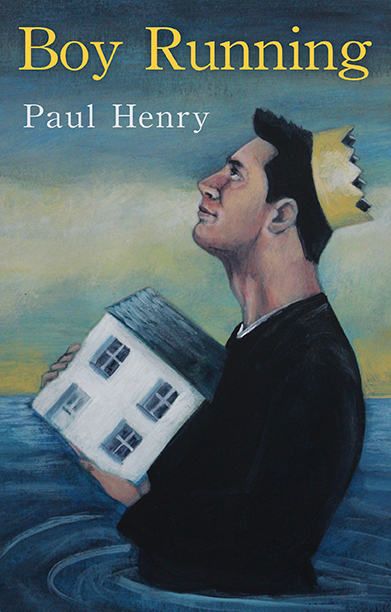
Boy Running, Paul Henry

Studio Flat comes from Paul Henry’s sixth collection, Boy Running, available February 2015.

Boy Running has three distinct sections:

Recently reeling after a marital break up, poems such as Studio Flat deal with the aftermath of divorce. The poet is left to sift through the emotional fallout and the physical reminders of a shared life left behind: tables, lamps, metronomes, pianos, guitars. The poet’s sons are at the heart of this section where pathos is balanced by humour amidst the characters of a small country town.

A second section moves to the Welsh coastal town of Henry’s childhood, Aberystwyth, and the summer of 1969

In the final sequence we meet Davy Blackrock, a washed-up songwriter and modern day alter ego of Dafydd y Garreg Wen (David of the White Rock), the blind 18th century harpist and composer who fell asleep on a hill and dreamt the famous song which bears his name. In contrast to David of the White Rock, Davy Blackrock, ‘star of an ashen town’, drags his guitar from street to hotel to bedsit, an unsettled ghost who dreams of the perfect song.

Studio Flat

Socks hang like bats from a skylight.
They may be dry in time for the moon.
The camp site owner’s water-feature
drains more blood from the sun.

Cars queue for the narrow bridge.
Birds catch their pulses and fly.
I am suddenly old. What’s an attic
but a bungalow in the sky.

And where are you, my sons?
I heard your voices in the bells
of snowdrops pulled by the wind.
These tulips have lost their smell.

Perhaps I could tell you, one day
where the snowdrops went, why old men
dry their socks on the moon, and what
darkened the skylight, just then.

Pre order Boy Running from Seren’s website.

Posted on

Friday Poem – Bitumen and Rust

The Hitting Game, Graham Clifford

This Friday, our poem Bitumen and Rust, comes from Graham Clifford’s collection The Hitting Game. The vibrancy of Clifford’s voice and the immediacy of his claims upon our attention are clear in this lively collection. Incidents are approached from disarmingly intimate and entertainingly oblique angles. These are urban poems where nature appears like a strange intrusion. There is gentleness and empathy, humour and pathos, with poems full of unexpected dramas and fresh enchantments, which provoke as well as delight.

Bitumen and Rust

In the end you didn’t buy an angle-poise light
called lack – it must mean something aspirational
in another language. Driving home, a green-brass prick

of a church wedged in-between semis began to glow
as if a prayer just got answered. As if. Polystyrene
tea in cup holders. Dirty little seas rich as slicks

of sewage-juice in ruts we trudged in a landscape
ruined with bitumen and rust, by slung piglet carcasses
still eyeing fly-tipped, shoddy white goods.

There is more than one disputed memory
We tug apart like foxes: under branches
Sweating out winter, the colder, wet side of freezing

I found clay pigeon shrapnel like smashed, thick 45s.
You first saw the sun drown in two ponds at the outskirts
Where, where we know turned in to where we don’t.

Spuds and beet surfaced from dirt, sick bits;
it was me that bit an onion like an apple. Barbed wire –
you slam on the brake so as not to kill

a man selling premature roses in the road.
Everyone is full of music to make it better.
Jittery clouds scarper to the margin like bath foam,

soap-touched. Suddenly, above us is baby blue.
You won’t be around forever; laugh: tea –
barbed wire that disappeared into tree bark.

Get it in time for Christmas! The Hitting Game is available to buy with 20% off when you join our online book club.

Posted on

Seren Talks to … Jo Mazelis

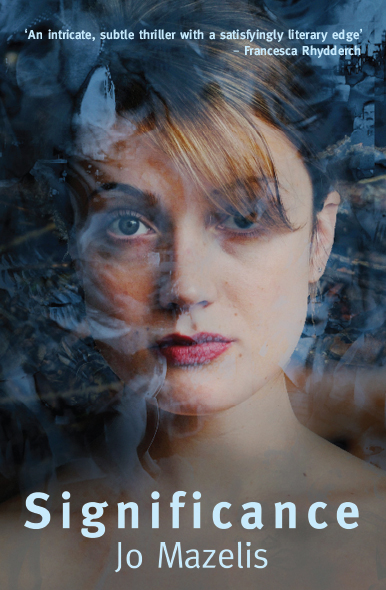
Jo Mazelis, Significance

We’ve been talking to Jo Mazelis about life as a writer, feminism, meeting PD James and her new book, Significance.

During the 1980s, Jo worked as a graphic designer, photographer and illustrator for the magazines City Limits, Women’s Review, Spare Rib, Undercurrents, Everywoman and New Dance.  Jo is author of short stories, non-fiction and poetry. Her stories and poetry have been broadcast on BBC Radio 4 and published in various anthologies and magazines. Her collection of stories, Diving Girls, was short-listed for the Commonwealth ‘Best First Book’ and Wales Book of the Year.

How did you come up with the title ‘Significance’?

The title came to me quite early in the writing process and in a sense it guided the whole book and became its philosophical fulcrum. Because the story was about crime – in particular violent crime – the reader begins to search for significance (or clues) in each event as the narrative develops. This parallels how direct and indirect witnesses to crime see greater significance in banal events and perceive them as vital parts of a larger picture. Beyond that I wanted to explore how people’s view of the world is altered by certain events, and how they may change their entire course of action due to a chance encounter. It’s a fairly well known phenomena now, that despite the digital age with its instant news from across the globe people still feel more affected by a tragedy or disaster the closer they are to it. I don’t think it is because as a species the human race can be unfeeling, rather it’s information overload. But it feels wrong somehow when a newscaster reports that ‘floods in country x killed three thousand people – one man, Professor Smith a geologist from the UK is believed to be among the dead’ His death is no more or less tragic than the other 2,999 yet he is given greater attention.

My point was I suppose to draw attention to significance and question how meaning and value are not fixed but entirely malleable or transient, depending on the viewpoint of the spectator.

On another level the character Lucy quite dramatically changes her appearance just before setting off on her trip, these changes alter how she is perceived – she looks younger, more girlish, less serious and more vulnerable. Is she the same person?

Because I was thinking about how meaning is bestowed to a greater or lesser extent on objects or emotions or experiences I explored how different characters create or define significance in their lives; whether through revolutionary politics, religion, astrology, love, medicine or history.

The chapters are very short and focus on different people, the minor characters all have fleshed out back stories and motivations – what was your aim in doing that?

Literature in all its forms has by its very nature created ‘the minor character’ whose role is perceived as of less interest than the major characters but whose presence creates plot points and realism. A novel in which many characters have equal weight would be impossible to write, read or even consider – though some novelists have attempted versions of it in different forms for example David Mitchell in Ghostwritten and also The Bone Clocks.

In a sense all individuals think of themselves as the heroes (or main characters) in the drama of their lives – they may recognize that as a waitress or factory worker or medical student their individual actions cannot shape world history but no one really considers him or herself a minor character and they are not minor characters to those closest to them.

In particular I did not want to create a narrative in which the victims of crime become mere ciphers, there only to create a mystery for the detectives to unravel or for the psychology of the murderer to be displayed. I particularly didn’t want to say very much about the killer at all – despite his actions I wanted him to be the most insignificant character. Many people have commented on how after a notorious murder or series of murders the name or tagline of the killer is remembered while the victims’ names are forgotten. In some ways this stems from how these stories are told in the media so we have Jack the Ripper or The Boston Strangler or The Yorkshire Ripper – maybe this is due in part to the circumstances of those crimes – in that the actions of one killer were known but his identity was not. I think the case of Fred and Rosemary West proves this point, as while the disappearance of many young women was known about, none of these cases were linked and thus there was no perpetrator to be sought and given a nickname prior to the discovery of the bodies. Instead, when the crimes were discovered, it almost seemed as if the house itself stood in for the monster, with 25 Cromwell Street becoming a byword of horror.

Racism, feminism, sexism – these are all themes that are touched upon in Significance. Are these themes important to you?

These are absolutely key to my perspective and clearly inform what I write about and how these topics are covered – at the same time I would hate to be led by the sort of dogma that sees all men as bad and all women as essentially good. In fiction one is usually looking at the world at a micro rather than macro level – so that it is the individual’s actions and belief systems that I tend to explore when I write especially by finding a psychological basis for their actions.

While I was working in publishing in London in the 1980s I read a few books about violent crime towards women including The Lust To Kill: A Feminist Perspective on Sexual Murder and The Streetcleaner: Yorkshire Ripper Case on Trial by Nicole Ward Jouve. These were upsetting books to read but both in a sense interrogated society as a whole, seeing sexual killers as symptoms of a greater ill. A case in point was when a few newspapers spoke of The Yorkshire Ripper’s ‘First INNOCENT victims’ implying that the other murdered women were GUILTY. Clearly a society that views any of its members as implicitly deserving of violent death is not a healthy one.

At the same time in the 70s and 80s racism was still a major issue – a friend of my mine at college – a young Asian man – showed me a large scar on his neck where years before he’d stabbed by skinheads in an unprovoked attack that mirrored the later fatal attack on Stephen Lawrence in South London.

One of the characters in Significance is an idealistic young African who becomes a suspect mainly because the colour of his skin causes his actions to be misinterpreted – even when he is simply running or attempting to do a good deed.

In many instances I am interested in the distorting lens of other people’s perception and the construction of personality and identity.

You photographed and interviewed some literary giants, including Margaret Atwood, PD James and Fay Weldon, during your career as a journalist and photographer. Did meeting these women inspire you to write or have you always been a writer?

I had a very vivid and conscious sense of seeing these writers as real people – I think before that I’d had very lofty ideas of what a writer might be like. It sounds terribly naïve but it was this recognition – for example hearing PD James say that it was a need for money due to her husband’s ill health that galvanized her to begin writing novels was a surprise. Not that it was the idea of money which motivated me rather it was that it gave me glimpse of the possible.

Did any of these women give you writing advice?

No – it wouldn’t have been appropriate for me to ask – I was there in their homes or hotels or publishers’ offices as a photographer. It was quite enough that I was peering at them from behind a camera or ordering them about and moving their furniture. I was usually there at the same time as an interviewer who had enough questions of their own and the time we were allowed was usually limited. My focus was very much on getting a good photograph – which in those pre-digital days required all my attention, especially as often I was only given five or ten minutes at the end of the interview to get my pictures.

I can’t imagine what I might have asked any of them even if I could have. Besides which I wasn’t really actively writing then – the odd review or non-fiction article perhaps – writing was something that I perhaps saw on the distant horizon that I might sail towards one day if the weather looked fair.

Why did you choose to become a writer?

This is a difficult question because it partly feels as if writing chose me rather than vice versa. I have always felt that deep down this was not something I was meant to do. This sounds very contradictory – but I think it has to do with my early perceptions of writers as a group of people who were academic high achievers, who read widely, went to university and were generally the exact opposite of me. At eighteen I wanted to be a painter, but after one year at Art College it spat me out leaving me disillusioned with myself, lost, confused and directionless. I had no idea what to do, hardly any qualifications and haunted shameful feelings of failure. I could no longer draw or paint as the blank paper before me no longer represented hope or the development of skills. I wrote a little poetry but this was really only just a private means of recording my feelings about many aspects of my life and how I perceived the world. I began to read a great deal – everything from Maxim Gorky to Flannery O’Connor to Ted Hughes and Sylvia Plath to Erica Jong and George Orwell and Hardy and Herman Hesse and Richard Brautigan. I read quite a bit of non-fiction too, Elaine Morgan’s ‘The Descent of Women’ and Phyllis Chesler’s ‘Women and Madness’, ‘The Family’ by Ed Sanders and books about women’s art and poetry, others about politics, witchcraft, prisons, psychology and social issues. All these books were part of the zeitgeist then, although isolated as I was, I’m not sure where or how I was managing to tap into it. I suppose I just wandered into places like The Uplands Bookshop and spied these books there – esoteric works published by Picador and Paladin in particular were always displayed on revolving stands and were a different format from other paperbacks. I was reading into an ideology but I’m not sure I would have put it that way at the time. I was trying to understand the world I suppose and maybe the drive to do that is stronger if you feel you have no place in it.

So I became a writer very slowly by degrees of disaster, despair and determination. I signed up for an evening class in ‘Creative Writing’ in London in 1979 or 1980 and the first thing the tutor said was that it was highly unlikely that any of us would ever become writers – confirming what I had always thought – I went to one, maybe two more classes then dropped out – what was the point? I began to write in earnest in 1987 and my first story was published in 1988 but my first book ‘Diving Girls’ wasn’t published until 2002 so I suppose this proves I have staying power if nothing else.

What’s next? Will you be sticking with novels or returning to short stories?

I have always written short stories – I forced myself to stop entirely for the four years it took to write Significance but I very quickly began again when the novel was finished. I suppose part of this question refers not so much to what I will write but what sort of book might I publish next? I have a large number of short stories already written – some of which have appeared in magazines like The Big Issue or Tears in the Fence, others have been collected in anthologies published by Honno and Seren, others that are yet to see the light of day and others that perhaps deserve to stay in darkness. So as a writer I would very much like to bring out another book (or two) of short stories, but I equally have several novels in various states of progress that I would like to see published. Of course what any writer may like is not what they necessarily get – publishing has changed, the market for books has transformed beyond recognition, people, especially in areas like Wales, the North of England, Scotland are struggling to pay for even the staples of life so are unlikely to buy books in such a quantity as to keep the market buoyant.

Despite this I tend to see each piece of writing as a challenge – can I make this story or poem or novel or paragraph the best I can? Will it ever be finished or published? As Sylvia Plath famously said, ‘Nothing stinks like a pile of unpublished writing’ and I feel that’s true – it shouldn’t be – but it is. All that unpublished writing represents failure and wasted time and all sorts of unpleasant feelings for their creator.

So I will be continuing to write both short stories and novels and other genres of writing too, besides that fact of creation everything else is uncertain.

Get 20% off Significance from our website when you join our online book club.

Posted on

Seren Talks To… Pascale Petit

Pascale Petit Pascale Petit tells us about her favourite places in Paris, The big cat house of the Jardin des Plantes zoo and it’s devilishly handsome inhabitant Aramis, teases us with the possibility of a novel and  tells all about her new book Fauverie .


Hi Pascale, tell us about your new collection Fauverie and how the idea originated?
The title Fauverie comes from the name of the big-cat house in the Jardin des Plantes zoo. It’s an amazing art deco building and has an interior where the cats sleep and are publicly fed, and an octagonal exterior, which thankfully has been enlarged. To me it’s the heart of Paris, which to me, historically and personally is a savage place. I was born there and spent five unhappy years there as child. For decades I wouldn’t go back as I was scared of it, but then my father contacted me after a thirty-five year absence and I visited him as he was dying. Over those visits I fell in love with Paris. In a way Fauverie is my account of that love affair with my home town. But mainly it’s about my relationship to my estranged father during the few years I knew him. I felt that writing about Paris could be a way of writing about him as it was very much his city.

Another building I’m obsessed with is Notre-Dame cathedral and the book began with a few poems about my father and the cathedral. The cathedral became like a friend. I discovered that my father had spent many years living in hotels that were overlooked by it and its towers with those gargoyles and chimeras, so he was observed by this stone zoo. I went up the four hundred stairs to the gargoyle galleries. I started writing the book with those poems. In fact the first poem, ‘My Father’s City’, I had started writing when I was writing The Zoo Father, my second collection, but couldn’t get right then.

What was your research process for this book?
All the poems in the book were written in Paris! I edited them in London where I live but very rarely wrote one there. I rented rooms in Paris for a month at a time and wrote very intensively, usually I’d end up with about twelve to fifteen poems. I got up very early and wrote or read to help get me going then went out to the zoo in the late afternoon or to Notre-Dame or other places. Every time I went to Paris (about three or four times a year) I’d discover some new place in this city that was so strange to me yet so familiar. One of those wonders was Sainte-Chapelle, a revelation. Then the Musée de la Chasse et de la Nature, my favourite museum. Also, in the Jardin des Plantes’ main museum there is a very sad hall dedicated to endangered and extinct animals, most of them stuffed.

The collection features a lot of wild animals, which was your favorite animal to write about?
Aramis the black jaguar! I’ve seen the young keeper kiss him on his mouth through the mesh just before feeding him. He’s four years old but large for his age. He’s actually a rich dark brown with black rosettes. He was in the Fauverie for two years while the larger zoo at Vincennes was being renovated, and that’s where I visited him when I wrote this book, in the Fauverie. Now I visit him at Vincennes zoo, where there are also two young gold jaguar sisters, kept separately from him as they are not yet old enough to mate. When they’re old enough he will have a choice of one as his mate.

Were there any poems that were particularly difficult to write?
I suppose the poems that describe the cellar I was placed in as a small child. I visited the building where we lived on the Boulevard de Grenelle, and twice I went down into the cellar. I couldn’t believe how scary it was, so medieval and narrow. It was like going into a nightmare. I had had nightmares about it throughout my life but thought I’d made them up because there was a window in the cellar and I thought that cellars don’t have windows. But there it was this tiny window at the top of the spiralling stairs, looking out onto the courtyard! Apart from those poems there were certainly a number that I couldn’t get right and took months of rewrites. I kept going back to the Boulevard de Grenelle, to the famous market outside our door, under the métro aérien, and to the park where I played, and even the horrible school.

Your relationship with your father, like in The Zoo Father, is at the fore of this collection. How has it evolved and impacted on your writing since the Zoo Father?
When I wrote The Zoo Father I was in shock – my father had just contacted me and I felt too angry to write at first, then I realised I could through the animals and my travels in the Amazon. It’s now fifteen years since he died and I felt compelled to try again, with more distance, hoping for more compassion. He was suffering from emphysema and was caged himself, could never go out so I did feel very sad for him at the time. Then he died and I lost him again, and he had never acknowledged that he’d done anything wrong, but he had done some pretty bad things. Fauverie is my attempt to redeem him, and perhaps mourn him, but it’s hard to mourn someone I barely knew.

You’ve dealt with some pretty big subjects over the years through your poetry, are there any subjects you wouldn’t write about?
Yes there are, I’m a private person even though I write personal stuff about my parents. But the speaker of my poems is not the actual me, so my poems are fictionalised.

What is the most inspirational book you’ve read and why?
There are so many it’s hard to choose one. I’ll choose two. The first was a Time Life book I found in a library, a south American library in Hyde Park that no longer exists. The book was about South American animals and in it I found the most exquisite photograph I’ve ever seen. It was of a suitcase and it contained forty live hummingbirds. I carried a photocopy of it with me but lost it. Eventually I managed to track the book down and ordered a copy so I have the photo in full colour. I’ve also found another photo of hummingbirds in a suitcase, both are of suitcases belonging to the Brazilian hummingbird expert Augusto Ruschi. The first photo led me to write ‘The Strait-Jackets’, the first poem in The Zoo Father. I’ve just written a poem about the second of those photos.

The second book was crucial to my development as a poet. It was called Waterfalls of the World by Rita Margaret Barton and was published in 1974. The cover features Iguazu Falls. I found this book in 1992, during a tough time in my life, and it was like discovering a friend. It was also the book that led me to to see the highest waterfall in the world Angel falls, in Venezuela’s Lost World. So in a way this book led to all my subsequent obsessions with the Amazon, because once I saw Angel Falls I became fascinated by the whole landscape, table mountains, the flora and fauna, the tribes and their rituals, and their spiritual worlds. It all came from that one book that appeared when I so needed it. Of course there are also countless poetry books that are important to me but it would take too long to name them all.

What are you working on next?
I’m writing a sequence of poems for the Medicine Unboxed prize, it’s called Mama Amazonica. I’ve written it this month in Paris. I was very lucky to be shortlisted for the prize for the proposal. I won’t say more about it just now as it’s a work in progress. There is also a novel in the background!

Fauverie is available to order from the Seren website with 20% off when you join our online book club.

Posted on

New Titles for £6

Get Two New Titles For £6 Each.

It’s publication day for two fantastic new titles: Pascale Petit’s Fauverie is the award winning follow up to The Zoo Father, while Significance by Jo Mazelis takes a literary twist on the classic murder mystery. To celebrate, both titles are just £6. Snap them up while you can – this offer will end at midnight on 15th September.

Pascale’s Pascale Petit, Fauveriefraught relationship with her father takes a central role in this new collection, with Paris and the majestic Jardin des Plantes zoo as its stage. The title of this, her fifth collection,  Fauverie, evokes the Fauves, ‘primitive’ painters who used raw colour straight from the tube. Pascale’s writing is every bit as fervent, vivid and evocative as their art.

filler filler filler

filler filler

Jo Mazelis, SignificanceLucy Swann’s death, like a stone thrown into a pool, sends out far-reaching ripples, altering the lives of people she never knew as well as those of her loved ones back home. When the hunt for the murder suspect begins, the ordinary events of Lucy’s last few days take on a new Significance. In a clever twist of genre subversion, Mazelis weaves in an ending not even the most astute crime reader would be able to guess.

Posted on

Three Evocative Poems from Pascale Petit’s Award Winning Collection, Fauverie

Pascale Petit’s eagerly anticipated new collection Fauverie, will be released in just a few days. Fauverie is the award winning follow up to Pascale’s previous collection The Zoo Father.  With Paris and the majestic Jardin des Plantes as it’s stage, Fauverie redeems the darker forces of human nature while celebrating the ferocity and grace of endangered species.

Arrival of the Electric Eel

Each time I open it I feel like a Matsés girl
handed a parcel at the end of her seclusion,
my face pierced by jaguar whiskers
to make me brave.
I know what’s inside – that I must
unwrap the envelope of leaves
until all that’s left
squirming in my hands
is an electric eel.
The positive head, the negative tail,
the rows of batteries under the skin,
the small, almost blind eyes.
The day turns murky again,
I’m wading through the bottom of my life
when my father’s letter arrives. And keeps on arriving.
The charged fibres of paper
against my shaking fingers,
the thin electroplates of ink.
The messenger drags me up to the surface
to gulp air then flicks its anal fin.
Never before has a letter been so heavy,
growing to two metres in my room,
the address, the phone number, then the numbness –
I know you must be surprised, it says,
but I will die soon and want to make contact.


Emmanuel

In the last days, after all he said
and didn’t say, his iron tongue
resting in the open bell of his mouth,
the belfry of his face asleep,
I climbed the spiral steps of the tower –
up the steep steps of the bell cage, to the bourdon,
the great bumblebee, Emmanuel.
I stared at that bronze weight, the voice of Paris,
as if it was my father’s voice
and I had climbed up his spine,
all thirteen tons of copper and tin,
the clapper half a ton of exorcised iron.
I washed the outside with holy oil for the sick,
the inside with chrism. Let all badness
be banished when he rings. Let the powers of the air
tremble – the hail and lightning
that fell from his tongue on our last days together.
I made the sign of the cross. His note
was F sharp, the hum
deep enough to reverberate through the rest of my life.
I stood upright in him.
I placed myrrh inside his mouth, incense
smoking like a last cigarette.
I praised him. I assembled the priests.
I mourned his death.
Storm clouds dispersed. Thunderbolts scattered.
I tolled in Sabbaths. I raised
my father’s life to its hoists and rang him until I was deaf.
I proclaimed peace after bloodshed.


Sleeping Black Jaguar

1.
A solar eclipse – his fur
seems to veil light,
the smoulder

of black rosettes
a zoo of sub-atoms
I try to tame –

tritium, lepton, anti-proton.
They collide
as if smashed inside

a particle accelerator.
But it’s just Aramis sleeping,
twitching himself back

to the jungle, where he leaps
into the pool of a spiral
galaxy, to catch a fish.

2.
Later, the keeper tells me
Aramis has had surgery
for swallowing

a hose-head
where his hank of beef
was lodged. But

what vet could take
a scalpel to this
dreaming universe?

What hand could shave
that pelt, to probe
the organs

of dark matter, untwist
time’s intestines
and stitch

night’s belly
together again, only
to return him to a cage?

Fauverie is available to pre-order with 20% off when you join our online book club.

Posted on

‘The Last Hundred Days’

Released 1st June 2011 by Patrick McGuinness.

An intricately plotted literary thriller about Ceausescus last hundred days in power, from an author who was a first-hand witness to the regime.

Set during Ceausescu’s last hundred days in power, Patrick McGuinness’s accomplished debut novel explores a world of danger, repression and corruption.

When our narrator, a young English student with a damaged past and an uncertain future, arrives in Bucharest he finds himself in a job he never applied for. With duties that become increasingly ambiguous and precarious, he soon finds himself uncomfortably and often dangerously close to the eye of the storm. He learns, as he goes, the uncertainty of friendships in a surveillance society: friendships that are compromised and riddled with danger and duplicity. He encounters dissidents, party apparatchiks, black-markerteers, diplomats, spies and ordinary Romanians, their lives all intertwined against a background of severe poverty and repression as Europe’s most paranoid regime plays out its bloody endgame.

The socialist state is in stasis, the shops are empty and old Bucharest vanishes daily under the onslaught of Ceaucescu’s demolition gangs. Paranoia is pervasive and secret service men lurk in the shadows.

Posted on

‘Daniel’s Beetles’

Released 16th May 2011 by Tony Bianchi.

Daniel’s Beetles is the author’s translation of his prizewinning novel, Pryfeta

Daniel is six. One afternoon, while playing with insects in the garden, he sees his father fall to his death. Is he upset? It’s difficult to say, because Daniel would prefer to attend to his beetles. Forty years later, he remembers nothing of the event. But two failed relationships and his elderly mother’s confusion  bring Daniel face-to-face with his demons. Then he meets Cerys and Dr Bruno and discovers a bold new way of regaining control over the past.

Daniel’s Beetles is an absorbing, unnerving novel about memory and forgetting, stories and lies. It describes our attempts to recreate ourselves in ways we can never fully control. And in Dr Bruno, it offers a disturbing glimpse of how our fears and desires can be manipulated by much larger forces.

Tony Bianchi is from North Shields, Northumberland and lives in Cardiff. The Welsh-language version of Daniel’s Beetles won the Daniel Owen Prize in 2007 and was short-listed for Wales Book of the Year. He has published two other novels in Welsh – Esgyrn Bach (2006) and Chwilio am Sebastian Pierce (2009) – and a volume of short stories, Cyffesion Geordie Oddi Cartref (2010). His English-language novel, Bumping (2010), was long-listed for the Portico Prize in 2010. He has also won awards for his poetry in Welsh.

‘One of the most exciting writers working in Wales today.’ (Lloyd Jones, Taliesin)

‘This is an intricate and multi-layered novel, rich in ideas and eloquent in expression, which will be pored over for years to come.’ (Owain Wilkins, Planet)

‘The writing is muscular and at times utterly overwhelming… I was exhilarated.’

(Robat Arwyn, adjudicator, National Eisteddfod of Wales)


Posted on

‘Real South Pembrokeshire’

The latest release in The Real Series.
Released 13th June 2011 by Tony Curtis.

Poet, and past resident and frequent visitor Tony Curtis roams south Pembrokeshire, from costal resorts of Tenby and Saundersfoot, west to the surfers of Stackpole and Barafundle and north to the Landsker, the cultural boundary between English speaking south Pembs and the Welsh speaking north. On his tour round half-county Curtis takes in many contrasts, from Pembrokshire’s famous new potatoes to the oil refineries of Angle, from farmworkers to immigrant artists, from the excited tourism of Folly Farm and Oakwood Park to the tranquillity of Bosherston Ponds and timeless beauty of Broadhaven beach.

In keeping with the series Curtis views his area through the eyes of a local and as a visitor, digging into his own Pembrokeshire backstory – and deeper into its history- but also observing keenly the Pembrokeshire of the new century. The mix of new and old, of memoir, anecdote and history gives us new insights into patters and the vivacity of life in one of the most beautiful places in Britain.