Posted on

Win a signed copy of Wild Places by Iolo Williams

win a copy of wild places by iolo williams

Show us your favourite nature place in Wales win a copy of Iolo Williams’ new guide book, Wild Places: Wales’ Top 40 Nature Sites.

We’re giving away a signed copy of Wild Places, Iolo Williams’ stunning new guide to Wales’ best wildlife and nature sites. All you have to do to win is head to Twitter and tell us your top nature place.

Win a signed copy of Wild Places by Iolo Williams

Follow us (@SerenBooks) and use the hashtag #WildPlacesWales to tell us where you think tops the list of Wales’ best wild places. Add a photo if you can! We’ll pick the winner on 16th December – our favourite comment will take the prize.

We’ve already had some great responses – here are a few of the places chosen so far…

https://twitter.com/dhboughton/status/800722011433607169


Can you think of an even better wild place in Wales? If so, tell us now and you’ll be in the running to win this fantastic new book, signed by the author.


Entries close 16/12/16. Winner will be chosen from all Twitter comments. Prize cannot be exchanged or substituted.


Posted on

Friday Poem – ‘Reasons for his absence’, Darío Jaramillo Agudelo (translated by Richard Gwyn)

Friday Poem Dario aramillo Agudelo Richard Gwyn

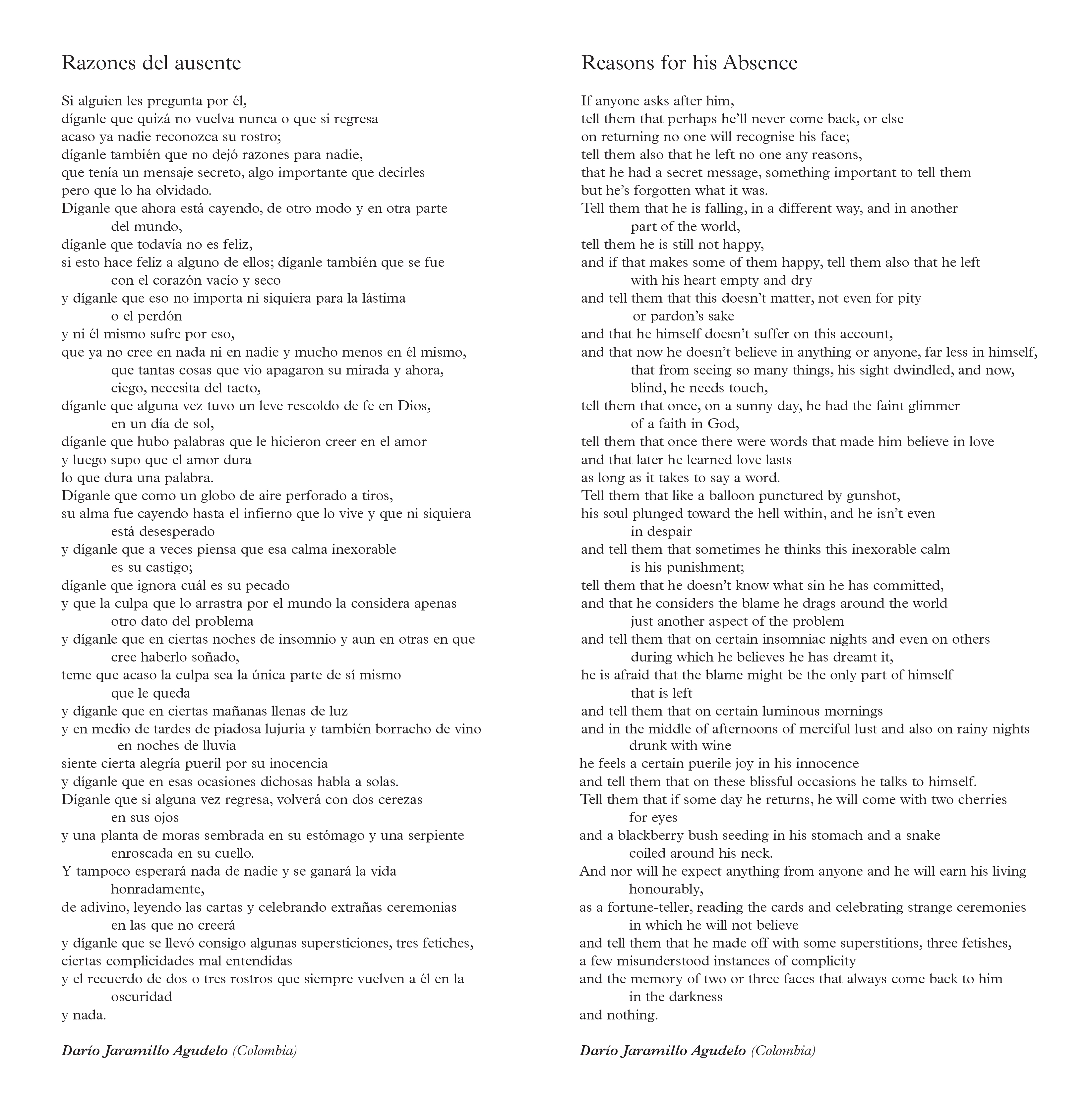
This week our Friday Poem is ‘Reasons for his absence’ by Darío Jaramillo Agudelo, from Richard Gwyn’s hot-off-the-press anthology, The Other Tiger: Recent Poetry from Latin America.

The Other Tiger by Richard GwynThe Other Tiger (the title is a nod to Borges – “the one not in this poem”) is a much-needed bilingual anthology of contemporary poetry, containing 156 poems by 97 South and Latin American poets. It includes work from Argentina, Colombia, Mexico, Peru, Nicaragua, Chile, Uruguay, Venezuela, Cuba, the Dominican Republic, Ecuador, Costa Rica, Bolivia and El Salvador.


About Darío Jaramillo Agudelo
Agudelo is an internationally acclaimed poet, novelist and essayist. He graduated in law and economics from the Universidad Javeriana of Bogotá, and worked for many years in various roles with state cultural and arts organisations. He has been shortlisted or winner of several awards for his work, including the Colombian National Eduardo Cote Lamus prize for poetry (1978), and the José María de Pereda Prize for the short novel (2010). The most recent edition of his Selected Poems is his personal anthology Basta cerrar los ojos (México DF: Era, 2014).

A note on ‘Reasons for his absence’, from Richard Gwyn:
I was attracted to this poem by its epistolary style, and by the device of news being relayed about an absent party. The lack of clarity surrounding the reasons for the man’s absence holds particular poignancy in a country such as Colombia, where ‘disappearances’ were – at the time of the poem’s composition, in the late 1970s – already becoming an everyday occurrence. The slightly elevated or ‘baroque’ language and incantatory style creates a strange juxtaposition with the content, which describes a life of sensual dissolution. The curiosity is stirred by the profound sense of loss or lack with which the absentee seems infused, wherever he is. Whether his exile is literal or metaphoric is never made clear.

My principal concern with the translation of this poem concerned the title. The Spanish noun ‘razón’ can mean a range of things, including ‘reason’ or ‘information’, or even ‘explanation’, depending on context. Similarly ‘ausente’ – here a noun, but commonly an adjective – could be translated in a number of ways: ‘the absent one’ sounded too much like translatorese, ‘the missing person’ subject to over-interpretation in the context of recent Latin American history. In the end I chose ‘his absence’, which deviates from the original in a grammatical sense but conveys the meaning of the phrase accurately. A second concern was the repetition in the Spanish of ‘díganle’ (literally: tell him), which, since it refers back to ‘alguien’ (anyone) in line 1, I chose to translate as the generic ‘tell them’.

 I attempted to re-create the long, rolling cadences of the original in my translation, alongside the reiteration of the introductory ‘tell them that . . .’.

I have also tried to reproduce the bereft tone that reflects the absentee’s solitude, and the distance he has chosen to maintain from those he left behind.

 When I read this poem out loud at an event – as I do from time to time – it still makes the hairs on the back of my neck stand on end. I can’t say that happens with many poems, but with this one it happens every time.

Reasons for his Absence
(click to enlarge image)

Project1 the other tiger new order_Layout 1

Buy your copy of The Other Tiger now: £14.99
Claim 20% off when you become a Seren Book Club member

Save

Save

Posted on

Friday Poem – ‘Making Out’, Deryn Rees-Jones

friday poem making out deryn rees-jones

This week our Friday Poem is ‘Making Out’ by Deryn Rees-Jones, which originally appeared in her second collection, Signs Round a Dead Body, and also features in her generous new What It’s Like to Be Alive: Selected Poems.

Both collections (along with Deryn’s other books The Memory Tray, QuiverAnd You, Helen and Burying the Wren) are half price until midnight on Sunday, 9th October as part of our National Poetry Day sale.

Deryn Rees-Jones What It's Like To Be Alive Selected PoemsWhat It’s Like to Be Alive marks a mid-career milestone in the life of this highly-acclaimed writer. From the poems written in her teens and early twenties included in her exciting debut The Memory Tray to her most recent exploration of time and grief, we see the arc of development in her writing over twenty-five years as she visits and revisits the concerns that are the mainstay of her writing: memory, love, desire, and heartbreak in all its manifestations. The following poem originally featured in Signs Round a Dead Body, Deryn’s second collection.

Making Out

Now it was airports that she needed –
to sit there going nowhere
counting aeroplanes like sheep,

with Concorde like an archaeopteryx or angel
and Egypt, Russia, the Azores and Lithuania
spinning in her head. She’d sit there

writing letters that she knew she wouldn’t send,
telling him about the dull, red moon, the way
the landscape then, so pale, unreal,

the fishermen, the midnight seas
had been tattooed like hieroglyphs
in blues and golds

deep into her skin. It was his hands, I think,
she could imagine best
travelling across her. But she thought about the way

he’d kiss her too, the way she’d smile, nod yes
to his demolishing her. The way he’d start
to reassemble, slowly, in the rented bed

her mouth, her throat, her shoulders, breasts,
her knees, her arms, her thighs, her calves, and love etc.


Until midnight on Sunday 9 October,What It’s Like to Be Alive: Selected Poems is half price: only £6.49 (RRP £12.99). Buy your copy now to take advantage of this fantastic offer.


Save

Posted on

An Interview with Caroline Smith

An interview with Caroline Smith The Immigration Handbook

Today we are joined by Caroline Smith, whose new poetry collection The Immigration Handbook weaves together stories of hope, frustration and pain, drawn from Smith’s experience as an Immigration Caseworker.

CarolineSmith CropCaroline Smith was born in Ilford and grew up in Hertfordshire. She originally trained as a sculptor at Goldsmith’s College. Her first publication was a 30-page narrative poem, ‘Edith’. Smith’s first full collection, The Thistles of the Hesperides (Flambard), is about the community of West Pilton in Scotland where Caroline lived in the 1980s when it was one of the most deprived housing estates in Europe. Using imagery and structure from Greek mythology, and direct stories from observed lives, the poet weaves a dense and dramatic tension between the harshness of reality and the lyricism of myth. Published widely in journals like Poetry Wales, Poetry Review, Staple, Orbis and Stand, she has twice won prizes in the Troubadour Poetry Competition.  Smith has had work set to music, broadcast on the BBC and is also the author of a musical play, The Bedseller’s Tale, that was performed at the Edinburgh Festival Fringe.  She lives in London with her family.

 The Immigration Handbook Caroline SmithYour new poetry collection, The Immigration Handbook, brings to life the stories from migrants and refugees that you hear every day in your work as an Immigration Caseworker. What made you choose to transcribe these deeply affecting stories, and was the process cathartic?

Writing thousands of letters to the Home Office over the years, I think about language, what turns a letter into a poem, the different functions of language and how by changing the angle or perspective on a subject you can show it afresh. My book is another way of contributing to the immigration debate, but it is primarily a book of poetry. It’s the stuff of my life so it’s what I make art out of.

When I was younger I couldn’t decide if I wanted to be a priest or a sculptor – so I campaigned for women’s equality and ended up as a poet! But in a sense these twin strands have come together in my poetry; my interest in social justice and my training as a sculptor who needs always to recreate the world in a different way.

I’ve never found writing cathartic. When I am most upset about something I want it to stop, I don’t write my way out of it. I see my work as an Immigration Caseworker and my poetry as separate. I get angry and try to change the system, but for poetry I need distance and reflection and I enjoy the creative process; the juxtaposition of odd fragments, creating something new, although I suppose it is cathartic in a Nietzschean way….. ‘Every art and every philosophy may be regarded as a healing… in that respect maybe.

Your poems are often (unsurprisingly) rather bleak, as they describe characters who have lost hope, who feel abused by the system, who don’t know where to turn. Do you hope the collection inspires people to see beyond the statistics and recognise the humanity of those seeking citizenship?

Yes that is exactly what I am hoping people will find in my poems – despite the bleakness, a celebration of humanity. My poetry contributes to the immigration debate; not by putting forward a set of arguments like I do in my letters to the Home Office, but by showing the humanity of people trapped in the system. Not every asylum seeker or refugee is a hero or angel. I have painted people as they are – with both frailties and resilience. We all have the same longings and desires to make something of our lives, it’s just that the people I see in our immigration surgery have a much tougher journey than most of us have ever had to bear.

You have a knack for finding humour in surprising places, for instance in your poem ‘Judgements’, which cleverly and comically portrays the bureaucracy behind judgements made on applications:

“… if the appellant claimed
that relevant matters did not happen I should not
exclude the possibility that they did not happen
(although believing that they probably did)”

Is humour an important part of poetry writing for you? And does it follow you into the workplace, and other aspects of your life?

Tragedy and comedy sit very close to each other. I’ve received so many misspelt letters…’I have been arrested by six uninformed guards’…with wormiest regards’‘I love your cuntry’!

Satire and the use of comedy is important in art. Slapstick and the absurd sharpen the truth of a situation. The most wildly improbable stories, can actually accentuate pathos and provide a break in the bleakness. Humour is also a great tool for showing up the absurdity and dysfunctionality of the Home Office which cruelly traps people without status and documents for years. It is the startling and unbelievable that is often true; whereas the predictable stories are most likely to be fabricated.

The Immigration Handbook was written over a number of years. Were these poems always destined to be released as a collection, or did the idea to publish these stories together come much later?

I always intended them to be a sequence of poems on the subject. I remember the night I started writing this collection. I filled a book with scrawling notes of incidents, characters and injustices. But it is one thing to have an idea for a poem, but then you have to wait for all the elements to come together and it often ends up going off in a completely different direction. Because I have so many stories fermenting in my head, unexpected elements mesh together.

Both my previous collections included sequences of poems. I’ve never been interested in writing a novel, but I love the opportunities presented by writing a number of individual poems that can work together and spark off each other to come at an idea from different angles and perspectives. Although I don’t write formally, the form of the poems are critical to me. I used to approach a sculpture from all angles as once.  I would use different materials and found objects set against each other to break up the surface, juxtaposing different textures. And I think I do the same with poems using different intensities; some highly worked, some quick ‘line drawings’, some found reports. The difference today is that I’m carrying my studio of scraps and fragments and found objects around in my head!

And finally, tell us about your plans for the future- where will we see your name next, and are there any festival or events appearances you can tell us about?

I had a great time reading at the Ledbury Festival earlier this summer and my book launch at the Nehru Centre in London was just fantastic – courtesy of the Indian High Commissioner! I have a whole series of readings lined up for the autumn in Cardiff, London, Aberystwyth and I’m doing a couple of Festivals in Bristol and Chorleywood as well as a special event with Waterstones in Berkhamsted for National Poetry Day.

I am really enjoying giving readings and talking about my book but already the restlessness to create and my dissatisfaction with the world as it is, is pushing me back to my writing desk. When I have lots of ideas in my head I find it distracting to read. Now The Immigration Handbook is out I’m reading as much as I can, going to lots of poetry events and every play that I can get tickets for.

17th September: Free Verse, The London Poetry Book Fair.
3
rd October: Poetry Can Festival, Bristol.
6
th October: National Poetry Day, Waterstones Berkhamsted, Herts.
15
th October: Chorleywood LitFest, 12 noon The Junction, Chorleywood, Herts.
18
th October: Lumen Poetry Series, 19:00 Tavistock Place, London.
26
th October: Aberystwyth University, English & Creative Writing Society.
27
th October: Waterstones Aberystwyth.
30th October: Cardiff Book Festival.
24
th November: 19:30 Waterstones Piccadilly.

The Immigration Handbook is available on our website. Buy your copy now: £9.99
Claim 20% off when you become a Seren Book Club member

Save

Posted on

Friday Poem – ‘The Scarlet Lizard’, Caroline Smith

Friday Poem Caroline Smith

Last night saw us at Chapter, Cardiff, for July’s First Thursday event and among the readers was Caroline Smith with her new collection, The Immigration Handbook. This week we have a treat for you – you can listen to the Friday Poem being read by the author. Look below for the video, and accompanying poem text.

The Immigration Handbook Caroline SmithThe strikingly moving poems in Caroline Smith’s The Immigration Handbook are the fruit of the author’s career as an Immigration Caseworker for one of the most diverse inner-city areas in London. Her characters are careful composites of people she’s observed. They step vividly off the page, as if out of the headlines. Written over a period of years, as layered and infused with experience as the documents she discusses: letters folded and refolded, creased with time, Caroline Smith’s poems are a moving record of global people movement, the story of our time.

The Scarlet Lizard

Nothing moves
except the evening light
crossing the Judge’s room.
The lawyers’ skeleton arguments
lay piled on his desk.
They seemed to him brittle
as bleached poppies,
tapped of their seeds.

He longed to see the quick movement
of a scarlet lizard weaving unexpectedly
through the parched, cracked hexagons
of a legal phrase, to hear the snapped stick
fritter away from a hiding place;
to feel the cold, diaphanous weed grip
in the black current of a border crossing.

He needed to sense some quiver of
indecision, an odd detail
that would open the truth of their words;
chinks of light shining
through shuttered doors.


Buy your copy of The Immigration Handbook now from the Seren website: £9.99

Become a Book Club Member to claim 20% off.


Save

Posted on

Gloriously gothic book launch: Bethany W. Pope in Cardiff

Gloriously gothic book launch Bethany W Pope Cardiff

Join us for a night of gothic romance as Bethany W. Pope reads from Masque, her rich and psychological re-telling of Gaston Leroux’s classic, The Phantom of the Opera.

The event is at the new Octavo’s Book Cafe & Wine Bar in Cardif Bay, Wednesday 22 June, 5:00-7:00pm, and is free for all to attend.
Bring your friends, have a glass of something decadent, and listen to the story unfold.

Bethany W. Pope launch Cardiff

Tell us you’ll be there! Click ‘going’ on the Facebook event page or RSVP by email to: [email protected]

About Masque:
Masque is a richly gothic retelling of Gaston Leroux’s phantom of the opera story by debut novelist Bethany W Pope. Centre stage is promising young singer Christine, who, despite being devoted to her art, attracts the attention of both the Phantom (Erik), and rich Parisian theatre owner Raoul.

The intensely ambitious Christine finds herself caught between the twin evils of the Phantom’s murderous pursuit of artistic perfection and Raoul’s ‘romantic’ vision of her as a bourgeois wife. Her own desire to follow her operatic career becomes her guiding light, but none of the three leading characters can control the directions in which their passions lead them, while the beautiful masked skull of the opera house itself looms large over their respective fates. The resulting mix of love, rage, art and murderous intent, is explosive.

Love, lust, adventure, romance, and the monstrous nature of unfulfilled creativity await you here.

Everyone wears a mask. Look beneath it, if you dare.


Posted on

Friday Poem – On Standby

Friday Poem On Standby from Animal People by Carol Rumens

This week’s Friday Poem is taken from Carol Rumens’ hot-off-the-press new collection, Animal People.

Friday Poem On Standby from Animal People by Carol RumensAs the author says in her brief introduction, ‘the vertebrae of this collection are the seasons of a sometimes Welsh and sometimes English year.’ Rumens’ poems are frequently inspired by places, either wild landscapes as in ‘Fire, Stone, Snowdonia’ or urban scenes as in ‘March Morning, Pearson Park’. But just as often a setting will be a pretext for a theme that has a political, sociological, aesthetic, philosophical or even metaphysical focus. The striking ten-page title poem explores some of the effects and affects of Autistic Spectrum Disorder (ASD), focusing particularly on Asperger’s Syndrome and how it may be experienced by young women. Rumens opens up this topic with all her characteristic energy, empathy and curiosity.
This is a beautifully intelligent collection of poetry, sure to delight and inspire.

Friday Poem On Standby Carol Rumens


Buy your copy of Animal People now, 20% off on our website for Book Club members.


Posted on

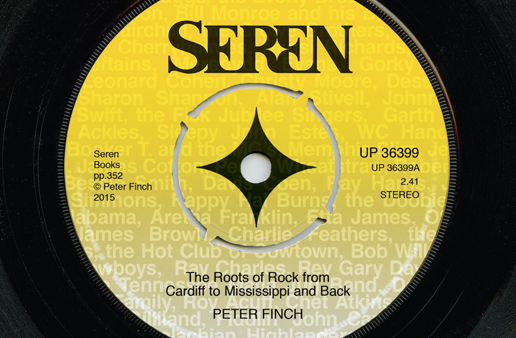
The Roots of Rock, from Cardiff to Mississippi and Back: Listen Online

The Roots of Rock, from Cardiff to Mississippi and Back

Peter Finch’s latest book The Roots of Rock, from Cardiff to Mississippi and Back charts the evolution of rock and popular music, from a 1950s valve radio playing in a suburban Cardiff terrace to the reality of the music among the bars of Ireland, the skyscrapers of New York, the plains of Tennessee, the flatlands of Mississippi and the mountains of North Carolina. For each chapter there is a playlist of suggested records to listen to whilst reading, to bring alive Peter’s many sharp-witted stories. To give you a taste of Peter’s world of music, we’ll be creating playlists for each chapter which you can listen to on our Youtube Channel. The first of these is now available, so take a listen below…

Chapter 1: Howlin’ Wolf in City Road

This entertaining book is part musical autobiography, part travel literature and also an exploration of how music can create a world for the listener that is simultaneously of and beyond the place in which is is heard.

The Roots of Rock, from Cardiff to Mississippi and BackFinch gives us sharp-eyed accounts of gigs from Champion Jack Dupree to the Garth Mountain Boys, muses on the importance of the Dansette record player, ponders why Elvis never came to Wales (except multiply in Porthcawl’s legendary Elvis Festival), visits musical shrines and theme parks – Dollywood, Grand Ole Opry, Graceland, Stax, rides along with singing cowboys and recalls his attempt to form a band, The Blueswailers. Add in music in Ireland and Wales (and in Welsh), the Bible Belt, Sister Rosetta Tharpe, Etta James, Ray Charles, Bert Jansch, Taylor Swift, Alan Stivell, Chet Atkins, the Appalachian Mountains and Pigeon Forge and Finch’s world of music is as broad as the last six decades allows.

We hope you enjoyed the playlist above. You can buy the book on our website.

Posted on

The Road to Zagora | Travelling with Mr Parkinson

In 2006, author Richard Collins was diagnosed with Parkinson’s disease. Spurred on by news of his illness, Richard and his partner Flic resolved to seize life by the horns and see more of the world. The Road to Zagora tells the story of their subsequent adventures.

the road to zagora by richard collins

Here at Seren we’ve been eagerly awaiting the arrival of The Road to Zagora, a unique sort of travel memoir in which the author explores the good, the not-so-good and the surprisingly funny aspects of travelling with Parkinson’s disease. We thought we’d give you a sneak preview of the book to wet your appetites – so read on to hear about the adventures of Richard, Flic, and Mr Parkinson.

A is for Aqaba (Jordan)

Travelling enriches your life and changes your understanding
of quite a few things. Home is a different place on your
return. You are a different person, having travelled. I have had
some preconceptions of other people and places quietly
overturned. I spend a lot of my time at home now because of
my poor health and have the opportunity to reflect on these
things. Or I do something daft like make an A to Z of place
names, each from a different country, and write a little
anecdote about each one. I once spent a couple of rainy days
doing this, starting with Aqaba in Jordan:

Forget Lawrence of Arabia arriving in Aqaba on camelback at
the head of a Bedouin army: we crossed the desert by bus, in
comfort, with wi-fi and air-con and reclining seats.

Aqaba is a port but also a seaside resort, a holiday destination
for Jordanians. We were at the beach on a Friday, the
Muslim holy day, and found that it wasn’t wall-to-wall joylessness
as Sunday is in some parts of Christendom (we once saw
a children’s playground in the west of Scotland with a sign
Closed on Sundays). People may have been to the mosque in
the morning but now they were having fun. Women were
dressed conservatively, some in long black robes, but it didn’t
stop them from going into the sea, snorkelling or messing
about on inflatable plastic ducks.

We had already had our preconceptions of Islamic society
challenged in the first Jordanian town we visited. The shoe
shop proudly displayed in their window a number of pairs of hi-heeled thigh-high leather boots in a choice of colours, red or
black. Did the women we passed on the street wear these under
their long robes? In what other context, we wondered, would
they be worn? I really can’t imagine.
The people of Jordan are renowned for their hospitality,
friendliness and sense of humour.

The Road to Zagora, Richard Collins


Richard Collins


I hope you enjoyed this cheeky preview of The Road to Zagora! If you did, then good news – you can find the book in our store here, and get a 20% discount through our store.

Posted on

The World, the Lizard and Me – Incoming Autumn Reads

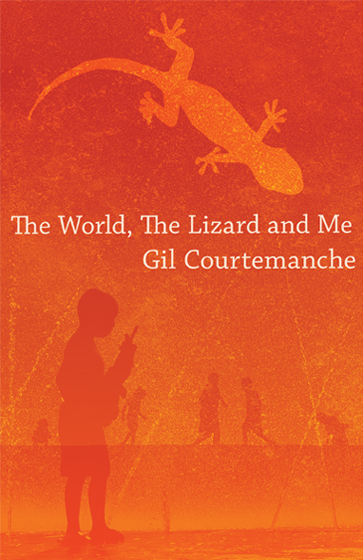
The World, The Lizard and Me - Gil Courtemanche

I know, I know – summer has hardly begun! But here at Seren, we’re already excited about our forthcoming Autumn books.  Top of my reading list is The World, The Lizard and Me.  Which of these titles are you most excited for?

You can find all these upcoming releases on our website.

The World, The Lizard and Me - Gil CourtemancheThe World, The Lizard and Me
by Gil Courtemanche

Gil Courtemanche (1943-2011) found worldwide acclaim for his first novel, A Sunday at the Pool in Kigali (2000), which dealt with Rwandan genocide and the AIDS crisis whilst immersing the reader in a bittersweet love story.
The World, The Lizard and Me was first published in 2009 and we are proud to bring you the first English translation of this enthralling story.

The World, The Lizard and Me follows the life of French Canadian Claude Tremblay who, since he was eleven has sought justice for the voiceless victims of war. His passion for justice has taken him to a job at the International Criminal Court in The Hague, where he pursues the conviction of Thomas Kabanga, a Congolese warlord charged with creating child soldiers in the civil war there.
Defeated in court due to a legal technicality, Tremblay finds himself at a moral crossroads and travels to Congo to gather more evidence. Moral boundaries blur in a culture Claude thought he understood, and a different sort of justice is formulated and executed.

The novel is informed my Courtemanche’s own experiences of reporting in Africa, and his depiction of the region is highly evocative, bringing into question the nature of evil and the effects and consequences of childhood.

The World, The Lizard and Me is out in October 2015, and you can read a more detailed description of the book here.

dark mermaids, anne lauppe-dunbarDark Mermaids
by Anne Lauppe-Dunbar

Doping in sport is an incredibly current issue, raising questions of morality and responsibility.

In Dark Mermaids, Anne Lauppe-Dunbar depicts a political system that shockingly doped its youngsters to sporting superhero status, and then left them to fend for themselves.

Shortlisted for the Impress and Cinnamon First Novel Prize, this East German noir thriller is set in 1990, a year after the fall of the Berlin Wall.

Unhappy West Berlin police officer Sophia is called on to investigate the murder of her childhood friend Kathe, after her beaten body is discovered in Sophia’s local park. As she reluctantly delves into the sordid Stasi secrets of those she grew up with, Sophia uncovers a web of horrors about her own abusive past as a child-swimming star in the former GDR. But her hunt for the truth has not gone unnoticed by those close to her, people who still have too much to hide.

Anne says of her novel: ‘I wrote Dark Mermaids as my refugee mother’s daughter: a child of the GDR who fled westwards carrying arcane knowledge of a country in which secrets and lies were endemic.’ In writing the novel Anne has extensively researched what is known of athletes doping and training in the area of East Germany she writes about.

Dark Mermaids will be available in September, and you can find out more about the book here.

Star-Shot_72rgbStar-Shot
by Mary-Ann Constantine

This mysterious, captivating tale weaves together stories of four people whose paths cross outside Cardiff Museum, which is only a stone’s throw away from us here in Bridgend.

Both fable and mystery, Star-Shot is set in a small world of parks and galleries around Cardiff’s National Museum, in a time not quite our own. As their paths cross, characters reveal stories of obsession, loss and recovery, creating a fragile network of relationships that resist the inexorable channels of silence eating into the city.

Poignant and humorous, Star-Shot is an exploration of how objects and images can focus our grief and desire; it is also a meditation on the regenerative power of garden ponds, and the cosmic significance of frogs. Beautifully illustrated with woodcut-style motifs by Clive Hicks-Jenkins, this is a subtle urban novel with a supernatural twist.

Star-Shot will be available in October, but for now you can read more about it on our website.

I hope you enjoyed finding out a little of what’s to come this autumn at Seren. This has only been a snippet though, so for the full list of forthcoming titles, take a look at our Coming Soon page.