Posted on

Veganuary: Tips & vegan recipes from Sarah Philpott

Veganuary Sarah Philpott vegan

Forget the January blues – in recent years this cold and gloomy month has instead brought cooking inspiration and healthy eating ideas as ‘Veganuary’ has taken off.

What is Veganuary? Whether you’re new to the vegan diet or you’ve dabbled before, the idea is to cut out meat and dairy throughout January – and if you find you like it, then continue for as long as you’d like! To help kickstart your vegan journey, vegan cook Sarah Philpott, author of The Occasional Vegan, has some tips, tricks and recipes:

Sarah Philpott The Occasional VeganGetting started
Eating and cooking as a vegan might seem like a minefield but it’s simple once you know
how. Despite what your mother says, you’d be surprised by how little protein you actually
need and it can be found in a number of vegetables, beans and pulses. The same goes for iron, calcium and healthy fats.

Where to shop & what to buy – Can eating vegan be budget-friendly?
You might think that veganism is only for well-off lefties but it’s not a middle-class fad; it’s actually really accessible for those of us on a tight budget. Seasonal fruit and vegetables are cheap and plentiful, and beans, pulses, rice and other grains cost pennies. Meals like chilli, dhal and curry are tasty tummy fillers which, armed with a well-stocked cupboard, will cost you next nothing to make. You can buy big bags and tins of pulses for next to nothing from supermarkets and international stores, and pound or bargain shops often sell quinoa, nuts, seeds and dried fruit at a fraction of the price you’d pay elsewhere. Most supermarkets sell everything from plant milk to vegan cheese, as well as a variety of ready meals, and if you fancy a treat, there are plenty available, including vegan Magnums and Ben and Jerry’s. Most restaurants now offer a vegan menu and you can even enjoy a vegan sausage roll at Greggs.

Get started – try these vegan recipes!


The healthy meal:
Beat the Blues Salad
This vibrant and filling salad pairs smoky tofu with beetroot, orange and salty black olives.

Video credit: Manon Houston

Read the full recipe


The mid-week treat:
‘KFC’ – Kentucky Fried Cauliflower
This spiced, fried cauliflower tastes amazing and is surprisingly easy to make.

Video credit: Manon Houston

Read the full recipe


The decadent dessert:
Vegan Chocolate Mousse
This gorgeously light and creamy mousse has just four ingredients and comes together as if by magic.

Video credit: Manon Houston

Read the full recipe


We hope you feel inspired and ready to begin your voyage into veganism. Hungry for more great recipes? Get your copy of The Occasional Vegan from our website: £12.99

Create your free Seren account and enjoy 20% off every book you buy direct from us.


Posted on

An interview with Cardiff author & legend, Peter Finch

Interview Cardiff Peter Finch

The Eisteddfod will soon be in full swing in Cardiff’s beautiful Bay area. We can’t wait to welcome you to Wales’ capital city – and to introduce you to our resident Cardiff expert, Peter Finch, who will be signing copies of his new book on the Welsh Books Council stand (84) on Wednesday 8 August, 1:00pm.

As you prepare for the marvellous week ahead, we thought you might enjoy learning a little more about the Welsh capital – so here is our interview with Peter Finch, who – as ever – is full of fascinating insight into his home city.

Peter Finch

Peter, you have been writing about Cardiff for quite some time now, with the first ‘Real Cardiff’ book having appeared in 2004. What do you perceive as the most radical change Cardiff has undergone in the last decade?
Changes to Cardiff seem to work in twenty year cycles rather than decades.  We didn’t have the Bay nor the Barrage, the Millennium Centre not the Senedd in 1980 but by 2000 we did.  In 2000 and other than right on campus there was barely a purpose-built student let available anywhere in the city.  Today they are everywhere, gargantuan, gleaming, glowing, growing, rocketing up in every district from right next door to the old Gaiety Cinema on City Road to the city’s highest of new high rises, the Bridge Street Exchange, at the bottom of Charles Street.  In the pipeline are plans for more.  Purpose Built Student Accommodation (PBSA) erected against a background of weak planning control and easy to manage building regulation they are the cash cows of property developers everywhere.   Put them up and then apply for change of use.  The cityscape will never be the same again.  In 2000 we had a green belt running right round the city.  Today that belt has shifted to become instead a green wedge, a green splash, a green smear.  In its place are the city’s new districts.  Plas Dwr, Churchlands and all the others. Cardiff expands. And expands. And expands.

The ‘culinary odyssey of City Road’ is marvellously well documented in Real Cardiff: The Flourishing City. For hungry Eisteddfod-goers, where would you recommend trying first?
.CN, the internet suffix for China, is the name of the city’s best Chinese eatery by far.  Here you can get top end Sichuan king prawn in chilli and pepper sauce, healthy option Kung Po chicken, and north east China salad in a style you’ll find hard to beat anywhere else in the city.  Failing that and for kebab fans Al Wali’s Omani Restaurant half way down and hiding behind a bus stop is pretty decent.  For Omani read Persian or Iranian or Egyptian, or Middle Eastern.  City Road is a feast from one end to the other offering meals at price points everyone can reach.

If you could be transported to any period of Cardiff’s history, which would you choose?
I think I’d want to see the heroic period of Cardiff’s industrial expansion in action first hand.  That would mean arriving in 1861 at the Royal Arcade and finding the very first Cardiff Free Library on the first floor.  Out the back they’d have a time machine, naturally, so having got here I could then get back.  I’d use it to slide back a further few years to 1849 to see Brunel move the Taff in order to build Cardiff General Rail Station for his South Wales broad gauge railway.  I’d spot a few numbers and then rush forward to 1886 to visit the brand new Coal Exchange, have a drink in the just opened Grand Hotel on the new Westgate Street, buy some cockles at the brand new indoor market and finally climb up the shiny new statue of John Bachelor to top his head with a road mender’s lamp, traffic cones not yet having been invented.   This was the period that made Cardiff, when the population boomed and when modern invention and business innovation flooded the place.  That flourishing must have been simply thrilling to watch.

Psychogeography is a particularly inventive way of mapping a place – how did you first become interested in it?
The Situationists who flourished between the fifties and the seventies were international social revolutionaries and avant garde artists.  I was running the journal second aeon at the time, a Welsh-based home for a world of avant garde poetry, so naturally I took note.  These people interested me.  They were an onward growth of the Dadaists and the Surrealists and seemed to me to be right at the cutting edge.  One of their members was Guy Debord ­– the man who invented psychogeography, the exploration of mainly urban environments for what they were rather than where they led.  The sense of place became more important than the place itself.  Why not view a city as an entity rather than a destination?  This was something I needed to try for myself.

Peter Finch Real Cardiff Flourishing CityWhat did you find most challenging in your process of writing Real Cardiff: The Flourishing City?
In writing these books you don’t sit about waiting for inspiration to strike, no hoping for those rays of Blakean stuff to come pouring down through the air and infest your work.  None of that.  This is work..  I need to immerse myself in my subject. Research it, walk through it, think about, talk about, listen to it, feel it.  I make notes.  Constantly.  I record things on the camera, take snaps, use the phone.  I check out the maps.  I check out the old ones and then the new ones.  I check  just how the used to spell the name of the place I am interested in.  Why was Rumney called Rompney? Why was Cardiff called Kairdiv?

I accumulate what I need to say and then find a way of starting out and saying it.  The starting is so important.  Get that right and the rest will flow. I work hard walking and thinking, note book always with me, and into it I make notes of how my start might go.  The walking helps the flow.  I ignore passers-by, I ignore interrupters, I am working so this poor and rude behaviour is entirely reasonable.

It’s also true that you then need to check and then check again.  I reread and redraft.  I get help from others to check too and I listen to what they say.  I recheck my spellings.  I look at what others have said and I try not to repeat them.  I acknowledge them if I do.

What’s the most challenging?  Transcribing interviews.  Getting that right.  And remembering to ask the right questions in the first place.  I always double check with my interviewees.  I let the subject see what I intend including and ask them if they are happy.  If they aren’t or I’ve got it wrong somehow then I put it right.

And finally, in the closing pages of The Flourishing City, you wonder about Cardiff ‘how it could be’, and tell us, ‘Cities are never finished’. Is it also true, then, that you’ll never be finished exploring this city of yours?
I think that once a city gets above a certain size there will always be new things to discover about it.  Not only is Cardiff big enough to keep me permanently involved but it is also changing constantly, often at a bewildering rate.  No matter which part of it I find myself in there are always new things to look at, new roads to walk down, new paths to follow and new routes to create.  Tracking the lost can be just as thrilling as delighting in the newly discovered.  The moment I finish a volume of Real Cardiff something new or different or previously unseen appears.  Buildings get built.  Buildings get torn down.  Populations flourish.  Roads and walkways bend and turn offering new and different vistas.  This capital of ours is a great Welsh place, far more involving than most people think. Try it. Just arrive and open your eyes. Real Cardiff: The Flourishing City will give you a few hints.


Real Cardiff: The Flourishing City is available from the Seren website: £9.99

Join our free Book Club for 20% off every book you buy from us.


Posted on

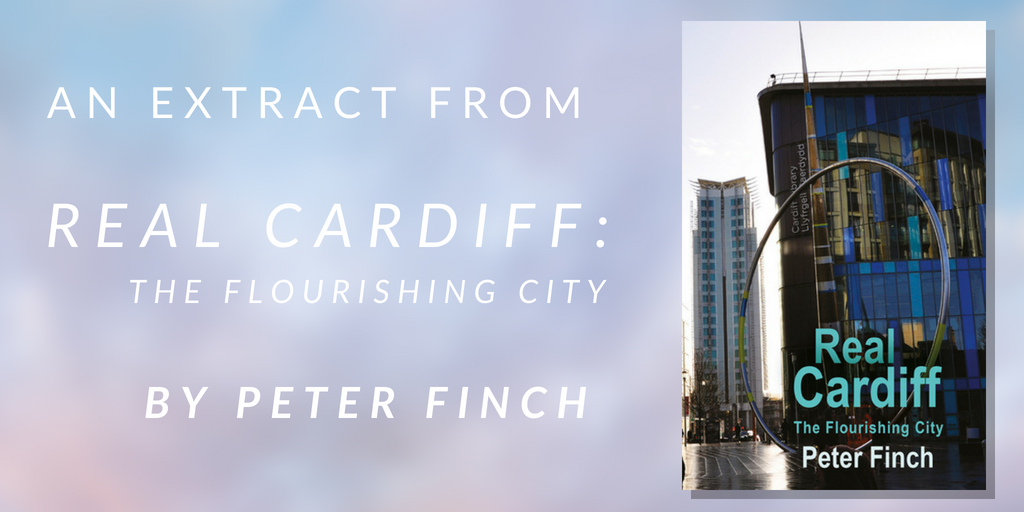
An extract from Real Cardiff: The Flourishing City, by Peter Finch

Real Cardiff Peter Finch extract

Though certain parts may be seeing rain this weekend, the warm weather continues – and what better time than summer to explore all the UK has to offer?

Peter Finch Real Cardiff Flourishing CityOur Real Series – a collection of intimate and entertaining guide books written by local writers – offers an insider’s view of the places it celebrates. The most recent addition to the series is Real Cardiff: The Flourishing City by Cardiff author and legend Peter Finch. So whether you’re an armchair traveller, or someone looking forward to a trip to the Welsh Capital sometime soon, we hope you enjoy this glimpse into the history of Cardiff – specifically, the area in which famous children’s author Roald Dahl grew up.

The whole of the Real Series – and all our other Seren books – are 50% off until midnight, Sunday 29 July, on the Seren website.


ROALD DAHL’S CARDIFF NORTH LEY

I catch the train at Cardiff Central. This is the City Line which began in the city’s north east and now, after looping in a great U through the city’s heart is about to head north again. I’m in the two-car Sprinter and I’m standing. Every single seat is occupied by pupils from Bishop of Llandaff High School. Kids, bags, blazers, headphones, chewing.
The windows stream as the train steams. Around us is railway land, an industrial cityscape full of rail sheds, engine bays, carriage washeries, repair shops and assembled new track in stacks like a giant train set. This south west of the city on view from the tracks is the capital with its guard down. Backs of mosques, tottering streets, unkempt gardens, the yards of Brains brewery, warehouses stacked with building materials, and even more open and right now empty rail beds. It reminds me of London, how the land looks as you reach Paddington or Waterloo.
But it doesn’t last. After the carriages have disgorged a hundred uniformed school kids at Fairwater, the cuttings emerge, wooded banks and scrub masking the housing above. It’s leafy suburbia giving an impression of empty countryside. A green west Cardiff, a place that doesn’t change.
It’s freezing. This is January. The train has reached Radyr where it will rest a while before returning the way it came. I’m off, up the footbridge steps, plastered thickly with Network Rail road salt. No one but no one will slip and sue here. In a previous, smaller, steam-filled incarnation, the Radyr train would have served Roald Dahl’s father, Harald, who did a daily commute in to what was then called Bute Road Station. His ghost is there on the platform now, eye glasses, three-piece suit, white starched collar. He looks like a disapproving headmaster. His railway season ticket was found inside his expensive leather wallet when he died in 1920. That was on April the 11th. The ticket was valid until the 23rd.
Like most in Cardiff at this time Harald’s business was coal. With his partner Ludvig Aadnesen he had established a business as a colliery agent and provider of all that ships docking in the world’s leading coal port would need. Provisions, ropes, oil for their lamps, food. The profits flowed.
In 1917 Harald had bought Tŷ Mynydd (Mountain House), set on rising ground a mile north of the Radyr rail station. As befits the successful businessman Harald was, here was life on a grand scale. 150 acres of land, outbuildings, cottages, a piggery, lawns, formal flower borders, terraces, its own electricity generator and an enormous Victorian house.
In photographs it looks like part of Hogwarts. It had multiple chimney stacks, mock Tudor gables, a tiled roof larger than most churches’ and greenhouses to the side to rival those of Dyffryn House, to the west of Cardiff. This is the place Roald, the great author, remembers with nostalgia, recalling the fields full of shire horses and dairy cows. There are photographs of him as a four-year-old out on the lawns and terraces, in the fields among the sheaves of corn, sitting on the wall of the piggery and of the house itself, which is resplendently decorated with both the Union Jack and the Norwegian Flag. No Welsh dragon in sight.
Like Cefn Onn, Tŷ Mynydd also had railway connections. The house had been built in 1883 by George Fisher, Director of the Taff Vale Railway. When he died in 1891 the property passed to his son, H. Oakden Fisher, Chair of both the TVR and the Cardiff Gaslight and Coke Company Ltd, although his real interest lay with the military. He was Lieutenant Colonel of the Glamorgan Volunteer Artillery. Harald bought the estate in 1918. When he died in 1920, his second wife, Sofie Magdalene, moved to smaller premises back in Llandaff. Tŷ Mynydd then became the property of the architect Sir Beddoe Rees, MP and for a brief time in the 1930s was turned into St Maur’s College, a small private boarding school for girls.
In 1967 the house and most if its outbuildings were demolished. This was the first full-blooded rush at clearance following the war. Cardiff was expanding. Property developers had no interest in the preservation of inefficient, draughty piles such as Tŷ Mynydd. On its lands a whole housing estate could be build. It had to come down.
I take the road up out of the station’s gully. Already the old shunting yards and waste ground lining the river have been populated with high density brick town housing. There’s little public space. Most structures are distinct from each other, laid at angles as if thrown there like dice. Room for breath is restricted and corners are rounded. Access is on turning roads named after De Clare, Norman Lord of the City, Aradur Hen, an ancient local croft that gave us the name Radyr, and Goetre Fawr, the farm that once worked these lands. Behind the aptly named Junction Terrace is a field replete with three grazing llamas, tall-necked beasts which, despite the ll of their name, are about as common in Wales as kangaroos. Food To Go which has signs offering coffee and warmth is closed. I head up along rising Heol Isaf in the direction of the Village of Fire.
In 1841 the ten cottages of Pentre Poeth (Warm Village) were all that existed of what is now Morganstown, upper Radyr – that part of Cardiff north of the M4’s périphérique grip. This is where the workforce of the developing fire-filled ironworks at Pentyrch lived, an element of Cardiff’s lost industrial heritage. Heol Isaf was and still is the main road to Tŷ Mynydd. It’s no distance to cover. In my ears I’ve got Emmylou playing through the buds. 1970s country, when what she sang was the edge. Alabama down home. Dahl wouldn’t have stood for this. He preferred Beethoven.
The Tŷ Mynydd estate has been built on; the fields are gone. The line of the original entrance path running up from Tŷ Mynydd Lodge has been preserved in the rising bends of MaesYr Awel. The detached late-sixties houses along it turn eventually to a U-shaped cluster of apartment blocks. Cwrt Tŷ Mynydd is the appropriately named first; after that the developer gave up and resorted to names with a strong English resonance – Norfolk Court, York Court, Windsor. It’s a marketing thing. Here, near the eastern edge of Wales, where the language thins, the Anglo norm dominates.
Beyond the apartment courts, circled like a residential wagon train, there’s a copse, ancient pine trees, all that remains of what once was here. For the Dahls of the nineteen teens this would all now be virtually unrecognisable. A local walking his young daughter to the primary school at the former estate’s southern end tells me, yes, he knows about Dahl and the great house. He points me back towards the still extant Tŷ Mynydd Lodge which faces Heol Isaf. And there it is, the gatehouse preserved, doing time now as an up-market B&B. The Llandaff Society have installed a celebratory plaque above the front door. Over the years since Roald would have known it the building has been much extended. But there’s enough original left for the Dahlian spirit to soar. I can see him outside, short pants, laced leather shoes, hat, overcoat with enormous buttons. Mama holding his hand.


Real Cardiff: The Flourishing City is currently half price on the Seren website: £9.99 £4.99

Thinking of visiting cities elsewhere in the UK? Find the perfect insider’s guidebook to enrich your trip:

Poet Ian Spring overlays the current map of Glasgow with the map of his memory and experience.
‘Bard of Barnsley’ Ian McMillan delves into the past of the area of South Yorkshire in which he was born and still lives.
Poet Chris McCabe looks at the art, attractions and ‘oozy’ docklands history of this slice of London.
Novelist Clare Dudman explores her richly historic city as you won’t find it in other guidebooks.


See the full list of Real books on the Seren website: all half price until midnight, Sunday 29 July!

Posted on

An extract from The Wellspring by Barney Norris

Barney Norris The Wellspring extract

‘A rare duet, in which father and son rediscover a whole world through the redeeming power of art.’
– Declan Kiberd

Barney Norris The WellspringIn The Wellspring, acclaimed novelist and dramatist Barney Norris conducts a conversation with his even more acclaimed father, the pianist and composer David Owen Norris, on creativity, cultural identity, and how the two intertwine.

In this free extract, the conversation between father and son turns towards David’s career as a pianist: how it began; the impact of failures and accolades; the strangely altering milestone of 30.

This extract begins on page 87 of The Wellspring.

Playing

BN: I’ve titled this second sequence ‘Playing’. Ostensibly, what I hope to cover here is the bulk of your professional life – your work as a performer. But I have it in my mind as well that what we’re circling is one person’s route into a life, into living well, and I want to draw attention to that as we begin. This book will take the same path everyone does as they find their way into the world – first we listen, then we simulate, then we live. In some lives, I don’t think the path is as easy to trace. Not everyone has a vocation. Not everyone’s entire life can be expressed as the development of a single project. Of course, your life isn’t adequately summarised if we turn it into a single developing theme, either. If we were to exhaustively catalogue everything you’ve ever done, a meaning would emerge that was too diffuse and complex to express – or you might end up with a catalogue of infinite drift, I don’t know how open you are to the idea that lives have inherent meanings at all, or whether it’s fairer to say all narratives are superimposed. But the opportunity we have here is that it’s in the nature of an artist’s career, where the life feeds the work and the enthusiasms are buried deep in childhood and the work is all-consuming, that a narrative can be constructed more easily than is usually the case that expresses something like a linear development through life. So when looking at an artist’s life, you can say things about the way all people move through time more easily than you can with some other careers. The milestones are easier to make out. So for the purposes of this book we’ll read your performing career as a second stage in a development that leads, eventually, to the writing of music. Not an adequate summation, but perhaps it’s an interesting one, you see the two as connected?

DON: It was the break-down of my early composing career that led directly to my performing career. I’ve already hinted that my composing didn’t go down too well in 1970s Oxford, though come to think, I left with a composition scholarship to the Academy. But the contemptuous reaction to my B. Mus exercise a year later – ‘This fugue subject implies harmony’ was one criticism I still recall with some puzzlement – and the prevailing narrow taste in ‘modern music’ funding circles, led me to concentrate on something I did to everyone’s satisfaction, namely, play the piano. Young performers play a wide range of music, partly because they know they need a wide range of experience, and partly for frank commercial reasons, and so I formed hands-on opinions of the work of still-living composers like Tippett & Britten & Messiaen, and I gave innumerable premieres of works by composers now forgotten.

BN: It’s a very interesting environment, the generation of contemporaries one works with at the beginning, before it’s clear who’s really going to make it. I’ve been going through that myself for the last few years – it’s still a bit too soon to tell which of my generation of theatremakers will one day be filed under that ‘now forgotten’. Because there’s no precise formula for identifying the ones who’ll last, is there. It’s not only talent, it’s not only prevalent fashions in funding circles, it’s not only luck, it’s not only hard work, it’s not only whether you choose to have a family, or where you’re from, or who you know; it’s not even whether you’re someone that anyone likes. It’s terrifying, because of course, after the first six months when a few people who thought they were serious wake up and back out, anyone who’s tilting at the windmill of the arts can’t imagine doing anything else, and doesn’t have a back-up plan, even though some will end up needing one. The arts are so hard to break into, you’d never do it if you were capable of doing anything else. But it’s also a very wonderful moment, because, in a Schrodinger sort of way, you live suspended in this moment where anything might be possible for you and your friends – even if in actual fact, when you get to the end, you will look back and find that it wasn’t.

DON: ‘Now forgotten’ sounds callous, doesn’t it? I meant it more as a merciful imprecision. Your list of things that need to slot into place is pretty scary – and very carefully ordered! Academy Professors, as I discovered when I became one, all agreed that we should exert ourselves to the utmost to put students off, because only the students that can’t be put off stand the slightest chance in the business. Good as far as it goes, but things change, become less narrow – good changes as well as bad changes. Some of the less positive changes at institutions of higher education are down to money, which has all sorts of repercussions – not all new courses fill purely educational needs. Then, if half the population is going to university, degrees will need to change, not necessarily for the worse: but we need to make sure that the former methods of study, where they were valuable, can be continued – which has emphatically not happened in secondary school music.

But there are positive changes too. I’m thinking especially of social change. What’s often called dumbing-down (something I’ve hinted at in the previous paragraph) can also be seen as a welcome acceptance that art need not always be on the verge of unintelligibility to be worthy – which is why my music can reach listeners now, though it was so out of tune with the seventies. Another helpful social development is a public acceptance of the portfolio career. We can take real advantage of the new opportunities the twenty-first century has brought us, the communications revolution. I wonder if I could have created a taste for my sort of music back in the seventies, if we’d had the Internet. But it lumbers up too late, like Chesterfield coming to the assistance of Dr. Johnson. Still, it gives us new ways to reach audiences, if only we had time to develop them.

BN: You told me once that the thing to watch for was what happened when everyone turned thirty – it was around then that things started shaking out. Having turned thirty not so long ago, I can increasingly attest to the truth of this. Did that advice come from personal experience?

DON: Observation rather than experience, luckily. There were so many schemes and scholarships that you could compete for till you were thirty. After that, you were on your own, and many winners didn’t make the change into actually earning a living. It’s an age that concentrates the mind in many ways. Clocks are ticking, clocks of self-esteem as well as of biology. Is it still too late to become a bank manager? we used to ask ourselves back in the day, in blissful ignorance, probably, of how difficult it is to be a bank manager.


The Wellspring is available on the Seren website: £12.99

Join our free Book Club for 20% off every book you buy from us.


Posted on

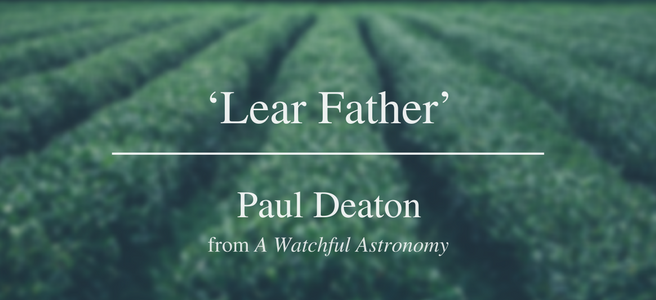
Friday Poem – ‘Lear Father’, Paul Deaton

Our Friday Poem this week is ‘Lear Father’ from Paul Deaton’s recently published debut, A Watchful Astronomy.

Paul Deaton A Watchful AstronomyWelsh-raised and Bristol-based, Paul Deaton has produced a debut collection full of poems that are quietly precise, yet full of powerful emotion.
Deaton’s poems are finely attuned and alert to the tensions in relationships, partly attributable to a difficult father figure, ‘like a wounded bear’, who haunts much of this book – including our featured poem today, ‘Lear Father’. Nature is also a guiding presence in this collection, and is often embodied by a wintery landscape.
A Watchful Astronomy is a Poetry Book Society Recommendation for Winter 2017.


Friday Poem Lear Father Paul Deaton


A Watchful Astronomy is available from the Seren website: £9.99

Join our free Book Club for 20% off every book you buy from us.


Posted on

Free poetry alert – enjoy samples from all our 2017 collections

Free poetry Seren sampler 2017

Who doesn’t love a freebie? We’ve put together something a little special for  all you poetry lovers – the Seren Poetry Sampler 2017. This free PDF is now available to download, and contains a free poem from each of our 2017 collections.

It also contains an exclusive 30% discount code – so when you inevitably fall in love with all ten books, you won’t break the bank.

Free poetry pamphlet


There are a number of poems from striking debut collections: ‘Lake Fever’ from Polly Atkin’s Basic Nest Architecture, ‘The Coffin Hut’ from Paul Deaton’s PBS-Recommended debut A Watchful Astronomy, and ‘The Walking Wed’, Emily Blewitt’s Walking Dead-inspired poem from This Is Not A Rescue.

Experienced poets Siobhán Campbell, Martyn Crucefix, and Graham Mort feature too, with poems from fresh new collections: ‘Why Islanders Don’t Kiss Hello’ (Heat Signature), ‘R-O-M-J-X’ (The Lovely Disciplines), ‘Froglet’ (Black Shiver Moss), alongside ‘Closing Down’ from Robert Walton’s long-awaited second collection, Sax Burglar Blues.

There are also poems from two new pamphlets: ‘The Birds’ from Brood by Wales Book of the Year winner Rhian Edwards, and ‘Howlet’ by promising young poet Yvonne Reddick, from Translating Mountains, winner of the 2016 Mslexia Poetry Prize.

A final treat is ‘Hare’, a poem by Carolyn Jess-Cooke from the Writing Motherhood anthology, which brings together poetry, essays and interviews on the subjects of motherhood and creativity.


Download the Seren Poetry Sampler 2017 for free from our website.


Posted on

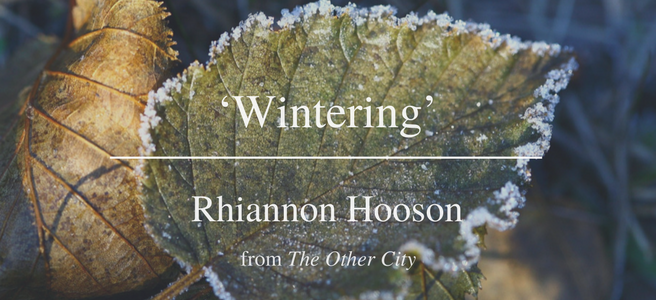
Friday Poem – ‘Wintering’, Rhiannon Hooson

Friday Poem Rhiannon Hooson Wintering

Rhiannon Hooson’s incredible debut collection, The Other City, has just appeared on the Wales Book of the Year shortlist – and this week our Friday Poem is one from its pages: the seasonally-appropriate ‘Wintering’.

The Other City Rhiannon HoosonThe Other City offers us elegant, artful verse of precision and insight. Sharply focused, beautifully resonant, deeply felt, these poems tend to travel in distinct streams: characters like Zeus, Narcissus, Ariadne, and Ganymede sit alongside reworkings of Welsh history, both ancient and modern. Other poems explore the idea of otherness and the uncanny, where actions are done and undone, and the familiar made unfamiliar.
This is a poet who can re-imagine scenes from Greek myth, from Welsh history, and make them as urgent and compelling as her poems about personal relationships.


Rhiannon Hooson Wintering


The Other City is available from the Seren website: £9.99

Join our free Book Club for 20% off every book you buy from us.


Posted on

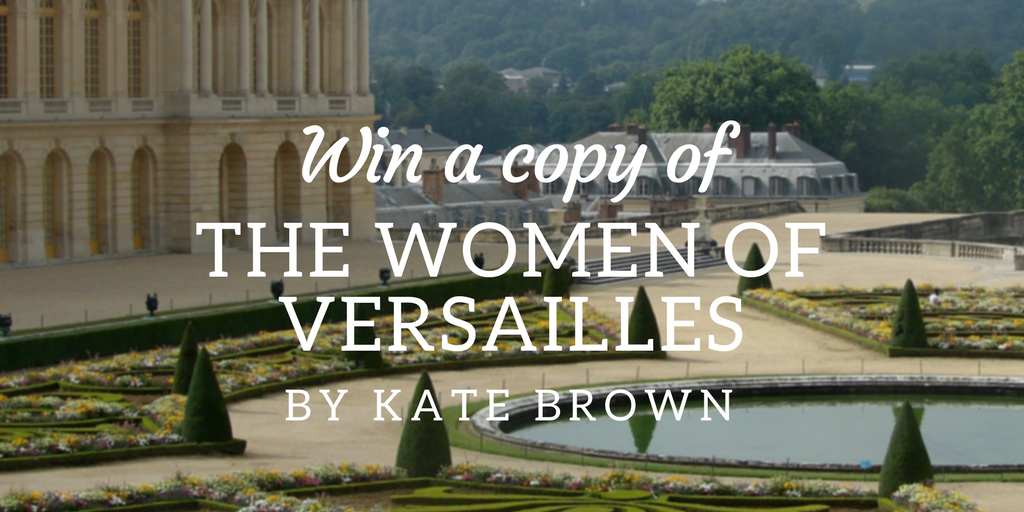
July Book Giveaway: win a copy of The Women of Versailles

July Giveaway The Women of Versailles

You’ll need to hurry, because there are only a few days left for you to enter our monthly giveaway – and this month, the prize is a copy of Kate Brown’s ‘extraordinarily timeless’ debut novel, The Women of Versailles.

To enter, simply sign up to the Seren newsletter before 1st August:
https://www.serenbooks.com/newsletter/signup

Book Giveaway The Women of Versailles


About The Women of Versailles:
The Women of Versailles Kate Brown
Princess Adélaïde, daughter of Louis XV, is at odds with the etiquette of the French court. Adélaïde envies her brother, is bored with her sister and, when Madame de Pompadour, a bourgeoise, comes to court as her father’s mistress, she is smitten, with dangerous results. Adélaïde pushes against the confines of the court, blind to the difference between a mistress and princess, with tragic results. Forty-four years later, under the looming shadow of the revolution, what has happened to the hopes of a young girl and the doomed regime in which she grew up?

‘Dark and rich, The Women of Versailles is filled with political intrigue, sexual awakening, and the roots of revolution.’ – Peggy Riley


We will pick a winner at random from all our email subscribers on 1st August. Make sure you have signed up to Seren News before then to be in with a chance of winning!

Why not give your friends a chance to win too, by recommending that they sign up to our newsletter before the end of the month using this link?
www.serenbooks.com/newsletter/signup


Save

Posted on

Friday Poem – ‘Waking in Picardy’, Graham Mort

Friday Poem Graham Mort Waking in Picardy

This week we welcomed the publication of Graham Mort’s masterly tenth collection, Black Shiver Moss, and so today as Friday Poem we feature ‘Waking in Picardy’, the opening poem from this brand new collection.

New places are made familiar by the vivid descriptions and evocations in Black Shiver Moss. In ‘Waking in Picardy’ we see the intimacies of nature: ‘damselflies glisten, sex to sex/ promiscuously winged.’ Elsewhere in this startling collection, Mort moves us beyond the visible, towards spiritual and philosophical concerns. What really impresses is how Mort manages to create and sustain a darkly magnificent tone, reminiscent of Beethoven’s late quartets, of Shakespeare’s tragedies, of classical landscape painting, a tone suffused with seriousness and mortality.


Black Shiver Moss is available from the Seren website: £9.99

Join our free Book Club for 20% off every book you buy from us

Posted on

Announcing the Myths & Legends Astronomy Tour of Wales

Myths and Legends Astronomy Tour Wales Martin Griffiths

With it being Wales’ Year of Legends, what better time could there be to discover the rich mythological history of our land? Martin Griffiths’ new astronomy book, Dark Land, Dark Skies, does just that – and now Martin is getting ready to tour Wales with his fascinating Celtic interpretation of the stars.

Dark Land, Dark Skies, Martin GriffithsThe tour kicks off with the Dark Land, Dark Skies book launch, tomorrow, at the Brecon Beacons National Park Visitors Centre, Libanus. Martin will introduce the legendary Welsh heroes, plotting a map of our mythology in the stars above. If the weather allows, we’ll step outside and gaze at the dark sky, the author’s expertise guiding us away from Greek and Roman to instead see mythical Celtic figures far above.
Free places are still available – book now.

Meet us in Pembrokeshire, Snowdonia, Elan Valley and Newtown as the tour continues: at each stop, Martin will reveal more about Welsh mythology and how it can be seen in the stars. These unmissable events will connect you to our culture and change the way you see the night sky.

Myths & Legends Astronomy Tour Wales


Find all the most up-to-date information on these events, including how to purchase tickets, on the Seren Events page.