Posted on

Friday Poem – ‘Savoy Hotel, London’, Rosie Shepperd

friday poem rosie shepperd

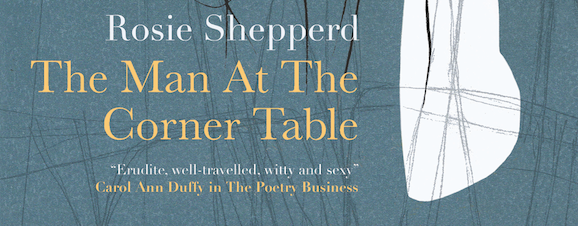
This week our Friday Poem is from Rosie Shepperd’s tantalising debut, The Man at the Corner Table. You can hear Rosie read from this collection live on National Poetry Day, 6 October, at Berkhamsted Waterstones alongside Caroline Smith and Graham Clifford.

the man at the corner table rosie shepperdThe Man at the Corner Table crackles with the unexpected. The voice is one of urban sophistication; a merciless charm that teases and tempts us with sensual evocations of food and place. The reader is surprised with tastes, scents, colours and textures. There is a winning insistence on detail offered with an irony that blends into satire.


Savoy Hotel, London
Those nights downstairs at the American Bar;
it’s not just the chairs that show gilt in the telling.
Back then we were almost quite something.
You and London were lean;
your eyes, a fraction off-centre as you
struggled not to say,
We have this connection. My God.
You overplayed.
And not just your hand.

My role in this mellow
drama was to shift that arse
you loved to chase and twitch my best side
close to the oh-so-Maraschinos.
Too long ago, they were fruit in a tree.
Some tree.
I guess they were something for me
to play with; the pretence
we were ever friends was just
a way to simulate sharing.

30:70 and I never found out
who made the best bet
but I do know that’s the wrong word.
Early is just another kind of late and
anyway, you were always
there each night, every night. There’s
no fool like a blind
fool; thank God I didn’t see the edge
till I was over and out
the other side.


Buy your copy of The Man at the Corner Table now: £9.99

Claim 20% when you become a Book Club member

Posted on

Friday Poem – ‘What the Dead Don’t Know’, Anne-Marie Fyfe

Friday Poem What the Dead Don't Know Anne-Marie Fyfe

Our Friday Poem this week is taken from Anne-Marie Fyfe’s latest collection, House of Small Absences.

House of small absencesAnne-Marie Fyfe’s poems have long dwelt on the role that the spaces we inhabit, the places in which we find security, play in our lives: House of Small Absences is an observation window into strange, unsettling spaces—a deserted stage-set, our own personalised ‘museum’, a Piedmont albergo, underground cities, Midtown roof-gardens, convent orchards, houseboats, a foldaway circus, a Romanian sleeper-carriage—the familiar rendered uncanny through the distorting lenses of distance and life’s exigencies, its inevitable lettings-go…


What the Dead Don’t Know

Grows quickly, daily, from the perimeter
of a postage stamp, until it’s twice the size
of Norway, and growing fast.

What the deceased can’t understand
is why they don’t still hear from us
day-by-day, hour-by-hour.

What the departed don’t see
is how the lead story has moved on.

What the dead won’t say
is more or less what they didn’t say
when they had the chance. Diplomacy,
tact, reserve: these things endure.


Buy your copy of House of Small Absences now: £9.99

Claim 20% when you become a Seren Book Club member


Posted on

Friday Poem – ‘VII’ from Batu-Angas, Anne Cluysenaar

batu-agas Anne Cluysenaar

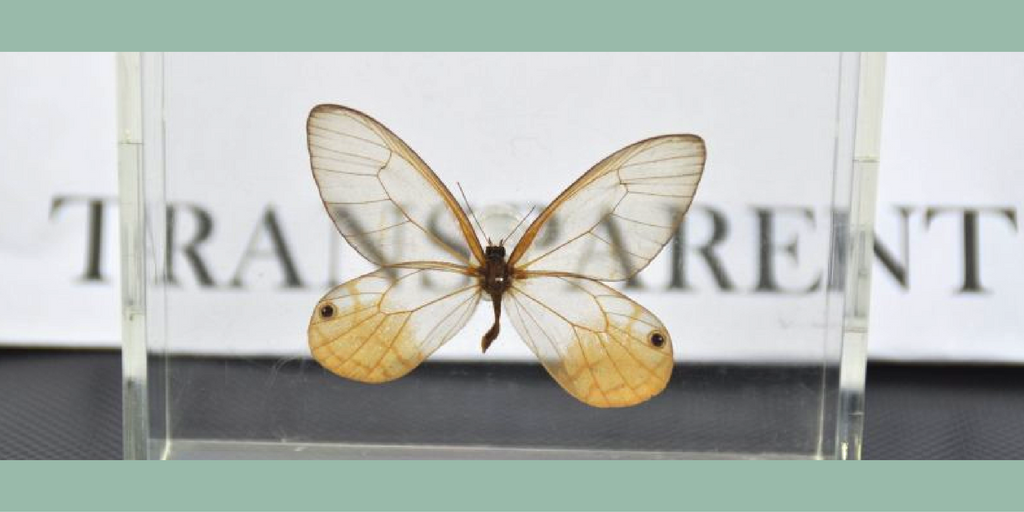
In celebration of the brief heatwave that has hit the UK, we are taking this week’s Friday Poem from Anne Cluysenaar’s tropical Batu-Angas: Envisioning Nature with Alfred Russel Wallace.

Batu-Angas Anne CluysenaarAlfred Russel Wallace (1823-1913) was one of the most famous scientists of the 19th century and is best known today as the co-discoverer, with Charles Darwin, of the theory of evolution through natural selection. Wallace’s life and work are the inspiration for this beautifully considered collection of poems. Why the title? As Anne Cluysenaar explains in her Foreword:

It was during an acute bout of malaria on the volcanic island of Ternate that it ‘flashed upon’ Wallace how life evolves through natural selection … From the local language of Ternate itself, Wallace had borrowed the phrase ‘batu-angas’ to describe the ‘burnt rocks’ or cooled lava he saw there. The phrase struck me as as suitable title for this sequence because it could be said to symbolise the visible world at any one time – a world now, thanks to Wallace and Darwin, known to maintain a seeming stasis only, amid the flowing lava of evolution.


VII

batu-angas-blogBatu–Angas is available from our website: £8.99

Sign up to the Seren Book Club and save 20%


Save

Posted on

50th Anniversary of the Severn Bridge | An extract from Edging the Estuary

Severn Bridge

The original £8m Severn bridge was opened by the Queen on 8 September 1966, heralding a new economic era for South Wales. In celebration, here is an extract from Edging the Estuary by Peter Finch, in which Peter meets the men continuing the traditional method of Lave net fishing on the River Severn, at times directly below the bridge.

Edging the Estuary Peter FinchAbout Edging the Estuary:
In the Middle Ages the port of Cardiff stretched from Chepstow to Gower. Peter Finch, archetypal Cardiffian, sets out to explore his heritage, walking the Welsh side of the Severn Estuary and reclaiming his personal memories in addition to discovering the lives of others. And with a detour to Maismore, the highest tidal point of the estuary, he walks the English side too, taking in the differences with Wales, reviving past links and looking at his homeland from abroad. On his journey he sees the estuary as border, a highway for trade and ideas, an industrial zone, and a place where people spend their leisure. Rich in anecdote, evocative in description, Finch’s book takes in villages and cities, power stations and fishermen, castles and caravans, leg-aching walks and deckchairs on the beach.

The Lave Fishing Grounds

The novelist and poet Richard Brautigan went trout fishing in America. There the fish were made of a precious and intelligent metal. Trout steel in the snow-filled rivers. Among them he found the dharma or the Buddha, or love or something. I’d never done any of that. I’d never really thought much about fishing anyway other than logging that lots of people did it. Blokes in wool hats sitting on piers, pond sides, river edges waiting and on their faces that distant look. It seemed all about waiting. And I couldn’t be doing with that.
At the end of Black Rock Road, to the east of Sudbrook, is the small park the council has created facing Black Rock. In a corner is the Black Rock Lave Net Heritage Fishery’s hut. Hand built in local stone. A salmon in wrought iron adorns the front. For most of the year the hut is closed and locked but today it’s not. Martin Morgan, a fifty-year-old steelworker from Undy, is in action out front. Spread on the grass he has replicas of the fishtraps that have been used in these waters since medieval times. They’ve now been banned by the Environment Agency in an attempt to conserve fish stocks. “There used to be other methods of fish catching that are gone too,” Martin tells me. “Stock boats, drift nets, tuck nets. Those ways are over.”
The putt, a great ten-foot-long assemblage of bent willow in the shape of an open-mouthed giant cone, is the older method. The example Martin shows me is a replica made from an ancient original pulled from the river muds. These things go back to the eleventh century. The cone would be pegged to the river bed facing an ebb tide and once a salmon had swum in, it couldn’t then get back out.
Also on show are replicas of putchers – smaller five-foot cones made originally of woven hazel or willow but from the 50s onwards of aluminium mesh.These would be assembled in racks known as engines with sometimes a hundred or more in a single array. These would be strung out across the river like radar sets. Salmon was the target but they also caught whitefish and eels and anything else that drifted in.
These were the fixed engines, the fish henges. In the sixteenth century, Rawlins White, the Cardiff martyr, operated something similar at the Rhymney River mouth. The remains of ancient putcher racks have been discovered by estuarial archaeologists in waders, stepping through the glutinous mud between the river’s rapid tides. The largest, containing some fifteen hundred baskets swung out into the waters opposite Goldcliff.
The archaeologist J.R.L. Allen has used aerial photographs of the Estuary to uncover a complex pattern of fish traps dating from Mesolithic times to virtually the present day. His shots show putcher lines running just off the river shores like the claw prints of giant birds. Further out are the remains of rod and wattle fencing, formed into complexes of stone and woodposted weir. Fish dams, intertidal fish pools, fish gullies. Fish capture has gone on in these waters for thousands of years. But it’s all banned now. Regarded as being as bad as fishing with dynamite. All that’s left are the lave fishers. Eight of them. The Environment Agency refuses to issue any more licences.
Lave fishing uses large Y-shaped nets each individually made by the fisherman. The net has willow arms known as rimes hinged onto a stout handle called the rock staff, made of ash. Fishermen wade into an outgoing tide and wait. They can stand for hours with the Severn’s tides falling around them. They call this cowering. Much more exciting is stalking, where the fisherman spots a fish moving over the sandbanks and gives chase.
Caught fish are dispatched with a short wooden baton known as a knocker. Weights are anything from five to seventeen pounds. The record was held by Martin’s great grandfather. He landed a monster that weighed in at fifty-six pounds. There’s a silver-coloured replica back at the hut. The net they also knit themselves. It was once made of hemp. Smacker Williams, in Sudbrook in the 1960s, could knit a single net in a day. That was going some. When he went, the practice died out, but Martin’s fishermen have revived it. They use nylon cord today.
At the Heritage Fishery they are all lave fishermen, although as the season is so short they double up for the rest of the year with rod and line. They used to fish from February right through until October but the Environment Agency have now got them down to a mere three months. 1st June to the 31st August. They’re allowed to catch an absolute total of fifteen fish, five a month, and that’s it. Not much. Martin thinks the Agency would be happiest if it could close the lave fishermen down.
The Agency is at odds with the Heritage authorities who see the Black Rock fishermen as a relic of Wales’ traditional past and something to be encouraged. Martin tells me that last week they had a camera team along from Wedi Saith who brought a Teifi coracle fisherman with them to compare traditions. We’re out on the mud now, walking through the glutinous slime to get into the fishermen’s tiny boat. “You take care,” says Martin. “We’ve had camera crews slip here and go sprawling. They always somehow manage to save their equipment, though.” In my Homebase green wellingtons I take it slow.
The fishing grounds all have names that don’t appear on most maps. Grandstand, The Hole, The Monkey Tump, Lighthouse Vere, The Marl, The Looby and Gruggy. We row west of the Second Severn Crossing to anchor in waters that are moving at around five knots and are at least eight feet deep. “This new bridge was built right across our traditional fishing grounds,” Martin tells me.We watch his brother Richard in the distance striding along the shoreline, net over his shoulder. “It’s made the mudbanks shift and created new ones but we can still fish.”
He and Tim Bevan, a tinplate printer from Sudbrook, are in the water now, chest deep, nets below the surface, that look of concentrated desire mixed with endless patience on their faces. Catching fish is all a matter of getting the wind in the right place and the spring tide flowing. “Are things right today?” I ask. “Could be.” But in the end it turns out they’re not.
During the two-hour window between tide ebb and flow I watch the water drop more than four feet. Fields of rocks emerge around me. Hundreds of boulders running in all directions like this was the Russian Steppes. The brown water slows from a rush to a drifting crawl.You can hear the muted traffic roar on the bridge high above. But the water itself is silent. The boat shifts on its anchor mooring then bumps against rocks below. Martin has walked off hundreds of yards into the distance. His brother, once separated from us by a river depth too great to navigate, now strides across, net over his shoulders, nothing caught where he was either.
Looking west the river runs off into a silver distance that points right out into the Atlantic. You’d think there’d be ship traffic but there is none. Nothing floats by. Just the ripples. “It would have been better if we’d caught something,” says Martin. But half of fishing is the activity itself. Richard Fox and Rob Evans, two other Lave Fisherman in action today have been working the river east of the bridge. “They’ve not been with us that long,” says Martin. “And they’re the only two who haven’t caught their first fish.We’ve two more days left. They’ll be out tonight, 2.00 am, fishing in the dark, just to catch up.”
We’re back on shore now. The fishiest thing we’d seen all day was a tiny mullet about five inches long that Tim had in his net and then threw back. I missed that, too busy taking photos of English coast, power stations, or Sudbrook from the estuary distance, pumping station and the Seven Tunnel Great Spring outfall, still rushing fresh water into the river after all these years.
The EU control that limits catches is contained in Annex 11 of the EC Habitats Directive (council directive 92/43/EEC). It ripples off the tongue. But irrelevant today. Down the pub now, yes.


Buy your copy of Edging the Estuary now: £9.99

Claim 20% off when you join the Seren Book Club

Save

Posted on

Friday Poem – ‘Autumn Elegy’, Leslie Norris

Friday Poem Autumn Elegy Leslie Norris

Our Friday Poem this week marks the coming of autumn, and is taken from Leslie Norris: The Complete Poems, edited by Meic Stephens.

Leslie Norris Collected PoemsThis landmark publication of over 300 poems is a testament to a publishing life of more than sixty years. The late Leslie Norris, who died in 2007 at the age of 86, was best known as a nature poet and elegist of passion and rare expression. Lyrical and individual, to his closely observed poems, each word weighed and in its correct place, Norris introduces a strong metaphysical element which makes the poems, as Edward Lucie-Smith noted, “much larger than the sum of their parts”.


Autumn Elegy

September. The small summer hangs its suns
On the chestnuts, and the world bends slowly
Out of the year. On tiles of the low barns
The lingering swallows rest in this timely

Warmth, collecting it. Standing in the garden,
I too feel its generosity; but would not leave.
Time, time to lock the heart. Nothing is sudden
In Autumn, yet the long, ceremonial passion of

The year’s death comes quickly enough
As form veins shut on the sluggish blood
And the numberless protestations of the leaf
Are mapped on the air. Live wood

Was scarce and bony where I lived as a boy.
I am not accustomed to such oppulent
Panoply of dying. Yet, if I stare
Unmoved at the flaunting, silent

Agony in the country before a resonant
Wind anneals it, I am not diminished, it is not
That I do not see well, do not exult,
But that I remember again what

Young men of my own time died
In the Spring of their living and could not turn
To this. They died in their flames, hard
War destroyed them. Now as the trees burn

In the beginning glory of Autumn
I sing for all green deaths as I remember
In their broken Mays, and turn
The years back for them, every red September.


Buy your copy of Leslie Norris: The Complete Poems now: £25.00

Claim 20% off when you become a Seren Book Club member


Posted on

Short Story of the Month | ‘The Dig’ by Graham Mort

short story of the month the dig graham mort

Our new Short Story of the Month is ‘The Dig’ by Graham Mort, from his newest collection, Terroir, in which past and present intertwine as amateur archeologists dig for answers in an area whose violent, territorial history they know nothing of.

the dig from terroir by graham mortAbout Terroir:
From England to Europe, Africa to South America, these stories from prize-winning short story writer Graham Mort explore relationships: father and child; man and wife; man and his environment.
All these stories are sensitively told and beautifully written, bringing fresh perspectives to our place in the world around us.
Graham Mort has won the Edgehill and Bridport and Short Fiction short story prizes.


The Dig

This is an extract. Read the full short story for free on our website.

A Thistlethwaite, red-haired like all her clan. Longshanked, full-breasted, tall. Freckled, grey-eyed, jug-eared, a crooked smile creasing into dimples. Climber of rockfaces for hawk’s eggs. Horse breeder, dog hater. Broadshouldered, a fighter who’ll take on her brothers and anyone else. Fey, man-shy, loyal. Fierce to the lie, quick to offence. Footsore now, limping from a bruised knee where the gelding took her into a dry stone boundary.
Homeward bound, the moor’s peat squelching underfoot, the heather springy, bog cotton in the hollows. Hungry and used to it.

The Land Rover lurches on the bridleway, loaded with wire ladders and lamps, yellow waterproofs, digging gear. The man’s helmet lies beside him on the front seat. His hair is spiky grey, his hands badly scarred from a fire. The flesh has grown back in purple patches. He’s got a blue thumbnail where a hammer missed. He wears a diver’s watch with a black plastic wristband. Sun shows up the scratches on the spattered windscreen, tyres jog over stones and ruts and into mud puddles. The exhaust stinks in low gear. He’s arranged to meet the others at the dig. This one’s been on the go for months and you never knew who’d turn up.

She’s a long hour from home after trading her grey horse in the next dale. There are coins in her purse but she’s packed it tight with grass to stop them chinking. She rode the gelding bareback to the Sykes place, now she has the walk home. It was a good sale. The bridle and harness are
tight under her jerkin. She’s taken a short cut over a flank of moorland, crossing a corner of Abel Rintner’s land, past his new peat cuttings where turves are piled. She’s black to the ankles and there’s a foul gas from the moss. She could have played it safe and detoured by the valley head,
then down past the inn where there were other folk. There’d be drunken, groping bastards too. Fenmen and Dutchlanders draining the land for the monks, gabbling, fetching up phlegm and laughter. She can’t bear that. No need if the light holds. Her feet catch in rushes. She can hear the calling of fat lambs. Soon they’d be cutting their throats for Eric’s wedding.

There’s a dirty Peugeot estate parked where the bridleways meet. Dark blue with a roof rack. Two other cavers are already climbing into their gear. A woman in her late thirties with pulled-back hair and acute blue eyes; a fifty-year-old man, bow-legged, short and bearded. He’s coiling a climbing rope clarted in dried clay and she’s fastening her overalls over rubber boots. Their greeting is a stubbing of cigarette butts, a faint smile, nods to the stile, the causeway they’ve laid across the marsh that leads to the dig. Another path goes up over the limestone edge, past the killing pit – a swallow-hole with almost sheer sides, twenty yards across and twelve deep. They’d help excavate that for an archaeological dig, uncovering broken animal bones and Mesolithic flints. Hand axes, arrow tips, flensing blades. The ancient people had hunted with dogs, driving red deer, elk, auroch, and wild boar over the edge then stoning them to death. They’d been proud of that dig, the way it made sense of things, of the past. The man with the
scarred hands slams the Land Rover door and takes two yellow plastic trugs from the back. They pick up their lamps, two folding spades, a short-handled pick. The bearded man carries the rolled-up ladder and the woman with blue eyes lifts a coil of rope.

Jogging across the moor to strike the track, Hannah’s breath is harsh now. She’s anxious to get to the commons below. Sun is dropping over the sea about thirty miles west. The air is cooling, smoke coiling from the farmstead she’s too close to. A flight of geese follows the river to the estuary in
a double vee. She stumbles, pauses, rights herself, touching a hand to her sore knee. There’s the sudden hiss and flicker of plumage. A streaking bird is attacking her. Then the arrow strikes into her forearm, almost parallel to the bone, the point driving right through. She sucks her breath, freckles starring her suddenly white face. She glares round quickly and keeps moving. She should have covered her hair. That was stupid. The mistake will cost her. She’s wearing an amber amulet that hangs from a leather thong. It tosses as she runs. The arrow stings, evilly. She needs to get out of view, jags to the left, drops into a gulley and lies listening for dogs. Nothing. She follows the gulley down, stumbling, nursing her arm, trying to let blood drip onto her and not bare rocks where they can track her. There’s a little water in the beck bottom, not much.

They walk up the lane in single file, trudging a little after their day of work. Each to their own: wrought iron making, timberwork, the work of the body. There’s a gate on the left leading to the wooden causeway laid over the moor. The timber smells of creosote. The man with the beard grimaces, but the woman half smiles, bends her head a little closer as she swings the gate back onto its catch, savouring a memory. They move across the peat bog, feeling the planks sink a little under their weight. There are black pools on either side. Petroleum from the peat has stained them with iridescent patterns. A stand of bog cotton stirs in a slight breeze coming off the Irish sea. The man in the lead flexes his fingers and switches hands on the trug. The woman’s eyes are paler here, bluer, as if cut from underwater stones. She’s thinking of a bright room, how she loves the touch and smell of babies though she’s had none of her own. Their pure skin, their tiny hands reaching to their awed mothers’ faces.

Voices, thick and faint, not far off. A hundred yards. Maybe more. Men’s bass tones. She pauses, hunched over. Dark blood is oozing where the arrow tip has gone through.

Continue reading ‘The Dig’ for free here.


Graham Mort’s short story collection Terroir is available to buy from the Seren website: £9.99.

Claim 20% off when you become a Book Club Member.

Posted on

Friday Poem – ‘Talking in the Dark’, Christine Evans

Friday Poem Talking in the Dark Christine Evans

This week our Friday Poem is from Christine Evans’ sensitive collection, Growth Rings, which was shortlisted for Wales Book of the Year 2007.

Friday Poem Christine EvansThis collection from Christine Evans follows well-received ’Selected Poems’.  Hers is a persuasive voice, highly attuned to the vagries of the seasons, to the landscapes and inhabitants of the beautiful Llyn Peninsula in North Wales where the author has made her home.
As well as vibrant short lyrics on everything from ’Bluebells in Nanhoron’ to jets flying over Wales, there are a series of tender elegiac pieces on relatives, meditations on the last moments of Shelley and the fates of the Brontes, and a number of poems featuring the mysterious Island of Bardsey.

Talking In the Dark

Now the air is indigo with evening
together by the boathouse where we’ve sprawled
an hour or more, felt earth’s breath cooling,
we wake mind-echoes of ‘the real world’.
Night prompts us all to visions of tomorrow.

A subtle fullness, like a ripening field
contains us, names and knowledge weightless now.
The biosphere, Helen thinks, might still have the power
to heal pillage, maiming, poison. Protests fly:
excuse for doing nothing, weak, evasion.

Although we can’t agree what should be done
a tribal dignity begins to hover.
Shadows with eyes that hold the light, we are
communicators, not just talking faces.
First stars beckon in a deepening sky.

The universe accepts our hopeful voices
but sea demurs with one slow-hushing sigh.


Buy your copy of Growth Rings now: £7.99

Claim 20% off as a Book Club Member

Posted on

Friday Poem – ‘The Scarlet Lizard’, Caroline Smith

Friday Poem Caroline Smith

Last night saw us at Chapter, Cardiff, for July’s First Thursday event and among the readers was Caroline Smith with her new collection, The Immigration Handbook. This week we have a treat for you – you can listen to the Friday Poem being read by the author. Look below for the video, and accompanying poem text.

The Immigration Handbook Caroline SmithThe strikingly moving poems in Caroline Smith’s The Immigration Handbook are the fruit of the author’s career as an Immigration Caseworker for one of the most diverse inner-city areas in London. Her characters are careful composites of people she’s observed. They step vividly off the page, as if out of the headlines. Written over a period of years, as layered and infused with experience as the documents she discusses: letters folded and refolded, creased with time, Caroline Smith’s poems are a moving record of global people movement, the story of our time.

The Scarlet Lizard

Nothing moves
except the evening light
crossing the Judge’s room.
The lawyers’ skeleton arguments
lay piled on his desk.
They seemed to him brittle
as bleached poppies,
tapped of their seeds.

He longed to see the quick movement
of a scarlet lizard weaving unexpectedly
through the parched, cracked hexagons
of a legal phrase, to hear the snapped stick
fritter away from a hiding place;
to feel the cold, diaphanous weed grip
in the black current of a border crossing.

He needed to sense some quiver of
indecision, an odd detail
that would open the truth of their words;
chinks of light shining
through shuttered doors.


Buy your copy of The Immigration Handbook now from the Seren website: £9.99

Become a Book Club Member to claim 20% off.


Save

Posted on

An extract from Boy Running | Wales Book of the Year shortlist

extract from Boy Running Wales Book of the Year

The winners of the Poetry, Non-Fiction and Fiction Categories, and the overall Wales Book of the Year Winner, will be announced in just two weeks. Seren have two titles in the running for the awards, and before we find out the results, we thought you might enjoy reading an extract from each of our nominated books. Look below and you’ll find an extract from Boy Running by Paul Henry (shortlisted for the Open University in Wales Creative Non-Fiction Award).

Studio Flat

Socks hang like bats from a skylight.
They may be dry in time for the moon.
The camp site owner’s water-feature
drains more blood from the sun.

Cars queue for the narrow bridge.
Birds catch their pulses and fly.
I am suddenly old. What’s an attic
but a bungalow in the sky.

And where are you, my sons?
I heard your voices in the bells
of snowdrops pulled by the wind.
These tulips have lost their smell.

Perhaps I could tell you, one day
where the snowdrops went, why old men
dry their socks on the moon, and what
darkened the skylight, just then.


Ring

I can’t get the ring out of my finger.
How long till it disappears
this ghost ring, twenty years deep?
I’m branded. Is it the same with you?
Your fingers were slenderer than mine.


We hope you enjoyed reading this free extract from Boy Running by Paul Henry. Keep an eye on the Seren blog, as we will be announcing the Wales Book of the Year Awards results in just over two weeks time.

About Boy Running:
Paul Henry has gained a reputation as one of of the best poets in the UK. Boy Running is his beautiful sixth collection and the first to follow  The Brittle Sea: New and Selected PoemsAlso a singer-songwriter, Henry is known for his precise lyricism, intimate tone and a cast of characters inspired (like Dylan Thomas) by his childhood by the sea in Aberystwyth, West Wales.

Posted on

An extract from Losing Israel | Wales Book of the Year shortlist

An extract from Losing Israel by Jasmine Donahaye Wales Book of the Year shortlist

The winners of the Poetry, Non-Fiction and Fiction Categories, and the overall Wales Book of the Year Winner, will be announced in just under a month. Seren have two titles in the running for the awards, and before we find out the results, we thought you might enjoy reading an extract from each of our nominated books. Look below and you’ll find an extract from Losing Israel by Jasmine Donahaye (shortlisted for the Open University in Wales Creative Non-Fiction Award).

1 – Motherland

It is the year of clogs and flared skirts, of shiny striped shirts with big collars, the year the PLO infiltrates by boat on the coast north of Tel Aviv and takes a bus-load of passengers hostage. It is spring, 1978 and I am ten years old. Security at El Al Airlines is high. I know the names Abu Nidal and Abu Jihad and Leila Khaled – Leila Khaled, that woman who is somehow not really a woman, but a terrorist.
Israel is an impression of barbed wire and rusting yellow warning signs on the beaches, the scent of orange blossom and the stink of sewage, hot nights and ruins – and a huge sprawling network of strangers who are relatives. It is my mother’s first return home after fifteen years of self-imposed exile, and it opens in me a wound I can never heal – a longing to come home to a place that can’t be home.
Now whenever I return, it is the long straight road through the valley to the kibbutz that catches at me – after Afula, that dusty way-station; after the last turnings, where it straightens out into the old Roman road that runs through the Jezreel Valley or the Plain of Esdraelon or Marj Ibn Amer, depending on your political orientation, or language, or biblical inclination. ‘The Ruler Road’ my mother called it, that first time we went back in 1978. The mass of Mount Gilboa rises on your right, and far off in the distance there’s a shimmering above the road where the border lies, some twenty kilometres away. Beyond it rise the Jordanian mountains, the mountains of Gilad or Gilead, after which my grand-father Yair named himself and my family – Hagiladi, a man of that place. On either side of the road stretch the fishponds, where you can see white-fronted blue and chestnut Smyrna kingfishers, and pied kingfishers and black-winged stilts; and then, looming up under Gilboa, the complex of the prison moves into sight, watchtowers and barbed wire topping the long external wall, which runs alongside the dusty road. A short distance beyond the prison a trilingual green metal sign points out the left turning to the kibbutz.
Through every return, the kibbutz lies like a magnet at the centre, exerting a force that pulls each journey into a curve inward to its core. Even now, after I have learned its other story, it exerts its pull. This is where my mother is from, and so I have always felt that this is in some way where I am from, too. No matter what I learn about its history, what I feel about its government’s acts, its citizens’ electoral choices, what I think about its political foundations and exclusions, Israel is inextricably caught up with my mother – my inaccessible, elusive mother, who left her community and her country, but inwardly never left, who carried her home all the years of my childhood not in a book, as some anti-Zionists will say the ‘true’ Jew does, but in the locked chamber of her heart.


We hope you enjoyed reading this free extract from Losing Israel by Jasmine Donahaye. Keep an eye on the Seren blog, because next week we will be publishing an extract from Paul Henry’s gorgeous poetry collection, Boy Running, which is shortlisted in the Wales Book of the Year, Roland Mathias Poetry Award category.


Losing IsraelAbout Losing Israel:
In Losing Israel the search for her family’s past and the part her forebears played in the newly created Israel reveals unsettling knowledge about kibbutzim and land clearances in northern Israel. Challenged by this new and unwonted information, Donahaye’s notion of history and her understanding of Israel, of her grandparents and of her identity is completely transformed.

Buy your copy now: £12.99 direct from the Seren website (sign up to be a Seren Book Club Member to claim 20% off)

Save