Posted on

Friday Poem – ‘On the Sudden Passing of a Crow’, Eoghan Walls

Friday Poem On the Sudden Passing of a Crow Eoghan Walls

Happy Friday, everyone. This week our Friday Poem is taken from Eoghan Walls’ debut collection, The Salt Harvest. Eoghan has just been shortlisted for the prestigious Manchester Poetry Prize – so do send all your good luck his way.

the_salt_harvest72Dark and evocative, the poems in The Salt Harvest involve rich, multi-layered descriptions of the natural world, and cast a sardonic and tender eye on the human condition. The climates of Walls’ native Ireland inspire both the muscular imagery and the complex forms of work. Also apparent is an ambivalent, often deeply ironic attitude towards a culture once steeped in religion, whilst threads of humour and an imaginative playfulness run throughout.


on the sudden passing of a crow eoghan walls


The Salt Harvest is available from the Seren website: £8.99 (£7.19 for Book Club members)


The Seren Book Club is free a free, no-purchase-necessary subscription and and gives you 20% off all orders from the Seren website. Sign up now and save money every time you shop with us.


Posted on

Friday Poem – ‘Armistice Day ’77, Honiton’, John Tripp

John Tripp Friday Poem Armistice Day

Today, to mark Armistice Day, our Friday Poem is one of remembrance and silence from John Tripp’s Selected Poems.

John Tripp Selected PoemsA well known and popular figure on the poetry scene, John Tripp’s untimely death in 1986 meant the loss of a ’devoted and passionate poet’, as John Ormond calls him in the Introduction to this book. Pithy, regretful, bitter, angry, at times tender, John Tripp’s poetry was always engaged with the issues which most mattered to him.

Selected Poems draws on all John Tripp’s books, together with work published since the last of those collections, Passing Through (1984), and previously unpublished poems.


Armistice Day ’77, Honiton

The two minutes’ silence was cut to one
that November day; it was a busy world.
By chance, on my way to a gig
I walked into a ceremony of six
in the rain: crosses in a ring, and the poppies soaked.

Down two sides of the slab were names
linked to this piece of England – the sound
of country stock grown old in duty
and the acceptance of pointless loss.
Names going back to Minden and before.

(Were these the only ones left
to remember their dead?
Already sixty seconds were lopped
off any dignity. Would their children
forget, as I had forgotten?)

No more came. On some other day
I might have felt an interloper
marring their ritual. At eleven o’clock
the men took off their hats
and we all bowed our heads.

A minute in the rain in a country town
may whisper the whole grief of history.
Picture a knot of seven around that block,
the red wet poppies, and just for a moment
a complete and utter silence in the world.


John Tripp: Selected Poems is available from the Seren website: £4.95


Posted on

NaNoWriMo: How to write a novel – advice from Seren novelists

how to write a novel advice from Seren novelists

It’s November and that means NaNoWriMo (National Novel Writing Month) has begun. If you’re not familiar with it, NaNoWriMo is a worldwide writing challenge, where participants have one month (1st–30th November) to write a 50,000 word novel.

Are you taking on the challenge? Perhaps you’re in need of a little motivation? Or maybe your novel has been in the works for a while now, and you need some guidance to get it finished? Whatever the case, Seren novelists are here to help.

Take a look below for some novel writing tips from the experts. Whether your novel takes a month or a year, we know you can do it.

Bethany W Pope author of Masque1. Start by letting your mind wander where it will. Taking long walks helps. Don’t ever say ‘no’ to an idea, however ridiculous or obscene it seems at first. Every idea is a seed; it’s best to let it grow. (Bethany W. Pope, author of Masque)


Jayne Joso author of My Falling Down House2. Don’t begin until the ideas preoccupy your thoughts, until you have read and researched to a point of exhaustion, until your mind is full of the world of the book, and the characters inhabit it freely. Things will change and move, grow, and diminish, and some will brutally be cut, but if you begin with a world that you can see, characters that you are beginning to know, then, when you settle down in the quiet to write, the world of your novel will begin to emerge as though by itself. Research more as you go, as you need to; sleep well, exercise and eat well, and always have something else to read. Stay with the world of your book in your mind, and switch off when you need to, sleep some more, run or swim some more. Then write and write, with fight, with joy. (Jayne Joso, author of My Falling Down House)

Bethany W Pope author of Masque3. Eventually you’ll spot your characters. Once you’ve seen them, the best way to capture what they’re like on the page is by inhabiting them, mentally. Use the actor’s method. Wear the skin of the role that you’re playing; write as if you are them and the writing will breathe. This is easier than you might think — after all, you are them, really; or they are aspects of you. Even the bad guys. Especially the bad guys. They’re parts of your psyche that you never let out. (Bethany W. Pope, author of Masque)

Jo Mazelis author of Significance4. There are two ways to approach a novel: some writers plot the whole work in advance, others begin with a vague idea, character or situation, then plunge in allowing organic development to occur. Neither is right or wrong, but there are certain advantages to both, every writer will discover along the way which works best for them. (Jo Mazelis, author of Significance)

Bethany W Pope author of Masque5. When it comes to the actual writing, do it wherever you can. By this, I mean that you should write wherever you can actually produce work. My top two choices are at the gym (I think best whilst moving — the stepper is my friend) and while sitting in my (empty) bathtub with a budgie on my head. There is no ‘should’ when it comes to writing. If it works for you, do it and give no thought to what other people think about it. You have to if you want to finish the job at hand. Once the story starts coming it will continue to come. If you love it, you will finish it. That which we cannot live without is that which we love. (Bethany W. Pope, author of Masque)

Jayne Joso author of My Falling Down House6. Drink whiskey, drink tea. Plan, don’t plan. Write. Tear it up. Start again, as you like… but finally, remember, there ain’t no way round but through, so just write the darn thing! (Jayne Joso, author of My Falling Down House)


Bethany W Pope author of Masque7. Do not worry about proofreading or editing until after the first draft is finished. Get it out, as fast as possible, even if it’s rough. It’s much, much easier to edit a finished manuscript than a few measly pages. But once it’s out of your head, for the love of God, go over it with a fine-toothed comb. Remove all the nits and every last tangle before sending it out to meet the world. It’s your child, after all. It deserves a clean face. (Bethany W. Pope, author of Masque)


We hope these helpful tips from our talented authors give you the push you need to get that novel finished – however long it takes.

‘I love deadlines. I like the whooshing sound they make as they fly by.’
– Douglas Adams


Save

Posted on

Enter the Seren Christmas Poetry Competition

Submit your Christmas-themed poem for entry to the Seren Christmas Poetry Competition!
Entries are now open for our Christmas Poetry Competition, judged by poetry editor Amy Wack. You are invited to submit one poem with a Christmas theme for consideration, before the closing date (21 November). All submissions will be read and the winner will be announced on 5 December.
What is the prize? The winning poem will be circulated to all Seren’s publishing and literary friends as the official 2016 Christmas card. The winner will also receive 25 printed copies of the card for personal use, to send to family and friends.
How do I enter? Visit the Submittable Entry Page and upload your poem (as a Word Doc or PDF). On this page you will also find the full terms and conditions.
 
Thank you and good luck to all those who enter, we look forward to reading your poems.


Posted on

Friday Poem – ‘Seamus on the Tube’, Tony Curtis

Friday Poem Seamus on the Tube Tony Curtis

Last night saw us at Chapter, Cardiff, with Tony Curtis and Cynan Jones for November’s First Thursday event, and today we are featuring one of the new poems Tony read on the night – for all of you who missed his entertaining performance.

From left: Tony Curtis, Amy Wack (Seren Poetry Editor), Cynan Jones

From the Fortunate Isles: New and Selected Poems, Tony CurtisTony Curtis has been writing poetry for fifty years, and his new collection, From the Fortunate Isles: New and Selected Poems contains poems from ten of his published collections, as well as fifty pages of new poems. This is a poet whose themes and variations remain consistent: a deep affection for his roots in West Wales, tender attachments to family, a profound interest in the wars of the last century, and an abiding fascination for all art forms, particularly painting and poetry.


Seamus on the Tube

Looking away, not looking away –
The happenstance of what may change everything;
Those standing commuters moving off at Charing Cross
For the Bakerloo Line and then your eyes lifting

Above those seated opposite, as one does, to read
Between faster Broadband and Las Vegas –
“Where your accent is an aphrodisiac,” it says,
And where “what happens here, stays here,”

The Railway Children where in the white cups
Of the telegraph wires a young boy knows
That words are carried in the shiny pouches of raindrops.
Like this poem carried for you in the red and white Tube

On the Northern Line in cold January’s real freeze;
Snow is promised in the suburbs so everyone’s scarved
Against the weather. Words taking you back to the fifties
And his boyhood summers before everything changed.

Reaching Warren Street, you’ve read it
Four or five times, absorbed the innocent wisdom
And sense of the thing. Those people opposite
See a crazy old man mouthing words, appearing to sing.


Buy your copy of From the Fortunate Isles now: £12.99

Claim 20% off when you become a Seren Book Club member

Posted on

Free extracts from our favourite Halloween books: read them if you dare…

read these free extracts from our favourite Halloween books

Get yourself in the Halloween spirit – read these chilling extracts from our favourite spine-tingling stories.

trick or treat: happy Halloween from Seren

Ritual, 1969 by Jo MazelisRitual 1969 by Jo Mazelis
From ‘The Twice Pricked Heart’:


When Margaret returned to the cottage she saw that her father and stepmother had retired to bed, though it was not yet night.
She put Esmerelda in a chair and the child settled down to sleep as she sang softly to her. The light in the room was made strange by the dark sky and glittering snow. The quiet of the house seemed to swell with each passing second. Margaret sat upon the settle and took up the workbasket and began to mend her father’s shirt. It was torn under the arm and this she made good before turning it over to inspect it for other signs of wear. She froze at what she saw, for there on the chest where it lay over his heart she found a small puncture hole, the edges of which were stained in a halo of what must be dried blood. She gasped to see this for to her mind such a wound was unlikely to strike the same place twice.
A chill crept over her flesh and looking up she saw that the sun was at the lowest point in the sky and shadows filled the room. Then while she looked about her she saw a movement in the darkest corner of the room that she likened to a moving cloth, such as a woman’s cloak, for there was a sort of fluttering wavelike movement to it. Never had she perceived the like before and there was nothing in the room to cast such a shadow.
She kept to her place too terrified to move or make a sound, then just at the moment when she had made up her mind to gather Esmerelda in her arms and flee the house, she heard a step upon the stair and there was the sailor’s eldest daughter, dressed in her shift and a wrap, her cheeks aglow, her eyes bright and her lips red and wet and swollen.
‘Bring me cheese,’ she said, ‘and bread and wine.’

Want to keep reading? Buy your copy of Ritual, 1969 now: £8.99


Sugar Hall Tiffany Murrayfrom Sugar Hall by Tiffany Murray:


His cry echoed in the empty shed, his breath coming out in puffs of white. Dieter thought about London: he thought of the broken buildings and the cracks, he thought of the wide spaces and the rubble, and he thought of all those adventures he was missing. He gazed up at the dust dancing and the cobwebs pulsing, and Dieter heard a noise.

‘Pop!’ it said. Then,‘Pap!’

There were sparks and a shimmer that had to settle. Then, by the window and the filthy crates, there was a boy’s face.

The face was moving as if the boy was already standing up, but there was no body beneath it.

The Cheshire Cat, Dieter thought, as the face moved towards him. He gripped his pa’s crisp shirt tight, he stopped breathing, but he was determined that this time he wouldn’t run away.

The face was making a strange noise, as if tiny wings were fluttering in its throat. Dieter felt the balloon’s skin crackle beneath him; there was electricity: a crackle beneath his bottom and a crackle in the air.

He’s not a duppy, Cyn, Dieter thought, he won’t hurt me.

‘I – I brought you this shirt, these trousers,’ Dieter said. ‘I thought you’d be cold.’

Then Dieter wondered how the boy could use the shirt if he didn’t have a body.

A hot breeze of golden sparks cut through the freezing air and suddenly the boy was all there: his chest, his arms and legs, his neck and around that a silver collar. The boy shook himself and stretched up: Dieter had never seen anyone so naked, not even himself. The boy walked from those filthy storage chests and it was soundless, but Dieter watched the pitpat, pitpat of his footprints in the dust. Pitpat, pitpat; like steps in the sand and no one there.

The boy was thin. He was small, but Dieter couldn’t tell how old he was.

The boy hunched over and bent into a squat. His arms dropped, hands palmup and circling in the dust like little fish. The golden sparks were gone and Dieter saw the boy was pale for all his blackness.

Want to keep reading? Buy your copy of Sugar Hall now: £8.99


Masque by Bethany W PopeFrom Masque by Bethany Pope:


It was my job to see that she was properly dressed for company, to escort her to the room to meet her lover and the other admiring gentlemen, and then to change the subject any way I could when her natural whimsy took a turn for the disgusting as it often might.

One night, while De Changy was speaking to his managers (this was, you remember, two sets of managers back) she started speaking to a tall, nearly skeletal man who had appeared, dressed in a cloak and dinner jacket, a fine fedora aslant, shadowing a face as bland and unlined as a new-born baby’s. Her laughter had grown its most dangerous edge, the short hairs on my neck, cheeks, and arms rose in fear. La Sorelli was sweet, and she had a good heart, but her tongue could suddenly become impolitic and there were many investors present there this evening.

Annie and the stranger were standing at the point where the glorious stairs that make the Palais Garner famous intersect and form an enormous marble Y, glittering in the light refracted in a thousand tear-shaped crystals that drip from the tremendous chandeliers and gaslight torches. Whoever he was, he stood terribly erect, his gloved hands hidden behind his narrow waist, clutching a fine ebony stick. My friend, who I was meant to be watching, was sloppily drunk, spreading her barely covered breasts against the wide, pink-veined bannister. I could not read his face as he looked at her, his features were oddly stiff, expressionless, but the arch of his body signalled contempt. I rushed to her side, a quickly as I could, pleased that my new silk shoes did not slap against the carved stone stairs, pleased that I did not slip and crack my skull against the pavement…

Want to keep reading? Buy your copy of Masque now: £9.99


Bonus: download Jaki McCarrick’s short story, ‘Blood’, for free!
‘Blood’ from The Scattering by Jaki McCarrickShabby academic Fred Plunkett, working alone in his aunt’s Victorian house, has his peace disturbed by a sleek intruder with matt red lipstick, a lampblack dress and high, plastic heels. Lara claims to be researching vampires and the theory that Dracula fled his native Transylvania to take refuge in the Cooley Mountains of Ireland, in Fred’s home town. But when she smiles, submerged thoughts of blood and desire begin to wake in Fred’s mind…

Download ‘Blood’ for free from amazon.co.uk

‘Blood’ is one of nineteen stories in Jaki McCarrick’s critically acclaimed short story collection, The Scattering, available from the Seren website: £8.99



Posted on

Friday Poem – ‘Reasons for his absence’, Darío Jaramillo Agudelo (translated by Richard Gwyn)

Friday Poem Dario aramillo Agudelo Richard Gwyn

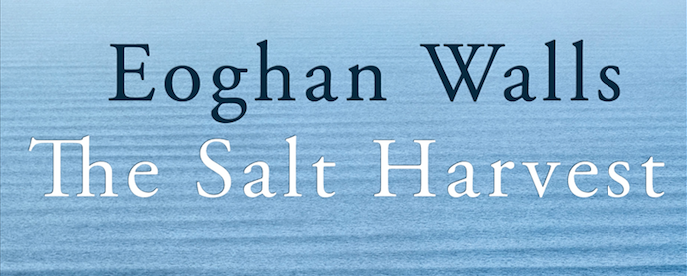
This week our Friday Poem is ‘Reasons for his absence’ by Darío Jaramillo Agudelo, from Richard Gwyn’s hot-off-the-press anthology, The Other Tiger: Recent Poetry from Latin America.

The Other Tiger by Richard GwynThe Other Tiger (the title is a nod to Borges – “the one not in this poem”) is a much-needed bilingual anthology of contemporary poetry, containing 156 poems by 97 South and Latin American poets. It includes work from Argentina, Colombia, Mexico, Peru, Nicaragua, Chile, Uruguay, Venezuela, Cuba, the Dominican Republic, Ecuador, Costa Rica, Bolivia and El Salvador.


About Darío Jaramillo Agudelo
Agudelo is an internationally acclaimed poet, novelist and essayist. He graduated in law and economics from the Universidad Javeriana of Bogotá, and worked for many years in various roles with state cultural and arts organisations. He has been shortlisted or winner of several awards for his work, including the Colombian National Eduardo Cote Lamus prize for poetry (1978), and the José María de Pereda Prize for the short novel (2010). The most recent edition of his Selected Poems is his personal anthology Basta cerrar los ojos (México DF: Era, 2014).

A note on ‘Reasons for his absence’, from Richard Gwyn:
I was attracted to this poem by its epistolary style, and by the device of news being relayed about an absent party. The lack of clarity surrounding the reasons for the man’s absence holds particular poignancy in a country such as Colombia, where ‘disappearances’ were – at the time of the poem’s composition, in the late 1970s – already becoming an everyday occurrence. The slightly elevated or ‘baroque’ language and incantatory style creates a strange juxtaposition with the content, which describes a life of sensual dissolution. The curiosity is stirred by the profound sense of loss or lack with which the absentee seems infused, wherever he is. Whether his exile is literal or metaphoric is never made clear.

My principal concern with the translation of this poem concerned the title. The Spanish noun ‘razón’ can mean a range of things, including ‘reason’ or ‘information’, or even ‘explanation’, depending on context. Similarly ‘ausente’ – here a noun, but commonly an adjective – could be translated in a number of ways: ‘the absent one’ sounded too much like translatorese, ‘the missing person’ subject to over-interpretation in the context of recent Latin American history. In the end I chose ‘his absence’, which deviates from the original in a grammatical sense but conveys the meaning of the phrase accurately. A second concern was the repetition in the Spanish of ‘díganle’ (literally: tell him), which, since it refers back to ‘alguien’ (anyone) in line 1, I chose to translate as the generic ‘tell them’.

 I attempted to re-create the long, rolling cadences of the original in my translation, alongside the reiteration of the introductory ‘tell them that . . .’.

I have also tried to reproduce the bereft tone that reflects the absentee’s solitude, and the distance he has chosen to maintain from those he left behind.

 When I read this poem out loud at an event – as I do from time to time – it still makes the hairs on the back of my neck stand on end. I can’t say that happens with many poems, but with this one it happens every time.

Reasons for his Absence
(click to enlarge image)

Project1 the other tiger new order_Layout 1

Buy your copy of The Other Tiger now: £14.99
Claim 20% off when you become a Seren Book Club member

Save

Save

Posted on

Jasmine Donahaye shortlisted for V S Pritchett Memorial Prize

Jasmine Donahaye, author of Wales Book of the Year Non-Fiction winner, Losing Israel, has been shortlisted for the V S Pritchett Memorial Prize.
The annual prize of £1,000 is awarded to the best unpublished short story of the year. and Jasmine’s short story, ‘Theft’, a “haunting” period piece that harks back to its narrator’s experiences as an 11 year-old country girl hired to help a couple of visiting gentry collect birds’ eggs in remote bog-land, is among the four shortlisted.
On the judging panel are Sara Taylor, an American writer living in Norwich, author Aamer Hussein, and chief fiction reviewer for The Sunday Times and member of the RSL Council, Peter Kemp.
The winner will be announced at a public event featuring Ali Smith on Thursday 17th November.
The winning entry will be published in Prospect magazine and in RSL Review.