Posted on

Halloween tips for book lovers: have a spooktacular night in

halloween tips for book lovers spooktacular night in

If the thought of venturing outside gives you a fright, then why not stay in for the night? All Hallow’s Eve is right around the corner, and that means frights, delights, and a healthy dose of Halloween literature.

What could be better than a cosy night at home, candles flickering, the wind howling outside, and a good book in your hands? Staying in is the new going out, and we’re here to tell you how to make the most of Halloween from home.

1. Set the scene
It’s all in the detail – hang up some spooky decorations, dim the lights and set some tall candles ablaze.

2. Play that spooky music
Some gorgeously gothic music will set you up for a night of horror. This Best of Dark Classical Music playlist should do the trick.

3. Choose your Halloween reading
Ghost stories, gothic, true crime or thriller – choose your poison. Take a look below for our spooktacular selection of dark and chilling literature…

Masque by Bethany W Pope

Masque, Bethany W. Pope
£9.99
This richly gothic re-telling of Gaston Leroux’s The Phantom of the Opera takes us to 19th Century Paris, where aspiring opera singer Christine is trapped between theatre owner Raoul’s ‘romantic’ vision of her as a bourgeois wife, and the mysterious Phantom’s murderous pursuit of artistic perfection.
Love, lust, adventure, romance, and the monstrous nature of unfulfilled creativity await you here. Everyone wears a mask. Look beneath it, if you dare…

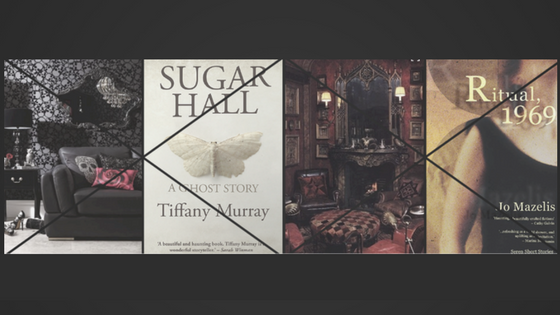
Sugar Hall Tiffany MurraySugar Hall, Tiffany Murray
£8.99
Easter 1955. As Lilia Sugar scrapes ice from the inside of the windows and rust from the locks in Sugar Hall, she knows there are pasts she cannot erase. The red gardens of Sugar Hall hold a secret, and Lilia and her children must confront a history that has been buried but not forgotten.
This superbly chilling ghost story (named by David Mitchell as one of his six favourites) will have you on the edge of your seat.

Ritual, 1969 by Jo MazelisRitual, 1969, Jo Mazelis
£9.99
What are little girls made of? What will they become? From the playground to adulthood the path is beset with misunderstandings, missed dates and hidden traps for the unwary.
This darkly gothic collection of stories explores the unsettling borderland between reality and the supernatural. Ranging from early twentieth-century France to 1960s South Wales and contemporary Europe, Jo Mazelis’ stories portray characters caught up in events and feelings they do not fully understand or control. Not all is as it seems in a world where first impressions may only conceal disguises and false trails – and there’s no going back…

Sean Tyrone A Symphony of HorrorsSeán Tyrone: A Symphony of Horrors, Mark Ryan
£8.99
The brilliantly evoked valleys town of Aberuffern (the mouth of hell) becomes the central motif of this short novel, inspired by the Mexican novel Pedro Paramo by Juan Rulfo.
This is lively, blackly humorous and intelligent storytelling.


Witch, Damian Walford Davies
£8.99
With the narrative pull of a novel and the vibrancy of a play for voices, Damian Walford Davies’s Witch offers a thrilling portrait of a Suffolk village in the throes of the witchcraft hunts of the mid-seventeenth century. The poems in this collection are dark spells, compact and moving: seven sections, each of seven poems, each of seven couplets, are delivered by those most closely involved in the ‘making’ of a witch.

Murder-at-the-StarMurder at the Star, Steve Adams
£9.99
The murder of God-fearing, bible-quoting, partially deaf Thomas Thomas at the branch of Star Stores he managed in Garnant, South Wales has remained an unsolved mystery since it happened in 1921. Over £126 was missing from the store safe, yet there were oddities about the attack which suggested this was more than a robbery that went tragically wrong.
In classic cold case fashion, journalist Steve Adams’s extensive researches have finally identified the killer, and the almost century-old case can finally be closed…

Happy Halloween one and all, we hope you have a frightfully good evening.
hoppip halloween art animation film

Save

Save

Save

Posted on

Frightfully good books to read this Halloween

Halloween is almost upon us, and what better to do than sit with a good book as the witching hour draws closer? See below for a selection of our darker and more chilling titles, from fiction, to poetry, to crime.
Masque, Bethany W. Pope£9.99This richly gothic re-telling of Gaston Leroux’s The Phantom of the Opera takes us to 19th Century Paris, where aspiring opera singer Christine is trapped between theatre owner Raoul’s ‘romantic’ vision of her as a bourgeois wife, and the mysterious Phantom’s murderous pursuit of artistic perfection.Love, lust, adventure, romance, and the monstrous nature of unfulfilled creativity await you here. Everyone wears a mask. Look beneath it, if you dare…
Sugar Hall, Tiffany Murray£8.99Easter 1955. As Lilia Sugar scrapes ice from the inside of the windows and rust from the locks in Sugar Hall, she knows there are pasts she cannot erase. The red gardens of Sugar Hall hold a secret, and Lilia and her children must confront a history that has been buried but not forgotten.This superbly chilling ghost story (named by David Mitchell as one of his six favourites) will have you on the edge of your seat.
Ritual, 1969, Jo Mazelis£9.99What are little girls made of? What will they become? From the playground to adulthood the path is beset with misunderstandings, missed dates and hidden traps for the unwary.This darkly gothic collection of stories explores the unsettling borderland between reality and the supernatural. Ranging from early twentieth-century France to 1960s South Wales and contemporary Europe, Jo Mazelis’ stories portray characters caught up in events and feelings they do not fully understand or control. Not all is as it seems in a world where first impressions may only conceal disguises and false trails – and there’s no going back…
Seán Tyrone: A Symphony of Horrors, Mark Ryan£8.99The brilliantly evoked valleys town of Aberuffern (the mouth of hell) becomes the central motif of this short novel, inspired by the Mexican novel Pedro Paramo by Juan Rulfo.This is lively, blackly humorous and intelligent storytelling.
Witch, Damian Walford-Davies£8.99With the narrative pull of a novel and the vibrancy of a play for voices, Damian Walford Davies’s Witch offers a thrilling portrait of a Suffolk village in the throes of the witchcraft hunts of the mid-seventeenth century. The poems in this collection are dark spells, compact and moving: seven sections, each of seven poems, each of seven couplets, are delivered by those most closely involved in the ‘making’ of a witch.
Murder at the Star, Steve Adams£9.99The murder of God-fearing, bible-quoting, partially deaf Thomas Thomas at the branch of Star Stores he managed in Garnant, South Wales has remained an unsolved mystery since it happened in 1921. Over £126 was missing from the store safe, yet there were oddities about the attack which suggested this was more than a robbery that went tragically wrong.In classic cold case fashion, journalist Steve Adams’s extensive researches have finally identified the killer, and the almost century-old case can finally be closed…

Posted on

Friday Poem – ‘Elegy for David Beynon’, Leslie Norris

Aberfan Friday Poem Elegy for David Beynon by Leslie Norris

Today marks 50 years since the Aberfan disaster, 21 October 1966, when a mountain of coal waste slid into Pantglas school and 19 houses, killing 144 people, 116 of them children.

Today is a day of solemn remembrance, and in this spirit, our Friday Poem is ‘Elegy for David Beynon’ by Leslie Norris, written after a teacher who died trying to shield five children from the slurry.

Leslie Norris was born in Merthyr Tydfil in 1921, and many of his works transform local incidents into poems of great depth and significance. ‘Elegy for David Beynon’ is among his most anthologised poems, and with its poignancy and sincere emotion, it is not hard to see why.


Friday Poem Elegy for David Beynon Leslie Norris

‘Elegy for David Beynon’ is taken from Leslie Norris: The Complete Poems, edited by Meic Stephens.


Posted on

The true story behind Alun Lewis’ poem, ‘Burma Casualty’

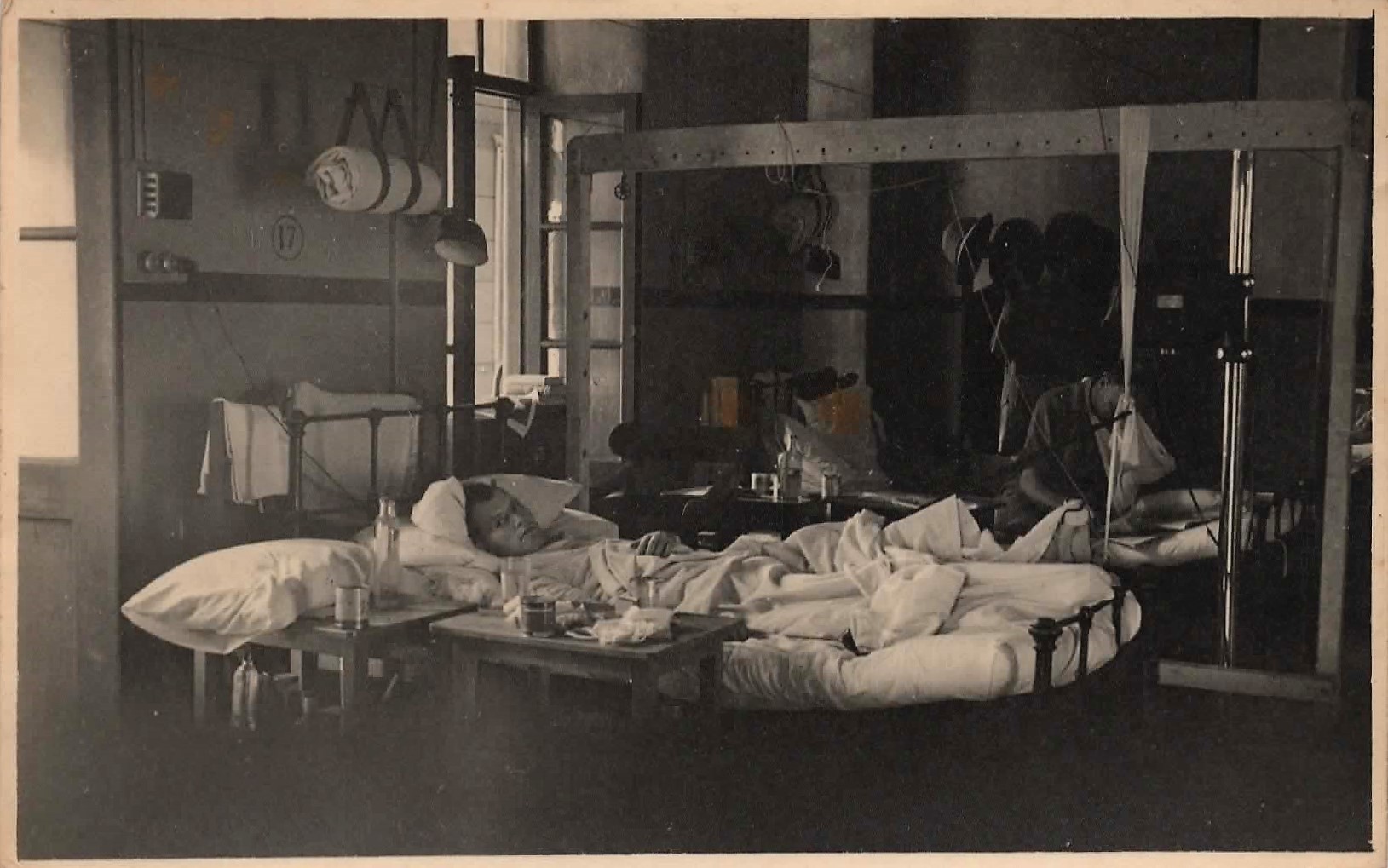
In January 1943, after fracturing his jaw during a regimental football match, Alun Lewis spent 6 weeks in Poona Hospital. In this blog post, Maggie Evans, whose father lay injured in Poona in the bed next to Lewis’, tells the true story behind the poem ‘Burma Casualty’.

As a child, “My Dad’s in a poem”, was my default position when any Dad boasting was called for.  “Don’t believe you”, was the usual reply, but here I had them.  I could run to the shelf and produce the evidence. There, in a slim volume entitled Ha! Ha! Among the Trumpets, was the poem, entitled ‘Burma Casualty’ and even more exciting, with a dedication – To Capt. G. T. Morris, Indian Army – My Dad!

It was years before I actually read the poem and even longer before I was capable of understanding it, but the magic of a special poem about my own special Dad has never faded.

Dad was born on 12th July 1911 in the Eastern Valley of South Wales. His given names were Thomas Griffiths but he was always known as “Griff”. To me and my two older brothers he was just our Dad, and the fact that he had one stiff leg shorter than the other and had to wear funny, built up shoes was of no consequence. We were children of the Second World War and post War period – war wounds were common. Dad didn’t ever let this hamper him. He wouldn’t accept a Disabled Badge for instance, and wouldn’t countenance anyone thinking of him in this way. He carried us on his shoulders and took us swimming and walking just like any other Dad and so I never fully understood the extent of his injuries until recently, when following a house move, I found bundles of his letters and photographs from that time. Reading the letters he sent from hospital in Poona sent me straight back to the poem – and now for perhaps the first time I was able to understand it.

In February 1942 Dad was fighting in the Burma Campaign with the 17th Indian Division which was decimated at the Battle of Sittang Bridge during a retreat from the Japanese. He was badly wounded, carried off the bridge by unknown hands, and ended up in hospital in Poona where he remained until late 1943.  Earlier that year he had for six weeks a new neighbouring bedfellow – one Alun Lewis, also a Welshman, who had sustained a shattered jaw in a football match. The sharing of his experiences with Alun resulted in ‘Burma Casualty’.

Thomas “Griff” Griffiths in Poona Hospital
Thomas “Griff” Griffiths Morris in Poona Hospital

Re-reading the poem now reveals how much Dad shared with Alun of his pain and fear – showing that at times he might have welcomed death as a release from his own physical pain and from the loss of so many comrades.

Thomas Griffiths and his wife on their wedding day
Thomas Griffiths Morris and his wife on their wedding day

But his letters to his sister from the same time show that as he recovered, his focus was on re-stablishing his family life with my Mum, his childhood sweetheart, and my oldest brother, born in 1940, whom he had never met.  He resisted Death, the ‘beautiful singing sexless angel’, preferring ‘his wife’s sweet body and her wilful eyes’ (though, like any child, however advanced in age, I confess to being unable to think of my mother in these terms without feeling slightly queasy!)


Dad never spoke of his experiences of jungle warfare and rarely mentioned his time in hospital. When pressed, he spoke of his friend, Alun Lewis, as something of a tortured soul. As an adult I have come to understand and love Alun’s poetry, not because he allowed my childhood self to hold its own on the boasting front, but for his luminous verse with its dark undercurrents. I can now say with pride, “my Dad knew a true poet’.

burma-casualty


‘Burma Casualty’ is one of the many poems featured in Alun Lewis: Collected Poems. Buy your copy now from our website: £9.99.


Posted on

International Day of the Girl 2016

international day of the girl

Today is International Day of the Girl, a day designed to raise awareness about gender inequality and the barriers girls come up against, from birth to adulthood. In recognition, here are a few Seren writers whose books highlight the challenges girls and women face.

Six Pounds Eight Ounces, Rhian Elizabethsix pounds eight ounces
‘My first word was clock only it came out as cock. That was when my mother knew I was trouble.’
Rhian Elizabeth’s introduces us to Hannah King, a self-assured young girl brought up in the Rhondda Valley within a community that offers little prospect for her future. Situated in turbulent surroundings, in conflict with family and community, Hannah is pulled towards a dark instability. Both comic and tragic, this is a gripping portrayal of girlhood in Wales.


The Way the Crocodile Taught Me, Katrina Naomithe way the crocodile taught me
In Katrina Naomi’s collection we see a girl in fear of her domineering step-father whose ‘flashing anger’ (‘Portrait of my Step-father as a Xmas Tree’) threatens to bubble up at every turn. We see the trials a woman can face: sexual assault, aggression, misuse. This is an emotive collection that refuses to shy away from depictions of violence and abuse, yet remains resolutely uplifting.


folk music sheenagh pughFolk Music, Sheenagh Pugh
Set in a country lying somewhere between Wales and central Asia, in a time which might be the middle ages or the near-present, Folk Music is a work of fiction that draws parallels with the oppressive, patriarchal regimes still existing today. Central to the story is the convention that, on marriage, a woman does not speak to anyone, except in private to her husband, until the birth of her first child. Pugh explores the possibility for both oppression and empowerment in this subtly-entwined narrative, which asks whether the abandonment of tradition is a positive thing, or may leave us only with rootlessness and dislocation.


fighting-pretty-smallFighting Pretty, Louise Walsh
Walsh peers into the macho world of boxing with tenderness and telling humour. Reeling from divorce, jobless and living back home with her embittered father, Lizzie throws everything she has into training to be a boxer. Despite battles with her weight and other demons, Lizzie fights on, determined someday box for Wales, and wear the coveted red vest. This story breaks down the barriers separating men and women in sport, just as the Olympics have begun to give women better representation (in 2012, for the first time, 10 men’s Boxing events at the London Olympics were joined by three women’s events).


the tip of my tongue trezza assopardiThe Tip of my Tongue, Trezza Azzopardi
This re-telling of the Mabinogion story Geraint and Enid transforms a medieval heroine who won’t be silenced into a brace 1970’s girl from downtown Splott in Cardiff, who, no matter how difficult the circumstances, always seems to get the last word.
The original Enid from Celtic mythology defends her misguided husband by warning him of approaching villains, even though he has forbidden her to speak. Trezza Azzopardi’s young Enid is also unlikely to respect a gagging order.


This list features just a few of the many talented Seren women writers. Discover them all on our website.


Want to get involved with International Day of the Girl? Join the conversation online by using the hashtag #DayoftheGirl on Twitter.


Posted on

Short Story of the Month | ‘Intervals in making lace’ by Diana Powell

short story intervals in making lace diana powell

Our new short story of the month is ‘Intervals in Making Lace’ by Diana Powell. This is one of a collection of stories set in the Black Mountains, where a group of women artists gather to work. As they do so, they spin tales of their childhoods, coloured by the folklore and landscape of their surroundings. But what do they really remember?

Diana Powell Intervals in making laceDiana Powell was born and brought up in Llanelli, and studied English at Aberystwyth University. She writes mainly short stories and novels. She won the last PENfro short story prize, and the 2013 Allen Raine Award. This year, she was a runner-up in the Cinnamon competition, and was longlisted for the Sean O Faolain, and the Over the Edge. Her work has appeared in a number of print publications, including The Lonely Crowd and Brittle Star.
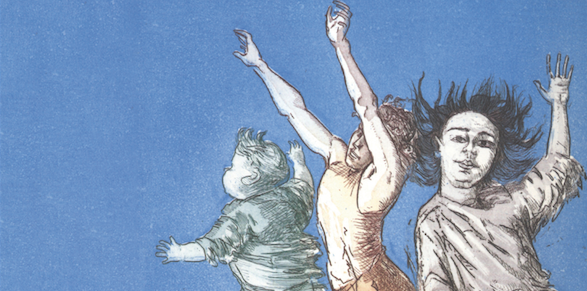
 

Intervals in making lace

This is an extract. Read the full short story for free on our website.


………

………………..

…………………………

How do you describe a gap? It is, after all, a place with nothing there. You could say ‘an opening with two clear ends’ perhaps – like a break in a fence or a mountain pass (both easily found in our hilly, farm-shod landscape). Or holes in a fishing net; a clearing in a wood …  to let water out; to let light, animals, people, gather.

All these are gaps. All physical entities (although there is nothing there). There are plenty of examples both natural and man-made, difficult, but not impossible, to explain.

But how do you make sense of the other kind of gap – the less substantial, belonging to the mind, or the spirit?

Recently, I have been enduring such a gap in my life: a break in its normal proceedings. An accident. It was an accident: all my own fault, of my own making. There is no one else to blame.

Just like then, whatever they may have said.

‘Foolish Bron! Daydreaming again!’ Words from the past echo down to me. The voices of my mother and father, or sisters, fondly scolding. ‘Off in cloud-cuckoo-land, Bron? Again?’ True, then; true, now. For yes, I was daydreaming. You’d think I would have learnt … I had learnt! For a long time, I had! But no, my thoughts wandered away, and my body followed, leaving the stove on, and the towel draped too close. Easily done; it could happen to anyone! Though there are, no doubt, those who whisper about my fondness for a glass of whisky; a second glass. Those such as the old women in the Square, who tutt behind me as the till girl in Mace slips the bottle into a brown paper bag; all the while dismissing and excusing, somehow, their own favoured tipples – as if sherry and gin do not count as the devil’s potions, brewed to steal your wits and lead you to Hell.

But there was no whisky that night, though I am happy to admit to it on other occasions. After all, it is a quick, easy way of making gaps in your existence, if that is what you are after.

So … there was a fire, as testified by those who pulled me from it, and by the charred detritus of my worldly goods – and of my body. Yes, my body bears witness, but not my mind. Not my consciousness, for I remember nothing. Even the knowledge of the stove and tea towel were presented to me later. Lucky, some say. Better that way – to have been pushed into such dense oblivion by the fumes, and to fall from that into an even deeper chasm of unconsciousness (the greatest depth of my gap), so that I did not know the worst of the pain, or the prodding, patching and finishing that was needed to put me back together again, into some reasonable fashion. Did not know … until I finally woke and had to face the torment, and battle through it (such floundering, such darkness, then!) Making tentative steps forward into painful reality, interspersed with welcome lapses back into insensibility … one step forward, two steps back. Onwards, upwards, until…

Until I am here. Now. Again. Yes, I have come through on the other side. For there is always this about gaps – the suggestion that they can be bridged or crossed; that they are something to emerge from. It may take time, and much effort. But, with some luck, and hope, you can make it. Maybe.

That is how it seems to me now – now that I am trying to put my life back together, and make sense of it all. Yet, in truth, none of what happened should have been strange to me. I should have been prepared. I should have known all about absences from consciousness; lapses from reality. I should have remembered. But back then we called such things by different names. We wrapped them in strange words, or wove them into magical imaginings, all meant to cloak, disguise or simply hide them. And so the truth was left unsaid, replaced by uncertainty and bewilderment. Another kind of gap; a deep, churning river that you struggled through, leaving you reaching for understanding like a drowning man gasping for air. But since I came back here, amongst you, memories have been returning – not from the accident, but from my earliest years, as if they are needed now. Like the echoing words, they flash into my mind, clear, not clouded. And beyond them, something else is taking shape – something not fixed, yet, not fully revealed, but which, if I start with what is definite, will also, perhaps, become more clear, so that I, too, will have some kind of story…


Continue reading ‘Intervals in making lace’ for free here.


Posted on

October Author of the Month: Jayne Joso

Jayne Joso is our October Author of the Month.
We recently published Jayne’s latest novel, My Falling Down House, which tells the story of a young Japanese salaryman who finds himself jobless, homeless and struggling to hold on to his sanity as he slowly attempts to rebuild his life from within a run-down, traditional wood and paper house.
Jayne Joso is a critically acclaimed writer, who in 2012 was awarded the Coracle International Writer’s Residency in Ireland. Her first novel, Soothing Music for Stray Cats (2009, Alcemi), was heralded as ‘the debut of a distinctive voice in contemporary British Fiction’ by social historian Joe Moran. Her latest novel, My Falling Down House, has already been praised widely, with Sho Konishi, Professor in Modern Japanese History at the University of Oxford, calling it ‘a remarkable achievement’.
October is an exciting month, as you can meet Jayne (and even purchase a signed copy of her book) on 20 October at the Daiwa Foundation, where Jayne will be hosting the event Joso’s Japan: Wood and Paper Houses. Here, Jayne will talk us through the essential elements of the Japanese wood and paper house, and how one of these enigmatic spaces came to settle itself as a character in its own right in My Falling Down House. Jayne will also focus on the increasing number of abandoned houses in Japan, presenting her photography of these spaces taken in remote parts of Japan such as Echizenhama and Teradomari.
 
Find out more about Jayne on her Seren author page.

Posted on

Friday Poem – ‘Making Out’, Deryn Rees-Jones

friday poem making out deryn rees-jones

This week our Friday Poem is ‘Making Out’ by Deryn Rees-Jones, which originally appeared in her second collection, Signs Round a Dead Body, and also features in her generous new What It’s Like to Be Alive: Selected Poems.

Both collections (along with Deryn’s other books The Memory Tray, QuiverAnd You, Helen and Burying the Wren) are half price until midnight on Sunday, 9th October as part of our National Poetry Day sale.

Deryn Rees-Jones What It's Like To Be Alive Selected PoemsWhat It’s Like to Be Alive marks a mid-career milestone in the life of this highly-acclaimed writer. From the poems written in her teens and early twenties included in her exciting debut The Memory Tray to her most recent exploration of time and grief, we see the arc of development in her writing over twenty-five years as she visits and revisits the concerns that are the mainstay of her writing: memory, love, desire, and heartbreak in all its manifestations. The following poem originally featured in Signs Round a Dead Body, Deryn’s second collection.

Making Out

Now it was airports that she needed –
to sit there going nowhere
counting aeroplanes like sheep,

with Concorde like an archaeopteryx or angel
and Egypt, Russia, the Azores and Lithuania
spinning in her head. She’d sit there

writing letters that she knew she wouldn’t send,
telling him about the dull, red moon, the way
the landscape then, so pale, unreal,

the fishermen, the midnight seas
had been tattooed like hieroglyphs
in blues and golds

deep into her skin. It was his hands, I think,
she could imagine best
travelling across her. But she thought about the way

he’d kiss her too, the way she’d smile, nod yes
to his demolishing her. The way he’d start
to reassemble, slowly, in the rented bed

her mouth, her throat, her shoulders, breasts,
her knees, her arms, her thighs, her calves, and love etc.


Until midnight on Sunday 9 October,What It’s Like to Be Alive: Selected Poems is half price: only £6.49 (RRP £12.99). Buy your copy now to take advantage of this fantastic offer.


Save

Posted on

50% off all Seren poetry collections for National Poetry Day

national poetry day sale 50% off

Today is National Poetry Day, and in celebration we are offering a whopping 50% off all our fabulous poetry books.

Seren have been dedicated to publishing poetry since the 1980s, and so there are a stunning number of titles on offer – everything from the classic bestsellers like Dannie Abse’s Welsh Retrospective and Sheenagh Pugh’s Selected Poems to our newest offerings, like Caroline Smith’s topical The Immigration Handbook and Tony Curtis’ hot-off-the-press From the Fortunate Isles: New and Selected Poems.

national poetry day 50% off sale Seren

Hurry to take advantage of this offer as it ends at midnight on Sunday, 9 October. We hope you discover great new poetry, on this most poetic of days…

Explore the Seren poetry shop and find new poetry for less

Posted on

An extract from Masque by Bethany W. Pope

an extract from Masque by Bethany W Pope

Enjoy this extract from Bethany W. Pope’s debut novel, Masque, now available from serenbooks.com (or your local bookshop!)

Masque by Bethany W PopeAbout Masque:
Masque is a richly gothic retelling of Gaston Leroux’s The Phantom of the Opera. Centre stage is would-be opera singer Christine, who, despite being devoted to her art, attracts the attention of both the Phantom, and rich theatre owner Raoul. The resulting mix of love, rage, art and murderous intent, is explosive.


This extract begins on p.11 of the novel and is our first introduction to The Phantom – Erik – a deformed and complex character, both monstrous and kind. Unlike Leroux’s original The Phantom of the Opera story, Masque is told from the perspective of the three main characters, so we see directly into the mind of the much-maligned Phantom, and can judge him as we see fit…


ERIK
1.
My father was a master mason. I never met the man but I
spent the first decade of my life inside the house he built
and so I feel I know him. The lathes of the attic communicated
with me as much through their shape (he was
exacting when he laid out the angles of the eaves) as did
the notations he left in pencil on the undersides of the
unfinished, unpainted struts which supported the ceiling. I
inherited the crabbed handwriting he used to mark out his
measurements, though I am far more articulate than he ever
was in artistry, architecture, or print.
Although he was skilled with the trowel and could lay
travertine so tightly that its texture was more like marble
than limestone, he was more renowned for the beauty of
his person that the skill of his hands. He won my mother
with his looks and he left her a sad ghost of the gay girl he
married, haunting the house that he built on Rue Rouge.
I learned about him through the letters he left to my
mother, retained by her in memory of their apparently passionate
courtship.They were bound by a blue ribbon, an
appropriate memento of an innocent girl. One envelope
contained a bright lock of hair that must have been his,
since mother’s was as dark as a sewer rat’s. The letters were
naïve, almost innocently crude. They were full of phrases
about the things that he wished that he could do to her
body and peppered with prayers for many years of marital
bliss. They were written in the kind of cheap ink that an
uneducated man would favour. He did not expect them to
last, or be held on to.The sepia was grainy and badly mixed,
this combined with his handwriting in such a way that it
seemed as though his words were written out by a sexually
precocious child with a fondness for experimenting with
matchsticks. As I said, my handwriting is no better, but at
least the ink I use is superior.
I always thought that writing was a bit like the telepathy
those spiritualists in the paper are always talking about. It
makes sense, if you think about it; one mind communicates
to another through a series of black blotches which transmit
thoughts directly into another’s brain. You, reading this,
whoever you are, can hear my voice (a sweet, trained tenor)
without ever having to worry about viewing the flesh that
produces it.This is lucky for you: all my gifts are internal.
In any case, my current habitations remind me of my
childhood home. These damp vaults are rather like the basement
where my mother moved my crib once the
neighbours complained that my cries disrupted their business.
The house my father built was tall and narrow, the
walls of dark grey granite, polished to the high shine of
gravestones. He meant his home to be a living monument
to his skill and a permanent advertisement for his services.
The roof was tiled with slabs of greenish slate, and the
windows were small and imperfectly glassed. When I was
older, I replaced them as a gift for my mother. I spent a
whole afternoon removing the warped and watery panes,
replacing them with sheets I’d poured myself. I learned the
art of glazing, sneaking every night to the factory down the
street. When the time came that I had spent enough hours
watching the midnight production shift pouring the sheets
of reddish molten sand into the mould, I tried my hand at
it myself. I waited until the Michaelmas holiday and stole
the machinery (I provided my own materials, lugging bags
of silicone that I’d found in the cellars among the unopened
bottles of wine and the skeletons of rodents). I love the look
of glass as it is being poured. It is honest, then, about itself.
Cooled, it only seems a solid. It never fully hardens. Over
centuries, window glass will melt.
There is no such thing as stasis.
In any case, my mother loved the finished product; windows
that let the light in without warping what she saw on
the street. She was so thrilled she squeezed my upper arm
through the thick fabric of my jacket. I swear she almost
hugged me. In any case, for once she did not shudder at my
smell or flinch away from the feel of my corpselike body.
The houses on either side of ours were dedicated, in their
own way, to music. Dancing girls and cabaret, absinthe and
cheap champagne that the likes of those poets who styled
themselves ‘Romantic’ drank themselves to death in. My
widowed mother hired men to refurbish the attic into a
series of rooms that she furnished with sticks she’d bought
from brothels, closed in raids by the province governor the
previous summer. She did not sleep on them and rarely
bothered to change the sheets, so she didn’t have to worry
about bedbugs. She made a good living, I must say, giving
the drunks who seethed from her neighbours in the early
morning a bed off of the streets.
For my fifth birthday she made me my first (and for a
long time only) birthday present; a mask cut from a length
of chamois that she bought from a glover. It was more like
a loose sack with holes cut for eyes than a proper garment
but it did its job well. The sight of me ceased bothering her.
As I grew older, she let me come up more frequently –
although once she had a steady stream of lodgers I never
had the run of the attic again – my father’s writing was long
since buried behind plaster. I wore the mask without complaint
– it was far from uncomfortable and it had a nice smell,
as did the sachets of mint and violet that she sewed into my
clothing. If she almost never touched me, she did love me as
best as she was able, being young and easily frightened.
After a few years of proving my capacity with panes of
glass and basic home repairs, she hired a blind tutor to teach
me letters, music, mathematics. He would come and sit for
hours in my basement room, complaining of the effect of the
chill on his bones and making me memorise many disparate
packets of learning. When I surpassed his ability to teach, as
I soon did, I had many books close at hand and I turned to
them to expand my knowledge. I read everything from
Archimedes to fairy stories. As I recall, I had a special affection
for La Belle et la Bête. My mother bought me as many books
as she could afford through mail-order – often secondhand.
She resold them after I had squeezed them of their nutrients,
though I demanded permission to keep the fairy tales. They
were a balm to me, with their stories of transformation. They
provided me with a sharp and dangerous hope.


Buy your copy of Masque now: £9.99

Claim 20% off this and all future orders when you become a Seren Book Club member