Posted on

Book nooks and beyond – where do you like to read?

book nooks where do you like to read

We all have our favourite place – or places – to settle down in with a good book. Is yours a book nook? A library? The garden (weather permitting)? Take a look below for some inspiration, and tell us about your favourite reading spot by leaving a comment on this blog post or sending us a tweet with the hashtag #WhereIRead.

Book nooks
‘A lifelong dream of mine is to have a big cushioned windowsill to sit on with a great book, rain or shine – a world just outside my window and one in my hands too’
– Rosie, Marketing

Cosy corners in your house, decked with pillows galore, blankets and somewhere to put a mug of hot tea or coffee. What could be better?


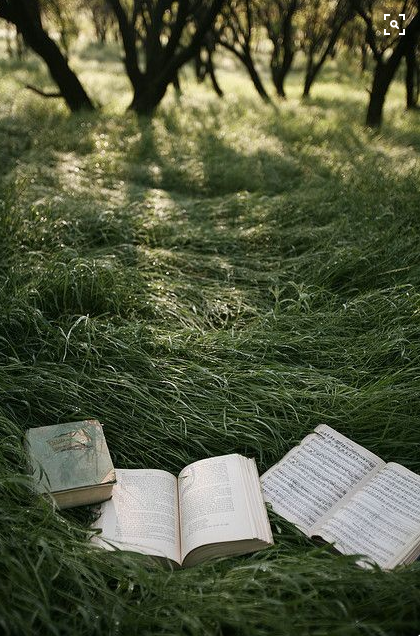
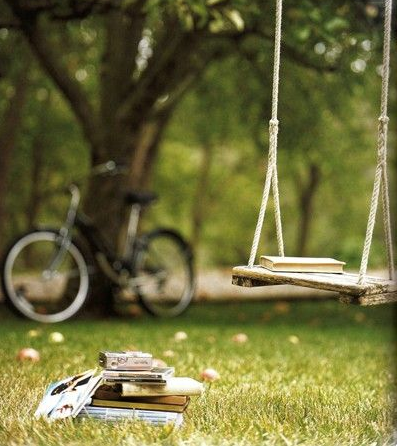
The great outdoors
‘The Graveyard of St Mary’s Church is the best spot in Bridgend for a lunchtime read. Spent Bank Holiday Monday down Pobbles with surf, seagulls and David Mitchell. Winter’s days at home I huddle under blankets on a sun lounger in the garden, a gazebo on hand in case of rain.’
– Simon, Sales

Summer may be almost over, but we have many warm autumn days ahead – and what better way to spend them than by sitting in the garden, or even the graveyard (Simon!) with a book or two.


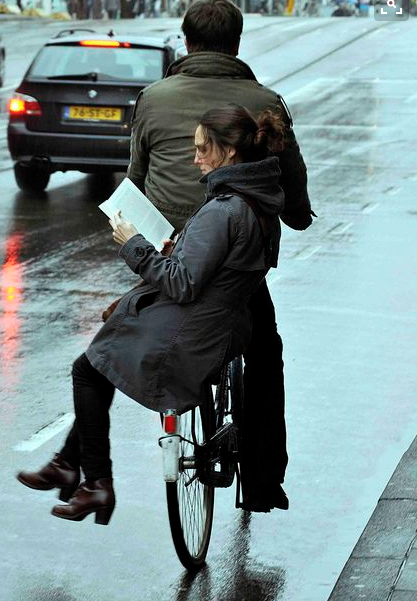
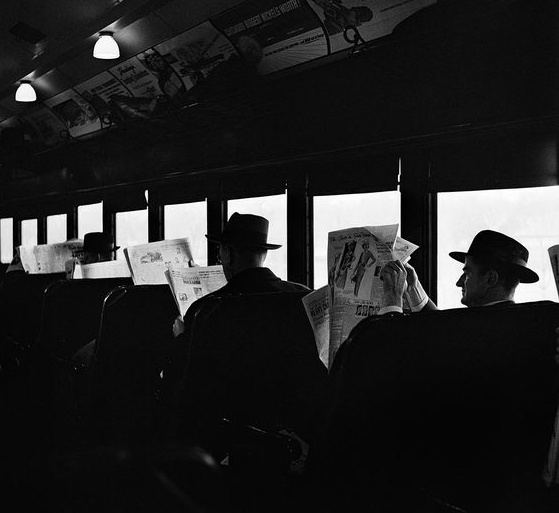
En route
‘Especially since the arrival of the e-reader, reading on the go has never been more convenient.  Perhaps this is why books such as The Girl on the Train have become such global bestsellers, as readers identify with the journey of the character. Reading on the go enables me to fit in a lot more reading that I would otherwise not be able to find the time for, and ensures that I spend that hour of commuting constructively. ’
– Ceri, Intern

Convenience is key. An un-put-downable book is a great distraction when you’re stuck on a long commute or journey – the only issue is having to put the book away when you reach your destination.


Where do you like to read? Tell us in the comments section, or tweet at us using the hashtag #WhereIRead

Follow us on Pinterest for more book nook and reading inspiration.


Save

Posted on

Friday Poem – ‘Insomnia’, Tamar Yoseloff

Friday Poem Insomnia Tamar Yoseloff A Formula for Night

This week our Friday Poem is taken from Tamar Yoseloff’s newest collection, A Formula for Night: New and Selected Poems, which is half price on our website until midnight on Monday as part of the Seren summer sale.

Tamar Yoseloff A Formula for Night Tamar Yoseloff is a poet whose career has been profoundly influenced by the visual arts. A Formula for Night: New and Selected Poems is the eagerly awaited summation of her work, encompassing selections from four published print volumes: Sweetheart, Barnard’s Star, Fetch and The City with Horns (now mostly out of print); and poems from her collaborations with artists: Formerly, Marks and Desire Paths. The book also includes a generous selection of beautiful new poems. ‘Insomnia’, our Friday Poem, is one of these.


Insomnia

The clock’s small hands carry me
to the house where I was a child

and in those rooms peace settled
despite the war inside the TV,
the lunatic with an axe who filled
the drive-in screen. My parents said
no harm would come if I was good.

My room was buttercup yellow,
it was always spring; my Barbies
were missing arms or legs, while boys
came back from Nam in bags.
Everyone seemed old but they were young,

now everyone seems young, and I’m the one
crowding the night with phantoms.


Buy your copy of A Formula for Night now, half price until midnight, Monday 29th August!


Save

Save

Posted on

Seren summer sale | 50% off books

Seren summer sale

The Seren summer sale is here for this week only, so curl up in a comfy armchair and have a browse on our website for some book bargains.

We have something for everyone – everything from poetry to novels, short stories, art, history and biography. And with so much choice, we thought you might like a helping hand choosing what to read next. Take a look below for our summer sale suggestions.

Best for… reading on the beach:
foreign bodiesForeign Bodies by Candy Neubert
£7.99 £3.99
Deep down she had always known that the world was like this. It was incredible to think of all those people in their offices in London still living their grey lives, while here in the Philippines… this. Life bursting out everywhere.
Fresh from the UK, Emma thinks she has fallen in love with a place, a person, and pursues the man of her dreams with a colonial zeal. But for all her poetic sensibilities, she seems unaware of the destruction she is capable of leaving in her wake.


Best for… getting lost in, on a long afternoon:
The Roots of Rock, from Cardiff to Mississippi and BackThe Roots of Rock by Peter Finch
£9.99 £4.99
‘This is a vivid and engaging read that breathes new life into some great old music.’ – The Welsh Agenda
Peter Finch follows the trail of twentieth century popular music from a 1950s valve radio playing in a suburban Cardiff terrace to the reality of the music among the bars of Ireland, the skyscrapers of New York, the plains of Tennessee, the flatlands of Mississippi and the mountains of North Carolina. From Etta James to Bert Jansch, Taylor Swift to Ray Charles, Finch’s world of music is as broad as the last six decades allows.


Best for… poring over on a rainy day:
A Boat Called AnnaliseA Boat Called Annalise by Lynne Hjelmgaard
£9.99 £4.99
‘Hjelmgaard brings the specialist knowledge of an experienced sailor to her understanding of the varied rhythms demanded by her poetry. Reading her, I begin to appreciate what a sea-journey feels like.’ – London Grip
A Boat Called Annalise is wonderfully evocative of life on a sailboat; the book recalls a journey this much-travelled author took on a sailboat to the Caribbean and back to Europe with her husband. Hjelmgaard’s poems are beautifully poised, full of clear-eyed and frequently humorous observations.


Best for… livening up long journeys:
seren_-_the_advantages_of_an_older_manAdvantages of the Older Man by Gwyneth Lewis
£7.99 £3.99
‘A little gem of a novella with hidden depths. This light-hearted story of a young woman suffering from an unrequited passion explores life, love, death and the fine art of poetry.’ – Pamreader
A light-hearted story exploring the strange case of a Swansea woman who is apparently possessed by the spirit of Dylan Thomas. Naturally all is not as it seems. The woman, who works in the Dylan Thomas Centre, meets a rather different Dylan from the one she knows by repute, one who doesn’t really fit in with the ghosts of other poets in heaven and is desperate to train himself to join the fitter shades of the long distance runners instead. Her own life, which has been lonely and sad, is completely transformed by the encounter.


Best for… broadening your mind:
TheDragonandtheCrescentThe Dragon and the Crescent by Grahame Davies
£12.99 £6.49
‘This is a fully annotated work of scholarship as well as an always readable, sometimes exciting book that opens out a previously neglected aspect of Welsh – and British – culture over more than 400 pages’ – Western Mail
In the early twenty-first century, the relationship between the West and Islam has, due to recent political events, become the subject of intense study, curiosity and tension. But to understand contemporary anxieties, we need to trace their historical roots. The Dragon and the Crescent does this for one small European nation, revealing for the first time, the full and surprising story of the Welsh relationship with Islam.


Best for… curling up with on a dark night:
Masque by Bethany W PopeMasque by Bethany Pope
£9.99 £4.99
‘A novel richly layered with both gothic appeal and intellectual depth. In Masque Pope has initiated an important dialogue about the value of art to the human soul, and the psychological masks we wear as we pick our way through life.’ –Wales Arts Review
A richly gothic retelling of Gaston Leroux’s The Phantom of the Opera .  A promising young singer is torn between two loves. One, her patron, is a rich vicomte, who offers her a life of luxury and light. The other, the mysterious Phantom of the Opera, is a dark enigma who offers to help her further her art. One is a man, the other a monster. But truth and life are twisted things. A life of empty privilege can be ugly and monsters can be kind. And art exerts its own demands.
This is not the story you think you know.


We hope you enjoy browsing our summer sale. The half price offer ends at midnight on bank holiday Monday, 29th July, so hurry and fill your library for less before it ends.

Save

Posted on

Friday Poem – ‘Bob’s Dogs’, Hilary Menos

Friday Poem Bob's Dogs Hilary Menos

It’s that time of the week again, and this time our Friday Poem is taken from Hilary Menos’ collection, Red Devon.

Originally a food writer and journalist, Hilary Menos’ poems are often inspired by rural farming life in Devon where she lived for some years.

Red Devon by Hilary MenosIn Red Devon, her second collection, Menos reveals her experiences as a “blow in” from upcountry moving into a tight-knit rural community and seeing at first hand some of the human and animal costs of the conflict between traditional farming methods and the demands of modern commercial agriculture. She also tells the story of a burgeoning love affair between farmer Grunt Garvey and haulier Jo Tucker, a romance which ends in tragedy. Alongside these two stories, one fictional and one very real, runs a concern for farmers around the world whose livelihoods – and lives – are threatened by global changes in agriculture.


Bob’s Dogs

There was the one dog, neither use nor ornament.
Each morning he lurked by the tanker’s dribbling spout
licking his chops. Spawned every cur in the district.
Bit the postman, once, and got away with it.

There was the other dog, two-bit brother to the first,
eyes like spilt milk. Danced on the slurry pit’s crust
one time too many, said Bob, and no good since.
Bit the builder’s foreman twice, and got away with it.

There was the third dog, each month went walkabout
under a chicken moon, fetching and shedding stars.
Deaf to everyone but Bob’s dad, now four years
bed-bound. What shall I say? Bit nobody, yet.

And lastly there was the bitch. Bit the child.
The four shots blew through the lanes and echoed loud
in the neighbour’s eyes. Only Bob shook my hand,
hitching his trousers up with a ‘Welcome, my friend.’

 
Buy your copy of Red Devon now: £8.99
Claim 20% when you become a Book Club member

Posted on

Friday Poem – ‘A Pembrokeshire Artist’, Tony Curtis

A Pembrokeshire Artist Tony Curtis Llangwm

This week we have a treat for you – our Friday Poem is one of the new poems from Tony Curtis’ forthcoming From the Fortunate Isles: New and Selected Poems (Seren, October 2016).

From the Fortunate Isles: New and Selected Poems, Tony CurtisFrom the Fortunate Isles, published in celebration of the author’s 70th year, features poems from ten of Curtis’ published collections as well as a substantial number of new poems. This is a poet whose themes and variations remain consistent: a profound interest in the wars of the last century, an abiding fascination for all art forms, particularly painting and poetry, tender attachments to family, and (most evident in the poem below), a deep affection for his roots in West Wales.


A Pembrokeshire Artist
John Knapp Fisher (1931 -2015)

An evening with the rain coming in,
that sea so cold and unsettled, a heavy graphite,
you’d not have gone out with your mackerel lines
in the Viking or any of her successors
from the stone-brick embrace of Porthgain.

We’ve eaten our fill at your wake, John,
the Sloop Inn squeezed tight
with suits, black ties and memories.
Wives, patrons, grandchildren.
Photos of you through all seven ages on the screen.

Inland to Wolf ’s Castle and as far south as the cathedral
the farms, haggards and holiday lets
shrug down for the cold night.
You’d have worked to conjure the reluctant light
discovered in them under this empting, moonless sky.

And the first scurp coming would have dabbed
your paper, blossomed and been coaxed,
smudged, into the finished sketch.
Now the county will have to sing its own spirit,
compose its own shape, keep its own watch.


If you would like to listen to Tony read from his forthcoming collection and other books in his native Pembrokeshire, don’t miss his event at the Llangwm Literary Festival, Saturday 12th August. More details here.

You can buy copies of Tony Curtis’ poetry collections, anthologies he has edited, critical essays, and other writing direct from us (20% off for Book Club Members):
Crossing Over
Heaven’s Gate
Tokens for the Foundlings (ed Tony Curtis)
After the First Death (ed Tony Curtis)

Wales at War
Real South Pembrokeshire
Keep an eye out on the Seren website – Tony’s new collection, From the Fortunate Isles: New and Selected Poems, is coming soon…

Posted on

Titles to treat yourself to this National Book Lovers’ Day

titles to treat yourself with national book lovers’ day 2016

Book buying can be a bit of an addiction, but now we all have the perfect excuse to go out and treat ourselves to a new title – it’s National Book Lovers’ Day.

Here are our editors’ top ten picks. If you haven’t read them yet, then what are you waiting for?

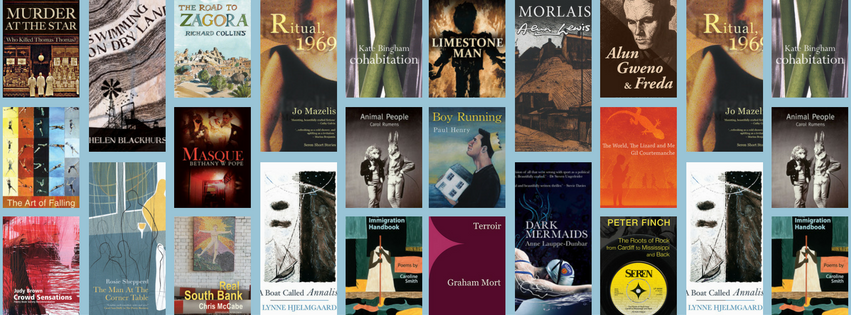
1. Masque, Bethany W. Pope
Masque by Bethany W PopeA richly gothic retelling of Gaston Leroux’s phantom of the opera story by debut novelist Bethany W. Pope. Centre stage is promising young singer Christine, who, despite being devoted to her art, attracts the attention of both the Phantom (Erik), and rich Parisian theatre owner Raoul.
The intensely ambitious Christine finds herself caught between the twin evils of the Phantom’s murderous pursuit of artistic perfection and Raoul’s ‘romantic’ vision of her as a bourgeois wife. Her own desire to follow her operatic career becomes her guiding light, but none of the three leading characters can control the directions in which their passions lead them, while the beautiful masked skull of the opera house itself looms large over their respective fates. The resulting mix of love, rage, art and murderous intent, is explosive.
Love, lust, adventure, romance, and the monstrous nature of unfulfilled creativity await you here.
Everyone wears a mask. Look beneath it, if you dare.

2. Crowd Sensations, Judy Brown
Elterwater Rain Crowd Sensations Judy BrownCrowd Sensations is a worthy follow-up to Brown’s Forward Prize-nominated debut, Loudness. Brown is a poet of dazzling contrasts, of thoughtful paradox, intimate confidences and precise evocations. Her titles and first lines both draw you right into a poem and then quite often surprise you with a narrative that you hadn’t quite expected. ‘The Things She Burned Last Year’ references a past both remote and near, like multiple reflections seen in a mirror. Brown is a poet of profoundly unsettling domesticity as in ‘The Dehumidifier’, which unravels the metaphysics of damp and ‘This is Not a Garden’, which is a cool summation of a failed marriage. We frequently imagine an uncomfortable intimacy: ‘Poem in Which I am Not Short-sighted’, or are given a scary anecdote like: ‘The Post Box in the Wall’. There are serious poems that lure you with humorous titles: ‘Poem in the Voice of a Dead Cockroach’.

3. Sugar Hall, Tiffany Murray 
Easter 1955. As Lilia Sugar scrapes the ice from the inside of the windows and the rust from the locks in Sugar Hall, she knows there are pasts she cannot erase. On the very edge of the English/Welsh border, the red gardens of Sugar Hall hold a secret, and as Britain prepares for its last hanging, Lilia and her children must confront a history that has been buried but not forgotten.
Based on the stories of the slave boy that surround Littledean Hall in the Forest of Dean, this is a superbly chilling ghost story from Tiffany Murray.

4. Ritual 1969, Jo Mazelis
Ritual, 1969 by Jo MazelisWhat are little girls made of? What will they become? Will they run away to the circus or become dressmakers, teachers or servants? From the playground to adulthood the path is beset with misunderstandings, missed dates and hidden traps for the unwary.
This darkly gothic collection of stories explores the unsettling borderland between reality and the supernatural. Ranging from early twentieth-century France to 1960s South Wales and contemporary Europe, Jo Mazelis’ singular vision and poetic language creates characters caught up in events and feelings they do not fully understand or control, giving the book its uncanny focus. Not all is as it seems in a world where first impressions may only conceal disguises and false trails – and there’s no going back.

5. Dark Mermaids, Anne Lauppe-Dunbar
Dark_Mermaids_Web72It is the Olympic summer so what better time to read Anne Lauppe-Dunbar’s gripping thriller, Dark Mermaids, which tells a shocking yet enduringly familiar story of the horrors of a political system that doped its youngsters to sporting superhero status, and then left them to fend for themselves.
Dark Mermaids follows West Berlin police officer Sophia as she is called to investigate the murder of her childhood friend Käthe. The search for Käthe’s killer draws Sophia back into her abusive past as a child swimming star in the former GDR, and as the web of half-remembered horrors starts to unravel, those close to Sophia begin to take notice. There are some who still have much to hide, and they will go to great lengths to stop their secrets from surfacing.
Dark Mermaids was shortlisted for the Cross Sports Book Awards, 2016.

6. Star-Shot, Mary-Ann Constantine
Part fable, part mystery, Star-Shot is a stylish debut novel set in and around Cardiff’s National Museum in a time that is almost, but not quite, our own. As their paths cross in a circumscribed world of benches, parks and galleries, a handful of characters reveal their stories of obsession, loss and recovery, creating a fragile network of relationships which will help to resist the inexorable channels of silence eating into the city.
A brittle young woman sits on a bench in Gorsedd park, conscious of the powerful building behind her; a tall man carries a box full of a strange organic substance up the entrance steps; a young father explains the formation of stars to his tiny son.  As university researchers try to map and understand  the destructive silence snaking around them, it becomes clear that the linked lives of these and other marginal characters offer ways of countering its effects. Poignant and humorous,Star-Shot is an exploration of how objects and images can focus our grief and desire; it is also a meditation on the regenerative power of garden ponds, and the cosmic significance of frogs..

7. The Dogs That Chase Bicycle Wheels, Ilse Pedler
The Dogs that Chase Bicycle Wheels Ilse Pedler Friday PoemBeautifully evocative of life on a sailboat, Lynne Hjelmgaard’s poems trace a journey this much-travelled author took on a sailboat to the Caribbean and back to Europe with her husband.
The couple’s relationship is poised on tensions, beautifully observed, as masculine/ feminine, the need to assert and/or withdraw in the face of the turbulent seascape. The paradise-like destination is reached and later we learn that life goes on, there is illness and loss, and in the final section, the tone becomes movingly elegiac.
Hjelmgaard’s poems are beautifully poised, full of clear-eyed and frequently humorous observations. Her work is full of sentiment without being sentimental. We hope you enjoy your trip on A Boat Called Annalise.

8. Murder at the Star:Who Killed Thomas Thomas?, Steve Adams
The murder of God-fearing, bible-quoting, partially deaf Thomas Thomas at the branch of Star Stores he managed in Garnant, South Wales has remained an unsolved mystery since it happened in 1921. His body was found on the morning of Sunday February 13th, his head smashed, his throat cut and with a stab wound to the stomach, any of which could have killed him. Over £126 was missing from the store safe, yet there were oddities about the attack which suggested this was more than a robbery that went tragically wrong: Thomas had been gagged with cheese, and there was no tear in his trousers, shirt and waistcoat above the stab wound. What circumstances could explain these things?
Garnant was in shock, and Scotland Yard arrived in the form of DI George Nicholls. A number of suspects were identified but none seemed to have the telling combination of motive and opportunity. Despite the expertise of Nicholls the case was eventually abandoned and the killer’s secret died with him.
Until now. In classic cold case fashion journalist Steve Adams’s extensive researches have finally identified the killer, who is revealed at the end of the book, after a thorough reconstruction of the murder and the subsequent investigation.

9. The Way the Crocodile Taught Me, Katrina Naomi
Katrina Naomi’s new poetry collection, The Way the Crocodile Taught Me, is a heartfelt and tragi-comic portrayal of a fraught childhood and adolescence. Central to the book are two sequences: one about an awful stepfather, and the other about a kindly but also comically old-fashioned grandmother. A mother appears, distant, glamorous as a film star. An absent father is also a dream: “After my father left, I grew/ a battery of hearts,/ felt each of them beat,/ like doves in a casket/”. These family poems are both heartbreaking and often hilarious, sometimes both at once as in ‘Portrait of my Stepfather as a Xmas Tree’.


10. The World, The Lizard and Me, Gil Courtemanche
The World, The Lizard and Me - Gil CourtemancheA novel of testament to the children caught up in the civil wars of Central Africa, The World, the Lizard and Me follows criminal investigator Claude Tremblay as he pursues a warlord charged with creating child soldiers in the Congo.
Defeated in court by a legal technicality, Claude abandons his usual professional detachment and decides to act alone. He finds himself in the growing chaos of the mining town of Bunia, searching for more evidence and eventually encountering Kabanga. Pitched from distant observation into the grim reality of an African power struggle, he is confronted by a form of justice different from any he has experienced before. He also encounters at first hand the results of the inhumanity of the lives of child soldiers, and is forced to reconsider the nature of love and the notion of normality.


If you prefer to read digitally, then why not check out Seren eBooks? See our full eBook list on Kobo or search by title on Amazon.

Save

Posted on

Friday Poem – ‘Accent’, Carolyn Jess-Cooke

This week’s Friday Poem is taken from Carolyn Jess-Cooke’s debut collection, Inroads.  

The opening piece, ‘Accent’ where ‘stowaway inflections and locally-produced slang/have passports of their own’ is a praise poem for the versatility and joy of language, “The way sound chases itself in tunnels and halls, the way senses fold  memory…”.After this playful start, a difficult childhood is evoked through metaphor in poems like ‘Music Lesson’,‘One Thousand Painful Pieces’ and ‘Bitten’, all the more heartbreaking for being indirect.


Buy your copy of Inroads from the Seren website: £7.99

Claim 20% off when you become a Book Club Member.

Save

Posted on

Short Story of the Month | ‘The Dig’ by Graham Mort

short story of the month the dig graham mort

Our new Short Story of the Month is ‘The Dig’ by Graham Mort, from his newest collection, Terroir, in which past and present intertwine as amateur archeologists dig for answers in an area whose violent, territorial history they know nothing of.

the dig from terroir by graham mortAbout Terroir:
From England to Europe, Africa to South America, these stories from prize-winning short story writer Graham Mort explore relationships: father and child; man and wife; man and his environment.
All these stories are sensitively told and beautifully written, bringing fresh perspectives to our place in the world around us.
Graham Mort has won the Edgehill and Bridport and Short Fiction short story prizes.


The Dig

This is an extract. Read the full short story for free on our website.

A Thistlethwaite, red-haired like all her clan. Longshanked, full-breasted, tall. Freckled, grey-eyed, jug-eared, a crooked smile creasing into dimples. Climber of rockfaces for hawk’s eggs. Horse breeder, dog hater. Broadshouldered, a fighter who’ll take on her brothers and anyone else. Fey, man-shy, loyal. Fierce to the lie, quick to offence. Footsore now, limping from a bruised knee where the gelding took her into a dry stone boundary.
Homeward bound, the moor’s peat squelching underfoot, the heather springy, bog cotton in the hollows. Hungry and used to it.

The Land Rover lurches on the bridleway, loaded with wire ladders and lamps, yellow waterproofs, digging gear. The man’s helmet lies beside him on the front seat. His hair is spiky grey, his hands badly scarred from a fire. The flesh has grown back in purple patches. He’s got a blue thumbnail where a hammer missed. He wears a diver’s watch with a black plastic wristband. Sun shows up the scratches on the spattered windscreen, tyres jog over stones and ruts and into mud puddles. The exhaust stinks in low gear. He’s arranged to meet the others at the dig. This one’s been on the go for months and you never knew who’d turn up.

She’s a long hour from home after trading her grey horse in the next dale. There are coins in her purse but she’s packed it tight with grass to stop them chinking. She rode the gelding bareback to the Sykes place, now she has the walk home. It was a good sale. The bridle and harness are
tight under her jerkin. She’s taken a short cut over a flank of moorland, crossing a corner of Abel Rintner’s land, past his new peat cuttings where turves are piled. She’s black to the ankles and there’s a foul gas from the moss. She could have played it safe and detoured by the valley head,
then down past the inn where there were other folk. There’d be drunken, groping bastards too. Fenmen and Dutchlanders draining the land for the monks, gabbling, fetching up phlegm and laughter. She can’t bear that. No need if the light holds. Her feet catch in rushes. She can hear the calling of fat lambs. Soon they’d be cutting their throats for Eric’s wedding.

There’s a dirty Peugeot estate parked where the bridleways meet. Dark blue with a roof rack. Two other cavers are already climbing into their gear. A woman in her late thirties with pulled-back hair and acute blue eyes; a fifty-year-old man, bow-legged, short and bearded. He’s coiling a climbing rope clarted in dried clay and she’s fastening her overalls over rubber boots. Their greeting is a stubbing of cigarette butts, a faint smile, nods to the stile, the causeway they’ve laid across the marsh that leads to the dig. Another path goes up over the limestone edge, past the killing pit – a swallow-hole with almost sheer sides, twenty yards across and twelve deep. They’d help excavate that for an archaeological dig, uncovering broken animal bones and Mesolithic flints. Hand axes, arrow tips, flensing blades. The ancient people had hunted with dogs, driving red deer, elk, auroch, and wild boar over the edge then stoning them to death. They’d been proud of that dig, the way it made sense of things, of the past. The man with the
scarred hands slams the Land Rover door and takes two yellow plastic trugs from the back. They pick up their lamps, two folding spades, a short-handled pick. The bearded man carries the rolled-up ladder and the woman with blue eyes lifts a coil of rope.

Jogging across the moor to strike the track, Hannah’s breath is harsh now. She’s anxious to get to the commons below. Sun is dropping over the sea about thirty miles west. The air is cooling, smoke coiling from the farmstead she’s too close to. A flight of geese follows the river to the estuary in
a double vee. She stumbles, pauses, rights herself, touching a hand to her sore knee. There’s the sudden hiss and flicker of plumage. A streaking bird is attacking her. Then the arrow strikes into her forearm, almost parallel to the bone, the point driving right through. She sucks her breath, freckles starring her suddenly white face. She glares round quickly and keeps moving. She should have covered her hair. That was stupid. The mistake will cost her. She’s wearing an amber amulet that hangs from a leather thong. It tosses as she runs. The arrow stings, evilly. She needs to get out of view, jags to the left, drops into a gulley and lies listening for dogs. Nothing. She follows the gulley down, stumbling, nursing her arm, trying to let blood drip onto her and not bare rocks where they can track her. There’s a little water in the beck bottom, not much.

They walk up the lane in single file, trudging a little after their day of work. Each to their own: wrought iron making, timberwork, the work of the body. There’s a gate on the left leading to the wooden causeway laid over the moor. The timber smells of creosote. The man with the beard grimaces, but the woman half smiles, bends her head a little closer as she swings the gate back onto its catch, savouring a memory. They move across the peat bog, feeling the planks sink a little under their weight. There are black pools on either side. Petroleum from the peat has stained them with iridescent patterns. A stand of bog cotton stirs in a slight breeze coming off the Irish sea. The man in the lead flexes his fingers and switches hands on the trug. The woman’s eyes are paler here, bluer, as if cut from underwater stones. She’s thinking of a bright room, how she loves the touch and smell of babies though she’s had none of her own. Their pure skin, their tiny hands reaching to their awed mothers’ faces.

Voices, thick and faint, not far off. A hundred yards. Maybe more. Men’s bass tones. She pauses, hunched over. Dark blood is oozing where the arrow tip has gone through.

Continue reading ‘The Dig’ for free here.


Graham Mort’s short story collection Terroir is available to buy from the Seren website: £9.99.

Claim 20% off when you become a Book Club Member.

Posted on

Friday Poem – ‘Skirrid Fawr’, Owen Sheers

friday poem skirrid fawr owen sheers

Today marks the start of the National Eisteddfod, this year in Abergavenny, and our Friday Poem talks of an area just a few miles north – Ysgyryd Fawr, or The Skirrid. The poem is taken from Abergavenny poet Owen Sheers’ second collection, Skirrid Hill.

skirrid fawr friday poem owen sheersIdeas of separation and divorce are important in Owen Sheers’ eagerly-awaited follow up to his acclaimed debut collection The Blue Book. The geographical divides of borders, the separation of the dead and the living, the movement from childhood to adulthood, the ending of relationships. Such divides are both moments of ‘mark-making’ and moments of absence. In this collection it is often the awareness of such separation – past or impending – and the juxtaposition of these diverse states – that provides the friction from which the poems are born.


Skirrid Fawr

Just like the farmers who once came to scoop
handfuls of soil from her holy scar,

so I am still drawn to her back for the answers
to every question I have never known.

To the sentence of her slopes,
the blunt wind glancing from her withers,

to the split view she reveals
with every step along her broken spine.

This edge of her cleft palate,
part hill, part field,

rising from a low mist, a lonely hulk
adrift through Wales.

Her east-west flanks, one dark, one sunlit,
her vernacular of borders.

Her weight, the unspoken words
of an unlearned tongue.


Buy your copy of Skirrid Hill from the Seren website: £8.99
Claim 20% off when you become a Book Club Member.

Save

Save

Save

Posted on

Friday Poem – ‘Outcast Hours’, Rhian Edwards

Clueless Dogs Rhian Edwards

This week our Friday Poem is taken from Rhian Edwards’ dark and sensual debut collection Clueless Dogs.

Winner of Wales Book of the Year 2013
Winner of the Roland Mathias Prize for Poetry 2013
Winner of Wales Book of the Year People’s Choice 2013
Shortlisted for the Forward Prize for Best First Collection 2012

clueless_dogs72Full of verve and humour, with a spiky syntax featuring hard-edged consonants, Rhian Edwards’ language has a winning honesty and intensity. Poems like ‘The Welshman Who Couldn’t Sing’ chronicle a fraught childhood in Bridgend, south Wales, where the sensitive child escapes through imaginative games of ‘Playing Dead’ and ‘Broken Lifeboat’. Later poems confidently explore teenage lusts, student rivalries, damaged peers and tense situations. Although the author doesn’t flinch from ruthless depictions in which we are often implicated by her use of the second person ‘You’, there is an underlying sweetness, an elegiac thread most evident in the poems of maturity.

Outcast Hours

White light weighs heavy, bullying
bright as squash courts. I fix a dirty look
on the electric clock. The walled
minutes stagger their blinks.

Wheel-footed suitcases scurry
about me like clueless dogs,
flip flops tick-tock
on the polished rink of the concourse.

One girl’s patience is vivid,
measured by the careful brush strokes
of plum on her toenails,
the soft turning of pages.

Her boyfriend hibernates,
his legs stretched out before him.
Ankles crossed, he wags his foot
conducting his concert of sleep.

A ponytailed mother raises
an eye for her wandering son.
Shc scoops him up and breathes in his scalp
in chase of a smell that is running away from her.

The antique couple are butchering time.
Their teeth tear through baguettes
raining faded confetti
onto their open laps.

Shy of games and companions, fidgeting
in plastic-boned chairs, we comb the air
for that splintered voice,
dictating when our sky will ship us.


Buy your copy of Clueless Dogs now: £8.99

Claim 20% off as a Book Club Member