Posted on

Recommended Reads this Easter!

There’s no denying that Christmas is a fantastically fun time of year, but a lot of stress, tears and an inordinate amount of planning goes into it – just 1 day out of 365 – meaning we barely get a chance to acknowledge it until the day’s over and done with, and we have to spend January living off what seems like an endless supply of turkey sandwiches.

Easter is a much more mellow holiday; a chance to enjoy a long weekend with a pile of chocolate and celebrate that spring has arrived at last! What better way to spend a weekend like that than with a good book?

judas cover rgbDamian Walford Davies’ latest collection, Judas, is a perfect read for this time of year. No matter your opinion of Judas, we guarantee this collection will both fascinate and horrify you, and by the end of it you may find your perception of the most famous traitor has changed. Check out our interview with Damian here!

If you’d prefer to take a step back from the religious elements of the holiday, perhaps Philip Gross aA Fold in the River_Layout 1nd Valerie Coffin Price’s A Fold in the River would be more to your taste. The arrival of spring brings out the green fingers in everyone, and with their marriage of poetry and paintings dedicated to the landscape around the River Taff this collection is an evocative tribute to our natural world.

Perhaps youseren_-_the_advantages_of_an_older_man‘d prefer to read prose, and if you’re in the mood for something fun and quick to enjoy over the weekend then why not read Gwyneth Lewis’s Advantages of the Older Man? In this light-hearted novella a young Swansea woman finds herself possessed by the restless spirit of Dylan Thomas, who is in the middle of a mid-afterlife crisis himself.

Sugar Hall by Tiffany Murray. £8.99Sugar Hall is the ideal read for you if you’re in the mood for something a little spookier this Easter. Set during the Easter of 1955 on the edge of the English/Welsh border as Britain prepares for its last hanging, Tiffany Murray’s chilling ghost story is inspired by the tales of the slave boy that surround Littledean Hall in Gloucestershire.

You can find all of these books, and many more, on our website. From all of us at Seren, we hope you have a wonderful Easter!

Posted on

Friday Poem – Fireweed

Today’s poem – and painting! – is from A Fold in the River by Philip Gross and Valerie Coffin Price, due to be released at the end of the month.

A Fold in the River is the fruit of collaboration between T.S. Eliot prize-winning poet Philip Gross and the visual artist Valerie Coffin Price. Philip Gross once lived on the banks of the River Taff in Wales and his journals are the source for the powerful poems. Valerie Price revisited the walking route along the river and evolved the beautiful prints and drawings that accompany the poems.

p66-7 Tipsy Pinkrgb

Fireweed

a tipsy pink, a night out
on the palette – mixing

Bloody Marys, lipstick,
a hint of the flare-up to come

*

as kids we played on bombsites,
the badlands of railway lines,

untimely places – back then
there was no such thing as waste

*

always first on the scene,
a bit too soon, after disasters

see us in the background
of the newsreel, inappropriately
dressed

*

one day, all this will be wisps
of white, of seed like grown smoke

forgetting ourselves into the future
wildly, willy-nilly, with a will

Pre-order A Fold in the River from our website.

Posted on

Prepare Yourself for Indie Book Day!

Indie-Book-Day-embed

This Saturday is Indie Book Day – hooray!

What is Indie Book Day?

Indie Book Day is an entire day dedicated to supporting and celebrating our independent publishers and bookstores.

Great! How can I get involved?

Simple! To take part in Indie Book Day all you have to do is visit your local independent bookstore on March 21st and buy yourself a book that has been published by an independent publisher – the genre doesn’t matter! Then post a picture of your new book, its cover, or, even better, you with the book and post it on any social media site of your choice using the hashtag #indiebookday.

So, will you take up the challenge?

Look out for some Seren titles in your local independent bookstore this Saturday. Until then, here are some recommendations to whet your appetite!

my_family_and_other_superheroes_covercosta_quicksand coverMy Family and Other Superheroes introduces a vibrant and unique new voice from Wales. The superheroes in question are a motley crew. Evel Knievel, Sophia Loren, Ian Rush, Marty McFly, a bicycling nun and a recalcitrant hippo – all leap from these pages and jostle for position, alongside valleys mams, dads and bamps, described with great warmth. Other poems focus on the crammed terraces and abandoned high streets where a working-class and Welsh nationalist politics is hammered out. This is a post-industrial valleys upbringing re-imagined through the prism of pop culture and surrealism.

Easter 1955. Sugar Hall by Tiffany Murray. £8.99As Lilia Sugar scrapes the ice from the inside of the windows and the rust from the locks in Sugar Hall, she knows there are pasts she cannot erase. On the very edge of the English/Welsh border, the red gardens of Sugar Hall hold a secret, and as Britain prepares for its last hanging, Lilia and her children must confront a history that has been buried but not forgotten.

Love & Fallout

When Tessa’s best friend organises a surprise TV makeover, Tessa is horrified. It’s the last thing she needs – her business is on the brink of collapse, her marriage is under strain and her daughter is more interested in beauty pageants than student politics. What’s more, the ‘Greenham Common angle’ the TV producers have devised reopens some personal history Tessa has tried to hide away. Then Angela gets in touch, Tessa’s least favourite member of the Greenham gang, and she’s drawn back into her muddy past.

Pascale Petit, FauverieThe Fauverie of this book is the big-cat house in the Jardin des Plantes zoo. But the word also evokes the Fauves, ‘primitive’ painters who used raw colour straight from the tube. Like The Zoo Father, Petit’s acclaimed second collection, this volume has childhood trauma and a dying father at its heart, while Paris takes centre stage – a city savage as the Amazon, haunted by Aramis the black jaguar and a menagerie of wild animals. Transforming childhood horrors to ultimately mourn a lost parent, Fauverie redeems the darker forces of human nature while celebrating the ferocity and grace of endangered species. Five poems fromFauverie won the 2013 Manchester Poetry Prize and the manuscript in progress was awarded an Arts Council England Grant for the Arts.

seren_-_the_advantages_of_an_older_manA light-hearted novella exploring the strange case of a Swansea woman who is apparently possessed by the spirit of Dylan Thomas. Naturally all is not as it seems. The woman, who works in the Dylan Thomas Centre, meets a rather different Dylan from the one she knows by repute, one who doesn’t really fit in with the ghosts of other poets in heaven and is desperate to train himself to join the fitter shades of the long distance runners instead. Her own life, which has been lonely and sad, is completely transformed by the encounter.

Jo Mazelis, SignificanceLucy Swann is trying on a new life. She’s cut and dyed her hair and bought new clothes, but she’s only got as far as a small town in northern France when her flight is violently cut short. When Inspector Vivier and his handsome assistant Sabine Pelat begin their investigation the chance encounters of her last days take on a new significance.

Lucy’s death, like a stone thrown into a pool, sends out far-reaching ripples, altering the lives of people who never knew her as well as those of her loved ones back home.

Posted on

Friday Poem – The Love Songs of Davy Blackrock

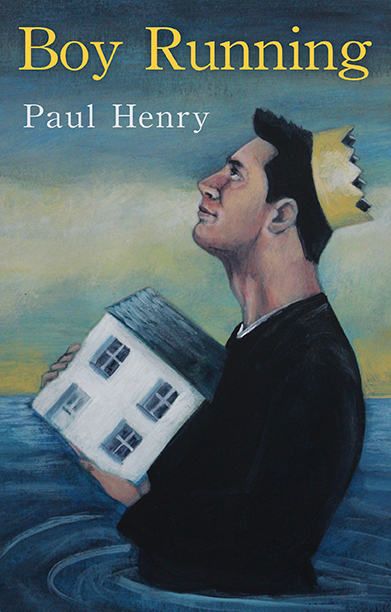
Boy Running, Paul Henry

Today’s poem is from Paul Henry’s latest collection, Boy Running, published last month.

Paul Henry has gained a reputation as one of of the best poets in the UK. Boy Running is his beautiful sixth collection and the first to follow ‘The Brittle Sea: New and Selected Poems’. We begin in a ‘Studio Flat’. Cut adrift by marital break-up, the poet must sort through the emotional fallout and the various ‘chattels’ left behind; a sea of characteristic props: tables, lamps, metronomes, pianos, guitars. The poet’s sons are at the heart of this section where pathos is balanced by humour amidst the characters of a small country town.

A second section moves to the Welsh coastal town of Henry’s childhood, Aberystywth, opening with a long poem, ‘Kicking the Stone’ set in the summer of 1969. Also in this section are some familiar characters from earlier poems such as Brown Helen and Catrin Sands.

In the final sequence we meet ‘Davy Blackrock’: washed-up songwriter and modern day alter ego of Dafydd y Garreg Wen (David of the White Rock), alias David Owen (1720-1749), the blind, 18th century harpist and composer who fell asleep on a hill and dreamt the famous song which bears his name. In contrast to David of the White Rock, Davy Blackrock, ‘star of an ashen town’, drags his guitar from street to hotel to bedsit, an unsettled ghost who dreams of the perfect song.

The Love Songs of Davy Blackrock

  “The songs I had are withered
   Or vanished clean,
   Yet there are bright tracks
   Where I have been,”

                         Ivor Gurney – ‘The Songs I Had’

Few remembered them
but by the end
it was enough
that they’d brought love,
some good friends.
What was ambition
after all but the drum
of rain on a glass room,
a distraction from the moon?

He’d sit late for hours, Davy
in those final days,
inventing new chords
in his conservatory,
oblivious to the news,
worrying less about words
than the melody,
trusting his ear,
not counting the bars

and, between downpours
keeping one eye on the stars.

Paul will be launching Boy Running on 27th March at the bear in Crickhowell. Find out more or book tickets here.

Order Boy Running from our website.

Posted on

Friday Poem – A Birthmother’s Catechism

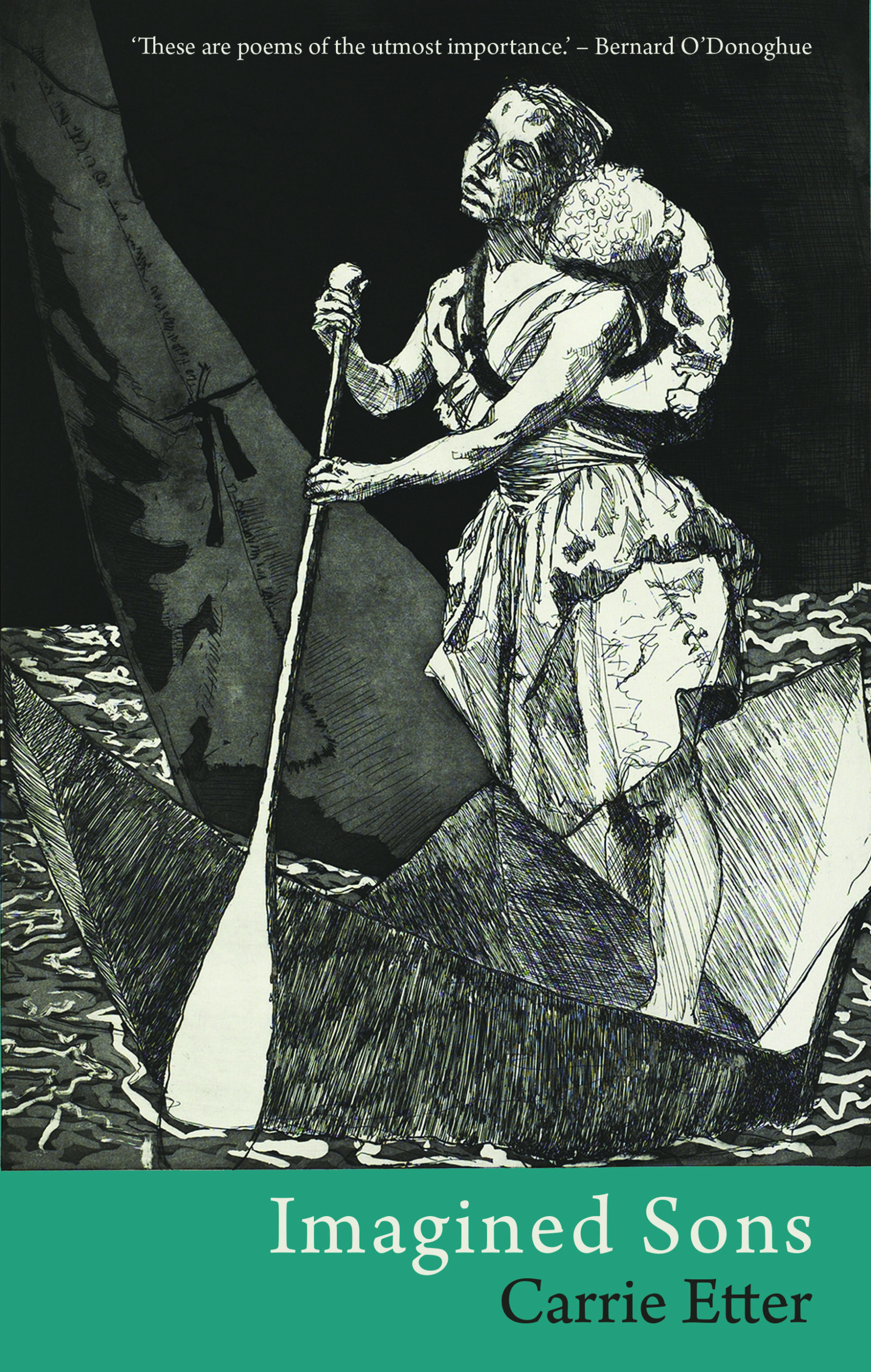
This week’s poem is from Carrie Etter’s Imagined Sons, first published in 2014, which has been shortlisted for the 2014 Ted Hughes Award for New Work in Poetry.

In Imagined Sons  Carrie Etter has written a book of vivid, heartbreaking poems on the experience of giving up a child for adoption. A prize-winning author, lecturer, critic and popular blogger, Etter imagines the possible destinies for the child and presents us with various scenarios from the tragic to the absurd. That the child’s birthday is also Sept. 11th adds a layer of irony and pathos, ‘What is the anniversary of loss?’ – asks the narrator in one of the ‘Birthmother’s Catechism’ poems. A pamphlet containing some of these poems was a Poetry Book Society Choice.

A Birthmother’s Catechism

How did you let him go?

With black ink and legalese

How did you let him go?

It’d be another year before I could vote

How did you let him go?

With altruism, tears, and self-loathing

How did you let him go?

A nurse brought pills for drying up breast milk

How did you let him go?

Who hangs a birdhouse from a sapling?

Order a copy of Imagined Sons from our website.

Posted on

An Interview with Damian Walford Davies

Today we’re chatting to poet Damian Walford Davies about his latest collection, Judas, which you can pre-order from our website here.

Damian is a poet, writer and librettist. He is the author of three Seren collections – Suit of Lights (2009), Witch (2012) and Judas (2015), together with the pamphlet Alabaster Girls (Rack Press, 2015) and the co-written volume, Whiteout (Parthian, 2006). He is Head of the School of English, Communication & Philosophy at Cardiff University, where he specialises in Romanticism, the two literatures of Wales, and Creative Writing.

Had you always wanted to write about Judas, whether it was Judas the man or Judas the metaphor, or did the poems in this collection quietly creep up on you?

Judas creeps up on you, certainly. I’ve always found him (or ‘it’ – Judas is a phenomenon, a problem, a crux (‘cross’), a paradox, a sore point) compelling. (The same with Lazarus, by the way, but that’s another, if related, story . . .) He is contradictorily represented in the canonical gospels, and that’s before we come to the second-century AD gnostic Gospel of Judas, where he is Christ’s confidant. There are a myriad of historical, theological, political and psychological arguments as to why Judas did what he did (if he did). To accept the historicity of Judas – which many scholars of first-century Palestine and early Christianity do not – means recognising him as an elusive figure. He is a no-man as well as a knot of contradictory representations, built up over twenty ideological centuries. (See Susan Gubar’s excellent 2009 biography of Judas.) This is the guy with the dark halo.

What is it you enjoy most about exploring history through poetry?

I like to write against big accepted narratives, intervene in them at personal, psychological levels, offer case studies of emotional quandaries, reveal terror on local, personal scales. I use the dramatic monologue for this, aiming for an imaginative inhabitation of voice and situation, aware at the same time that ventriloquising others has an ethics attached. This is Judas’s speaking platform, throughout. My previous Seren collection, Witch, did similar things, exploring how a witch is ‘made’ in the tense atmosphere of 1640s Suffolk. In Judas, I’m constantly negotiating suggestive gaps in the canonical gospel accounts. One has to be nuanced here, as well as bold. I made the decision from the outset to play with timescales, and so Judas is encountered during the week after the crucifixion, wandering through first-century Jerusalem one minute, but then clocking two women air kissing in the contemporary city’s Sheraton Hotel the next. Judas quotes Bob Dylan. Time is spliced; the Arab-Israeli conflict is as real to him as the Roman occupation. He is disturbed by a history that hasn’t yet happened. So I enjoy querying dogmatic versions of history, indulging in counterfactuals (which is more than a parlour game – it’s a way of changing the future). History always happens somewhere, and (like religion) is in many aspects terrifying. All this is not to say that the collection is iconoclastic, or without belief/faith, or blandly ‘materialist’. Quite the opposite. Multiple ironies mean that there are no final, fixed positions in this collection.

Throughout the collection you play around with many biblical images, such as the ‘thorns’ in ‘Annunciation 1’ and the ‘silver coins’ in ‘Denominations’. I imagine it would be difficult to write a poetry collection titled Judas without them! But did you ever worry about finding a new way to use imagery that has been around for centuries?

I saw it as an opportunity – to inflect, defamiliarise, and recontextualise these ‘core’ images. Judas is a collection in which all these images exist (I hope) in a complex, kinetic, shifting relationship. Did I worry about this? All the time. Poets must always be on edge, edgy. Poetry is about edgework. Judas is published at a time of political-religious crisis and horror. The collection is a reflection on fundamentalism, belief, faith, history, knowing, unknowing, violence, intolerance and human beings as agents and casualties of history. And (of course) beauty, friendship, love, worlds of spice.

You paint a very vivid picture of Jerusalem throughout the collection, picking out places like Yad Vashem in ‘In Vino’ and Ben Yehuda Street in ‘Siloam Pool’. Was giving your poems a specific setting important to you while writing the collection?

It was crucial. I was lucky enough to be able to visit Jerusalem in April 2012, and parts of the volume were written there in a hostel room under the muezzin’s recorded call to prayer and on the hostel’s roof, from which I could see the Al-Aqsa mosque to the east, the Church of the Holy Sepulchre to the west, and a sea of satellite dishes in between. And so the journeys that the shattered Judas takes through the old city are the ones I myself took through the narrow streets – full of managed but mangy colonies of cats – and souqs, around the Baths of Bethesda (a place of deep peace), down to the Garden of Gethsemane (from which I phoned my 93-year-old grandmother, who quite understandably asked ‘How big is it?’), back up to the ‘tufted wall’ of the Temple and through the four quarters of the divided (and machine-gun-patrolled) town. Judas is a map. Gethsemane, by the way, is tiny.

What, if anything, have you learned about Judas and the idea of evil through writing this collection?

He wants answers as much as we do. He’s still waiting.

Pre-order Judas from Seren’s website.

Posted on

Friday Poem – The Sound of a Diamond Planet

Short Days Log Shadows Sheenagh Pugh

The Sound of a Diamond Planet comes from Sheenagh Pugh’s collection Short Days, Long Shadows, published in 2014.

In this, her twelfth collection, noted poet Sheenagh Pugh steps into a new, northern landscape, the Shetland Islands, with poems steeped in the wilder weathers and views of rugged coastlines, sweeping sea-vistas and the hardy historical characters who have inhabited these lands. There is a lovely pared-down spareness, and elegiac formality to poems like ‘Travelling with Ashes’, ‘Staying’, and ‘Trondheim: January’ where the inhabitants appear lost in a ‘strange pink daylight’, and in ‘Gardening’ where ‘White stones are shaped like hearts’. The author’s characteristic dry humour emerges elsewhere as in ‘Extremeophiles’, a paean to bacteria – ‘chancers’ who live without sun. A poet who considers ‘too accessible’ to be the best sort of compliment, Sheenagh Pugh’s work has as much to offer the general reader as it does the specialist, who will admire her artful use of traditional forms.

Sheenagh will be reading at the Stanza Festival on the 5th March. For more information check out our website!

The Sound of a Diamond Planet

I seem to be surrounded
by things not quite there,

like the fieldmice munching
unseen inside my walls,

the spit of sand
uncovered at low tide,

the slick rock waiting to be
a waterfall again.

A planet, they say,
made all of diamond

resonates in its orbit,
light years beyond

human hearing, its brittle sound
broadcast in space.

Order Short Days, Long Shadows from Seren’s website.

Posted on

Friday Poem – Studio Flat

Boy Running, Paul Henry

Studio Flat comes from Paul Henry’s sixth collection, Boy Running, available February 2015.

Boy Running has three distinct sections:

Recently reeling after a marital break up, poems such as Studio Flat deal with the aftermath of divorce. The poet is left to sift through the emotional fallout and the physical reminders of a shared life left behind: tables, lamps, metronomes, pianos, guitars. The poet’s sons are at the heart of this section where pathos is balanced by humour amidst the characters of a small country town.

A second section moves to the Welsh coastal town of Henry’s childhood, Aberystwyth, and the summer of 1969

In the final sequence we meet Davy Blackrock, a washed-up songwriter and modern day alter ego of Dafydd y Garreg Wen (David of the White Rock), the blind 18th century harpist and composer who fell asleep on a hill and dreamt the famous song which bears his name. In contrast to David of the White Rock, Davy Blackrock, ‘star of an ashen town’, drags his guitar from street to hotel to bedsit, an unsettled ghost who dreams of the perfect song.

Studio Flat

Socks hang like bats from a skylight.
They may be dry in time for the moon.
The camp site owner’s water-feature
drains more blood from the sun.

Cars queue for the narrow bridge.
Birds catch their pulses and fly.
I am suddenly old. What’s an attic
but a bungalow in the sky.

And where are you, my sons?
I heard your voices in the bells
of snowdrops pulled by the wind.
These tulips have lost their smell.

Perhaps I could tell you, one day
where the snowdrops went, why old men
dry their socks on the moon, and what
darkened the skylight, just then.

Pre order Boy Running from Seren’s website.

Posted on

Friday Poem – Holes

Disturbance – Ivy Alvarez

Ivy Alvarez’ collection Disturbance is a gripping novel in verse that chronicles a multiple homicide, a tragic case of domestic violence, where a family was gunned down by the husband and father, the one person who promised to protect them.

The book features poems in a kaleidoscope of voices from all the characters involved. We first meet the family itself and witness how the father’s controlling attitude gradually escalates into violence. Then we get the aftermath: the authorities, police and neighbours, who all might have helped to prevent this tragedy. This is a very dark book, but a courageous one, ultimately about evil and its presence in our everyday lives.

Holes captures the immense anguish and heartbreak of a mother who was helpless to protect her son in this tragic case.

Holes

I pressed the button. No-one came. The police could not find me in the dark. They were also afraid of death… it might come for them instead. They waited behind a screen of trees, for the moon to uncover itself, silver the edges of their sirens, their dark cars. The pale pebbles in the driveway, left to imagine the river that used to wet them—they must tire of always staring up, sightless and at the mercy of everything. The police step on them. They creep only so close, but no closer. My son is dead on the ground. Someone close his eyes. But I am ignored in this as I have been with so many other things. His blood is cold now, blackening, drying up, stiffening the fabric of his jacket, soaking into the soil. There are holes in him I know nothing about, nothing to do with the boy I delivered to the world, my gift, small and pure. The dark is blue and cold. The trees conceal susurrations in their high skirts, branches uplifted like arms, wailing whispers… Black cars, old scars, my son’s open mouth, empty shotgun shells whistling smoke white dancing up and out

Posted on

Friday Poem – The Voice in which my Mother Read to Me

This cover shows a colourful painting of a school boy stomping with excitement viewed as if looking from the ground. The text reads: My Family and Other Superheroes, Jonathan Edwards.

The Friday poem is back f0r 2015 and we’re kicking off with The Voice in Which my Mother Read to Me from Jonathan Edwards’ Costa Poetry Award Winning collection My Family and Other Superheroes.

The Voice in which my Mother Read to Me

isn’t her good morning, good afternoon, good night voice,
her karaoke as she dusts, make furniture polite voice,
her saved for neighbours’ babies and cooing our dog’s name voice.

It isn’t her best china, not too forward, not too shy voice,
or her dinner’s ready, your room looks like a sty voice,
or her whisper in my ear as she adjusts my tie voice.

It’s not her roll in, Friday night, Lucy in the Sky voice,
her Sunday morning, smartest frock, twinkle-in-the-eye voice,
that passing gossip of the vicar with the Communion wine voice.

It’s not her ‘Gateau – no, ice cream – no… I can’t make the choice’ voice.
It’s not her decades late, fourth change, ‘Is this skirt smart enough?’ voice.
It’s not her caught me with the girl from number twenty-one voice.

That voice which she reserved for twelve-foot grannies, Deep South hobos,
that sleepy, secret staircase, selfish giants, Lilliput voice.
That tripping over, ‘Boy, why is your house so full of books?’ voice.

[soundcloud url=”https://api.soundcloud.com/tracks/183594834″]

My Family and Other Superheroes is available from the Seren website. Save 20% when you join our online book club.