Posted on

An Interview with Kim Moore

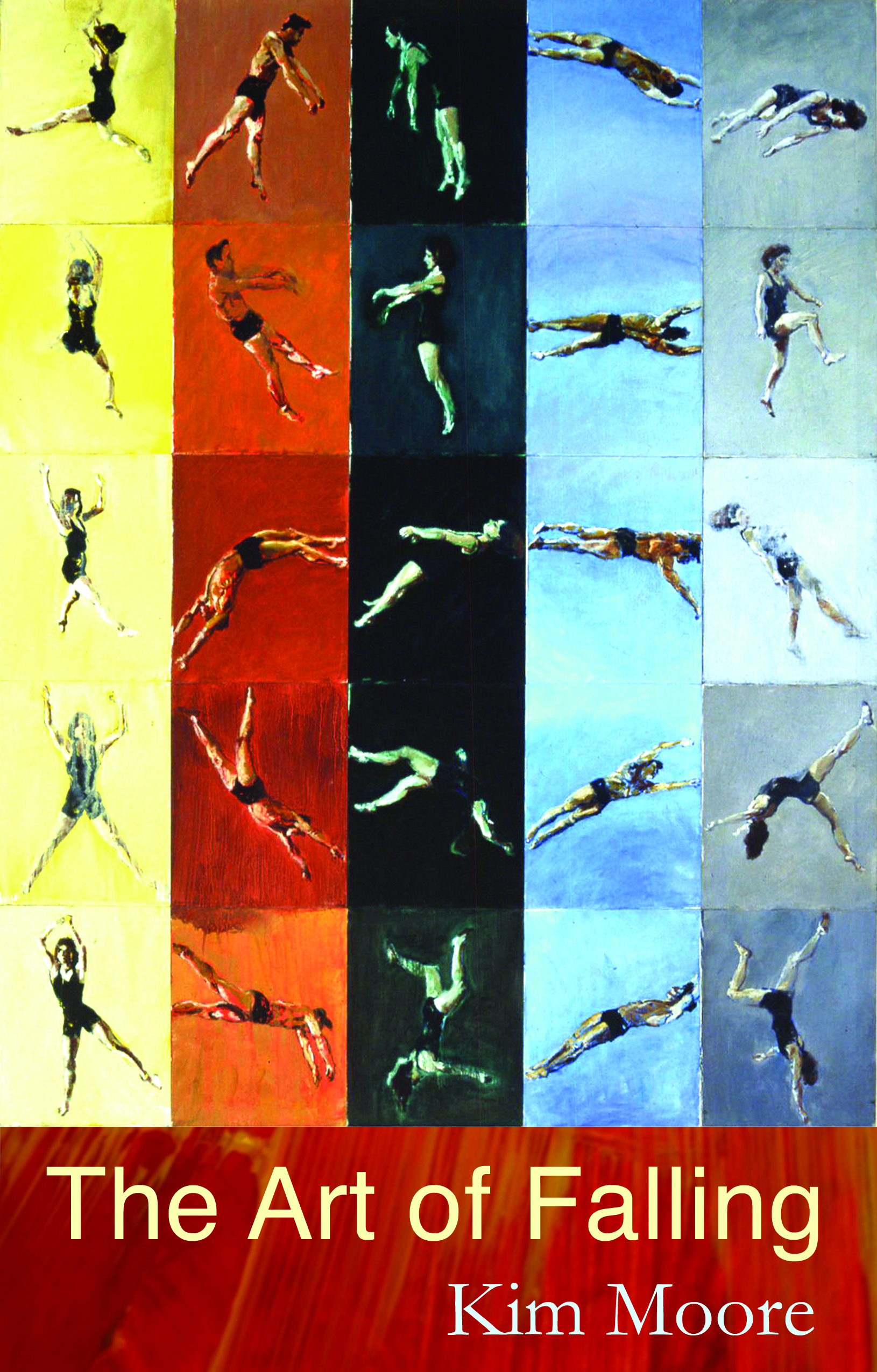
Today we’re talking to poet Kim Moore about her debut collection, The Art of Falling, which you can order from our website here.

Kim Moore lives in Barrow, Cumbria. She has an MA from Manchester Metropolitan University. Her poems have been published in the TLS, Poetry Review, Poetry London, and elsewhere. She regularly appears at festivals and events, her prize-winning pamphlet, If We Could Speak Like Wolves (Smith-Doorstop) was chosen as an Independent Book of the Year in 2012 and was shortlisted for other prizes. Moore won an Eric Gregory Award in 2011 and the Geoffrey Dearmer Prize in 2010. In 2014 she won a Northern Promise award. She writes a thoughtful blog and has a wide social media following. The Art of Falling (Seren 2015) is her debut collection.

Has the idea of falling, be it literally or metaphorically, always fascinated you, or did you find yourself writing about the many ways in which we fall purely for this collection?

The short answer is no, not consciously, but unconsciously. I think the concept of falling must have been something that has always been in the background. My father is a scaffolder and has had two serious falls – once when my twin sister and I were born and then again when I was twenty-one when he fell thirty feet from scaffolding and was lucky to survive. However, I didn’t realise I was writing about falling a lot until I wrote the title poem of the collection – and I only wrote that because David Tait, a good friend and wonderful poet set me a challenge to write a poem about falling. We used to take it in turns to do this – to set each other challenges – I didn’t even think at the time to ask him why, or what type of falling he meant. I actually forgot all about it and didn’t write the poem until six months later but looking back, the seed was definitely planted in that moment. Once I’d written the poem I realised that there were lots of poems about different types of falling throughout the collection – the book was maybe three quarters done by this point, so maybe I was just being very slow on the uptake.

In poems such as ‘My People’ and ‘A Psalm for the Scaffolders’ there’s a real sense of proud, working-class history. Is it fair to say you have a fondness for writing about the ‘every day’ hero?

‘My People’ is one of the poems I feel most guilty about writing because as well as hopefully communicating my pride, love and admiration for the people and background I came from, I’m being quite critical as well. It was an exhilarating poem to write, but it was also quite nerve-wracking. My people are ‘the type of people who would argue with their teacher if the child has detention’. Now I’m a teacher so I see it from both sides, of course. I actually wrote it when my husband started tracing his family tree and got quite far back and I realised I couldn’t. The poem was a way of finding out who my people were.

As for ‘A Psalm for the Scaffolders’ I definitely have a fondness for writing about my poor old dad! I think he likes it though – and to me it is really interesting because his life and the way he has worked, doing the same job since he left school is a way of working that is dying out, I think. I have a lot of admiration for that, for the physical hard graft of doing the same job for forty odd years.

I couldn’t help noticing the recurring animal imagery throughout The Art of Falling. There are plenty of wolves amongst your poems – ‘And the Soul’; ‘If We Could Speak Like Wolves’; ‘How Wolves Change Rivers’ – and also the incredibly powerful poems ‘The Language of Insects’ and ‘When I Was a Thing with Feathers’. In what way do animals help you to explore human nature through your writing?

I have never managed to answer this question about what the wolves mean in my poems, so I will skip over that one. Part of me also wants to duck out of answering it – I don’t really want to know. I like that they wander in and out of my poems when they feel like it though.

Halfway through writing the sequence which makes up the central sequence of this book, I got lost. I couldn’t find a way of saying what I wanted to say. I didn’t want to write a narrative sequence, with a beginning, a middle and an end. I started reading Ovid’s Metamorphoses and that is when everything shifted for me and I was able to carry on writing. The poems have a lot of animals in them, but perhaps more importantly, they have a lot of transformation in them, which was a way I found of writing about violence and the loss of not just identity, but of speech.

You play the trumpet, so I imagine there must be many musicians you admire. What is it about John Lennon and Wallace Hartley that made you want to write about them in particular?

It is actually obsessive people in general that I like writing about – and most musicians are obsessive – you have to be to practice enough to be good.

I actually wrote the John Lennon poem to take part in a competition to write a poem about John Lennon. It is what I call a research poem – I went to the library and read as many books about John Lennon as I could find and then wrote the poem, putting together the things that I read that interested me.

As for Wallace Hartley, I was helping to put together a project as part of my work as a music teacher. I read that he was found with his violin still with him and it was this that made me want to write something about him.

Congratulations on the publication of your debut collection! What are your future plans for your writing?

Thank you! My future plans are pretty simple – just to keep writing, and to always read more than I write. In September, I’ll only be working 2 days as a music teacher so this will hopefully give me a little bit more time. I haven’t written for the last six months – basically since I handed in the final proofs of the book, and then I’ve just started writing again last week, strangely coinciding with the book being delivered. I’ve started writing a few poems about scaffolding and a few poems about running which is my new obsession at the minute so I’m planning on carrying on with those.

Order The Art of Falling from our website.

Posted on

Friday Poem – Edward Hopper on Long Island

Tailor's Three Sons Mara Bergman

Today’s poem is from Mara Bergman’s pamphlet The Tailor’s Three Sons & Other New York Poems, which won the 2014 Mslexia Women’s Poetry Pamphlet Competition!

The Tailor’s Three Sons & Other New York Poems, the Mslexia magazine prize-winning pamphlet published by Seren, is the fruit of author Mara Bergman’s rich memories of her childhood on Long Island and Manhattan. Now living in the UK, she looks back and assembles an appealing cast of characters for us: a grandmother who lives with precarious memories of war-torn Europe in a ‘railroad apartment’ where passing trains make ‘a whole room shake’; a cousin Sharon who makes a weekly pilgrimage to a nail salon, the bottles of nail varnish, ‘lined up like sweets’. There is the ghost of an uncle, spotted in the likeness of a man on the London-Hastings train. We meet an ‘Englishman in New York’ and experience, along with the author, ‘East 13th Street or How I Met My Husband’.

The title poem is inspired by the author’s visit to the Tenement Museum in New York’s Lower East Side, where Bergman vividly imagines the lives of immigrants when many thousands docked in ships at Ellis Island and the Lower East Side was ‘the most crowded place on the planet’. She envisions the lives of the tailor’s three sons she learns about during a museum tour: ‘afternoons they’d elbow through the teeming streets’, come home to a bowl of soup and share a single sofa for a bed. These poems are written with a great deal of warmth and empathy and with a quietly deceptive casual tone. We can see the author, as a small ‘Girl with a Pen’ entranced by her reading a biography of Charlotte Brontë.

Mara Bergman says: ‘I am fascinated by people and their stories. Having lived in England for many years, I often think, What if… and have tried, in my writing, somehow to meld my life in England with the one I left in New York. Here are poems about people, the process of work and art, and distance, in time and place.’

Edward Hopper on Long Island

He left the neon-lit cafés and deserted stations
for a winter of snow, mounds of it,
steeped on decks through a neighbourhood
where he didn’t know a soul.
He had given up city lights, city life,
to see the sun rise from a corner of a garden,
a flock of geese pummel across clouds.
At last the chance to study the filaments
of a squirrel’s tail, the shock of red cardinal.
He’d go to bed later and later,
wake up earlier until
there was no discernible difference
between darkness and light.
Three a.m., looking out on the snow
when a plane passed over the row of split-
levels, he spotted that thin divide
where streetlight met houselight – light
on the side of a building his favourite thing.
Maybe he wasn’t so far from his life,
maybe it was then he stopped questioning
what he was doing amid the snowlight
and a pale orange glow
over the telephone wire, heat steaming.

Order The Tailor’s Three Sons & Other New York Poems from our website.

Posted on

Friday Poem – Corpus

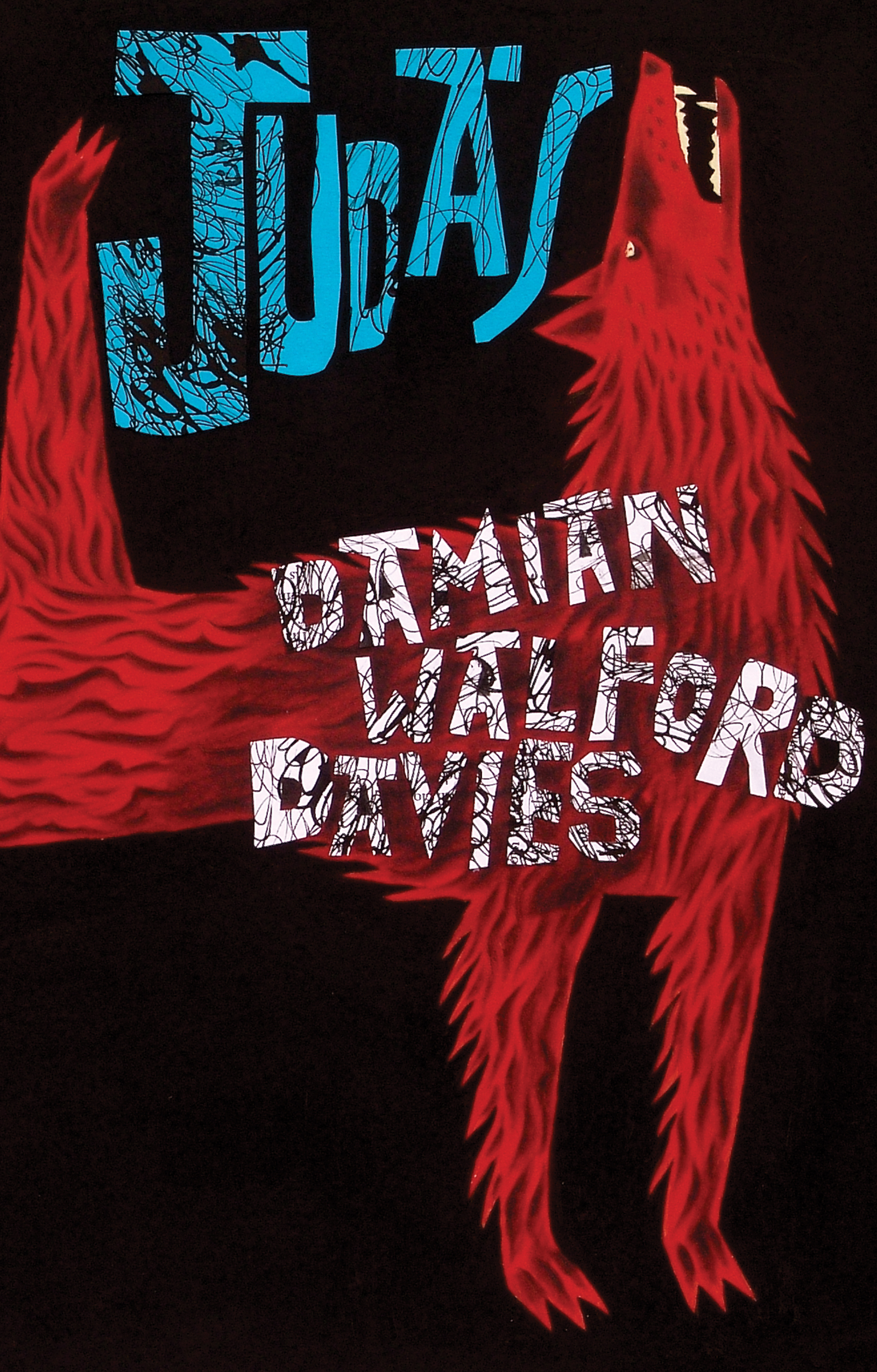
An Easter themed poem  for this week’s installment. ‘Corpus’ comes from Damian Walford Davies’ latest collection, Judas.

A shattered Judas Iscariot – that byword for betrayal – tells his own story in Damian Walford Davies’ compelling and finely wrought new collection from Seren.

We follow Judas over the course of five days as he moves through first-century Jerusalem trying to make sense of the bewildering events surrounding the life and execution of Jesus. But this is a man for whom the future is as real as his anguished and traumatized present, and for whom the Arab-Israeli conflict is as urgent as the tension between the Romans and Jews. Emphasising our compulsion to create, and challenge, gospel truths, Judas gives voice to man caught up in the promise and violence of history.

In short-lined, intensely suggestive dramatic monologues, Damian Walford Davies vividly summons moments of fear and swagger, doubt and passion, despair and nonchalance as an outlaw Judas finds himself haunted by his chequered and extraordinary past. Familiar stories are rendered strange and uncanny as the reader is caught in multiple ironies. As striking as the unnerving images on the news loops of our TV and computer screens, these poems locate us on the hazardous streets of a divided city with a companion-guide who shares with us his own troubling and troubled version of history.

Drawing on conflicting representations of Judas spanning twenty centuries, this chain of poems sets out to challenge orthodoxies and easy pieties. Judas offers an imaginative map of ancient enmities – and dares to hint at resolutions – in the form of a dramatic autobiography of the man whose most famous act (they say) was a kiss in the dark.

Corpus

What can I say? I wasn’t there:
neither ready to relieve him
of the transom’s heft

at Via Dolorosa, Station number five;
nor standing with his mother
on the quarry’s scree

to watch his wrists
spiked expertly
between electric nerve

and bone, and hear him
gurgle, drowning in the liquor
of his lungs. I could have tracked

the trail of blood
from here to where the last gob
hit the ground. The morning

had an air of perfect
commonplace. I howled,
so silently I know he heard.

Order Judas from our website.

Posted on

Friday Poem – Fireweed

Today’s poem – and painting! – is from A Fold in the River by Philip Gross and Valerie Coffin Price, due to be released at the end of the month.

A Fold in the River is the fruit of collaboration between T.S. Eliot prize-winning poet Philip Gross and the visual artist Valerie Coffin Price. Philip Gross once lived on the banks of the River Taff in Wales and his journals are the source for the powerful poems. Valerie Price revisited the walking route along the river and evolved the beautiful prints and drawings that accompany the poems.

p66-7 Tipsy Pinkrgb

Fireweed

a tipsy pink, a night out
on the palette – mixing

Bloody Marys, lipstick,
a hint of the flare-up to come

*

as kids we played on bombsites,
the badlands of railway lines,

untimely places – back then
there was no such thing as waste

*

always first on the scene,
a bit too soon, after disasters

see us in the background
of the newsreel, inappropriately
dressed

*

one day, all this will be wisps
of white, of seed like grown smoke

forgetting ourselves into the future
wildly, willy-nilly, with a will

Pre-order A Fold in the River from our website.

Posted on

Friday Poem – The Love Songs of Davy Blackrock

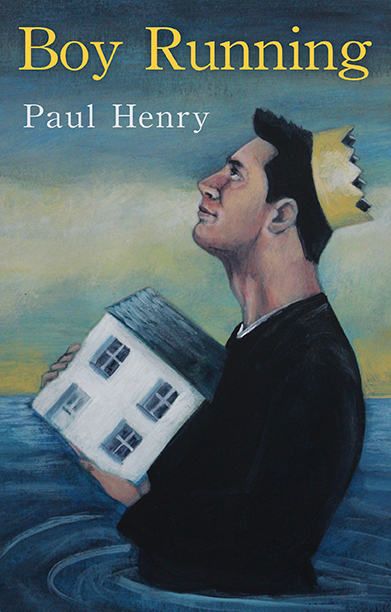
Boy Running, Paul Henry

Today’s poem is from Paul Henry’s latest collection, Boy Running, published last month.

Paul Henry has gained a reputation as one of of the best poets in the UK. Boy Running is his beautiful sixth collection and the first to follow ‘The Brittle Sea: New and Selected Poems’. We begin in a ‘Studio Flat’. Cut adrift by marital break-up, the poet must sort through the emotional fallout and the various ‘chattels’ left behind; a sea of characteristic props: tables, lamps, metronomes, pianos, guitars. The poet’s sons are at the heart of this section where pathos is balanced by humour amidst the characters of a small country town.

A second section moves to the Welsh coastal town of Henry’s childhood, Aberystywth, opening with a long poem, ‘Kicking the Stone’ set in the summer of 1969. Also in this section are some familiar characters from earlier poems such as Brown Helen and Catrin Sands.

In the final sequence we meet ‘Davy Blackrock’: washed-up songwriter and modern day alter ego of Dafydd y Garreg Wen (David of the White Rock), alias David Owen (1720-1749), the blind, 18th century harpist and composer who fell asleep on a hill and dreamt the famous song which bears his name. In contrast to David of the White Rock, Davy Blackrock, ‘star of an ashen town’, drags his guitar from street to hotel to bedsit, an unsettled ghost who dreams of the perfect song.

The Love Songs of Davy Blackrock

  “The songs I had are withered
   Or vanished clean,
   Yet there are bright tracks
   Where I have been,”

                         Ivor Gurney – ‘The Songs I Had’

Few remembered them
but by the end
it was enough
that they’d brought love,
some good friends.
What was ambition
after all but the drum
of rain on a glass room,
a distraction from the moon?

He’d sit late for hours, Davy
in those final days,
inventing new chords
in his conservatory,
oblivious to the news,
worrying less about words
than the melody,
trusting his ear,
not counting the bars

and, between downpours
keeping one eye on the stars.

Paul will be launching Boy Running on 27th March at the bear in Crickhowell. Find out more or book tickets here.

Order Boy Running from our website.

Posted on

Friday Poem – A Birthmother’s Catechism

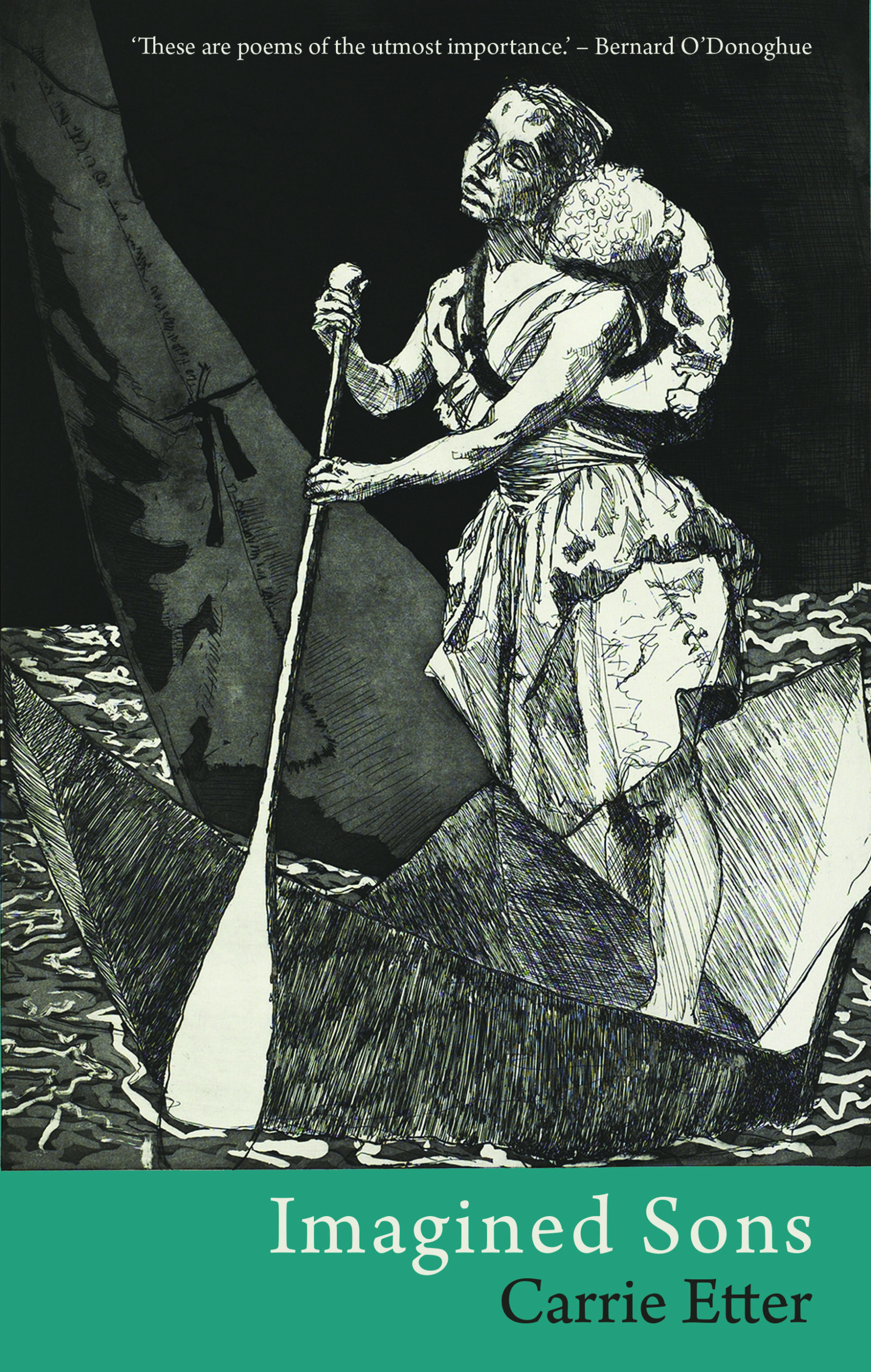
This week’s poem is from Carrie Etter’s Imagined Sons, first published in 2014, which has been shortlisted for the 2014 Ted Hughes Award for New Work in Poetry.

In Imagined Sons  Carrie Etter has written a book of vivid, heartbreaking poems on the experience of giving up a child for adoption. A prize-winning author, lecturer, critic and popular blogger, Etter imagines the possible destinies for the child and presents us with various scenarios from the tragic to the absurd. That the child’s birthday is also Sept. 11th adds a layer of irony and pathos, ‘What is the anniversary of loss?’ – asks the narrator in one of the ‘Birthmother’s Catechism’ poems. A pamphlet containing some of these poems was a Poetry Book Society Choice.

A Birthmother’s Catechism

How did you let him go?

With black ink and legalese

How did you let him go?

It’d be another year before I could vote

How did you let him go?

With altruism, tears, and self-loathing

How did you let him go?

A nurse brought pills for drying up breast milk

How did you let him go?

Who hangs a birdhouse from a sapling?

Order a copy of Imagined Sons from our website.

Posted on

An Interview with Damian Walford Davies

Today we’re chatting to poet Damian Walford Davies about his latest collection, Judas, which you can pre-order from our website here.

Damian is a poet, writer and librettist. He is the author of three Seren collections – Suit of Lights (2009), Witch (2012) and Judas (2015), together with the pamphlet Alabaster Girls (Rack Press, 2015) and the co-written volume, Whiteout (Parthian, 2006). He is Head of the School of English, Communication & Philosophy at Cardiff University, where he specialises in Romanticism, the two literatures of Wales, and Creative Writing.

Had you always wanted to write about Judas, whether it was Judas the man or Judas the metaphor, or did the poems in this collection quietly creep up on you?

Judas creeps up on you, certainly. I’ve always found him (or ‘it’ – Judas is a phenomenon, a problem, a crux (‘cross’), a paradox, a sore point) compelling. (The same with Lazarus, by the way, but that’s another, if related, story . . .) He is contradictorily represented in the canonical gospels, and that’s before we come to the second-century AD gnostic Gospel of Judas, where he is Christ’s confidant. There are a myriad of historical, theological, political and psychological arguments as to why Judas did what he did (if he did). To accept the historicity of Judas – which many scholars of first-century Palestine and early Christianity do not – means recognising him as an elusive figure. He is a no-man as well as a knot of contradictory representations, built up over twenty ideological centuries. (See Susan Gubar’s excellent 2009 biography of Judas.) This is the guy with the dark halo.

What is it you enjoy most about exploring history through poetry?

I like to write against big accepted narratives, intervene in them at personal, psychological levels, offer case studies of emotional quandaries, reveal terror on local, personal scales. I use the dramatic monologue for this, aiming for an imaginative inhabitation of voice and situation, aware at the same time that ventriloquising others has an ethics attached. This is Judas’s speaking platform, throughout. My previous Seren collection, Witch, did similar things, exploring how a witch is ‘made’ in the tense atmosphere of 1640s Suffolk. In Judas, I’m constantly negotiating suggestive gaps in the canonical gospel accounts. One has to be nuanced here, as well as bold. I made the decision from the outset to play with timescales, and so Judas is encountered during the week after the crucifixion, wandering through first-century Jerusalem one minute, but then clocking two women air kissing in the contemporary city’s Sheraton Hotel the next. Judas quotes Bob Dylan. Time is spliced; the Arab-Israeli conflict is as real to him as the Roman occupation. He is disturbed by a history that hasn’t yet happened. So I enjoy querying dogmatic versions of history, indulging in counterfactuals (which is more than a parlour game – it’s a way of changing the future). History always happens somewhere, and (like religion) is in many aspects terrifying. All this is not to say that the collection is iconoclastic, or without belief/faith, or blandly ‘materialist’. Quite the opposite. Multiple ironies mean that there are no final, fixed positions in this collection.

Throughout the collection you play around with many biblical images, such as the ‘thorns’ in ‘Annunciation 1’ and the ‘silver coins’ in ‘Denominations’. I imagine it would be difficult to write a poetry collection titled Judas without them! But did you ever worry about finding a new way to use imagery that has been around for centuries?

I saw it as an opportunity – to inflect, defamiliarise, and recontextualise these ‘core’ images. Judas is a collection in which all these images exist (I hope) in a complex, kinetic, shifting relationship. Did I worry about this? All the time. Poets must always be on edge, edgy. Poetry is about edgework. Judas is published at a time of political-religious crisis and horror. The collection is a reflection on fundamentalism, belief, faith, history, knowing, unknowing, violence, intolerance and human beings as agents and casualties of history. And (of course) beauty, friendship, love, worlds of spice.

You paint a very vivid picture of Jerusalem throughout the collection, picking out places like Yad Vashem in ‘In Vino’ and Ben Yehuda Street in ‘Siloam Pool’. Was giving your poems a specific setting important to you while writing the collection?

It was crucial. I was lucky enough to be able to visit Jerusalem in April 2012, and parts of the volume were written there in a hostel room under the muezzin’s recorded call to prayer and on the hostel’s roof, from which I could see the Al-Aqsa mosque to the east, the Church of the Holy Sepulchre to the west, and a sea of satellite dishes in between. And so the journeys that the shattered Judas takes through the old city are the ones I myself took through the narrow streets – full of managed but mangy colonies of cats – and souqs, around the Baths of Bethesda (a place of deep peace), down to the Garden of Gethsemane (from which I phoned my 93-year-old grandmother, who quite understandably asked ‘How big is it?’), back up to the ‘tufted wall’ of the Temple and through the four quarters of the divided (and machine-gun-patrolled) town. Judas is a map. Gethsemane, by the way, is tiny.

What, if anything, have you learned about Judas and the idea of evil through writing this collection?

He wants answers as much as we do. He’s still waiting.

Pre-order Judas from Seren’s website.

Posted on

Barry Plummer (ed)

Barry Plummer is an independent researcher of Welsh art. He was awarded a doctorate in 2006 from the University of Wales for his thesis on the life and work of Evan Walters.He has a degree in Visual Art and studied the history of art as a post- graduate at the Courtauld Institute. Between 1999 and 2010 he lectured on Art History at Trinity College, Carmarthen, University of Wales, Swansea and Swansea Metropolitan University.

Books by Barry Plummer
Evan Walters: Moments of Vision

Posted on

Robert Seatter

After studying English at Oxford University, Robert Seatter worked variously as an EFL teacher in Italy and France, an actor, a journalist, in publishing and broadcasting. He lives in London where he now works for the BBC. His poetry has been widely published, has won numerous awards and has been featured on radio, television and London buses.

Books by Robert Seatter
On the Beach with Chet Bake

Travelling to the Fish Orchards

Writing King Kong


Posted on

Forthcoming Title: ‘Writing King Kong’

To be released on 20th June 2011.

Writing King Kong explores the way we write the world, and reinvent it both for our own development and delusion. From an elliptical self-help manual to a telephone party line where we become ‘an accidental spy’ on another life, from the ambivalent comfort of a drunken night singing hymns to the elusive proximity of family trees, the recipe for summer pudding as elegy for a lost friend or a mantra of engineering facts (‘six million hand-driven rivets’) about Sydney Harbour Bridge to comfort a dying father.  Along with King Kong, Anton Chekhov, Marilyn Monroe and Shakespeare’s comic lovers, the likes of Gershwin, Robinson Crusoe, Ulysses, Fred and Ginger also find their way into this eclectic, multi-voiced collection.  At the heart of the book is a sequence of poems inspired by the writer’s travels in South America, conjuring both the exactitude of place and the strange unreality of journeying.

“His poems can remind us how complex a business it is to recall and rebuild a world, and how the act of doing so comes bundled with its own sense of loss” – Paul Farley, Poery London