Posted on

Friday Poem – Bob’s Dogs

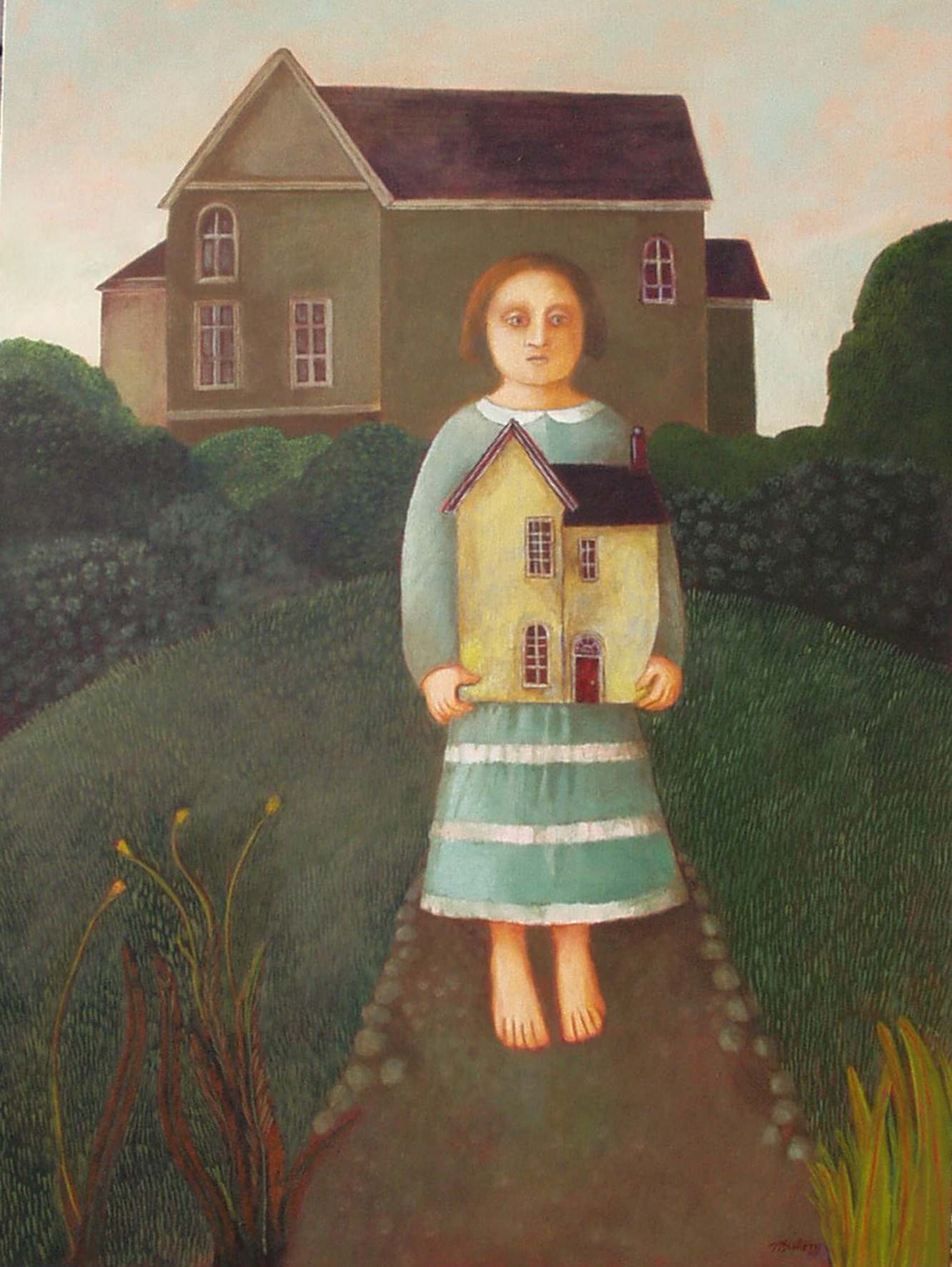
Red Devon by Hilary Menos

This week’s poem is from Hilary Menos’s Red Devon, first published in 2013.

In the late 90’s the poet Hilary Menos moved from Camden Town in London to a farmhouse two miles from a small village in Devon. Over the next ten years, together with her husband Andy Brodie and three sons, she turned this into a 100 acre organic farm with a herd of pedigree Red Devon cows and a flock of Wiltshire Horn sheep.

In Red Devon, her second collection, Menos reveals her experiences as a “blow in” from upcountry moving into a tight-knit rural community and seeing at first hand some of the human and animal costs of the conflict between traditional farming methods and the demands of modern commercial agriculture. She also tells the story of a burgeoning love affair between farmer Grunt Garvey and haulier Jo Tucker, a romance which ends in tragedy. Alongside these two stories, one fictional and one very real, runs a concern for farmers around the world whose livelihoods – and lives – are threatened by global changes in agriculture.

Bob’s Dogs

There was the one dog, neither use nor ornament.
Each morning he lurked by the tanker’s dribbling spout
licking his chops. Spawned every cur in the district.
Bit the postman, once, and got away with it.

There was the other dog, two-bit brother to the first,
eyes like spilt milk. Danced on the slurry pit’s crust
one time too many, said Bob, and no good since.
Bit the builder’s foreman twice, and got away with it.

There was the third dog, each month went walk about
under a chicken moon, fetching and shedding stars.
Deaf to everyone but Bob’s dad, now four years
bed-bound. What shall I say? Bit nobody, yet.

And lastly there was the bitch. Bit the child.
The four shots blew through the lanes and echoed loud
in the neighbour’s eyes. Only Bob shook my hand,
hitching his trousers up with a “Welcome, my friend.”

Order Red Devon from our website.

Posted on

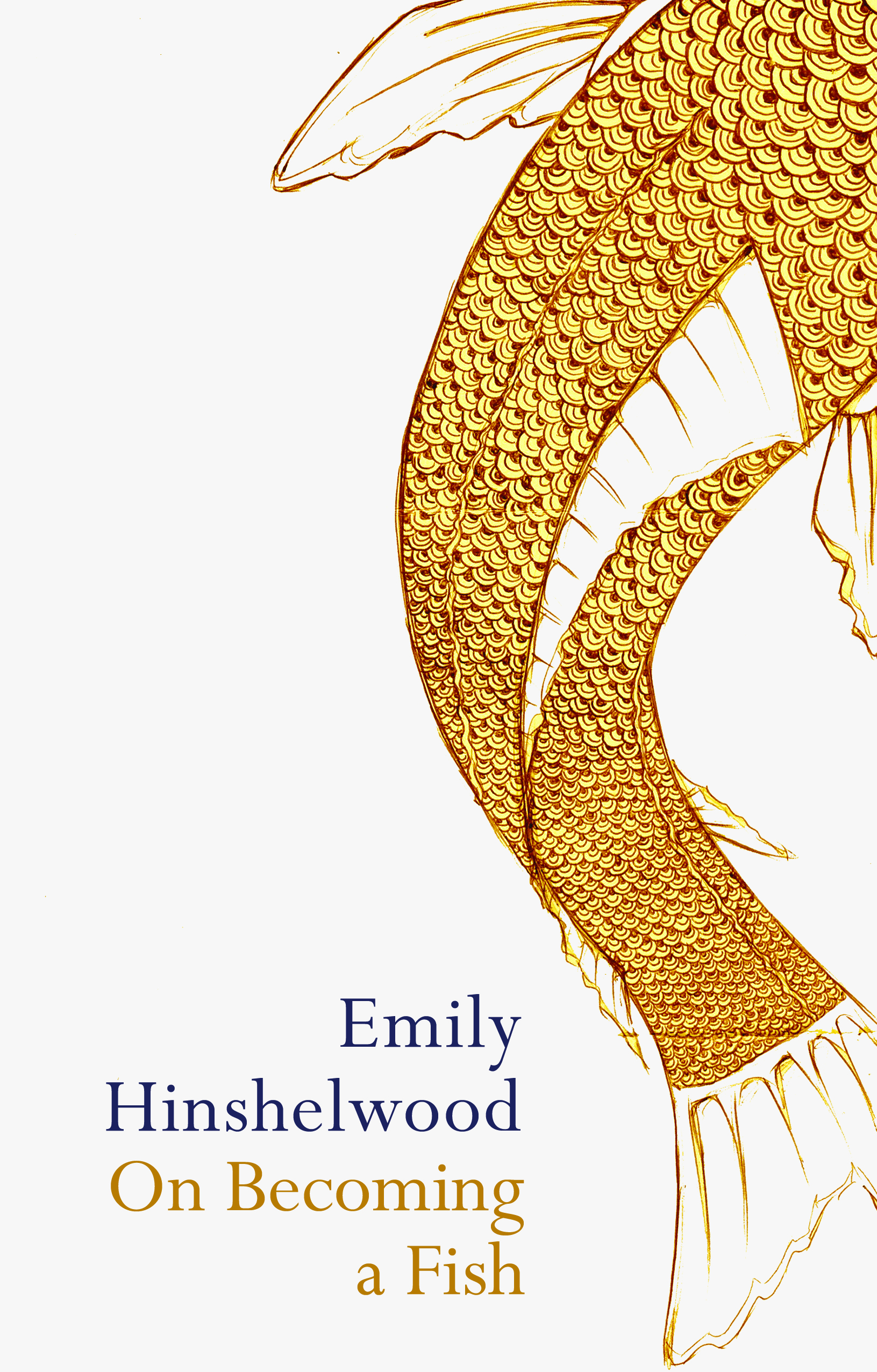
Friday Poem – On Becoming a Fish

This week’s poem is from Emily Hinshelwood’s second collection, On Becoming a Fish, published in 2012.

Emily Hinshelwood’s On Becoming a Fish was inspired by a series of walks around the 186 mile Pembrokeshire coastal path in West Wales, known for its spectacular views from cliffside paths skirting the Irish sea and the Bristol Channel. Deeply engaged with environmental issues through her work in community energy and climate change, the author is also a keen observer of human nature in the context of this beautiful coastline.

The poems feature: ghosts, quarries, shipwrecks, pirates, fishermen, sailors; the remnants of industrial industry as well as monuments from the past: neolithic burial sites, forts, caves, graves, memorials. Also present are characters conjured from history such as the ‘four hundred Welsh Women wearing stovepipe hats’ who foiled the last invasion of Britain at Carregwastad in 1797, as well as contemporary encounters: a retired fisherman, lifeboat crew, a lighthouse keeper and a skinny dipper.

The author says: “This collection explores ‘what happens at the boundary’ – not just the topographical boundary of sea meeting land – but the concept of boundary in itself: political borders, social barriers, environmental limits, historical divisions; the boundary between fact and fiction, between you and I.”

On Becoming a Fish

Milford Haven

Tales of the sea didn’t prepare me for this.
It all seemed so Jack Sparrow, so Barti Du,
perhaps a mermaid flung on a rock,
whales. Jonah.
You know what I mean.
Even the fish stall with its ice trays
and neat lines of flat eyes, even he spins yarns
as he slices heads into a bucket.

When you stop coming up for air,
when your lungs implode to a stillness
all that talking ceases.
All that endless talking.
And you half-remember poking
at a lobster with rubberbanded claws
noting how prehistoric it was
and someone said something about the future.

Sounds now are just noise
against my body.
This is my story.
I keep telling it over and over.
For it’s just me
defying gravity.
The swish of my tail
darting.

It’s starting to feel like I’m dancing.

Order On Becoming a Fish from our website.

Posted on

Friday Poem – Somnography

This week’s poem is from Polly Atkin’s Shadow Dispatches, which won Mslexia’s very first pamphlet competition in 2012.

These atmospheric and keenly observational poems offer us a slant perspective on everyday things and events: the ugliness of an elderly mute swan; or a group of migraine sufferers forming a fellowship and holding regular meetings. Poems addressing the complexity of contemporary relationships sit alongside those riffing on traditional themes, even – in the case of ‘Hermes Enodios’ and ‘Potnia Theron’ – revisiting classical gods. These are poems embedded in particular landscapes, in which the real becomes surreal and vice versa. Together they form a poetry which is deeply involved with the natural world – concerned with deer in fields and jays in woods – but which is not in any way removed, encompassing email, photoshop and fighter jets.

Somnography

Early this morning I got your note.
I can’t recall the words or meaning,

only the light oblique on the screen
and how it made it feel, certain

transmission was real. I could recite
all the messages received in my sleep

which days have tried to prove imagined,
and one correspondence aborted mid-sentence

which sent itself nevertheless, as though
the content refused erasure, arriving

complete through the ether. We dare not believe
these shadow dispatches: corrupted, wishful,

impossible to delete. The same way sheets
I never strung to dry at a window

still fill the room with sails long after
I’ve moved, and how I’m still reading a letter

a man never sent, though I could repeat it
verbatim, clear as the sun through the linen,

billowing yellow and sweet as the wedge
that lit your words I can’t remember,

or that email which backspaced even as I scrolled
down the face of the dream computer.

Order Shadow Dispatches from our website.

Posted on

I Know What You Read Last Summer

Well actually I don’t, but now that summer is just around the corner I can at least tell you what we think you should be reading this summer!

Look out for these upcoming releases on our website.

InfragreenInfragreenrgb
by Kate Bingham

Perceptive, persuasive and intricately made, the poems of Kate Bingham’s third collection, Infragreen, take the reader on a startling and unfamiliar journey through everyday experiences and phenomena. Her keen eye, reflectiveness and quiet wit endow her subjects with a shimmering freshness.

Set within the four walls of home, on the streets of north London and in the Yorkshire countryside, the poems build out from mundane activities such as taking the pill, traveling a daily bus route and scything thistles. In Bingham’s hands, the familiar sights and hypnotic routines that normally lull the brain into unthinking acquiescence are the starting points for finding new richness in the world around us and our participation in it.

The book contains three sections, each infused by a different season and place, but a spirit of serious play presides throughout. Contemporary versions of Hardy and Frost, a collage cut from old favourite Christmas carols, and a refleshing of some of English poetry’s oldest clichés are part of it, but so too is Bingham’s fascination with pattern: the patterning required by some of poetry’s stricter traditional forms, and pattern as content, a subject in itself.

Those who know Bingham’s earlier work will recognize in this collection her playful, often darkly comic, appreciation of the surreal, which features hearts and hands, feet, and even a pair of shoes with minds and agenda of their own. Elsewhere, a milk-bottle breathes, a pocket of air turns into a winged creature, flies serenade the poet whose mortal scent has drawn them into her room. A ballad at the start of the final section tells the story of an artisan paper-maker whose origami creation is so perfect it comes to life, only to be destroyed again by its maker.

But beneath the gently cynical, almost self-deprecating tone lie Infragreen’s darker themes: a base note of environmental and existential anxiety in which teasing self-deprecation can mutate into a desire for disembodiment, and a ruthless wishing away of consciousness and self.

MorlaisMorlais cover
by Alun Lewis

Morlais is Alun Lewis’s unpublished novel from the late 1930s. The Laurentian story of a young boy growing up in the poverty stricken industrial valleys of south Wales, it also reflects Lewis’s own experiences, particularly his search for self-knowledge and his conviction that he would be a writer.

Miner’s son Morlais Jenkins is already being educated away from his background at grammar school when he is adopted, on the death of her own son, by the wife of the local local colliery owner. Morlais’s parents recognize the opportunity for their son to make a better future, but they must all pay a great price. Stifled by middle class life, his adoptive mother recognizes that Morlais will be a poet and encourages him to be neither working class or middle class, but true to his talent.

Full of vivid descriptive passages of life in the fictional mining valley, and centred on the conflicted character of Morlais and the decisions he faces over his two families, his two social backgrounds, and his desire to be a poet, the novel is an enthralling journey through the life of a young boy becoming a young man.

Alun Lewis (1915-1944) was the outstanding writer of World War Two and Morlais, written in his mid twenties, is an early indication of the talented writer he would become just five years later. This edition is accompanied by an Afterword by Lewis’s biographer, John Pikoulis.

coverThe Road to Zagora
by Richard Collins

When Richard Collins was diagnosed with a progressive incurable disease in 2006 he decided to see as much of the world as he could while his condition allowed. The result is The Road to Zagora, a singular travel book which takes in India, Nepal, Syria, Turkey, Morocco, Peru, Equador and Wales. ‘Mr Parkinson’, as Collins refers to his condition, informs the narrative.

As inveterate walkers Collins and his partner Flic decided to continue to travel ‘close to the land’ post diagnosis, leaving the tourist trails and visiting places of extremes: the Himalayas, rainforests, deserts. The difficulties of rough terrain, altitude, extremes of climate for a person with Collins’ condition are an ongoing strand of his narrative; occasionally they cannot be overcome and Collins is forced to consider the frailties of the human body in passages of moving contemplation.

The Road to Zagora also includes an element of memoir, as Parkinson’s Disease also causes Collins to reflect on his life, and in particular on his relationship with Flic. There are moments of great charm as their relationship evolves, and also the drama of previous serious illnesses. These recollections of pre-diagnosis life have the wistfulness of hindsight as Collins considers what constitutes a life well lived.

Yet any sentiment or self-pity is denied through Collins’s resolute and independent- mindedness and the quality of writing. In the travel passages the readers experiences the sheer physicality of Collins’ expeditions, along with his novelist’s eye for telling local detail. In the sequences of memoir the writing is humane, compassionate and quite often comic. The Road to Zagora is a memorable journey around the world, and the self.

Posted on

Friday Poem – String

infragreen

Today’s poem comes from Kate Bingham’s latest collection, Infragreen, due to be released in June.

‘String’ was first published in The Poetry Review.

Perceptive, persuasive and intricately made, the poems of Kate Bingham’s third collection, Infragreen, take the reader on a startling and unfamiliar journey through everyday experiences and phenomena. Her keen eye, reflectiveness and quiet wit endow her subjects with a shimmering freshness.

Set within the four walls of home, on the streets of north London and in the Yorkshire countryside, the poems build out from mundane activities such as taking the pill, traveling a daily bus route and scything thistles. In Bingham’s hands, the familiar sights and hypnotic routines that normally lull the brain into unthinking acquiescence are the starting points for finding new richness in the world around us and our participation in it.

The book contains three sections, each infused by a different season and place, but a spirit of serious play presides throughout. Contemporary versions of Hardy and Frost, a collage cut from old favourite Christmas carols, and a refleshing of some of English poetry’s oldest clichés are part of it, but so too is Bingham’s fascination with pattern: the patterning required by some of poetry’s stricter traditional forms, and pattern as content, a subject in itself.

Those who know Bingham’s earlier work will recognise in this collection her playful, often darkly comic, appreciation of the surreal, which features hearts and hands, feet, and even a pair of shoes with minds and agenda of their own. Elsewhere, a milk-bottle breathes, a pocket of air turns into a winged creature, flies serenade the poet whose mortal scent has drawn them into her room. A ballad at the start of the final section tells the story of an artisan paper-maker whose origami creation is so perfect it comes to life, only to be destroyed again by its maker.

But beneath the gently cynical, almost self-deprecating tone lie Infragreen’s darker themes: a base note of environmental and existential anxiety in which teasing self-deprecation can mutate into a desire for disembodiment, and a ruthless wishing away of consciousness and self.

String

The farmer kept his trousers up with string.
Out of his pockets like an entertainer
with a Punch and Judy sausage-string
he summoned knots of orange binder-twine,
a scruffy scratchy plastic nest of string
his filthy freckled hands pressed into mine.

The lining of his jacket hung in strings
but there would be a Cadbury’s Eclair,
a humbug, or a coil of licorice string
unwinding somewhere, hidden in the hem,

and I was not to give him back his string
until his fingers turned into a hen
and laid a sweet. He didn’t need the string.
I tugged his arm and trotted after him.

Check out Infragreen on our website.

Posted on

Friday Poem – Io’s Sisters

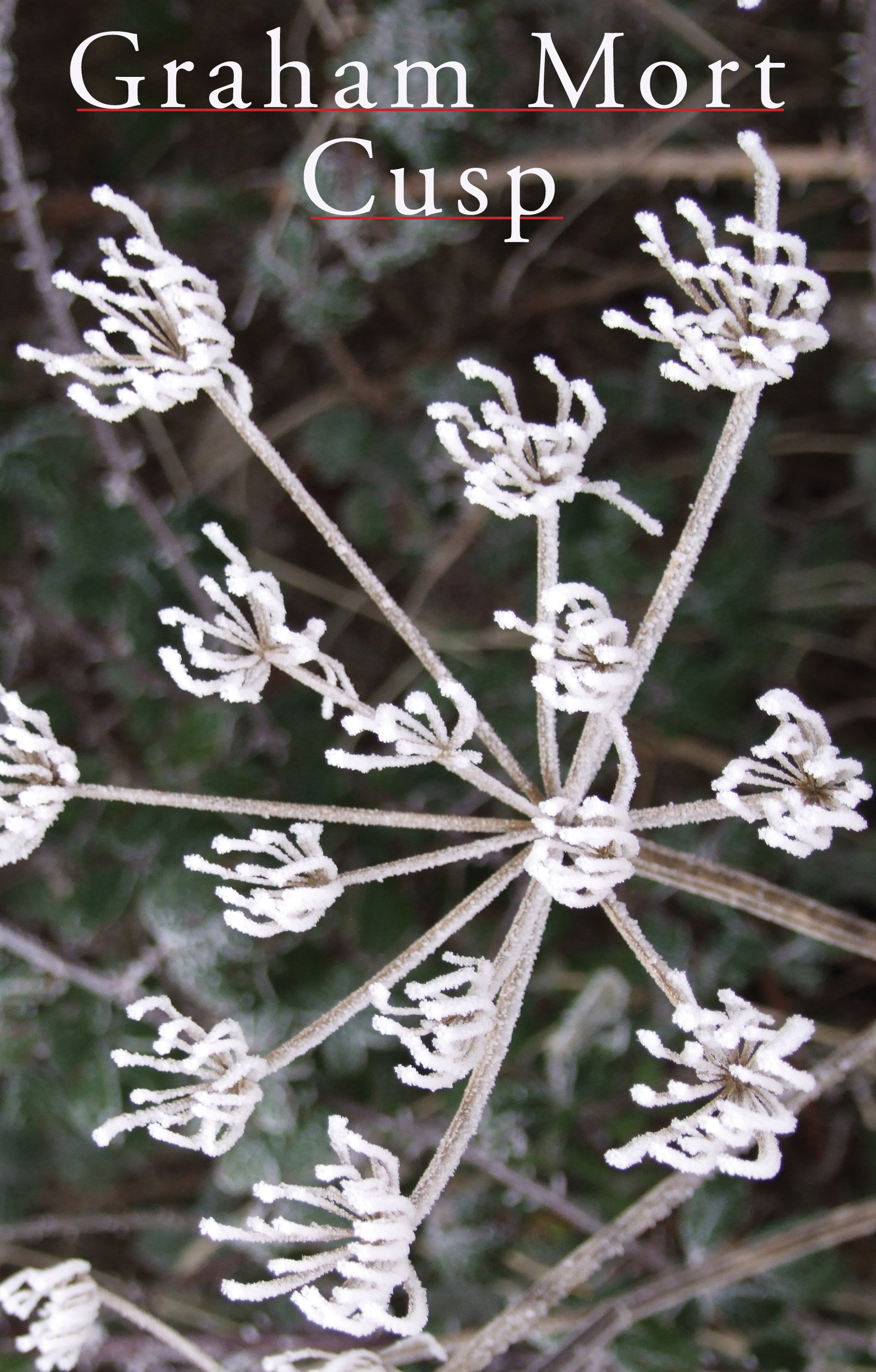
This week’s poem comes from Graham Mort’s collection, Cusp. His latest short story collection, Terroir, is now available on our website.

Cusp features many of the qualities readers have come to admire from Graham Mort; keen observation, a feeling for the natural world that echoes and enhances the human interactions in his poems, the sense of the individual as part of a larger society of which we are implicitly responsible. New here is a different sort of line, which alternates short and longer lines in a step-like formation, a terracing which propels the narratives along. Also included is the remarkable, ambitious long poem, ‘Electricity’, fizzing with riffs on its theme. Mort’s formal rigour, instinctive compassion, and warm humanity shine through in this new book, the first since his acclaimed: Visibility: New and Selected Poems.

Io’s Sisters

The usual English summer:
early heat stoking speedwell
dog’s mercury stealing
a march, then months
of drizzle until rosehips
were fading coals
in the hedgerows
sloes a hidden bruise
slugs cruising a lacework
of green and bodies coming
home under Union Jacks
salutes, tributes, the Last Post.

Then on the fading cusp
of August, cows calling
nightlong into rain that
pelted the village:
knock-kneed, teats dragging
in mud, their lungs’ bellows
working the drenched ember
of summer, as if Hera’s spite
stranded them beyond
phonetical love; their eyes
goaded by flies, their tongues
turning a hoarse cud of longing.

Even in darkness
we question their sad
calling with the glib surety
of words, shaping these
smallest sounds as if glass
had broken in our mouths
to join up again as meaning
measure the loss in their
inhuman mooning yet
still fall short of ours.

Engorged, drooling
teat-sore, they drag their
banishment through wet
fields, call for their stolen
calves in pain so large
so inexpressible so deep
it erupts from the colossal
absence they circle as if
they have known in one
form, one incarnation, one
language of consonant
delight a delicacy they
could never speak in this
brute sphere, nor ever be
transfigured to themselves.

Order Cusp and Terroir from our website.

Posted on

Friday Poem – Goodbye

Today it’s the 70th anniversary of VE Day, marking 70 years since the end of the Second World War in Europe, and so today’s poem comes from Alun Lewis’s Collected Poems.

Alun Lewis (1915-1944), the remarkable poet and story writer, died, aged 28, in Burma during the Second World War. Some critics see him as the last of the great Romantic poets, a twentieth century Keats. Others view him as the bridge between pre-war poets like Auden and Yeats to post-war poets such as Hughes and Gunn. He was born and raised in Depression-struck south Wales and, following degrees in history at Aberystwyth and Manchester, became a teacher there. Early in 1940, despite his pacifist inclinations he enlisted and, after long periods of training, joined the war in India.

Becoming a soldier galvanised Lewis’s writing. By 1944 he had written two collections of poems and one of short stories, all published to considerable acclaim. Firmly established with Keith Douglas as the leading writer of the Second World War, Lewis’s death in an accident while on active service was a huge loss to English literature. Collected Poems comprises a body of work which has endured and which transcends the label ‘war poetry’; it is complete in itself and full of promise of greater things.

Goodbye

So we must say Goodbye, my darling,
And go, as lovers go, for ever;
Tonight remains, to pack and fix on labels
And make an end of lying down together.

I put a final shilling in the gas,
And watch you slip your dress below your knees
And lie so still I hear your rustling comb
Modulate the autumn in the trees.

And all the countless things I shall remember
Lay mummy-cloths of silence round my head;
I fill the carafe with a drink of water;
You say ‘We paid a guinea for this bed,’

And then, ‘We’ll leave some gas, a little warmth
For the next resident, and these dry flowers,’
And turn your face away, afraid to speak
The big word, that Eternity is ours.

Your kisses close my eyes and yet you stare
As though god struck a child with nameless fears;
Perhaps the water glitters and discloses
Time’s chalice and its limpid useless tears.

Everything we renounce except our selves;
Selfishness is the last of all to go;
Our sighs are exhalations of the earth,
Our footprints leave a track across the snow.

We made the universe to be our home,
Our nostrils took the wind to be our breath,
Our hearts are massive towers of delight,
We stride across the seven seas of death.

Yet when all’s done you’ll keep the emerald
I placed upon your finger in the street;
And I will keep the patches that you sewed
On my old battledress tonight, my sweet.

Order Alun Lewis: Collected Poems from our website.

Posted on

Friday Poem – Street Scene

house of small absences

Today’s poem is from Anne-Marie Fyfe’s latest collection, House of Small Absences, due for release this month.

Anne-Marie Fyfe’s poems have long dwelt on the role that the spaces we inhabit, the places in which we find security, play in our lives: House of Small Absences is an observation window into strange, unsettling spaces—a deserted stage-set, our own personalised ‘museum’, a Piedmont albergo, underground cities, Midtown roof-gardens, convent orchards, houseboats, a foldaway circus, a Romanian sleeper-carriage—the familiar rendered uncanny through the distorting lenses of distance and life’s exigencies, its inevitable lettings-go…

Street Scene

‘Nowhere’ is a setting, a situation and a state of mind.
It’s not on any map, but you know it when you’re there.
– Don George, Tales from Nowhere

When you turn your back on the street
and walk away one block, then two,
the over-familiar street-view’s exposed
as propped-up storefronts and verandahs,
sceneries of wings and facades
that could shudder and collapse
in the whish of the tenderest summer breeze.

The scene’s drained first of Technicolor
and then slips slowly out of focus,
passers-by strutting staccato
into the maze of tram-line junctions
that never make it into town’s gazetteer.

Each new city block takes you further
from the grip of a reality that’s already
packing-up shop behind you, shipping
for storage or the next production.
You’d do best to maintain a brisk walking pace.

Pre-order a copy of House of Small Absences from our website.

Posted on

Friday Poem – Finding a Fossil

Today’s poem is from John Ormond’s Collected Poems, edited by Rian Evans and introduced by Patrick McGuinness, which is due to be released next month.

John Ormond (1923-1990) is one of the remarkable generation of poets born in south Wales in the early 1920s which includes Dannie Abse and Leslie Norris. A journalist on Picture Post during its heyday in the 1940s, he was a friend of fellow Swansea writers Dylan Thomas and Vernon Watkins, both of whom were key influences on a poetry of consistently high standards. A significant number of his poems, many of them elegiac, probe his Welsh roots, demonstrating an abiding concern with family and locality. Others focus on particular aspects of the natural world, seeking to capture their elusive quiddities. Stylistically, they vary from the extremely plain to the highly-wrought; are witty and ironic, paradoxical and conceited. Typically unsentimental, shapely and meticulously crafted, his are the poems of a sensibility which delights in explorations, probes complex themes and problematical areas of feeling, and refuses to settle for easy answers.

In addition to his writing Ormond had a distinguished career with BBC Wales as a director and producer of documentary films, which include studies of Welsh painters and writers such as Ceri Richards, Kyffin Williams, Dylan Thomas, Alun Lewis and R.S. Thomas. The insight and visual awareness which mark his films also inform his poetry, a selection of which was published in the Penguin Modern Poets series.

This Collected Poems edited by Rian Evans, draws together all of Ormond’s work, including unpublished material. It includes an Introduction by poet, novelist and critic Patrick McGuinness, notes and commentary of the poems re their geneses, backgrounds, allusions and meanings, and a bibliography of Ormond’s prose writing, films and writing about him. An index of titles and first lines completes this essential book.

Finding a Fossil

Maidenhair fern in flint;
An ancient accident
Shows me time’s imprint.

A leaf preserved and pressed
Between leaves of stone; crossed
Rest and unrest.

An image that grew green
Took ground in the rock grain:
Dark; now light again.

Luck interlaced each line
And dying vein with stone.
They return to the same sun.

The casual life of fronds,
Air and the tongues of friends;
Green begins, grey ends;

Except that remembered shapes
Live, and that at one’s lips
Love speaks as loves lapse.

Graftings (so fused in chance
Among cold stars that dance
Gestures of permanence)

Persist and contrive to invent
From fragment and element
A mindful firmament.

Pre-order a copy of John Ormond’s Collected Poems from our website.

Posted on

Friday Poem – A Psalm for the Scaffolders

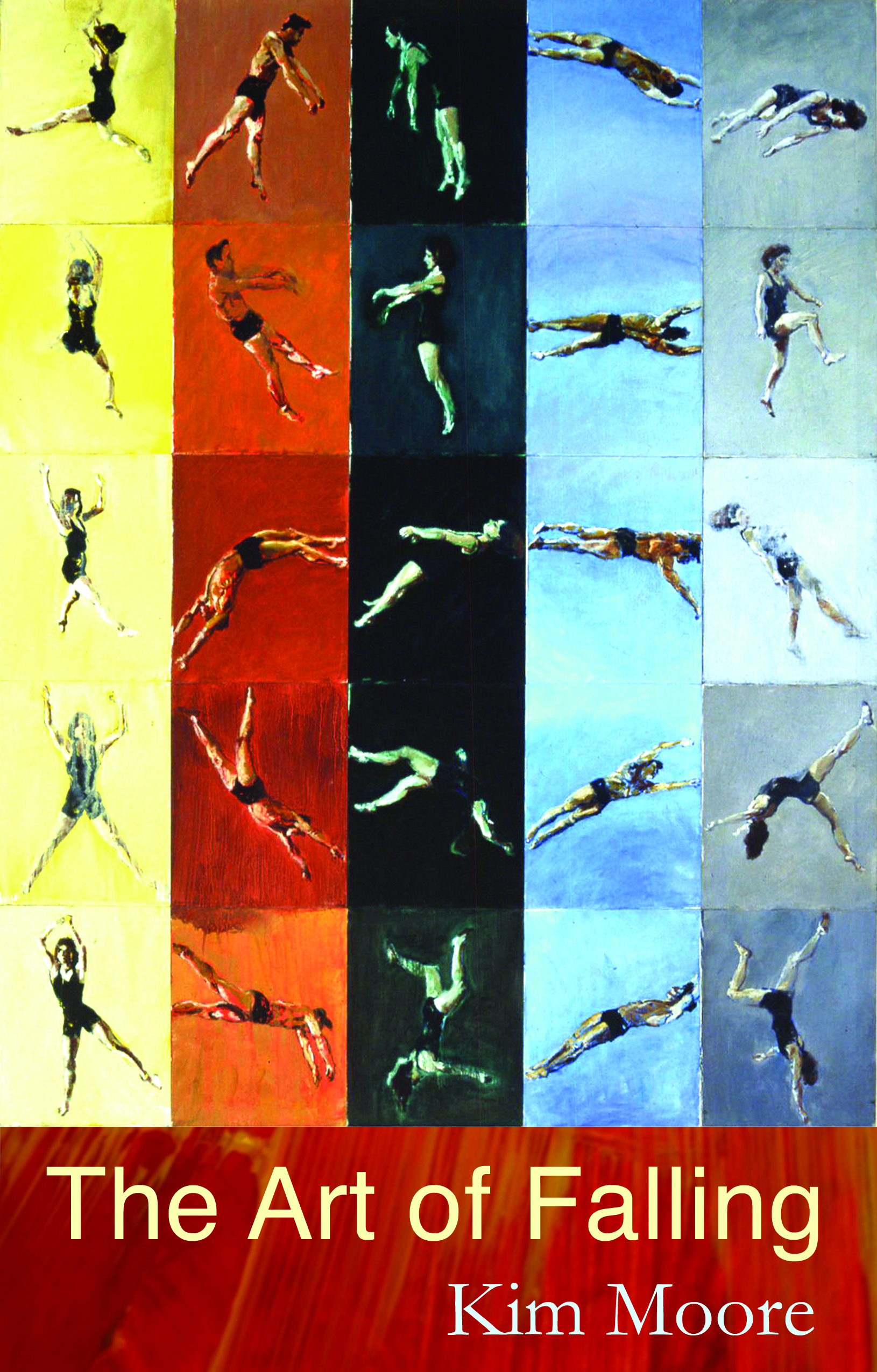
Today’s poem is from Kim Moore’s debut collection, The Art of Falling. Check out our interview with Kim here.

Kim Moore lives in Barrow, Cumbria. She has an MA from Manchester Metropolitan University. Her poems have been published in the TLS, Poetry Review, Poetry London, and elsewhere. She regularly appears at festivals and events, her prize-winning pamphlet, If We Could Speak Like Wolves (Smith-Doorstop) was chosen as an Independent Book of the Year in 2012 and was shortlisted for other prizes. Moore won an Eric Gregory Award in 2011 and the Geoffrey Dearmer Prize in 2010. In 2014 she won a Northern Promise award. She writes a thoughtful blog and has a wide social media following. The Art of Falling (Seren 2015) is her debut collection.

A Psalm for the Scaffolders

who balanced like tightrope walkers,
who could run up the bracing
faster than you or I could climb
a ladder, who wore red shoes
and worked bare-chested,
who cut their safety vests in half,
a psalm for the scaffolders
and their vans, their steel
toe-capped boots, their coffee mugs,
a psalm for those who learnt
to put up a scaffold standing
on just one board, a psalm
for the scaffolder who could put
a six-inch nail in a piece of wood
with just his palm, a psalm
for those who don’t like rules
or things taking too long, who now
mustn’t go to work uncovered,
who mustn’t cut their safety vests
or climb without ladders, who must
use three boards at all times,
a psalm for the scaffolders
who fall with a harness on,
who have ten minutes to be rescued,
a psalm for the scaffolder who fell
in a clear area, a tube giving way,
that long slow fall, a psalm for him,
who fell thirty feet and survived,
a psalm for the scaffolder
who saw him fall, a psalm for those
at the top of the buildings, the wind whistling
in their ears, the sky in their voices,
for those who lift and carry
and shout and swear, for those
who can recite the lengths of the boards
and tubes like a song, a psalm for them,
the ones who don’t like heights
but spent their whole life hiding it,
a psalm for those who work too long,
a psalm for my father, a psalm for him.

Order The Art of Falling from our website.