Posted on

Friday Poem – A small domestic scene

This week’s poem is from Ivy Alvarez’s collection, Disturbance, published in 2013.

Disturbance is a novel in verse by Ivy Alvarez that chronicles a multiple homicide, a tragic case of domestic violence, where a family was gunned down by the husband and father. 

The book features poems in a kaleidoscope of voices from all the characters involved. We first meet the family itself and witness how the father’s controlling attitude gradually escalates into violence. Then we get the aftermath: the authorities, police and neighbours, who all might have helped to prevent this tragedy. This is a very dark book, but a courageous one, ultimately about evil and its presence in our everyday lives. The fact that this family was relatively well-to-do, seemingly prosperous and well-connected, adds another layer of intrigue and mystery. There is some graphic violence, but the emphasis is on the characters and their motivations.

A small domestic scene

‘Blood comes out in cold water,’
he said to me,
almost tenderly,
from the doorway,
as I held the icepack to my cheek,
looked at my blouse in the mirror,
fingered the stains.
Order Disturbance from our website.

Posted on

Friday Poem – Mermaid

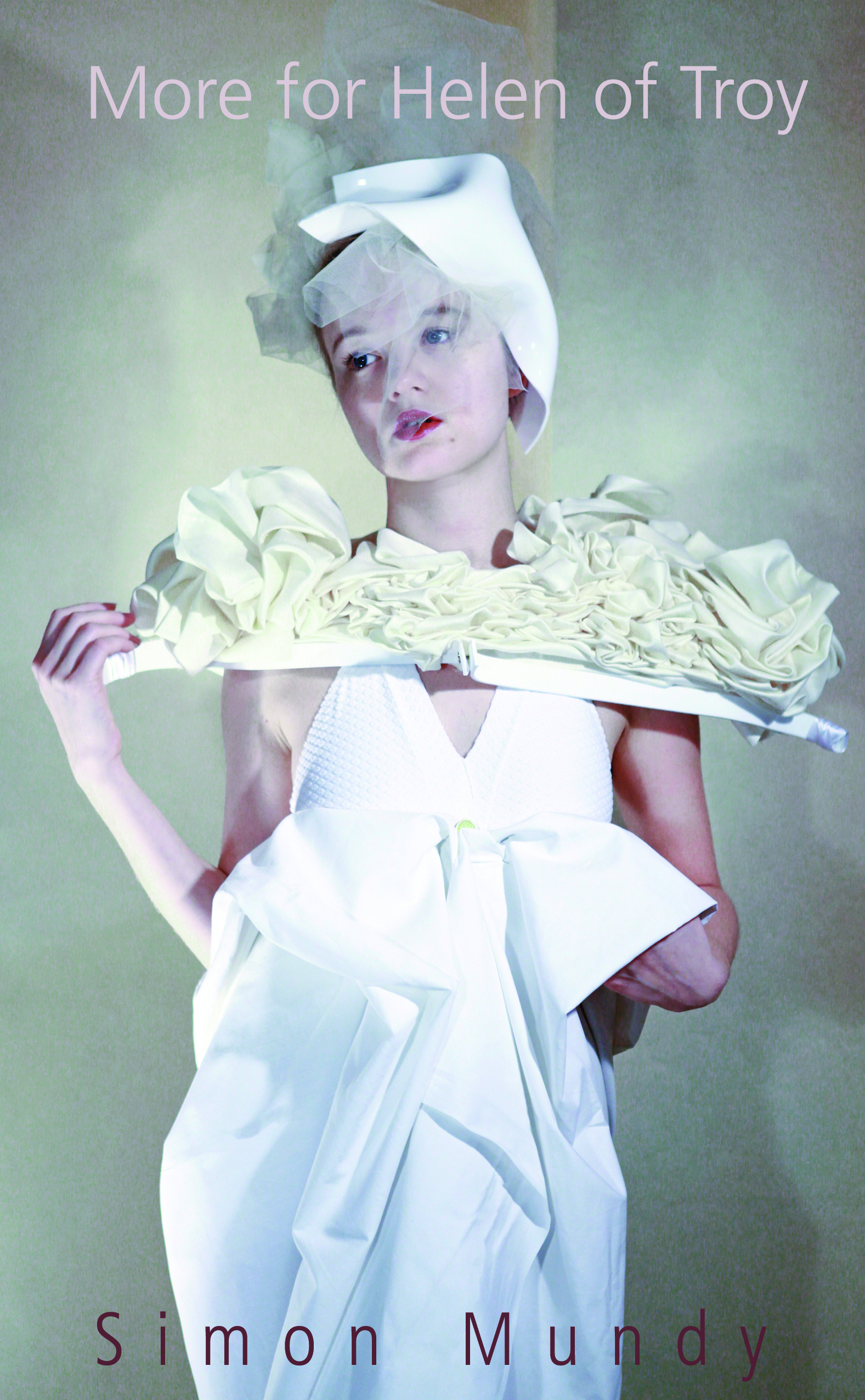
This week’s poem is from Simon Mundy’s fourth collection, More for Helen of Troy, first published in 2012.

More for Helen of Troy, Simon Mundy’s new collection of poems from Seren, is suffused with the atmosphere of the landscapes that inspire him, the lush countryside of Powys, and a number of islands all over the world:Genada, Jamaica, Shetland, Italy. It is also deeply involved with many questions of desire: for the ideal of a beautiful woman, as ‘Mermaid’; for the hope of a good state, as in ‘The New Senedd, Cardiff’ for the vision of a pristine country and seaside, as in ‘Radnor Songs’ and ‘Aspects of Sea’. The tension between all these ideals, between lofty aims and inevitable disappointments, come together in the main title sequence, where an entire society must scheme and suffer for the allure of Helen. Helen is also emblematic: both a legendary figure and a imago for women from all times: pursued, desired, lonely, restless, she haunts the imagination of the poet. Sometimes keenly satirical, as in ‘Society Haiku’, and often poignantly lyrical as in ‘Translated Daughter’, these poems are both pointed and enjoyable. 

Mermaid

This rock, this divan of stone
Is too jagged for your tail, tearing
Young scales, the salt of sea and tears
Searing raw skin as you preen and comb,
Holding the pose for shipsful of men
Who pass in the morning.
What else can you do?
Hide in the cold northern waters that sparkle
On the surface but hold poisons that pock
Your fins with dirty sores.
Or you could hitch on board those ships,
Shed the tail, rejoice in legs and bush,
Bask on the warm sands of love
Before the mortal tides creep in
Across the disappointing strand.
No. Keep amphibious. Immortal
Beauty is worth a little weeping.

Order More for Helen of Troy from our website.

Posted on

Friday Poem – Masculine Happiness

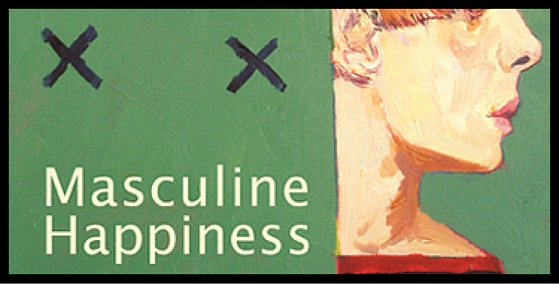
This week’s poem is from David Foster-Morgan’s debut collection, Masculine Happiness, which was released this week!

Masculine Happiness is the provocative debut poetry collection by David Foster-Morgan. Born and based in Wales, Foster-Morgan has long been a presence in the poetry world, having had poems published widely in magazines and with appearances at workshops, festivals, and events including ‘slams’ where his quiet style and obvious integrity frequently beat louder and less subtle voices to a prize. His debut collection, some years in the making, is inspired in part by his reading of American literature: the conversational tone of Frank O’Hara (‘F’OH’) and the long-lined garrulity of Allen Ginsberg, (‘Allen Ginsberg returns to Llantony Priory’) as well as the models of masculinity handed out to us by Hollywood characters like John Wayne (‘Masculine Happiness’). His ambivalence toward the idea of the ‘hero’ and his observation of the fate of those who have been lauded, like the conflicted protagonist of ‘The City Legend’, is a fruitful area for exposition.

This is also a writer who casts a cold eye on the natural world, at one point lauding a landscape and the next, mourning its depredation. In the poem ‘Meeting my Eagle’ the narrator comments: ‘Polar magnets, our feel for each other is/strongest at the point of turning away.’  The poet observes, interacts and resists the urge to rhapsodise. The author’s philosophical education informs his frequent changes of character and point of view. This erasure of ego is characteristic. We also see into the minds of people like the ‘Machine Gun Killer’, made frightening due to the author eschewing gory melodrama in favour of cool accuracy. We are poised with this professional killer, ‘behind the muzzle’s flare, breathing the pepper exhaust, transported on the recoil’s shudder.’

There is also a considerable amount of humour here, along with astute satire and insightful character poems.

Foster-Morgan’s work repays the careful attention of thoughtful readers.

Masculine Happiness

John Wayne is warm, tired and had
just the right number of drinks. Firelight
and the stars of Arizona surround his bed:
a saddle blanket rolled out in the desert night.

News headlines of a foreign war: the reporter’s
hair and blue eyes match her checked scarf;
and a voice behind me starts: who’s having her,
insulted when I won’t laugh as he starts to laugh.

On another channel Bob Mitchum’s an old sea captain:
safe on land while his son’s submarine is overdue;
drinking cognac from a dark bottle, he finishes it all,
and floats into the sleep of drunk and drowned men.
Sick the next morning, his steps slow and unsure,
like a shipwrecked sailor exploring a new shore.

Order Masculine Happiness from our website.

Posted on

Friday Poem – Witch

Witch by Damian Walford Davies

This week’s poem is a section from Damian Walford Davies’ second collection Witch, just in time for Halloween!

With the narrative pull of a novel and the vibrancy of a play for voices, Damian Walford Davies’ Witch offers a thrilling portrait of a Suffolk village in the throes of the witchcraft hunts of the mid-seventeenth century. The poems in this collection are dark spells, compact and moving: seven sections, each of seven poems, each of seven couplets, are delivered by those most closely involved in the ‘making’ of a witch. The speakers – from Thomas Love the priest, the villagers who slowly succumb to suspicion and counter-accusation, the ‘discoverer of witches’ Francis Hurst, and the ‘witch’ herself – authentically conjure a war-torn society in which religious paranoia amplifies local grievances to fever pitch. Witch is a damning parable that chimes with the terror and anxieties of our own haunted age.

An extract from Witch

She was threshing out
a prayer from deep inside

her chained throat’s
gabble. The air was dizzy

with her dirt. Which art,
she kept repeating,

which art in, as if the once
lithe tongue were damned

to dwell on it. Hustling
clouds let sunlight flush

in pools; she sprang
and chased it, thwacking,

thwacking back again
along her jangling leash.

Did they expect she’d
partner them in one

last meek pavane?
She scratched and bit,

lapsed sullen. At the gate
they bound her wrists

until the knot was
knuckled like a fist

and dragged her bucking
in the dirt. I followed

in her rut and fierce
curlicues, like the carving

of the vine stock’s sudden
flourish into grapes.

Shouldered like a sheaf,
bare hockshins shocking

white, she felt the press
of bodies pitching up

against the pikes. Each
rung made her trussed

bulk skip. He botched
the roping-up, the halter

like a bridle round her
mouth. She turned to him

with squally eyes. Her feet
on his, he held her like

a husband by the waist,
and let her go.

Order Witch from our website.

Posted on

Friday Poem – The Witch Bag

This week’s poem comes from Sarah Corbett’s second collection, The Witch Bag, published in 2002.

“Poetry as white-knuckle ride” is how Poetry Wales described Sarah Corbett’s debut, The Red Wardrobe. Her eagerly-awaited second collection, The Witch Bag, is as powerful as its predecessor, and is sure to cement Corbett’s reputation as one of the rising stars of British poetry. The title poem evokes a spellbinder who is both “weightless, thin as pond moss” and “blacker than the pond’s belly.” ’The Kitchen God’ is a series of erotic love sonnets; ’My Son the Horse’ is part of an astonishing group of poems about the birth of a son; ’Czech Pieces’ records vivid impressions of Eastern Europe; the final section focuses on the death of a father. This poet, in sensuous and evocative language, conjures intimate worlds; her subjects are often fearlessly personal: birth, death, and love in all its manifestations.

The Witch Bag

Remember me. I am the woman
who shook her fisted nipples
at the moon,
bearing down the dark streets
that could not take her.

My face broke in two
as I ate its bright cheek,
my hands sudden as marshlight
held before me
into the dark nights that followed.

I am the woman who flew
not only in her dreams,
but remembered the spell as she woke
and hunted sighs like ticks,
dipping and turning as she went.

That woman, weightless thing,
thin as pond moss,
blacker than the pond’s black belly.
She hooks its clammy limbs around her own
and sucks the water into herself.

That woman, without a world,
who goes hopping with one boot
between twilights,
a bagful of grave treasures
lost and lost again –

mask of hair, milk tooth,
heel-bone, blood-purse, name.

Order The Witch Bag from our website.

Posted on

Friday Poem – The Formula for Night

Tamar Yoseloff A Formula for Night

This week’s poem comes from Tamar Yoseloff’s latest collection, A Formula for Night: New and Selected Poems.

Tamar Yoseloff is a poet whose career has been profoundly influenced by the visual arts. A Formula for Night: New and Selected Poems is the eagerly awaited summation of her work, encompassing selections from four published print volumes: Sweetheart, Barnard’s Star, Fetch and The City with Horns (now mostly out of print); and poems from her collaborations with artists: Formerly, Marks and Desire Paths. The book also includes a generous selection of beautiful new poems. The title poem is based upon an installation by Welsh artist Cerith Wyn Evans. An image from his work, a light sculpture, is used for the cover of the book. 

The poet’s first collection, Sweetheart, was a PBS Special Commendation and the winner of the Jerwood/Aldeburgh First Collection Prize. She was the recipient of an Arts Council New Writing award which helped her complete her second manuscript, later published as Barnard’s Star. Of her collaborations, Marks was published as a limited-edition artist’s book and pamphlet by Pratt Contemporary Art in 2007. Desire Paths was a limited-edition portfolio produced by Galerie Hein Elferink in the Netherlands. Both books feature work by artist Linda Karshan.

More recently, Formerly, a chapbook of poems based on forgotten London locations, with accompanying photographs by Vici MacDonald, was the debut publication of their co-founded imprint, Hercules Editions. Formerly was shortlisted for the Ted Hughes Award in 2012.  Exhibitions of the poems and photographs have appeared in two venues in London: the Poetry Society’s Poetry Café and the Saison Poetry Library at the Southbank.

The new poems are often artful explorations of paradox: death/birth, dark/light, clarity/mystery. In the ‘Swimmer of Lethe’  the protagonist says: ‘I’ve mastered surface/ here everything is under.’ Atmospheres are conjured, surfaces interrogated and humans are often found woefully or wonderfully implicated in their settings in unexpected ways. A misunderstood creature, the ‘Muntjac’, is seen with tender clarity ‘Now white with May/tar and fern on his delicate hooves…’. The poet’s vocabulary is spiky, sometimes ferociously so. Sex is another paradox, its violence at times palpable: from ‘Pictures of Spring’:  ‘I bend and break, bend/ and break, contort my limbs/ into these lovelocked shapes.’  ‘Hospital Time’: ‘collapses, folds the days into sterile gauze,/
a thousand different words for hurt’ beautifully evokes the estranging, atmosphere of a hospital but slowly evolves to become a moving elegy to the poet’s mother. 

The Formula for Night

It’s getting late. Light
floods the public bar,
you’re the final one to leave.
The mirror’s silver eye
gives you back yourself, precise.
You’ve lived your life through
glass, you miss the brush

of skin, someone whispering
your name.You hear it now,
a calling on the wind, insistent,
a small but steady flame.
You carry in your bones a gasp
of summer heat, the formula
for night.You arrive at the end-

of-pier reveal – the heart-stop hour,
when this world briefly yields
to the next: a door that creaks
an inch or two to catch
a blinding beam. You want
to understand what can’t
be seen, the fact behind

the trick, the wires hidden
from your view, the blue breath
that powers the machine.
Raise your eyes to read the stars –
streetlight’s glare has cast them
dark; once-bright bulbs,
trembling elements crack

and fizzle as they die. Their light
is obsolete. But close
your eyes, and still you find
gold impressed beneath
your lids, a moment lived.
And when you open them again,
darkness is what’s left.

Order A Formula for Night: New and Selected Poems from our website.

Posted on

Friday Poem – The Death of Doc Emmett Brown in Back to the Future

my family and other superheroes

This week’s poem comes from Jonathan Edwards’ Costa Award-winning debut collection, My Family and Other Superheroes.

My Family and Other Superheroes introduces a vibrant and unique new voice from Wales. The superheroes in question are a motley crew. Evel Knievel, Sophia Loren, Ian Rush, Marty McFly, a bicycling nun and a recalcitrant hippo – all leap from these pages and jostle for position, alongside valleys mams, dads and bamps, described with great warmth. Other poems focus on the crammed terraces and abandoned high streets where a working-class and Welsh nationalist politics is hammered out. This is a post-industrial valleys upbringing re-imagined through the prism of pop culture and surrealism. If the author’s subjects have something in common with RS Thomas, or even Terry Street-era Douglas Dunn, his technique and approach owe at least as much to contemporary American poets like James Tate and David Wojahn.

The Death of Doc Emmett Brown in Back to the Future

I sit here in the darkness with my father,
slurping Pepsi, passing popcorn round.
The Libyans come fast around the corner,

pump Doc Brown with automatic fire.
My feet are dangling, inches from the ground.
I sit here in the darkness with my father,

as Marty hits 88 miles an hour,
goes back to ’55, to warn Doc Brown.
The Libyans come fast around the corner,

pump Doc Brown with automatic fire:
he gets up, dusts his bulletproof vest down.
I sit here in the darkness with my father,

who starts to gently snore. Now time goes quicker:
the cinema’s knocked down, moved out of town;
the Libyans come fast around the corner

on DVD. My boy asks for Transformers
instead as, from the wall, his bamp looks down.
I sit here in the darkness with my father.
The Libyans come fast around the corner. 

Order My Family and Other Superheroes from our website.

Posted on

Friday Poem – The Snake House

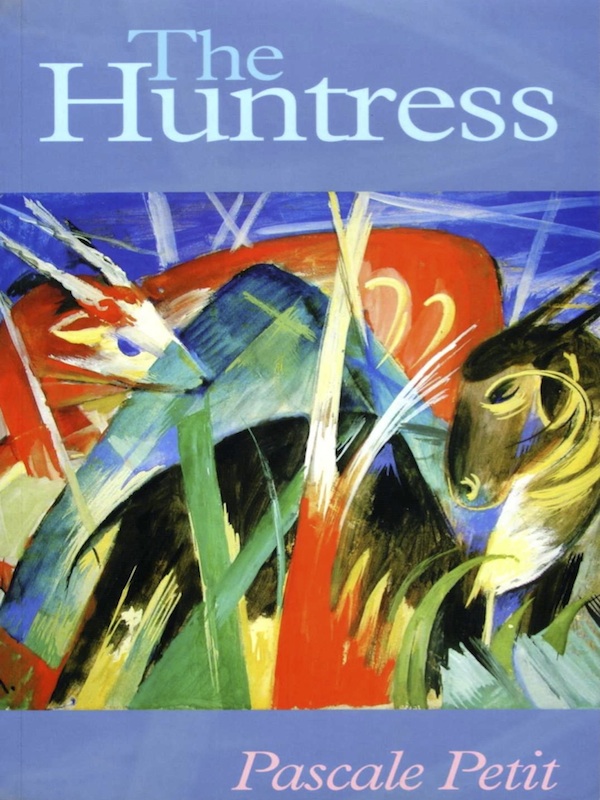
This week’s poem comes from Pascale Petit’s third collection, The Huntress, published in 2005.

In Pascale Petit’s highly-charged third collection, a daughter is haunted by her mentally ill mother, and a painful childhood is re-imagined through a series of remarkable and passionate transformations. The feared mother is a rattlesnake, an Aztec goddess, a Tibetan singing bowl, a stalagmite, a praying mantis, a ghost orchid. These culminate in a long central poem where the daughter escapes her huntress as a cosmic stag. Underlying these poems is an intense mystical vision that lifts the dark material of the subject matter above the merely personal. 

The Snake House

It’s time to go up to your front door, Mother,
and ring the rattling buzzer of a bell,
the door with two curved fangs.
I go in, into the muscular throat of the hall,
down the tunnel that’s closing now
to a pinpoint of light.
I’m in the swallowing living-room,
washing it for you, half-alive,
like a man preparing for the rain-dance
in the dry arroyo. He reaches
into the pit and washes the snakes
so that later when he dances with the ‘little mothers’
in his mouth, they won’t bite.
I’m a child playing in the pen
with my pet rattlers,
giving them bread and milk.
As long as I’m unscared
they won’t strike. And you’re saying,
“Only a girl-child can do this”.
My cheeks are almost seamless now,
countless grafts hide the necrosis.

Order The Huntress from our website.

Posted on

Friday Poem – Requiem for a Requiem Shark

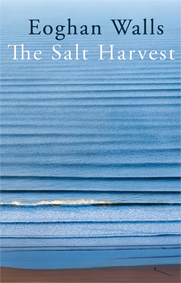
This week’s poem is from Eoghan Walls’ debut collection, The Salt Harvest, shortlisted for the 2012 DLR Strong Award.

Dark and evocative, these poems involve rich, multi-layered descriptions of the natural world, and cast a sardonic and tender eye on the human condition. All the climates of his native Ireland inspire both the muscular imagery and the complex forms of work such as ‘Star of the Sea’, ‘Cockles’ and the title poem; each line has been ‘packed with ore’. Also apparent is an ambivalent, often deeply ironic attitude towards a culture once steeped in religion, as in ‘Myrrh’ and ‘Confessions to the Southwest’. Threads of humour run throughout, an imaginative playfulness evident in ‘Martin Healey’s War on God and Ireland’, ‘Frog’ and ‘Star Matter’.

Requiem for a Requiem Shark

The necropsy left no doubt; this was a miracle of death.
Unpeeled from her womb lay the body of the christpup,

teeth crusting out its mouth, with a dorsel fin the breadth
of a thumbnail, tipped in black. The finprint of its makeup,

said Dr. Chapman, proved the non-existence of a father.
Angelsharks burrowed deeper into the ocean bottom.

There was no rising afterwards. Lights above the water
were only torches held by men from the aquarium.

Order The Salt Harvest from our website.

Posted on

Friday Poem – How I Abandoned My Body To His Keeping

The Art of Falling Kim Moore

This week’s poem is from Kim Moore’s debut collection, The Art of Falling, released earlier this year.

Kim Moore, in her lively debut poetry collection, The Art of Falling, sets out her stall in the opening poems, firmly in the North amongst ‘My People’: “who swear without knowing they are swearing… scaffolders and plasterers and shoemakers and carers…”. ‘A Psalm for the Scaffolders’ is a hymn for her father’s profession.

The title poem riffs on the many sorts of falling “so close to failing or to falter or to fill”. The poet’s voice is direct, rhythmic, compelling. These are poems that confront the reader, steeped in realism, they are not designed to soothe or beguile. They are not designed with careful overlays of irony and although frequently clever, they are not pretentious but vigorously alive and often quite funny. In the first section there is: a visit to a Hartley street spiritualist, a train trip from Barrow to Sheffield, a Tuesday at Wetherspoons.

The author’s experience as a peripatetic brass teacher sparks several poems. The lives of others also feature throughout, including a quietly devastating central sequence, ‘How I Abandoned My Body To His Keeping’: is the story of a woman embroiled in a relationship marked by coercion and violence. These are close-to-the-bone pieces, harrowing and exact.

The final section includes beautifully imagined character portraits of John Lennon and Wallace Hartley (the violinist on the Titanic), as well as Jazz trumpeter Chet Baker and the poet Shelley and other poems on: suffragettes, a tattoo inspired by Virginia Woolf’s A Room of One’s Own, and a poetic letter addressed to a ‘Dear Mr Gove’.

How I Abandoned My Body To His Keeping

What happened sits in my heart like a stone.
You told me I’d be writing about it
all my life, when I asked
how to stop saying these things to the moon.
I told you how writing it makes the dark
lift and then settle again like a flock of birds.

You said that thinking of the past like birds
who circle each year will make the stone
in my chest heavy, that the dark
that settles inside me will pass. You say it
is over, you say that even the moon
can’t know all of what happened, that to ask

to forget is to miss the point. I should ask
to remember. I should open myself to the birds
who sing for their lives. I should tell the moon
how his skin was like smoke, his hand a stone
that fell from a great height. It
was not what I deserved. The year was dark

because he was there and my eyes were dark
and I fell to not speaking. If I asked
him to leave he would smile. Nothing in it
was sacred. And I didn’t look up. The birds
could have fallen from the sky like stones
and I wouldn’t have noticed. The moon

was there that night in the snow. The moon
was waiting the day the dark
crept into my mouth and left me stone
silent, stone dumb, when all I could ask
was for him to stop, please stop. The birds
fled to the trees and stayed there. It

wasn’t their fault. It was nobody’s fault. It
happened because I was still. The moon
sung something he couldn’t hear. The bird
in my heart silent for a year in the dark.
This is the way it is now, asking
for nothing but to forget his name, a stone

that I carry. It cools in my mouth in the dark
and the moon sails on overhead. You ask
about birds, but all I can talk of is stones.

Order The Art of Falling from our website.