Posted on

Friday Poem – The Red Aeroplane

house of small absences

Our first Friday Poem of 2016 is from Anne-Marie Fyfe’s new collection, House of Small Absences. We hope you enjoy it, and happy New Year!

Anne-Marie Fyfe’s poems have long dwelt on the role that the spaces we inhabit, the places in which we find security, play in our lives: House of Small Absences is an observation window into strange, unsettling spaces—a deserted stage-set, our own personalised ‘museum’, a Piedmont albergo, underground cities, Midtown roof-gardens, convent orchards, houseboats, a foldaway circus, a Romanian sleeper-carriage—the familiar rendered uncanny through the distorting lenses of distance and life’s exigencies, its inevitable lettings-go…

The book opens with ‘The Red Aeroplane’ where witnessing an apparent plane crash sparks a vertiginous sequence of image and memory. We will follow the author in exploring not just specific places and memories but the ‘exponential function of tangents’, all that is implied and suggested.

The Red Aeroplane

From the oratory window I witness
mid-air doom, a slew of concentric
swirls, a trail of forge-sparks,
and that’s it. A vermilion two-seater
stagger-wing loops earthbound,
so much depending upon centrifugal
drive. Slivers of toughened glass
spangle the outer stone sill,
the vacant co-pilot seat
is plummeted deep in rosebed mulch.

I question now if the red bi-plane
ever was, the way sureties tilt
and untangle from any one freezeframe
to its sequel. Maybe I was glimpsing
that two-seater red pedal car
– injection-moulded plastic –
collected one Christmas Eve night
for a fevered child? Or conflating
the replica cherry-red sixty-three
we’d toyed with, tinkered with, briefly
on a tinsmith’s covered stall
that drenched Saturday?
What can’t be
cast in any doubt is the wreckage,
a fragmentary scattering,
the mangledness on the far side
of glass. And how a Galway blue
skyscape proves ineluctably
the exponential function of tangents.

Order Anne-Marie Fyfe’s House of Small Absences from our website.

Posted on

Friday Poem – Christmas Holiday

This week’s poem is from Alun Lewis’ Collected Poems. Merry Christmas!

Alun Lewis (1915-1944), the remarkable poet and story writer, died, aged 28, in Burma during the Second World War. Some critics see him as the last of the great Romantic poets, a twentieth century Keats. Others view him as the bridge between pre-war poets like Auden and Yeats to post-war poets such as Hughes and Gunn. He was born and raised in Depression-struck south Wales and, following degrees in history at Aberystwyth and Manchester, became a teacher there. Early in 1940, despite his pacifist inclinations he enlisted and, after long periods of training, joined the war in India.

Becoming a soldier galvanised Lewis’s writing. By 1944 he had written two collections of poems and one of short stories, all published to considerable acclaim. Firmly established with Keith Douglas as the leading writer of the Second World War, Lewis’s death in an accident while on active service was huge loss to English literature. This Collected Poems comprises a body of work which has endured and which transcends the label ‘war poetry’; it is complete in itself and full of promise of greater things.

Christmas Holiday

Big-uddered piebald cattle low
The shivering chestnut stallion dozes
The fat wife sighs in her chair
Her lap is filled with paper roses
The poacher sleeps in the goose-girl’s arms
Incurious after so much eating
All human beings are replete.

But the cock upon the dunghill feels
God’s needle quiver in his brain
And thrice he crows: and at the sound
The sober and the tipsy men
Jump out of the bed with one accord
And start the war again.

The fat wife comfortably sleeping
Sighs and licks her lips and smiles

But the goose-girl is weeping.

Order Alun Lewis’ Collected Poems from our website.

Posted on

Friday Poem – Snow

This week’s poem is by the National Poet of Wales, Gillian Clarke, and is taken from the Seren anthology, Christmas in Wales. If you order two books from our website you’ll get a copy of Christmas in Wales for free! Offer ends Midnight, 24th December.

Celebrate Christmas the Welsh way in the company of some of the country’s leading writers, past and present. Christmas mass, the nativity play, turkey and plum pudding, the Mari Lwyd, presents, the weather, the shopping and post-festive blues are among the many subjects drawn from stories, poems, diaries and letters. Wartime Christmases in Swansea and the Rhondda – and home thoughts from India and Italy – pantomime characters, Christmas cards and New Year Resolutions; R.S. Thomas, Dylan Thomas, Dannie Abse, Gillian Clarke, Catherine Fisher, Bruce Chatwin, Sian James, Kate Roberts and Leslie Norris, Christmas in Wales has all the ingredients for the complete experience of the season of celebration.

Snow

The dreamed Christmas,
flakes shaken out of silences so far
and starry we can’t sleep for listening
for papery rustles out there in the night
and wake to find our ceiling glimmering,
the day a psaltery of light.

So we’re out over the snow fields
before it’s all seen off with a salt-lick
of Atlantic air, then home at dusk, snow-blind
from following chains of fox and crow and hare,
to a fire, a roasting bird, a ringing phone,
and voices wondering where we are.

A day foretold by images
of glassy pond, peasant and snowy roof
over the holy child iconed in gold.
Or women shawled against the goosedown air
pleading with soldiers at a shifting frontier
in the snows of television,

while in the secret dark a fresh snow falls
filling our tracks with stars.

Order Christmas in Wales from our website.

Posted on

Friday Poem – For Christmas

This week’s poem is from Christine Evans’ 2007 Wales Book of the Year shortlisted collection, Growth Rings, published in 2006.

This collection from Christine Evans follows well-received Selected Poems.  Hers is a sensitive and persuasive voice, highly attuned to the vagries of the seasons, to the landscapes and inhabitants of the beautiful Llyn Peninsula in North Wales where the author has made her home.

As well as vibrant short lyrics on everything from ‘Bluebells in Nanhoron’ to jets flying over Wales, there are a series of tender elegiac pieces on relatives, meditations on the last moments of Shelley and the fates of the Brontes, and a number of poems featuring the mysterious Island of Bardsey.

For Christmas

Hubble shows us this:
the star factory in Sagittarius
where time’s a flying strand
looping from a furnace

where, out of the flux, out of the fire,
a boilover of hydrogen and sulphur,
cobalt and vermilion
from the radiant debris,

a scatter of new stars
streams out, seeds of light.
Pinpricks in our darkness:
guides as good as any for the journey.

Order Growth Rings from our website.


Posted on

Friday Poem – The Snow Dome

This week’s poem is from Paul Henry’s fifth collection, Ingrid’s Husband, first published in 2007.

Here is a book of ghosts, from the mysterious traveller in the title poem who, mistaken for another man, starts to crave his new alter ego, to the first person of ‘Between Two Bridges’, Henry’s long poem on Newport, who follows his teenage ghost across the city for a night:

He pulls away. The wind puts its lips to an arcade.
A seagull on a barber’s pole waits to open its blades.

How the living haunt themselves is the concern of Ingrid’s Husband, and the author discovers his spirits through an imagery of absences: a child’s signature in the dust of an old guitar; the stone plinth where a cafe once stood; a white balloon drifting down a shopping arcade; a chateau, still furnished with belongings of its vanished owner…. Love continues to underscore the commonplace in Paul Henry’s fifth collection and this lyric poet’s distinctive voice continues to haunt its readers.

The Snow Dome

First sun, then snow … my father floats up the lane
in white jeans, a white rose in his claw.
He cuts a Lear-like figure, drifting alone
through the sun and snow.

Wherever you mother goes, I follow
he mutters, brushing the icing from her stone,
its doorstep to a colder house. It snows

and shines about the ornamental scene.
We can’t see for the petals of the rose.
He says she kissed his bald head in the lane,
first with sun, then snow.

Order Ingrid’s Husband from our website.

Posted on

Friday Poem – A small domestic scene

This week’s poem is from Ivy Alvarez’s collection, Disturbance, published in 2013.

Disturbance is a novel in verse by Ivy Alvarez that chronicles a multiple homicide, a tragic case of domestic violence, where a family was gunned down by the husband and father. 

The book features poems in a kaleidoscope of voices from all the characters involved. We first meet the family itself and witness how the father’s controlling attitude gradually escalates into violence. Then we get the aftermath: the authorities, police and neighbours, who all might have helped to prevent this tragedy. This is a very dark book, but a courageous one, ultimately about evil and its presence in our everyday lives. The fact that this family was relatively well-to-do, seemingly prosperous and well-connected, adds another layer of intrigue and mystery. There is some graphic violence, but the emphasis is on the characters and their motivations.

A small domestic scene

‘Blood comes out in cold water,’
he said to me,
almost tenderly,
from the doorway,
as I held the icepack to my cheek,
looked at my blouse in the mirror,
fingered the stains.

Order Disturbance from our website.

Posted on

Friday Poem – Mermaid

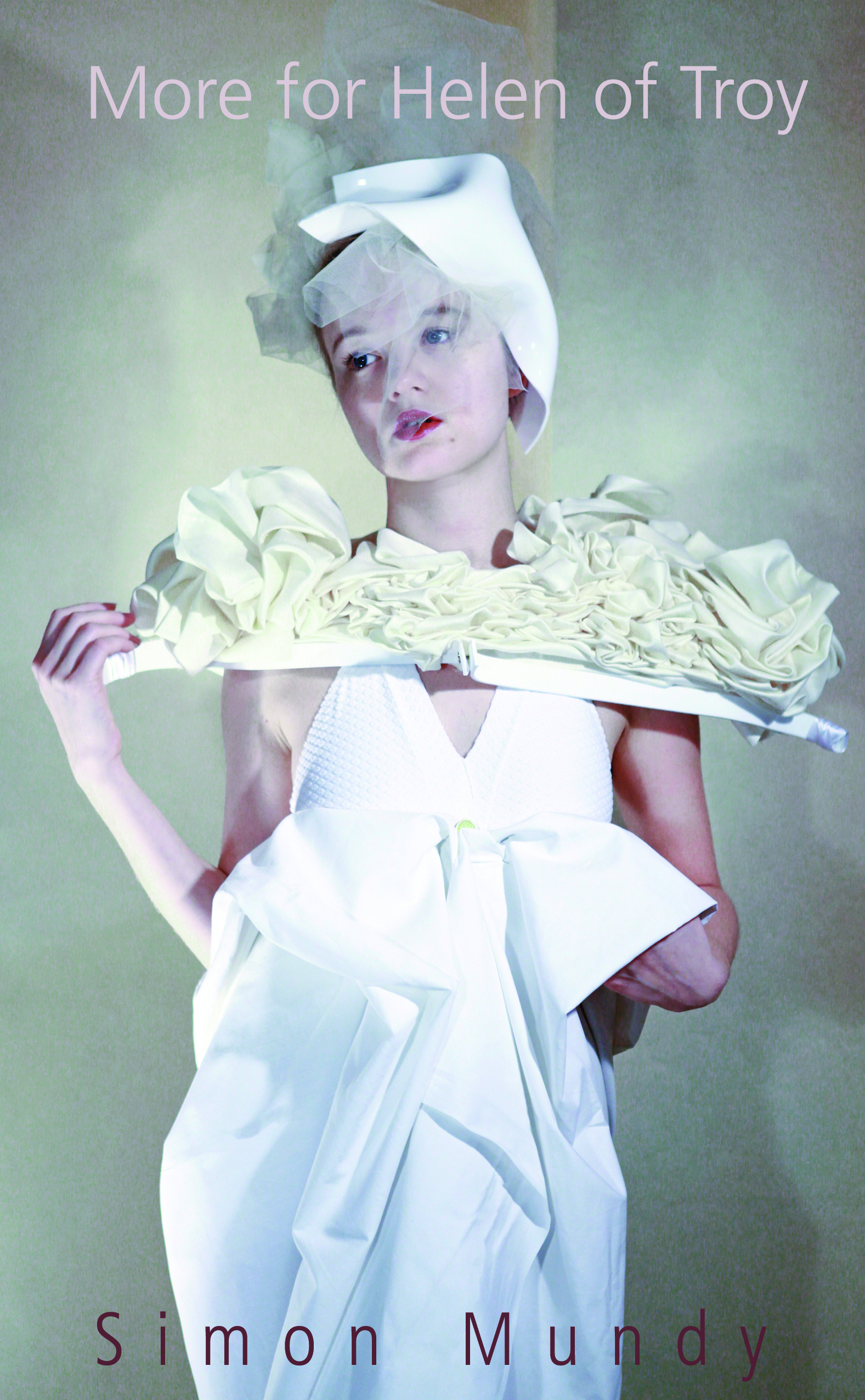
This week’s poem is from Simon Mundy’s fourth collection, More for Helen of Troy, first published in 2012.

More for Helen of Troy, Simon Mundy’s new collection of poems from Seren, is suffused with the atmosphere of the landscapes that inspire him, the lush countryside of Powys, and a number of islands all over the world:Genada, Jamaica, Shetland, Italy. It is also deeply involved with many questions of desire: for the ideal of a beautiful woman, as ‘Mermaid’; for the hope of a good state, as in ‘The New Senedd, Cardiff’ for the vision of a pristine country and seaside, as in ‘Radnor Songs’ and ‘Aspects of Sea’. The tension between all these ideals, between lofty aims and inevitable disappointments, come together in the main title sequence, where an entire society must scheme and suffer for the allure of Helen. Helen is also emblematic: both a legendary figure and a imago for women from all times: pursued, desired, lonely, restless, she haunts the imagination of the poet. Sometimes keenly satirical, as in ‘Society Haiku’, and often poignantly lyrical as in ‘Translated Daughter’, these poems are both pointed and enjoyable. 

Mermaid

This rock, this divan of stone
Is too jagged for your tail, tearing
Young scales, the salt of sea and tears
Searing raw skin as you preen and comb,
Holding the pose for shipsful of men
Who pass in the morning.
What else can you do?
Hide in the cold northern waters that sparkle
On the surface but hold poisons that pock
Your fins with dirty sores.
Or you could hitch on board those ships,
Shed the tail, rejoice in legs and bush,
Bask on the warm sands of love
Before the mortal tides creep in
Across the disappointing strand.
No. Keep amphibious. Immortal
Beauty is worth a little weeping.

Order More for Helen of Troy from our website.

Posted on

Friday Poem – The Last Soldier

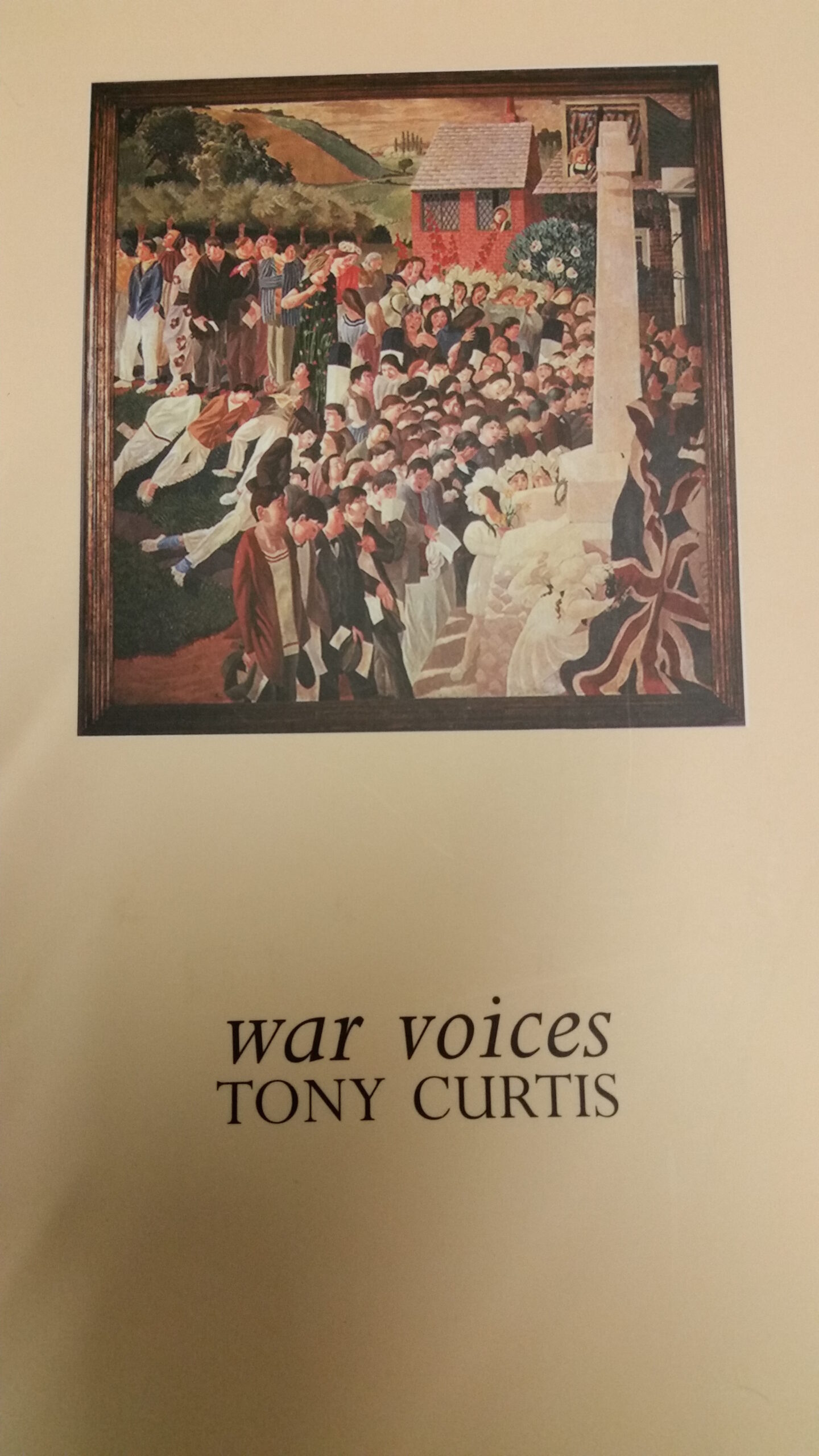
This week’s poem comes from Tony Curtis’ War Voices, first published in 1995.

War and its effects have been an enduring subject throughout the twenty-five year writing career of Tony Curtis. The resulting poetry might have been bleak but for the sensitivity with which Curtis handles the theme, and the bravery and dignity in the face of barbarism which he finds underlying conflict. Poems such as ‘Soup’, shortlisted for the Observer / Arvon Prize and ‘The Death of Richard Beattie-Seaman’, winner of the National Poetry Competition, are a measure of Curtis’s skill in addressing this difficult subject. From Flanders to Bosnia, via Russia and Suez, India and Ireland, Vietnam and the Cold War, these War Voices speak of protest, remembrance and commemoration.

The Last Soldier

The last soldier marches out of the jungle
to the gentlemen of the press and an official welcome.
He salutes, presents the sword
which his parents, thirty years before,
had him swear to use with honour
in war, or on himself. Swathed
in a white cloth, it does not glint in the lights.
The President orders a reception, magnanimously
pardons the crimes of his private war.
A chartered Jumbo flies him home:
his mother’s cheek is leather,
his father’s mind has split.
The crowds scream for a walking-history,
the last spirit of Empire. Too late.
In his absence the Dream has come
and gone.

The bright shells of cars litter his path,
blind-eyed towers monster above him;
selling lights dazzle, pattern unfamiliar streets.
The air cloys with a sweet choking sin.

Back in the jungle, the fronds of evening
finger a clear sky, rainbow birds dash
colours across the deep green.
Minutely, against the background of birds
and the timed whispering of the ocean
his abandoned radio crackles into life:
orders come through.

Order War Voices from our website.

Posted on

Friday Poem – Masculine Happiness

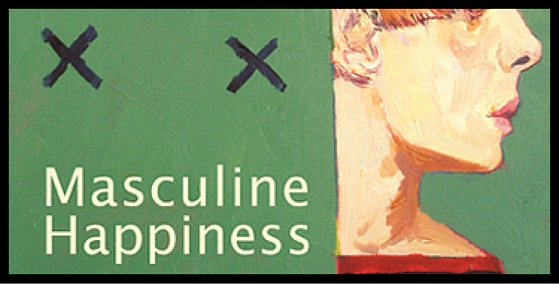
This week’s poem is from David Foster-Morgan’s debut collection, Masculine Happiness, which was released this week!

Masculine Happiness is the provocative debut poetry collection by David Foster-Morgan. Born and based in Wales, Foster-Morgan has long been a presence in the poetry world, having had poems published widely in magazines and with appearances at workshops, festivals, and events including ‘slams’ where his quiet style and obvious integrity frequently beat louder and less subtle voices to a prize. His debut collection, some years in the making, is inspired in part by his reading of American literature: the conversational tone of Frank O’Hara (‘F’OH’) and the long-lined garrulity of Allen Ginsberg, (‘Allen Ginsberg returns to Llantony Priory’) as well as the models of masculinity handed out to us by Hollywood characters like John Wayne (‘Masculine Happiness’). His ambivalence toward the idea of the ‘hero’ and his observation of the fate of those who have been lauded, like the conflicted protagonist of ‘The City Legend’, is a fruitful area for exposition.

This is also a writer who casts a cold eye on the natural world, at one point lauding a landscape and the next, mourning its depredation. In the poem ‘Meeting my Eagle’ the narrator comments: ‘Polar magnets, our feel for each other is/strongest at the point of turning away.’  The poet observes, interacts and resists the urge to rhapsodise. The author’s philosophical education informs his frequent changes of character and point of view. This erasure of ego is characteristic. We also see into the minds of people like the ‘Machine Gun Killer’, made frightening due to the author eschewing gory melodrama in favour of cool accuracy. We are poised with this professional killer, ‘behind the muzzle’s flare, breathing the pepper exhaust, transported on the recoil’s shudder.’

There is also a considerable amount of humour here, along with astute satire and insightful character poems.

Foster-Morgan’s work repays the careful attention of thoughtful readers.

Masculine Happiness

John Wayne is warm, tired and had
just the right number of drinks. Firelight
and the stars of Arizona surround his bed:
a saddle blanket rolled out in the desert night.

News headlines of a foreign war: the reporter’s
hair and blue eyes match her checked scarf;
and a voice behind me starts: who’s having her,
insulted when I won’t laugh as he starts to laugh.

On another channel Bob Mitchum’s an old sea captain:
safe on land while his son’s submarine is overdue;
drinking cognac from a dark bottle, he finishes it all,
and floats into the sleep of drunk and drowned men.
Sick the next morning, his steps slow and unsure,
like a shipwrecked sailor exploring a new shore.

Order Masculine Happiness from our website.

Posted on

Friday Poem – Witch

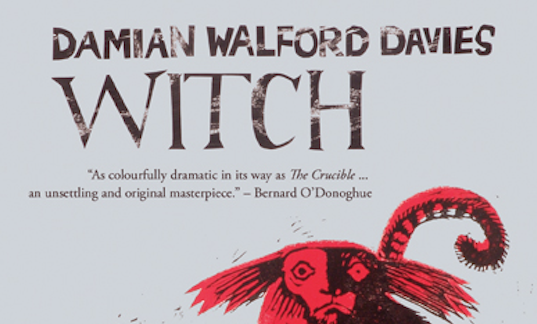
Witch by Damian Walford Davies

This week’s poem is a section from Damian Walford Davies’ second collection Witch, just in time for Halloween!

With the narrative pull of a novel and the vibrancy of a play for voices, Damian Walford Davies’ Witch offers a thrilling portrait of a Suffolk village in the throes of the witchcraft hunts of the mid-seventeenth century. The poems in this collection are dark spells, compact and moving: seven sections, each of seven poems, each of seven couplets, are delivered by those most closely involved in the ‘making’ of a witch. The speakers – from Thomas Love the priest, the villagers who slowly succumb to suspicion and counter-accusation, the ‘discoverer of witches’ Francis Hurst, and the ‘witch’ herself – authentically conjure a war-torn society in which religious paranoia amplifies local grievances to fever pitch. Witch is a damning parable that chimes with the terror and anxieties of our own haunted age.

An extract from Witch

She was threshing out
a prayer from deep inside

her chained throat’s
gabble. The air was dizzy

with her dirt. Which art,
she kept repeating,

which art in, as if the once
lithe tongue were damned

to dwell on it. Hustling
clouds let sunlight flush

in pools; she sprang
and chased it, thwacking,

thwacking back again
along her jangling leash.

Did they expect she’d
partner them in one

last meek pavane?
She scratched and bit,

lapsed sullen. At the gate
they bound her wrists

until the knot was
knuckled like a fist

and dragged her bucking
in the dirt. I followed

in her rut and fierce
curlicues, like the carving

of the vine stock’s sudden
flourish into grapes.

Shouldered like a sheaf,
bare hockshins shocking

white, she felt the press
of bodies pitching up

against the pikes. Each
rung made her trussed

bulk skip. He botched
the roping-up, the halter

like a bridle round her
mouth. She turned to him

with squally eyes. Her feet
on his, he held her like

a husband by the waist,
and let her go.

Order Witch from our website.