Posted on

Legend of the Month: Gwyneth Lewis

Legend of the Month Gwyneth Lewis

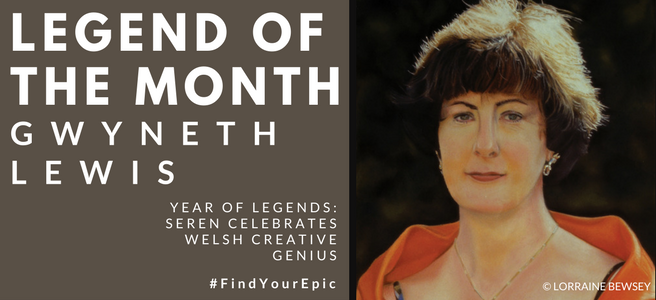
Each month we are celebrating one fantastic Seren author in honour of Wales’ Year of Legends. This month the spotlight has fallen on Wales’ first ever National Poet, Gwyneth Lewis, shown here in brilliant pastel by artist Lorraine Bewsey, from her series Poet Portraits.

Gwyneth Lewis has published nine books of poetry in Welsh and English, and wrote the six-foot-high words on the front of Cardiff’s iconic Wales Millennium Centre, rumoured to be the largest poem in the world.

Gwyneth is also an award-winning writer of non-fiction and screenplays. Gwyneth’s first non-fiction book, Sunbathing in the Rain: A Cheerful Book about Depression (2002) was shortlisted for the Mind Book of the Year, and her first television screenplay, Y Streic a Fi (‘The Strike and Me’), commissioned by S4C, won the 2015 BAFTA Wales for Best Drama. Gwyneth is also a writer of fiction: The Meat Tree, a space-age re-imagining of the tale of Blodeuwedd, is part of Seren’s New Stories from the Mabinogion series. Her light-hearted novella, Advantages of the Older Man, explores the strange case of a Swansea woman who is apparently possessed by the ghost of Dylan Thomas.

Gwyneth is a librettist and dramatist and has written two chamber operas for children and an oratorio, all commissioned and performed by Welsh National Opera. She is a Fellow of the Royal Society of Literature, a member of the Welsh Academi and a NESTA Fellow. In 2010 she was given a Society of Authors Cholmondeley Award recognizing a body of work and achievement of distinction.


Please enjoy this extract from The Meat Tree – a dangerous tale of desire, DNA, incest and flowers:

1

Technical Preparation

Synapse Log 28 Jan 2210, 09:00

Inspector of Wrecks
Is that working now, I wonder? I hate these thought recorders. They’re good in very confined spaces, where you don’t want to overhear the idiotic things your colleagues say to their families back on Mars, but I think they’re overrated. The trick is to keep the unconscious out of it as much as possible and pretend that you’re talking to yourself.
Now, I think it’s settling down. Right. Well, we’re just about approaching the Mars Outer Satellite Orbit. Not seeing too much debris around at the moment, they must have had a clean up fairly recently. Last time I was here, you could hardly move for junk. We’ve glimpsed the ship in the distance, and should arrive later this afternoon.
The new girl’s feeling sick but won’t admit it. She thinks I don’t know that she threw up in the heads, but you can’t hide any smells in a spacecraft. If Nona doesn’t stop vomiting, I’ll have to make her take the drugs. Her eyes are red alraedy, she’s dehydrated. I can’t have her out of action, we’re too close to the target vessel. Typical, getting lumbered with a student on my last mission.
Befrore anything starts happening, I’m going to get my expenses software set up…

Apprentice
So Campion’s telling me how he does his mileage first ‘and all else follows’ and I’m about to throw up all over him, but I manage to swallow it. Ironic. My whole life to get to Mars orbit, and now I’m here I feel too awful to take it in.
I did get to look out of a porthole as we passed close to home. Saw a dust storm in Thaumasia, thousands of miles wide. It looked like miso soup when you stir it up. Made me nauseous all over again. So I stopped looking. You wouldn’t believe how hard it is to catch floating vomit in a paper bag.
We’re not one day in and I’m already tired of hearing about the Department of Wrecks in the Good Old Days. When flotsam came in from as far as the Sculptor galaxy or the Microscopium Void. When he had a full team and they got to work on really interesting cultures. Not like this speck from God knows where, just me and him – the one man in the service who has absolutely no imagination.
Oh, I think he wants to do a quick equipment check.

Joint Thought Channel 28 Jan 2210, 09:02

Inspector of Wrecks
This is so that we can talk to each other on the vessel without disturbing any of the artifacts. Sometimes alien communication can be diffused by the human voice, so we’ll keep to Joint Thought mode until we know more about what’s going on.

Apprentice
You mean like a mind-meld? God! I didn’t mean to say that.

Inspector of Wrecks
The whole trick of this channel is to avoid personal static. Keep it professional.

Apprentice
Sorry. Of course.

Inspector of Wrecks
It’s a knack. Not a silent version of speaking out loud, but it’s a way of sharing two sets of sense impressions from slightly different angles. It doubles the amount of data we can record. But you’ll have to learn to make a very precise form of running commentary. It’s not your uncensored thoughts, but it’s not formal reporting either. Try doing it on me for a second.

Apprentice
He looks much taller than he did on Mars. And skinnier.

Inspector of Wrecks
That’s close, but you can do better. It’s a question of what’s appropriate. Give me some sensory data, because that’s often much more valuable than your opinions. We Won’t know what we’re seeing, but we need to record the effect its having on us. Try again.

Apprentice
The smell of his soap makes me sick to my stomach, I can’t get away from it.

Inspector of Wrecks
That’s much, much better. Relevant stuff. A little personal, perhaps, but that’s good. We’ll be getting all the objective data from the robots we send in before us.
Again.

Apprentice
His comb-over looks like the tendrils of a plant in zero gravity.

Inspector of Wrecks
That’s it, you’re getting it. And don’t worry, you can’t offend me. What I’m looking for is information. Record it, even if it doesn’t seem important at the time. I’m particularly interested in alien emotio-translation technology, we have a lot to learn in that area. This technique is going to be especially important if we have to go into Virtual Reality.

Apprentice
The sleep of leaves!

Inspector of Wrecks
All right! That’s it! That will do for now. Oh, and I’ll change the soap. Didn’t realise it was a problem. You should have said.


The Meat Tree is available from the Seren website: £7.99
 

Save

Save

Posted on

Friday Poem – ‘Wintering’, Rhiannon Hooson

Friday Poem Rhiannon Hooson Wintering

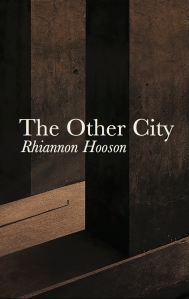
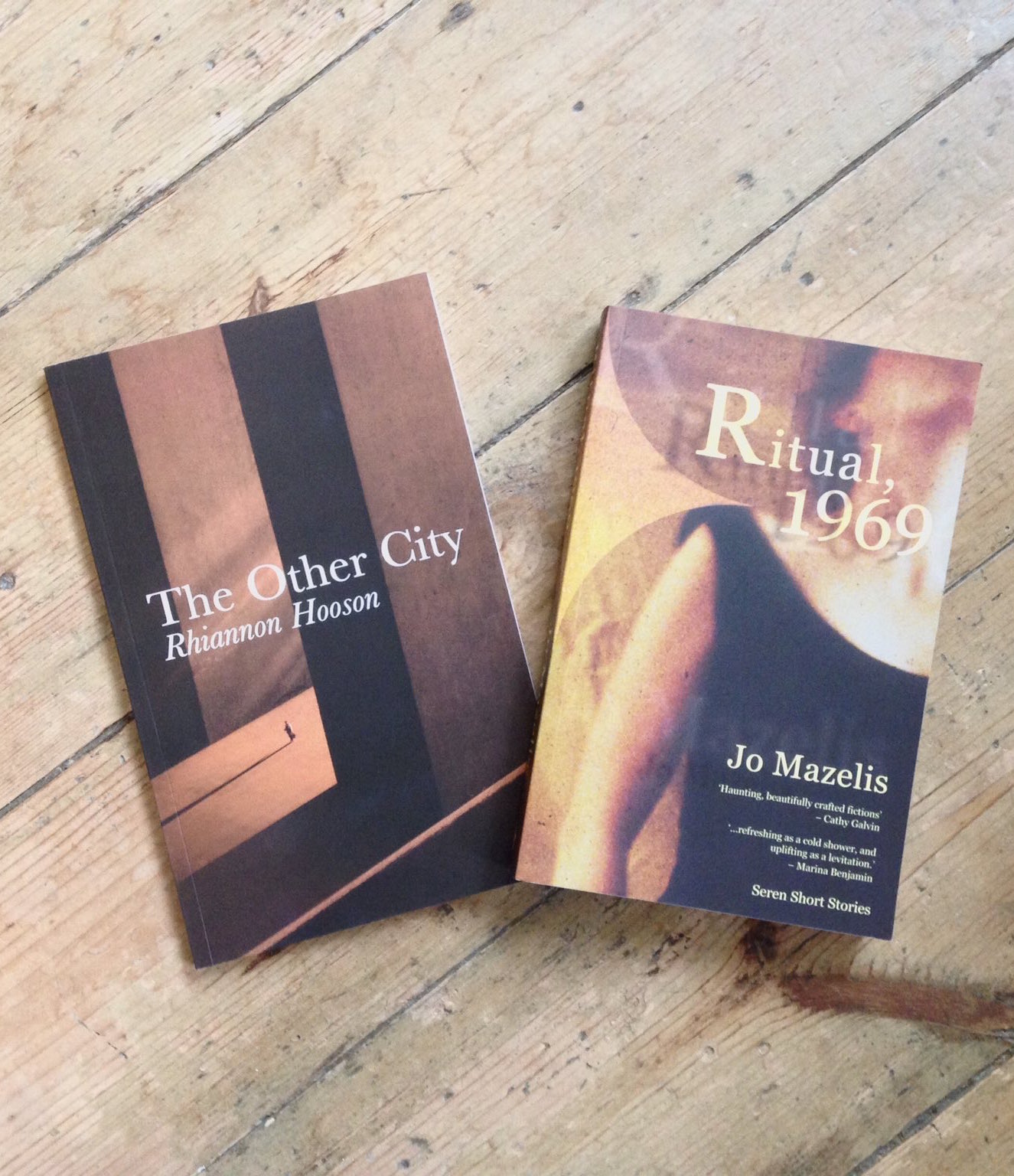
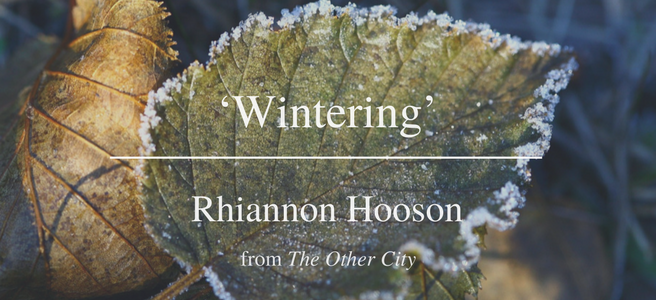
Rhiannon Hooson’s incredible debut collection, The Other City, has just appeared on the Wales Book of the Year shortlist – and this week our Friday Poem is one from its pages: the seasonally-appropriate ‘Wintering’.

The Other City Rhiannon HoosonThe Other City offers us elegant, artful verse of precision and insight. Sharply focused, beautifully resonant, deeply felt, these poems tend to travel in distinct streams: characters like Zeus, Narcissus, Ariadne, and Ganymede sit alongside reworkings of Welsh history, both ancient and modern. Other poems explore the idea of otherness and the uncanny, where actions are done and undone, and the familiar made unfamiliar.
This is a poet who can re-imagine scenes from Greek myth, from Welsh history, and make them as urgent and compelling as her poems about personal relationships.


Rhiannon Hooson Wintering


The Other City is available from the Seren website: £9.99

Join our free Book Club for 20% off every book you buy from us.


Posted on

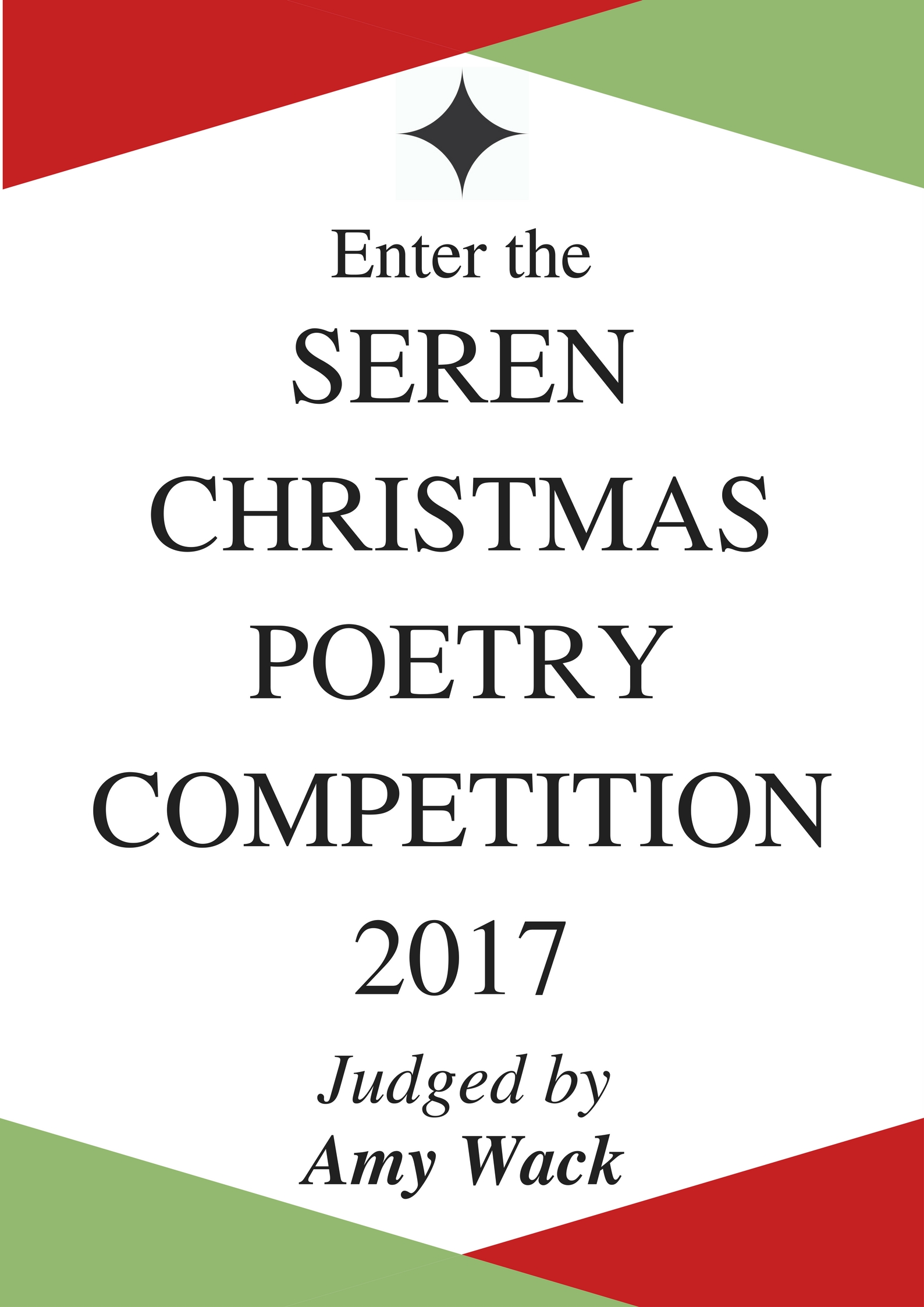
Enter the Seren Christmas Poetry Competition 2017

We are thrilled to announce that entries are now open for Seren’s Christmas Poetry Competition 2017.
Submit your Christmas-themed poem now.
 
The 2017 Christmas Poetry Competition is judged by Seren’s Poetry Editor, Amy Wack. You are invited to submit one poem with a Christmas theme for consideration, before the closing date (08 November). All submissions will be read and the winner will be announced on 27 November.
What is the prize? The winning poem will be circulated to all Seren’s publishing and literary friends as the official 2017 Christmas card. The winner will also receive 50 printed copies of the card to send to friends & family this Christmas. Longlisted poems will be considered for a 2018 poetry pamphlet.
How do I enter? Visit the Submittable Entry Page and upload your poem (as a Word Doc or PDF). On this page you will also find the full terms and conditions.
 
Thank you and good luck to all those who enter, we look forward to reading your poems.

Posted on

Friday Poem – ‘Drumlins have no personality’, Siobhán Campbell

Friday Poem Drumlins Siobhán Campbell

Our Friday Poem this week is Siobhán Campbell’s ‘Drumlins have no personality’, from her latest collection, Heat Signature.

Heat Signature Siobhan CampbellSiobhán Campbell’s poetry is of a strange breed: simultaneously comic and brutal, intelligent and whimsical. In Neil Leadbeater’s newly published review, he points to the ‘profoundly challenging and entertaining’ nature of Campbell’s new poems. Heat Signature is Siobhán’s sixth collection, and its complex style is entirely characteristic of the poet’s spikey voice: infused with an intelligence that resists easy answers to the conundrums that have faced her Irish homeland, but also suffused with a grudging admiration for the citizens who have survived their tumultuous history.

A note on the poem: drumlins are small hills shaped like half-buried eggs, formed by underlying glacial ice. The name comes from the Irish word droimnín (“littlest ridge”).


Siobhán Campbell Drumlins


Heat Signature is available on the Seren website: £9.99

Join our free Book Club for 20% off every book you buy from us.


Save

Posted on

Short Story of the Month | ‘Let Her Go’ by Maggie Ling

Let Her Go Maggie Ling Short Story

October’s Short Story of the Month is ‘Let Her Go’ by Maggie Ling. Previously an illustrator and cartoonist, Maggie now writes short stories. Her writing has been commended and longlisted by a number of prizes, and published in Unthology, and the Asham Award-winning ghost story collection, Something Was There (Virago 2011).

In ‘Let Her Go’, illusory boundaries, previously respected by a holidaying couple, begin to break down when, watching her husband emerging from the sea, the wife picks up an urgent call on his mobile phone and looks back over the years of misplaced love.


Let Her Go

This is an extract. Read the full short story for free on our website.


Your head is just breaking the water when I hear that tedious new ring tone of yours – mercifully muffled by your beach towel. Do you have to bring your phone to the beach? I moaned that morning, We are supposed to be on holiday. You know what it’s like, you’d said, Someone might need a quick comment, a quotable line. I can never be totally out of touch.
What liars we are.
I let that awful, tinkly, tinny tune go through several more ring cycles – less painful, less drawn out than Wagner at least – watch your sea-slicked seal head rise up, watch you turn to look back to the vast expanse of ocean, unwilling to leave this element that is so much your own. Torso fully exposed, now, you wade a few steps, stop once more, turn once more, hands on hips, back to me, looking back. Reluctant to face the deserted beach, no doubt. Your ‘flipper’ feet unwilling to make contact with the desiccated land, unwilling to rejoin the landlubber lying here waiting for you. Although, looking back myself, haven’t I always been the fish out of water.
The caller persistent, I decide to do the unthinkable. Rules, they say, are made to be broken. Though you and I have always prided ourselves on our mindfulness of rules. The concern we have for each other. The boundaries we respect. We have, you could say, made it a rule: a stick with which to measure our so-called easy-going, independent spirits; one we need not beat ourselves up with, since we do stick to the rules. No wishy-washy one-for all, all-for-one sentimentality for us. Oh no. We respect each other’s privacy, each other’s bank accounts, each other’s digital interactions. We two of the Me/Myself/I generation honour each other’s individuality. We are good at holding on while letting go. It was you who coined that arsehole, oxymoron of a phrase. Except, I seem to remember, you said You are good at holding on while letting go. It was back in the days when I was fool enough to take this as some kind of compliment.
I am unmuffling your smothered Blackberry from its multi-coloured cocoon when it comes to me: Who would bother to call, rather than to text you? No one calls you now – except me. And you and I both know I don’t count. All manner of correspondence done, arrangements made with all and sundry, without a single word said by you, heard by me. Who, I ask myself, would be this persistent?  Who would feel a need for such urgency? And, suddenly, in spite of having no warning signs, no reason to expect it, I know who is making the call, know why she is making it.
Meanwhile you are, quite literally, dragging your feet across the sand. Dry land already tiring, already tiresome to you. So much effort a body must make just to stay afloat on boring old dry land.
​           Yes, Izzy, Louise is saying, She’s gone. Too late to do anything. Can I speak to him? Is he there?
​           He’s here now, I say. Louise! I tell you, as droplets of seawater drip from your hair to dot my oily thighs. Lingering there, they remind me of those little golden domes of plastic that keep dropping off the insides of our kitchen unit doors. And I notice several extraneous pubic hairs have escaped my home-waxing treatment. Notice pink pinprick spots left by my home-waxing treatment. While you demand details from Louise: time, place, time before the ambulance arrived. Ask what more might have been done, say what should have been done, who could, should be blamed, sued, shouted at. You appear to almost blame Louise for not being there earlier – she who is there every Saturday afternoon. You exercise your phenomenal powers of outrage, while showing not one smidgen of sorrow.
​           He’s in shock, I tell myself.
​           Bye then, sweetheart, you say, Chin up!
​           And dropping the phone, you reach for the towel and energetically rub your hair with it…


Continue reading ‘Let Her Go’ for free here.


Posted on

International Day of the Girl 2017 – 8 Books we should All Read

international day of the girl 2017 8 books

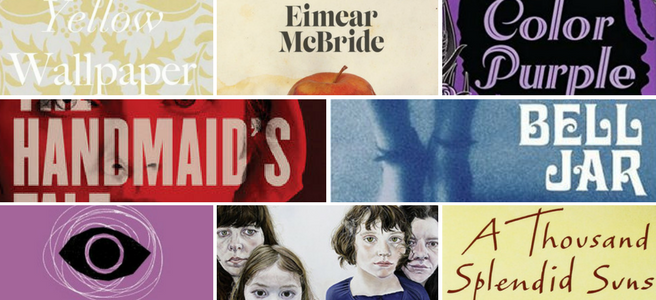
International Day of the Girl is celebrated every year on 11 October in order to bring attention to issues of gender inequality and the barriers girls come up against, from birth to adulthood. Here are eight outstanding books we think everyone should read – books which engage with the issues girls and women face, and will leave you empowered with knowledge and eager for change.

Handmaid’s Tale Margaret AtwoodThe Handmaid’s Tale, Margaret Atwood
Newly broadcast as a celebrated television series, Margaret Atwood’s modern classic, A Handmaid’s Tale, is a story of female subjugation at the hands of a male dictatorship, and the desperate hope of a young woman who cannot obliterate her memories and desires. Everyone should read this masterful story, which re-imagines modern society’s fears and flaws in a narrative at once otherworldly and entirely plausible.


The Colour Purple Alice WalkerThe Colour Purple, Alice Walker
Winner of the Pulitzer Prize, Alice Walker’s haunting novel follows Celie, a young black girl born into poverty and segregation. Raped repeatedly by the man she calls ‘father’, she has two children taken away from her, is separated from her beloved sister Nettie and is trapped into an ugly marriage. But then she meets the glamorous Shug Avery, singer and magic-maker – a woman who has taken charge of her own destiny. Though violent and explicit in its portrayal of the issues facing African-American women in the US, The Colur Purple also has its moments of empowerment and joy, showing that strength can be found even in the most tragic conditions.

Yellow Wallpaper Charlotte Perkins GilmanThe Yellow Wallpaper, Charlotte Perkins Gilman
Charlotte Perkins Gilman’s chilling short story was first published in January 1892, in an attempt to shine a light on the devastating impact of 19th century attitudes toward women’s health, both physical and mental. As a form of treatment, the protagonist is forbidden from reading, writing and all other forms of activity so she can recuperate from what her husband, a doctor, calls a “temporary nervous depression – a slight hysterical tendency”. With nothing to stimulate her, she instead becomes obsessed with the patterned wallpaper in her confining room, and suffers a descent into psychosis. Short but powerful, The Yellow Wallpaper is an important early work of American feminist literature, illustrating society’s profound ignorance of women’s wants and needs.

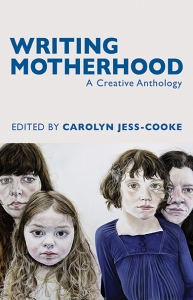
Writing Motherhood Carolyn Jess-CookeWriting Motherhood, ed. Carolyn Jess-Cooke
This important book reconsiders Cyril Connolly’s statement, that ‘there is no more sombre enemy of good art than the pram in the hall’. Through a unique combination of interviews, poems, and essays by established writers, Writing Motherhood interrogates contemporary representations of motherhood in media and literature, queries why so many novels dealing with serious women’s issues are packaged in pink covers with wellies and tea cups, and portrays the exquisite moments of motherhood as often enriching artistic practice rather than hindering it.

A Girl Is a Half-formed Thing, Eimear McBride
Eimear McBride’s multi award-winning debut novel tells the story of a young woman’s relationship with her brother, and the long shadow cast by his childhood brain tumour. It is a shocking and intimate insight into the thoughts, feelings and chaotic sexuality of a vulnerable and isolated protagonist. To read A Girl Is a Half-formed Thing is to plunge inside its narrator’s head, experiencing her world at first hand. This isn’t always comfortable – but it is always a revelation.

The Bell Jar, Sylvia Plath
The Bell Jar, Sylvia Plath’s only novel, was originally published in 1963 under the pseudonym Victoria Lucas, just one month before Plath tragically took her own life. The novel the story of a gifted young woman’s mental breakdown beginning during a summer internship as a junior editor at a magazine in New York City in the early 1950s. It explores unsettling themes of depression and is thought (by some) to mirror Plath’s own spiral into mental illness. It is also a feminist masterpiece, unpicking uneasy female stereotypes and despairing at what it was to be a woman at the time.

A Thousand Splendid Suns Khaled HosseiniA Thousand Splendid Suns, Khaled Hosseini
This tragic and achingly tender novel follows Mariam who, after a sudden and devastating loss, is sent at the age of fifteen to marry the much older Rasheed. After decades of servitude and oppression, Mariam strikes up an unlikely friendship with Rasheed’s new teenaged bride, Laila. When the Taliban take over, and life becomes a desperate struggle against starvation, brutality and fear, we see a brilliant resilience in these Afghan women, reluctantly brought out by their deep love for one another.

The Beauty Myth Naomi WolfThe Beauty Myth, Naomi Wolf
Every day, women around the world are confronted with a dilemma – how to look. In a society embroiled in a cult of female beauty and youthfulness, pressure on women to conform physically is constant and all-pervading. Naomi Wolf’s groundbreaking book will make you think about why and how you judge yourself when you’re stood in front of the mirror. First published in 1991, The Beauty Myth is sadly still all-too-relevant today.


Happy International Day of the Girl, and happy reading.

Posted on

Two Seren authors shortlisted for Wales Book of the Year

The Wales Book of the Year shortlist has been revealed, and it features not one but two Seren authors.
In the running for the Roland Mathias Poetry Award is Rhiannon Hooson’s beautifully resonant debut poetry collection, The Other City, with its sharply-focused poems, some referencing Greek mythology, others re-working Welsh history or exploring the idea of otherness and the uncanny. Joining Rhiannon’s debut on the shortlist are What Possessed Me by John Freeman (Worple) and Psalmody by Maria Apichella (Eyewear).
Jo Mazelis’ darkly gothic short story collection, Ritual, 1969, is shortlisted for the Rhys Davies Trust Fiction Award. Mazelis’ third collection, Ritual, 1969 explores the unsettling borderland between reality and the supernatural, ranging from early twentieth-century France to 1960s South Wales and contemporary Europe. Also shortlisted for this award are Alys Conran’s Pigeon (Parthian) and Cove by Cynan Jones (Granta).
 
The winners will be announced at an award ceremony at The Tramshed in Cardiff on Monday 13th November at 7.00pm. The event will be hosted by BBC Radio Wales presenter Eleri Sion  in the company of the competition’s judges, shortlisted writers and their guests, publishers, partners and members of the public. Tickets are on sale on The Tramshed’s website.
For further information on the Wales Book of the Year Award visit:www.literaturewales.org
Listen again to the shortlist announcement on BBC Radio Wales (2:12:12):http://www.bbc.co.uk/programmes/b09780jg


Posted on

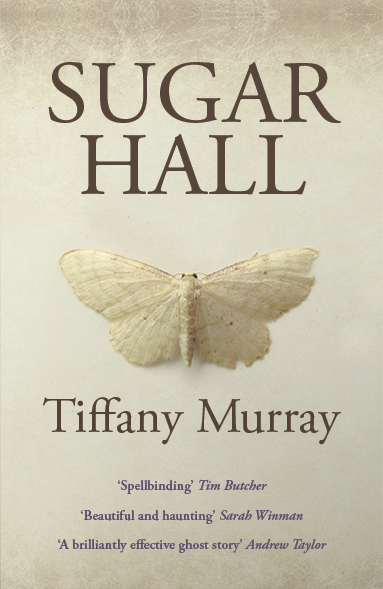
Win a copy of Sugar Hall by Tiffany Murray

Enter our giveaway to win a copy of the hardback edition of Sugar Hall, Tiffany Murray’s truly haunting ghost story.
To enter, simply sign up to the Seren newsletter before 1st November:https://www.serenbooks.com/newsletter/signup
About Sugar Hall:Easter 1955 and Britain waits for a hanging. Dieter Sugar finds a strange boy in the red gardens at crumbling Sugar Hall – a boy unlike any he’s ever seen. As Dieter’s mother, Lilia, scrapes the mould and moths from the walls of the great house, she knows there are pasts that cannot be so easily removed. Sugar Hall has a history, buried, but not forgotten.Based on the stories of the slave boy that surround Littledean Hall in the Forest of Dean, this is a superbly chilling ghost story from Tiffany Murray.
 
The winner of this giveaway will be chosen at random from all our email subscribers on 1st November 2017, so make sure you sign up to Seren News before this deadline to be in with a chance of winning.
Feeling generous? Why not invite your friends to enter, by signing up using the link below:http://serenbooks.com/newsletter/signup


Posted on

Friday Poem – ‘The Children’s Asylum’, Pascale Petit

This week our Friday Poem is ‘The Children’s Asylum’ by Pascale Petit, which was originally published in The Huntress, and later featured in Tokens for the Foundlings, an anthology inspired by the Foundling Hospital.

Established in 1741, The Foundling Hospital was essentially Britain’s first orphanage, and admissions were catalogued by tokens – coins, scraps of ribbon, needlework – symbols of maternal hope left by the children’s parents. Tokens for the Foundlings is an anthology of poems about orphans, childhood and family inspired by and supporting the work of the Foundling Museum in Bloomsbury. It brings together many of the finest poets from Britain, Ireland and the USA, among them Seamus Heaney, Carol Ann Duffy, Gillian Clarke, and our featured poet today, Pascale Petit.
The Huntress is Pascale’s T.S. Eliot shortlisted third collection, and re-imagines a painful childhood through a series of remarkable and passionate transformations.

Petit says, “I wrote ‘The Children’s Asylum’ after my mother died, and left a trunk of journals and letters in which I found her description of being committed to a “loony bin” when she was nine years old. Later in life her mental illness became worse, and it’s this that I wrote about in my seventh collection Mama Amazonica (Bloodaxe, 2017), where the “madwood” of ‘The Children’s Asylum’ has turned into the whole Amazon rainforest, and her psychiatric ward is a place haunted by giant talking water lilies, jaguars, caimans and hummingbirds.”


The Children's Asylum Pascale Petit Friday Poem


The Huntress is available on the Seren website: £7.99

Tokens for the Foundlings is available on the Seren website: £12.99
(all royalties from sales are donated to the Foundling Museum, in support of its work)

Join our free Book Club for 20% off every book you buy from us.


Posted on

National Poetry Day 2017: Recommended Reads

Recommended Reads National Poetry Day

This year National Poetry Day is taking place this Thursday, 28 September, and the theme is “Freedom”.

National Poetry Day is all about enjoying, discovering and sharing poems. With the support of publishers, the Forward Arts Foundation have curated four strong and varied lists of recommended poetry reading, comprising 40 books: anthologies, poetry for children, books for reading groups and current collections.

Seren are proud to announce that not one but two of our authors feature amongst this list of 40: Caroline Smith and Kim Moore. Find out more about their books, and how they tie into this year’s theme, below.

The Immigration Handbook Caroline SmithCaroline Smith’s The Immigration Handbook transforms stories heard every day by the author in her work as an Immigration Officer. Within this collection are heartbreaking scenes of anguish and frustration, contrasts between first and third worlds that prick the conscience, and also occasional moments of humour, of joy: the e-mail address changed to reflect a success, the comical mis-spellings of those learning English, the friendships that arise due to shared difficulties. Above all, The Immigration Handbook offers empathy and hope, with refugees and immigrants who step vividly off the page, emploring the reader to listen to their stories.

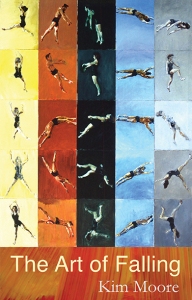
The Art of Falling Kim MooreThe quietly devastating central sequence in Kim Moore’s The Art of Falling, entitled ‘How I Abandoned My Body To His Keeping’, is the story of a woman embroiled in a relationship marked by coercion and violence. These are close-to-the-bone pieces, harrowing and exact, where in place of love there is posession, and the memory of violence is a haunting presence: ‘when I’m afraid,/ it’s only then I think of him, or remember his name.’ The poetry itself, though, is a means of catharsis, and throughout the collection pulls us like a current towards lighter, brighter things: an imagining of Percy Bysshe Shelley’s childhood mischief; a tattoo inspired by Virginia Woolf; beautifully imagined character portraits of John Lennon, Wallace Hartley and Chet Baker.

Find both amazing books in a bookshop near you!


Take a look at the Library of Freedom Poems on the National Poetry Day website, where you’ll find a great selection of themed poems to read.

Join in on National Poetry Day: find out what’s happening near you on the events map. You can also join in the conversation by using the hashtag #NationalPoetryDay on Twitter.


Save

Save