Posted on

Friday Poem – ‘Festival Field’, Paul Henry

Paul Henry Friday Poem Festival Field

In just under a month, Paul Henry will read from his remarkable tenth collection, The Glass Aisle, at the Seren/Cornerstone Poetry Festival. In the meantime, please enjoy ‘Festival Field’, one of the poems from the book.

The Glass Aisle Paul HenryThe Glass Aisle is Paul Henry’s tenth book of verse and features all the lyrical precision, empathy for the human condition and deep sense of temporal loss that have become the hallmarks of his work. The poems move between rage and stillness, past and present, music and silence. The title poem is a moving elegy to displaced workhouse residents, set on a stretch of canal in the Brecon Beacons National Park, in which a telephone engineer unwittingly connects the centuries.
Paul’s event at the Seren/Cornerstone Poetry Festival will feature a stunning musical collaboration with singer/songwriter Brian Briggs, lead singer of the band ‘Stornoway’. Tickets are available: book now.


Festival Field by Paul Henry Friday Poem


Paul Henry on ‘Festival Field’ (from The Glass Aisle):

An earlier draft of this poem began with cows slithering in the mud of a churned up field, a few days after a music festival. (I was thinking of a field in Portmeirion where ‘The Flaming Lips’ had played). Poor field, like a tourist resort handed back to its quieter self in winter, a patch of land disturbed by who knows what other gatherings across the centuries – fêtes, battles, rituals….

Then I found myself in a smaller field, a smaller festival, in Flintshire, in the late summer – a much calmer affair. There were hay bales scattered about, a blacksmith, real ale, craftspeople sharing their skills… and music, of course. The late sun arrowed about the place and the field, for moments, held all of its time. And love was as old as the field.

Find out more about Paul and his forthcoming events on his website.


The Glass Aisle is available to pre-order from the Seren website: £9.99

Join our free Book Club for 20% off every book you buy from us.


Posted on

Friday Poem – ‘A Pembrokeshire Artist’, Tony Curtis

A Pembrokeshire Artist Tony Curtis Llangwm

This week we have a treat for you – our Friday Poem is one of the new poems from Tony Curtis’ forthcoming From the Fortunate Isles: New and Selected Poems (Seren, October 2016).

From the Fortunate Isles: New and Selected Poems, Tony CurtisFrom the Fortunate Isles, published in celebration of the author’s 70th year, features poems from ten of Curtis’ published collections as well as a substantial number of new poems. This is a poet whose themes and variations remain consistent: a profound interest in the wars of the last century, an abiding fascination for all art forms, particularly painting and poetry, tender attachments to family, and (most evident in the poem below), a deep affection for his roots in West Wales.


A Pembrokeshire Artist
John Knapp Fisher (1931 -2015)

An evening with the rain coming in,
that sea so cold and unsettled, a heavy graphite,
you’d not have gone out with your mackerel lines
in the Viking or any of her successors
from the stone-brick embrace of Porthgain.

We’ve eaten our fill at your wake, John,
the Sloop Inn squeezed tight
with suits, black ties and memories.
Wives, patrons, grandchildren.
Photos of you through all seven ages on the screen.

Inland to Wolf ’s Castle and as far south as the cathedral
the farms, haggards and holiday lets
shrug down for the cold night.
You’d have worked to conjure the reluctant light
discovered in them under this empting, moonless sky.

And the first scurp coming would have dabbed
your paper, blossomed and been coaxed,
smudged, into the finished sketch.
Now the county will have to sing its own spirit,
compose its own shape, keep its own watch.


If you would like to listen to Tony read from his forthcoming collection and other books in his native Pembrokeshire, don’t miss his event at the Llangwm Literary Festival, Saturday 12th August. More details here.

You can buy copies of Tony Curtis’ poetry collections, anthologies he has edited, critical essays, and other writing direct from us (20% off for Book Club Members):
Crossing Over
Heaven’s Gate
Tokens for the Foundlings (ed Tony Curtis)
After the First Death (ed Tony Curtis)

Wales at War
Real South Pembrokeshire
Keep an eye out on the Seren website – Tony’s new collection, From the Fortunate Isles: New and Selected Poems, is coming soon…

Posted on

Short Story of the Month | ‘A Bird Becomes A Stone’ by Jo Mazelis

Our January Short Story of the Month, still available to read, is ‘A Bird Becomes A Stone’ by Jo Mazelis, which features in her beautiful new collection Ritual, 1969, due to be published April 2016.
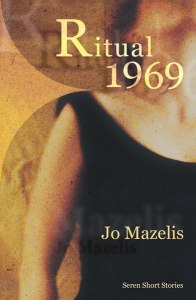
A Bird Becomes A Stone from Ritual, 1969 by Jo Mazelis

This, her third collection, welcomes you to a darkly disquieting world of make-believe and performance, where nothing is quite as it seems and first impressions may only lead to further disguises and false trails. Twins, circus acts, playground games and play-acting, the path from the schoolyard to adulthood is beset with misunderstandings, missed dates and traps for the unwary.

Awarded a Jerwood Fiction Uncovered Prize for her debut novel Significance, Jo has also had numerous short stories in anthologies and listed for awards, including five short-listings for the Rhys Davies short-story prize. Several of her stories have been broadcast on Radio 4.


A Bird Becomes A Stone

This is an extract. Read the full short story for free on our website.

The film Sarah had volunteered to act in was written and directed by a Welsh girl called Catrin, who was at college in Bristol. She’d brought a crew of other students to Wales, one to do sound, another was a cameraman. There was also a sulky girl with bad skin called Morgana whose role was not explained. They drove in a grubby white VW van up to the Brecon Beacons, careering and bumping along narrow tracks in search of good locations. The cameraman drove and the girl with bad skin sat up front because she claimed she’d get carsick otherwise. So the other three had to suffer in the back, wedged in among the film equipment and two plastic sacks of what seemed to be dirty laundry but turned out to be props and costume.

Sarah played the main role. According to the storyboard a lot of footage would consist of her running through woods, along a shoreline (brooding clouds and crashing waves in the background) and along treacherous mountain paths. The schedule demanded that they shoot with her for three days, then on the fourth and fifth days another actor would join them. He was to play a man who had molested her as a child. The chief premise of the film was that every impression in the early sequences led the audience to believe she was being chased, but actually it emerged that her character was the pursuer. The hunted becomes the hunter.

They parked at a lay-by above a stream. The day was still and unusually warm, white puffs of cumulus clouds moved lazily across a yawning blue sky.

‘This weather is crap,’ Catrin said.

The girl with the bad skin sat on a rock and stared hatefully at the rest of them as they unloaded the van.

From eleven o’clock until almost two, Sarah helped Catrin and the sound man scatter torn white sheets along the side of the stream while the cameraman shouted directions at them. At two they stopped for a lunch made by Catrin’s mother. Sandwiches with cheap white bread, some sort of meat that might have been pork or possibly turkey, hard-boiled eggs, crisps and an assortment of chocolate-covered biscuits which were warm and sticky and reminded her too much of long journeys in the back of her parents’ car; of her loneliness as an only child.

After lunch Sarah climbed into the back of the van and struggled into the costume they had brought for her; a grubby, ivory-coloured floor length dress. It had a plunging front and tied behind her neck leaving her back bare. It was made of artificial satin and the rough skin on her hands caught on it like tiny barbs.

In this scene she was meant to wander along by the stream charting a course between one discarded rag and another. Catrin showed Sarah some photographs taken after a battle; women searching for their menfolk in a field littered with the corpses of soldiers, explaining that this was the atmosphere she wanted to convey.

Sarah set off barefoot; in places mud oozed between her toes. The dress was thin, she shivered as the sun began to drop behind the mountains, but she persevered.

That night Sarah dreamt that she was filming the scene over and over, but her dream was invaded by the war photograph and as she stared at each flung-down rag, the torn scraps came to life turning into dreadful ghosts with scarred and half-flayed skin who moaned and tried to touch her.

The next day Catrin was overjoyed as weighty blue-grey cumulonimbus began to gather behind the mountains threatening an approaching storm.

‘We’re going further north today, then as far as Dolgellau on Thursday.’

There was little time wasted on the second day; they parked on a bleak mountain with a ribbon-like road running through it. Plynlimon hunkered under dark skies to the north.

‘Now just run towards the camera but look beyond it, not directly at it.’

She ran. Barefoot in wet grass peppered with shiny black sheep droppings, her long dress saturated up to her thighs. A few times she fell but pulled herself up and stumbled on.

‘That was brilliant! It looks so real when you fall,’ Catrin said.

‘Hey,’ the sound guy said, touching her arm gently. ‘Is that blood? Did you hurt yourself?’

She looked down; the dress was torn over her right knee, bright crimson blood mixed with muddy grey stains. She lifted her dress, her knee was grazed and in one place a small cut sent a trickle of red coursing down her leg and over the arch of her foot.

Continue reading ‘A Bird Becomes A Stone’ here.


Jo Mazelis’ new collection, Ritual, 1969, will be published by Seren in April 2016. More information coming soon to the Seren website.

Posted on

The World, the Lizard and Me – Incoming Autumn Reads

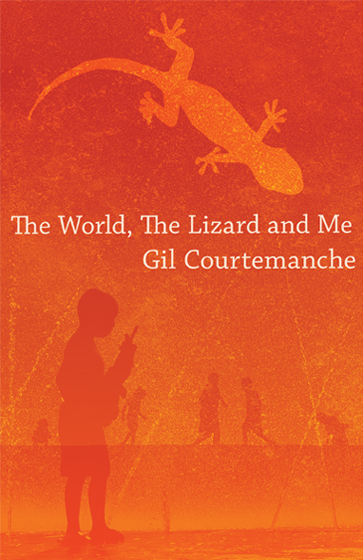
The World, The Lizard and Me - Gil Courtemanche

I know, I know – summer has hardly begun! But here at Seren, we’re already excited about our forthcoming Autumn books.  Top of my reading list is The World, The Lizard and Me.  Which of these titles are you most excited for?

You can find all these upcoming releases on our website.

The World, The Lizard and Me - Gil CourtemancheThe World, The Lizard and Me
by Gil Courtemanche

Gil Courtemanche (1943-2011) found worldwide acclaim for his first novel, A Sunday at the Pool in Kigali (2000), which dealt with Rwandan genocide and the AIDS crisis whilst immersing the reader in a bittersweet love story.
The World, The Lizard and Me was first published in 2009 and we are proud to bring you the first English translation of this enthralling story.

The World, The Lizard and Me follows the life of French Canadian Claude Tremblay who, since he was eleven has sought justice for the voiceless victims of war. His passion for justice has taken him to a job at the International Criminal Court in The Hague, where he pursues the conviction of Thomas Kabanga, a Congolese warlord charged with creating child soldiers in the civil war there.
Defeated in court due to a legal technicality, Tremblay finds himself at a moral crossroads and travels to Congo to gather more evidence. Moral boundaries blur in a culture Claude thought he understood, and a different sort of justice is formulated and executed.

The novel is informed my Courtemanche’s own experiences of reporting in Africa, and his depiction of the region is highly evocative, bringing into question the nature of evil and the effects and consequences of childhood.

The World, The Lizard and Me is out in October 2015, and you can read a more detailed description of the book here.

dark mermaids, anne lauppe-dunbarDark Mermaids
by Anne Lauppe-Dunbar

Doping in sport is an incredibly current issue, raising questions of morality and responsibility.

In Dark Mermaids, Anne Lauppe-Dunbar depicts a political system that shockingly doped its youngsters to sporting superhero status, and then left them to fend for themselves.

Shortlisted for the Impress and Cinnamon First Novel Prize, this East German noir thriller is set in 1990, a year after the fall of the Berlin Wall.

Unhappy West Berlin police officer Sophia is called on to investigate the murder of her childhood friend Kathe, after her beaten body is discovered in Sophia’s local park. As she reluctantly delves into the sordid Stasi secrets of those she grew up with, Sophia uncovers a web of horrors about her own abusive past as a child-swimming star in the former GDR. But her hunt for the truth has not gone unnoticed by those close to her, people who still have too much to hide.

Anne says of her novel: ‘I wrote Dark Mermaids as my refugee mother’s daughter: a child of the GDR who fled westwards carrying arcane knowledge of a country in which secrets and lies were endemic.’ In writing the novel Anne has extensively researched what is known of athletes doping and training in the area of East Germany she writes about.

Dark Mermaids will be available in September, and you can find out more about the book here.

Star-Shot_72rgbStar-Shot
by Mary-Ann Constantine

This mysterious, captivating tale weaves together stories of four people whose paths cross outside Cardiff Museum, which is only a stone’s throw away from us here in Bridgend.

Both fable and mystery, Star-Shot is set in a small world of parks and galleries around Cardiff’s National Museum, in a time not quite our own. As their paths cross, characters reveal stories of obsession, loss and recovery, creating a fragile network of relationships that resist the inexorable channels of silence eating into the city.

Poignant and humorous, Star-Shot is an exploration of how objects and images can focus our grief and desire; it is also a meditation on the regenerative power of garden ponds, and the cosmic significance of frogs. Beautifully illustrated with woodcut-style motifs by Clive Hicks-Jenkins, this is a subtle urban novel with a supernatural twist.

Star-Shot will be available in October, but for now you can read more about it on our website.

I hope you enjoyed finding out a little of what’s to come this autumn at Seren. This has only been a snippet though, so for the full list of forthcoming titles, take a look at our Coming Soon page.

Posted on

An Interview with Damian Walford Davies

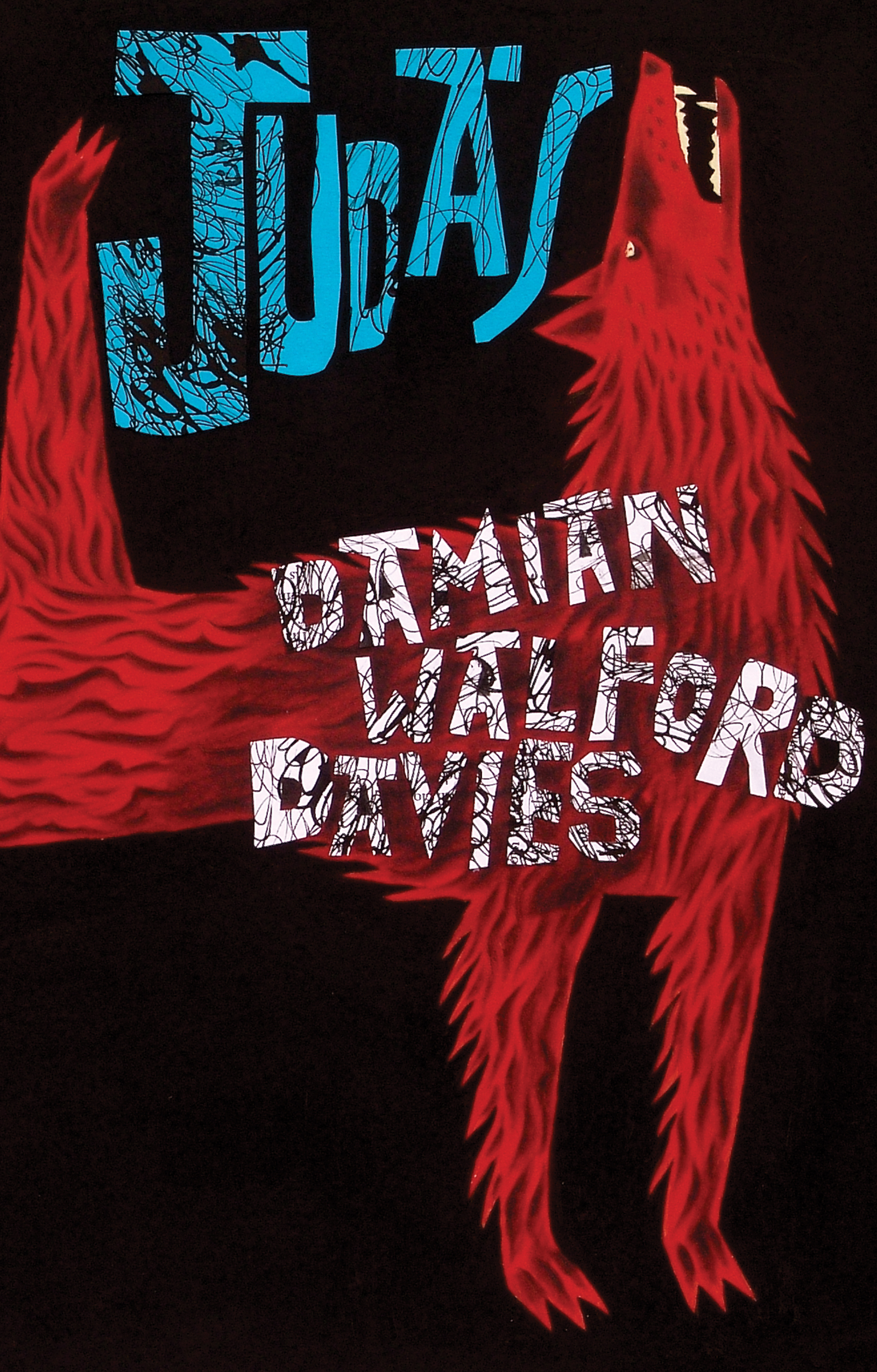
Today we’re chatting to poet Damian Walford Davies about his latest collection, Judas, which you can pre-order from our website here.

Damian is a poet, writer and librettist. He is the author of three Seren collections – Suit of Lights (2009), Witch (2012) and Judas (2015), together with the pamphlet Alabaster Girls (Rack Press, 2015) and the co-written volume, Whiteout (Parthian, 2006). He is Head of the School of English, Communication & Philosophy at Cardiff University, where he specialises in Romanticism, the two literatures of Wales, and Creative Writing.

Had you always wanted to write about Judas, whether it was Judas the man or Judas the metaphor, or did the poems in this collection quietly creep up on you?

Judas creeps up on you, certainly. I’ve always found him (or ‘it’ – Judas is a phenomenon, a problem, a crux (‘cross’), a paradox, a sore point) compelling. (The same with Lazarus, by the way, but that’s another, if related, story . . .) He is contradictorily represented in the canonical gospels, and that’s before we come to the second-century AD gnostic Gospel of Judas, where he is Christ’s confidant. There are a myriad of historical, theological, political and psychological arguments as to why Judas did what he did (if he did). To accept the historicity of Judas – which many scholars of first-century Palestine and early Christianity do not – means recognising him as an elusive figure. He is a no-man as well as a knot of contradictory representations, built up over twenty ideological centuries. (See Susan Gubar’s excellent 2009 biography of Judas.) This is the guy with the dark halo.

What is it you enjoy most about exploring history through poetry?

I like to write against big accepted narratives, intervene in them at personal, psychological levels, offer case studies of emotional quandaries, reveal terror on local, personal scales. I use the dramatic monologue for this, aiming for an imaginative inhabitation of voice and situation, aware at the same time that ventriloquising others has an ethics attached. This is Judas’s speaking platform, throughout. My previous Seren collection, Witch, did similar things, exploring how a witch is ‘made’ in the tense atmosphere of 1640s Suffolk. In Judas, I’m constantly negotiating suggestive gaps in the canonical gospel accounts. One has to be nuanced here, as well as bold. I made the decision from the outset to play with timescales, and so Judas is encountered during the week after the crucifixion, wandering through first-century Jerusalem one minute, but then clocking two women air kissing in the contemporary city’s Sheraton Hotel the next. Judas quotes Bob Dylan. Time is spliced; the Arab-Israeli conflict is as real to him as the Roman occupation. He is disturbed by a history that hasn’t yet happened. So I enjoy querying dogmatic versions of history, indulging in counterfactuals (which is more than a parlour game – it’s a way of changing the future). History always happens somewhere, and (like religion) is in many aspects terrifying. All this is not to say that the collection is iconoclastic, or without belief/faith, or blandly ‘materialist’. Quite the opposite. Multiple ironies mean that there are no final, fixed positions in this collection.

Throughout the collection you play around with many biblical images, such as the ‘thorns’ in ‘Annunciation 1’ and the ‘silver coins’ in ‘Denominations’. I imagine it would be difficult to write a poetry collection titled Judas without them! But did you ever worry about finding a new way to use imagery that has been around for centuries?

I saw it as an opportunity – to inflect, defamiliarise, and recontextualise these ‘core’ images. Judas is a collection in which all these images exist (I hope) in a complex, kinetic, shifting relationship. Did I worry about this? All the time. Poets must always be on edge, edgy. Poetry is about edgework. Judas is published at a time of political-religious crisis and horror. The collection is a reflection on fundamentalism, belief, faith, history, knowing, unknowing, violence, intolerance and human beings as agents and casualties of history. And (of course) beauty, friendship, love, worlds of spice.

You paint a very vivid picture of Jerusalem throughout the collection, picking out places like Yad Vashem in ‘In Vino’ and Ben Yehuda Street in ‘Siloam Pool’. Was giving your poems a specific setting important to you while writing the collection?

It was crucial. I was lucky enough to be able to visit Jerusalem in April 2012, and parts of the volume were written there in a hostel room under the muezzin’s recorded call to prayer and on the hostel’s roof, from which I could see the Al-Aqsa mosque to the east, the Church of the Holy Sepulchre to the west, and a sea of satellite dishes in between. And so the journeys that the shattered Judas takes through the old city are the ones I myself took through the narrow streets – full of managed but mangy colonies of cats – and souqs, around the Baths of Bethesda (a place of deep peace), down to the Garden of Gethsemane (from which I phoned my 93-year-old grandmother, who quite understandably asked ‘How big is it?’), back up to the ‘tufted wall’ of the Temple and through the four quarters of the divided (and machine-gun-patrolled) town. Judas is a map. Gethsemane, by the way, is tiny.

What, if anything, have you learned about Judas and the idea of evil through writing this collection?

He wants answers as much as we do. He’s still waiting.

Pre-order Judas from Seren’s website.

Posted on

Friday Poem – Studio Flat

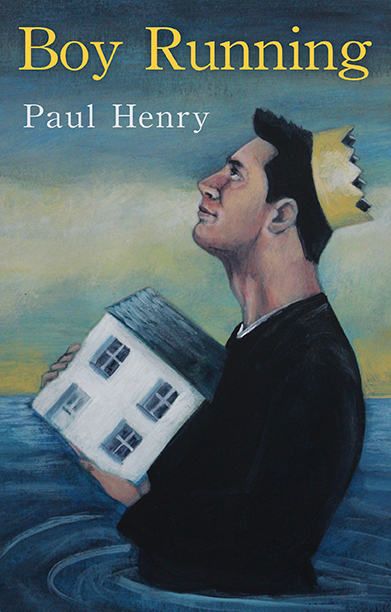
Boy Running, Paul Henry

Studio Flat comes from Paul Henry’s sixth collection, Boy Running, available February 2015.

Boy Running has three distinct sections:

Recently reeling after a marital break up, poems such as Studio Flat deal with the aftermath of divorce. The poet is left to sift through the emotional fallout and the physical reminders of a shared life left behind: tables, lamps, metronomes, pianos, guitars. The poet’s sons are at the heart of this section where pathos is balanced by humour amidst the characters of a small country town.

A second section moves to the Welsh coastal town of Henry’s childhood, Aberystwyth, and the summer of 1969

In the final sequence we meet Davy Blackrock, a washed-up songwriter and modern day alter ego of Dafydd y Garreg Wen (David of the White Rock), the blind 18th century harpist and composer who fell asleep on a hill and dreamt the famous song which bears his name. In contrast to David of the White Rock, Davy Blackrock, ‘star of an ashen town’, drags his guitar from street to hotel to bedsit, an unsettled ghost who dreams of the perfect song.

Studio Flat

Socks hang like bats from a skylight.
They may be dry in time for the moon.
The camp site owner’s water-feature
drains more blood from the sun.

Cars queue for the narrow bridge.
Birds catch their pulses and fly.
I am suddenly old. What’s an attic
but a bungalow in the sky.

And where are you, my sons?
I heard your voices in the bells
of snowdrops pulled by the wind.
These tulips have lost their smell.

Perhaps I could tell you, one day
where the snowdrops went, why old men
dry their socks on the moon, and what
darkened the skylight, just then.

Pre order Boy Running from Seren’s website.

Posted on

Three Evocative Poems from Pascale Petit’s Award Winning Collection, Fauverie

Pascale Petit’s eagerly anticipated new collection Fauverie, will be released in just a few days. Fauverie is the award winning follow up to Pascale’s previous collection The Zoo Father.  With Paris and the majestic Jardin des Plantes as it’s stage, Fauverie redeems the darker forces of human nature while celebrating the ferocity and grace of endangered species.

Arrival of the Electric Eel

Each time I open it I feel like a Matsés girl
handed a parcel at the end of her seclusion,
my face pierced by jaguar whiskers
to make me brave.
I know what’s inside – that I must
unwrap the envelope of leaves
until all that’s left
squirming in my hands
is an electric eel.
The positive head, the negative tail,
the rows of batteries under the skin,
the small, almost blind eyes.
The day turns murky again,
I’m wading through the bottom of my life
when my father’s letter arrives. And keeps on arriving.
The charged fibres of paper
against my shaking fingers,
the thin electroplates of ink.
The messenger drags me up to the surface
to gulp air then flicks its anal fin.
Never before has a letter been so heavy,
growing to two metres in my room,
the address, the phone number, then the numbness –
I know you must be surprised, it says,
but I will die soon and want to make contact.


Emmanuel

In the last days, after all he said
and didn’t say, his iron tongue
resting in the open bell of his mouth,
the belfry of his face asleep,
I climbed the spiral steps of the tower –
up the steep steps of the bell cage, to the bourdon,
the great bumblebee, Emmanuel.
I stared at that bronze weight, the voice of Paris,
as if it was my father’s voice
and I had climbed up his spine,
all thirteen tons of copper and tin,
the clapper half a ton of exorcised iron.
I washed the outside with holy oil for the sick,
the inside with chrism. Let all badness
be banished when he rings. Let the powers of the air
tremble – the hail and lightning
that fell from his tongue on our last days together.
I made the sign of the cross. His note
was F sharp, the hum
deep enough to reverberate through the rest of my life.
I stood upright in him.
I placed myrrh inside his mouth, incense
smoking like a last cigarette.
I praised him. I assembled the priests.
I mourned his death.
Storm clouds dispersed. Thunderbolts scattered.
I tolled in Sabbaths. I raised
my father’s life to its hoists and rang him until I was deaf.
I proclaimed peace after bloodshed.


Sleeping Black Jaguar

1.
A solar eclipse – his fur
seems to veil light,
the smoulder

of black rosettes
a zoo of sub-atoms
I try to tame –

tritium, lepton, anti-proton.
They collide
as if smashed inside

a particle accelerator.
But it’s just Aramis sleeping,
twitching himself back

to the jungle, where he leaps
into the pool of a spiral
galaxy, to catch a fish.

2.
Later, the keeper tells me
Aramis has had surgery
for swallowing

a hose-head
where his hank of beef
was lodged. But

what vet could take
a scalpel to this
dreaming universe?

What hand could shave
that pelt, to probe
the organs

of dark matter, untwist
time’s intestines
and stitch

night’s belly
together again, only
to return him to a cage?

Fauverie is available to pre-order with 20% off when you join our online book club.

Posted on

Forthcoming Title: ‘Jonah Jones: An Artist’s Life’

To be released on 18th July 2011.
Author:

Peter Jones

Sculptor, painter, letter cutter, stained glass artist, novelist, travel writer, academic and administrator; Jonah Jones (1919-2004) was a twentieth century renaissance man.
Born near Newcastle into a family of miners he became a librarian before reluctantly volunteering for a non-combatant role in the Medical Corps during he second world war. He saw action in North Africa but also met a number of artists and craftsmen in the RAMC who fired his own passion to become an artist. After the war, now married and having survived severe case of TB he settled in his family’s homeland of Wales and began his ‘on the job’ education as a sculptor and letter cutter. Much of his early work was at Clough Williams-Ellis’s Portmeirion villages. The two became close friends and Jones widened his circle to include Richard Hughes, Bertrand Russell, John Cowper Powys and Huw Wheldon.

In a varied career Jonah Jones produced intimate sculptures, monumental installations, and beautiful inscriptions, in addition to writing novels published by leading London houses, a biography of Clough Williams-Ellis and a hugely regarded survey of the lakes of North Wales.

Posted on

Forthcoming Title: ‘Second Chance’

To be released July 18th 2011.
Author:

Sian James

Kate Rivers has it all; London life, successful acting career, and caring lover Paul. So why, when she is unexpectedly recalled to the Welsh village where she grew up, are both her past and her present such a struggle to come to terms with? Where is Paul when she needs him, and why does her handsome cousin Rhydian seem to feature so much in both her memory and her present dilemma? First Published in 2000, this classic tale is told with skill and sympathy by novelist Sian James.

Posted on

Forthcoming Title: ‘Evan Walters: Moments of Vision’

To be released 1st July 2011.
Evan Walters ( 1893-1951) is perhaps the great hidden secret of Welsh painting in the twentieth century, an outstanding artist who awaits discovery beyond Wales. This book presents, for the first time, a generous selection of colour reproductions of his paintings – portraits, landscapes, still lives – with a biographical essay on the artist. The bulk of the book, however, is taken up by a host of responses to the paintings by leading artists, writers, poets and academics including Shani Rhys James, Iwan Bala, Mary Lloyd Jones, Jan Morris, Twm Morys, Nigel Jenkins, Rowan Williams, Dannie Abse, Peter Stead, Prys Morgan, Gillian Clarke, Tim Davies, Mererid Hopwood, Karen Ingham, John Barnie, Jon Gower, Peter Finch, Joe Dunthorne, Menna Elfyn, Janet Dube, Osi Rhys Osmond,  Mel Gooding and many others.The result is revealing of both Walters and the respondents, and becomes a fascinating commentary on creativity and inspiration.The book is unique in one other respect in that all the royalties are being donated to the Noah’s Ark Appeal for the Children’s Hospital of Wales.