Posted on

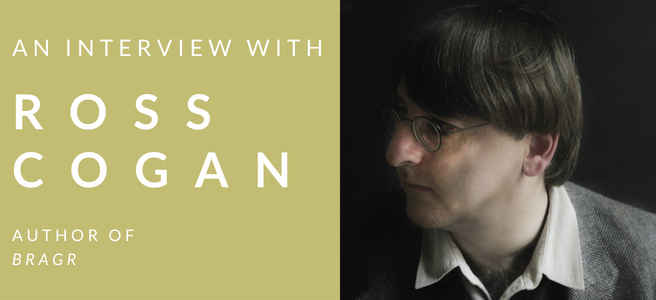
An interview with poet Ross Cogan

Ross Cogan BragrBragr is Ross Cogan’s third collection of poetry, an compelling mix of environmental woes, apocalyptic predictions, and richly reimagined tales from Norse mythology.

Where does Cogan’s inspiration come from, and what does he hope readers will take away from Bragr? In this interview, we aim to find out.


Where does your interest in Norse mythology stem from, and what made you
choose to combine your environmental concerns with these ancient characters, who are so detached from our modern woes?
I can’t remember when I first became interested in Norse mythology as such, though I have been interested in history and mythology since I was at school. But I would challenge the idea that the Gods and mortals of Norse myth (or other myths for that matter) are at all remote from our ‘modern woes’. The Norse Gods, like many pagan Gods, are personifications of different aspects of our world. Odin, for example, is associated with knowledge, wisdom, poetry and healing but also battle and death; Frigg, his wife, with wisdom and foreknowledge; Thor isn’t just the God of thunder, storms and strength, but also of farming and crop fertility; while Freyja is associated with love, sex, fertility and beauty but also, like Odin, war and death. Each would have had their sacred places, and the landscape would have been full of its spirits and monsters, and heavy with sacred associations. So to me the connections between the ancient Gods and our modern concerns are striking.

Through the course of Bragr a world is created in which the environment is
considered unimportant until it is too late. The ‘Bestiary’ section reads as a lament to the loss of many of Earth’s animals whereas the poem ‘Ragnarök’ describes the earth succumbing to a major natural disaster. However, the concluding poem of the collection, ‘Wreath’, is optimistic in comparison, suggesting that it is possible for the earth to recover. Does this interpretation match your own views on the planet’s environmental state?
During its 4.5 billion-and-something year history the earth has survived all sorts of major changes. It’s been far hotter than it is now and far colder. And for about 3.8 billion of those years there has been life on earth of some kind. But individual species come and go with dizzying regularity. At the moment we humans are busy fouling our nests and bringing about the sixth great mass extinction event in earth’s history. But the fact that this is the sixth mass extinction shows that the earth will survive and life will survive and, given time, recover. I’m less optimistic – in fact downright pessimistic – that human life will survive. But I don’t want to rule it out. Most people have heard of the great battle of Ragnarök that spells the ‘doom of the Gods’. However in my experience few realise that it doesn’t signify the end of the world or even the end of the Gods; a few survive, as do a few people, to start the cycle again. Personally I’m from the apocalyptic edge of the environmental movement, along with writers like Paul Kingsnorth (whose recent essay collection
‘Confessions of a Recovering Environmentalist’ is outstanding). I believe that
humanity won’t change its ways and that, even if it could, it’s too late; we’ve passed a tipping point and are heading towards a catastrophe from which no amount of wind farms and solar panels will save us. But I’d like to think that the door is still open, just as the writers of the original Eddic verse did, for remnants of humanity to survive and thrive. That’s the role of ‘Wreath’ in the collection.

If you could only recommend one poem from Bragr that is the epitome of your own values, which would you choose?
‘Lapstrake’. One of the best experiences you can have as a poet is when a poem breaks free from your control and you realise that you’re not writing it any more, it’s writing itself through you. It’s very rare in my experience, but this was one of them. The word is an old one for what’s better known as clinker building – the process of boat building where each stave overlaps the next. It’s a genuine art – boats built like this are very beautiful. But it also tends to result in craft that are versatile, stable, responsive, easy to handle and flexible enough to deal with high seas. The Vikings sailed to America in ships built like this. The poem emerged from my realisation that their shipwrights were, to an extent, following natural forms. It reflects my deeply-held belief that humans are often at their best when they live in harmony with the rest of the natural world, work with it and borrow natural models for use in their own creation. It also reflects my enormous respect for the skills of traditional craftspeople. I’ve always seen poetry as primarily a craft enjoining upon its practitioners the duty to practice for years, study the forms and the great poetry of the past, and never to be satisfied with substandard work. If I ever produce a poem half as amazing as the Gokstad ship, I will be happy. By the way, I was delighted when Carol Rumens chose ‘Lapstrake’ as her Guardian Poem of the Week for 6 August, so you can read it, along with her perceptive commentary, on the Guardian website.

The poems ‘Willow’ and ‘Wreath’ seem to mirror each other, as in both a tree
miraculously grows from branches removed from the tree. The central difference between the two is the environment in which it occurs; ‘Willow’ occurs in a land of plenty, whereas ‘Wreath’ takes place following a natural disaster. What conclusions do you hope readers will draw when reading these two poems in conjunction?
I see now that ‘Willow’ and ‘Wreath’ are companion pieces of a sort, but I must admit that it’s also a happy accident that they came to be written since both also describe real events. I really did plant a willow branch in the ground to mark a row of vegetables and it really did take root and grow into a sapling which, several years later I took down (it was now shading out the vegetable seedlings). I also pruned back a horse chestnut and was surprised when, the following year, the branches that I’d stacked up and supposed were dead, broke into leaf. As it happens there are a number of myths concerning trees that take root from branches planted in the ground. Most famously Joseph of Arimathea’s staff is supposed to have become the Glastonbury Thorn, but the Anglo-Saxon St Etheldreda’s staff apparently became the greatest Ash tree in the land – which looks to me like a pagan borrowing, since the link to Yggdrasil, the world-tree, is obvious. I was aware that trees could do this, and that willow branches in particular had a great ability to take root. However I was genuinely surprised by the Horse Chestnut. I’ve talked above about the role of ‘Wreath’ in the collection, representing as it does the possibility of redemption and survival after the calamity of Ragnarök. So reading the two poems together (and remembering that I didn’t specifically write them to be companion pieces – that just happened), they seem to me to reflect the way in which, in our time of plenty, we have tended to grow complacent and will cheerfully disregard, even hold in contempt, the miracles that occur on a daily basis.

In ‘Kvasir’s blood’, other names for the blood are listed including “the Mead of Poetry”. Do you feel that pain and suffering is essential for creating poetry or do you think you can write with emotional detachment and still create powerful work?
I know that many poets find that, as Henry de Montherlant said, “happiness writes in white ink on a white page”. Some have certainly done their best work when they were depressed. However, just as there are a lot of different poets with different personalities, I don’t think there’s one rule that suits everyone, and poetry written from joy or with emotional detachment can also work. Personally – and this is probably just a reflection of my own personality – I have a lot of sympathy with Wordsworth’s claim that poetry “takes its origin from emotion recollected in tranquillity”, as I need complete calm to write well. I can’t write when it’s noisy, or when I am upset (or for that matter overjoyed) about something. It almost feels as if, for me at least, writing poetry has something of the flavour of meditation, where you attain enough distance to be able to reflect upon and examine the emotions and
ideas that have provoked it. This also imposes some practical constraints: in order to write not only do I need quiet, I also need time – typically I book out a minimum of three or four uninterrupted hours and spend the first of these sitting and staring at a blank sheet before the words come to me. Incidentally, ‘Kvasir’s Blood’ is not actually blood but really is mead, or perhaps wine or some other fermented drink (Kvass is a traditional drink made across Russia and the Baltic from rye bread). So you might also ask ‘is the consumption of alcohol essential for creating poetry?’

What did you find most challenging about bringing the collection together, and what piece of advice would you give to aspiring poets who are trying to do the same?
I mentioned above my conviction that poetry was a craft and should be treated as such. And one of the things that means for me is cultivating patience. If you are learning how to play a musical instrument or build a cabinet, you will need to spend thousands of hours playing the same scales over and over again, or whole days sanding down joints until they fit perfectly. But few, if any, of us are born with patience. So the most challenging thing about writing, in my experience, is not writing. Lots of writing tutors now advise young poets to get into the habit of writing every day – which is fine if they’re going to treat it purely as an exercise and throw most of it away. What I would stress is that it’s just as important to know when you are too tired or emotional, or just lacking in inspiration, to write, and then have the courage to wait. Aspiring poets aren’t necessarily going to like this, but the advice I would give them is not to publish too early. There is a lot of pressure on young writers – especially those who want to get jobs in creative writing – to get that book out in their mid-, or even early, twenties when they can still be ‘the next big thing’. But this can lead people to rushing into print with work that’s not as good as it could have been, and possibly regretting it. Personally I didn’t publish my first book until I was thirty five, and looking back I wish I had held my nerve even longer.

What are your plans for the future? Are there any new works or events we can look out for?
With luck I will be doing a number of readings over the next year or two linked to Bragr. Other than that, like a lot of writers, I don’t much like talking about work in progress, but let’s just say I have a number of ideas I’m developing at the moment.


Ross Cogan will be reading from Bragr at Buzzwords in Cheltenham, Sunday 2nd September. You can also catch him at the Cardiff Book Festival, where he will be performing alongside a chorus of poetic voices in the Friday Night Poetry Party, Friday 7th September


Posted on

An interview with Cardiff author & legend, Peter Finch

Interview Cardiff Peter Finch

The Eisteddfod will soon be in full swing in Cardiff’s beautiful Bay area. We can’t wait to welcome you to Wales’ capital city – and to introduce you to our resident Cardiff expert, Peter Finch, who will be signing copies of his new book on the Welsh Books Council stand (84) on Wednesday 8 August, 1:00pm.

As you prepare for the marvellous week ahead, we thought you might enjoy learning a little more about the Welsh capital – so here is our interview with Peter Finch, who – as ever – is full of fascinating insight into his home city.

Peter Finch

Peter, you have been writing about Cardiff for quite some time now, with the first ‘Real Cardiff’ book having appeared in 2004. What do you perceive as the most radical change Cardiff has undergone in the last decade?
Changes to Cardiff seem to work in twenty year cycles rather than decades.  We didn’t have the Bay nor the Barrage, the Millennium Centre not the Senedd in 1980 but by 2000 we did.  In 2000 and other than right on campus there was barely a purpose-built student let available anywhere in the city.  Today they are everywhere, gargantuan, gleaming, glowing, growing, rocketing up in every district from right next door to the old Gaiety Cinema on City Road to the city’s highest of new high rises, the Bridge Street Exchange, at the bottom of Charles Street.  In the pipeline are plans for more.  Purpose Built Student Accommodation (PBSA) erected against a background of weak planning control and easy to manage building regulation they are the cash cows of property developers everywhere.   Put them up and then apply for change of use.  The cityscape will never be the same again.  In 2000 we had a green belt running right round the city.  Today that belt has shifted to become instead a green wedge, a green splash, a green smear.  In its place are the city’s new districts.  Plas Dwr, Churchlands and all the others. Cardiff expands. And expands. And expands.

The ‘culinary odyssey of City Road’ is marvellously well documented in Real Cardiff: The Flourishing City. For hungry Eisteddfod-goers, where would you recommend trying first?
.CN, the internet suffix for China, is the name of the city’s best Chinese eatery by far.  Here you can get top end Sichuan king prawn in chilli and pepper sauce, healthy option Kung Po chicken, and north east China salad in a style you’ll find hard to beat anywhere else in the city.  Failing that and for kebab fans Al Wali’s Omani Restaurant half way down and hiding behind a bus stop is pretty decent.  For Omani read Persian or Iranian or Egyptian, or Middle Eastern.  City Road is a feast from one end to the other offering meals at price points everyone can reach.

If you could be transported to any period of Cardiff’s history, which would you choose?
I think I’d want to see the heroic period of Cardiff’s industrial expansion in action first hand.  That would mean arriving in 1861 at the Royal Arcade and finding the very first Cardiff Free Library on the first floor.  Out the back they’d have a time machine, naturally, so having got here I could then get back.  I’d use it to slide back a further few years to 1849 to see Brunel move the Taff in order to build Cardiff General Rail Station for his South Wales broad gauge railway.  I’d spot a few numbers and then rush forward to 1886 to visit the brand new Coal Exchange, have a drink in the just opened Grand Hotel on the new Westgate Street, buy some cockles at the brand new indoor market and finally climb up the shiny new statue of John Bachelor to top his head with a road mender’s lamp, traffic cones not yet having been invented.   This was the period that made Cardiff, when the population boomed and when modern invention and business innovation flooded the place.  That flourishing must have been simply thrilling to watch.

Psychogeography is a particularly inventive way of mapping a place – how did you first become interested in it?
The Situationists who flourished between the fifties and the seventies were international social revolutionaries and avant garde artists.  I was running the journal second aeon at the time, a Welsh-based home for a world of avant garde poetry, so naturally I took note.  These people interested me.  They were an onward growth of the Dadaists and the Surrealists and seemed to me to be right at the cutting edge.  One of their members was Guy Debord ­– the man who invented psychogeography, the exploration of mainly urban environments for what they were rather than where they led.  The sense of place became more important than the place itself.  Why not view a city as an entity rather than a destination?  This was something I needed to try for myself.

Peter Finch Real Cardiff Flourishing CityWhat did you find most challenging in your process of writing Real Cardiff: The Flourishing City?
In writing these books you don’t sit about waiting for inspiration to strike, no hoping for those rays of Blakean stuff to come pouring down through the air and infest your work.  None of that.  This is work..  I need to immerse myself in my subject. Research it, walk through it, think about, talk about, listen to it, feel it.  I make notes.  Constantly.  I record things on the camera, take snaps, use the phone.  I check out the maps.  I check out the old ones and then the new ones.  I check  just how the used to spell the name of the place I am interested in.  Why was Rumney called Rompney? Why was Cardiff called Kairdiv?

I accumulate what I need to say and then find a way of starting out and saying it.  The starting is so important.  Get that right and the rest will flow. I work hard walking and thinking, note book always with me, and into it I make notes of how my start might go.  The walking helps the flow.  I ignore passers-by, I ignore interrupters, I am working so this poor and rude behaviour is entirely reasonable.

It’s also true that you then need to check and then check again.  I reread and redraft.  I get help from others to check too and I listen to what they say.  I recheck my spellings.  I look at what others have said and I try not to repeat them.  I acknowledge them if I do.

What’s the most challenging?  Transcribing interviews.  Getting that right.  And remembering to ask the right questions in the first place.  I always double check with my interviewees.  I let the subject see what I intend including and ask them if they are happy.  If they aren’t or I’ve got it wrong somehow then I put it right.

And finally, in the closing pages of The Flourishing City, you wonder about Cardiff ‘how it could be’, and tell us, ‘Cities are never finished’. Is it also true, then, that you’ll never be finished exploring this city of yours?
I think that once a city gets above a certain size there will always be new things to discover about it.  Not only is Cardiff big enough to keep me permanently involved but it is also changing constantly, often at a bewildering rate.  No matter which part of it I find myself in there are always new things to look at, new roads to walk down, new paths to follow and new routes to create.  Tracking the lost can be just as thrilling as delighting in the newly discovered.  The moment I finish a volume of Real Cardiff something new or different or previously unseen appears.  Buildings get built.  Buildings get torn down.  Populations flourish.  Roads and walkways bend and turn offering new and different vistas.  This capital of ours is a great Welsh place, far more involving than most people think. Try it. Just arrive and open your eyes. Real Cardiff: The Flourishing City will give you a few hints.


Real Cardiff: The Flourishing City is available from the Seren website: £9.99

Join our free Book Club for 20% off every book you buy from us.


Posted on

An interview with novelist Naomi Krüger

Interview novelist Naomi Kruger

Naomi Krüger MayNaomi Krüger’s debut novel, May, provides a sensitive and moving insight into the life of the title character. We see May in glimpses through the eyes of her loved ones, and from her own perspective: from the past to her present in a care home, where she now struggles to maintain her identity and memory as she wrestles with the effects of dementia.

What moved Naomi to write such a novel, and how did she go about it? In this interview, Seren’s Rosie Johns asks Naomi all about the creation of May.


What do you think it is about fiction that makes it a good form in which to address subjects such as dementia? 

Dementia is something that inspires a lot of fear and is often represented in the media in reductive and sensationalist ways. What I think fiction can do is give nuance to these kinds of representations. It can allow us to imagine what it might be like to live with a disease that affects memory, identity and perception. It can remind us that someone with dementia is more than a diagnosis. It can complicate the stereotype. But in some ways dementia resists narrative representations because the very things we need to write and read a story (the ability to make connections between past and present, the ability to anticipate what comes next) are disrupted. So it’s a complex thing to try to narrate in first person.


In May, there are several different narratives of which May’s story –despite being the thing to connect them all – is only a part. What influenced your decision to depict this story in such a way? 

I wanted May to be part of a community of voices. In some ways this was a practical choice because it would be hard to sustain a whole novel in such a fragmented consciousness. But I also wanted to show that May’s identity is inter-subjective. She has dementia but she is also part of a family and a community. She is influenced by her past experiences and her current environment in the care home. As I began writing the other narratives, interesting parallels emerged. Many of the other characters feel lost or alone. They forget things, lie or fail to speak. They are not as different from May as you might imagine at first. There are opportunities for connection and although the characters don’t always take these, I wanted readers to sense these spaces, to see May through the eyes of other people and build up a complex picture of someone who struggles to speak fro herself but still has things to communicate.


Given the delicate nature of the subject matter and the abstract style in which you approached it, did you find narrating May’s perspective difficult? Were there any other characters whose narratives were particularly easy or difficult to write? 

Capturing May’s perspective was a shifting experiment. At times it felt like a giant imaginative leap. Although she is a fictional character I did feel a sense of responsibility to research the effects of dementia and spend time with people who live with the disease to get a sense of the reality. But of course this varies from person to person and diagnosis to diagnosis. Ultimately it is an approximation of something often beyond language that has to feel as ‘real’ as possible. Afsana was another character that I felt a real responsibility to. I didn’t find her difficult to imagine or write, but because I was taking a cultural leap I spent a lot of time researching and trying to make sure the details were right.


Another character we get very close to throughout the novel is May’s grandson, Alex. He finds his grandmother’s deterioration particularly hard to deal with, especially when her memory of him fades. What would your advice be to those who find themselves in a similar position to Alex?

I think it can be very scary and upsetting to feel unseen and unknown by a person who has  previously been a big part of your life and identity. This can hit particularly hard for young people who are still in the process of finding their place in the world. I am very fond of Alex as a character. Although the book is not autobiographical his experience is very loosely inspired by my own reaction to my grandfather’s Parkinson’s related dementia. He lived with my family for my whole life and died when I was sixteen. When he began to get confused and hallucinate I didn’t deal with it very well. I went from daily contact to avoiding him as much as possible. When he was transferred to a home I didn’t visit him as much as I could have. I didn’t know what to say. My advice to my younger self would be to go anyway, to meet him wherever he is. To listen, to communicate through music or photographs or touch, to feel the fear and still go.


Finally, if you could recommend one book that readers of May will also love, what would it be?

I’m going to cheat and say three!

Moon Tiger by Penelope Lively: A book that plays with memory, hope and regret in really interesting and beautiful ways.

The Turning by Tim Winton: A collection of interconnected short stories set on the Australian coast. I love the way the characters re-emerge, trespass and become more and more complex with each story.

Olive Kitteridge by Elizabeth Strout: Another collection of stories, but this time focused on one main protagonist. I love how the book builds layers of relationships often through the mundane and domestic details, the moments that build and accumulate.


May is available from the Seren website: £8.99

Join our free Book Club for 20% off every book you buy from us.


Posted on

Paul Deaton on Therapy, Honesty, and Exiting the ‘Poetry Closet’

Paul Deaton therapy poetry

This article was originally published in Therapy Today (April 2018) and we thank the editors for granting permission for its reproduction here.

‘Without her mirroring, maybe I’d have stayed in my poetry closet. Her affirmation was the turning point in my adult life. I felt I’d finally been given permission to have a voice’

Ten years ago, when I was 40, I saw an advert for a poetry course at Bristol University. It was an adult learning programme, which, sadly, is no longer offered. I had to submit six poems before being accepted. I’ve always written, and always used poetry as my mirror, to know and explore who I am. But I’ve always done so as a guilty pleasure, a closet hobby.
The course was run by a grounded, passionate and sometimes fearsome poet. It was challenging in the way that therapy is challenging; getting the poems to a level of truth and meaning, of genuine authenticity, isn’t easy. People often get the wrong idea of poetry; they think of it as something flaky. I was struck by how powerfully my teacher responded to my work. She was serious about it. She said it had value, more than I had chosen to give it. Tellingly, what she conveyed was that she believed in it.
Looking back, this was a huge moment. She opened a door that had been firmly shut. Without her mirroring, maybe I’d have stayed in my poetry closet. Her affirmation was the turning point in my adult life. I felt I’d finally been given permission to have a voice.
Up to that point I’d been working in publishing sales. I’d graduated in psychology as a mature student when I was 33. In my final year, I fell ill with Hodgkin’s disease. Even though I eventually came out with a top degree, when I graduated, rather than being full of confidence, I was broken. I had lost hope in my own future. I also felt I’d failed. The sales job was some bizarre gesture to my father; I was still trying to get his love, to prove to him I could be a man in a man’s world. It wasn’t me at all.
My relationship with him had been tense, difficult and baleful. I didn’t trust him, and that lack of trust fed into me. I wouldn’t trust myself or my own instincts. That poetry course opened the door to a side of my personality I had done my damnedest to shut away. Once open, there was no going back to the repressed darkness. I’d found a little light and began a process of reliving that opened out my 40s. I could no longer afford to not be myself. There wasn’t time.
I started to trust in my more nuanced skills – thoughtfulness and reflectiveness; to trust that I could be and offer something else. I entered therapy and was ‘blessed’ by a male therapist, week in and week out. It was a revelatory experience to trust a man. Like a new tide, I returned to my love of psychology, and finally had the confidence to start my counselling training. And, amid the study, my new job with the NHS, gardening work and marathon running, I followed on with a commitment to my poetry. I sent my poems into the world, and to my surprise, they were published.

Paul Deaton poetAbout Paul
Paul Deaton is a poet, writer and counsellor-in- training at BCPC Bath. Seren has just published his first full-length poetry collection, A Watchful Astronomy.


Paul Deaton A Watchful Astronomy

About A Watchful Astronomy:
A Watchful Astronomy is such an unclouded, moving and accessible collection it should be prescribed by the NHS for those who say they cannot stomach poetry because it’s too difficult or irrelevant.’
– Poetry School
Haunted by a father ‘like a wounded bear’, the poems in Paul Deaton’s debut collection, A Watchful Astronomy, are tense, exact and often beautifully formal.


Posted on

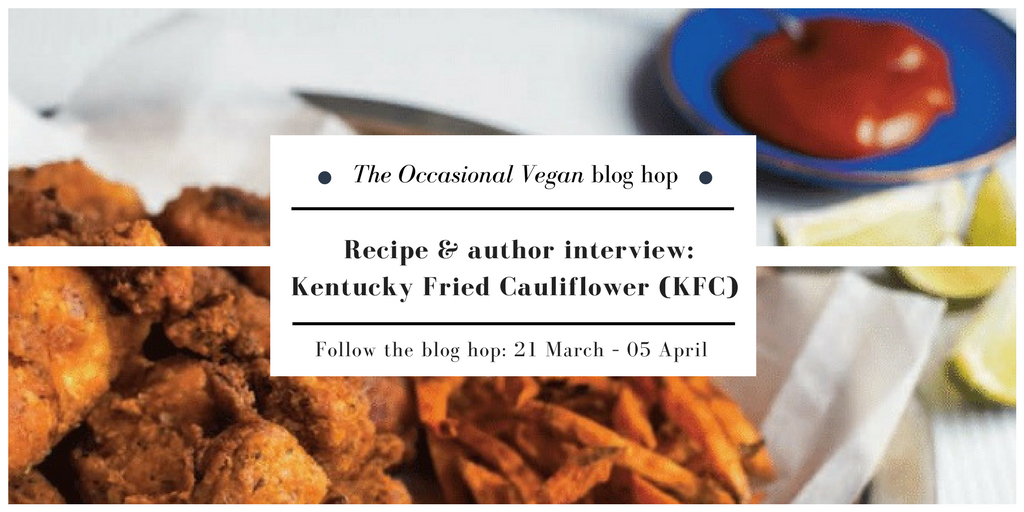
Recipe & Interview with Sarah Philpott – The Occasional Vegan Blog Hop

The Occasional Vegan blog hop KFC recipe

Today marks the beginning of The Occasional Vegan  blog hop – two weeks of recipes, giveaways, reviews and articles from some of the UK’s best foodie blogs. To kick things off we have an interview with author Sarah Philpott, and a free recipe – Kentucky Fried Cauliflower.

The Occasional Vegan Sarah Philpott

The Occasional Vegan, your new cookbook, has just been released and we couldn’t be happier. You describe in the introduction how you dived straight into veganism, giving up meat and dairy cold turkey after making the decision that you wanted to eat more ethically. What was the hardest part about changing your diet so radically and so quickly?

Well, it was a bit of a shock to the system and it took my body a little while to adapt so I was quite tired and hungry at first. That didn’t last for long though, and as my taste buds changed, I soon realised that there was so much food for me to eat. It’s easier now than ever because there are so many vegan alternatives out there and plenty of biscuits, cakes, and even cheeses, to enjoy.

Would you recommend the same approach to others who are considering the vegan diet? And which resources would you recommend, to help with the transition?

Everybody is different and it’s important to do what feels right for you, your body and your lifestyle. If you want to try eating vegan, you can introduce new things gently and gradually, perhaps buying almond milk for your cereal or making a spaghetti bolognese with lentils instead of minced beef. There’s plenty of support out there and we’re a friendly bunch in the vegan community – we don’t preach, we teach! Veganuary is a great resource and there are plenty of great vegan cookery books and blogs out there – some of my favourites are Avant Garde Vegan, Anna Jones and Aine Carlin – and Instagram is full of inspiration, too.

Criticism of veganism often leans towards comments about ‘rabbit food’, kale, and boring salads. What do you have to say to people who think vegan food lacks variety and flavour?

It’s such a myth that vegans don’t like food! Of course, vegans can eat salad all the time, but most of us don’t! And if your salads are boring, you’re not making them right. Cooking as a vegan forces you to be more creative and to play around with different flavours and textures. What’s not to love about that?

What do you cook for your non-vegan friends and family? Do you have a go-to dinner party menu that has proven to be a hit?

Luckily, most of my friends and family don’t mind that I cook without meat and my boyfriend is a vegetarian so that makes things a lot easier. I tend to cook hearty but healthy meals like spaghetti bolognese, chilli, and warming stews and casseroles. My salads always go down well; I like to experiment with different flavours, and beetroot, orange and fennel is a current favourite combination. I also make a mean chocolate mousse.

All of us have times when we fancy eating something naughty – perhaps late at night, or maybe even the next morning. What’s your favourite go-to greasy food?

I don’t think that any food is ‘naughty’, because enjoying a bit of what you fancy is an important part of balanced eating. If I fancy something a bit greasy I’ll sometimes have chips or I’ll make a toasted sandwich with vegan cheese, and if I want a real treat I’ll make KFC – that’s Kentucky fried cauliflower! – which tastes amazing and is surprisingly easy to make. My favourite breakfast is avocado on toast with peanut butter and Marmite because it’s sweet and salty and a good source of protein and healthy fats – don’t knock it until you’ve tried it!

There are masses more vegans now than there have ever been before. Do you think the popularity of plant-based diets will lead to real social, ecological and agricultural change? What would you like to see happen?

I’d like to see more people embrace the idea of veganism, even if they decide not to eat that way all the time. Every little helps and reducing our consumption of animal products can make a real difference. People are a lot more aware of the impact that agriculture has on the environment and the cruelty that animals suffer and I think they want to change that.

And finally, what do you most hope people will get out of your book? 

I hope people will try the recipes and discover that being vegan can be just as delicious – if not more so – as any other way of eating. Giving up meat doesn’t mean that you have to miss out!  

Thank you Sarah for giving us some insight into your vegan experience. And now for a little vegan comfort food…

Kentucky Fried Cauliflower (KFC) with sweet potato fries

KFC vegan

Delicious, cruelty-free and surprisingly easy to make, thisKentucky Fried Cauliflower uses most of the ‘secret’ spices in KFC’s blend. By grounding the flaxseed, you create an egg-like binder which makes the spicy coating stick to the cauliflower. There’s no other way to say this: these are delicious. Seriously good and definitely worth the mess.

Ingredients

–1 large head of cauliflower, cut into largish pieces
– 200ml vegetable oil, or more depending on how shallow your pan is

For the dry coating
– 3 tsp salt
– ½ tsp dried thyme
– ½ tsp dried basil
– ½ tsp dried oregano
– 2 tsp black pepper
– 2 tsp sweet paprika
– 2 tsp smoked paprika
– 1 tsp ground ginger
– 2 tsp brown sugar
– 150g plain flour

For the wet coating
– 2 tbsp ground flaxseed (or linseed) or chia seeds
– 3 tbsp hot sauce
– 1 tbsp Dijon mustard
– 1 tbsp maple syrup
– 70ml water

For the sweet potato fries
– 2 large sweet potatoes, peeled and sliced very thinly
– 1 tbsp olive oil
– 1 tsp smoked paprika
– ½ tsp dried rosemary or thyme
– 1-2 tbsp plain flour or cornflour
– Salt and pepper

Directions
Preheat the oven to 200C. Make the chips by popping everything into a freezer bag and shaking it so that the potato fries are coated. Place them onto greaseproof paper on a baking sheet and roast for 20-25 minutes.

Meanwhile, make the wet coating for your cauliflower. Put the seeds into a food processor or grind in a pestle and mortar. Add to a bowl and mix together with the other ingredients. Stir well and give it a few minutes to thicken.

Make your dry coating. In a large bowl, mix the flour with all the spices, sugar and salt and pepper.

Pour the vegetable oil into a large pan (make sure it’s about 2-3cm high so that the cauliflower pieces are fully submerged when you dip them in) and place on a high heat. Make sure that it doesn’t get too hot – it shouldn’t bubble or splatter.

Now comes the messy bit. Take a cauliflower piece and dip it into the wet coating, making sure to cover both sides. Dip into the flour coating, again covering both sides. Now, repeat the process: roll in the wet coating and then again in the flour mixture.

Using tongs, take the cauliflower and submerge in the oil. Cook for 4-5 minutes, turning occasionally, until brown and crispy. Place on a plate with some kitchen roll to absorb some of the oil. Repeat with all the pieces (you may need to top up the oil), then serve with the sweet potato fries.


The Occasional Vegan is available from all good bookshops, and also the Seren website (£12.99).

Follow the rest of the blog hop, which features 13 fabulous food bloggers – tomorrow, there will be a giveaway and guest post from Sarah on the For the Love of Hygge blog.


Posted on

An Interview with Polly Atkin

Interview with Polly Atkin

From nature, to places we call home and poetic inspiration – today we talk to Polly Atkin about her debut collection, Basic Nest Architecture.

Polly Atkin interviewPolly Atkin lives in Cumbria. Her debut poetry pamphlet bone song (Clitheroe: Aussteiger, 2008) was shortlisted for the Michael Marks Award, 2009. Her second poetry pamphlet Shadow Dispatches (Seren, 2013) won the Mslexia Pamphlet Prize, 2012. In 2014 an extract from her first collection, Basic Nest Architecture, was awarded New Writing North’s Andrew Waterhouse Prize for ‘reflect[ing] a strong sense of place or the natural environment’. Polly has taught English and Creative Writing at Lancaster University and the Universities of Strathclyde and Cumbria.


Basic Nest Architecture Polly AtkinIn Basic Nest Architecture, the contrast between city and country, natural and unnatural, is at the forefront of many of the poems – did this theme emerge organically through the process of your writing, or was there a conscious fascination with the urban & rural you sought to explore from the outset?
I think the poems try to trouble the idea of these binaries – I’m not a fan of binaries generally; they always over-simplify – and especially the way people use terms like ‘natural’ or ‘unnatural’ or ‘rural’ or ‘urban’ to certain ends. The natural/unnatural dichotomy in particular is something that really bothers me. Natural to whom, or what? Unnatural how, and in what context?

There’s a very practical movement behind the appearance of some of those concerns in the poems – in 2006 I moved to Lancashire, and then to the Lake District – after seven years living in East London. People often think of the Lake District as a kind of little wilderness, but it’s actually one of the most populated national parks, with over 40, 000 people living within its boundaries. It contains towns and villages and a vast array of different kinds of managed lands, yet we are constantly encouraged to see it as wild and empty ‘Nature’, including by the Lake District National Park Authority themselves. People have a tendency to associate the rural with the past, and the urban with the future or with modernity. This association is as ancient as cities themselves, and hard to challenge. I don’t know what the best answers to our current environmental crises are, but re-examining some assumptions about how we live, and what we live with, seems pretty central to me. I’ve been doing that in a very small way in my own life, and I hope the poems are doing that too.

Which do you find a better source of poetic inspiration – the natural world or the urban one? Do you think your poetic style has shifted as you’ve moved from city to country?
I would never say one or other was more ‘inspirational’. A poet I respect a lot said to me a while ago ‘you’ve found your place’, and I think that’s the key, for me at least. I loved living in London whilst I was there, but when I left, it was coming out of a long fever or something. I had never loved a place I lived in before Grasmere, only the things a place provided for me, and the ways it allowed me to live. Really loving the place I woke up in every day was a radical difference for me.

As for style … I’m very much of the mind that it is important to keep learning and developing and changing, as a person, as an artist. What influences that change and growth can be many things, from what you read, to social and political changes, to changes in your environment. If I’m still writing the same way in ten years time that I am now, I’ll have to have a serious word with myself, if someone else doesn’t get there first.

In ‘Buzz Pollination’ we see a bee attempting to take pollen from a woman’s bracelet: ‘tricked by the blossom/ of my bracelet’s fat fake pearls, their delicious/ lustre’. The pearls are pretty yet useless – would you say this is indicative of the human preoccupation with aesthetics?
Partly … people can get very focused on the external without considering usefulness, and yes, that might suggest a preoccupation with aesthetics over function. But I wouldn’t say beauty didn’t have a purpose. Going back to the first question, those beads are something inorganic that is mistaken as organic. It’s not the fact that they’re not ‘natural’ that’s the problem, or that they’re fake pearls and not flowers, but that they’re in the wrong place. The bee needs flowers, and the flowers need the bee. But from my very selfish human perspective, the bee’s inappropriate attraction to my bracelet made me feel like the bee and I had some kind of connection. I liked it; liked the fact it kept coming back to me, as though that made me special, even though I knew on a larger scale that meant both the end of the bee, and the end of pollination. So maybe it’s really about human selfishness, and prioritising the human experience over the needs of the non-human.

Several of the poems seem to express the view that urbanization is destroying the natural world in the name of progress, particularly in the poem ‘The New Path’. Do you think that more should be done to protect British wildlife? Do you hope that your poetry inspires its readers to be more active in protecting it?
That’s a big ask for a poem, isn’t it? The most I can hope for is that some of these poem might make some readers question some of the ways they respond to the things around them, including, but by no means limited to, animals. There are a lot of debates about what animals should or should not be protected. I’m very aware of my status in Cumbria as an off-comer – an incomer, raised in an urban environment – exactly the kind of person who would sentimentalise foxes or badgers, and prioritise of the aesthetics of the landscape over practical concerns. ‘The New Path’ is literally about a new path, which seemed grotesque in its insistence on ease of movement, and in its inappropriateness in the landscape. But, like the road in the epigraph, ‘we take it nonetheless’. Why? Because it’s easier. If it allows access to someone who was unable to use the more aesthetically pleasing old path, maybe it’s not the new path that’s unreasonable.

Some of the poems capture the unease and discomfort at not feeling at home in either your location or your mind – for example ‘Dreams’ and ‘Colony Collapse Disorder.’ Did you find it difficult to write about such personal feelings, particularly when writing about your illness, or was this cathartic?
I wouldn’t say it was either particularly difficult or particularly cathartic, no more so than writing anything. Chronic illness, pain, and all the strange and marvellous things that come with them, are facts of my life. I write about them in the same way as I write about anything. Another way of looking at it is that all my writing is filtered through my mind and my body, my experience of the world, so I am always writing through those things, through personal and bodily feelings, whether they are the subject of the poem or not. Everything is both personal and totally impersonal in a poem. Once you write about it, it is outside you. It no longer belongs to you. I do joke a lot about ‘the Plath consolation’, that idea of ‘grit into art’, but it’s a very troubled concept, particularly where Disability is concerned. I recently heard David Constantine answer a similar question, and he said (in my poor paraphrase) that writing can’t be redemptive, or consolatory, that it can’t change the facts of real life, but that what it does instead is imagine different ways of being, different human possibilities. I thought that was very beautiful.

Lastly, what can we look forward to next? Are you working on any other exciting projects, or appearing at any events soon?
I’m working on new poems, but I’m not quite sure how they’ll come together yet. I’ve been working on a sequence about experiences of venesection (taking blood) as a treatment for Haemochromatosis, which will be included in a Wellcome Trust funded project called Books of Blood. Two of the poems from this sequence are going to be published in an anthology, Gush (Fronetac House, 2018), ed. by Rosanna Deerchild, Ariel Gordon and Tanis McDonald. I’ve got some other possible projects lining up but I can’t talk about them yet!

I’m lucky to have quite a few readings and events over the next few months including:

  • Guest Poet at The Garsdale Retreat, ‘Writing The Land: Crafting Poems from Inspired Communion’, Sedbergh, Wednesday August 23rd 2017.
  • Reading for Caught by The River at The Good Life Experience, Hawarden Estate, Flintshire, Saturday September 16th, 2017.
  • ‘Northern Poets’ event at Durham Book Festival, Saturday October 14th.
  • Reading with Elizabeth Jane Burnett at Kendal Mountain Festival, Brewery Arts Centre, Kendal, Saturday November 18th, 2017.

I put new events up on my website, so keep an eye on https://pollyatkin.com/events/ if you’re interested.


Basic Nest Architecture is available on our website: £9.99

Join our free, no obligation Book Club for 20% off every time you shop with us.


Posted on

The true story behind Alun Lewis’ poem, ‘Burma Casualty’

In January 1943, after fracturing his jaw during a regimental football match, Alun Lewis spent 6 weeks in Poona Hospital. In this blog post, Maggie Evans, whose father lay injured in Poona in the bed next to Lewis’, tells the true story behind the poem ‘Burma Casualty’.

As a child, “My Dad’s in a poem”, was my default position when any Dad boasting was called for.  “Don’t believe you”, was the usual reply, but here I had them.  I could run to the shelf and produce the evidence. There, in a slim volume entitled Ha! Ha! Among the Trumpets, was the poem, entitled ‘Burma Casualty’ and even more exciting, with a dedication – To Capt. G. T. Morris, Indian Army – My Dad!

It was years before I actually read the poem and even longer before I was capable of understanding it, but the magic of a special poem about my own special Dad has never faded.

Dad was born on 12th July 1911 in the Eastern Valley of South Wales. His given names were Thomas Griffiths but he was always known as “Griff”. To me and my two older brothers he was just our Dad, and the fact that he had one stiff leg shorter than the other and had to wear funny, built up shoes was of no consequence. We were children of the Second World War and post War period – war wounds were common. Dad didn’t ever let this hamper him. He wouldn’t accept a Disabled Badge for instance, and wouldn’t countenance anyone thinking of him in this way. He carried us on his shoulders and took us swimming and walking just like any other Dad and so I never fully understood the extent of his injuries until recently, when following a house move, I found bundles of his letters and photographs from that time. Reading the letters he sent from hospital in Poona sent me straight back to the poem – and now for perhaps the first time I was able to understand it.

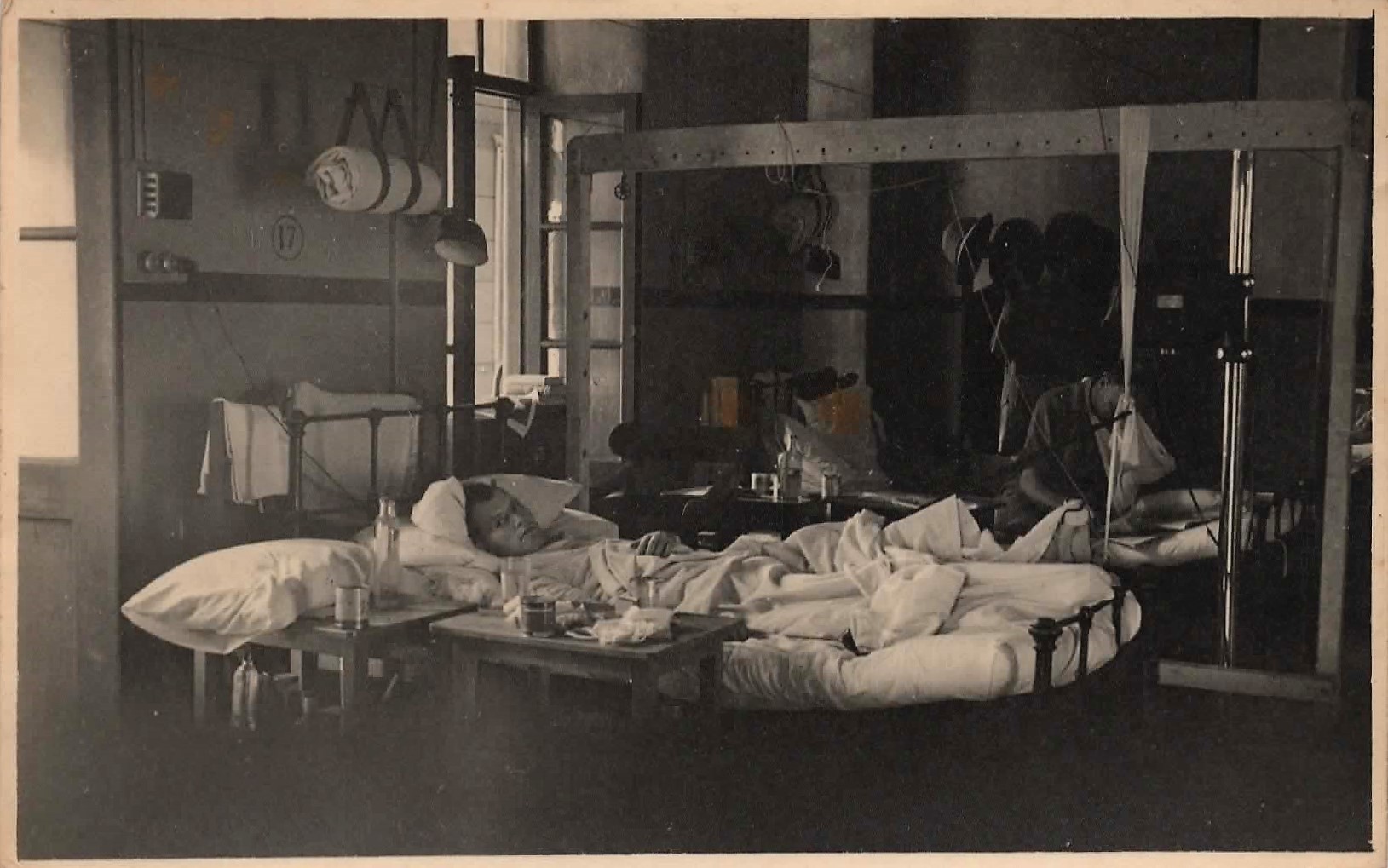
In February 1942 Dad was fighting in the Burma Campaign with the 17th Indian Division which was decimated at the Battle of Sittang Bridge during a retreat from the Japanese. He was badly wounded, carried off the bridge by unknown hands, and ended up in hospital in Poona where he remained until late 1943.  Earlier that year he had for six weeks a new neighbouring bedfellow – one Alun Lewis, also a Welshman, who had sustained a shattered jaw in a football match. The sharing of his experiences with Alun resulted in ‘Burma Casualty’.

Thomas “Griff” Griffiths in Poona Hospital
Thomas “Griff” Griffiths Morris in Poona Hospital

Re-reading the poem now reveals how much Dad shared with Alun of his pain and fear – showing that at times he might have welcomed death as a release from his own physical pain and from the loss of so many comrades.

Thomas Griffiths and his wife on their wedding day
Thomas Griffiths Morris and his wife on their wedding day

But his letters to his sister from the same time show that as he recovered, his focus was on re-stablishing his family life with my Mum, his childhood sweetheart, and my oldest brother, born in 1940, whom he had never met.  He resisted Death, the ‘beautiful singing sexless angel’, preferring ‘his wife’s sweet body and her wilful eyes’ (though, like any child, however advanced in age, I confess to being unable to think of my mother in these terms without feeling slightly queasy!)


Dad never spoke of his experiences of jungle warfare and rarely mentioned his time in hospital. When pressed, he spoke of his friend, Alun Lewis, as something of a tortured soul. As an adult I have come to understand and love Alun’s poetry, not because he allowed my childhood self to hold its own on the boasting front, but for his luminous verse with its dark undercurrents. I can now say with pride, “my Dad knew a true poet’.

burma-casualty


‘Burma Casualty’ is one of the many poems featured in Alun Lewis: Collected Poems. Buy your copy now from our website: £9.99.


Posted on

An Interview with Caroline Smith

An interview with Caroline Smith The Immigration Handbook

Today we are joined by Caroline Smith, whose new poetry collection The Immigration Handbook weaves together stories of hope, frustration and pain, drawn from Smith’s experience as an Immigration Caseworker.

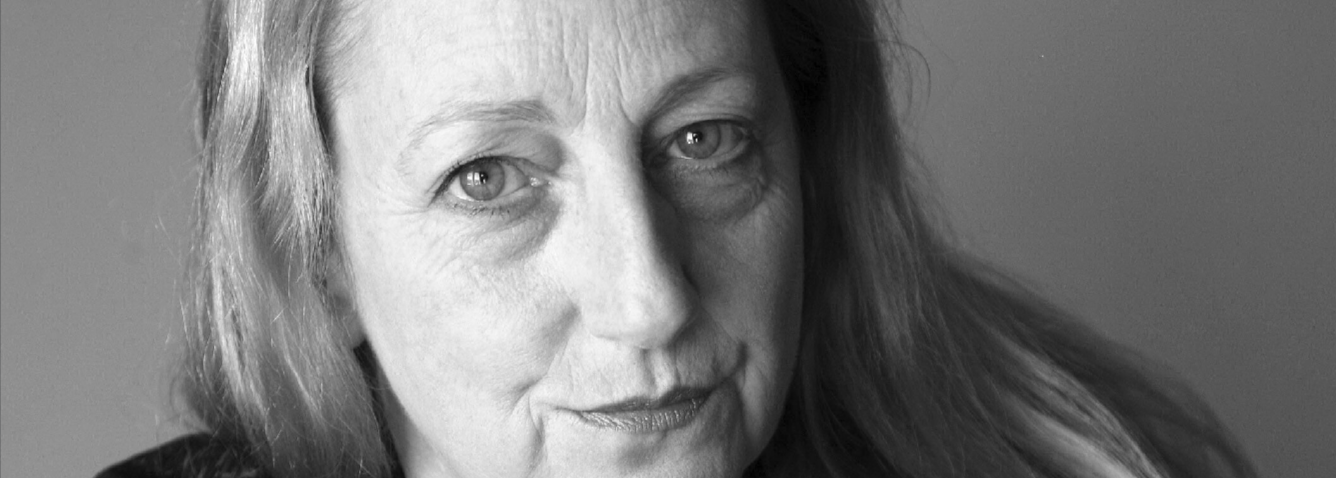
CarolineSmith CropCaroline Smith was born in Ilford and grew up in Hertfordshire. She originally trained as a sculptor at Goldsmith’s College. Her first publication was a 30-page narrative poem, ‘Edith’. Smith’s first full collection, The Thistles of the Hesperides (Flambard), is about the community of West Pilton in Scotland where Caroline lived in the 1980s when it was one of the most deprived housing estates in Europe. Using imagery and structure from Greek mythology, and direct stories from observed lives, the poet weaves a dense and dramatic tension between the harshness of reality and the lyricism of myth. Published widely in journals like Poetry Wales, Poetry Review, Staple, Orbis and Stand, she has twice won prizes in the Troubadour Poetry Competition.  Smith has had work set to music, broadcast on the BBC and is also the author of a musical play, The Bedseller’s Tale, that was performed at the Edinburgh Festival Fringe.  She lives in London with her family.
 The Immigration Handbook Caroline SmithYour new poetry collection, The Immigration Handbook, brings to life the stories from migrants and refugees that you hear every day in your work as an Immigration Caseworker. What made you choose to transcribe these deeply affecting stories, and was the process cathartic?

Writing thousands of letters to the Home Office over the years, I think about language, what turns a letter into a poem, the different functions of language and how by changing the angle or perspective on a subject you can show it afresh. My book is another way of contributing to the immigration debate, but it is primarily a book of poetry. It’s the stuff of my life so it’s what I make art out of.

When I was younger I couldn’t decide if I wanted to be a priest or a sculptor – so I campaigned for women’s equality and ended up as a poet! But in a sense these twin strands have come together in my poetry; my interest in social justice and my training as a sculptor who needs always to recreate the world in a different way.

I’ve never found writing cathartic. When I am most upset about something I want it to stop, I don’t write my way out of it. I see my work as an Immigration Caseworker and my poetry as separate. I get angry and try to change the system, but for poetry I need distance and reflection and I enjoy the creative process; the juxtaposition of odd fragments, creating something new, although I suppose it is cathartic in a Nietzschean way….. ‘Every art and every philosophy may be regarded as a healing… in that respect maybe.

Your poems are often (unsurprisingly) rather bleak, as they describe characters who have lost hope, who feel abused by the system, who don’t know where to turn. Do you hope the collection inspires people to see beyond the statistics and recognise the humanity of those seeking citizenship?

Yes that is exactly what I am hoping people will find in my poems – despite the bleakness, a celebration of humanity. My poetry contributes to the immigration debate; not by putting forward a set of arguments like I do in my letters to the Home Office, but by showing the humanity of people trapped in the system. Not every asylum seeker or refugee is a hero or angel. I have painted people as they are – with both frailties and resilience. We all have the same longings and desires to make something of our lives, it’s just that the people I see in our immigration surgery have a much tougher journey than most of us have ever had to bear.

You have a knack for finding humour in surprising places, for instance in your poem ‘Judgements’, which cleverly and comically portrays the bureaucracy behind judgements made on applications:

“… if the appellant claimed
that relevant matters did not happen I should not
exclude the possibility that they did not happen
(although believing that they probably did)”

Is humour an important part of poetry writing for you? And does it follow you into the workplace, and other aspects of your life?

Tragedy and comedy sit very close to each other. I’ve received so many misspelt letters…’I have been arrested by six uninformed guards’…with wormiest regards’‘I love your cuntry’!

Satire and the use of comedy is important in art. Slapstick and the absurd sharpen the truth of a situation. The most wildly improbable stories, can actually accentuate pathos and provide a break in the bleakness. Humour is also a great tool for showing up the absurdity and dysfunctionality of the Home Office which cruelly traps people without status and documents for years. It is the startling and unbelievable that is often true; whereas the predictable stories are most likely to be fabricated.

The Immigration Handbook was written over a number of years. Were these poems always destined to be released as a collection, or did the idea to publish these stories together come much later?

I always intended them to be a sequence of poems on the subject. I remember the night I started writing this collection. I filled a book with scrawling notes of incidents, characters and injustices. But it is one thing to have an idea for a poem, but then you have to wait for all the elements to come together and it often ends up going off in a completely different direction. Because I have so many stories fermenting in my head, unexpected elements mesh together.

Both my previous collections included sequences of poems. I’ve never been interested in writing a novel, but I love the opportunities presented by writing a number of individual poems that can work together and spark off each other to come at an idea from different angles and perspectives. Although I don’t write formally, the form of the poems are critical to me. I used to approach a sculpture from all angles as once.  I would use different materials and found objects set against each other to break up the surface, juxtaposing different textures. And I think I do the same with poems using different intensities; some highly worked, some quick ‘line drawings’, some found reports. The difference today is that I’m carrying my studio of scraps and fragments and found objects around in my head!

And finally, tell us about your plans for the future- where will we see your name next, and are there any festival or events appearances you can tell us about?

I had a great time reading at the Ledbury Festival earlier this summer and my book launch at the Nehru Centre in London was just fantastic – courtesy of the Indian High Commissioner! I have a whole series of readings lined up for the autumn in Cardiff, London, Aberystwyth and I’m doing a couple of Festivals in Bristol and Chorleywood as well as a special event with Waterstones in Berkhamsted for National Poetry Day.

I am really enjoying giving readings and talking about my book but already the restlessness to create and my dissatisfaction with the world as it is, is pushing me back to my writing desk. When I have lots of ideas in my head I find it distracting to read. Now The Immigration Handbook is out I’m reading as much as I can, going to lots of poetry events and every play that I can get tickets for.

17th September: Free Verse, The London Poetry Book Fair.
3
rd October: Poetry Can Festival, Bristol.
6
th October: National Poetry Day, Waterstones Berkhamsted, Herts.
15
th October: Chorleywood LitFest, 12 noon The Junction, Chorleywood, Herts.
18
th October: Lumen Poetry Series, 19:00 Tavistock Place, London.
26
th October: Aberystwyth University, English & Creative Writing Society.
27
th October: Waterstones Aberystwyth.
30th October: Cardiff Book Festival.
24
th November: 19:30 Waterstones Piccadilly.

The Immigration Handbook is available on our website. Buy your copy now: £9.99
Claim 20% off when you become a Seren Book Club member

Save

Posted on

Ritual, 1969 | An interview with Jo Mazelis

Ritual, 1969 Jo Mazelis interview

Our Marketing Officer Rosie Johns talks to Jo Mazelis about her new short story collection, Ritual, 1969, which is newly available.

Have you got a burning question of your own you would like to ask Jo? Or would you like your copy of Ritual, 1969 signed? If so, come to John Smith’s bookshop, Swansea, this Thursday for the book launch. This event is free to attend, all are welcome, and refreshments will be provided. Find more details here.

Ritual, 1969 by Jo Mazelis

What are little girls made of? What will they become? Will they run away to the circus or become dressmakers, teachers or servants? From the playground to adulthood the path is beset with misunderstandings, missed dates and hidden traps for the unwary.
This darkly gothic collection of stories explores the unsettling borderland between reality and the supernatural. Ranging from early twentieth-century France to 1960s South Wales and contemporary Europe, Jo Mazelis’ singular vision and poetic language creates characters caught up in events and feelings they do not fully understand or control, giving the book its uncanny focus. Not all is as it seems in a world where first impressions may only conceal disguises and false trails – and there’s no going back.
A thrilling third collection from the author of Jerwood Award winning novel Significance.

Your novel Significance was set in France while many of the stories in Ritual, 1969 are located in Wales. As a Welsh writer, do you see any importance in the issues of place and identity?

I think with Significance it had to be set abroad because I wanted to explore ideas about escape and rebirth as a starting point. The same novel could, I suppose, have been set in a small coastal town in Wales, but it just wouldn’t have been the same – I mean in the sense of my imaginative process. It had to be in an unfamiliar territory, yet one that is perceived as innocent and safe.

The stories in Ritual, 1969 weren’t planned or written as a collection – therefore the fact that so many are set in Wales is probably due to my thinking and experiences over the last twelve years or so. This also raises the question of whether Welsh writers should only write about Wales and the Welsh. The MA I did many years ago was ‘Writing the Celtic Archipelago’ and involved a sort of comparative study of the 20th century literature of small nations; from Wales to Éire, Northern Ireland and Scotland. In one tutorial I raised the issue of Muriel Spark as she wasn’t included in the course and was firmly told that she was not a Scottish writer. The argument was that she didn’t write about Scotland or live there, which I have always found rather puzzling. Then very recently I read Ian Rankin’s introduction to Spark’s novel Symposium and his first words were, ‘Muriel Spark was the greatest Scottish novelist of modern times’.  He goes on to say that although she lived abroad, ‘her roots are evident in everything she wrote.’ Aside from feeling vindicated after almost twenty years, I think his words make clear something I have always believed, namely that my roots inform everything I write.

The period when these stories were written also coincides with my travelling all over Wales for a variety of reasons, so the landscape figures directly as a place of reality and imagination. I also made a sort of conscious effort to travel imaginatively through time, so that the stories are set in different periods as well as different locations.

Ritual, 1969 contains stories that are often given hauntingly uncertain endings. What made you choose to give the reader so much room for interpretation?
The writer Paul Auster said, ‘The one thing I do in all my books is to leave enough room in the prose for the reader to inhabit it’. I suppose I must do the same but unconsciously. Saying that it seems almost deliberately vague or evasive to attribute any aspect of writing to the unconscious because it suggests that what the writer is producing is a stream of consciousness or work that is unmediated or without art or craft, but this is my experience.

When I write I don’t think about any potential or ideal reader and very often I have no idea where a story is going. It is a process of discovery for me as much as for the reader. When I first began seriously writing stories in 1987 I had not studied literature or creative writing beyond GCSE as I had gone to Art College not university. I had however read a great deal, but I think because I was essentially self-taught, I tended to doubt myself and worried that ‘real’ writers would not work in the same way as me. ‘Real’ writers would have the whole thing mapped out and they wouldn’t rely on intuition or the unconscious. I later read something John Fowles said about his novel The French Lieutenant’s Woman; how he had a recurring image during the autumn of 1966 of ‘A woman [who] stands at the end of a deserted quay and stares out to sea’ and he explained that he wrote the book to discover her story. It was this and other things a broad range of writers said which made me realise I was not unique in my approach and that was reassuring.

It has often been my experience that I don’t notice the underlying themes of my stories until after publication. It is only then that my later university education in literature seems to kick in and I can begin to analyse my work more like an academic. I realise that very often my fiction can be read on two levels, one which is simply the plot and characters, and the other which is connected to philosophy, politics, myth and culture. So the story ‘A Bird Becomes a Stone’ could be read as a crime mystery. Actually it’s a story whose title I changed several times and the other titles were far more prosaic. At the point I changed the title for the third or fourth time I thought I was being almost flippantly artful, but later I realised that the new title with a living thing, a bird, changing into a dead thing, a stone actually was the key to the story’s meaning. This was not just in the sense that something dies, but it also speaks to the whole process of art – a bird carved out of a stone, or a film of a bird or a poem will outlive the bird itself. Does this mean that a carved representation is somehow more important than the living creature?

A similar question is evident below the surface in ‘The Flower Maker’ a story set during a period of war and turmoil concerning a displaced woman who makes and sells artificial flowers from scraps of silk and satin in order to survive. Art and what should be sacrificed for it emerges in story after story, whether it is poetry or circus performance or film or photography or novels. If the endings to my stories are enigmatic then perhaps it’s because I can’t and won’t answer that question.

There are many female characters who seem to be struggling for survival and against alienation throughout the collection. Did the diversity of female characters and experiences in these stories appear with a conscious plan in mind?
As with my other collections of short fiction, these stories were written over a fairly long period of time – some were created as far back as 2003, others as late as December 2015, so there was no guiding principle as such, no sense of any relationship between them in terms of a book. Penny Thomas, my editor at Seren was really helpful in selecting these from the rather larger group of stories I presented her with, thus helping the book to become a cohesive whole. I think the effect of this is that the stories speak to one another; though clearly I was also at different times experimenting with the idea of linked stories.

If these stories have a common theme then I think it might be that they expose gender as an artificial construct, so much so that it almost seems as if all of the female characters are ‘performing femininity’ rather that behaving naturally or instinctively. In this sense there is once again a dichotomy between the false and the real, the surface and what lies beneath; between art and nature, dreams and reality.

In my earlier short story collections Diving Girls and Circle Games there were far more stories about men and their particular perspectives  –  I was interested in ideas about patriarchy and men’s internalised view of their ‘natural’ superiority, so these characters were often white, middle-class Englishmen. Of course you can’t generalise about anyone on account of their gender, race, class or religion, and it was fairly hard to get inside the head of some of these male characters, especially at moments when they were acting badly, then performing mental tricks of self-justification, but these stories were an important aspect of my feminism because they interrogated power itself at a micro-level. Having said that I also wanted to interrogate or dispel some myths, for example those to do with a relationship between a lecturer and a student (who is over the age of eighteen) as I felt that such a relationship would not be simply about a predator and his victim. It seemed important that the female character has to have some degree of free will, that she is responsible for her own choices.  Just as he is.

I suppose in some ways I am exploring the limits of knowledge and how none of us can really understand how it feels to be someone else, or why people do the things they do whether for good or ill. In the story ‘Word Made Flesh’ which was commissioned by Wales Arts Review, a young Irish woman is never listened to. Because no one knows her tragic story she grows increasingly lonely and alienated and cannot sleep at night – so in this story it’s a case of important knowledge not withheld but ignored.

These themes about knowledge also appear in the stories about teenage girls and children, recurring again and again in different guises, whether it is a poem that never gets discussed, or the secrets and/or fantasies of many of the characters. It could be argued that a lot of these characters are trying to live their lives according to the wrong script – which is the case in ‘Whose Story Is This Anyway’ and ‘The Murder Stone’. One of the questions I am asking is, why are people so deceived and so enduringly self-deceiving? Why do so many women feel so self-conscious about their imperfections, so eager to construct their image based on artificial and/or idealised figures whether these are dolls or glamorous female celebrities?

The two epigraphs at the start of the book by William Blake and Mary Wollstonecraft are there as lodestones to the stories’ meaning, but were added long after most of the stories were written.  One addresses the issue of corrupted beauty and nature, the other the issue of truth with particular regard to education and these themes are revisited in many of the stories.

Which character was the hardest to bring to life, and why?
Characters either come to life or they don’t. I tend not to think of them as separate entities from the story itself – they are woven in, creating a tapestry, rather than appliquéd on. Or perhaps instead of using a metaphor which employs a traditionally female art form I might say that the idea for a story appears in my mind like a block of marble. I chip away at it to reveal the figures and the narrative that is locked in the stone.

I wish I could give a simple answer to this question but after writing fiction for so long I have acquired something I learned about via Flannery O’Connor, namely ‘the habit of art’. I began to read the stories of Flannery O’Connor in 1975, then in 1988, when I began to steadfastly write, I bought ‘Mystery and Manners: Occasional Prose’ which is a collection of her non-fiction work. O’Connor has been a huge and enduring influence on my short stories making me wonder some time ago if the notion of Southern Gothic couldn’t be extended to absorb Southern Welsh Gothic. Strangely, many years ago I bought a rare hardcover 1st edition of a Flannery O’Connor novel for 50p. I was exceedingly poor for many years, in debt and fear and worry constantly which is a miserable way to live. Then in an idle moment I looked up the value of this particular O’Connor novel and found it was worth a lot of money – I had a brief and dizzy moment of thinking that Flannery had saved me, that this was fate that it was her book not any other. There was only one problem, the copy I possessed had no dust jacket and this meant it was virtually worthless. So if there is a lesson to be learned from that it is that an author’s worth is in their words, not in any abstract artefact. Though the story might have had a more rewarding and uncanny ending had I sold the book for thousands.

To return to the question, I think if a character fails to come to life then the story is a failure and I abandon it. I’ve got a lot of abandoned stories; some might be worthy of resuscitation, others are beyond hope. I think the cause of the half-written stories is usually lack of time – I find I can’t begin a story then pick up the thread weeks later, the original impulse or train of thought has gone. Sometimes a story will just emerge fully formed and my pen can barely keep pace with my mind – but that is a fairly rare occurrence and it hasn’t happened for a couple of years.

One of the recurring themes in this collection seems to be the idea that the journey towards womanhood is fractured and complicated. Where did your focus on this theme stem from?
This is complicated – in part it was due to the fact I was researching the late sixties and early seventies for another novel. This research was focused on the general history of the period but also specifically Swansea where I grew up. I have also been working on several autobiographical pieces for years now, though nothing so organised as a full length book, though I did at one point think about putting all of these together and calling it ‘Experiments in Autobiography: a Sampler’. One of these memoir pieces was published in New Welsh Review in 2015 as ‘The Girl in Red Boots’ – other pieces have appeared in non-fiction anthologies published by Honno, Parthian and Pandora, and in the online journal, Wales Arts Review.

One of these pieces was about an unforgettable and terrible event that occurred in the early seventies. This was brought vividly back to life in 2003 when the identity of a serial killer who murdered three girls in the Swansea area was discovered using DNA. I had been at the same nightclub on the same Saturday as the murdered girls. My friend and I were a similar age; we were probably dressed in similar clothes, may have danced next to those girls. I always think it could have been me and my friend – we were just lucky, unlike them.

Because of this autobiographical writing I was thinking very deeply about the 60s and 70s time the news broke about Jimmy Savile and his crimes. I think it is almost impossible to make people understand how very different things were up until the 1990s. Indeed it was hard for me to remember or perhaps trust my memory about the period: during my research I found that news stories in the local and national papers that were quite mind-boggling; there was a man who had battered his wife to death who was given a suspended sentence from a sympathetic judge because it was said the woman nagged him, while a young man was sent to prison for two years for possession of a very trifling amount of cannabis, and in a report about a school teacher having a relationship with one of his pupils the girl was referred to as a ‘Lolita’, the implication being that this teenager had tempted a ‘good and respectable family man’.

The other source for a lot of the 1969 stories were several books by Peter and Iona Opie which confirmed everything I remembered about The Levitation Game but also rhymes and games I had forgotten. From them I found the quite remarkable fact that The Levitation Game was first recorded in the seventeenth century. These games, and the lore of the playground, were passed on through generations of children, were not part of the taught curriculum and are for the most part left behind in childhood. I think, though it’s hard to be certain, that finally, under pressure from health and safety, television, smart phones and the greatly curtailed freedom of children to ‘go out and play’ they are now disappearing.

I think as a woman it is easier for me to understand how female lives can be fragmented, but that doesn’t mean that men’s aren’t also – or at least some men’s. I certainly found my early life to be difficult, both at home, at school and at Art College aged eighteen – the last of these was probably the worst but perhaps only because everything that happened before came to a head at that point. So at nineteen, after one year of college, my education stopped and I worked for years and years in a variety of low paid jobs as a waitress, chambermaid, shop assistant, barmaid and library assistant. I had no sense of any future, hardly any useful qualifications, no A levels, no confidence, seemingly no hope. I had also lived through a variety of personal tragedies, terrible experiences and other disturbing and often inexplicable events. So the idea of a fragmented life is very familiar to me.

You can purchase your copy of Ritual, 1969 direct from our website, or get your copy at the John Smith’s launch event, 21 April, 12:00-2:00pm.


Posted on

An Interview with Helen Blackhurst

We had a chat with Helen Blackhurst about her debut novel, Swimming on Dry Land.

Helen lives in rural Ireland and works as a drama therapist.  Her first novel, Swimming on Dry Land, was born out of a period of residency in Australia.  Helen’s passion for the Australian landscape has inspired her writing ever since.  Her second novel, A Time of Rainfish, is set in a fictional town in Arnhemland, Northern Territory, where Helen has made several research trips, at one point working on a short project with a group of Aboriginal women. Helen has facilitated a range of writer-in-community projects, exploring writing from various perspectives, including sound, image, movement, and voice. Site to Sound (2009) and Forgetmenot (2008), both community arts projects, were supported by the Arts Council of Ireland. 

Swimming on dry land draft1

Set in a small fictional mining town in south-west Australia, Monica Harvey, a twelve-year-old English girl, is looking for her younger sister, Georgie.  The Harvey family has recently moved to Akarula, having been persuaded to set out in search of a new life by their rich Uncle Eddie, who owns the town.  Monica discovers Georgie down one of the disused mine shafts but when she returns later that day with her father and Uncle Eddie, Georgie has disappeared.   

It becomes clear that Georgie’s is not the first disappearance in the town. Eddie, a self-made money-man – a dreamer whose main concern is to save his beloved town – has thus far concealed the disappearances from his brother, Michael. But as the search for Georgie widens, the pressure intensifies and Eddie’s dream-like vision of his town gradually implodes. Mr M, the only aborigine left in Akarula, sees it all from his seat under the town’s single tree, giving rise to local superstition and fears.

As the history of the land unfolds new possibilities and answers to the mysterious disappearances slowly suggest themselves.

Both Swimming on Dry Land and your second novel, A Time of Rainfish, are heavily influenced by the time you spent living in Australia. What is it about Australia that so captivates you?

The landscape – the vast emptiness you get from driving through the middle, the beauty of the country as a whole, all those amazing creatures. And being on the food chain really puts you in your place. I love that; it gives you a sense of awe which is hard to come by in Europe. I’m also fascinated by Australian history.

The town Swimming on Dry Land is set in is fictional. Why did you decide to use a fictional setting rather than a real one?

Akarula is a patchwork of places I passed through or spent time in whilst in Australia. Fictionalising the setting gave me the freedom to create what I needed for the town without being constrained by the reality of a real one.

You get into the heads of several characters throughout Swimming on Dry Land. Which character did you find the most difficult to write? Which character was the easiest?

Monica came to me first. I considered writing the whole story from her perspective. In some ways, she was the easiest. I think Caroline probably took me the longest to get to know.

Are there any other countries you’d like to explore in your fiction? Have you ever considered writing a novel set in Ireland, for example?

There are many countries I’d like to explore, but for the moment I seem locked into Australia. I suspect that if I moved to Australia, I’d start writing about Ireland. There is something in the distance – time, space, culture – that allows for that outside eye, a sharpening of the senses, a feeling that anything is possible. Familiarity seems to flatten all that for me. Of course I am still a foreigner in Ireland, though it feels like home.

Finally, what’s the best book you’ve so far read this year?

I’ve read many great books this year. The Goldfinch by Donna Tartt, which I’ve just finished, was really hard to put down – always a good sign.

Order Swimming on Dry Land from our website.