Posted on

Friday Poem – ‘All Day It Has Rained’, Alun Lewis

Friday Poem All Day It Has Rained Alun Lewis

On this day, one of the best-known English-language poets of the Second World War came into the world. Alun Lewis was born on 1 July 1915 in Cwmaman, Wales.

A year later, on 1 July 1916, the British Army would see its bloodiest day as The Battle of the Somme commenced, and over 57,000 British Soldiers became casualties on the first day alone.

Our Friday Poem this week is both in celebration of Alun Lewis’ birth, and in remembrance of all those who fought and died on the Somme.

Alun Lewis
Alun Lewis All Day It Has RainedSome critics see Lewis as the last of the great Romantic poets, a twentieth century Keats. Others view him as the bridge between pre-war poets like Auden and Yeats to post-war poets such as Hughes and Gunn. He was born and raised in Depression-struck south Wales and, following degrees in history at Aberystwyth and Manchester, became a teacher there. Early in 1940, despite his pacifist inclinations he enlisted and, after long periods of training, joined the war in India.

‘All Day It Has Rained’ was written whilst Lewis was stationed with the Royal Engineers at Longmoor, Hampshire. It is among the poems featured in Alun Lewis: Collected Poems.

All Day It Has Rained

All day it has rained, and we on the edge of the moors
Have sprawled in our bell-tents, moody and dull as boors,
Groundsheets and blankets spread on the muddy ground
And from the first grey wakening we have found
No refuge from the skirmishing fine rain
And the wind that made the canvas heave and flap
And the taut wet guy-ropes ravel out and snap.
All day the rain has glided, wave and mist and dream,
Drenching the gorse and heather, a gossamer stream
Too light to stir the acorns that suddenly
Snatched from their cups by the wild south-westerly
Pattered against the tent and our upturned dreaming faces.
And we stretched out, unbuttoning our braces,
Smoking a Woodbine, darning dirty socks,
Reading the Sunday papers – I saw a fox
And mentioned it in the note I scribbled home; –
And we talked of girls and dropping bombs on Rome,
And thought of the quiet dead and the loud celebrities
Exhorting us to slaughter, and the herded refugees:
Yet thought softly, morosely of them, and as indifferently
As of ourselves or those whom we
For years have loved, and will again
Tomorrow maybe love; but now it is the rain
Possesses us entirely, the twilight and the rain.

And I can remember nothing dearer or more to my heart
Than the children I watched in the woods on Saturday
Shaking down burning chestnuts for the schoolyard’s merry play,
Or the shaggy patient dog who followed me
By Sheet and Steep and up the wooded scree
To the Shoulder o’ Mutton where Edward Thomas brooded long
On death and beauty – till a bullet stopped his song.


Buy your copy of Alun lewis: Collected Poems from the Seren website. Become a Book Club Member to claim 20% off your order.

Want to see more Alun Lewis titles? Take a look at our website for biographies, short stories, poetry, and Lewis’ previously unpublished 1930’s novel, Morlais.

Save

Save

Save

Posted on

Book Giveaway: A Boat Called Annalise

book giveaway a boat called annalise lynne hjelmgaard

You only have two days left to enter our A Boat Called Annalise book giveaway!A Boat Called Annalise Lynne Hjelmgaard

Enter now for the chance to win a copy of this beautiful new poetry collection.

To enter, simply sign up to the Seren newsletter before 1st July:
https://www.serenbooks.com/newsletter/signup

annalise giveaway june social media


About A Boat Called Annalise:
A Boat Called Annalise, Lynne Hjelmgaard’s new poetry collection, is wonderfully evocative of life on a sailboat: “Still, Annalise has that smell: slightly honeyed, rusty cans, soapy rags, brewed coffee, a whole cinnamon in a drawer”. The book recalls a journey this much-travelled author took on a sailboat to the Caribbean and back to Europe with her husband.

The winner of this giveaway will be chosen at random from all our email newsletter subscribers on 1st July 2016, so if you haven’t already, hurry and sign up for our newsletter before the end of the month if you want it to be you!


Posted on

Friday Poem – Hunting For The Man With Huge Ear Lobes

friday poem peter finch zen cymru

This week our Friday Poem is taken from Peter Finch’s collection Zen Cymru.

zen cymru peter finchNot one for quiet meditations, Finch’s voice in Zen Cymru is: loud, bewildered, satirical, furious, sad, fearful and funny. This is a Wales that missed its revolution in ‘I Chew Gum and Think of Rifles’. This is a Wales beset by: rain, the ghosts of hard-drinking poets, of holy wells guarded by heifers, of sports crowds, Ikea, sheep, “enormous storm clouds”, and the ‘Entry of Christ Into Cardiff, 2005’.
Finch is a well-known performance poet and his poems have the immediacy and the dramatic impact of pieces conceived for the stage. Formal innovation is allied with themes that are resonant and deeply humane.


Hunting For The Man With Huge Ear Lobes

It’s difficult discussing Buddhism over
whiskey. It makes you laugh.
When you reach the tenets which
concern eternal suffering it’s hard.
I imagine my father here with me. I am
explaining reincarnation but he won’t
have any of it. I am no returned wood louse,
he insists. The bottle on the table
between us is going down at a terrific rate.

We aren’t anything, says my father,
any of us, and when we go it’s just
dark, you can’t figure it, can you?
He’s drunk, my father,
he waves his hands, this is how it is.

My father tells me alcohol is best consumed
lying down. Less chance of hurting
the living. We try this. His face still has that
lopsided look it had when I last saw him
flat-out in the morgue.

He is the greater vehicle, I am the lesser.
We drive on in the darkness looking for a
smiling man with huge ear lobes. He’ll
have the answer, I say. No, says my father,
breathing softly. No he won’t.

 
Buy your copy of Zen Cymru from our website. Sign up to be a Seren Book Club member to claim 20% off.

Posted on

Friday Poem – A Psalm for the Scaffolders

A Psalm for the Scaffolders Kim Moore The Art of Falling

This week’s Friday Poem – published on Father’s Day weekend – is from Kim Moore’s lively debut poetry collection, The Art of Falling.

Kim sets out her stall firmly in the North amongst ‘My People’: “who swear without knowing they are swearing… scaffolders and plasterers and shoemakers and carers…”. ‘A Psalm for the Scaffolders’ is a hymn for her father’s profession.


A Psalm for the Scaffolders
who balanced like tightrope walkers,
who could run up the bracing
faster than you or I could climb
a ladder, who wore red shorts
and worked bare-chested,
who cut their safety vests in half,
a psalm for the scaffolders
and their vans, their steel
toe-capped boots, their coffee mugs,
a psalm for those who learnt
to put up a scaffold standing
on just one board, a psalm
for the scaffolder who could put
a six-inch nail in a piece of wood
with just his palm, a psalm
for those who don’t like rules
or things taking too long, who now
mustn’t go to work uncovered,
who mustn’t cut their safety vests
or climb without ladders, who must
use three boards at all times,
a psalm for the scaffolders
who fall with a harness on,
who have ten minutes to be rescued,
a psalm for the scaffolder who fell
in a clear area, a tube giving way,
that long slow fall, a psalm for him,
who fell thirty feet and survived,
a psalm for the scaffolder
who saw him fall, a psalm for those
at the top of buildings, the wind whistling
in their ears, the sky in their voices,
for those who lift and carry
and shout and swear, for those
who can recite the lengths of boards
and tubes like a song, a psalm for them,
the ones who don’t like heights
but spent their whole life hiding it,
a psalm for those who work too long,
a psalm for my father, a psalm for him.


Buy your copy of The Art of Falling from our website. Sign up to be a Seren Book Club member to claim 20% off.


Posted on

Friday Poem – Darling, Would You Please Pick up those Books?

friday poem kathryn maris god loves you

This week’s Friday Poem is one of Poetry Editor Amy Wack’s ‘favourite sestinas of all time’ and is taken from God Loves You by Kathryn Maris.

Friday Poem Kathryn Maris God Loves YouKathryn Maris borrows rhythms, vocabulary and themes from the Bible in this collection of poems. The result is more than artful parody, although a sly wit is in evidence. It is an approach that accommodates large themes, unravelling them in new ways.
The first section, ‘What will the neighbours think?, is a kaleidoscopic view of the sins and sinners of the modern city and opens, appropriately enough, with a vision of a flood to rival Noah’s. The poems feature domestic discord, gossip, suicide, celebrity and anxiety about the safety and behaviour of children and spouses. It says much about this poet’s meticulous poise and tone that we are lured into these scenarios with our sympathies fully engaged. The following sections subvert scripture more directly. A skilful use of form is characteristic, as in the sestina ‘Darling, Will You Please Pick up those Books?’ Other pieces are set out in the numbered style of psalms or parables but have an entirely contemporary edge.


Darling, Would You Please Pick up those Books?

How many times do I have to say
get rid of the books off the goddamn floor
do you have any idea how it feels
to step over books you wrote about her
bloody hell you sadist what kind of man
are you all day long those fucking books

in my way for 3 years your acclaimed books
tell me now what do you have to say
for yourself you think you’re such a man
silent brooding pondering at the floor
pretending you’re bored when I mention her
fine change the subject ask ‘Do I feel

like I need more medication’ NO I don’t feel
like I need more medication it’s the books
don’t you see don’t you see it’s her
why don’t you listen to anything I say
and for God’s sake books on the floor
are a safety hazard remember that man

from Cork who nearly died fine that man
fell over a hurley not a book but I don’t feel
you’re getting the point the point is that a floor
is not an intelligent place for books
books I have to see and books that say
exactly where and how you shagged her

what shirt she wore before you shagged her
I can write a book too about some man
better still about you I can say
something to demonize you how would you feel
about that ha ha why don’t I write a book
about how I hoover your sodding floor

and how you’ve never once hoovered your floor
why can’t I be a muse why can’t I be a ‘her’
what does one have to do to be in a book
around here do I have to be dead for a man
to write me a poem how do you think it feels
to be non-muse material can’t you say

you feel for me what you felt for her
can’t you say I’m better than that woman
can’t you get those books off the floor?

Buy your copy of God Loves You from our website. Sign up to be a Seren Book Club member to claim 20% off.


Posted on

Friday Poem – On Standby

Friday Poem On Standby from Animal People by Carol Rumens

This week’s Friday Poem is taken from Carol Rumens’ hot-off-the-press new collection, Animal People.

Friday Poem On Standby from Animal People by Carol RumensAs the author says in her brief introduction, ‘the vertebrae of this collection are the seasons of a sometimes Welsh and sometimes English year.’ Rumens’ poems are frequently inspired by places, either wild landscapes as in ‘Fire, Stone, Snowdonia’ or urban scenes as in ‘March Morning, Pearson Park’. But just as often a setting will be a pretext for a theme that has a political, sociological, aesthetic, philosophical or even metaphysical focus. The striking ten-page title poem explores some of the effects and affects of Autistic Spectrum Disorder (ASD), focusing particularly on Asperger’s Syndrome and how it may be experienced by young women. Rumens opens up this topic with all her characteristic energy, empathy and curiosity.
This is a beautifully intelligent collection of poetry, sure to delight and inspire.

Friday Poem On Standby Carol Rumens


Buy your copy of Animal People now, 20% off on our website for Book Club members.


Posted on

Books for your Summer Break

Books for your Summer Break

The warm weather has arrived so here at Seren we’ve been thinking about books for your summer break. Which titles do we recommend stuffing into your suitcase? Read on to find out our top picks.

1. Swimming on Dry Land, Helen Blackhurst
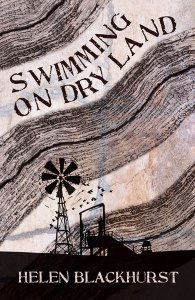
swimming_on_dry_land_72Set in the blistering Australian outback, Blackhurst’s writing is so vivid that even if (like us) you’re experiencing mild Welsh weather, you might start to feel the prickling heat she conjures.
Swimming on Dry Land tells the story of the Harvey family, who move to the fictional mining town of Akarula in outback Australia in search of paradise, and instead find deceit, mystery and superstition. Georgie, the youngest, is missing – and she’s not the first to vanish into the landscape. As the family searches for their lost daughter, their dream-like vision of life in Akarula collapses around them. And as the history of the landscape unfolds, new possibilities and answers to the mysterious disappearances slowly suggest themselves.

2. The Road to Zagora, Richard Collins
The Road to ZagoraAfter he is diagnosed with Parkinson’s Disease, Richard Collins decides to see as much of the world as possible while he still can. India, Nepal, Turkey, Morocco, Peru, Equador and even our very own Wales – Collins travels to them all, taking each day as it comes, accompanied by his partner Flic, as well as ‘Mr Parkinson’. Leaving the tourist trails, they visit places of extremes: the Himalayas, rainforests, deserts. The difficulties of rough terrain, altitude, extremes of climate for a person with Collins’ condition are an ongoing strand of his narrative; but although the hardships aren’t ignored, any sentiment or self-pity is denied through Collins’s resolute and independent-mindedness.
The Road to Zagora is dramatic, honest, and at times humerous too. Collins has written a memorable journey around the world, and the self.

3. The Man at the Corner Table, Rosie Shepperd
the man at the corner table rosie shepperdIn these poems the voice is one of urban sophistication; it has a merciless charm that teases and tempts us with sensual evocations of food and place.
Tastes, scents, colours and textures surprise and entice, and there is a winning insistence on detail offered with an irony that blends into satire.
Comedy, grief and loss combine like the distinct yet complimentary flavours in a dish – these poems are exquisite meals, to be devoured amidst surprising intimacies.

4. Foreign Bodies, Candy Neubert
foreign bodiesFresh from the UK and on an idyllic holiday in the Phillippines, Emma thinks she has fallen in love with a place, a person, and pursues the man of her dreams with a colonial zeal. But for all her poetic sensibilities, she seems unaware of the destruction she is capable of leaving in her wake.
A beautifully written first novel, Foreign Bodies explores the spaces between people, and the nature of encounters in romantic idylls on the other side of the world.

5. Dark Mermaids, Anne Lauppe-Dunbar
Dark_Mermaids_Web72It is the Olympic summer so what better time to read Anne Lauppe-Dunbar’s gripping thriller, Dark Mermaids, which tells a shocking yet enduringly familiar story of the horrors of a political system that doped its youngsters to sporting superhero status, and then left them to fend for themselves.
Dark Mermaids follows West Berlin police officer Sophia as she is called to investigate the murder of her childhood friend Käthe. The search for Käthe’s killer draws Sophia back into her abusive past as a child swimming star in the former GDR, and as the web of half-remembered horrors starts to unravel, those close to Sophia begin to take notice. There are some who still have much to hide, and they will go to great lengths to stop their secrets from surfacing.
Dark Mermaids was shortlisted for the Cross Sports Book Awards, 2016.

6. The Roots of Rock, Peter Finch
The Roots of Rock, from Cardiff to Mississippi and BackFrom 1950s Cardiff suburbia to modern-day America and beyond, Peter Finch follows the trail of twentieth century popular music. The Roots of Rock: from Cardiff to Mississippi and Back mixes musical autobiography with an exploration of the physical places from which this music comes.
Finch gives us sharp-eyed accounts of gigs from Champion Jack Dupree to the Garth Mountain Boys, muses on the importance of the Dansette record player, ponders why Elvis never came to Wales (except multiply in Porthcawl’s legendary Elvis Festival), visits musical shrines and theme parks, and even recalls his own attempt to start a band. You’ll find all kinds of music here – everyone from Ray Charles to Taylor Swift – and each chapter is accompanied by a multi-track playlist, making this the perfect book for anyone who loves music, history, and culture.

7. A Boat Called Annalise, Lynne Hjelmgaard
A Boat Called Annalise Lynne HjelmgaardBeautifully evocative of life on a sailboat, Lynne Hjelmgaard’s poems trace a journey this much-travelled author took on a sailboat to the Caribbean and back to Europe with her husband.
The couple’s relationship is poised on tensions, beautifully observed, as masculine/ feminine, the need to assert and/or withdraw in the face of the turbulent seascape. The paradise-like destination is reached and later we learn that life goes on, there is illness and loss, and in the final section, the tone becomes movingly elegiac.
Hjelmgaard’s poems are beautifully poised, full of clear-eyed and frequently humorous observations. Her work is full of sentiment without being sentimental. We hope you enjoy your trip on A Boat Called Annalise.

We hope you like our summer selections. And if you’re struggling to fit all the books that have caught your eye into your suitcase, why not explore our range of eBooks? Whether you have a Kindle, a Kobo or any other e-reader, we have a whole host of books you can download instantly. See below for the latest digital additions to our list…

Losing IsraelLosing Israel, Jasmine Donahaye
Amazon: £10.00
Kobo: £7.19
In Losing Israel the search for her family’s past and the part her forebears played in the newly created Israel reveals unsettling knowledge about kibbutzim and land clearances in northern Israel. Challenged by this new and unwonted information, Donahaye’s notion of history and her understanding of Israel, of her grandparents and of her identity is completely transformed.
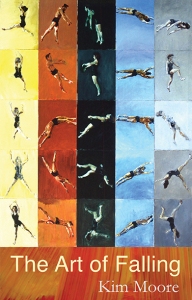
The Art of Falling Kim MooreThe Art of Falling, Kim Moore
Amazon: £9.48
Kobo: £7.19
“The poems of The Art of Falling are fearless. There are more good poems filling Kim Moore’s first collection than many poets will produce in a lifetime.” – Alison Brackenbury
In this startling debut, Kim Moore writes with a compelling directness and power about her life and the lives of others.

The World, The Lizard and Me - Gil CourtemancheThe World, the Lizard and Me, Gil Courtemanche
Amazon: £9.48
Kobo: £7.19
A novel of testament to the children caught up in the civil wars of Central Africa, The World, the Lizard and Me follows criminal invetigator Claude Tremblay as he pursues a warlord charged with creating child soldiers in the Congo.


Want to see more Seren eBooks? See our full eBook list on Kobo or search by title on Amazon.

Posted on

Friday Poem – Borderland

friday poem borderland christopher meredith

Yesterday marked the beginning of the week-long Hay Festival, where writers from around the world gather in the staggering beauty of the Welsh borders to debate, read, share stories and inspire – among them, Tom Bullough with his new novel, Addlands (Granta).

As a nod to Hay, our Friday poem is ‘Borderland’ from Air Histories by Christopher Meredith. ‘Borderland’ and Air Histories had a significant influence on Tom Bullough’s new Radnorshire-set novel, Addlands.

air_historiesChristopher Meredith’s Air Histories starts in the Stone Age and ends in the future. It’s marked by formal diversity and a wide range of subjects, with the personal alongside the impersonal and the experimental alongside well-known forms, as well as including some translations from the Welsh. Throughout it engages the rich meanings of its title, touching on the elemental and on historical time, as well as music and story, meditating on human creativity and its fallibilities from knapping an arrowhead to playing the fiddle or making a guitar. Nature is a touchstone, particularly the Black Mountains, near the author’s home, but also often seen ‘aslant’ as in ‘Seeing the Birds’ where sparrows seem suddenly fierce as eagles.


Borderland

Ffin is the Welsh for border. It occurs inside diffiniad which means definition, and in Capel y Ffin, a place in the Black Mountains.

You’ll find a ffin inside each definition.
We see what is when we see what it’s not:
edges are where meanings happen.

On the black whaleback of this mountain
earth curves away so sky can start
to show a ffin’s a kind of definition

where skylarks climb across earth’s turn
to air and pulsing muscle turns to an art-
ful song the edge that lets a meaning happen.

Live rock can yield to mortared stone,
a city to a castle, then a shepherd’s hut,
where ffin’s contained inside a definition,

where the lithic turns into the human.
Here’s where things fall together, not apart
at edges that let meanings happen.

And self here blurs into annihilation.
Larkfall, earthfall, skyfall, manfall each create
the ffin that is the place of definition
the edges where we see our meanings happen.


Buy your copy of Air Histories now, 20% off for Book Club Members.

Posted on

Friday Poem – Suturing Secrets

Ilse Pedler The Dogs that Chase Bicycle Wheels Mslexia pamphlet

This week’s Friday Poem is taken from Ilse Pedler’s new poetry pamphlet The Dogs that Chase Bicycle Wheels.

The Dogs that Chase Bicycle Wheels Ilse Pedler Friday PoemIlse Pedler’s marvelous debut poetry booklet, The Dogs that Chase Bicycle Wheels, won the 2015 Mslexia Poetry Pamphlet Competition. Many of her poems are about animals and how they interact with humans, and reflect her working life as a Veterinary Surgeon. Pedler has a careful, empathetic eye for the characteristics of the animals she comes across. Humans and their secrets are also observed, with a sharp wryness but also with a characteristic gentleness.


Suturing Secrets

We are divided into compartments,
separated by taut membranes,

glistening planes of connective tissue,
resilient boundaries. 

Today this is damaged,
anaesthetized, surgically explored

your diaphragm is a torn curtain hanging
and like a peep show I’m drawn to look behind. 

In the absence of pressure lungs hesitate
to inflate, do their best to conceal 

the frantic convulsions at your core,
the struggle for rebirth every second.

I look perhaps longer than I should
at the shuddering flesh, the labouring

beauty, then I pull the curtain back over
and suture the secret inside.

Buy your copy of The Dogs that Chase Bicycle Wheels now, 20% off for Book Club members.

Posted on

Friday Poem – The New World

friday poem the new world meirion jordan

Tomorrow is International Dylan Thomas Day and we will be celebrating Swansea’s most famous son, so today our Friday Poem is by another Swansea native, Meirion Jordan.

Jordan was born in 1985 in Swansea. His début Moonrise was shortlisted for the Forward Prize for Best First Collection, and his pamphlet, Strangers Hall, was shortlisted for an East Anglia Book of the Year award.

moonrise meirion jordan friday poemFinely held moods and moments resonate throughout this unusually accomplished first book. The rich, complex history of Wales often crops up, sometimes in unexpected contexts: ‘The New World’ is a vision, a cross between Dylan Thomas’ ‘Under Milk Wood’ and an early J.G. Ballard novel, of post-global warming Wales, with a polyglot population: “Ronaldinho Davies/wowing the crowds at the Millennium Stadium” and swamped by tropical vegetation: “cobalt lizards and coral snakes/swallowing the cottages an Llandinam/ the mahoganies uprooting Carno’s hearths”.

The New World

Roll on global warming. The Maentwrog Junta
seizing power on a Sunday morning
just after chapel, the frenziedly moustachioed
General Gwydion Mendéz proclaiming martial law
after the third psalm of the evening service.
The Gorseinon drugs cartel expanding
to the Aberystwyth favelas, bringing the clash
of kalashnikovs to constitution hill.
Samba and harps. O Seion Fryn
bawled out at thirty in the shade
by sweating ministers. Cawl mango
and coconuts replacing lava bread. Ronaldinho Davies
wowing the crowds at the Millennium Stadium,
the Rhondda turning out in rainbows
of rippling cloth and streamers to see England lose
four-nil, Islwyn Marley at half time
shaking the stands with sounds from Ynys Mon.
Olwen Perón leading the mob in Marchog Iesu
at the Cwmdonkin bandstand, her voice
spreading like an angelus along
the Taff Fechan, along Cwm Tywi.
David Attenborough filming the fauna
of the Nantgwynant valley, eccentric Englishmen
looking for the lost city of Dolgellau
up Cwm Pennant, out behind Corris.
100 percent humidity at Rhandirmwyn.
Kurtz Jenkins on the shores of Llyn Clywedog,
and everything from Llanidloes to Rhaeadr
declared ‘the dark interior’. The rattan
wrapping itself around the spine of the A470,
the cobalt lizards and the coral snakes
swallowing the cottages at Llandinam,
the mahoganies uprooting Carno’s hearths.
The moon at Devil’s Bridge pulled earthwards
in a sail of vines, the sun
squinting in the eye of a bromeliad
that wields its universe of frogspawn out
from Carnedd Dafydd to the new world.

Buy your copy now.