Posted on

Friday Poem – ‘Bob’s Dogs’, Hilary Menos

Friday Poem Bob's Dogs Hilary Menos

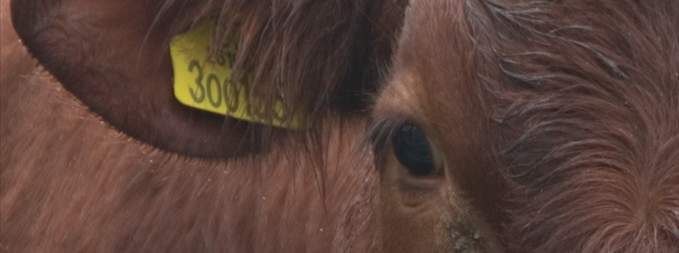
It’s that time of the week again, and this time our Friday Poem is taken from Hilary Menos’ collection, Red Devon.

Originally a food writer and journalist, Hilary Menos’ poems are often inspired by rural farming life in Devon where she lived for some years.

Red Devon by Hilary MenosIn Red Devon, her second collection, Menos reveals her experiences as a “blow in” from upcountry moving into a tight-knit rural community and seeing at first hand some of the human and animal costs of the conflict between traditional farming methods and the demands of modern commercial agriculture. She also tells the story of a burgeoning love affair between farmer Grunt Garvey and haulier Jo Tucker, a romance which ends in tragedy. Alongside these two stories, one fictional and one very real, runs a concern for farmers around the world whose livelihoods – and lives – are threatened by global changes in agriculture.


Bob’s Dogs

There was the one dog, neither use nor ornament.
Each morning he lurked by the tanker’s dribbling spout
licking his chops. Spawned every cur in the district.
Bit the postman, once, and got away with it.

There was the other dog, two-bit brother to the first,
eyes like spilt milk. Danced on the slurry pit’s crust
one time too many, said Bob, and no good since.
Bit the builder’s foreman twice, and got away with it.

There was the third dog, each month went walkabout
under a chicken moon, fetching and shedding stars.
Deaf to everyone but Bob’s dad, now four years
bed-bound. What shall I say? Bit nobody, yet.

And lastly there was the bitch. Bit the child.
The four shots blew through the lanes and echoed loud
in the neighbour’s eyes. Only Bob shook my hand,
hitching his trousers up with a ‘Welcome, my friend.’

 
Buy your copy of Red Devon now: £8.99
Claim 20% when you become a Book Club member

Posted on

Friday Poem – ‘A Pembrokeshire Artist’, Tony Curtis

A Pembrokeshire Artist Tony Curtis Llangwm

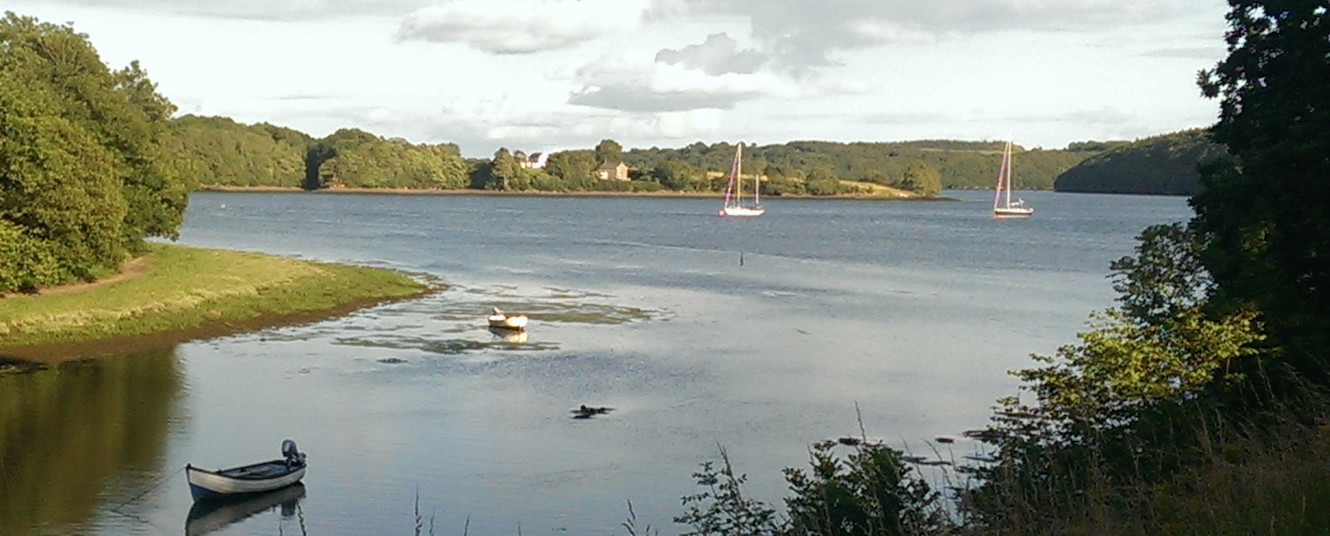
This week we have a treat for you – our Friday Poem is one of the new poems from Tony Curtis’ forthcoming From the Fortunate Isles: New and Selected Poems (Seren, October 2016).

From the Fortunate Isles: New and Selected Poems, Tony CurtisFrom the Fortunate Isles, published in celebration of the author’s 70th year, features poems from ten of Curtis’ published collections as well as a substantial number of new poems. This is a poet whose themes and variations remain consistent: a profound interest in the wars of the last century, an abiding fascination for all art forms, particularly painting and poetry, tender attachments to family, and (most evident in the poem below), a deep affection for his roots in West Wales.


A Pembrokeshire Artist
John Knapp Fisher (1931 -2015)

An evening with the rain coming in,
that sea so cold and unsettled, a heavy graphite,
you’d not have gone out with your mackerel lines
in the Viking or any of her successors
from the stone-brick embrace of Porthgain.

We’ve eaten our fill at your wake, John,
the Sloop Inn squeezed tight
with suits, black ties and memories.
Wives, patrons, grandchildren.
Photos of you through all seven ages on the screen.

Inland to Wolf ’s Castle and as far south as the cathedral
the farms, haggards and holiday lets
shrug down for the cold night.
You’d have worked to conjure the reluctant light
discovered in them under this empting, moonless sky.

And the first scurp coming would have dabbed
your paper, blossomed and been coaxed,
smudged, into the finished sketch.
Now the county will have to sing its own spirit,
compose its own shape, keep its own watch.


If you would like to listen to Tony read from his forthcoming collection and other books in his native Pembrokeshire, don’t miss his event at the Llangwm Literary Festival, Saturday 12th August. More details here.

You can buy copies of Tony Curtis’ poetry collections, anthologies he has edited, critical essays, and other writing direct from us (20% off for Book Club Members):
Crossing Over
Heaven’s Gate
Tokens for the Foundlings (ed Tony Curtis)
After the First Death (ed Tony Curtis)

Wales at War
Real South Pembrokeshire
Keep an eye out on the Seren website – Tony’s new collection, From the Fortunate Isles: New and Selected Poems, is coming soon…

Posted on

Titles to treat yourself to this National Book Lovers’ Day

titles to treat yourself with national book lovers’ day 2016

Book buying can be a bit of an addiction, but now we all have the perfect excuse to go out and treat ourselves to a new title – it’s National Book Lovers’ Day.

Here are our editors’ top ten picks. If you haven’t read them yet, then what are you waiting for?

1. Masque, Bethany W. Pope
Masque by Bethany W PopeA richly gothic retelling of Gaston Leroux’s phantom of the opera story by debut novelist Bethany W. Pope. Centre stage is promising young singer Christine, who, despite being devoted to her art, attracts the attention of both the Phantom (Erik), and rich Parisian theatre owner Raoul.
The intensely ambitious Christine finds herself caught between the twin evils of the Phantom’s murderous pursuit of artistic perfection and Raoul’s ‘romantic’ vision of her as a bourgeois wife. Her own desire to follow her operatic career becomes her guiding light, but none of the three leading characters can control the directions in which their passions lead them, while the beautiful masked skull of the opera house itself looms large over their respective fates. The resulting mix of love, rage, art and murderous intent, is explosive.
Love, lust, adventure, romance, and the monstrous nature of unfulfilled creativity await you here.
Everyone wears a mask. Look beneath it, if you dare.

2. Crowd Sensations, Judy Brown
Elterwater Rain Crowd Sensations Judy BrownCrowd Sensations is a worthy follow-up to Brown’s Forward Prize-nominated debut, Loudness. Brown is a poet of dazzling contrasts, of thoughtful paradox, intimate confidences and precise evocations. Her titles and first lines both draw you right into a poem and then quite often surprise you with a narrative that you hadn’t quite expected. ‘The Things She Burned Last Year’ references a past both remote and near, like multiple reflections seen in a mirror. Brown is a poet of profoundly unsettling domesticity as in ‘The Dehumidifier’, which unravels the metaphysics of damp and ‘This is Not a Garden’, which is a cool summation of a failed marriage. We frequently imagine an uncomfortable intimacy: ‘Poem in Which I am Not Short-sighted’, or are given a scary anecdote like: ‘The Post Box in the Wall’. There are serious poems that lure you with humorous titles: ‘Poem in the Voice of a Dead Cockroach’.

3. Sugar Hall, Tiffany Murray 
Easter 1955. As Lilia Sugar scrapes the ice from the inside of the windows and the rust from the locks in Sugar Hall, she knows there are pasts she cannot erase. On the very edge of the English/Welsh border, the red gardens of Sugar Hall hold a secret, and as Britain prepares for its last hanging, Lilia and her children must confront a history that has been buried but not forgotten.
Based on the stories of the slave boy that surround Littledean Hall in the Forest of Dean, this is a superbly chilling ghost story from Tiffany Murray.

4. Ritual 1969, Jo Mazelis
Ritual, 1969 by Jo MazelisWhat are little girls made of? What will they become? Will they run away to the circus or become dressmakers, teachers or servants? From the playground to adulthood the path is beset with misunderstandings, missed dates and hidden traps for the unwary.
This darkly gothic collection of stories explores the unsettling borderland between reality and the supernatural. Ranging from early twentieth-century France to 1960s South Wales and contemporary Europe, Jo Mazelis’ singular vision and poetic language creates characters caught up in events and feelings they do not fully understand or control, giving the book its uncanny focus. Not all is as it seems in a world where first impressions may only conceal disguises and false trails – and there’s no going back.

5. Dark Mermaids, Anne Lauppe-Dunbar
Dark_Mermaids_Web72It is the Olympic summer so what better time to read Anne Lauppe-Dunbar’s gripping thriller, Dark Mermaids, which tells a shocking yet enduringly familiar story of the horrors of a political system that doped its youngsters to sporting superhero status, and then left them to fend for themselves.
Dark Mermaids follows West Berlin police officer Sophia as she is called to investigate the murder of her childhood friend Käthe. The search for Käthe’s killer draws Sophia back into her abusive past as a child swimming star in the former GDR, and as the web of half-remembered horrors starts to unravel, those close to Sophia begin to take notice. There are some who still have much to hide, and they will go to great lengths to stop their secrets from surfacing.
Dark Mermaids was shortlisted for the Cross Sports Book Awards, 2016.

6. Star-Shot, Mary-Ann Constantine
Part fable, part mystery, Star-Shot is a stylish debut novel set in and around Cardiff’s National Museum in a time that is almost, but not quite, our own. As their paths cross in a circumscribed world of benches, parks and galleries, a handful of characters reveal their stories of obsession, loss and recovery, creating a fragile network of relationships which will help to resist the inexorable channels of silence eating into the city.
A brittle young woman sits on a bench in Gorsedd park, conscious of the powerful building behind her; a tall man carries a box full of a strange organic substance up the entrance steps; a young father explains the formation of stars to his tiny son.  As university researchers try to map and understand  the destructive silence snaking around them, it becomes clear that the linked lives of these and other marginal characters offer ways of countering its effects. Poignant and humorous,Star-Shot is an exploration of how objects and images can focus our grief and desire; it is also a meditation on the regenerative power of garden ponds, and the cosmic significance of frogs..

7. The Dogs That Chase Bicycle Wheels, Ilse Pedler
The Dogs that Chase Bicycle Wheels Ilse Pedler Friday PoemBeautifully evocative of life on a sailboat, Lynne Hjelmgaard’s poems trace a journey this much-travelled author took on a sailboat to the Caribbean and back to Europe with her husband.
The couple’s relationship is poised on tensions, beautifully observed, as masculine/ feminine, the need to assert and/or withdraw in the face of the turbulent seascape. The paradise-like destination is reached and later we learn that life goes on, there is illness and loss, and in the final section, the tone becomes movingly elegiac.
Hjelmgaard’s poems are beautifully poised, full of clear-eyed and frequently humorous observations. Her work is full of sentiment without being sentimental. We hope you enjoy your trip on A Boat Called Annalise.

8. Murder at the Star:Who Killed Thomas Thomas?, Steve Adams
The murder of God-fearing, bible-quoting, partially deaf Thomas Thomas at the branch of Star Stores he managed in Garnant, South Wales has remained an unsolved mystery since it happened in 1921. His body was found on the morning of Sunday February 13th, his head smashed, his throat cut and with a stab wound to the stomach, any of which could have killed him. Over £126 was missing from the store safe, yet there were oddities about the attack which suggested this was more than a robbery that went tragically wrong: Thomas had been gagged with cheese, and there was no tear in his trousers, shirt and waistcoat above the stab wound. What circumstances could explain these things?
Garnant was in shock, and Scotland Yard arrived in the form of DI George Nicholls. A number of suspects were identified but none seemed to have the telling combination of motive and opportunity. Despite the expertise of Nicholls the case was eventually abandoned and the killer’s secret died with him.
Until now. In classic cold case fashion journalist Steve Adams’s extensive researches have finally identified the killer, who is revealed at the end of the book, after a thorough reconstruction of the murder and the subsequent investigation.

9. The Way the Crocodile Taught Me, Katrina Naomi
Katrina Naomi’s new poetry collection, The Way the Crocodile Taught Me, is a heartfelt and tragi-comic portrayal of a fraught childhood and adolescence. Central to the book are two sequences: one about an awful stepfather, and the other about a kindly but also comically old-fashioned grandmother. A mother appears, distant, glamorous as a film star. An absent father is also a dream: “After my father left, I grew/ a battery of hearts,/ felt each of them beat,/ like doves in a casket/”. These family poems are both heartbreaking and often hilarious, sometimes both at once as in ‘Portrait of my Stepfather as a Xmas Tree’.


10. The World, The Lizard and Me, Gil Courtemanche
The World, The Lizard and Me - Gil CourtemancheA novel of testament to the children caught up in the civil wars of Central Africa, The World, the Lizard and Me follows criminal investigator Claude Tremblay as he pursues a warlord charged with creating child soldiers in the Congo.
Defeated in court by a legal technicality, Claude abandons his usual professional detachment and decides to act alone. He finds himself in the growing chaos of the mining town of Bunia, searching for more evidence and eventually encountering Kabanga. Pitched from distant observation into the grim reality of an African power struggle, he is confronted by a form of justice different from any he has experienced before. He also encounters at first hand the results of the inhumanity of the lives of child soldiers, and is forced to reconsider the nature of love and the notion of normality.


If you prefer to read digitally, then why not check out Seren eBooks? See our full eBook list on Kobo or search by title on Amazon.

Save

Posted on

Friday Poem – ‘Accent’, Carolyn Jess-Cooke

This week’s Friday Poem is taken from Carolyn Jess-Cooke’s debut collection, Inroads.  

The opening piece, ‘Accent’ where ‘stowaway inflections and locally-produced slang/have passports of their own’ is a praise poem for the versatility and joy of language, “The way sound chases itself in tunnels and halls, the way senses fold  memory…”.After this playful start, a difficult childhood is evoked through metaphor in poems like ‘Music Lesson’,‘One Thousand Painful Pieces’ and ‘Bitten’, all the more heartbreaking for being indirect.


Buy your copy of Inroads from the Seren website: £7.99

Claim 20% off when you become a Book Club Member.

Save

Posted on

Friday Poem – ‘Skirrid Fawr’, Owen Sheers

friday poem skirrid fawr owen sheers

Today marks the start of the National Eisteddfod, this year in Abergavenny, and our Friday Poem talks of an area just a few miles north – Ysgyryd Fawr, or The Skirrid. The poem is taken from Abergavenny poet Owen Sheers’ second collection, Skirrid Hill.

skirrid fawr friday poem owen sheersIdeas of separation and divorce are important in Owen Sheers’ eagerly-awaited follow up to his acclaimed debut collection The Blue Book. The geographical divides of borders, the separation of the dead and the living, the movement from childhood to adulthood, the ending of relationships. Such divides are both moments of ‘mark-making’ and moments of absence. In this collection it is often the awareness of such separation – past or impending – and the juxtaposition of these diverse states – that provides the friction from which the poems are born.


Skirrid Fawr

Just like the farmers who once came to scoop
handfuls of soil from her holy scar,

so I am still drawn to her back for the answers
to every question I have never known.

To the sentence of her slopes,
the blunt wind glancing from her withers,

to the split view she reveals
with every step along her broken spine.

This edge of her cleft palate,
part hill, part field,

rising from a low mist, a lonely hulk
adrift through Wales.

Her east-west flanks, one dark, one sunlit,
her vernacular of borders.

Her weight, the unspoken words
of an unlearned tongue.


Buy your copy of Skirrid Hill from the Seren website: £8.99
Claim 20% off when you become a Book Club Member.

Save

Save

Save

Posted on

Aspie-Chromatics | Carol Rumens on Asberger’s, ASC and Poetry

aspie-chromatics carol rumens asberger's syndrome poetry

Carol Rumens is the author of sixteen collections of poems, as well as occasional fiction, drama and translation. Here she talks about Asperger’s Syndrome and Autistic Spectrum Condition (ASC), the misunderstandings and mysteries still surrounding these conditions, and how her awareness of Asperger’s Syndrome has affected her understanding of her own creative process.

Aspie –  someone with Asperger’s Syndrome

Chromaticsthe study of colour

When my grandson was diagnosed with autism it was as if a stone had been hurled into a quiet pool. The ripples spread through his immediate family, particularly affecting my two daughters (one being his mother) and myself. We re-evaluated our lives from a dizzy perspective. Autistic spectrum condition is a genetic condition. It’s a doubtful gift passed from generation to generation. A lot of us were implicated!

At first I was very uncomfortable with the idea that I had Asperger’s Syndrome. I’d always considered myself eccentric. My self-esteem relied on a sense, since earliest childhood, that I was creative, one of those people who could paint, draw, play music and write, even if they weren’t always very good at thinking straight or mixing with the other kids. I was an introvert – fine. So were a lot of intelligent people. I didn’t need close friends: I needed a room of my own, plus a typewriter. So what?

Perhaps being an Aspie made me less guilty of the wrongs I’d done to others in my life, but, equally, I was less responsible for the good. The best of my ‘good’ self – my poetry – was just a symptom, an expression of pathology.

I began the “On the Spectrum” sequence partly to express that grief. But I soon struck notes of defiance and humour. I remembered strange, disconcerting experiences I’d had as a child, and I measured them against some of the diagnostic criteria of Asperger’s Syndrome. Some were in tune with the criteria. But others weren’t.

I will have more questions in future: I haven’t finished telling the story. For instance, it’s said that Aspies lack empathy, and that we misunderstand metaphor. I wonder where this leaves the Aspergers poets – or indeed the women with Aspergers.

Sensory over-stimulation is one of the affects of Autistic Spectrum Condition: there’s neurological and experiential evidence. But wouldn’t that susceptibility be more likely to increase empathy? Perhaps autistic people, especially women (the gender which is socially conditioned for empathy) have an excess rather than a lack of response to others, but deny it because it feels chaotic and scary? An inability to grasp metaphor might be the result of a similar subconscious defence-mechanism –because metaphor is also sensuously stimulating, and therefore potentially disruptive.

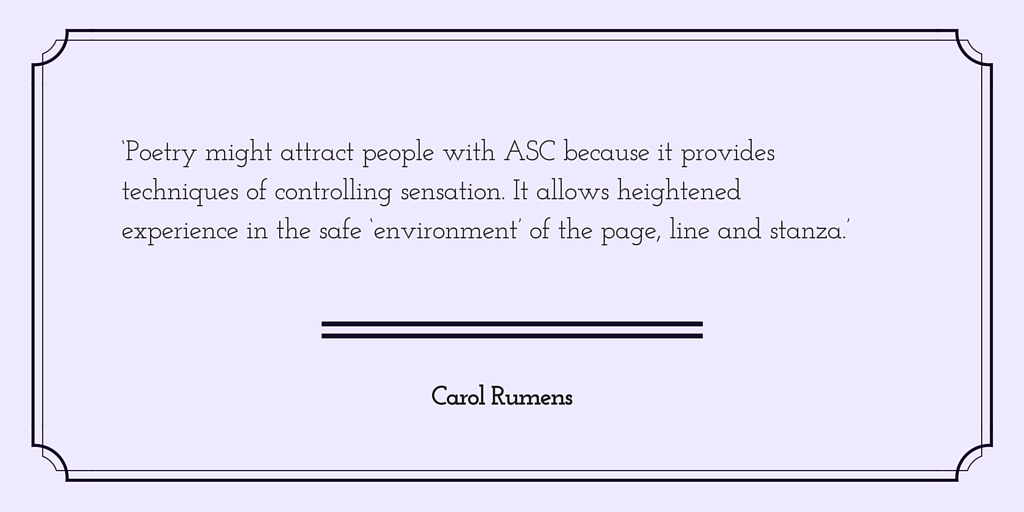
Poetry might attract people with ASC because it provides techniques of controlling sensation. It allows heightened experience in the safe ‘environment’ of the page, line and stanza. It foregrounds pattern-making. It allows repeated patterns to be safely interrupted. I realise now that, whatever the genetic ‘prompt’ towards an activity for an individual, it doesn’t invalidate the activity. Being an Aspie poet doesn’t damage the poetry, but the pride.

And so, having overcome my pride and prejudice, a faintly crusading element entered my attitude to autism. The condition needs a lot more fresh thinking. I’m not generally someone who wants poetry to earn its bread as a foot-soldier in the army of good causes. But I want to speak for a greater understanding of autism, and I choose to do it through the medium I’m best able to employ. Rather than use poetry as propaganda, I would simply ask it to report back sometimes from the field, like a travel correspondent in the complex, many-coloured terrain of a newly discovered country.

What I’d like to do now, besides filing more dispatches, is to edit an anthology of poems by autistic poets. Certain poets have already ‘come out’ and I suspect there are potentially many more. Autism is a richer, wider, more polychromatic spectrum than so far defined. In fact, to know autism would be to know consciousness, which would be to see God. I don’t think anyone can, but I hope we can build some better microscopes.


Animal People Carol RumensCarol Rumens’ latest collection, Animal People, is available on the Seren website. The striking final sequence, ‘On the Spectrum’, focuses particularly on Asperger’s Syndrome and how it may be experienced by young women, as well as exploring some of the effects of Autistic Spectrum Condition (ASC).

Buy your copy now: £9.99
Claim 20% off when you become a Book Club Member


Save

Save

Posted on

Friday Poem – ‘Outcast Hours’, Rhian Edwards

Clueless Dogs Rhian Edwards

This week our Friday Poem is taken from Rhian Edwards’ dark and sensual debut collection Clueless Dogs.

Winner of Wales Book of the Year 2013
Winner of the Roland Mathias Prize for Poetry 2013
Winner of Wales Book of the Year People’s Choice 2013
Shortlisted for the Forward Prize for Best First Collection 2012

clueless_dogs72Full of verve and humour, with a spiky syntax featuring hard-edged consonants, Rhian Edwards’ language has a winning honesty and intensity. Poems like ‘The Welshman Who Couldn’t Sing’ chronicle a fraught childhood in Bridgend, south Wales, where the sensitive child escapes through imaginative games of ‘Playing Dead’ and ‘Broken Lifeboat’. Later poems confidently explore teenage lusts, student rivalries, damaged peers and tense situations. Although the author doesn’t flinch from ruthless depictions in which we are often implicated by her use of the second person ‘You’, there is an underlying sweetness, an elegiac thread most evident in the poems of maturity.

Outcast Hours

White light weighs heavy, bullying
bright as squash courts. I fix a dirty look
on the electric clock. The walled
minutes stagger their blinks.

Wheel-footed suitcases scurry
about me like clueless dogs,
flip flops tick-tock
on the polished rink of the concourse.

One girl’s patience is vivid,
measured by the careful brush strokes
of plum on her toenails,
the soft turning of pages.

Her boyfriend hibernates,
his legs stretched out before him.
Ankles crossed, he wags his foot
conducting his concert of sleep.

A ponytailed mother raises
an eye for her wandering son.
Shc scoops him up and breathes in his scalp
in chase of a smell that is running away from her.

The antique couple are butchering time.
Their teeth tear through baguettes
raining faded confetti
onto their open laps.

Shy of games and companions, fidgeting
in plastic-boned chairs, we comb the air
for that splintered voice,
dictating when our sky will ship us.


Buy your copy of Clueless Dogs now: £8.99

Claim 20% off as a Book Club Member

Posted on

Friday Poem – ‘Talking in the Dark’, Christine Evans

Friday Poem Talking in the Dark Christine Evans

This week our Friday Poem is from Christine Evans’ sensitive collection, Growth Rings, which was shortlisted for Wales Book of the Year 2007.

Friday Poem Christine EvansThis collection from Christine Evans follows well-received ’Selected Poems’.  Hers is a persuasive voice, highly attuned to the vagries of the seasons, to the landscapes and inhabitants of the beautiful Llyn Peninsula in North Wales where the author has made her home.
As well as vibrant short lyrics on everything from ’Bluebells in Nanhoron’ to jets flying over Wales, there are a series of tender elegiac pieces on relatives, meditations on the last moments of Shelley and the fates of the Brontes, and a number of poems featuring the mysterious Island of Bardsey.

Talking In the Dark

Now the air is indigo with evening
together by the boathouse where we’ve sprawled
an hour or more, felt earth’s breath cooling,
we wake mind-echoes of ‘the real world’.
Night prompts us all to visions of tomorrow.

A subtle fullness, like a ripening field
contains us, names and knowledge weightless now.
The biosphere, Helen thinks, might still have the power
to heal pillage, maiming, poison. Protests fly:
excuse for doing nothing, weak, evasion.

Although we can’t agree what should be done
a tribal dignity begins to hover.
Shadows with eyes that hold the light, we are
communicators, not just talking faces.
First stars beckon in a deepening sky.

The universe accepts our hopeful voices
but sea demurs with one slow-hushing sigh.


Buy your copy of Growth Rings now: £7.99

Claim 20% off as a Book Club Member

Posted on

Friday Poem – ‘The Scarlet Lizard’, Caroline Smith

Friday Poem Caroline Smith

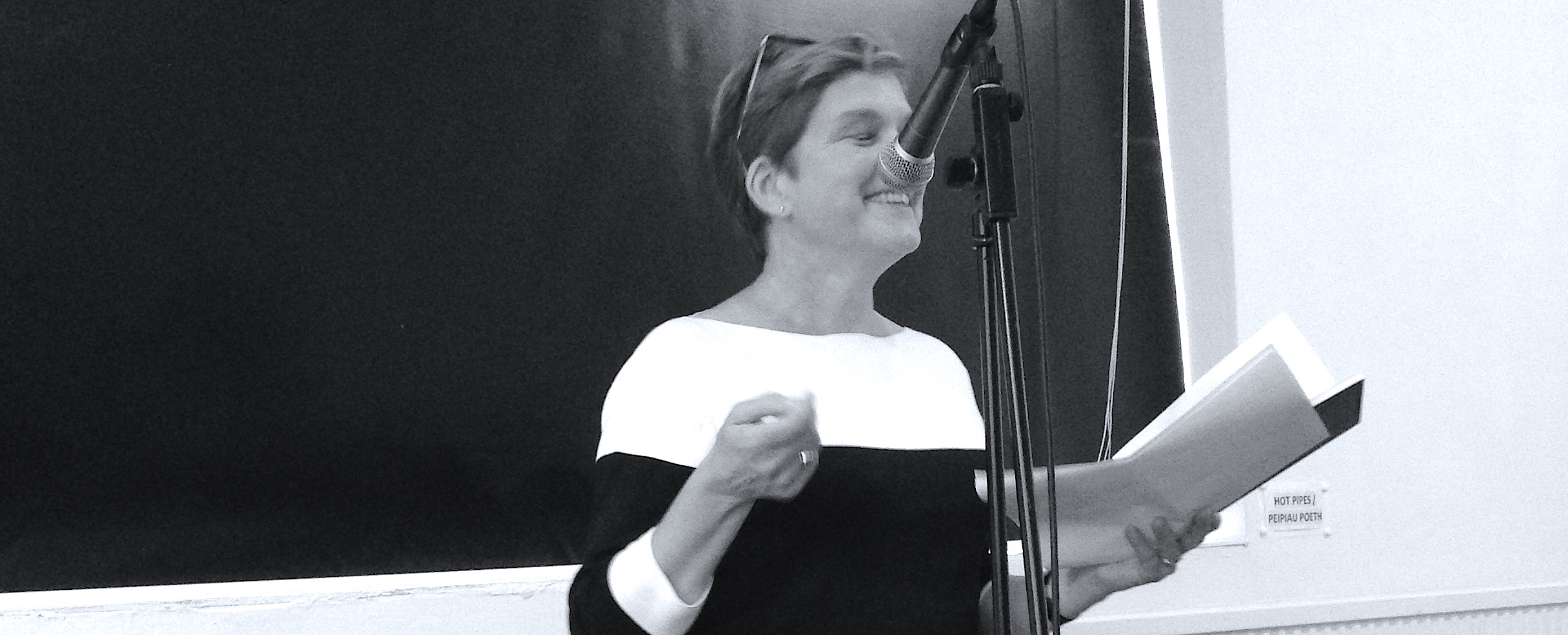
Last night saw us at Chapter, Cardiff, for July’s First Thursday event and among the readers was Caroline Smith with her new collection, The Immigration Handbook. This week we have a treat for you – you can listen to the Friday Poem being read by the author. Look below for the video, and accompanying poem text.

The Immigration Handbook Caroline SmithThe strikingly moving poems in Caroline Smith’s The Immigration Handbook are the fruit of the author’s career as an Immigration Caseworker for one of the most diverse inner-city areas in London. Her characters are careful composites of people she’s observed. They step vividly off the page, as if out of the headlines. Written over a period of years, as layered and infused with experience as the documents she discusses: letters folded and refolded, creased with time, Caroline Smith’s poems are a moving record of global people movement, the story of our time.

The Scarlet Lizard

Nothing moves
except the evening light
crossing the Judge’s room.
The lawyers’ skeleton arguments
lay piled on his desk.
They seemed to him brittle
as bleached poppies,
tapped of their seeds.

He longed to see the quick movement
of a scarlet lizard weaving unexpectedly
through the parched, cracked hexagons
of a legal phrase, to hear the snapped stick
fritter away from a hiding place;
to feel the cold, diaphanous weed grip
in the black current of a border crossing.

He needed to sense some quiver of
indecision, an odd detail
that would open the truth of their words;
chinks of light shining
through shuttered doors.


Buy your copy of The Immigration Handbook now from the Seren website: £9.99

Become a Book Club Member to claim 20% off.


Save

Posted on

An extract from Boy Running | Wales Book of the Year shortlist

extract from Boy Running Wales Book of the Year

The winners of the Poetry, Non-Fiction and Fiction Categories, and the overall Wales Book of the Year Winner, will be announced in just two weeks. Seren have two titles in the running for the awards, and before we find out the results, we thought you might enjoy reading an extract from each of our nominated books. Look below and you’ll find an extract from Boy Running by Paul Henry (shortlisted for the Open University in Wales Creative Non-Fiction Award).

Studio Flat

Socks hang like bats from a skylight.
They may be dry in time for the moon.
The camp site owner’s water-feature
drains more blood from the sun.

Cars queue for the narrow bridge.
Birds catch their pulses and fly.
I am suddenly old. What’s an attic
but a bungalow in the sky.

And where are you, my sons?
I heard your voices in the bells
of snowdrops pulled by the wind.
These tulips have lost their smell.

Perhaps I could tell you, one day
where the snowdrops went, why old men
dry their socks on the moon, and what
darkened the skylight, just then.


Ring

I can’t get the ring out of my finger.
How long till it disappears
this ghost ring, twenty years deep?
I’m branded. Is it the same with you?
Your fingers were slenderer than mine.


We hope you enjoyed reading this free extract from Boy Running by Paul Henry. Keep an eye on the Seren blog, as we will be announcing the Wales Book of the Year Awards results in just over two weeks time.

About Boy Running:
Paul Henry has gained a reputation as one of of the best poets in the UK. Boy Running is his beautiful sixth collection and the first to follow  The Brittle Sea: New and Selected PoemsAlso a singer-songwriter, Henry is known for his precise lyricism, intimate tone and a cast of characters inspired (like Dylan Thomas) by his childhood by the sea in Aberystwyth, West Wales.