Posted on

Friday Poem — Making Love

Masculine happiness

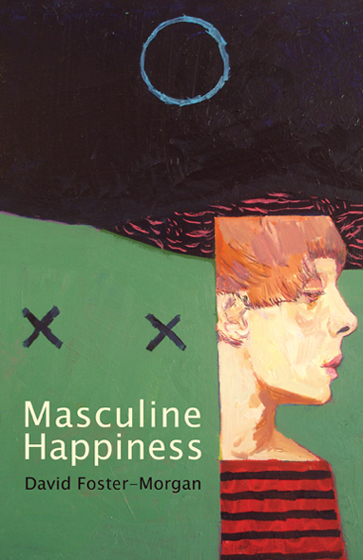
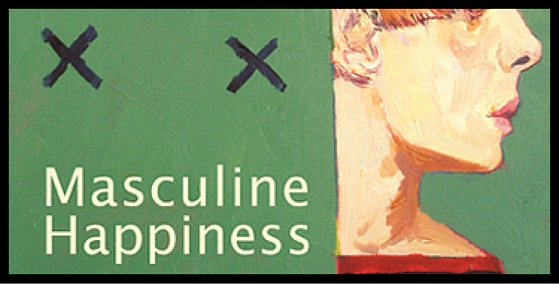
This week’s poem is from Cardiff-based David Foster-Morgan’s provocative debut, Masculine Happiness. The collection is half price until midnight, Sunday 10th January. You can find the book here.

Born and based in Wales, Foster-Morgan has long been a presence in the poetry world, having had poems published widely in magazines and with appearances at workshops, festivals, and events including ‘slams’ where his quiet style and obvious integrity frequently beat louder and less subtle voices to a prize. His debut collection, some years in the making, is inspired in part by his reading of American literature: the conversational tone of Frank O’Hara (‘F’OH’) and the long-lined garrulity of Allen Ginsberg, (‘Allen Ginsberg returns to Llantony Priory’) as well as the models of masculinity handed out to us by Hollywood characters like John Wayne (‘Masculine Happiness’). His ambivalence toward the idea of the ‘hero’ and his observation of the fate of those who have been lauded, like the conflicted protagonist of ‘The City Legend’, is a fruitful area for exposition.

Making Love

I think that we were meant to…
Is it treat as if we were nations
or better meet as friends.
To have no buts
and simply wait ’til fate instructs.
Fate though never interrupts.
Oh: sighs, eyes, easy, thighs.

Oh: find, kind, miss, bliss.

In exquisite orbit on your…
Is it rim
or better promise held within.
Both pleasure and pain
in equal measure, at once the same.
With no words the meaning plain.
Oh: insane, flame, be, flee.

Oh: quest, rest, crux, stuck.

You are…
Is it everything I lack
or better welcome heart and hurry back.
Your soft magnetic air sublime,
wraps me in an ecstasy so kind.
That is I like your style.
Oh: start, apart, qualm, charm.

Oh: light, flight, sun, undone.

I fear you sense my…
Is it following cloud
or better stubborn doubt.
It is a flinching habit to say no
and pinch new love before it can grow.
Give no the elbow.
Oh: aloud, shroud, spite, blight.

Oh: cruel, duel, bequeathed, heed.

Banish fear with…
Is it yes
nothing better than yes.
Defeat strange love with a yes,
fate and doubt distress with a yes.
I would really like you to say yes.
Oh: finesse, mistress, conquest, bless.

Oh: fair, dare, rare, flare.

I watch your hair…
Is it coil like a snake
or better hang at your nape.
High on oblivion’s plain,
a wordless freedom we will claim.
Enjoy the moment, don’t explain.
Oh: arms, charms, find, unconfined
Oh: sublime, entwine, sun, outdone.
Oh: me, thee, we.

Masculine_happiness_72dpirgb
Order David Foster-Morgan’s Masculine Happiness from our website (half-price until midnight, Sunday 10th January).
Posted on

Friday Poem – The Red Aeroplane

house of small absences

Our first Friday Poem of 2016 is from Anne-Marie Fyfe’s new collection, House of Small Absences. We hope you enjoy it, and happy New Year!

Anne-Marie Fyfe’s poems have long dwelt on the role that the spaces we inhabit, the places in which we find security, play in our lives: House of Small Absences is an observation window into strange, unsettling spaces—a deserted stage-set, our own personalised ‘museum’, a Piedmont albergo, underground cities, Midtown roof-gardens, convent orchards, houseboats, a foldaway circus, a Romanian sleeper-carriage—the familiar rendered uncanny through the distorting lenses of distance and life’s exigencies, its inevitable lettings-go…

The book opens with ‘The Red Aeroplane’ where witnessing an apparent plane crash sparks a vertiginous sequence of image and memory. We will follow the author in exploring not just specific places and memories but the ‘exponential function of tangents’, all that is implied and suggested.

The Red Aeroplane

From the oratory window I witness
mid-air doom, a slew of concentric
swirls, a trail of forge-sparks,
and that’s it. A vermilion two-seater
stagger-wing loops earthbound,
so much depending upon centrifugal
drive. Slivers of toughened glass
spangle the outer stone sill,
the vacant co-pilot seat
is plummeted deep in rosebed mulch.

I question now if the red bi-plane
ever was, the way sureties tilt
and untangle from any one freezeframe
to its sequel. Maybe I was glimpsing
that two-seater red pedal car
– injection-moulded plastic –
collected one Christmas Eve night
for a fevered child? Or conflating
the replica cherry-red sixty-three
we’d toyed with, tinkered with, briefly
on a tinsmith’s covered stall
that drenched Saturday?
What can’t be
cast in any doubt is the wreckage,
a fragmentary scattering,
the mangledness on the far side
of glass. And how a Galway blue
skyscape proves ineluctably
the exponential function of tangents.

Order Anne-Marie Fyfe’s House of Small Absences from our website.

Posted on

Friday Poem – The Snow Dome

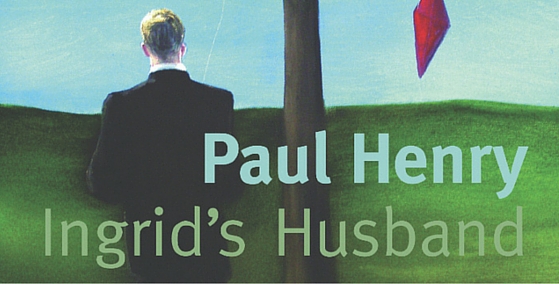
This week’s poem is from Paul Henry’s fifth collection, Ingrid’s Husband, first published in 2007.

Here is a book of ghosts, from the mysterious traveller in the title poem who, mistaken for another man, starts to crave his new alter ego, to the first person of ‘Between Two Bridges’, Henry’s long poem on Newport, who follows his teenage ghost across the city for a night:

He pulls away. The wind puts its lips to an arcade.
A seagull on a barber’s pole waits to open its blades.

How the living haunt themselves is the concern of Ingrid’s Husband, and the author discovers his spirits through an imagery of absences: a child’s signature in the dust of an old guitar; the stone plinth where a cafe once stood; a white balloon drifting down a shopping arcade; a chateau, still furnished with belongings of its vanished owner…. Love continues to underscore the commonplace in Paul Henry’s fifth collection and this lyric poet’s distinctive voice continues to haunt its readers.

The Snow Dome

First sun, then snow … my father floats up the lane
in white jeans, a white rose in his claw.
He cuts a Lear-like figure, drifting alone
through the sun and snow.

Wherever you mother goes, I follow
he mutters, brushing the icing from her stone,
its doorstep to a colder house. It snows

and shines about the ornamental scene.
We can’t see for the petals of the rose.
He says she kissed his bald head in the lane,
first with sun, then snow.

Order Ingrid’s Husband from our website.

Posted on

Friday Poem – Mermaid

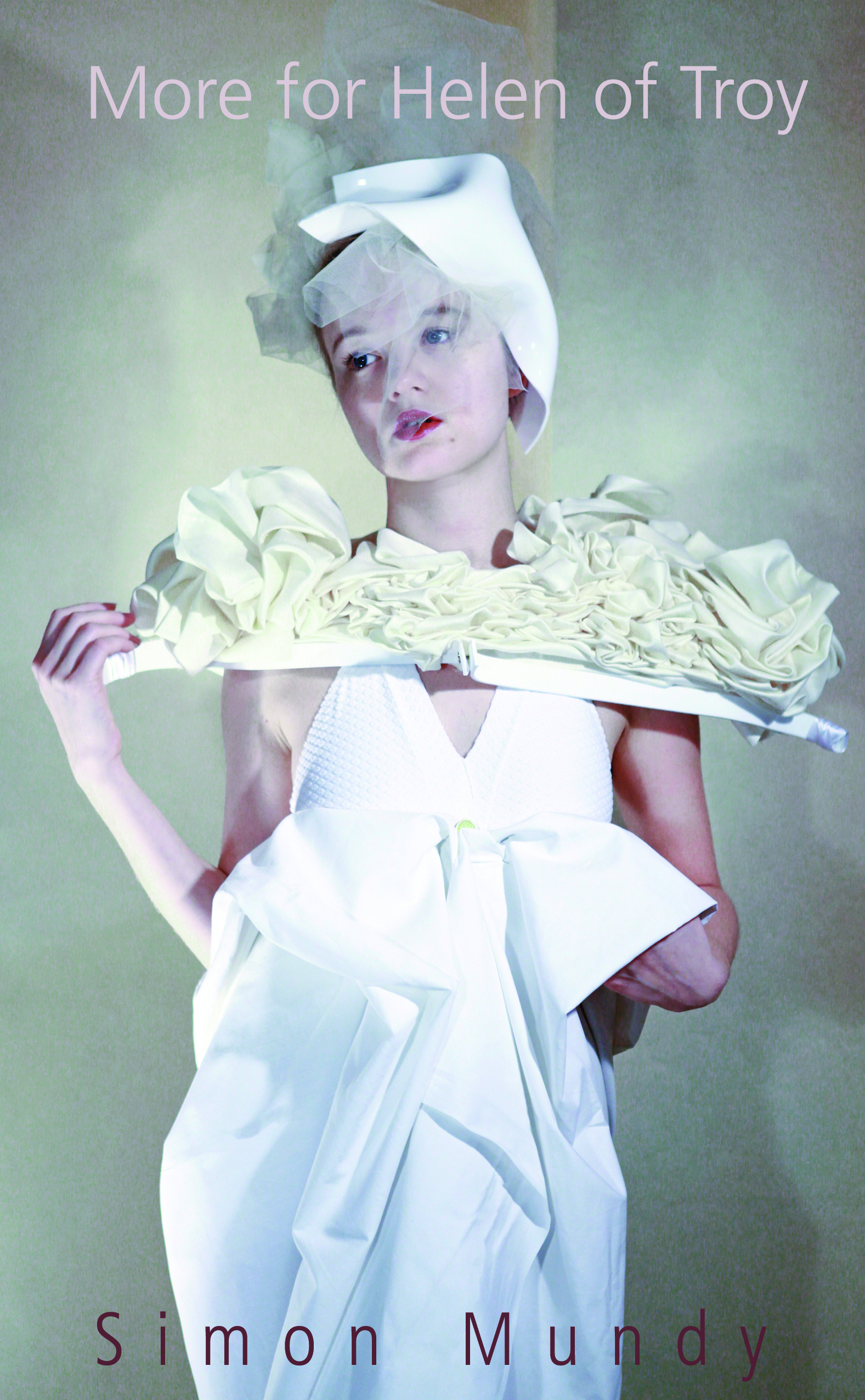
This week’s poem is from Simon Mundy’s fourth collection, More for Helen of Troy, first published in 2012.

More for Helen of Troy, Simon Mundy’s new collection of poems from Seren, is suffused with the atmosphere of the landscapes that inspire him, the lush countryside of Powys, and a number of islands all over the world:Genada, Jamaica, Shetland, Italy. It is also deeply involved with many questions of desire: for the ideal of a beautiful woman, as ‘Mermaid’; for the hope of a good state, as in ‘The New Senedd, Cardiff’ for the vision of a pristine country and seaside, as in ‘Radnor Songs’ and ‘Aspects of Sea’. The tension between all these ideals, between lofty aims and inevitable disappointments, come together in the main title sequence, where an entire society must scheme and suffer for the allure of Helen. Helen is also emblematic: both a legendary figure and a imago for women from all times: pursued, desired, lonely, restless, she haunts the imagination of the poet. Sometimes keenly satirical, as in ‘Society Haiku’, and often poignantly lyrical as in ‘Translated Daughter’, these poems are both pointed and enjoyable. 

Mermaid

This rock, this divan of stone
Is too jagged for your tail, tearing
Young scales, the salt of sea and tears
Searing raw skin as you preen and comb,
Holding the pose for shipsful of men
Who pass in the morning.
What else can you do?
Hide in the cold northern waters that sparkle
On the surface but hold poisons that pock
Your fins with dirty sores.
Or you could hitch on board those ships,
Shed the tail, rejoice in legs and bush,
Bask on the warm sands of love
Before the mortal tides creep in
Across the disappointing strand.
No. Keep amphibious. Immortal
Beauty is worth a little weeping.

Order More for Helen of Troy from our website.

Posted on

Friday Poem – Masculine Happiness

This week’s poem is from David Foster-Morgan’s debut collection, Masculine Happiness, which was released this week!

Masculine Happiness is the provocative debut poetry collection by David Foster-Morgan. Born and based in Wales, Foster-Morgan has long been a presence in the poetry world, having had poems published widely in magazines and with appearances at workshops, festivals, and events including ‘slams’ where his quiet style and obvious integrity frequently beat louder and less subtle voices to a prize. His debut collection, some years in the making, is inspired in part by his reading of American literature: the conversational tone of Frank O’Hara (‘F’OH’) and the long-lined garrulity of Allen Ginsberg, (‘Allen Ginsberg returns to Llantony Priory’) as well as the models of masculinity handed out to us by Hollywood characters like John Wayne (‘Masculine Happiness’). His ambivalence toward the idea of the ‘hero’ and his observation of the fate of those who have been lauded, like the conflicted protagonist of ‘The City Legend’, is a fruitful area for exposition.

This is also a writer who casts a cold eye on the natural world, at one point lauding a landscape and the next, mourning its depredation. In the poem ‘Meeting my Eagle’ the narrator comments: ‘Polar magnets, our feel for each other is/strongest at the point of turning away.’  The poet observes, interacts and resists the urge to rhapsodise. The author’s philosophical education informs his frequent changes of character and point of view. This erasure of ego is characteristic. We also see into the minds of people like the ‘Machine Gun Killer’, made frightening due to the author eschewing gory melodrama in favour of cool accuracy. We are poised with this professional killer, ‘behind the muzzle’s flare, breathing the pepper exhaust, transported on the recoil’s shudder.’

There is also a considerable amount of humour here, along with astute satire and insightful character poems.

Foster-Morgan’s work repays the careful attention of thoughtful readers.

Masculine Happiness

John Wayne is warm, tired and had
just the right number of drinks. Firelight
and the stars of Arizona surround his bed:
a saddle blanket rolled out in the desert night.

News headlines of a foreign war: the reporter’s
hair and blue eyes match her checked scarf;
and a voice behind me starts: who’s having her,
insulted when I won’t laugh as he starts to laugh.

On another channel Bob Mitchum’s an old sea captain:
safe on land while his son’s submarine is overdue;
drinking cognac from a dark bottle, he finishes it all,
and floats into the sleep of drunk and drowned men.
Sick the next morning, his steps slow and unsure,
like a shipwrecked sailor exploring a new shore.

Order Masculine Happiness from our website.

Posted on

Friday Poem – South Shore House, Long Island

the man at the corner table rosie shepperd

This week’s poem is from Rosie Shepperd’s debut collection, The Man at the Corner Table.

The Man at the Corner Table crackles with the unexpected. The voice is one of urban sophistication; a merciless charm that teases and tempts us with sensual evocations of food and place. The reader is surprised with tastes, scents, colours and textures. There is a winning insistence on detail offered with an irony that blends into satire.

The poems adopt a deadly seriousness to the business of comedy.  In‘It isn’t just the under-floor heating that makes me lie down in the kitchen’, the poem explores the ineffable by sending it up in a domestic setting that subverts as it disconcerts.

The gorgeous place settings of these poems are not just carefully delineated backdrops. They toy with our interpretations of ‘at table’. As in a Dutch master ‘tablescape’, they become symbolic of our relation to ourselves, to others and the world.

These poems are exquisite meals, to be devoured amidst surprising intimacies, like the search for solace that is edging towards something more in ‘Balthazar Bakery, Spring Street, NY. Others explore troubling scenarios of grief and loss, such as the heartbreak in ‘You all have lied…’. Sometimes the poems appear like postcards from beautifully observed moments of exile, as in ‘Chorinho’ – where the author is hounded and haunted by unease. As in Elizabeth Bishop’s ‘Questions of Travel’ there is artfulness in this unease, and an obligation to close observation that resolutely refuses to moralize.

South Shore House, Long Island

Now the man who does the garden
has stopped gardening. Each Thursday he drifts
through the hothouse, composting silence.
His cash-in-hand drips home to Peru to feed
his sister and her children, Ana and round Amparo.
The youngest lives in an iron bed
on the longest, thinnest tubercular ward.
He will see them next year and waits without complaint,
sleeping his lunch hour in the coolness of the arbor
while the filthy cleaner flicks about your desk.
There’ll be ash under your chair and white musk
between the cushions. She checks empty
drawers and drops damp family secrets.
I pick them off and forget them.

The foxes are back tonight
savaging the trash, nosing the scent of bones.
Perhaps the ribcage of a roast.
Egg boxes, sticky with protein.
They find nothing, but I hear
their icy sex and cannot shake them.
One is injured; his eye reflects
a single bulb from the not quite busted light.
Rime hangs on his breath.
Lightly, he lifts a front leg. Up.
Slowly down. Up. I watch the dark space
between us, feel the fog
settle back. We are again separate.
I am not afraid of being alone.
I am alone because I am not afraid.

Order The Man at the Corner Table from our website.

Posted on

Friday Poem – Metamorphic

Zoë Skoulding Museum of Disappearing Sounds

This week’s poem is from Zoë Skoulding’s 2013 collection, The Museum of Disappearing Sounds.

The disappearing sounds of Zoë Skoulding’s collection may be either in the rich sonic environments that the poems observe, or in the resonance of words themselves, which exist in traces of speech and breath.

‘The Man in the Moone’ takes its title from a 17th century work of science fiction in which lunar inhabitants can communicate their thoughts via music alone. But rather than aspiring to reach beyond language, these poems focus on the spaces that words occupy, looking at how ‘a sentence reverses itself between two pairs of eyes’ or noting ‘the distance drifted by a word shaken loose from border controls’.

Skoulding’s characteristically inventive approach to form emerges in a fractured sonnet sequence based on the coincidences of room numbers. Repeated actions build haunting interior spaces which the reader is invited to enter, each poem becoming a room in which sound ‘bounces off four walls’, as memory accumulates in the subtle rhythms of everyday life.

These poems can provoke states of eerie unease, or of passion evoked with shimmering densities of verbal texture. We can feel the ice in ‘Gwydyr Forest’ “Freezing under feathered/ water landscapes”. Provisional landscapes in which the ground itself is ‘aslant’ call for an active state of perception in which ‘I can do more dangerous things /just with my eyes’.

Exploratory and alive to the senses, The Museum of Disappearing Sounds creates new perspectives on language and the world in which it exists.

Metamorphic

The split slate weathers, lichen colonies
advancing where I stumble in mud, shocked
blood pulsing through limbs, vertical

I tilted in the scent of pine, violent green,
a wood’s engine buzz. Up against the wall
my voice comes back not mine: between ear

and stone a rock face turned aside. What’s
unintelligible isn’t silent, isn’t transcendent
blank: it’s most of it, including you – this

noise, irresolute as rain, where harmony’s
nothing but the hard facts adding up.

Order The Museum of Disappearing Sounds from our website.

Posted on

Friday Poem – What I Did in My Summer Holidays

This week’s poem is from Kathryn Simmonds’ second poetry collection, The Visitations, originally published in 2013.

The Visitations is the follow-up to Kathryn Simmonds’ Forward Prize-winning debut, Sunday at the Skin Launderette. As with her previous collection, an appealing voice prevails, though this simplicity is something of a veil, through which the author, with subtle shifts of language and perspective, manages to imply darker themes and worlds unseen. The tone is often simultaneously satirical and elegiac and the collection abounds with sudden moments of strange illumination: a lime tree strikes up a conversation; a life coach finds an old passport; an infant teeters on the brink of speech. Here are poems where the physical and metaphysical meet, where questions of new motherhood are set against those of faith, and the larger conundrum of how to live.

What I Did in My Summer Holidays

Never ask for an ice-cream confidently or menacingly or using
any other adverb. And if you’re in pain, show me where it hurts
and how. Love is an abstract noun. Dialogue gives the effect
of real speech but with all the boring rubbish taken out.
Every thought you’ve ever had has been thought better and by
someone else. Does anyone have any questions? We talked
last week about the stanza, you might think of stanzas as little
rooms: what are you going to do in yours? Are you going to just
lie there watching light reinvent itself? The second line doesn’t
scan. Yes, flair is better. For homework, sit in a soft chair and
describe the exact experience, no, don’t do that, write down a
conversation you hear on a bus; go out in the rain and open
your mouth; make a list of everything in your bathroom cabinet.
Try not to break your line on an article. The first person
you have to please is yourself, but if nobody else is pleased
you have a problem. Fill out the form and give it back to me:
te-dum te-dum te-dum te-dum te-dum. Notice that beautiful line
where the widow’s hands are likened to the wings of a dead bird.
Less is more, but sometimes less is less. What do librarians get paid?
I’ve never seen that particular noun used as a verb. But it’s too late
now to get to grips with the Dewey Decimal System.
Did anyone else have a problem with the turnip metaphor?

Order The Visitations from our website.

Posted on

Friday Poem – A Brief History of Topiary

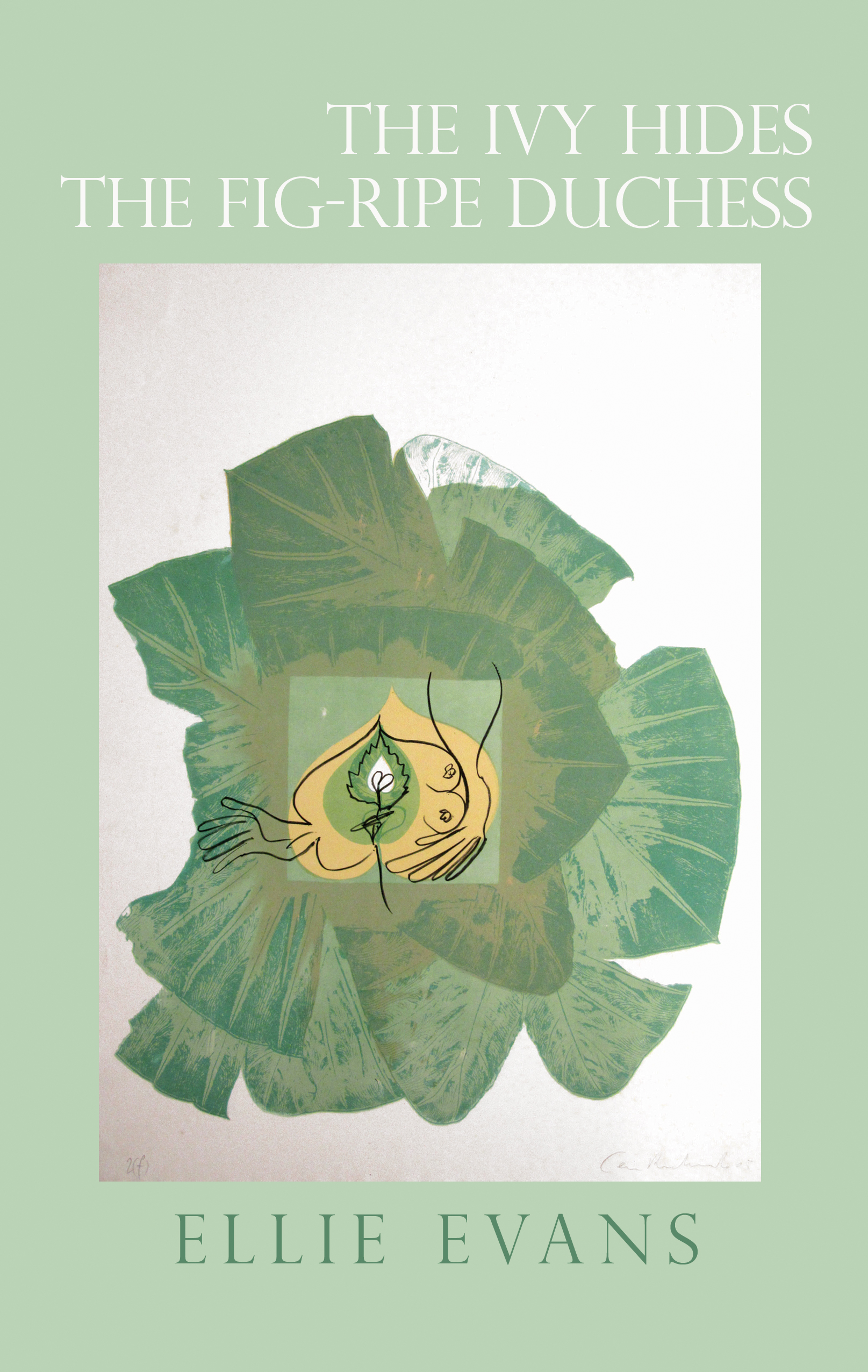
This week’s poem comes from the late Ellie Evans’s collection, The Ivy Hides the Fig-ripe Duchess, published in 2011.

The Ivy Hides the Fig-ripe Duchess is an exhilarating first collection of poems from Ellie Evans. Using a surrealist palette of imagery and a tightly focused idiom, the author takes us on strange journeys:to the post-apocalyptic world of the title poem, or into a skewed 18th century Venice in ‘The Zograscope’. These strange worlds are always to the purpose, they are, as Marianne Moore famously said of poetry ‘imaginary gardens with real toads in them.’ We obliquely unearth childhood trauma, fraught or intense relationships and also a singular (and perhaps also Welsh?) delight in rebellion, and in escape through the imagination. Poems like ‘Picnic with Earthquakes’ and ‘Jekyl Island, Georgia’ deftly align exotic locales (Eastern Europe, South East Asia, Greece and the USA,) with intimate states of mind. A fascination with art and history emerge in: ‘A Brief History of Topiary’ and ‘Two Monologues from The Odyssey’. There is also a palpable delight in technique: you will find a sonnet, a villanelle, triolets and a concise free verse where she employs rhyme, half-rhyme, and subtle alliteration.

A Brief History of Topiary

That September, in the Garden Nursery
three hundred yew cuttings, Taxus baccata,
stubbled in green, were ranked
in rows of fifty, in identical brown pots.

They were like schoolgirls waiting in Assembly
cross-legged and silent in the new Sports Hall
where the morning sun cast shadows on looped ropes
and blue lines on the floor for goals and penalties.

Years later, the young yews were planted out as hedges,
so they grew together sideways, twined, supported
each other. They made a garden room for picnics,
plays, dalliance and tennis. Some had alcoves

gouged out of them, to enclose pillars or gods,
satyrs and herms. Others were cut through, so
you could look out to another garden
or to a borrowed view. A few were special:

allowed to grow above the rest, until
frames were bolted round them. When they’re mature,
you don’t see these underlying structures for cones,
or balls, or obelisks, or whatever.

Purists won’t use frames, of course, but rely
on frequent trimming, checking from all angles.
Whichever method you chose, remember:
all stray shoots must be pinched out.

At night, the moon plays tricks on topiary,
on the giant women with their stove-pipe hats,
their capes and skirts like bells, who look as though
they’ll stride off to the woods, tearing the garden down.

Order The Ivy Hides the Fig-ripe Duchess from our website.

Posted on

Friday Poem – In Hospital: Poona

This week’s poem is from Alun Lewis: Collected Poems, edited by Cary Archard, to celebrate Lewis’s centenary earlier this week. Lewis was one of the most compelling writers of the Second World War, whose premature death in 1944 – when he was only 28 – was a grave loss to Britain’s literature community.

For more information about Lewis, check out his website and find out everything you need to know about the continuing centenary celebrations on Twitter.

In Hospital: Poona

Last night I did not fight for sleep
But lay awake from midnight while the world
Turned its slow features to the moving deep
Of darkness, till I knew that you were furled,

Beloved, in the same dark watch as I.
And sixty degrees of longitude beside
Vanished as though a swan in ecstasy
Had spanned the distance from your sleeping side.

And like to swan or moon the whole of Wales
Glided within the parish of my care:
I saw the green tide leap on Cardigan,
Your red yacht riding like a legend there,
And the great mountains, Dafydd and Llewelyn,
Plynlimmon, Cader Idris and Eryri
Threshing the darkness back from head and fin,
And also the small nameless mining valley

Whose slopes are scratched with streets and
sprawling graves
Dark in the lap of firwoods and great boulders
Where you lay waiting, listening to the waves-
My hot hands touched your white despondent shoulders

– And then ten thousand miles of daylight grew
Between us, and I heard the wild daws crake
In India’s starving throat; whereat I knew
That Time upon the heart can break
But love survives the venom of the snake.

Order Alun Lewis: Collected Poems from our website.