
Blog
10th July, 2015
Friday Poem – A Brief History of Topiary
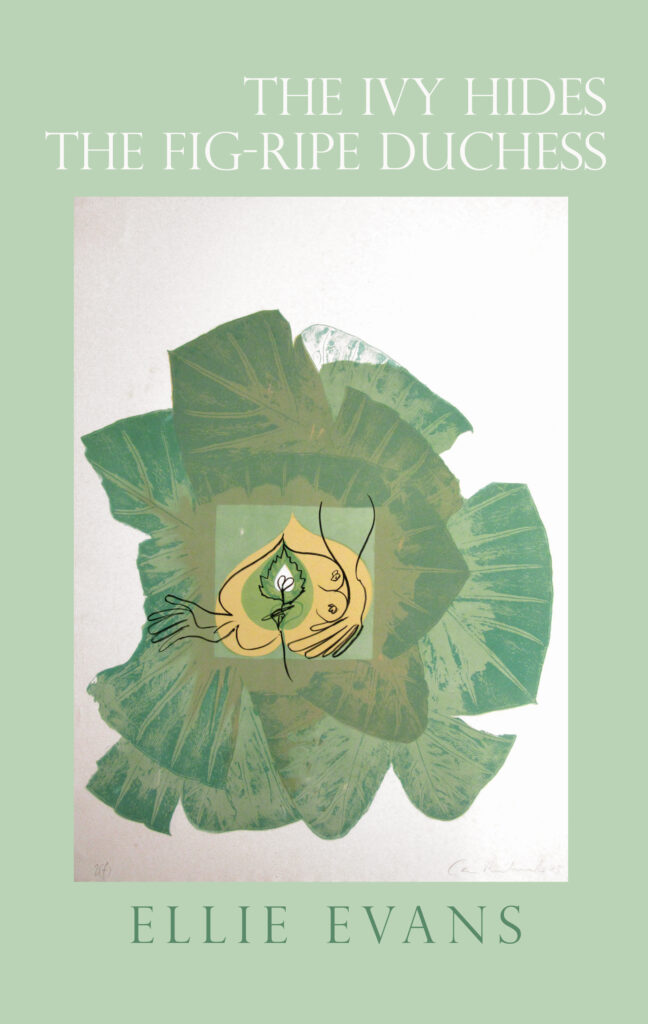
This week’s poem comes from the late Ellie Evans’s collection, The Ivy Hides the Fig-ripe Duchess, published in 2011.
The Ivy Hides the Fig-ripe Duchess is an exhilarating first collection of poems from Ellie Evans. Using a surrealist palette of imagery and a tightly focused idiom, the author takes us on strange journeys:to the post-apocalyptic world of the title poem, or into a skewed 18th century Venice in ‘The Zograscope’. These strange worlds are always to the purpose, they are, as Marianne Moore famously said of poetry ‘imaginary gardens with real toads in them.’ We obliquely unearth childhood trauma, fraught or intense relationships and also a singular (and perhaps also Welsh?) delight in rebellion, and in escape through the imagination. Poems like ‘Picnic with Earthquakes’ and ‘Jekyl Island, Georgia’ deftly align exotic locales (Eastern Europe, South East Asia, Greece and the USA,) with intimate states of mind. A fascination with art and history emerge in: ‘A Brief History of Topiary’ and ‘Two Monologues from The Odyssey’. There is also a palpable delight in technique: you will find a sonnet, a villanelle, triolets and a concise free verse where she employs rhyme, half-rhyme, and subtle alliteration.
A Brief History of Topiary
That September, in the Garden Nursery
three hundred yew cuttings, Taxus baccata,
stubbled in green, were ranked
in rows of fifty, in identical brown pots.
They were like schoolgirls waiting in Assembly
cross-legged and silent in the new Sports Hall
where the morning sun cast shadows on looped ropes
and blue lines on the floor for goals and penalties.
Years later, the young yews were planted out as hedges,
so they grew together sideways, twined, supported
each other. They made a garden room for picnics,
plays, dalliance and tennis. Some had alcoves
gouged out of them, to enclose pillars or gods,
satyrs and herms. Others were cut through, so
you could look out to another garden
or to a borrowed view. A few were special:
allowed to grow above the rest, until
frames were bolted round them. When they’re mature,
you don’t see these underlying structures for cones,
or balls, or obelisks, or whatever.
Purists won’t use frames, of course, but rely
on frequent trimming, checking from all angles.
Whichever method you chose, remember:
all stray shoots must be pinched out.
At night, the moon plays tricks on topiary,
on the giant women with their stove-pipe hats,
their capes and skirts like bells, who look as though
they’ll stride off to the woods, tearing the garden down.


