Posted on

Friday Poem | My Father’s Wardrobe

My Father's Wardrobe Pascale Petit

This week, our Friday Poem is ‘My Father’s Wardrobe’, from Pascale Petit’s Fauverie, which was shortlisted for the T.S. Eliot Prize 2014.

Pascale Petit, FauverieThe Fauverie of this book is the big-cat house in the Jardin des Plantes zoo. But the word also evokes the Fauves, ‘primitive’ painters who used raw colour straight from the tube. Like The Zoo Father, Petit’s acclaimed second collection, this volume has childhood trauma and a dying father at its heart, while Paris takes centre stage – a city savage as the Amazon, haunted by Aramis the black jaguar and a menagerie of wild animals. Transforming childhood horrors to ultimately mourn a lost parent, Fauverie redeems the darker forces of human nature while celebrating the ferocity and grace of endangered species. Five poems from Fauverie won the 2013 Manchester Poetry Prize and the manuscript in progress was awarded an Arts Council England Grant for the Arts.


My Father’s Wardrobe
after Peter Redgrove

In the late afternoon he begins his toilette –
he has limestone pyjamas threaded with fossils,
a nightshirt of catacombs through which his dreams drip.
He has a dressing gown woven with petrol fumes, between its folds
echo car-horns and the murmur of tourists.
He tries on the long rail of awakening suits.
He dresses from the quarries that built Paris.
He wears a cathedral cloak with chimera eyes.
His raincoat is stuccoed with spouting gargoyles.
He has trousers that are stained-glass windows,
casting shadows like candied fruit as he walks.
His cravat is a knotted métro train,
one tie is an escalator, another a fountain
with Saint-Michel fighting Satan.
A carousel turns silently between his knees
and in it a boy is singing on a lacquered foal.
He has a shirt of hotel fronts
and a waistcoat of bridges under which bateaux mouches glide.
He emerges from the trapdoors of nightclubs
in a wedding suit of pavements that steam in the sun
and in it he marries the dawn.
He has a jacket made of wind-blown newspapers
and a cocktail suit of cigarette smoke
with balconies for pockets. Sometimes
he wears a suit of ash that scatters when he moves.

Buy your copy now.

Pascale Petit will be at Tŷ Newydd Writing Centre, March 14-19, along with Robert Minhinnick for Writing the Wild: A Poetry Course. To book tickets, visit the Tŷ Newydd website.

Posted on

International Women’s Day: celebrating Seren’s female poets

International Women’s Day 2016 has arrived. We celebrate this year by highlighting just a few of the talented women we’ve been fortunate enough to publish. There will always be more names to mention and more works to appreciate, and you can find countless gorgeous books written by women on our website. But none-the-less, we hope you enjoy hearing about just a few of the Seren women writers and their achievements.

In this blog post, the first of two, we focus on the Seren female poets. Poetry Editor Amy Wack has been with us at Seren for over twenty years, publishing countless collections by women. The gender balance of most UK publishers favours men but in our case, with Amy at the helm, the balance is far more even.

Amy: Seren has a very good record for promoting, and bringing forth women writers and we owe this both to the Seren Board, and the forward-looking people at the Welsh Books Council, as well as the skill of my co-commissioner: Fiction Editor at Seren, Penny Thomas.

women's work 2016Women’s Work, edited by Eva Salzman and Amy Wack
March 2016, £14.99
Featuring over 100 poets, Women’s Work: Women Poets Writing in English, has been re-printed.  The 2016 edition features a revised introduction and updated author biographies.
Women’s Work contains classic poems by famous poets as well as lesser-known works. Editor Eva Salzman has provided an opening essay that artfully picks apart the statistics involving women’s work in anthologies and points out, with her characteristically vigorous wit,  just who gets to choose the canon, and why. Along with co-Editor Amy Wack (Seren poetry editor), they’ve both ranged broadly over the English-speaking world, and aimed to represent women of colour as well as those from the more esoteric wings of the style spectrum.

Poets published by Seren included in Women’s Work:

Kate Bingham
Jean Earle
Carrie Etter
Catherine Fisher
Hilary Menos
Deryn Rees-Jones
Vuylwa Carlin
Pascale Petit
Carolyn Jess-Cooke
Anne-Marie Fyfe
Kathryn Gray
Siobhan Campbell
Kathryn Maris
Anne Cluysenaar
Hilary Llewellyn-Williams
Tamar Yoseloff
Kathryn Simmonds
Zoe Skoulding
Christine Evans
Sarah Corbett
Carol Rumens

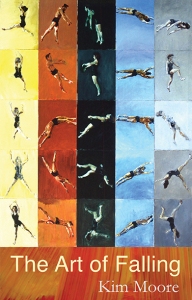
The Art of Falling Kim Moore Tamar_quicksand cover the man at the corner table rosie shepperd playing house katherine stansfield


Collections published in the last few years include Kim Moore’s critically acclaimed debut The Art of Falling, Tamar Yoseloff’s A Formula for Night: New and Selected Poems, Rosie Shepperd’s The Man at the Corner Table, and Katherine Stansfield’s debut, Playing House.

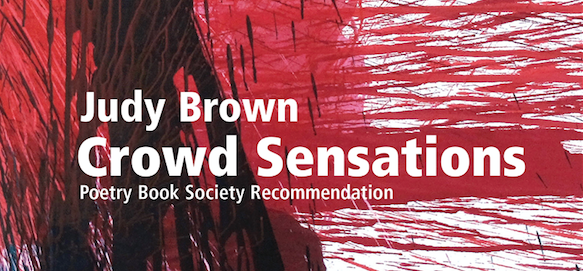
Elterwater Rain Crowd Sensations Judy BrownA Boat Called Annalise


Hot off the press, we have Crowd Sensations by Judy Brown, which is a Poetry Book Society Recommendation, and Lynne Hjelmgaard’s A Boat Called Annalise, which recalls a journey the author took with her late husband on a sailboat, to the Caribbean and back.

The-Dogs-That-Chase-Bicycle-Wheels-rgbthe way the crocodile taught meanimal people


You can look forward to many more collections by female poets, and on the horizon we have Mslexia Poetry Pamphlet Competition winner The Dogs that Chase Bicycle Wheels by Ilse Pedler (available to pre-order), Katrina Naomi’s hard-hitting The Way the Crocodile Taught Me (April), and Animal People by Carol Rumens (April).

Posted on

Friday Poem – Different Water

Boom! Carolyn Jess-Cooke

Happy Friday one and all. This week’s Friday Poem is an exploration of the significance and power of motherhood, taken from Carolyn Jess-Cooke’s collection, Boom!, as a little early celebration of Mother’s Day this coming Sunday.

Boom! Carolyn Jess-Cooke‘Becoming a mother changed me in every single way,’ says the author, ‘my first child – born in October 2006 – just about knocked me sideways. There were many reasons for this, but here’s the biggest one: I could not believe how public and political the (hugely personal) experience of motherhood was.’

Jess-Cooke found, as many parents do, that the juggling act required to raise young children and continue a professional and creative life, is both exhausting and fulfilling. Viewing motherhood from a multiplicity of artful angles, the author says, ‘Coupled with all this was the love I had for my children. It completely and utterly blew me away, how much I could love another human being.’

Different Water

When a girl becomes a mother there is no fanfare.
No government re-elections, no erupting volcanoes.
The baby mops up the praise. But quietly
there are earthquakes, realigning planets.
When you ask to hold her newborn you are
addressing someone who just became a tiger,
so be careful.When she soothes the child that has
shrieked for three hours she is the Matador,
sunlit with relief. Sometimes, at around 2am,
she is the only woman ever to have given birth.
At the supermarket she is a calm strong oak
dragging a thrashing child past the strawberries.
At the school gates she’s autumn weeping leaves
of every hue for the loss of summer. Often
she spies the girl she once was and thinks, wimp.
Like grass trees after fire, like crops in new weather,
like a river clasping different water, there is
no fanfare when a girl becomes a mother.

Buy your copy here.

Posted on

Friday Poem – Elterwater Rain

Elterwater rain friday poem Judy Brown

This week our Friday Poem is taken from the brand new, beautiful Crowd Sensations by Judy Brown. A Poetry Book Society Recommendation, Crowd Sensations is the worthy follow-up to Judy’s Forward Prize-nominated debut, Loudness.

Elterwater Rain Crowd Sensations Judy BrownJudy Brown is a poet of vivid contrasts, of thoughtful paradox, intimate confidences and precise evocations. Her titles and first lines draw readers into a poem then often surprise with an unexpected narrative. A key theme in this new collection is the contrast between living in the city and the countryside; her take on landscape is original and characteristically unnerving: ‘Elterwater Rain’, ‘Dove Cottage Ferns’ and ‘One of the Summer People’ reflect on nature and the place of the traveller, the incomer, the tourist.


Elterwater Rain

When I came to write of it there was no rain,
just the last of its ectoplasm shivering
in a pool on the terrace’s lowest slate.

No sky winks in the left-behind liquid,
only the garden table’s black metal underside –
all is prediction, absence, an oracle’s glum vigil –

whilst the air, hyperactive, holds more weather:
weather folded in weather, the rest of the day
remains to be dealt like a deck of wet cards.

Town rain splits and skids but this land accepts
what is given. Foliage moves against foliage;
water drains down the conifers’ inner ladders.

Something thirsts for each substance spilled
but this liquid is neighbourly, a local’s drink.
Outside Ambleside’s tourist shops, dog-bowls

brim with downpour. Here the last shower
hangs about too, old drops slung like bats
from the bird-feeder and the patio chairs.


Buy your copy now.


Posted on

Friday Poem – A Psalm for the Scaffolders

A Psalm for the Scaffolders Kim Moore The Art of Falling

This week’s Friday Poem comes from Kim Moore’s acclaimed debut, The Art of Falling.

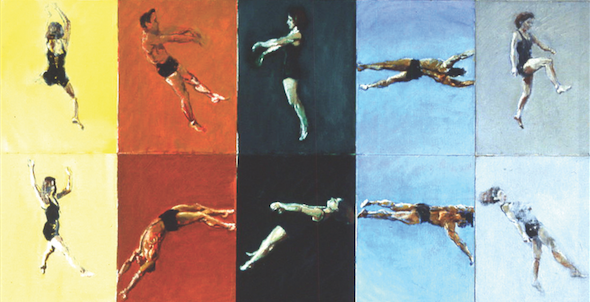
The Art of Falling Kim MooreThese are poems that confront the reader, steeped in realism, they are not designed to soothe or beguile. They are not designed with careful overlays of irony and although frequently clever, they are not pretentious but vigorously alive and often quite funny.

Already a winner of multiple prizes, such as the Northern Promise Award (2014), Moore writes poems that are both moving and memorable.


A Psalm for the Scaffolders

who balanced like tightrope walkers,
who could run up the bracing
faster than you or I could climb
a ladder, who wore red shorts
and worked bare-chested,
who cut their safety vests in half,
a psalm for the scaffolders
and their vans, their steel
toe-capped boots, their coffee mugs,
a psalm for those who learnt
to put up a scaffold standing
on just one board, a psalm
for the scaffolder who could put
a six-inch nail in a piece of wood
with just his palm, a psalm
for those who don’t like rules
or things taking too long, who now
mustn’t go to work uncovered,
who mustn’t cut their safety vests
or climb without ladders, who must
use three boards at all times,
a psalm for the scaffolders
who fall with a harness on,
who have ten minutes to be rescued,
a psalm for the scaffolder who fell
in a clear area, a tube giving way,
that long slow fall, a psalm for him,
who fell thirty feet and survived,
a psalm for the scaffolder
who saw him fall, a psalm for those
at the top of buildings, the wind whistling
in their ears, the sky in their voices,
for those who lift and carry
and shout and swear, for those
who can recite the lengths of boards
and tubes like a song, a psalm for them,
the ones who don’t like heights
but spent their whole life hiding it,
a psalm for those who work too long,
a psalm for my father, a psalm for him.

Buy your copy now.

Posted on

Friday Poem – Love

friday poem love kate bingham

cohabitation kate binghamThis week, our Friday Poem is taken from Cohabitation by Kate Bingham.

Until midnight on February 14th, claim 35% off this beautiful collection in our Valentine’s poetry sale.

A brisk wit and intelligence characterises these poems by Kate Bingham. Her subjects are friends, family, work, the experiences of any day, but her keen and compassionate focus brings these moments vividly to life. Her gift is a point of view that is startling, moving and humorous.

Reflective and playful, intimate and exuberant, these poems have a wry, deliberate logic of their own which makes Cohabitation an engaging as well as an illuminating first collection.

Love

There were so many flies we spoke in sign language
and wore long socks and sun-glasses for protection.

Just thinking of them as eggs or creamy worms
writhing, unseen, in the flower heads
could make you sick,

but it was a kind of torture, with the grasses deep
and the air so soft,
not to go out into the haze.

A kind of ecstasy to risk bare skin
in the profusion.


Buy your copy of Cohabitation now, and discover the other treasures in our Valentine’s poetry sale.

Posted on

Friday Poem – Bamp

my family and other superheroes

Our Friday poem is from Jonathan Edwards’ Costa Award-winning My Family and Other Superheroes, which is 35% off until 14th February in our Valentine’s sale (so what better time to pick up a copy?)

my family and other superheroes jonathan edwardsMy Family and Other Superheroes introduces a vibrant and unique new voice from Wales. The superheroes in question are a motley crew. Evel Knievel, Sophia Loren, Ian Rush, Marty McFly, a bicycling nun and a recalcitrant hippo – all leap from these pages and jostle for position, alongside valleys mams, dads and bamps, described with great warmth. Other poems focus on the crammed terraces and abandoned high streets where a working-class and Welsh nationalist politics is hammered out. This is a post-industrial valleys upbringing re-imagined through the prism of pop culture and surrealism.

Bamp

That’s him, with the tweed and corduroy
skin, wearing the slack gloves of his hands,
those liver spots like big full stops. That’s him

passing time with his favourite hobby, which is
you know, pottering, or staring closely
at the middle distance, enjoying the magic tricks

his watch does. His pockets are for special things
he has forgotten, no one fills the holes
in crumpets like he does, and in his wallet

is a licence from the Queen and what it means
is he can say what the hell he likes and you
can’t do nothing. That’s him, with a cupboard full

of tea cosies, a severe hearing problem
round those he doesn’t like, gaps in his smile
and stories, a head full of buried treasure

and look, that’s him now, twiddling his thumbs
so furiously, it’s like he’s knitting air.
It’s only him can hold the air together.

Buy your copy now.

Posted on

Friday Poem – Soup

Soup by Tony Curtis

This week’s Friday Poem is Tony Curtis’ Arvon Prize-shortlisted ‘Soup’.

This is one of many poems on the subject of conflict in Tony’s War Voices (1995) and will also feature in the soon-to-be published From the Fortunate Isles: New and Selected Poems, out in October this year. Wednesday 27th January was Holocaust Remembrance Day and so this poem is an especially poignant choice.

Soup

One night our block leader set a competition:
two bowls of soup to the best teller of a tale.
That whole evening the hut filled with words –
tales from the old countries
of wolves and children
potions and love-sick herders
stupid woodsmen and crafty villagers.
Apple-blossom snowed from blue skies,
orphans discovered themselves royal.
Tales of greed and heroes and cunning survival,
soldiers of the Empires, the Church, the Reich.

And when they turned to me
I could not speak,
sunk in the horror of that place,
my throat a corridor of bones, my eyes
and nostrils clogged with self-pity.
‘Speak,’ they said, ‘everyone has a story to tell.’
And so I closed my eyes and said:
I have no hunger for your bowls of soup, you see
I have just risen from the Shabbat meal –
my father has filled our glasses with wine,
bread has been broken, the maid has served fish.
Grandfather has sung, tears in his eyes, the old songs.
My mother holds her glass by the stem, lifts
it to her mouth, the red glow reflecting on her throat.
I go to her side and she kisses me for bed.
My grandfather’s kiss is rough and soft like an apricot.
The sheets on my bed are crisp and flat
like the leaves of a book …

I carried my prizes back to my bunk: one bowl
I hid, the other I stirred
and smelt a long time, so long
that it filled the cauldron of my head,
drowning a family of memories.

Buy War Voices from our website, and look out for From the Fortunate Isles: New and Selected Poems, available October 2016.


Posted on

Friday Poem – Elegy for the Living

Friday Poem Elegy for the Living

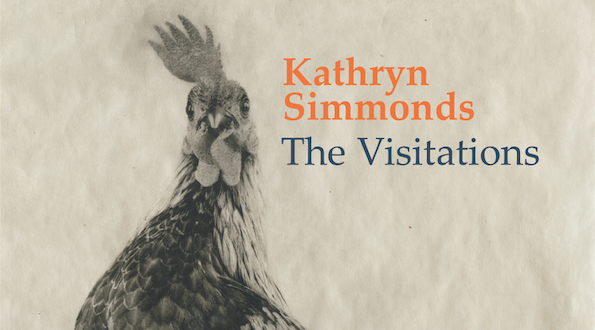
This week’s Friday Poem is ‘Elegy for the Living’ from Kathryn Simmonds’ insightful collection The Visitations.

In this book, Simmonds infuses with beauty the everyday phenomena that we often neglect: from fleeting moments with strangers on the street, to even that peculiar yet widely recognisable experience of forgetting what exactly we went upstairs to retrieve. Through an innovative and triumphant blend of humour and realism – complemented by its simple yet wonderfully rich language – the collection explores both the truths and the uncertainties of life in terms of faith, the self, and the familial. This creative ambiguity reaches a crescendo in the title poem ‘The Visitations’ in which the divine is effortlessly combined with the domestic. Yet even her more elegiac poems are rarely sombre, but abound with the imagery of homeliness, and an underlying sense of vigour and life.

Elegy for the Living

We wash up side by side
to find each other


in the speakable world,
and, lulled into sense,


inhabit our landscape;
the curve


of that chair draped
with your shirt;


my glass of  water
seeded overnight with air.


After this bed
there’ll be another,


so we’ll roll
and keep rolling


until one of  us
will roll alone and try to roll


the other back — a trick
no one’s yet pulled off —


and it’ll be
as if   I dreamed you, dear,


as if   I dreamed this bed,
our touching limbs,


this room, the tree outside alive
with new wet light.


Not now. Not yet.


Buy The Visitations on our website. 

Posted on

Friday Poem – Skeeter Syndrome

Clueless Dogs Rhian Edwards

For our Friday Poem this week we have ‘Skeeter Syndrome’ from Rhian Edwards’ dark and sensual debut collection Clueless Dogs.

Winner of Wales Book of the Year 2013
Winner of the Roland Mathias Prize for Poetry 2013
Winner of Wales Book of the Year People’s Choice 2013
Shortlisted for the Forward Prize for Best First Collection 2012

Full of verve and humour, with a spiky syntax featuring hard-edged consonants, Rhian Edwards’ language has a winning honesty and intensity. Poems like ‘The Welshman Who Couldn’t Sing’ chronicle a fraught childhood in Bridgend, south Wales, where the sensitive child escapes through imaginative games of ‘Playing Dead’ and ‘Broken Lifeboat’. Later poems confidently explore teenage lusts, student rivalries, damaged peers and tense situations. Although the author doesn’t flinch from ruthless depictions in which we are often implicated by her use of the second person ‘You’, there is an underlying sweetness, an elegiac thread most evident in the poems of maturity.

Skeeter Syndrome

I felt a tickle to my ankle,
saw her, dithering in the air
light as dandelion snow,
a winged needle, a mother-to-be
clumsy with the harvest of my blood.

I caught her dancing on the wall,
crushed her with a single applaud.
I opened my hand to a mangle of limbs,
a patch of my own blood – the stigma
of killing something full of me.

Buy Clueless Dogs on our website.