Posted on

Remembering Leigh Roose – ‘The Prince of Goalkeepers’

Remembering Leigh Roose

It’s Euro 2016 and Wales is in the finals! Historian Mike Rees looks back into Wales’ sporting history to remember goalkeeping legend Leigh Roose, who found glory on the football field and died a hundred years ago, at the Somme.

Mike Rees’  book Men who Played the Game looks at the development and importance of sport in Britain and the Empire leading up to the outbreak of the First World War, and the part played by sportsmen in the conflict.

On the eve of Wales’s participation in the finals of a major international football tournament for the first time since 1958, it is likely many of you may be reflecting on past glories achieved by Welshmen on the football field.
You might well consider the achievements of Wales first ‘football superstar’ Billy Meredith, talisman of both Manchester City and Manchester United in the early years of the twentieth century or the ‘Gentle Giant’ that was John Charles, revered from Swansea to Turin where he won multiple league championships and cups as the focal point of a brilliant Juventus team. More likely, you’ll consider the incomparable Ryan Giggs, with his sack full of medals, or the striking prowess of Ian Rush or Mark Hughes. But as Gareth Bale, the latest Welsh superstar, graces the football stadiums of France this summer how many will remember Leigh Roose, the first renowned Wales goalkeeper and predecessor of Jack Kelsey in 1958 or Neville Southall in the 1980’s and ‘90’s? As we move towards the centenary of Roose’s demise on the battlefields of the Somme, perhaps it is time to ensure that a new generation is made aware of the exploits of this remarkable Welshman.

Remembering Leigh RooseThe process of remembering Leigh Roose has already begun. Pupils from Wrexham are creating a collage with a particular focus on his part in the first international match to be caught on film, the game between Wales and Ireland at the Racecourse, Wrexham on 2nd April 1906. This will be displayed in Eagles Meadow shopping centre, Wrexham and bring his name to many for the first time – recognition that is long overdue.

Leigh Richmond Roose was born at Holt, near Wrexham on 26th November 1877, the son of a Presbyterian minister, the fourth of five boys. Despite losing his mother to cancer at the age of four, he had a comfortable middle class upbringing which led to him gaining a degree in Bacteriology from UCW Aberystwyth in 1899. Leigh enjoyed his time at ‘Aber’, particularly his experience of playing for the town football team in his favourite position, that of goalkeeper. So successful was he that in February 1900 he was chosen to play for Wales in the match against Ireland, the first of his 24 caps. A host of professional clubs sought his signature but by now Leigh was working in King’s College, London, fully intending to pursue a medical career. In the summer of 1901, however, he relented and signed for Stoke.

It was not long before this six foot, thirteen stone athlete made his mark. He became known for his reckless bravery, total dominance of his penalty area, his startling reflexes and resulting shot-stopping. Playing often as a modern day sweeper, Leigh left the confines of his area to start attacks, carrying the ball to the half way line, as he was permitted to do. So effective was this tactic that in 1912 the laws were changed in order to prevent goalkeepers handling the ball outside the penalty area. Leigh was also prepared to impose himself in other ways. It was not uncommon for him to be involved in the occasional scuffle or dispute with authority, sometimes over his travel expenses, on other occasions, disputes with the opposition. Leigh was also an entertainer – his gymnastic ability used to swing from the crossbar when things were quiet at his end of the pitch. Crowds loved him, even more so when Wales won their first Home International championship in 1907. Although top league and cup medals eluded him, Leigh was always challenging for honours at Everton from 1904 and later at Sunderland. He became one of the country’s best known footballers whose lifestyle as an eligible young man in Savile Row suits predates David Beckham by ninety years. His affair with the ‘Queen of the Music Hall’, Marie Lloyd would delight the tabloids of the 21st century. However nothing lasts for ever and, following a spell as player coach at Arsenal, Leigh retired to his medical commitments and the after dinner circuit in 1912.

When war broke out Leigh joined the Royal Army Medical Corps and was quickly despatched to the Dardanelles where he served in Gallipoli. Here he worked in hospitals treating hundreds of serviceman injured in that futile encounter. However Leigh wanted to see the action for himself and, following his return to London, he joined the 9th Battalion of the Royal Fusiliers. His wish for action was soon granted. Leigh was awarded the Military Medal after he had taken part in the capture of Ration Trench near Dainville and the subsequent resistance to the German counter-attack. In October 1916 Leigh was once again in action. The 9th Royal Fusiliers advanced on the Albert-Bapaume Road and this led to the capture of Le Sars but the cost was disastrous. Three hundred and thirty two officers and private soldiers were killed or injured in the action. Leigh was seen running across No Man’s Land firing his gun with no concern for his own safety. He was last seen lying in a crater, probably already dead. Leigh’s body was never discovered and he is remembered, his name engraved and incorrectly spelt, on the Thiepval Memorial to the missing. Thirty eight year old Leigh is one of the 72,000 names remembered on that most impressive of memorials.

Leigh’s death was keenly felt by all who knew him. Mike Rees, in his recent book Men Who Played the Game, quotes the Athletic Times which described him as “dexterous though daring, valiant though volatile”. But Rees also concludes that this is only part of the story and that Leigh Roose, along with Billy Meredith, did more to put Welsh football on the map than any other player. That, coupled with his ability to entertain thousands of spectators, demands that he be remembered as a sportsman of real significance, one who died as bravely as he played. During this summer of exciting Welsh football, a century after Leigh made the ultimate sacrifice, he deserves to be remembered.


Posted on

Ritual, 1969 | An interview with Jo Mazelis

Ritual, 1969 Jo Mazelis interview

Our Marketing Officer Rosie Johns talks to Jo Mazelis about her new short story collection, Ritual, 1969, which is newly available.

Have you got a burning question of your own you would like to ask Jo? Or would you like your copy of Ritual, 1969 signed? If so, come to John Smith’s bookshop, Swansea, this Thursday for the book launch. This event is free to attend, all are welcome, and refreshments will be provided. Find more details here.

Ritual, 1969 by Jo Mazelis

What are little girls made of? What will they become? Will they run away to the circus or become dressmakers, teachers or servants? From the playground to adulthood the path is beset with misunderstandings, missed dates and hidden traps for the unwary.
This darkly gothic collection of stories explores the unsettling borderland between reality and the supernatural. Ranging from early twentieth-century France to 1960s South Wales and contemporary Europe, Jo Mazelis’ singular vision and poetic language creates characters caught up in events and feelings they do not fully understand or control, giving the book its uncanny focus. Not all is as it seems in a world where first impressions may only conceal disguises and false trails – and there’s no going back.
A thrilling third collection from the author of Jerwood Award winning novel Significance.

Your novel Significance was set in France while many of the stories in Ritual, 1969 are located in Wales. As a Welsh writer, do you see any importance in the issues of place and identity?

I think with Significance it had to be set abroad because I wanted to explore ideas about escape and rebirth as a starting point. The same novel could, I suppose, have been set in a small coastal town in Wales, but it just wouldn’t have been the same – I mean in the sense of my imaginative process. It had to be in an unfamiliar territory, yet one that is perceived as innocent and safe.

The stories in Ritual, 1969 weren’t planned or written as a collection – therefore the fact that so many are set in Wales is probably due to my thinking and experiences over the last twelve years or so. This also raises the question of whether Welsh writers should only write about Wales and the Welsh. The MA I did many years ago was ‘Writing the Celtic Archipelago’ and involved a sort of comparative study of the 20th century literature of small nations; from Wales to Éire, Northern Ireland and Scotland. In one tutorial I raised the issue of Muriel Spark as she wasn’t included in the course and was firmly told that she was not a Scottish writer. The argument was that she didn’t write about Scotland or live there, which I have always found rather puzzling. Then very recently I read Ian Rankin’s introduction to Spark’s novel Symposium and his first words were, ‘Muriel Spark was the greatest Scottish novelist of modern times’.  He goes on to say that although she lived abroad, ‘her roots are evident in everything she wrote.’ Aside from feeling vindicated after almost twenty years, I think his words make clear something I have always believed, namely that my roots inform everything I write.

The period when these stories were written also coincides with my travelling all over Wales for a variety of reasons, so the landscape figures directly as a place of reality and imagination. I also made a sort of conscious effort to travel imaginatively through time, so that the stories are set in different periods as well as different locations.

Ritual, 1969 contains stories that are often given hauntingly uncertain endings. What made you choose to give the reader so much room for interpretation?
The writer Paul Auster said, ‘The one thing I do in all my books is to leave enough room in the prose for the reader to inhabit it’. I suppose I must do the same but unconsciously. Saying that it seems almost deliberately vague or evasive to attribute any aspect of writing to the unconscious because it suggests that what the writer is producing is a stream of consciousness or work that is unmediated or without art or craft, but this is my experience.

When I write I don’t think about any potential or ideal reader and very often I have no idea where a story is going. It is a process of discovery for me as much as for the reader. When I first began seriously writing stories in 1987 I had not studied literature or creative writing beyond GCSE as I had gone to Art College not university. I had however read a great deal, but I think because I was essentially self-taught, I tended to doubt myself and worried that ‘real’ writers would not work in the same way as me. ‘Real’ writers would have the whole thing mapped out and they wouldn’t rely on intuition or the unconscious. I later read something John Fowles said about his novel The French Lieutenant’s Woman; how he had a recurring image during the autumn of 1966 of ‘A woman [who] stands at the end of a deserted quay and stares out to sea’ and he explained that he wrote the book to discover her story. It was this and other things a broad range of writers said which made me realise I was not unique in my approach and that was reassuring.

It has often been my experience that I don’t notice the underlying themes of my stories until after publication. It is only then that my later university education in literature seems to kick in and I can begin to analyse my work more like an academic. I realise that very often my fiction can be read on two levels, one which is simply the plot and characters, and the other which is connected to philosophy, politics, myth and culture. So the story ‘A Bird Becomes a Stone’ could be read as a crime mystery. Actually it’s a story whose title I changed several times and the other titles were far more prosaic. At the point I changed the title for the third or fourth time I thought I was being almost flippantly artful, but later I realised that the new title with a living thing, a bird, changing into a dead thing, a stone actually was the key to the story’s meaning. This was not just in the sense that something dies, but it also speaks to the whole process of art – a bird carved out of a stone, or a film of a bird or a poem will outlive the bird itself. Does this mean that a carved representation is somehow more important than the living creature?

A similar question is evident below the surface in ‘The Flower Maker’ a story set during a period of war and turmoil concerning a displaced woman who makes and sells artificial flowers from scraps of silk and satin in order to survive. Art and what should be sacrificed for it emerges in story after story, whether it is poetry or circus performance or film or photography or novels. If the endings to my stories are enigmatic then perhaps it’s because I can’t and won’t answer that question.

There are many female characters who seem to be struggling for survival and against alienation throughout the collection. Did the diversity of female characters and experiences in these stories appear with a conscious plan in mind?
As with my other collections of short fiction, these stories were written over a fairly long period of time – some were created as far back as 2003, others as late as December 2015, so there was no guiding principle as such, no sense of any relationship between them in terms of a book. Penny Thomas, my editor at Seren was really helpful in selecting these from the rather larger group of stories I presented her with, thus helping the book to become a cohesive whole. I think the effect of this is that the stories speak to one another; though clearly I was also at different times experimenting with the idea of linked stories.

If these stories have a common theme then I think it might be that they expose gender as an artificial construct, so much so that it almost seems as if all of the female characters are ‘performing femininity’ rather that behaving naturally or instinctively. In this sense there is once again a dichotomy between the false and the real, the surface and what lies beneath; between art and nature, dreams and reality.

In my earlier short story collections Diving Girls and Circle Games there were far more stories about men and their particular perspectives  –  I was interested in ideas about patriarchy and men’s internalised view of their ‘natural’ superiority, so these characters were often white, middle-class Englishmen. Of course you can’t generalise about anyone on account of their gender, race, class or religion, and it was fairly hard to get inside the head of some of these male characters, especially at moments when they were acting badly, then performing mental tricks of self-justification, but these stories were an important aspect of my feminism because they interrogated power itself at a micro-level. Having said that I also wanted to interrogate or dispel some myths, for example those to do with a relationship between a lecturer and a student (who is over the age of eighteen) as I felt that such a relationship would not be simply about a predator and his victim. It seemed important that the female character has to have some degree of free will, that she is responsible for her own choices.  Just as he is.

I suppose in some ways I am exploring the limits of knowledge and how none of us can really understand how it feels to be someone else, or why people do the things they do whether for good or ill. In the story ‘Word Made Flesh’ which was commissioned by Wales Arts Review, a young Irish woman is never listened to. Because no one knows her tragic story she grows increasingly lonely and alienated and cannot sleep at night – so in this story it’s a case of important knowledge not withheld but ignored.

These themes about knowledge also appear in the stories about teenage girls and children, recurring again and again in different guises, whether it is a poem that never gets discussed, or the secrets and/or fantasies of many of the characters. It could be argued that a lot of these characters are trying to live their lives according to the wrong script – which is the case in ‘Whose Story Is This Anyway’ and ‘The Murder Stone’. One of the questions I am asking is, why are people so deceived and so enduringly self-deceiving? Why do so many women feel so self-conscious about their imperfections, so eager to construct their image based on artificial and/or idealised figures whether these are dolls or glamorous female celebrities?

The two epigraphs at the start of the book by William Blake and Mary Wollstonecraft are there as lodestones to the stories’ meaning, but were added long after most of the stories were written.  One addresses the issue of corrupted beauty and nature, the other the issue of truth with particular regard to education and these themes are revisited in many of the stories.

Which character was the hardest to bring to life, and why?
Characters either come to life or they don’t. I tend not to think of them as separate entities from the story itself – they are woven in, creating a tapestry, rather than appliquéd on. Or perhaps instead of using a metaphor which employs a traditionally female art form I might say that the idea for a story appears in my mind like a block of marble. I chip away at it to reveal the figures and the narrative that is locked in the stone.

I wish I could give a simple answer to this question but after writing fiction for so long I have acquired something I learned about via Flannery O’Connor, namely ‘the habit of art’. I began to read the stories of Flannery O’Connor in 1975, then in 1988, when I began to steadfastly write, I bought ‘Mystery and Manners: Occasional Prose’ which is a collection of her non-fiction work. O’Connor has been a huge and enduring influence on my short stories making me wonder some time ago if the notion of Southern Gothic couldn’t be extended to absorb Southern Welsh Gothic. Strangely, many years ago I bought a rare hardcover 1st edition of a Flannery O’Connor novel for 50p. I was exceedingly poor for many years, in debt and fear and worry constantly which is a miserable way to live. Then in an idle moment I looked up the value of this particular O’Connor novel and found it was worth a lot of money – I had a brief and dizzy moment of thinking that Flannery had saved me, that this was fate that it was her book not any other. There was only one problem, the copy I possessed had no dust jacket and this meant it was virtually worthless. So if there is a lesson to be learned from that it is that an author’s worth is in their words, not in any abstract artefact. Though the story might have had a more rewarding and uncanny ending had I sold the book for thousands.

To return to the question, I think if a character fails to come to life then the story is a failure and I abandon it. I’ve got a lot of abandoned stories; some might be worthy of resuscitation, others are beyond hope. I think the cause of the half-written stories is usually lack of time – I find I can’t begin a story then pick up the thread weeks later, the original impulse or train of thought has gone. Sometimes a story will just emerge fully formed and my pen can barely keep pace with my mind – but that is a fairly rare occurrence and it hasn’t happened for a couple of years.

One of the recurring themes in this collection seems to be the idea that the journey towards womanhood is fractured and complicated. Where did your focus on this theme stem from?
This is complicated – in part it was due to the fact I was researching the late sixties and early seventies for another novel. This research was focused on the general history of the period but also specifically Swansea where I grew up. I have also been working on several autobiographical pieces for years now, though nothing so organised as a full length book, though I did at one point think about putting all of these together and calling it ‘Experiments in Autobiography: a Sampler’. One of these memoir pieces was published in New Welsh Review in 2015 as ‘The Girl in Red Boots’ – other pieces have appeared in non-fiction anthologies published by Honno, Parthian and Pandora, and in the online journal, Wales Arts Review.

One of these pieces was about an unforgettable and terrible event that occurred in the early seventies. This was brought vividly back to life in 2003 when the identity of a serial killer who murdered three girls in the Swansea area was discovered using DNA. I had been at the same nightclub on the same Saturday as the murdered girls. My friend and I were a similar age; we were probably dressed in similar clothes, may have danced next to those girls. I always think it could have been me and my friend – we were just lucky, unlike them.

Because of this autobiographical writing I was thinking very deeply about the 60s and 70s time the news broke about Jimmy Savile and his crimes. I think it is almost impossible to make people understand how very different things were up until the 1990s. Indeed it was hard for me to remember or perhaps trust my memory about the period: during my research I found that news stories in the local and national papers that were quite mind-boggling; there was a man who had battered his wife to death who was given a suspended sentence from a sympathetic judge because it was said the woman nagged him, while a young man was sent to prison for two years for possession of a very trifling amount of cannabis, and in a report about a school teacher having a relationship with one of his pupils the girl was referred to as a ‘Lolita’, the implication being that this teenager had tempted a ‘good and respectable family man’.

The other source for a lot of the 1969 stories were several books by Peter and Iona Opie which confirmed everything I remembered about The Levitation Game but also rhymes and games I had forgotten. From them I found the quite remarkable fact that The Levitation Game was first recorded in the seventeenth century. These games, and the lore of the playground, were passed on through generations of children, were not part of the taught curriculum and are for the most part left behind in childhood. I think, though it’s hard to be certain, that finally, under pressure from health and safety, television, smart phones and the greatly curtailed freedom of children to ‘go out and play’ they are now disappearing.

I think as a woman it is easier for me to understand how female lives can be fragmented, but that doesn’t mean that men’s aren’t also – or at least some men’s. I certainly found my early life to be difficult, both at home, at school and at Art College aged eighteen – the last of these was probably the worst but perhaps only because everything that happened before came to a head at that point. So at nineteen, after one year of college, my education stopped and I worked for years and years in a variety of low paid jobs as a waitress, chambermaid, shop assistant, barmaid and library assistant. I had no sense of any future, hardly any useful qualifications, no A levels, no confidence, seemingly no hope. I had also lived through a variety of personal tragedies, terrible experiences and other disturbing and often inexplicable events. So the idea of a fragmented life is very familiar to me.

You can purchase your copy of Ritual, 1969 direct from our website, or get your copy at the John Smith’s launch event, 21 April, 12:00-2:00pm.




Posted on

50% Off All Books: Editors’ Picks

50% off all books this week

2016 has arrived and with it, our January sale. For one week only, enjoy 50% off all books available on our website!

That being said, we know choosing which books to buy can be a little tricky so our three editors are on hand to give their book recommendations. Be it poetry, fiction or non-fiction that tickles your fancy, we have suggestions for one and all.

Mick Felton Non-Fiction Editor
Mick Felton – Non-Fiction Editor

As our non-fiction editor, Mick sees a wide variety of books each year, including everything from history, crime, autobiography, music and sport. So which two books does Mick think you need most on your shelf?


The Road to Zagora by Richard Collins
The Road to Zagora

After being diagnosed with Parkinson’s Disease, Richard Collins sets off with his partner Flic on a once-in-a-lifetime adventure. The Road to Zagora is a singular travel book which takes in India, Nepal, Turkey, Morocco, Peru, Equador and Wales.
Though not shy about the hardships of the disease, any sentiment of self-pity is denied through Collins’s resolute and independent-mindedness and the quality of writing.
£9.99  £5.00

Losing Israel by Jasmine Donahaye
Losing Israel

After discovering by chance that her family had colluded in the eviction of Palestinians in 1948, Jasmine Donahaye set out to learn the story of what happened. Her discoveries challenged everything she thought she knew about the country and her family. Losing Israel is a moving and honest account which spans travel writing, nature writing and memoir. Jasmine explores the powerful and competing attachments people feel for their country and its history, by attempting to understand and reconcile her conflicted attachments, rooted in her family story – and in a love of Israel’s birds.
£12.99 £6.50


Amy Wack Poetry Editor
Amy Wack – Poetry Editor

Amy has read and enjoyed a dazzling array of poetry over the twenty-plus years she’s been with us. Trying to narrow down her choices to just two books was hard, but here goes…


A Formula for Night: New and Selected Poems by Tamar YoseloffTamar_quicksand cover

The eagerly awaited summation of Tamar’ work, encompassing selections from four published print volumes: Sweetheart, Barnard’s Star, Fetch and The City with Horns; and poems from her collaborations with artists: Formerly, Marks and Desire Paths.
The book also includes a generous selection of beautiful new poems, which are often artful explorations of paradox: death/birth, dark/light, clarity/mystery.
£12.99 £6.50

House of Small Absences by Anne-Marie Fyfe
House of small absences
Anne-Marie Fyfe’s poems have long dwelt on the role that the spaces we inhabit, the places in which we find security, play in our lives: House of Small Absences is an observation window into strange, unsettling spaces—a deserted stage-set, our own personalised ‘museum’, a Piedmont albergo, underground cities, Midtown roof-gardens, convent orchards, houseboats, a foldaway circus, a Romanian sleeper-carriage—the familiar rendered uncanny through the distorting lenses of distance and life’s exigencies, its inevitable lettings-go.
£9.99 £5.00
Penny Thomas


Penny Thomas – Fiction Editor

Which fictional words would Penny have you delve into first? We’ve published a beautifully varied range of books, and below are just two of Penny’s favourites.

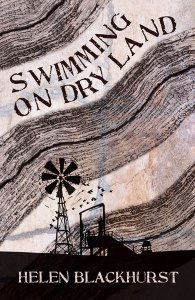
Swimming on Dry Land by Helen Blackhurst
swimming_on_dry_land_72
Twelve-year-old Monica Harvey is looking for her sister Georgie, who has disappeared. The Harvey family has recently moved to Akarula, south-west Australia, having been persuaded to set out in search of a new life by their rich Uncle Eddie, who owns the town. Unbeknownst to them, Georgie isn’t the first person to vanish.
As their dream-like vision of life in outback Australia begins to be tainted my mystery and deceit, the history of the land unfolds and answers to the strange disappearances slowly suggest themselves.
£9.99 £5.00

Foreign Bodies by Candy Neubert
foreign bodies
Fresh from the UK, Emma thinks she has fallen in love with a place, a person, and pursues the man of her dreams with a colonial zeal. But for all her poetic sensibilities, she seems unaware of the destruction she is capable of leaving in her wake.

A beautifully written first novel, Foreign Bodies explores the spaces between people, and the nature of encounters in romantic idylls on the other side of the world.
£7.99 £4.00


Don’t forget, absolutely everything on our website is 50% off– so if you’re eager to see beyond our suggestions, then go forth and discover a new read for the New Year on our website.

https://media.giphy.com/media/VcizxCUIgaKpa/giphy.gif

Half price offer ends midnight, Sunday 10th January. Happy book hunting!

Posted on

The Road to Zagora | Travelling with Mr Parkinson

In 2006, author Richard Collins was diagnosed with Parkinson’s disease. Spurred on by news of his illness, Richard and his partner Flic resolved to seize life by the horns and see more of the world. The Road to Zagora tells the story of their subsequent adventures.

the road to zagora by richard collins

Here at Seren we’ve been eagerly awaiting the arrival of The Road to Zagora, a unique sort of travel memoir in which the author explores the good, the not-so-good and the surprisingly funny aspects of travelling with Parkinson’s disease. We thought we’d give you a sneak preview of the book to wet your appetites – so read on to hear about the adventures of Richard, Flic, and Mr Parkinson.

A is for Aqaba (Jordan)

Travelling enriches your life and changes your understanding
of quite a few things. Home is a different place on your
return. You are a different person, having travelled. I have had
some preconceptions of other people and places quietly
overturned. I spend a lot of my time at home now because of
my poor health and have the opportunity to reflect on these
things. Or I do something daft like make an A to Z of place
names, each from a different country, and write a little
anecdote about each one. I once spent a couple of rainy days
doing this, starting with Aqaba in Jordan:

Forget Lawrence of Arabia arriving in Aqaba on camelback at
the head of a Bedouin army: we crossed the desert by bus, in
comfort, with wi-fi and air-con and reclining seats.

Aqaba is a port but also a seaside resort, a holiday destination
for Jordanians. We were at the beach on a Friday, the
Muslim holy day, and found that it wasn’t wall-to-wall joylessness
as Sunday is in some parts of Christendom (we once saw
a children’s playground in the west of Scotland with a sign
Closed on Sundays). People may have been to the mosque in
the morning but now they were having fun. Women were
dressed conservatively, some in long black robes, but it didn’t
stop them from going into the sea, snorkelling or messing
about on inflatable plastic ducks.

We had already had our preconceptions of Islamic society
challenged in the first Jordanian town we visited. The shoe
shop proudly displayed in their window a number of pairs of hi-heeled thigh-high leather boots in a choice of colours, red or
black. Did the women we passed on the street wear these under
their long robes? In what other context, we wondered, would
they be worn? I really can’t imagine.
The people of Jordan are renowned for their hospitality,
friendliness and sense of humour.

The Road to Zagora, Richard Collins


Richard Collins


I hope you enjoyed this cheeky preview of The Road to Zagora! If you did, then good news – you can find the book in our store here, and get a 20% discount through our store.

Posted on

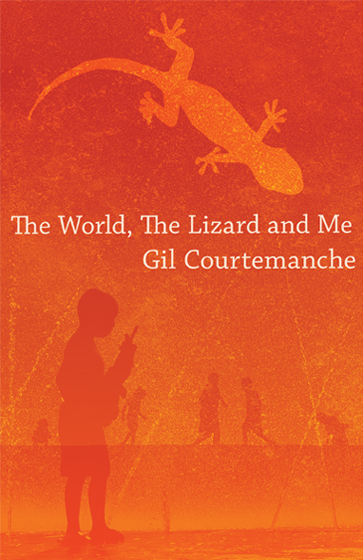
The World, the Lizard and Me – Incoming Autumn Reads

The World, The Lizard and Me - Gil Courtemanche

I know, I know – summer has hardly begun! But here at Seren, we’re already excited about our forthcoming Autumn books.  Top of my reading list is The World, The Lizard and Me.  Which of these titles are you most excited for?

You can find all these upcoming releases on our website.

The World, The Lizard and Me - Gil CourtemancheThe World, The Lizard and Me
by Gil Courtemanche

Gil Courtemanche (1943-2011) found worldwide acclaim for his first novel, A Sunday at the Pool in Kigali (2000), which dealt with Rwandan genocide and the AIDS crisis whilst immersing the reader in a bittersweet love story.
The World, The Lizard and Me was first published in 2009 and we are proud to bring you the first English translation of this enthralling story.

The World, The Lizard and Me follows the life of French Canadian Claude Tremblay who, since he was eleven has sought justice for the voiceless victims of war. His passion for justice has taken him to a job at the International Criminal Court in The Hague, where he pursues the conviction of Thomas Kabanga, a Congolese warlord charged with creating child soldiers in the civil war there.
Defeated in court due to a legal technicality, Tremblay finds himself at a moral crossroads and travels to Congo to gather more evidence. Moral boundaries blur in a culture Claude thought he understood, and a different sort of justice is formulated and executed.

The novel is informed my Courtemanche’s own experiences of reporting in Africa, and his depiction of the region is highly evocative, bringing into question the nature of evil and the effects and consequences of childhood.

The World, The Lizard and Me is out in October 2015, and you can read a more detailed description of the book here.

dark mermaids, anne lauppe-dunbarDark Mermaids
by Anne Lauppe-Dunbar

Doping in sport is an incredibly current issue, raising questions of morality and responsibility.

In Dark Mermaids, Anne Lauppe-Dunbar depicts a political system that shockingly doped its youngsters to sporting superhero status, and then left them to fend for themselves.

Shortlisted for the Impress and Cinnamon First Novel Prize, this East German noir thriller is set in 1990, a year after the fall of the Berlin Wall.

Unhappy West Berlin police officer Sophia is called on to investigate the murder of her childhood friend Kathe, after her beaten body is discovered in Sophia’s local park. As she reluctantly delves into the sordid Stasi secrets of those she grew up with, Sophia uncovers a web of horrors about her own abusive past as a child-swimming star in the former GDR. But her hunt for the truth has not gone unnoticed by those close to her, people who still have too much to hide.

Anne says of her novel: ‘I wrote Dark Mermaids as my refugee mother’s daughter: a child of the GDR who fled westwards carrying arcane knowledge of a country in which secrets and lies were endemic.’ In writing the novel Anne has extensively researched what is known of athletes doping and training in the area of East Germany she writes about.

Dark Mermaids will be available in September, and you can find out more about the book here.

Star-Shot_72rgbStar-Shot
by Mary-Ann Constantine

This mysterious, captivating tale weaves together stories of four people whose paths cross outside Cardiff Museum, which is only a stone’s throw away from us here in Bridgend.

Both fable and mystery, Star-Shot is set in a small world of parks and galleries around Cardiff’s National Museum, in a time not quite our own. As their paths cross, characters reveal stories of obsession, loss and recovery, creating a fragile network of relationships that resist the inexorable channels of silence eating into the city.

Poignant and humorous, Star-Shot is an exploration of how objects and images can focus our grief and desire; it is also a meditation on the regenerative power of garden ponds, and the cosmic significance of frogs. Beautifully illustrated with woodcut-style motifs by Clive Hicks-Jenkins, this is a subtle urban novel with a supernatural twist.

Star-Shot will be available in October, but for now you can read more about it on our website.

I hope you enjoyed finding out a little of what’s to come this autumn at Seren. This has only been a snippet though, so for the full list of forthcoming titles, take a look at our Coming Soon page.

Posted on

Barry Plummer (ed)

Barry Plummer is an independent researcher of Welsh art. He was awarded a doctorate in 2006 from the University of Wales for his thesis on the life and work of Evan Walters.He has a degree in Visual Art and studied the history of art as a post- graduate at the Courtauld Institute. Between 1999 and 2010 he lectured on Art History at Trinity College, Carmarthen, University of Wales, Swansea and Swansea Metropolitan University.

Books by Barry Plummer
Evan Walters: Moments of Vision

Posted on

Robert Seatter

After studying English at Oxford University, Robert Seatter worked variously as an EFL teacher in Italy and France, an actor, a journalist, in publishing and broadcasting. He lives in London where he now works for the BBC. His poetry has been widely published, has won numerous awards and has been featured on radio, television and London buses.

Books by Robert Seatter
On the Beach with Chet Bake

Travelling to the Fish Orchards

Writing King Kong


Posted on

Patrick McGuinness

Patrick McGuinness is a Professor of French and Comparative Literature at Oxford University and a Fellow of St Anne’s College where he has taught since 1998. He lives in North West Wales. His poetry is published by Carcanet and he has won an Eric Gregory Award, the American Poetry Foundations Levinson Prize in 2003 and the Poetry Business Prize in 2006. He frequently writes and presents for radio, eg “A Short History of Stupidity” and “The Art of Laziness” for R3 and Night Waves and Women’s Hour on poetry, French culture and his own work as a poet and translator. His translation of Mallarme’s For Anatole’s Tomb, 2004 was the Poetry Book Society’s Translation Choice. His other books include studies of theatre, French culture and literature. Patrick is a frequent contributor to TLS, and TLRB and reads and speaks at literary festivals in UK , US, Canada , France , Czech Republic , Austria and Italy .

Books by Patrick McGuinness
The Last Hundred Days

Posted on

Tony Curtis

Tony Curtis is Emeritus Professor of Poetry at the University of Glamorgan where he introduced Creative Writing in 1981; he ran this discipline as both an undergraduate and post-graduate subject for nearly thirty years. He was born in Camarthen in 1946 and moved with his parents to Pembrokeshire in 1960. His grandmother’s family had farmed the county for generations and he had been visiting them through his childhood. He played rugby for Pembrokeshire Schoolboys and golf at Tenby before leaving for Swansea University. He and his family have taken over his mother’s house in Lydstep and they stay there frequently.
He has written and edited over thirty books, including The Poetry of Pembrokeshire and has won a number of literary prizes, including a Gregory Award, The Cholmondeley Award, the Dlyan Thomas Prize and the National Poetry Prize. He was elected as a Fellow of the Royal Literary Society in 2001 and was awarded a D.Litt. from the University of Glamorgan in 2004. His nine collections of poetry all include poems based in Pembrokeshire which deal with its landscape, characters and history.

Books by Tony Curtis