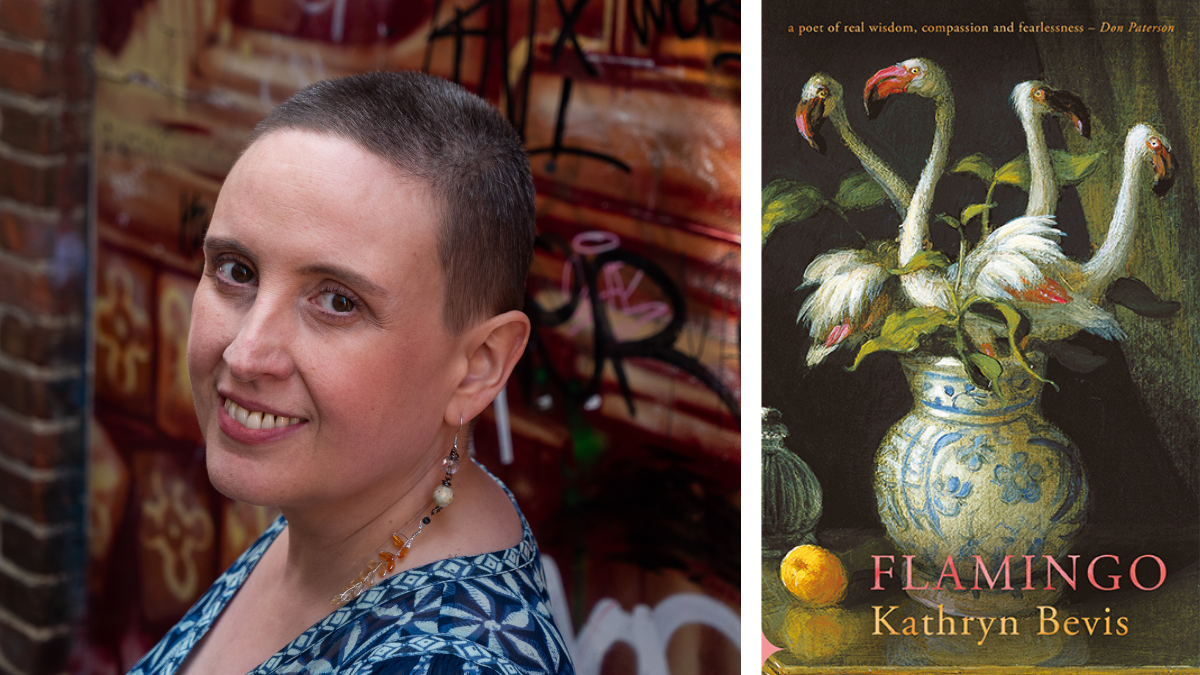
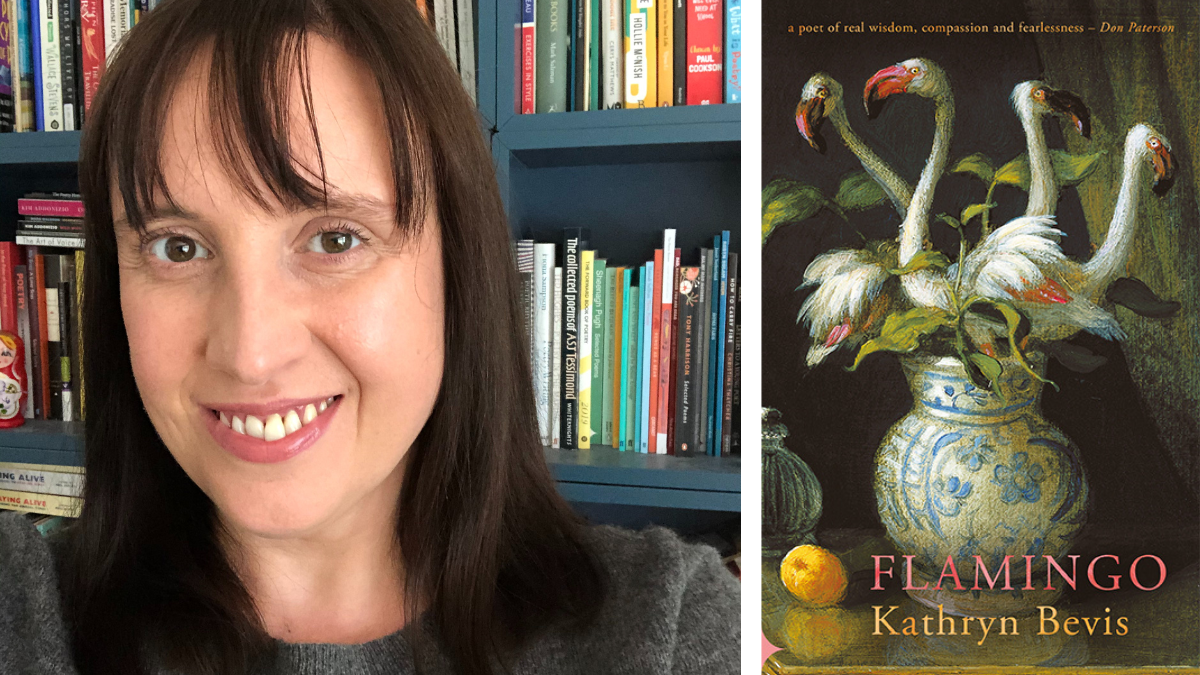
Seren poet Kathryn Bevis has been shortlisted for the Forward Prize for Best Single Poem 2023 for her poem ‘My Body Tells Me She’s Filling for Divorce’. The poem was originally published in our sister magazine Poetry Wales before going on to win the Second Light Poetry Competition 2022. It was also published in Kathryn’s debut pamphlet Flamingo.
This year’s Best Single Poem categories, which include both written and performed poems, were judged by Joelle Taylor, Khadijah Ibrahiim, Caroline Bird, Chris Redmond and Sue Roberts. Of the shortlists, panel chair Joelle Taylor said: ‘Between the two categories we have curated shortlists that exemplify all that is distinct, innovative, and alive in British poetry and poetic thought.’
The winners of this year’s Forward Prizes will be announced in an award ceremony later this year. The shortlists for all categories including Best Collection and Best First Collection can be viewed on the Forward Prizes website.
As Pride Month draws to a close, this week’s Friday Poem is ‘Unfitting’ by Rachael Clyne from her collection You’ll Never Be Anyone Else.
Catch Rachael at Bookhaus in Bristol from 7pm tonight (30th June) launching the book alongside Elizabeth Parker, Robert Walton and Claire Williamson. Buy tickets from bookhausbristol.com.
To celebrate Pride Month, this week’s Friday Poem is ‘Queer Times’ by SL Grange from their Poetry Wales award-winning pamphlet bodies and other haunted houses.
This week’s Friday Poem is ‘Cei Newydd’ by Paul Henry from his Wales Book of the Year shortlisted collection As If To Sing.
Voting is now open for the Wales Book of the Year People’s Choice Award. Vote for your favourite book on this year’s shortlist via the Wales Arts Review website.
Seren poet Kathryn Bevis’s debut pamphlet Flamingo is on the shortlist for the Saboteur Award for Best Poetry Pamphlet 2023.
The Saboteur Awards are audience led, with nominations for each category made by the general public. Flamingo is one of 5 collections on the shortlist for Best Pamphlet.
Devjani Bodepudi, For the Daughters Carried Here on the Hips of Their Mothers
Hannah Linden, The Beautiful Open Sky
Katheryn Bevis, Flamingo
Nikki Dudley, Exorcism Becomes Habit
Sallyanne Rock, Salt and Metal
Voting is now open for the second round of nominations where the public can vote for the winner in each category. Votes can be cast via this google form https://forms.gle/r7jyoNvNpzJXYH7K7.
The Saboteur Awards Festival will take place on Saturday 24th June in Birmingham. You can book tickets via their website.
Other award categories include: Best Short Story Collection, Best Spoken Word Performer, Best Magazine, Best Literary Festival, Best Novella, Best Poetry Pamphlet, Best Regular Spoken Word Night, Best Spoken Word Show, Most Innovative Publisher, Best Reviewer of Literature, Best Collaborative Work and Best Anthology. Find out more about the awards on Sabotage Reviews.
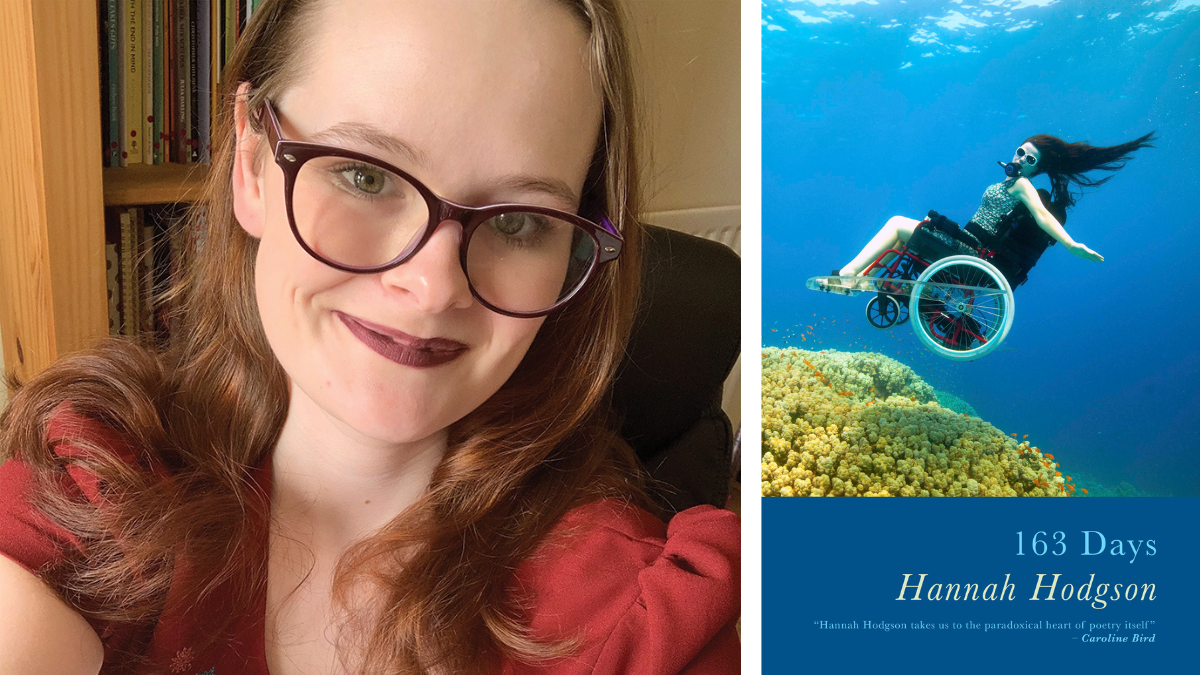
Seren poet Hannah Hodgson has been longlisted for Lakeland Book of the Year with her debut collection 163 Days.
Lakeland Book of the Year is an annual award for books which are connected to the Lake District in Cumbria. As a local author, Hannah Hodgson is longlisted alongside authors writing in a variety of genres.
The 2023 awards will be held at The Inn on the Lake, Glenridding on Tuesday 11th July.
The full longlist is available on the Cumbria Tourism website. The shortlist will be announced soon!
A year on from publication of her collection Sanctuary: There Must Be Somewhere, Angela Graham reflects on the creation of this innovative poetry collection and on what she has learned from readings.
Sanctuary – A Year On
May 30th 2023 marks the first year in the life of my first poetry collection, Sanctuary: There Must Be Somewhere. I’d like to consider what I gained from taking that step in the company of five other poets and what I’ve learned from reading from the collection to audiences.
I hardly need to state how sanctuary preoccupies the whole world. It was clear to me that the book should not be a solo effort but one undertaken with other poets so that the collection itself would be a welcoming space, a kind of sanctuary.
I sought out two poets from Wales and two from Northern Ireland (as I live in both places) who had some expertise in an aspect of sanctuary. They were not obliged to write on that theme. Furthermore, rather than giving a poem they had written, they would each write a poem with me. This deeper level of collaboration, although challenging, proved very fruitful.
It wasn’t until the reviews started coming in that I realised quite how unusual my approach was considered to be.
“Graham’s project is hugely experimental — few poets give space in their debut collections to others… as praxis, the project seems politically perfect, an unselfish poetic gesture underlining the ‘unevenness’ of sanctuary that is genuinely thought-provoking.”
Tim Murphy, London Grip
“the poems… are very finely wrought, whether by Graham or by her guests. This is a generous inclusion, of course, but Graham is a poet who is skilled and sublime enough, I imagine, not to feel any threat from it or, indeed, from anyone or anything at all.”
Mab Jones, Buzz Magazine
To me, poetry is one of the most intimate means of bridging the gap between one person and another, usually between the poet and reader or listener. It seems natural to me to want to achieve another kind of intimacy, in this case, during the actual process of creating the poem. I pay unreserved tribute to Phil Cope, Mahyar, Viviana Fiorentino and Csilla Toldy who allowed me to reflect on drafts with them; who were never defensive; who showed, to a remarkable degree, the humility of the true artist whose care is about the work in hand and not their own ego. I have gained immeasurably from being part of this whole-hearted process and consider myself very fortunate.
In addition, my mentor, Glen Wilson was tactful and committed and I am delighted that he gave a fine poem to the book. I was very moved when Glen sent me a recording of a beautiful song he composed called, There Must Be Somewhere. I felt this was evidence of how the theme and experience had entered him, to emerge from him afresh as something beautiful in a new medium. He performed this at the launch during the Belfast Book Festival in June last year. Covid kept Viviana away entirely and Csilla had to join via video but it was none the less wonderful to be together as a group.
All this hasn’t made me feel the book is any less mine. It has expanded the whole work without taking anything away from me.
Photograph of St Cooraun’s Well, Ireland. Copyright Phil Cope
The book in performance has been a revelation to me. I am a TV/film producer by trade so the audience comes first. If they can’t hear, are uncomfortable, or baffled then it’s a waste of everyone’s time. In a reading people can’t see the text so I have greatly enjoyed working out how to convey things that are clear on the page via quotation marks or italicisation, for instance, or by means of a line-break or capitalisation. The importance of poem titles has become more evident and the fact that they are an important poetic resource to be exploited.
I’ve tried to design the performance to suit the audience rather than develop an unchanging ‘act’. It’s true one sometimes has no idea of the nature of the audience so there has had to be some smart footwork occasionally! Recently I was asked, at half an hour’s notice, to read to a group of no-nonsense Belfast women at a reconciliation centre. I could tell at once that they would see through anything that was less than authentic and that I had to take very particular care to give something of my life, in addition to the poems.
I learnt a lesson there about how important story is. I had set out the background to a poem which is to do with an unsolved mystery in my family. After the final poem, when I made to leave, a cry went up, ‘Don’t go! Tell us what happened.’ I had moved on, in terms of my reading, but that desire to know how things end, which is, in essence, a desire to know the truth, was in my listeners’ minds and they wanted it satisfied. So the writerly me realised that there, in that mystery and its resolution, is a key element of the book I’m currently editing. I hadn’t appreciated its appeal.
In several sessions I have brought typescripts of poems or used power point to set out text and also used images and videos. An audience of poetry lovers is more experienced in listening to poetry than a more general mix of people. The latter, so far, in my experience, welcome some help in encountering what is not, to them, a familiar medium.
I was Author of the Month in December last year for Libraries Wales and this gave me the chance to meet a variety of audiences. In each case, the librarians were very helpful because they know their clients. They devised materials that would appeal. In Bargoed we had beautiful printed cards, showing one of my Christmas poems.
Angela Graham with staff at Bargoed Library
In Llanelli library the experience was particularly communal even though the group were strangers to each other. I think this was because of something I’ve done in every reading. I start by inviting people to take sixty seconds to consider what ‘sanctuary’ means to them. This unlocks a fascinating range of experience. When I read my poems, perhaps they enter that internal space whose door has been pushed ajar by those intimate reflections.
The final two poems in the book go together well. ‘There Must Be Somewhere’ attempts to face the brutal facts of how dangerous life is yet how faith in the possibility of sanctuary exerts itself nonetheless.
The final poem, ‘Home’ shares the greatest lesson I’ve learned from writing the book: sanctuary may be a place but it’s also something we can be.
Angela Graham
Angela Graham has a poem published in a chapbook edited by Phil Cope called The Oldest Music (Parthian), published May 2023.
Her poem ‘The Irish Civil War, County Tipperary, Summer, 1922’ is currently touring Ireland as part of Poetry As Commemoration’s Poetry Juke Box curation. It is one of 10 poems selected from the whole of Ireland and is in Limerick and Derry as of 19th May. This major initiative marks the Decade of Centenaries, 1912 – 1922, one of the most turbulent in Ireland’s history.
You can also watch an NVTV documentary about Angela’s poetry in Ulster-Scots here.