Posted on

What to read on Halloween

What to read on Halloween Seren

You can’t beat a chilling tale to read as darkness creeps ever earlier into the evening. From classics with haunted houses and man-made monstrosities to modern physological terrors, these books are at the top of our list of what to read on Halloween.

The Haunting of Hill HouseThe Haunting of Hill House
Shirley Jackson’s slow-burning psychological horror sees four paranormal enthusiasts explore a brooding, mid-Victorian mansion in the hope of finding indisputable evidence of the psychic phenomenon called haunting. As they begin to cope with horrifying occurrences beyond their control or understanding, they cannot possibly know what lies ahead. For Hill House is gathering its powers – and soon it will choose one of them to make its own.


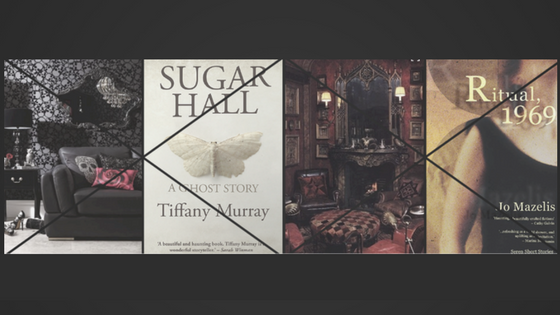
Sugar Hall Tiffany MurraySugar Hall
Easter 1955 and Britain waits for a hanging. Dieter Sugar finds a strange boy in the red gardens of crumbling Sugar Hall – a boy unlike any he’s ever seen. As Dieter’s mother, Lilia, scrapes the mould and moths from the walls of the great house, she knows there are pasts that cannot be so easily removed. Sugar Hall has a history, buried, but not forgotten.
Based on the stories of the slave boy that surround Littledean Hall in the Forest of Dean, this is a superbly chilling ghost story from Tiffany Murray.
Enter to win a hardback copy of Sugar Hall with this month’s Seren book giveaway.


The Woman in BlackThe Woman in Black
Few attend Mrs Alice Drablow’s funeral. There are undertakers with shovels, of course, a local official who would rather be anywhere else, and one Mr Arthur Kipps, a solicitor from London. He is to spend the night in Eel Marsh House, where the old recluse died. Young Mr Kipps expects a boring evening alone sorting out paperwork and searching for Mrs Drablow’s will. But when the high tide pens him in, amidst a sinking swamp, and a blinding fog, what he finds – or rather what finds him – is something else entirely.


FrankensteinFrankenstein
Composed as part of a challenge with Byron and Shelley to conjure up the most terrifying ghost story, Frankenstein narrates the chilling tale of a being created by a bright young scientist and the catastrophic consequences that ensue. Considered by many to be the first science-fiction novel, the tragic tale of Victor Frankenstein and the tortured creation he rejects is a classic fable about the pursuit of knowledge, the nature of beauty and the monstrosity inherent to man.


Ritual, 1969 by Jo MazelisRitual, 1969
What are little girls made of? What will they become? From the playground to adulthood the path is beset with misunderstandings, missed dates and hidden traps for the unwary.
This darkly gothic collection of stories explores the unsettling borderland between reality and the supernatural. Not all is as it seems in a world where first impressions may only conceal disguises and false trails – and there’s no going back. Shortlisted for Wales Book of the Year 2017.


The Call of CthulhuThe Call of Cthulhu and Other Weird Stories
Credited with inventing the modern horror tradition, H.P. Lovecraft remade the genre in the early twentieth century. Discarding ghosts and witches, and instead envisaging mankind at the mercy of a chaotic and malevolent universe. Experience the extraterrestrial terror of ‘The Call of Cthulhu’, which fuses traditional supernaturalism with science fiction, which features here alongside early tales of nightmares and insanity, and grotesquely comic stories.


Slade House
Turn down Slade Alley – narrow, dank and easy to miss, even when you’re looking for it. Find the small black iron door set into the right-hand wall. No handle, no keyhole, but at your touch it swings open. Enter the sunlit garden of an old house that doesn’t quite make sense; too grand for the shabby neighbourhood, too large for the space it occupies. A stranger greets you and invites you inside. At first, you won’t want to leave. Later, you’ll find that you can’t.



 season 2 halloween episode 6 abc modern family GIF


Save

Posted on

International Day of the Girl 2017 – 8 Books we should All Read

international day of the girl 2017 8 books

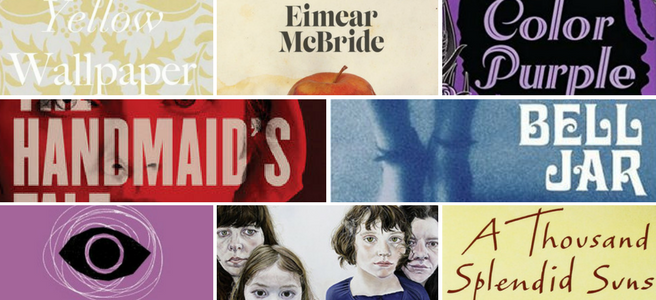
International Day of the Girl is celebrated every year on 11 October in order to bring attention to issues of gender inequality and the barriers girls come up against, from birth to adulthood. Here are eight outstanding books we think everyone should read – books which engage with the issues girls and women face, and will leave you empowered with knowledge and eager for change.

Handmaid’s Tale Margaret AtwoodThe Handmaid’s Tale, Margaret Atwood
Newly broadcast as a celebrated television series, Margaret Atwood’s modern classic, A Handmaid’s Tale, is a story of female subjugation at the hands of a male dictatorship, and the desperate hope of a young woman who cannot obliterate her memories and desires. Everyone should read this masterful story, which re-imagines modern society’s fears and flaws in a narrative at once otherworldly and entirely plausible.


The Colour Purple Alice WalkerThe Colour Purple, Alice Walker
Winner of the Pulitzer Prize, Alice Walker’s haunting novel follows Celie, a young black girl born into poverty and segregation. Raped repeatedly by the man she calls ‘father’, she has two children taken away from her, is separated from her beloved sister Nettie and is trapped into an ugly marriage. But then she meets the glamorous Shug Avery, singer and magic-maker – a woman who has taken charge of her own destiny. Though violent and explicit in its portrayal of the issues facing African-American women in the US, The Colur Purple also has its moments of empowerment and joy, showing that strength can be found even in the most tragic conditions.

Yellow Wallpaper Charlotte Perkins GilmanThe Yellow Wallpaper, Charlotte Perkins Gilman
Charlotte Perkins Gilman’s chilling short story was first published in January 1892, in an attempt to shine a light on the devastating impact of 19th century attitudes toward women’s health, both physical and mental. As a form of treatment, the protagonist is forbidden from reading, writing and all other forms of activity so she can recuperate from what her husband, a doctor, calls a “temporary nervous depression – a slight hysterical tendency”. With nothing to stimulate her, she instead becomes obsessed with the patterned wallpaper in her confining room, and suffers a descent into psychosis. Short but powerful, The Yellow Wallpaper is an important early work of American feminist literature, illustrating society’s profound ignorance of women’s wants and needs.

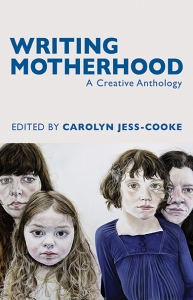
Writing Motherhood Carolyn Jess-CookeWriting Motherhood, ed. Carolyn Jess-Cooke
This important book reconsiders Cyril Connolly’s statement, that ‘there is no more sombre enemy of good art than the pram in the hall’. Through a unique combination of interviews, poems, and essays by established writers, Writing Motherhood interrogates contemporary representations of motherhood in media and literature, queries why so many novels dealing with serious women’s issues are packaged in pink covers with wellies and tea cups, and portrays the exquisite moments of motherhood as often enriching artistic practice rather than hindering it.

A Girl Is a Half-formed Thing, Eimear McBride
Eimear McBride’s multi award-winning debut novel tells the story of a young woman’s relationship with her brother, and the long shadow cast by his childhood brain tumour. It is a shocking and intimate insight into the thoughts, feelings and chaotic sexuality of a vulnerable and isolated protagonist. To read A Girl Is a Half-formed Thing is to plunge inside its narrator’s head, experiencing her world at first hand. This isn’t always comfortable – but it is always a revelation.

The Bell Jar, Sylvia Plath
The Bell Jar, Sylvia Plath’s only novel, was originally published in 1963 under the pseudonym Victoria Lucas, just one month before Plath tragically took her own life. The novel the story of a gifted young woman’s mental breakdown beginning during a summer internship as a junior editor at a magazine in New York City in the early 1950s. It explores unsettling themes of depression and is thought (by some) to mirror Plath’s own spiral into mental illness. It is also a feminist masterpiece, unpicking uneasy female stereotypes and despairing at what it was to be a woman at the time.

A Thousand Splendid Suns Khaled HosseiniA Thousand Splendid Suns, Khaled Hosseini
This tragic and achingly tender novel follows Mariam who, after a sudden and devastating loss, is sent at the age of fifteen to marry the much older Rasheed. After decades of servitude and oppression, Mariam strikes up an unlikely friendship with Rasheed’s new teenaged bride, Laila. When the Taliban take over, and life becomes a desperate struggle against starvation, brutality and fear, we see a brilliant resilience in these Afghan women, reluctantly brought out by their deep love for one another.

The Beauty Myth Naomi WolfThe Beauty Myth, Naomi Wolf
Every day, women around the world are confronted with a dilemma – how to look. In a society embroiled in a cult of female beauty and youthfulness, pressure on women to conform physically is constant and all-pervading. Naomi Wolf’s groundbreaking book will make you think about why and how you judge yourself when you’re stood in front of the mirror. First published in 1991, The Beauty Myth is sadly still all-too-relevant today.


Happy International Day of the Girl, and happy reading.

Posted on

Legend of the Month: Robert Minhinnick

Robert Minhinnick Legend of the Month

Each month we are celebrating one fantastic Seren author in honour of Wales’ Year of Legends. This month the spotlight falls on Robert Minhinnick – and as a special treat, all his books are 30% off.

Robert Minhinnick, born near Neath in 1952, has published numerous poetry books, collections of essays, novels, and short stories. His book To Babel and Back – a series of essays from America, Iraq and Wales – won the Wales Book of the Year Award in 2006. His first poetry collection was published more than thirty years ago, and he has won the Forward Poetry Prize twice. He has also received an Eric Gregory Award for his poetry and in 1998 he won a Cholmondeley Award.
He founded Friends of the Earth Cymru in 1984 and has worked as a writer in residence in Canada, travelling back there regularly to give readings. He was Editor of Poetry Wales magazine from 1997 until 2008.
Until the end of the month, you can enjoy 30% off all Robert Minhinnick’s books. Find out more about the poetry, fiction and essays available below.

limestone man robert minhinnickLimestone Man
RRP £9.99
NOW £6.99
Minhinnick’s latest novel is a meditation on age and opportunity, and introduces us to Richard Parry: a painter who cannot paint, a writer who doesn’t write. Parry’s obsession is Lulu, that ‘orphan off the street’, his aboriginal  ‘green child’. But on returning from Australia to his hometown he finds it has become notorious for the suicides of young people. As Parry tries to connect past and present he is haunted by dreams of Australia and of his youth. Yet is Parry all he seems?

Island of Lightning
RRP £9.99
NOW £6.99
The author travels from his home in south Wales to Argentina, China, Finland, Iraq, Tuscany and Piemonte, Malta, New York, Zagreb, Lithuania and the lightning island of Malta. In conventional travel essays and leaps of imaginative narrative his subjects include the annual Elvis convention in Porthcawl, Neolithic sculptures, poets playing football, the body of a saint and the definition of cool. His themes are big ones: the relationship of man and landscape, man and time, man and nature, immigration and war, in one sense ultimately humankind itself.

The Keys of Babylon
RRP 8.99
NOW £6.29
This Wales Book of the Year-shortlisted and Edge Hill-longlisted collection of 15 linked stories gives voices to migrants around the globe. The Keys of Babylon is both a fictional record of, and an exploration into their lives, and the characters reflect a comprehensive mix of hope, success, failure, fear, indifference and passion as their stories intertwine to create the final narrative.

Sea Holly
RRP £7.99
NOW £5.59
Sea Holly is Robert Minhinnick’s stuning debut novel, a story of drifting, burnt-out lives, shadowed by the mysterious disappearance of a vivacious young girl.
“John Vine? He has it all. Home, family, career. You can’t knock that. But he has this worm inside him, this dissatisfaction… A boy of twenty, that’s OK, he’s going to dream. But a man of fifty? With a young piece who thinks he’s not half bad?…believe me that’s when everything’s going to come loose.That’s when it’s going to get dangerous.”
Sea Holly was shortlisted for the RSL Ondaatje Prize.

To Babel and Back
RRP £7.99
NOW £5.59
Join Robert Minhinnick on a journey across a radioactive planet. Researching the use of depleted uranium in modern weapons, the writer follows a deadly trail from the uranium mines of the USA into Saddam Hussein’s Iraq. Here, he is led into the temples of a deserted Babylon and to what his guides insist is the site of the Tower of Babel. Interspersed with these ‘radioactive writings’, which seem part documentary, part dream, are essays on a host of different places.

Badlands
RRP £6.95
NOW £4.86
In these essays the writer travels from the impoverished of Albania to the scorched suburbia of Silicon Valley. On the way he encounters a foreign country called England, twenty thousand frozen lakes, and a desert of dinosaur bones. The people of Badlands include Coleridge and Ryan Giggs, Colonel Sanders and Freud, plus a host of minor deities from the numbing world of celebrity. Urban and rural, tragic and absurd, Badlands is a real place. But where the borders of Badlands begin, or finish, is difficult to say.

Green Agenda
RRP £7.95
NOW £5.56
In the 1970s, it was ignorance, in the 1980s, enthusiasm, and from the 1990s environmental issues were greeted with a peculiar fatalism. Green Agenda, the first popular volume of its type to be published in Wales, confronts head on our ideas of what constitutes ’the environment’ and how we perceive it. These essays acknowledge the danger of allowing environmental concern to flourish within a green ghetto, the perils of over-speculation, the banality of ’issues’.

Watching the Fire Eater Robert MinhinnickWatching the Fire-eater
RRP 8.99
NOW £6.29
Watching the Fire-eater covers variety of subjects: third world poverty and the internationalism of alcohol, rugby through the eyes of a vegetarian, nuclear power, sunbathing and a thanksgiving dinner for the demise of Margaret Thatcher. But at the core of this essay collection is a vivid series of attempts to strip away the exhausted mythologies of the writer’s own country and the increasingly-packaged places he visits. Watching the Fire-eater was the Wales Book of the Year Award winner, 1993.

Hey Fatman
RRP £5.95
NOW £4.16
Hey Fatman by Robert Minhinnick is full of the rich, sometimes strange, always telling, detail that we have come to expect from one of Britain’s most compelling poets. The book opens with poems set in and around his home country of south Wales, and includes a sequence based on the history of an ancestral house, Dunraven. We then move on to work inspired by the poet’s travels in South America and the U.S.A. This includes the title poem ’Hey Fatman’, a splendid baroque essay on the characters gathered in a Rio beach bar.


Find a great selection of books by our other legendary writers on the Year of Legends page.

Posted on

Summer Sale: Seren books half price this week

Summer Sale Half Price

Much like the nice weather, the Seren summer sale isn’t hanging around: for one week only, all our books are half price.

Seren Summer Sale books half price

Everything from poetry to novels, short stories, art, history and biography are included, and with so much choice, we thought you might like a helping hand deciding what to read next. Take a look below at our summer sale suggestions.

Best for… taking on holiday:
The Women of Versailles Kate BrownThe Women of Versailles by Kate Brown
£9.99 £4.99
This gripping and immersive novel tells the story of Adélaïde, daughter of King Louis XVI. Envious of her brother, bored with her sister and smitten with her father’s bourgeoise mistress, Adélaïde struggles with her budding sexuality and a desire for freedom of expression, both of which conflict with the expectations of the restrictive court of Versailles. Forty-four years later, under the looming shadow of the revolution, what has happened to the hopes of a young girl and the doomed regime in which she grew up?


Best for… devouring over lunch:
the man at the corner table rosie shepperdThe Man at the Corner Table by Rosie Shepperd
£9.99 £4.99
These poems are exquisite meals, to be consumed amidst surprising intimacies. The voice is one of urban sophistication; a merciless charm that teases and tempts us with sensual evocations of food and place. The gorgeous place settings of these poems are not just carefully delineated backdrops. They toy with our interpretations of ‘at table’. As in a Dutch master ‘tablescape’, they become symbolic of our relation to ourselves, to others and the world.


Best for… armchair reading:
Waterfalls of Stars Rosanne AlexanderWaterfalls of Stars by Rosanne Alexander
£12.99 £6.49
Rosanne Alexander paints the landscape and wildlife of isolated Skomer Island in vivid detail, drawn from her ten years spent as a warden on the uninhabited nature reserve. Waterfalls of Stars is a love-letter to this remarkable island, which is an important breeding ground for many birds, and populated by a stunning array of wildlife such as puffins, manx shearwaters, seals, and kittiwakes. With her lyrical evocation of the natural world and its enthusiastic and resourceful approach to the problems of island life, Alexander’s book is sure to inspire and entertain anyone who has felt the need for escape.


Best for… livening up a long journey:
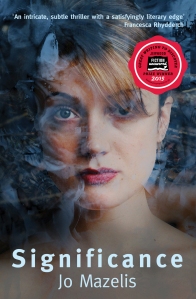
significanceSignificance by Jo Mazelis
£9.99 £4.99
Lucy Swann is trying on a new life. She’s cut and dyed her hair and bought new clothes, but only gets as far as a small town in northern France when her flight is violently cut short. When Inspector Vivier and his assistant Sabine Pelat begin their investigation, the chance encounters of her last days take on a new significance.
Jo Mazelis’ Jerwood Prize-winning novel is utterly addictive, and the cast of characters who brush ever so briefly against Lucy Swann in her last days are vividly imagined.

Best for… when you’re out and about:
Wild Places by Iolo WilliamsWild Places, Iolo Williams
£19.99 £9.99
Springwatch’s Iolo Williams picks his favourite forty nature sites in Wales and describes them in breathtaking detail, revealing rarities like the Snowdon lily and the Snowdonia hawkweed, where hares box and otters swim, where to spot dolphins and salmon, and where to see Wales’ great variety of hawks and other birds of prey. This informative and lavishly illustrated book confirms Wales’ pre-eminence as a country rich in stunning landscape inhabited in abundance by all manner of life. Take it with you on your travels, and discover all the delights of natural Wales.


Best for… broadening the mind:
Dark Land, Dark Skies, Martin GriffithsDark Land, Dark Skies by Martin Griffiiths
£12.99 £6.49
The constellations haven’t always been the province of Greek and Roman gods: ancient peoples around the world have looked up and added their particular myths to the heavens, only to have them subsumed by the Classics as the science of astronomy developed. Astronomer Martin Griffiths repopulates the night sky with figures from Welsh myths and legends, including the heroes of the Mabinogion, in this Celtic reclaimation of the night sky. Complete with star charts for the entire celestial year and 80 photographs of astronomically interesting objects, this informative guide is suitable for amateur and professional astronomers alike.


Best for… curling up with before bed:
The Tip of My Tongue Trezza AzzopardiThe Tip of My Tongue by Trezza Azzopardi
£8.99 £4.49
Enid wants a dog and wants to be a spy, but listening in on adult conversations doesn’t seem to bring her any nearer to understanding their troubled world. For all that,when times get tough and she has to stay with the Erbins, particularly her rich and spoilt cousin Geraint, she has plenty of verbal ammunition to help her fight her corner. Trezza Azzopardi transforms the heroine from The Mabinogion’s ‘Geraint and Enid’ into a brave 1970s girl from downtown Splott in Cardiff who, no matter how difficult the circumstances, always seems to get the last word. The original Enid defends her misguided husband by warning him of approaching villains, even though he has forbidden her to speak. Azzopardi’s young Enid is also unlikely to respect a gagging order.


We hope you enjoy browsing our summer sale. The half price offer ends at midnight on Sunday 23 July, so don’t delay – see what you can find before the time runs out.


Save

Save

Save

Save

Posted on

Happy Father’s Day

To all Dads, Grandads and those soon-to-be: we wish you a very happy Father’s Day. In celebration, we are happy to announce that all orders placed on our website in the next week will come with a complimentary ‘Dad joke’ to add to your collection.

Happy Father's Day
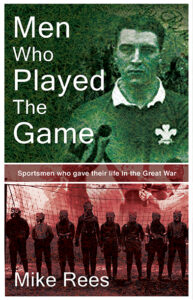
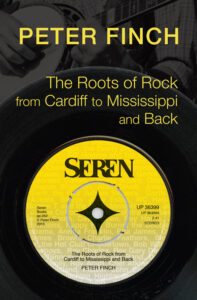
Mums, children, friends – we are so sorry. Because surely Dad won’t be able to resist treating himself to Mike Rees’ fascinating Men Who Played the Game, which pays tribute to sportsmen who fought in the Great War. He certainly won’t be able to stop himself from getting a copy of Lloyd Jones’ magnificent, newly back-in-print novel, Mr Vogel. And you can try, but we highly doubt you’ll be able to stop Dad from indulging in a little musical nostalgia with Peter Finch’s personal history of rock and pop: The Roots of Rock, from Cardiff to Mississippi and Back.


So go on Dads, treat yourself.


Posted on

Seren’s Top Ten Literary Romances

seren top ten literary romances

Valentine’s Day needn’t be a cause for stress when there are so many great literary romances to get lost in. Happy ending or otherwise, love in literature is beautiful and intense – the perfect distraction on this much-maligned day of devotion. Here are the Seren team’s top ten literary romances – in no particular order.

  1. Jayne Eyre and Edward Rochester – Jayne Eyre
    Unassuming and lacking in contemporary beauty, Jayne is perhaps not the convential heroine figure, yet her honesty and intelligence captures our hearts as well as that of wealthy Edward Rochester, whose impulsiveness and secrecy derails their budding romance. Rekindled much later after great suffering, their love seems all the more pure.
  2. Claire Abshire and Henry DeTamble – The Time Traveler’s Wife
    ‘I am at a loss because I am in love with a man who is standing before me with no memories of me at all’. Claire and Henry’s romance is unconvential and at times agonising, but each moment time-travelling Henry is brought back to Claire is cherished by both.
  3. Emma Woodhouse and George Knightley – Emma
    Like a slow burn, Emma’s imperceptible love grows out of friendship for the frank and critical Mr Knightly – the only character whose genuine concern and care for Emma is strong enough to prompt such well-meaning rebukes. Their romance is compassionate and selfless, and each improves the other through their genuine affection.
  4. Catherine Ernshaw and Heathcliff – Wuthering Heights
    Both strong, wild and passionate, Catherine and Heathcliffe fall prey to an obsessive kind of love, all-consuming in its intensity, to the ruin of both. Heathcliff is not our typical romantic hero – his coarse brutality turning him into something monstrous – yet his enduring love for Catherine, which dominates him even after her death, makes for a captivating and unforgettable story.
  5. Beatrice and Benedick – Much Ado About Nothing
    The will-they-won’t-they romance between Beatrice and Benedick begins with the two on equal footing – both clever, witty and utterly opposed to marriage. Throughout the play they continue to be evenly matched,  their heated linguistic duels blossoming into love. Each has the power to turn the other into the best (or worst) version of themselves, and the “merry war” of witty insults between Beatrice and Benedick ends with a romance we will remember always.
  6. Emma Morley and Dexter Mayhew – One Day
    This much-loved contemporary romance opens with Emma and Dexter’s one-night-stand, which unbeknownst to both characters will define the tragectory of their lives. Though ultimately tragic, the love between Emma and Dexter endures over decades of separation, and is captivating in its intensity.
  7. Hazel Lancaster and Augustus Waters – The Fault in Our Stars
    A short and hearbreaking romance, Hazel and Augustus stole hearts in the book and on the big screen as we followed them in their battles against cancer, love and loss. Embodying Tennyson’s phrase, “’Tis better to have loved and lost than never to have loved at all”, the story ends with neither character regretting having pursued their doomed relationship.
  8. Pip and Estella – Great Expectations
    Arguably one of Dickens’ strongest female characters, Estrella is cold and cruel to Pip as a child, rejecting the notion of romance and warning him to stay away from her. Pip, passionately in love, continues to pursue Estrella even after her marriage to the repugnant Drummle, and as the novel draws to a close, we are teased with the notion that Pip and Estella may finally be united.
  9. Margaret Hale and John Thornton – North and South
    An intelligent and wealthy mill owner, Mr Thornton represents all that genteel Margaret Hale is prejudiced against. He comes to love Margaret both because and in spite of her pride, and this passionate love persists even after she refuses his preposal and he comes to (wrongly) believe she has another lover. Margaret’s prejudices against the North and about social class slowly alter and when re-introduced to Thornton much later, the two finally declare their love.
  10. Elizabeth Bennet and Fitzwilliam Darcy – Pride and Prejudice
    How could we leave off this most famous of literary romances? Elizabeth Bennett and Mr Darcy both have their flaws – quick to jump to conclusions, Elizabeth misjudges Darcy from the start and he, falling prey to his pride, looks down upon her socially inferior family. Through hatred, to begruding respect and finally love, the two overcome their initial failings, and eventually embark upon a joyous marriage.


We hope you enjoyed this short list of great literary romances – though there are plenty more out there we haven’t mentioned. Happy Valentine’s Day, book lovers!

Seren literary romances love heart

And before we go, a couple of honorary mentions from the Seren list:

Dark_Mermaids_Web72Sophia and Hajo – Dark Mermaids
In Sophia’s struggles to investigate her friend’s murder and come to terms with her own abusive childhood as a young swimming star, fellow police officer Hajo begins as a wishful fantasy, his thick dark curly hair something coveted from a distance. But by the novel’s close, we see the two united, Sophia’s torment dulled by the reciprocated feelings from one whose love is patient, gentle, and pure.

Masque by Bethany W PopeChristine and The Phantom – Masque
In her pursuit of artistic perfection, young opera singer Christine encounters the Phantom, whose mentorship and murderous control of the theatre propel her to new heights. Much unlike Gaston Leroux’s original story, in Masque the Phantom is a complex character with great emotional depth, and ultimately Christine comes to recognise, despite his monstrous faults and physical deformity, that she admires and loves him.


Save

Posted on

NaNoWriMo: How to write a novel – advice from Seren novelists

how to write a novel advice from Seren novelists

It’s November and that means NaNoWriMo (National Novel Writing Month) has begun. If you’re not familiar with it, NaNoWriMo is a worldwide writing challenge, where participants have one month (1st–30th November) to write a 50,000 word novel.

Are you taking on the challenge? Perhaps you’re in need of a little motivation? Or maybe your novel has been in the works for a while now, and you need some guidance to get it finished? Whatever the case, Seren novelists are here to help.

Take a look below for some novel writing tips from the experts. Whether your novel takes a month or a year, we know you can do it.

Bethany W Pope author of Masque1. Start by letting your mind wander where it will. Taking long walks helps. Don’t ever say ‘no’ to an idea, however ridiculous or obscene it seems at first. Every idea is a seed; it’s best to let it grow. (Bethany W. Pope, author of Masque)


Jayne Joso author of My Falling Down House2. Don’t begin until the ideas preoccupy your thoughts, until you have read and researched to a point of exhaustion, until your mind is full of the world of the book, and the characters inhabit it freely. Things will change and move, grow, and diminish, and some will brutally be cut, but if you begin with a world that you can see, characters that you are beginning to know, then, when you settle down in the quiet to write, the world of your novel will begin to emerge as though by itself. Research more as you go, as you need to; sleep well, exercise and eat well, and always have something else to read. Stay with the world of your book in your mind, and switch off when you need to, sleep some more, run or swim some more. Then write and write, with fight, with joy. (Jayne Joso, author of My Falling Down House)

Bethany W Pope author of Masque3. Eventually you’ll spot your characters. Once you’ve seen them, the best way to capture what they’re like on the page is by inhabiting them, mentally. Use the actor’s method. Wear the skin of the role that you’re playing; write as if you are them and the writing will breathe. This is easier than you might think — after all, you are them, really; or they are aspects of you. Even the bad guys. Especially the bad guys. They’re parts of your psyche that you never let out. (Bethany W. Pope, author of Masque)

Jo Mazelis author of Significance4. There are two ways to approach a novel: some writers plot the whole work in advance, others begin with a vague idea, character or situation, then plunge in allowing organic development to occur. Neither is right or wrong, but there are certain advantages to both, every writer will discover along the way which works best for them. (Jo Mazelis, author of Significance)

Bethany W Pope author of Masque5. When it comes to the actual writing, do it wherever you can. By this, I mean that you should write wherever you can actually produce work. My top two choices are at the gym (I think best whilst moving — the stepper is my friend) and while sitting in my (empty) bathtub with a budgie on my head. There is no ‘should’ when it comes to writing. If it works for you, do it and give no thought to what other people think about it. You have to if you want to finish the job at hand. Once the story starts coming it will continue to come. If you love it, you will finish it. That which we cannot live without is that which we love. (Bethany W. Pope, author of Masque)

Jayne Joso author of My Falling Down House6. Drink whiskey, drink tea. Plan, don’t plan. Write. Tear it up. Start again, as you like… but finally, remember, there ain’t no way round but through, so just write the darn thing! (Jayne Joso, author of My Falling Down House)


Bethany W Pope author of Masque7. Do not worry about proofreading or editing until after the first draft is finished. Get it out, as fast as possible, even if it’s rough. It’s much, much easier to edit a finished manuscript than a few measly pages. But once it’s out of your head, for the love of God, go over it with a fine-toothed comb. Remove all the nits and every last tangle before sending it out to meet the world. It’s your child, after all. It deserves a clean face. (Bethany W. Pope, author of Masque)


We hope these helpful tips from our talented authors give you the push you need to get that novel finished – however long it takes.

‘I love deadlines. I like the whooshing sound they make as they fly by.’
– Douglas Adams


Save

Posted on

Free extracts from our favourite Halloween books: read them if you dare…

read these free extracts from our favourite Halloween books

Get yourself in the Halloween spirit – read these chilling extracts from our favourite spine-tingling stories.

trick or treat: happy Halloween from Seren

Ritual, 1969 by Jo MazelisRitual 1969 by Jo Mazelis
From ‘The Twice Pricked Heart’:


When Margaret returned to the cottage she saw that her father and stepmother had retired to bed, though it was not yet night.
She put Esmerelda in a chair and the child settled down to sleep as she sang softly to her. The light in the room was made strange by the dark sky and glittering snow. The quiet of the house seemed to swell with each passing second. Margaret sat upon the settle and took up the workbasket and began to mend her father’s shirt. It was torn under the arm and this she made good before turning it over to inspect it for other signs of wear. She froze at what she saw, for there on the chest where it lay over his heart she found a small puncture hole, the edges of which were stained in a halo of what must be dried blood. She gasped to see this for to her mind such a wound was unlikely to strike the same place twice.
A chill crept over her flesh and looking up she saw that the sun was at the lowest point in the sky and shadows filled the room. Then while she looked about her she saw a movement in the darkest corner of the room that she likened to a moving cloth, such as a woman’s cloak, for there was a sort of fluttering wavelike movement to it. Never had she perceived the like before and there was nothing in the room to cast such a shadow.
She kept to her place too terrified to move or make a sound, then just at the moment when she had made up her mind to gather Esmerelda in her arms and flee the house, she heard a step upon the stair and there was the sailor’s eldest daughter, dressed in her shift and a wrap, her cheeks aglow, her eyes bright and her lips red and wet and swollen.
‘Bring me cheese,’ she said, ‘and bread and wine.’

Want to keep reading? Buy your copy of Ritual, 1969 now: £8.99


Sugar Hall Tiffany Murrayfrom Sugar Hall by Tiffany Murray:


His cry echoed in the empty shed, his breath coming out in puffs of white. Dieter thought about London: he thought of the broken buildings and the cracks, he thought of the wide spaces and the rubble, and he thought of all those adventures he was missing. He gazed up at the dust dancing and the cobwebs pulsing, and Dieter heard a noise.

‘Pop!’ it said. Then,‘Pap!’

There were sparks and a shimmer that had to settle. Then, by the window and the filthy crates, there was a boy’s face.

The face was moving as if the boy was already standing up, but there was no body beneath it.

The Cheshire Cat, Dieter thought, as the face moved towards him. He gripped his pa’s crisp shirt tight, he stopped breathing, but he was determined that this time he wouldn’t run away.

The face was making a strange noise, as if tiny wings were fluttering in its throat. Dieter felt the balloon’s skin crackle beneath him; there was electricity: a crackle beneath his bottom and a crackle in the air.

He’s not a duppy, Cyn, Dieter thought, he won’t hurt me.

‘I – I brought you this shirt, these trousers,’ Dieter said. ‘I thought you’d be cold.’

Then Dieter wondered how the boy could use the shirt if he didn’t have a body.

A hot breeze of golden sparks cut through the freezing air and suddenly the boy was all there: his chest, his arms and legs, his neck and around that a silver collar. The boy shook himself and stretched up: Dieter had never seen anyone so naked, not even himself. The boy walked from those filthy storage chests and it was soundless, but Dieter watched the pitpat, pitpat of his footprints in the dust. Pitpat, pitpat; like steps in the sand and no one there.

The boy was thin. He was small, but Dieter couldn’t tell how old he was.

The boy hunched over and bent into a squat. His arms dropped, hands palmup and circling in the dust like little fish. The golden sparks were gone and Dieter saw the boy was pale for all his blackness.

Want to keep reading? Buy your copy of Sugar Hall now: £8.99


Masque by Bethany W PopeFrom Masque by Bethany Pope:


It was my job to see that she was properly dressed for company, to escort her to the room to meet her lover and the other admiring gentlemen, and then to change the subject any way I could when her natural whimsy took a turn for the disgusting as it often might.

One night, while De Changy was speaking to his managers (this was, you remember, two sets of managers back) she started speaking to a tall, nearly skeletal man who had appeared, dressed in a cloak and dinner jacket, a fine fedora aslant, shadowing a face as bland and unlined as a new-born baby’s. Her laughter had grown its most dangerous edge, the short hairs on my neck, cheeks, and arms rose in fear. La Sorelli was sweet, and she had a good heart, but her tongue could suddenly become impolitic and there were many investors present there this evening.

Annie and the stranger were standing at the point where the glorious stairs that make the Palais Garner famous intersect and form an enormous marble Y, glittering in the light refracted in a thousand tear-shaped crystals that drip from the tremendous chandeliers and gaslight torches. Whoever he was, he stood terribly erect, his gloved hands hidden behind his narrow waist, clutching a fine ebony stick. My friend, who I was meant to be watching, was sloppily drunk, spreading her barely covered breasts against the wide, pink-veined bannister. I could not read his face as he looked at her, his features were oddly stiff, expressionless, but the arch of his body signalled contempt. I rushed to her side, a quickly as I could, pleased that my new silk shoes did not slap against the carved stone stairs, pleased that I did not slip and crack my skull against the pavement…

Want to keep reading? Buy your copy of Masque now: £9.99


Bonus: download Jaki McCarrick’s short story, ‘Blood’, for free!
‘Blood’ from The Scattering by Jaki McCarrickShabby academic Fred Plunkett, working alone in his aunt’s Victorian house, has his peace disturbed by a sleek intruder with matt red lipstick, a lampblack dress and high, plastic heels. Lara claims to be researching vampires and the theory that Dracula fled his native Transylvania to take refuge in the Cooley Mountains of Ireland, in Fred’s home town. But when she smiles, submerged thoughts of blood and desire begin to wake in Fred’s mind…

Download ‘Blood’ for free from amazon.co.uk

‘Blood’ is one of nineteen stories in Jaki McCarrick’s critically acclaimed short story collection, The Scattering, available from the Seren website: £8.99


Posted on

Halloween tips for book lovers: have a spooktacular night in

halloween tips for book lovers spooktacular night in

If the thought of venturing outside gives you a fright, then why not stay in for the night? All Hallow’s Eve is right around the corner, and that means frights, delights, and a healthy dose of Halloween literature.

What could be better than a cosy night at home, candles flickering, the wind howling outside, and a good book in your hands? Staying in is the new going out, and we’re here to tell you how to make the most of Halloween from home.

1. Set the scene
It’s all in the detail – hang up some spooky decorations, dim the lights and set some tall candles ablaze.

2. Play that spooky music
Some gorgeously gothic music will set you up for a night of horror. This Best of Dark Classical Music playlist should do the trick.

3. Choose your Halloween reading
Ghost stories, gothic, true crime or thriller – choose your poison. Take a look below for our spooktacular selection of dark and chilling literature…

Masque by Bethany W Pope

Masque, Bethany W. Pope
£9.99
This richly gothic re-telling of Gaston Leroux’s The Phantom of the Opera takes us to 19th Century Paris, where aspiring opera singer Christine is trapped between theatre owner Raoul’s ‘romantic’ vision of her as a bourgeois wife, and the mysterious Phantom’s murderous pursuit of artistic perfection.
Love, lust, adventure, romance, and the monstrous nature of unfulfilled creativity await you here. Everyone wears a mask. Look beneath it, if you dare…

Sugar Hall Tiffany MurraySugar Hall, Tiffany Murray
£8.99
Easter 1955. As Lilia Sugar scrapes ice from the inside of the windows and rust from the locks in Sugar Hall, she knows there are pasts she cannot erase. The red gardens of Sugar Hall hold a secret, and Lilia and her children must confront a history that has been buried but not forgotten.
This superbly chilling ghost story (named by David Mitchell as one of his six favourites) will have you on the edge of your seat.

Ritual, 1969 by Jo MazelisRitual, 1969, Jo Mazelis
£9.99
What are little girls made of? What will they become? From the playground to adulthood the path is beset with misunderstandings, missed dates and hidden traps for the unwary.
This darkly gothic collection of stories explores the unsettling borderland between reality and the supernatural. Ranging from early twentieth-century France to 1960s South Wales and contemporary Europe, Jo Mazelis’ stories portray characters caught up in events and feelings they do not fully understand or control. Not all is as it seems in a world where first impressions may only conceal disguises and false trails – and there’s no going back…

Sean Tyrone A Symphony of HorrorsSeán Tyrone: A Symphony of Horrors, Mark Ryan
£8.99
The brilliantly evoked valleys town of Aberuffern (the mouth of hell) becomes the central motif of this short novel, inspired by the Mexican novel Pedro Paramo by Juan Rulfo.
This is lively, blackly humorous and intelligent storytelling.


Witch, Damian Walford Davies
£8.99
With the narrative pull of a novel and the vibrancy of a play for voices, Damian Walford Davies’s Witch offers a thrilling portrait of a Suffolk village in the throes of the witchcraft hunts of the mid-seventeenth century. The poems in this collection are dark spells, compact and moving: seven sections, each of seven poems, each of seven couplets, are delivered by those most closely involved in the ‘making’ of a witch.

Murder-at-the-StarMurder at the Star, Steve Adams
£9.99
The murder of God-fearing, bible-quoting, partially deaf Thomas Thomas at the branch of Star Stores he managed in Garnant, South Wales has remained an unsolved mystery since it happened in 1921. Over £126 was missing from the store safe, yet there were oddities about the attack which suggested this was more than a robbery that went tragically wrong.
In classic cold case fashion, journalist Steve Adams’s extensive researches have finally identified the killer, and the almost century-old case can finally be closed…

Happy Halloween one and all, we hope you have a frightfully good evening.

hoppip halloween art animation film

Save

Save

Save

Posted on

Short Story of the Month | ‘The Dig’ by Graham Mort

short story of the month the dig graham mort

Our new Short Story of the Month is ‘The Dig’ by Graham Mort, from his newest collection, Terroir, in which past and present intertwine as amateur archeologists dig for answers in an area whose violent, territorial history they know nothing of.

the dig from terroir by graham mortAbout Terroir:
From England to Europe, Africa to South America, these stories from prize-winning short story writer Graham Mort explore relationships: father and child; man and wife; man and his environment.
All these stories are sensitively told and beautifully written, bringing fresh perspectives to our place in the world around us.
Graham Mort has won the Edgehill and Bridport and Short Fiction short story prizes.


The Dig

This is an extract. Read the full short story for free on our website.

A Thistlethwaite, red-haired like all her clan. Longshanked, full-breasted, tall. Freckled, grey-eyed, jug-eared, a crooked smile creasing into dimples. Climber of rockfaces for hawk’s eggs. Horse breeder, dog hater. Broadshouldered, a fighter who’ll take on her brothers and anyone else. Fey, man-shy, loyal. Fierce to the lie, quick to offence. Footsore now, limping from a bruised knee where the gelding took her into a dry stone boundary.
Homeward bound, the moor’s peat squelching underfoot, the heather springy, bog cotton in the hollows. Hungry and used to it.

The Land Rover lurches on the bridleway, loaded with wire ladders and lamps, yellow waterproofs, digging gear. The man’s helmet lies beside him on the front seat. His hair is spiky grey, his hands badly scarred from a fire. The flesh has grown back in purple patches. He’s got a blue thumbnail where a hammer missed. He wears a diver’s watch with a black plastic wristband. Sun shows up the scratches on the spattered windscreen, tyres jog over stones and ruts and into mud puddles. The exhaust stinks in low gear. He’s arranged to meet the others at the dig. This one’s been on the go for months and you never knew who’d turn up.

She’s a long hour from home after trading her grey horse in the next dale. There are coins in her purse but she’s packed it tight with grass to stop them chinking. She rode the gelding bareback to the Sykes place, now she has the walk home. It was a good sale. The bridle and harness are
tight under her jerkin. She’s taken a short cut over a flank of moorland, crossing a corner of Abel Rintner’s land, past his new peat cuttings where turves are piled. She’s black to the ankles and there’s a foul gas from the moss. She could have played it safe and detoured by the valley head,
then down past the inn where there were other folk. There’d be drunken, groping bastards too. Fenmen and Dutchlanders draining the land for the monks, gabbling, fetching up phlegm and laughter. She can’t bear that. No need if the light holds. Her feet catch in rushes. She can hear the calling of fat lambs. Soon they’d be cutting their throats for Eric’s wedding.

There’s a dirty Peugeot estate parked where the bridleways meet. Dark blue with a roof rack. Two other cavers are already climbing into their gear. A woman in her late thirties with pulled-back hair and acute blue eyes; a fifty-year-old man, bow-legged, short and bearded. He’s coiling a climbing rope clarted in dried clay and she’s fastening her overalls over rubber boots. Their greeting is a stubbing of cigarette butts, a faint smile, nods to the stile, the causeway they’ve laid across the marsh that leads to the dig. Another path goes up over the limestone edge, past the killing pit – a swallow-hole with almost sheer sides, twenty yards across and twelve deep. They’d help excavate that for an archaeological dig, uncovering broken animal bones and Mesolithic flints. Hand axes, arrow tips, flensing blades. The ancient people had hunted with dogs, driving red deer, elk, auroch, and wild boar over the edge then stoning them to death. They’d been proud of that dig, the way it made sense of things, of the past. The man with the
scarred hands slams the Land Rover door and takes two yellow plastic trugs from the back. They pick up their lamps, two folding spades, a short-handled pick. The bearded man carries the rolled-up ladder and the woman with blue eyes lifts a coil of rope.

Jogging across the moor to strike the track, Hannah’s breath is harsh now. She’s anxious to get to the commons below. Sun is dropping over the sea about thirty miles west. The air is cooling, smoke coiling from the farmstead she’s too close to. A flight of geese follows the river to the estuary in
a double vee. She stumbles, pauses, rights herself, touching a hand to her sore knee. There’s the sudden hiss and flicker of plumage. A streaking bird is attacking her. Then the arrow strikes into her forearm, almost parallel to the bone, the point driving right through. She sucks her breath, freckles starring her suddenly white face. She glares round quickly and keeps moving. She should have covered her hair. That was stupid. The mistake will cost her. She’s wearing an amber amulet that hangs from a leather thong. It tosses as she runs. The arrow stings, evilly. She needs to get out of view, jags to the left, drops into a gulley and lies listening for dogs. Nothing. She follows the gulley down, stumbling, nursing her arm, trying to let blood drip onto her and not bare rocks where they can track her. There’s a little water in the beck bottom, not much.

They walk up the lane in single file, trudging a little after their day of work. Each to their own: wrought iron making, timberwork, the work of the body. There’s a gate on the left leading to the wooden causeway laid over the moor. The timber smells of creosote. The man with the beard grimaces, but the woman half smiles, bends her head a little closer as she swings the gate back onto its catch, savouring a memory. They move across the peat bog, feeling the planks sink a little under their weight. There are black pools on either side. Petroleum from the peat has stained them with iridescent patterns. A stand of bog cotton stirs in a slight breeze coming off the Irish sea. The man in the lead flexes his fingers and switches hands on the trug. The woman’s eyes are paler here, bluer, as if cut from underwater stones. She’s thinking of a bright room, how she loves the touch and smell of babies though she’s had none of her own. Their pure skin, their tiny hands reaching to their awed mothers’ faces.

Voices, thick and faint, not far off. A hundred yards. Maybe more. Men’s bass tones. She pauses, hunched over. Dark blood is oozing where the arrow tip has gone through.

Continue reading ‘The Dig’ for free here.


Graham Mort’s short story collection Terroir is available to buy from the Seren website: £9.99.

Claim 20% off when you become a Book Club Member.