Posted on

An extract from Boy Running | Wales Book of the Year shortlist

extract from Boy Running Wales Book of the Year

The winners of the Poetry, Non-Fiction and Fiction Categories, and the overall Wales Book of the Year Winner, will be announced in just two weeks. Seren have two titles in the running for the awards, and before we find out the results, we thought you might enjoy reading an extract from each of our nominated books. Look below and you’ll find an extract from Boy Running by Paul Henry (shortlisted for the Open University in Wales Creative Non-Fiction Award).

Studio Flat

Socks hang like bats from a skylight.
They may be dry in time for the moon.
The camp site owner’s water-feature
drains more blood from the sun.

Cars queue for the narrow bridge.
Birds catch their pulses and fly.
I am suddenly old. What’s an attic
but a bungalow in the sky.

And where are you, my sons?
I heard your voices in the bells
of snowdrops pulled by the wind.
These tulips have lost their smell.

Perhaps I could tell you, one day
where the snowdrops went, why old men
dry their socks on the moon, and what
darkened the skylight, just then.


Ring

I can’t get the ring out of my finger.
How long till it disappears
this ghost ring, twenty years deep?
I’m branded. Is it the same with you?
Your fingers were slenderer than mine.


We hope you enjoyed reading this free extract from Boy Running by Paul Henry. Keep an eye on the Seren blog, as we will be announcing the Wales Book of the Year Awards results in just over two weeks time.

About Boy Running:
Paul Henry has gained a reputation as one of of the best poets in the UK. Boy Running is his beautiful sixth collection and the first to follow  The Brittle Sea: New and Selected PoemsAlso a singer-songwriter, Henry is known for his precise lyricism, intimate tone and a cast of characters inspired (like Dylan Thomas) by his childhood by the sea in Aberystwyth, West Wales.

Posted on

An extract from Losing Israel | Wales Book of the Year shortlist

An extract from Losing Israel by Jasmine Donahaye Wales Book of the Year shortlist

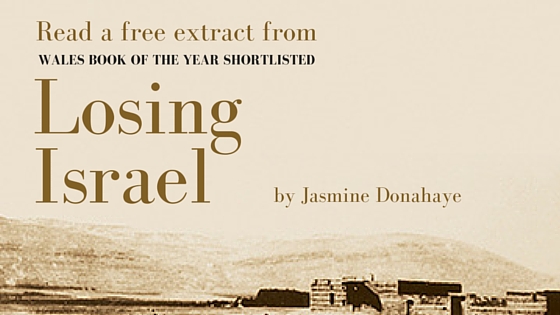
The winners of the Poetry, Non-Fiction and Fiction Categories, and the overall Wales Book of the Year Winner, will be announced in just under a month. Seren have two titles in the running for the awards, and before we find out the results, we thought you might enjoy reading an extract from each of our nominated books. Look below and you’ll find an extract from Losing Israel by Jasmine Donahaye (shortlisted for the Open University in Wales Creative Non-Fiction Award).

1 – Motherland

It is the year of clogs and flared skirts, of shiny striped shirts with big collars, the year the PLO infiltrates by boat on the coast north of Tel Aviv and takes a bus-load of passengers hostage. It is spring, 1978 and I am ten years old. Security at El Al Airlines is high. I know the names Abu Nidal and Abu Jihad and Leila Khaled – Leila Khaled, that woman who is somehow not really a woman, but a terrorist.
Israel is an impression of barbed wire and rusting yellow warning signs on the beaches, the scent of orange blossom and the stink of sewage, hot nights and ruins – and a huge sprawling network of strangers who are relatives. It is my mother’s first return home after fifteen years of self-imposed exile, and it opens in me a wound I can never heal – a longing to come home to a place that can’t be home.
Now whenever I return, it is the long straight road through the valley to the kibbutz that catches at me – after Afula, that dusty way-station; after the last turnings, where it straightens out into the old Roman road that runs through the Jezreel Valley or the Plain of Esdraelon or Marj Ibn Amer, depending on your political orientation, or language, or biblical inclination. ‘The Ruler Road’ my mother called it, that first time we went back in 1978. The mass of Mount Gilboa rises on your right, and far off in the distance there’s a shimmering above the road where the border lies, some twenty kilometres away. Beyond it rise the Jordanian mountains, the mountains of Gilad or Gilead, after which my grand-father Yair named himself and my family – Hagiladi, a man of that place. On either side of the road stretch the fishponds, where you can see white-fronted blue and chestnut Smyrna kingfishers, and pied kingfishers and black-winged stilts; and then, looming up under Gilboa, the complex of the prison moves into sight, watchtowers and barbed wire topping the long external wall, which runs alongside the dusty road. A short distance beyond the prison a trilingual green metal sign points out the left turning to the kibbutz.
Through every return, the kibbutz lies like a magnet at the centre, exerting a force that pulls each journey into a curve inward to its core. Even now, after I have learned its other story, it exerts its pull. This is where my mother is from, and so I have always felt that this is in some way where I am from, too. No matter what I learn about its history, what I feel about its government’s acts, its citizens’ electoral choices, what I think about its political foundations and exclusions, Israel is inextricably caught up with my mother – my inaccessible, elusive mother, who left her community and her country, but inwardly never left, who carried her home all the years of my childhood not in a book, as some anti-Zionists will say the ‘true’ Jew does, but in the locked chamber of her heart.


We hope you enjoyed reading this free extract from Losing Israel by Jasmine Donahaye. Keep an eye on the Seren blog, because next week we will be publishing an extract from Paul Henry’s gorgeous poetry collection, Boy Running, which is shortlisted in the Wales Book of the Year, Roland Mathias Poetry Award category.


Losing IsraelAbout Losing Israel:
In Losing Israel the search for her family’s past and the part her forebears played in the newly created Israel reveals unsettling knowledge about kibbutzim and land clearances in northern Israel. Challenged by this new and unwonted information, Donahaye’s notion of history and her understanding of Israel, of her grandparents and of her identity is completely transformed.

Buy your copy now: £12.99 direct from the Seren website (sign up to be a Seren Book Club Member to claim 20% off)

Save

Posted on

Dark Mermaids Shortlisted for Cross Sports Book Awards

dark mermaids anne lauppe-dunbar cross sports book awards

The Cross Sports Book Awards today announced their shortlists, and Anne Lauppe-Dunbar’s powerful debut novel Dark Mermaids is on the shortlist for the New Writer of the Year category.

The Cross Sports Book Awards is a major annual promotion for Sports Writing & Publishing; the awards exist to highlight the most outstanding sports books of the previous calendar year.

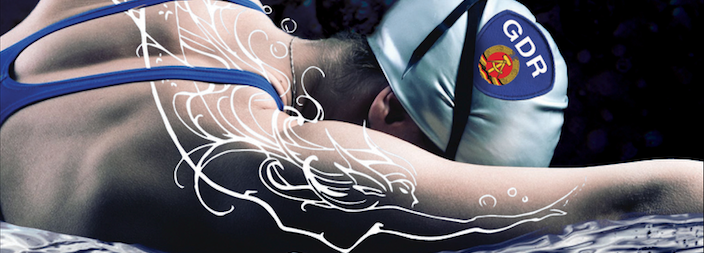
Dark_Mermaids_Web72Dark Mermaids is a shocking story of the horrors of a political system that doped its youngsters to sporting superhero status, and then left them to fend for themselves. Shortlisted for the Impress and Cinnamon First Novel Prize, this East German noir thriller is set in 1990, a year after the fall of the Berlin Wall.

Unhappy West Berlin police officer Sophia is called on to investigate the murder of her childhood friend Kathe; after her beaten body is discovered in Sophia’s local park. Sophia is forced to return to the hometown she fled as a teenager with her enigmatic father Petrus, and Mia – a frightened child who turned up on her doorstep. She must investigate Kathe’s murder and care for a mother she believed abandoned her.

As she reluctantly delves into the sordid Stasi secrets of those she grew up with, Sophie uncovers a web of horrors about her own abusive past as a child-swimming star in the former GDR. But her hunt for the truth has not gone unnoticed by those close to her, people who still have too much to hide.

You can see the full New Writer of the Year shortlist, as well as the other category shortlists, on the Cross Sports Book Awards website.

Posted on

Celebrating Significance!

jfu

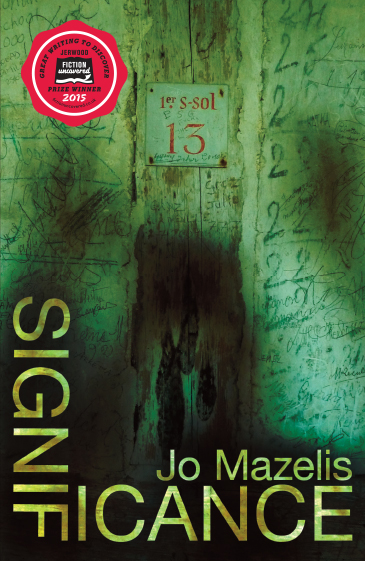
Jo Mazelis’ fantastic debut novel Significance, described by Cathy Galvin as “A must read for anyone who loves literary fiction and believes they would never read a crime novel”, was one of the eight winners of the 2015 Jerwood Fiction Uncovered Prize earlier this year.

Throughout the summer, Jerwood Fiction Uncovered have been celebrating one of its winners, and this week it’s Significance‘s turn!

significance_reprint_72dpi

Lucy Swann is trying on a new life. She’s cut and dyed her hair and bought new clothes, but she’s only got as far as a small town in northern France when her flight is violently cut short. When Inspector Vivier and his handsome assistant Sabine Pelat begin their investigation the chance encounters of her last days take on a new significance.

Lucy’s death, like a stone thrown into a pool, sends out far-reaching ripples, altering the lives of people who never knew her as well as those of her loved ones back home.

Head on over to the Jerwood Fiction Uncovered website this week and you’ll be able to read the first chapter of Significance and take a peek at some reviews that will make you want to read the rest of it, if you haven’t already! 

Don’t forget to head on over to Twitter where you can follow us @SerenBooks, Jo Mazelis @JoMazelis, and Jerwood Fiction Uncovered @FictUncovered and keep up to date with all of the celebrations.

Order Significance from our website.

Posted on

Friday Poem – The Voice in which my Mother Read to Me

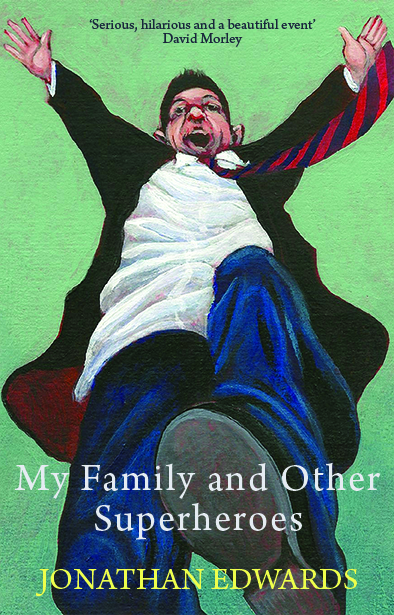
This cover shows a colourful painting of a school boy stomping with excitement viewed as if looking from the ground. The text reads: My Family and Other Superheroes, Jonathan Edwards.

The Friday poem is back f0r 2015 and we’re kicking off with The Voice in Which my Mother Read to Me from Jonathan Edwards’ Costa Poetry Award Winning collection My Family and Other Superheroes.

The Voice in which my Mother Read to Me

isn’t her good morning, good afternoon, good night voice,
her karaoke as she dusts, make furniture polite voice,
her saved for neighbours’ babies and cooing our dog’s name voice.

It isn’t her best china, not too forward, not too shy voice,
or her dinner’s ready, your room looks like a sty voice,
or her whisper in my ear as she adjusts my tie voice.

It’s not her roll in, Friday night, Lucy in the Sky voice,
her Sunday morning, smartest frock, twinkle-in-the-eye voice,
that passing gossip of the vicar with the Communion wine voice.

It’s not her ‘Gateau – no, ice cream – no… I can’t make the choice’ voice.
It’s not her decades late, fourth change, ‘Is this skirt smart enough?’ voice.
It’s not her caught me with the girl from number twenty-one voice.

That voice which she reserved for twelve-foot grannies, Deep South hobos,
that sleepy, secret staircase, selfish giants, Lilliput voice.
That tripping over, ‘Boy, why is your house so full of books?’ voice.

[soundcloud url=”https://api.soundcloud.com/tracks/183594834″]

My Family and Other Superheroes is available from the Seren website. Save 20% when you join our online book club.

Posted on

Jonathan Edwards Shortlisted For The 2014 Costa Poetry Award

This cover shows a colourful painting of a school boy stomping with excitement viewed as if looking from the ground. The text reads: My Family and Other Superheroes, Jonathan Edwards.

Jonathan Edwards has been shortlisted for the 2014 Costa Poetry Award with his debut book of poetry, My Family and Other Superheroes. The news comes just a few months after the collection was shortlisted for the Fenton Aldeburgh Poetry Prize.

The Costa Book Awards honour some of the most outstanding books of the year written by authors based in the UK and Ireland. There are five categories – First Novel, Novel, Biography, Poetry and Children’s Book.

Edward’s heroes are a motley crew: Sophia Loren, Marty Mcfly and Evel Knievel jostle for space on the pages alongside Valley’s mams and dads, The kebabby in Merthyr and the traditional Welsh costume.

The judges: Owen Sheers, Anna Dreda, and Charlotte Runcie said of Jonathan’s book:
“Joyful and dynamic – a collection that’ll make you laugh and make you think.”

Edward’s superheroes will have to fight it out with the likes of  Colette Bryce, Lavina Greenlaw and Kei Miller for the esteemed award. The category winner will be announced on 5th January with one of the five category winners chosen as the overall Costa Book of the Year later in the month.

Get a copy of Jonathan’s award worthy collection here. Save 20% when you join our online book club.

Posted on

Friday Poem – MIG–21 Raids at Shegontola

Midnight, Dhaka Mir Mahfuz Ali

This Friday’s poem, MIG–21 Raids at Shegontola, comes from Mir Mahufuz Ali’s debut collection Midnight, Dhaka. Rich in visual and aural descriptions, Mahfuz writes with a shocking directness about the atrocities he witnessed as a child in war-torn Bangladesh. In later poems his trauma becomes transformative, and his poetry the key to unlocking memories of a childhood that are rich in nuance, gorgeous in detail and evocative of a beautiful country. They celebrate the human capacity for love, survival and renewal.

MIG–21 Raids at Shegontola won the  2013 Geoffrey Dermer Prize for poetry. Mahfuz will be accepting the MDA award for best contribution to the Arts by an Asian artist presented by Julie Morgan, Am at a ceremony in Cardiff on 8th November.

MIG–21 Raids at Shegontola

Only this boy moves
between the runes of trees
on his tricycle
when an egle swoops,
releases two arrows
from it’s silver wings and melts
away faster than lightning.
Then a loud whistle
and a bang like dry thunder.
In a blink the boy sees
his house roof sink,
feel his ears ripped off.
The blast puffs up a fawn of smoke
bigger than a mountain cloud.
The slow begonias rattle
their scarlet like confetti.
Metal Slashes
the trees and ricochets.
Wires and pipes snap
at the roots, quiver.
The whirling smoke packed
witch bricks and cement,
chicken feathers and nigella seeds.
When the cloud begins
to settle on the ground,
the boy makes out buckled iron rods.
White soot descents
as he finds himseld dressed
like an apprentice baker.

Get 20% off Midnight, Dhaka when you join our online book club.

Posted on

Pascale Petit Shortlisted for the 2014 TS Eliot Prize

Pascale Petit

Pascale Petit has been shortlisted for the 2014 TS Eliot Prize for the fourth time with her collection Fauverie, A collection every bit as vivid and emotive as the art of the Fauves that the title evokes.

Described as ‘the prize most poets want to win’ (Sir Andrew Motion, former Poet Laureate) and ‘the world’s top poetry award’ (Irish Independent), the TS Eliot prize is awarded to the author of the best new collection of poetry published in the UK and Ireland each year.

Pascale has previously been shortlisted for the TS Eliot prize with her earlier collections The Zoo Father (2001, Seren), The Huntress (2005, Seren) and What the Water Gave Me: Poems after Frida Kahlo (2010, Seren).

Pascale will be reading alongside ten fellow shortlisted poets including Fiona Benson, Ruth Padel and Michael Longley at the Southbank Center’s Royal Festival Hall on 11th January, with the winner of the £20,000 prize being announced at an awards ceremony on the 12 January 2015.

Helen Dunmore will chair the judging panel for the 2014 prize alongside Sean Borodale and Fiona Sampson.

Posted on

Jaki McCarrick Longlisted for the Irish Laureate Award

The Scattering author, Jacki McCarrick has been longlisted for the first Irish Laureate Award. Jaki is one of thirty four Irish writers to be nominated for the award and she sits on the longlist alongside names such as Anne Enright, Roddy Doyle, Donal Ryan and Eimear McBride

Launched by the Arts Council in summer 2014, the €150,000 award aims to find a writer who has made a significant contribution to Irish literature and with an internationally recognised body of work.

Jaki is an award winning playwright and short story writer. Her first collection of short stories, The Scattering, a series of skillfully crafted stories focusing on borders, was shortlisted for the Edge Hill award. Her plays have won numerous awards including SCDA National playwriting competition and the Papatango New Writers Award.

Nominations were made by 119 organisations and individuals, with each providing a reason for their selection. Nominations came from book clubs, bookshops, arts organisations, poets, playwrights and libraries.

The first Irish Laureate for Fiction will be announced in January 2015 and the recipient is expected to be an author that has had “a considerably positive impact on readers” and “demonstrated commitment to engaging with the public, the media and the literary sector”.