Posted on

Short Story of the Month | ‘Beginning Again’, Candy Neubert

Short Story Beginning Again Candy Neubert

Our Short Story of the Month for March is ‘Beginning Again’ by Candy Neubert.

Cornish Short Stories

The story will shortly be published in Cornish Short Stories: A Collection of Contemporary Cornish Writing (The History Press).

Candy Neubert lives in Cornwall but maintains strong ties with South Africa where she lived from 1990–1996. She has received numerous literary awards, including the Bridport Prize. She is the author of Foreign Bodies (Seren, 2009) and Big Low Tide (Seren, 2012).


Beginning Again

This is an extract. Read the full short story for free on our website.


She was coming straight up the beach towards him.
Through half-closed eyes, his head propped up against his rucksack, he watched her come. In silhouette at first, the kind of shape you just knew wasn’t English, couldn’t be English, but you couldn’t say why. Hair plastered back slick and wet off her face.
She came right up and stood over him, flicking water over his hot skin. Hey, he laughed. She lifted her towel, shaking it out like a sheet over a bed, lying down with a grunt.
He felt the cool coming from her, saw tiny droplets drying on her neck—Sonya, his mate, his life’s woman.
“Mm … now I’m hungry,” she said, not opening her eyes. He was, too. He sat up slowly, sun dizzy, and reached into the rucksack. Here it was, the container she always filled to the brim—he raised a corner of the lid and out came the smell of food, olives and onion and … just then he woke up, as the small figure of the boy crossed his line of vision, still quite far off, heading his way.

        The path went straight up from Porthcurno and he took it two steps at a time. Not really steps but boulders and cliff straight up from the car park, just the way to get going on a cool morning. They’d soon be warm and the mist would clear; it was only a sea mist. He positively sprang all the way, pretty fit for a business man, an office chap.

        When the path levelled out, he waited for Daniel. It was an inviting path, gorse on either side, beaten earth sprinkled with rabbit droppings, gulls laughing overhead. But he kept still and waited patiently. He was so effing patient. But Daniel wasn’t in sight.

        Finally.

        If shoulders could talk.

        If shoulders could talk, the rucksack on Daniel’s back would shrivel up and die. As if towels were heavy. Bulky, yes, but not heavy. He should try the picnic, if he wanted heavy.

        Also, Fuller had the surfboard, which was fair enough; his arms were longer. But Daniel was young and strong. They did sports training at school, didn’t they?

        The boy climbed the last bit and came to a halt five yards away, his eyes fixed on his shoes.

        Patience, mind. Fuller held his tongue and set off again. A fresh scent came from the pink flowers in the grass under the gorse, while the mist ripped back off the cliffs before his eyes—what luck, when it might have come in thick and spoiled everything.

        They did sports training and next year Mandarin, of all things. He asked Daniel about it yesterday, about the new school. The boy made a face, sticking his tongue over his front teeth. They’re all tossers, he said. He’d wanted to go to a school in Devon where they taught tractor driving.

        But they were going to have a day today, a great day. They were here, damn it. The sun was coming out and everything was sorted.

        A kestrel rose and hung in the air, over to the right. Fuller put his fingers in his mouth and whistled, and the boy raised his head.

        ‘What?’ he yelled.

        ‘Kestrel!’

        ‘Uh.’

        Now, five hundred yards ahead, a gate—it had to be the right place, the path veering off towards the cliff edge, dipping at the end, there! He stood, breathing hard. Sheer drop on one side and at his feet, far down, two perfect golden discs of sand divided by a bar of pale green water, just like the photo in the brochure. He’d found it. His chest was big and warm and happy. Daniel came up behind him.

        ‘There it is—great, eh? Looks like the Caribbean. And the sun’s out. Got all my cards in one shoe, boy.’

        ‘What?’

        ‘Y’know—got everything I want, all in one place.’

        ‘Whatever.’

        He was twelve.

        ‘Go careful now. Very careful. Watch it.’

        They did have to be careful; it was a real rabbit path, hard on the knees. Fuller couldn’t be sure that this sluggish figure was truly his son; maybe he’d dart ahead the way he always had. He put out a warning arm. Sheer drop. Careful.

        The body board was a nuisance. Glancing at the sand below, he saw people down there already. Damn. Not to worry, live and let live, hey.

        ‘I’ll let the board drop,’ he called. Please let it not break, he said to himself as it slithered from his hand, pivoted on one edge and shot out of sight. Fuller turned around to take the last slope of rock backwards.

        ‘Turn around,’ he called up.

        The boy would figure it out. Let him find out for himself, let him learn from something a bit tough.

        All the nooks and crannies and shady spots were taken. Fuller walked the whole beach and back to where the boy had stopped, his bag dumped on the sand. Every cleft and shadow already occupied. A middle-aged couple were sauntering from one of these nooks, and something about them had the boy transfixed. Fuller looked. Not a stitch. Starkers. Perfect mahogany tans all over, their buttocks going concave as they walked, the brown flesh in shallow folds. The man had a hat on.

        ‘Well, what is the world coming to?’

        ‘Where are we going?’ asked Daniel.

        ‘Here’s as good as anywhere, I guess.’

        Fuller began to unpack the stuff. He was sure he’d brought everything: shorts, food, sun lotion, you name it, he’d got it. He flipped a ball in the boy’s direction, and it rolled a way off.

        ‘Bring your water bottle?’

        Daniel looked at him.

        ‘You didn’t, did you? You forgot, didn’t you? Didn’t I say: bring your water bottle?’

        ‘Well I didn’t, did I?’

        ‘We’ll be short. Good job I brought mine, but we’ll be short.’

        ‘What you doing?’

        ‘Getting the towels out.’

        ‘That’s my bag.’

        ‘I’m getting the towels out of your bag, okay? Please Daniel, may I get the towels out?’

        No reply. The boy sat down, yanked his cap further over his eyes, and looked at the sea. Fuller pulled his own shirt off and wrapped a towel tight around his waist. Still warm and happy; that sea was calling.

        ‘Coming?’

        He and his son, racing down the sand.

        ‘Coming?’

Continue reading ‘Beginning Again’ for free here.


Posted on

We’re all about self-gifting this Christmas with Mystery Book Bundles

Mystery book bundles

Unless you’re one of Santa’s particularly jolly elves, we imagine the countdown to Christmas might be a stressful and arduous experience. With that in mind, we’ve prepared some mystery book bundles – the ideal affordable self-gift! (Or, if you’re feeling particularly generous, a gift for someone else.)

Coming in Fiction and Poetry varieties, these lovingly gift-wrapped parcels contain three books from our fantastic Seren list – and are just £9.99.

Mystery Book Bundle Fiction
Mystery Bundle: Fiction
For the Fiction Bundle, we’ve chosen a mix of enthralling literary novels and absorbing short stories.

No matter what you get, you can expect to be glued to your comfiest chair for at least a few days.


Mystery Book Bundle poetry
Mystery Bundle: Poetry
For the Poetry Bundle, we’ve selected a blend of exciting debuts and powerful works from established poets.

We can’t tell you what you’re likely to receive as it would ruin the surprise, but we have a wonderful mix of things ready to wrap up.


Find our Mystery Fiction Bundle and Mystery Poetry Bundle on the Seren website – while stocks last.


Merry Christmas GIF


Posted on

What to read on Halloween

What to read on Halloween Seren

You can’t beat a chilling tale to read as darkness creeps ever earlier into the evening. From classics with haunted houses and man-made monstrosities to modern physological terrors, these books are at the top of our list of what to read on Halloween.

The Haunting of Hill HouseThe Haunting of Hill House
Shirley Jackson’s slow-burning psychological horror sees four paranormal enthusiasts explore a brooding, mid-Victorian mansion in the hope of finding indisputable evidence of the psychic phenomenon called haunting. As they begin to cope with horrifying occurrences beyond their control or understanding, they cannot possibly know what lies ahead. For Hill House is gathering its powers – and soon it will choose one of them to make its own.


Sugar Hall Tiffany MurraySugar Hall
Easter 1955 and Britain waits for a hanging. Dieter Sugar finds a strange boy in the red gardens of crumbling Sugar Hall – a boy unlike any he’s ever seen. As Dieter’s mother, Lilia, scrapes the mould and moths from the walls of the great house, she knows there are pasts that cannot be so easily removed. Sugar Hall has a history, buried, but not forgotten.
Based on the stories of the slave boy that surround Littledean Hall in the Forest of Dean, this is a superbly chilling ghost story from Tiffany Murray.
Enter to win a hardback copy of Sugar Hall with this month’s Seren book giveaway.


The Woman in BlackThe Woman in Black
Few attend Mrs Alice Drablow’s funeral. There are undertakers with shovels, of course, a local official who would rather be anywhere else, and one Mr Arthur Kipps, a solicitor from London. He is to spend the night in Eel Marsh House, where the old recluse died. Young Mr Kipps expects a boring evening alone sorting out paperwork and searching for Mrs Drablow’s will. But when the high tide pens him in, amidst a sinking swamp, and a blinding fog, what he finds – or rather what finds him – is something else entirely.


FrankensteinFrankenstein
Composed as part of a challenge with Byron and Shelley to conjure up the most terrifying ghost story, Frankenstein narrates the chilling tale of a being created by a bright young scientist and the catastrophic consequences that ensue. Considered by many to be the first science-fiction novel, the tragic tale of Victor Frankenstein and the tortured creation he rejects is a classic fable about the pursuit of knowledge, the nature of beauty and the monstrosity inherent to man.


Ritual, 1969 by Jo MazelisRitual, 1969
What are little girls made of? What will they become? From the playground to adulthood the path is beset with misunderstandings, missed dates and hidden traps for the unwary.
This darkly gothic collection of stories explores the unsettling borderland between reality and the supernatural. Not all is as it seems in a world where first impressions may only conceal disguises and false trails – and there’s no going back. Shortlisted for Wales Book of the Year 2017.


The Call of CthulhuThe Call of Cthulhu and Other Weird Stories
Credited with inventing the modern horror tradition, H.P. Lovecraft remade the genre in the early twentieth century. Discarding ghosts and witches, and instead envisaging mankind at the mercy of a chaotic and malevolent universe. Experience the extraterrestrial terror of ‘The Call of Cthulhu’, which fuses traditional supernaturalism with science fiction, which features here alongside early tales of nightmares and insanity, and grotesquely comic stories.


Slade House
Turn down Slade Alley – narrow, dank and easy to miss, even when you’re looking for it. Find the small black iron door set into the right-hand wall. No handle, no keyhole, but at your touch it swings open. Enter the sunlit garden of an old house that doesn’t quite make sense; too grand for the shabby neighbourhood, too large for the space it occupies. A stranger greets you and invites you inside. At first, you won’t want to leave. Later, you’ll find that you can’t.


 season 2 halloween episode 6 abc modern family GIF


Save

Posted on

Short Story of the Month | ‘Let Her Go’ by Maggie Ling

Let Her Go Maggie Ling Short Story

October’s Short Story of the Month is ‘Let Her Go’ by Maggie Ling. Previously an illustrator and cartoonist, Maggie now writes short stories. Her writing has been commended and longlisted by a number of prizes, and published in Unthology, and the Asham Award-winning ghost story collection, Something Was There (Virago 2011).

In ‘Let Her Go’, illusory boundaries, previously respected by a holidaying couple, begin to break down when, watching her husband emerging from the sea, the wife picks up an urgent call on his mobile phone and looks back over the years of misplaced love.


Let Her Go

This is an extract. Read the full short story for free on our website.


Your head is just breaking the water when I hear that tedious new ring tone of yours – mercifully muffled by your beach towel. Do you have to bring your phone to the beach? I moaned that morning, We are supposed to be on holiday. You know what it’s like, you’d said, Someone might need a quick comment, a quotable line. I can never be totally out of touch.
What liars we are.
I let that awful, tinkly, tinny tune go through several more ring cycles – less painful, less drawn out than Wagner at least – watch your sea-slicked seal head rise up, watch you turn to look back to the vast expanse of ocean, unwilling to leave this element that is so much your own. Torso fully exposed, now, you wade a few steps, stop once more, turn once more, hands on hips, back to me, looking back. Reluctant to face the deserted beach, no doubt. Your ‘flipper’ feet unwilling to make contact with the desiccated land, unwilling to rejoin the landlubber lying here waiting for you. Although, looking back myself, haven’t I always been the fish out of water.
The caller persistent, I decide to do the unthinkable. Rules, they say, are made to be broken. Though you and I have always prided ourselves on our mindfulness of rules. The concern we have for each other. The boundaries we respect. We have, you could say, made it a rule: a stick with which to measure our so-called easy-going, independent spirits; one we need not beat ourselves up with, since we do stick to the rules. No wishy-washy one-for all, all-for-one sentimentality for us. Oh no. We respect each other’s privacy, each other’s bank accounts, each other’s digital interactions. We two of the Me/Myself/I generation honour each other’s individuality. We are good at holding on while letting go. It was you who coined that arsehole, oxymoron of a phrase. Except, I seem to remember, you said You are good at holding on while letting go. It was back in the days when I was fool enough to take this as some kind of compliment.
I am unmuffling your smothered Blackberry from its multi-coloured cocoon when it comes to me: Who would bother to call, rather than to text you? No one calls you now – except me. And you and I both know I don’t count. All manner of correspondence done, arrangements made with all and sundry, without a single word said by you, heard by me. Who, I ask myself, would be this persistent?  Who would feel a need for such urgency? And, suddenly, in spite of having no warning signs, no reason to expect it, I know who is making the call, know why she is making it.
Meanwhile you are, quite literally, dragging your feet across the sand. Dry land already tiring, already tiresome to you. So much effort a body must make just to stay afloat on boring old dry land.
​           Yes, Izzy, Louise is saying, She’s gone. Too late to do anything. Can I speak to him? Is he there?
​           He’s here now, I say. Louise! I tell you, as droplets of seawater drip from your hair to dot my oily thighs. Lingering there, they remind me of those little golden domes of plastic that keep dropping off the insides of our kitchen unit doors. And I notice several extraneous pubic hairs have escaped my home-waxing treatment. Notice pink pinprick spots left by my home-waxing treatment. While you demand details from Louise: time, place, time before the ambulance arrived. Ask what more might have been done, say what should have been done, who could, should be blamed, sued, shouted at. You appear to almost blame Louise for not being there earlier – she who is there every Saturday afternoon. You exercise your phenomenal powers of outrage, while showing not one smidgen of sorrow.
​           He’s in shock, I tell myself.
​           Bye then, sweetheart, you say, Chin up!
​           And dropping the phone, you reach for the towel and energetically rub your hair with it…


Continue reading ‘Let Her Go’ for free here.


Posted on

International Day of the Girl 2017 – 8 Books we should All Read

international day of the girl 2017 8 books

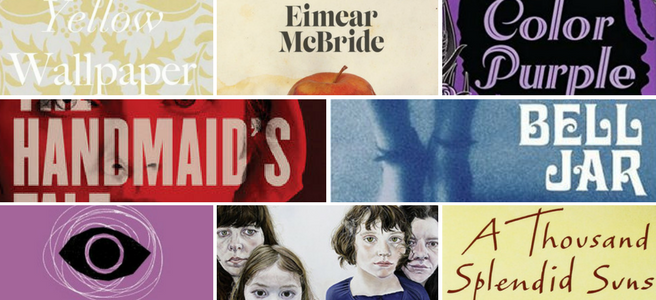
International Day of the Girl is celebrated every year on 11 October in order to bring attention to issues of gender inequality and the barriers girls come up against, from birth to adulthood. Here are eight outstanding books we think everyone should read – books which engage with the issues girls and women face, and will leave you empowered with knowledge and eager for change.

Handmaid’s Tale Margaret AtwoodThe Handmaid’s Tale, Margaret Atwood
Newly broadcast as a celebrated television series, Margaret Atwood’s modern classic, A Handmaid’s Tale, is a story of female subjugation at the hands of a male dictatorship, and the desperate hope of a young woman who cannot obliterate her memories and desires. Everyone should read this masterful story, which re-imagines modern society’s fears and flaws in a narrative at once otherworldly and entirely plausible.


The Colour Purple Alice WalkerThe Colour Purple, Alice Walker
Winner of the Pulitzer Prize, Alice Walker’s haunting novel follows Celie, a young black girl born into poverty and segregation. Raped repeatedly by the man she calls ‘father’, she has two children taken away from her, is separated from her beloved sister Nettie and is trapped into an ugly marriage. But then she meets the glamorous Shug Avery, singer and magic-maker – a woman who has taken charge of her own destiny. Though violent and explicit in its portrayal of the issues facing African-American women in the US, The Colur Purple also has its moments of empowerment and joy, showing that strength can be found even in the most tragic conditions.

Yellow Wallpaper Charlotte Perkins GilmanThe Yellow Wallpaper, Charlotte Perkins Gilman
Charlotte Perkins Gilman’s chilling short story was first published in January 1892, in an attempt to shine a light on the devastating impact of 19th century attitudes toward women’s health, both physical and mental. As a form of treatment, the protagonist is forbidden from reading, writing and all other forms of activity so she can recuperate from what her husband, a doctor, calls a “temporary nervous depression – a slight hysterical tendency”. With nothing to stimulate her, she instead becomes obsessed with the patterned wallpaper in her confining room, and suffers a descent into psychosis. Short but powerful, The Yellow Wallpaper is an important early work of American feminist literature, illustrating society’s profound ignorance of women’s wants and needs.

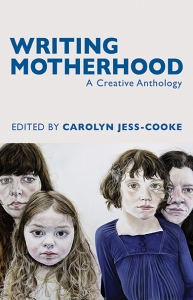
Writing Motherhood Carolyn Jess-CookeWriting Motherhood, ed. Carolyn Jess-Cooke
This important book reconsiders Cyril Connolly’s statement, that ‘there is no more sombre enemy of good art than the pram in the hall’. Through a unique combination of interviews, poems, and essays by established writers, Writing Motherhood interrogates contemporary representations of motherhood in media and literature, queries why so many novels dealing with serious women’s issues are packaged in pink covers with wellies and tea cups, and portrays the exquisite moments of motherhood as often enriching artistic practice rather than hindering it.

A Girl Is a Half-formed Thing, Eimear McBride
Eimear McBride’s multi award-winning debut novel tells the story of a young woman’s relationship with her brother, and the long shadow cast by his childhood brain tumour. It is a shocking and intimate insight into the thoughts, feelings and chaotic sexuality of a vulnerable and isolated protagonist. To read A Girl Is a Half-formed Thing is to plunge inside its narrator’s head, experiencing her world at first hand. This isn’t always comfortable – but it is always a revelation.

The Bell Jar, Sylvia Plath
The Bell Jar, Sylvia Plath’s only novel, was originally published in 1963 under the pseudonym Victoria Lucas, just one month before Plath tragically took her own life. The novel the story of a gifted young woman’s mental breakdown beginning during a summer internship as a junior editor at a magazine in New York City in the early 1950s. It explores unsettling themes of depression and is thought (by some) to mirror Plath’s own spiral into mental illness. It is also a feminist masterpiece, unpicking uneasy female stereotypes and despairing at what it was to be a woman at the time.

A Thousand Splendid Suns Khaled HosseiniA Thousand Splendid Suns, Khaled Hosseini
This tragic and achingly tender novel follows Mariam who, after a sudden and devastating loss, is sent at the age of fifteen to marry the much older Rasheed. After decades of servitude and oppression, Mariam strikes up an unlikely friendship with Rasheed’s new teenaged bride, Laila. When the Taliban take over, and life becomes a desperate struggle against starvation, brutality and fear, we see a brilliant resilience in these Afghan women, reluctantly brought out by their deep love for one another.

The Beauty Myth Naomi WolfThe Beauty Myth, Naomi Wolf
Every day, women around the world are confronted with a dilemma – how to look. In a society embroiled in a cult of female beauty and youthfulness, pressure on women to conform physically is constant and all-pervading. Naomi Wolf’s groundbreaking book will make you think about why and how you judge yourself when you’re stood in front of the mirror. First published in 1991, The Beauty Myth is sadly still all-too-relevant today.


Happy International Day of the Girl, and happy reading.

Posted on

Feline favourites for International Cat Day

International Cat Day books Feline Favourites

International cat day is the purr-fect time to celebrate man’s true best friends: cats. Here are a few of our favourite feline-centric books.

This Is Not A Rescue Emily BlewittThis Is Not A Rescue, Emily Blewitt (£9.99)
The author’s much-loved tortoiseshell cat is at the centre of this sharply satirical and entertaining book of poetry, bursting into poems with powerful personality. ‘We Broke Up’, the poem begins: ‘Because my cat/ screamed her passion on our lawn’. In ‘Dear Emily’ the feline voice asks:

Will you fall the way that cats do,
arch your spine in a defiant, graceful twist
and land on your feet?

Artist Karin Jurick’s painting of her own cat, ‘Bitz’, makes up the beautiful cover.

Jayne Joso My Falling Down HouseMy Falling Down House, Jayne Joso (£9.99)
When young salaryman Takeo Tanaka loses his home, his girlfriend and his job all in quick succession, he finds himself completely alone – apart from the company of a stray cat:

A cat had joined me on my journey from the station. He was black and handsome looking, and I guessed he was still quite young – I remember how the heat kept everything weighted, our moves made in a sun and dust slow motion.

His fears and failing health keep him inside the house through four testing seasons, and he is driven to the edge of insanity, with only a cello and the black cat to connect him to the world. Joso has written a moving exploration of identity – a must-read.

Pascale Petit, FauverieFauverie, Pascale Petit (£9.99)
The Fauverie of this book is the big cat house in the Jardin des Plantes zoo, home to Aramis the black jaguar, who haunts the Paris of this poetry collection: a city savage as the Amazon.

Transforming childhood horrors to ultimately mourn a lost parent, Fauverie redeems the darker forces of human nature whilst celebrating the ferocity and grace of endangered species. Five poems from Fauverie won the 2013 Manchester Poetry Prize, and the manuscript in progress was awarded an Arts Council England Grant.

The Other Tiger by Richard GwynThe Other Tiger: Recent Poetry from Latin America, Richard Gwyn (£14.99)
The title is a nod to Borges’ poem, in which: ‘I go on pursuing through the hours/ Another tiger, the beast not found in verse.’ This anthology of Spanish language poetry from the Americas consists of 97 poets from 16 countries, born over five decades. It includes work from Argentina, Colombia, Mexico, Peru, Nicaragua, Chile, Uruguay, Venezuela, Cuba, the Dominican Republic, Ecuador, Costa Rica, Bolivia and El Salvador.

Richard Gwyn has arranged the poems thematically – Where We Live; Memory, Childhood, Family; the Natural World; Politics, Journey and Exile; Love, Sex and the Body – to cut across nationality and the generations, illustrating the things poets have in common, and how they differ, across continents.


Find more great poetry, fiction and non-fiction on our website.

Join our free, no-purchase-necessary Book Club for 20% off every book you buy direct from us.


Posted on

July Book Giveaway: win a copy of The Women of Versailles

July Giveaway The Women of Versailles

You’ll need to hurry, because there are only a few days left for you to enter our monthly giveaway – and this month, the prize is a copy of Kate Brown’s ‘extraordinarily timeless’ debut novel, The Women of Versailles.

To enter, simply sign up to the Seren newsletter before 1st August:
https://www.serenbooks.com/newsletter/signup

Book Giveaway The Women of Versailles


About The Women of Versailles:
The Women of Versailles Kate Brown
Princess Adélaïde, daughter of Louis XV, is at odds with the etiquette of the French court. Adélaïde envies her brother, is bored with her sister and, when Madame de Pompadour, a bourgeoise, comes to court as her father’s mistress, she is smitten, with dangerous results. Adélaïde pushes against the confines of the court, blind to the difference between a mistress and princess, with tragic results. Forty-four years later, under the looming shadow of the revolution, what has happened to the hopes of a young girl and the doomed regime in which she grew up?

‘Dark and rich, The Women of Versailles is filled with political intrigue, sexual awakening, and the roots of revolution.’ – Peggy Riley


We will pick a winner at random from all our email subscribers on 1st August. Make sure you have signed up to Seren News before then to be in with a chance of winning!

Why not give your friends a chance to win too, by recommending that they sign up to our newsletter before the end of the month using this link?
www.serenbooks.com/newsletter/signup


Save

Posted on

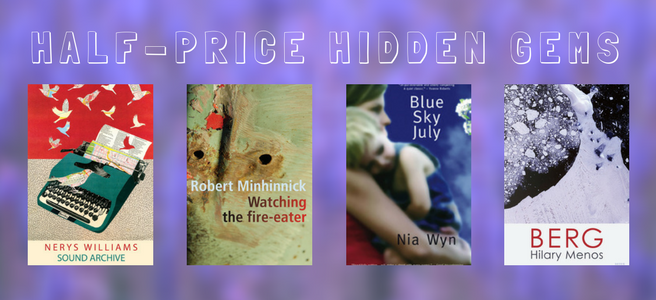
Half-Price Hidden Gems: Prize-winners from the archives

Half-Price Hidden Gems Seren Archive

Today we shine the spotlight on some hidden gems from the archives – fiction, poetry and non-fiction prize-winners from years passed which, if you haven’t read already, come highly recommended.

We’ve just passed the mid-week hurdle, and that means there’s only a few days left to take advantage of our half price summer sale. If you’re struggling to choose your next read, why not start with one of the extraordinary books below? These are the oldies and goodies from the Seren archive.

John Haynes Letter to PatienceLetter to Patience, John Haynes
Costa Poetry Award Winner, 2006
Set in Patience’s Parlour, a small mud-walled bar in northern Nigeria, at a time of political unrest, Letter to Patience is a vividly atmospheric book-length poem divided into cantos. The poem is not only a biography, or an essay on post-colonialism, it is an epic portrayal of a beautiful and troubled country and of one man’s search for meaning in difficult times.

Touch CoverTouch, Graham Mort
Edge Hill Short Story Prize Winner, 2011
From a young child adrift on an ice-filled lake to an ageing farmer facing life alone, the twenty-one stories display a deep sensitivity to both the natural world and to human relationships. In skilfully crafted prose, vivid with detail, Mort examines the strength and fragility of life and the ties that hold us within it.
Touch spans twenty years of short-story writing, and includes the Bridport prize-winning story ‘The Prince’.

Hilary Menos BergBerg, Hilary Menos
Winner of the Forward Prize, Best First Collection, 2010
In this extraordinarily vibrant debut collection, icebergs floating down the Thames jostle with transvestites in Singapore, aliens wading the Hudson River and the lively crew from the local slaughterhouse. We go shopping with Ingomar the barbarian and watch Bernard Manning gigging at Totnes Civic Hall. Throughout, Menos brings a sophisticated sensibility to her poetry. Her subjects are seen aslant, with ironic as well as tender intentions.


Gift of a Daughter Emyr HumphreysThe Gift of a Daughter, Emyr Humphreys
Wales Book of the Year Winner, 1999
Archaeology lecturer Aled Morgan and his wife Marian flee to Tuscany, and the home of old friends, to escape a family tragedy. Yet even immersed in Etruscan culture, Aled finds that friendships aren’t all they seem, and that his wife has become almost a stranger to him. The Gift of a Daughter is a novel of delusion and self-knowledge, tradition and change, loss and identity in which the pace, plotting, characterisation and dialogue are as faultless as we expect from a writer of Emyr Humphreys’s experience and skill.

Nerys Williams Sound ArchiveSound Archive, Nerys Williams
Winner of the DLR Strong Award, 2011
Shortlisted for both the Forward Prize Best First Collection and the Michael Murphy Prize, Sound Archive is a strikingly original first collection of poems. Using formal strategies similar to modernist painting: abstraction, dislocation, surrealist juxtaposition, the poet conjures a complex music, intriguing narratives, and poems full of atmosphere that query identity, gender, and the dream of art as a vehicle for emotion and meaning. Williams confronts our preconceptions about what it might mean to be a woman writing against the background of two formidable traditions: that of Welsh-speaking Wales and of English literature.

Watching the Fire Eater Robert MinhinnickWatching the Fire-eater, Robert Minhinnick
Wales Book of the Year Winner, 1993
Watching the Fire-eater
covers variety of subjects: third world poverty and the internationalism of alcohol, rugby through the eyes of a vegetarian, nuclear power, sunbathing and a thanksgiving dinner for the demise of Margaret Thatcher. But at the core of this essay collection is a vivid series of attempts to strip away the exhausted mythologies of the writer’s own country and the increasingly-packaged places he visits. Whether in the rainforest or the big match crowd, Minhinnick’s language: acid, imagist, compassionate, celebrates the people he meets and, fleetingly, defines their lives.

Nia Wyn Blue Sky JulyBlue Sky July, Nia Wyn
Barnes & Noble Discovery Prize Winner, 2009
Set between the summers of 1998 and 2005 in Cardiff, Blue Sky July follows the story of a mother whose child suffers a devastating brain injury. It traces her journey into a world hidden away in society’s pockets as she battles against impossible odds to heal him.
Through Wyn’s intimate day by day musings, the book explores the impact of the tragedy on her home life, love life, friendships and connection to the world, as the most extraordinary relationship unfolds between them. Blue Sky July won the Glen Dimplex Biography Prize and was shortlisted for both the Good Housekeeping Book of the Year, and Wales Book of the Year.

Time Being Ruth BidgoodTime Being, Ruth Bidgood
Roland Matthias Prize Winner, 2011
Time Being is Ruth Bidgood’s tenth collection, and a Poetry Book Society Recommendation. It has been said, rightly, that Bidgood’s work is ‘emphatically a poetry of location’ and it is the history and nature of her particular region of mid-Wales that most inspire the author. Her distinctive voice has a quiet authority but also a subtle, conspiratory edge, as if she is letting one in on a secret, unveiling a hidden fact, or making a discovery. She avoids sentimentality, but – unfashionably – not sentiment; an observation can engender joy or sorrow or fear uncluttered by irony. These are ambitious attempts to transcend the lyric and move towards a more epic, multi-faceted form equal to the many experiences of her long life.

The Colour of Dawn, Yanick Lahens
Winner of the RFO Award (2009); Prix Millepages (2008); and Prix Richelieu de la Francophonie (2009)
Port au Prince, Haiti. The police roam the streets and no-one is safe. Fignolé, musician and political radical, is missing. His sisters Joyeuse and Angelique search for their young brother amid the colourful bustle, urban deprivation and political tension of the city. Eventually they will find him, but in the process they will also have found more about themselves than they wanted to know. The Colour of Dawn is a tense, passionate and vividly told story of small victories of hope in the face of a seemingly impossible fight against a monolithic regime.

Bilbao–New York–Bilbao Kirmen UribeBilbao–New York–Bilbao, Kirmen Uribe
Spanish National Literature Prize Winner, 2009
Bilbao–New York–Bilbao takes place during a flight to New York and tells the story of journeys by three generations of the same family. The key to the book is Liborio’s fishing boat, the Dos Amigos: who are these two friends, and what is the nature of their friendship? Through letters, diaries, emails, poems and dictionaries, Kirmen reflects on the art of writing, and the distinction between life and fiction. Kirmen’s novel, translated by Elizabeth Macklin, creates a mosaic of memories and stories that combine to form a homage to a world that has almost disappeared, as well as a hymn to the continuity of life.


Half price summer sale Seren


Save

Posted on

Short Story of the Month | ‘Swimming’ by Katie Munnik

Katie Munnik Swimming Short Story

July’s featured Short Story of the Month is ‘Swimming’ by Katie Munnik. Katie is a Canadian writer living in Cardiff whose prose, poetry, creative non-fiction and reviews have appeared in several magazines and anthologies; her first collection of short fiction will be published by Wild Goose this autumn. In ‘Swimming’ she paints a vivid picture of a hot day on the beach, a suggestion of something sinister hidden by the calmness of the sea.


Swimming

This is an extract. Read the full short story for free on our website.


Light and water and sand and warmth. Peace on the way here, too, which can’t be guaranteed these days. Seems of late we’re getting slammed doors and tears every day, and then I stand in the kitchen, taking long, deep breaths. It’s not as if I can’t remember what it’s like to be her age, but try convincing her of that. In such a rush to grow up. She doesn’t see how soon it will all be coming her way; how few years we have left before she’ll be leaving. We could almost count it out in months.

But not today.

Today, she is relaxed. Stretched out on a beach towel, her pale skin courting that perfect, golden glow and her nose already freckling. Long-limbed and lovely. She’s lying on her belly, reading a paperback from the library and chewing on a pencil. From time to time, she underlines something or scribbles in the margin. I’m only watching out the corner of my eye and I wonder what she’s adding to the story, but I don’t ask.

We left her dad at home, working on the new cedar deck. He’ll be sunburnt and spent when we get home, his skin covered in sawdust. He’ll be happy.

This beach is a favourite of mine. It’s not far from the city – only half an hour in the car – and we usually have the place to ourselves. My mum loved it here and used to bring us along on the bus, with a travelling rug and a thermos in the tote bag and her long hair tied back in a scarf. I’d steal her sunglasses and pull faces, pretending to be a bug, and she’d take them back and set them on top of her head, then straighten my pigtails and tell me to go collect some shells. She looked like a movie star, my mum. She’d like to be here now, I’m sure. I’d like that, too.

The sun is already hot on the sand and my skin feels tight. ‘You okay here?’ I ask, ‘I was thinking of going in for a swim.’

‘Fine, Mum.’ She doesn’t look up from the page and her voice is soft and distracted.

The sand is warm and dry under my feet. A breeze blows gently. Not enough to turn the pages of a book. The horizon looks hazy, and I wonder if it’s the heat. Does heat do that over water? I’m wondering about this when I hear a call from the dunes, so I turn to look back and there’s my daughter looking up from her book. Then I hear the crow call again. I smile, catching my mistake, and my daughter waves her hand and lets out an echoing caw. I wave back and turn again to the sea.

The water is cold, but it always is and I don’t hesitate. Step after step after step until I can lower myself in and let the water catch my weight. Long strokes pushing out, the water deepens under me. Further along the coast, there are rocky stretches and cliffs, too, but this bay is gentle and so is the sea. Everything is quiet. The birds must be further out, fishing where the water is deeper or tucked away on their cliffs to watch the world. All I can hear is the sea’s song, lapping and rippling around me.

I swim out a hundred strokes, counting with each breath.

A wave catches me with my eyes closed, mouth open, and I flip onto my back, full of sea. I spit out my breath and taste my heart in my mouth, wondering how a wave caught me unaware like that. I’m blinking now and everything shatters into reflected light as I find the surface again and try to balance, but another wave is coming, so I take a breath and tuck myself safely under the surface. The strength of the running water somersaults me and I can’t fight it. Surfacing again, I look for the next wave, but there isn’t one. The sea is flat…


Continue reading ‘Swimming’ for free here.



Posted on

Seren’s Top Ten Literary Romances

seren top ten literary romances

Valentine’s Day needn’t be a cause for stress when there are so many great literary romances to get lost in. Happy ending or otherwise, love in literature is beautiful and intense – the perfect distraction on this much-maligned day of devotion. Here are the Seren team’s top ten literary romances – in no particular order.

  1. Jayne Eyre and Edward Rochester – Jayne Eyre
    Unassuming and lacking in contemporary beauty, Jayne is perhaps not the convential heroine figure, yet her honesty and intelligence captures our hearts as well as that of wealthy Edward Rochester, whose impulsiveness and secrecy derails their budding romance. Rekindled much later after great suffering, their love seems all the more pure.
  2. Claire Abshire and Henry DeTamble – The Time Traveler’s Wife
    ‘I am at a loss because I am in love with a man who is standing before me with no memories of me at all’. Claire and Henry’s romance is unconvential and at times agonising, but each moment time-travelling Henry is brought back to Claire is cherished by both.
  3. Emma Woodhouse and George Knightley – Emma
    Like a slow burn, Emma’s imperceptible love grows out of friendship for the frank and critical Mr Knightly – the only character whose genuine concern and care for Emma is strong enough to prompt such well-meaning rebukes. Their romance is compassionate and selfless, and each improves the other through their genuine affection.
  4. Catherine Ernshaw and Heathcliff – Wuthering Heights
    Both strong, wild and passionate, Catherine and Heathcliffe fall prey to an obsessive kind of love, all-consuming in its intensity, to the ruin of both. Heathcliff is not our typical romantic hero – his coarse brutality turning him into something monstrous – yet his enduring love for Catherine, which dominates him even after her death, makes for a captivating and unforgettable story.
  5. Beatrice and Benedick – Much Ado About Nothing
    The will-they-won’t-they romance between Beatrice and Benedick begins with the two on equal footing – both clever, witty and utterly opposed to marriage. Throughout the play they continue to be evenly matched,  their heated linguistic duels blossoming into love. Each has the power to turn the other into the best (or worst) version of themselves, and the “merry war” of witty insults between Beatrice and Benedick ends with a romance we will remember always.
  6. Emma Morley and Dexter Mayhew – One Day
    This much-loved contemporary romance opens with Emma and Dexter’s one-night-stand, which unbeknownst to both characters will define the tragectory of their lives. Though ultimately tragic, the love between Emma and Dexter endures over decades of separation, and is captivating in its intensity.
  7. Hazel Lancaster and Augustus Waters – The Fault in Our Stars
    A short and hearbreaking romance, Hazel and Augustus stole hearts in the book and on the big screen as we followed them in their battles against cancer, love and loss. Embodying Tennyson’s phrase, “’Tis better to have loved and lost than never to have loved at all”, the story ends with neither character regretting having pursued their doomed relationship.
  8. Pip and Estella – Great Expectations
    Arguably one of Dickens’ strongest female characters, Estrella is cold and cruel to Pip as a child, rejecting the notion of romance and warning him to stay away from her. Pip, passionately in love, continues to pursue Estrella even after her marriage to the repugnant Drummle, and as the novel draws to a close, we are teased with the notion that Pip and Estella may finally be united.
  9. Margaret Hale and John Thornton – North and South
    An intelligent and wealthy mill owner, Mr Thornton represents all that genteel Margaret Hale is prejudiced against. He comes to love Margaret both because and in spite of her pride, and this passionate love persists even after she refuses his preposal and he comes to (wrongly) believe she has another lover. Margaret’s prejudices against the North and about social class slowly alter and when re-introduced to Thornton much later, the two finally declare their love.
  10. Elizabeth Bennet and Fitzwilliam Darcy – Pride and Prejudice
    How could we leave off this most famous of literary romances? Elizabeth Bennett and Mr Darcy both have their flaws – quick to jump to conclusions, Elizabeth misjudges Darcy from the start and he, falling prey to his pride, looks down upon her socially inferior family. Through hatred, to begruding respect and finally love, the two overcome their initial failings, and eventually embark upon a joyous marriage.


We hope you enjoyed this short list of great literary romances – though there are plenty more out there we haven’t mentioned. Happy Valentine’s Day, book lovers!

Seren literary romances love heart

And before we go, a couple of honorary mentions from the Seren list:

Dark_Mermaids_Web72Sophia and Hajo – Dark Mermaids
In Sophia’s struggles to investigate her friend’s murder and come to terms with her own abusive childhood as a young swimming star, fellow police officer Hajo begins as a wishful fantasy, his thick dark curly hair something coveted from a distance. But by the novel’s close, we see the two united, Sophia’s torment dulled by the reciprocated feelings from one whose love is patient, gentle, and pure.

Masque by Bethany W PopeChristine and The Phantom – Masque
In her pursuit of artistic perfection, young opera singer Christine encounters the Phantom, whose mentorship and murderous control of the theatre propel her to new heights. Much unlike Gaston Leroux’s original story, in Masque the Phantom is a complex character with great emotional depth, and ultimately Christine comes to recognise, despite his monstrous faults and physical deformity, that she admires and loves him.


Save